






MDVR System with Waterproof Cameras

Best MDVR System with Waterproof Camera

Date Time: November 12, 2026
Reading volume: 7
Author: YUWEI

MDVR System with Waterproof Cameras


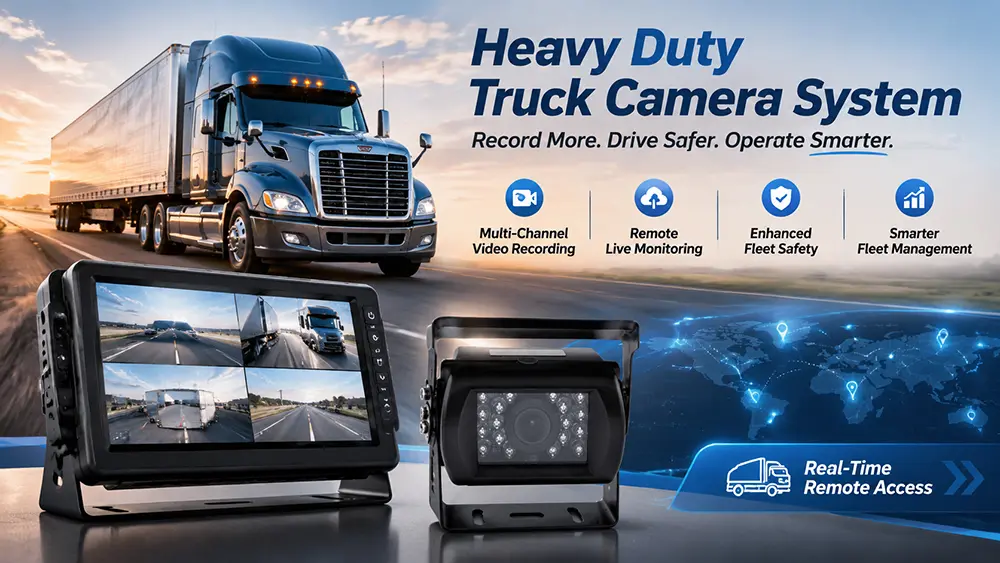
For Canadian trucks, long-distance passenger buses, city transit, and other commercial vehicle fleets, relying solely on ordinary dashcams is often insufficient to cover the sides, rear, cabin, and cargo compartments of the vehicle in environments like long-distance hauling, winter roads, rain, snow, and areas with large vehicle blind spots. Therefore, a video system consisting of an MDVR host + multi-channel in-vehicle cameras + a waterproof rearview camera makes the tracking and management of Canadian commercial fleets smarter.
MDVR System with Waterproof Cameras

What is a Truck/Passenger Bus Mobile DVR (MDVR)?

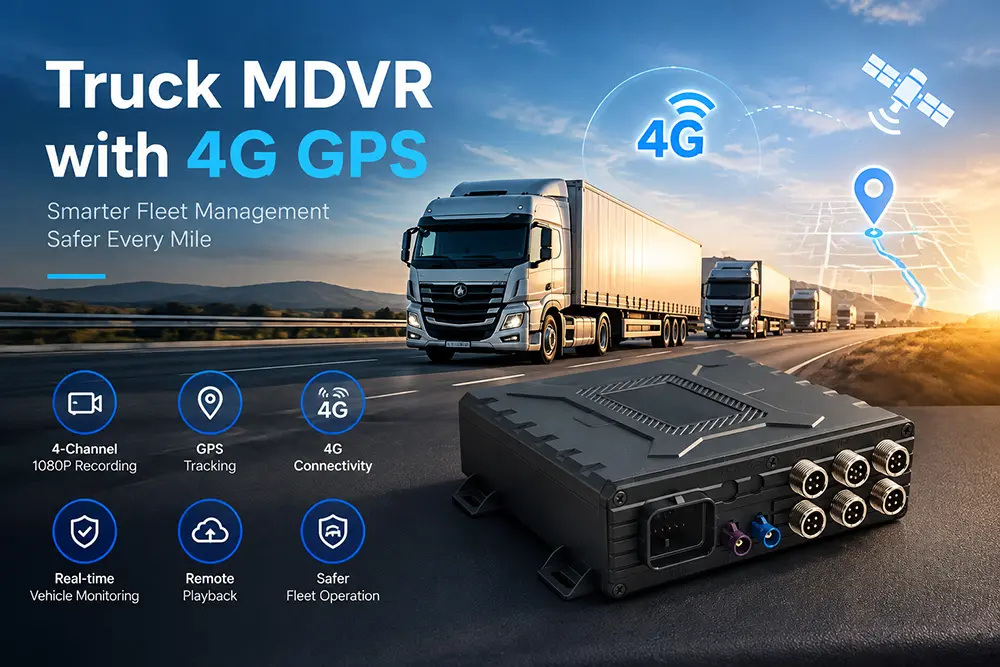
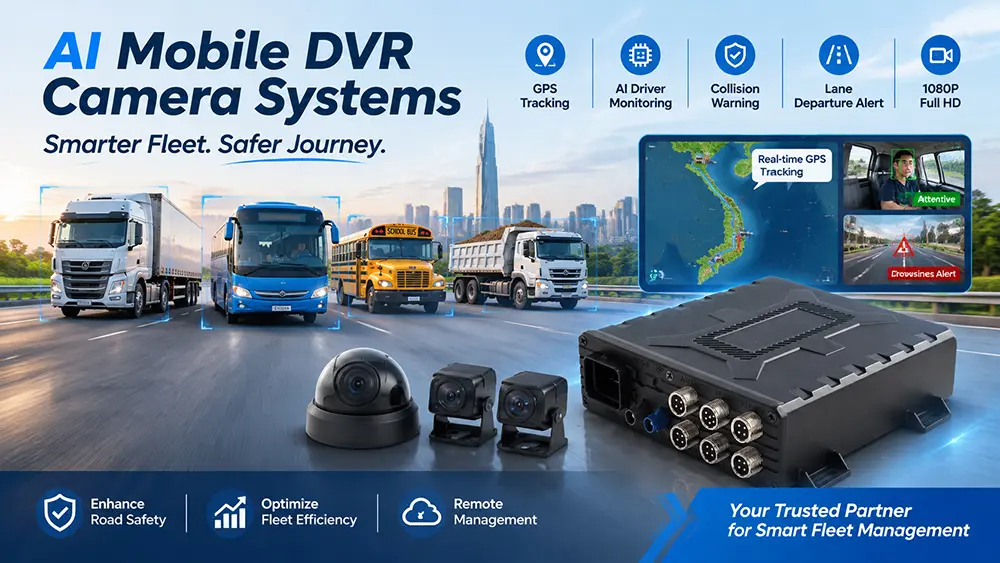
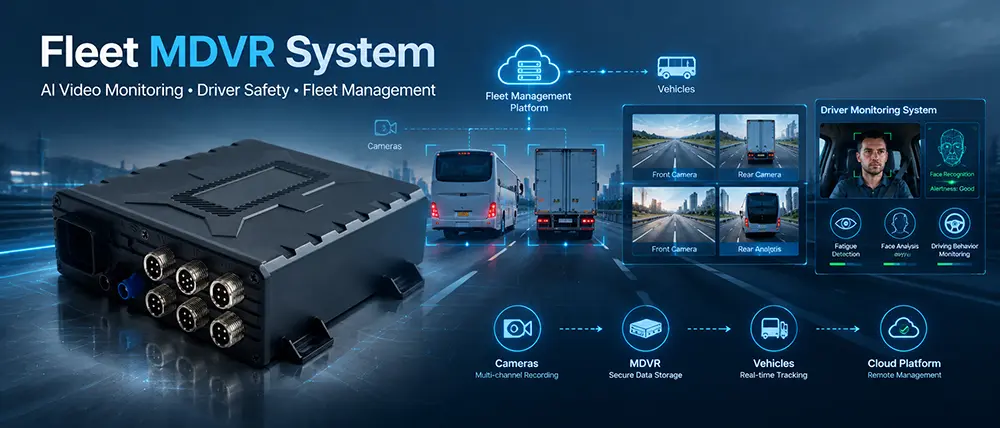
MDVR is a digital video recording and fleet monitoring terminal specifically designed for the mobile environment of vehicles. It can connect multiple cameras simultaneously and combine GPS, 4G/Wi-Fi, and local storage to perform unified recording and management of the front of the vehicle, left and right blind spots, the cabin, passenger areas, the cargo compartment, and the rear of the vehicle.

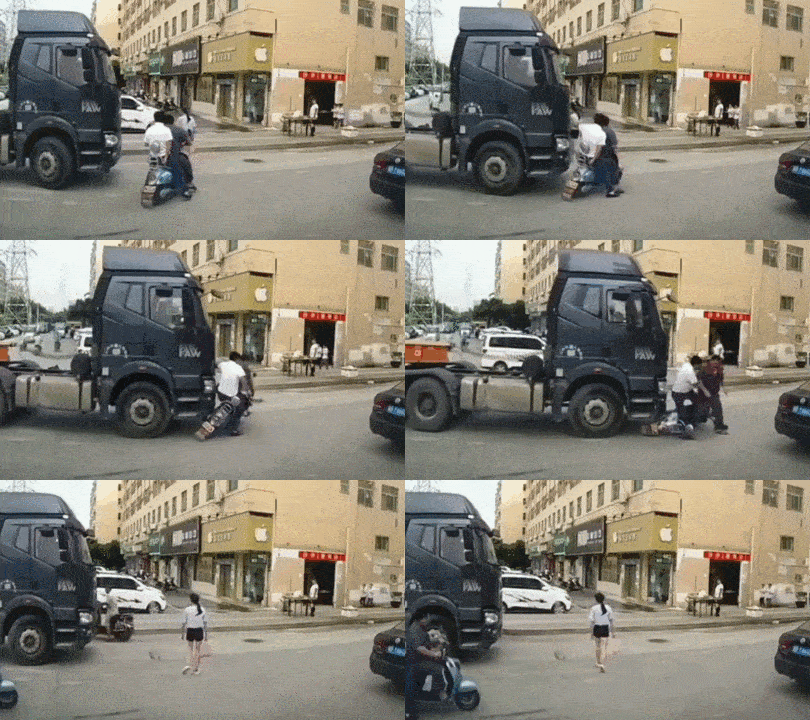
For Canadian truck fleets, MDVR focuses more on the road ahead, side blind spots, trailer/cargo areas, and reversing areas, which can be used for accident evidence collection, cargo security, driving behavior analysis, and remote vehicle management.

For passenger bus fleets, in addition to front and rear road recording, it can also cover the driver, doors, and passenger areas, providing video evidence in the event of collisions, passenger disputes, abnormal driving, and boarding/alighting incidents.

Therefore, choosing an MDVR shouldn't just be about "whether the video is clear," but should also simultaneously consider the number of channels, wireless communication, AI functions, storage capacity, protection level, and low-temperature operating capabilities.

Latest Regulations for Canadian Commercial Vehicles:

Regulation: "Commercial Vehicle Dashcam Act" passed in 2026-05; effective after a 6-month transition; mandates that commercial vehicles (trucks/passenger buses/combination vehicles) with a gross weight > 11,793kg require: forward-facing dashcam, 1080p, night vision, local storage ≥ 72h.


Recommended F4, F6 + IP67 Waterproof Camera

F4 Mobile DVR

The F4 is an industrial-grade AI Mobile DVR that integrates 4G, Wi-Fi, GPS/BDS positioning, multi-channel recording, and fleet monitoring functions. The device supports up to 6 channels of AHD/CVBS video input, which includes high-definition 1080P video input capability, and supports H.264/H.265 encoding simultaneously. It can also be expanded with ADAS, DSM, and BSD for forward driving assistance, driver status, and vehicle blind spot safety monitoring. The F4 supports a 2.5-inch HDD/SSD with a maximum capacity of up to 2TB, provides an SD card storage solution as well, and is equipped with hard drive shock absorption and power-off recording protection design.


F6 Mobile DVR

If the fleet often faces rain, snow, mud, construction sites, or high-dust environments, the F6 is more worth considering. The F6 features a die-cast aluminum body, with the whole machine reaching an IP67 protection level, while supporting up to 6 channels of AHD/CVBS video input, 4G/Wi-Fi communication, GPS/BDS positioning, and intelligent driving functions like ADAS, DSM, and BSD. The operating voltage range is 9–32V.


IP67 Waterproof Camera:

The YUWEI A720PJ-3228-412 waterproof rearview camera can be installed at the rear of trucks or buses and forms a multi-channel video system with the MDVR. This camera supports 1280×720 AHD video, IP67 protection, approximately 90° horizontal viewing angle, 0.01 Lux low illumination, and up to about 15 meters of infrared fill light, and provides functions such as digital noise reduction, wide dynamic range, strong light suppression, and defogging. The operating temperature is -30℃ to 70℃. For usage environments in Canada with heavy rain, snow, snow-melting salt, moisture, and road mud, the waterproof and sealing performance of external cameras is especially important.


Why Recommend MDVR for Canadian Truck and Bus Fleets?

Common Issues for Canadian Fleets

How MDVR Can Help

Long truck bodies, large rear and side blind spots

Multi-channel front/side/rear camera coverage

Difficult to determine accident liability

Saves pre- and post-accident video and vehicle location

Hard to manage long-distance vehicles in real-time

4G + GPS remote vehicle monitoring

Driver fatigue or distraction

DSM driving status monitoring

Lane departure, forward collision risks

ADAS assistance warnings

Large vehicle turning blind spots

BSD + side-view cameras

Bus passenger disputes

Cabin video provides incident evidence

Cargo anomalies, loading/unloading disputes

Cargo compartment/cabin recording

Rain, snow, mud affect rearview devices

IP67 waterproof cameras improve environmental adaptability

For fleets with dozens or even hundreds of commercial vehicles, remote viewing, event video uploading, and unified management are usually more important than simply increasing camera resolution.


How to Choose Between F4 and F6 Mobile DVR?

Parameter

F4

F6

Product Positioning

General-purpose AI MDVR

High-protection AI MDVR

Video Input

Up to 6 channels AHD/CVBS

Up to 6 channels AHD/CVBS

AI Functions

ADAS / DSM / BSD

ADAS / DSM / BSD

4G

Supported

Supported

Wi-Fi

Supported

Supported

Positioning

GPS/BDS

GPS/BDS, expandable high-precision positioning

Encoding

H.264/H.265

Supports H.264/H.265 depending on configuration

Primary Storage

2.5-inch HDD/SSD + SD

SD storage, specific expansion plan confirmed by configuration

Max Primary Storage

HDD/SSD up to 2TB

Official specs list SD up to 2TB

Protection Level

IP54

IP67

Operating Voltage

9–32V

9–32V

Operating Temperature

-30℃ ~ 70℃

-30℃ ~ 70℃

Recommended Vehicles

Highway trucks, logistics vehicles, buses

Construction vehicles, heavy trucks, high-humidity/high-dust vehicles


Waterproof Backup Camera Specifications:

Technical Item

Detailed Specification

Image Sensor

1/3-inch CMOS sensor, 1 Megapixel

Signal System

PAL

Effective Pixels

1280 (H) × 720 (V)

Minimum Illumination

0.01 Lux

Day/Night Mode

IR-CUT infrared filter switching

Infrared

Infrared distance 15 meters

S/N Ratio

≥45dB

Electronic Shutter

Auto / 1/50 (1/60) - 1/100,000 sec

Frame Rate

25 fps, 1280×720

Video Standard

AHD 1.0

Lens

2.8mm fixed-focus HD lens

Horizontal Viewing Angle

90°

Noise Reduction

Supports 2D/3D noise reduction

White Balance

Auto

Sync

Internal synchronization

Cable Length

50 cm

Shell

Metal

Protection Level

IP67

Power Supply

Current is 50mA at 12V DC without night vision; 200mA at 12V DC with night vision.

Operating Temperature

-30℃ ~ 70℃

Storage Temperature

-40℃ ~ 85℃

If vehicles primarily operate on highways, in urban distribution, or in regular passenger transport environments, the F4 is usually a more balanced choice in terms of configuration and cost. If the equipment installation location is prone to contact with water or dust, or if the vehicles operate long-term at construction sites, mining areas, and other harsh environments, the IP67 protection advantage of the F6 is more obvious.


For large Canadian trucks and buses, a combination of mobile DVR + front-view camera + left/right side cameras + IP67 rearview camera can be further adopted to form a more complete video coverage.


Conclusion:

For Canadian commercial fleets in 2027, priority should be given to multi-channel coverage, reliable storage, 4G remote management, GPS positioning, AI safety functions, and environmental protection capabilities when selecting an MDVR, rather than just comparing video resolutions. For regular logistics trucks and passenger buses, the YUWEI F4 provides a more balanced combination of multi-channel recording, positioning, wireless communication, and AI functions; for vehicles in rain, snow, dust, and complex working conditions, the IP67-rated YUWEI F6 has a better environmental adaptability advantage. Paired with an IP67 waterproof rearview camera, it can further cover the rear area, which is the most difficult to observe for large vehicles.

Email:hello@yuweitek.com

Canadian In-Vehicle MDVR FAQ

Are Canadian trucks required to install MDVR?

There is currently no national regulation requiring all Canadian trucks to uniformly install MDVRs. However, eligible federally regulated commercial vehicles are required to use compliant ELDs (Electronic Logging Devices) to record hours of service. MDVRs and ELDs are different systems and cannot directly replace each other.


How many cameras are suitable for a passenger bus?

It should generally be configured according to the vehicle's length and operational purpose. The road ahead, the driving area, the doors/passenger area, and the rear of the vehicle are common monitoring zones, and large buses can also add left and right side cameras to reduce blind spots.


What is the biggest difference between the F4 and F6?

Both support multi-channel recording, 4G, positioning, and AI driving safety functions. One of the main differences is the protection level: the F4 is IP54, while the F6 reaches IP67, making the F6 more suitable for high-humidity, dusty, or other harsh operating environments.


Why are waterproof rearview cameras recommended for Canadian trucks?

Truck tail cameras are exposed to rain, snow, mud, car wash water, and road contaminants for long periods. Therefore, compared to standard indoor cameras, they require waterproof, dustproof, and wide-temperature designs. The YUWEI waterproof rearview camera reaches IP67 and supports infrared night vision.


Can MDVR help process traffic accidents and insurance claims?

MDVRs can save video, time, and location information around the vehicle, so they can provide crucial data for accident reviews. However, the legal evidentiary value, submission methods, and insurance company acceptance standards for the recordings must still be judged based on specific cases and local requirements.


Can Canadian fleets record drivers at all times?

Caution is required. Canadian privacy regulators emphasize that employee monitoring must have a clear, reasonable, and proportionate purpose. Continuously recording cabin audio and video may pose obvious privacy compliance risks. Therefore, companies should establish recording policies, limit data collection scope and access permissions, and deploy systems in accordance with federal and provincial privacy rules.


Is MDVR suitable for winter use in Canada?

The published operating temperature range for the F4, F6, and YUWEI IP67 waterproof cameras all cover down to approximately -30℃. This can cover a large number of regular commercial vehicle environments, but winter temperatures in some parts of Canada may drop below this. Therefore, extreme cold fleets should complete low-temperature testing and installation environment assessments before mass deployment.


What parameters should truck fleets look at most when choosing an MDVR in 2027?

It is recommended to prioritize comparing the number of video channels, 4G remote access, GPS positioning, storage capacity, H.265 encoding, power-off protection, ADAS/DSM/BSD capabilities, protection levels, and operating temperature range. For Canadian fleets, low-temperature adaptability and video privacy compliance should also be included in the procurement standards.


Communicating with us can make you find a better fleet management equipment supplier
Get a quote
MESSAGE
*
*
*
*