










Best Dash Cam with Driver Monitoring
Dash Camera with Driver Monitoring
In the past, when Japanese enterprises purchased dash cams, their focus was typically on accident video recording, liability determination, and insurance claims. Nowadays, logistics transport, taxis, ride-hailing vehicles, buses, and corporate fleet vehicles are increasingly focusing on DMS (Driver Monitoring System). On September 30, 2026, the Ministry of Land, Infrastructure, Transport and Tourism (MLIT) of Japan officially announced the relevant amendments to vehicle safety standards, incorporating the "drowsiness warning device" and "distraction warning device"—which are DMS functions used to monitor driver fatigue and distraction—into vehicle safety standards.
According to the currently announced timetable, these standards will apply to new vehicle types in Japan starting from September 2031, and to continued-production vehicle types starting from September 2033.
What is a DMS Dash Cam?
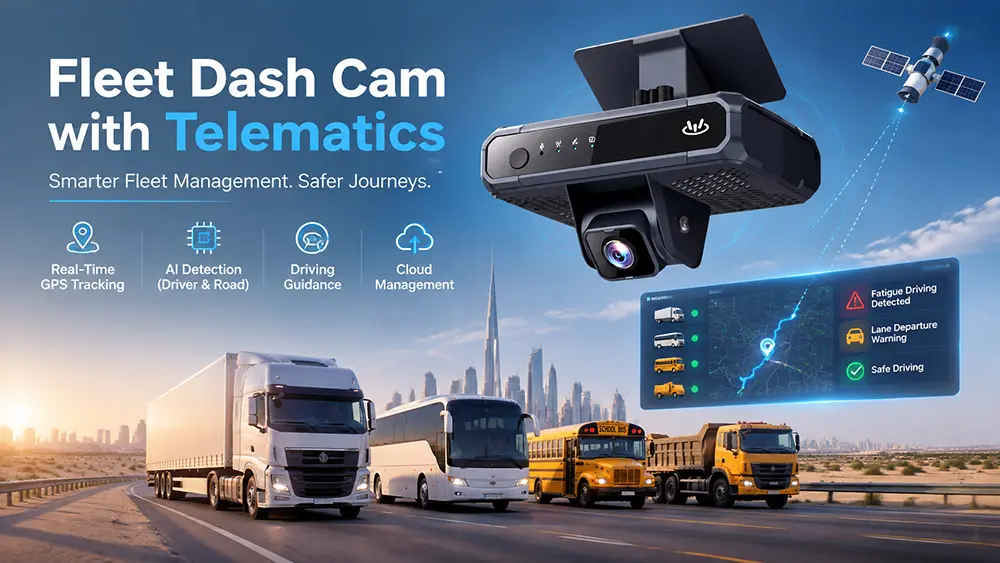
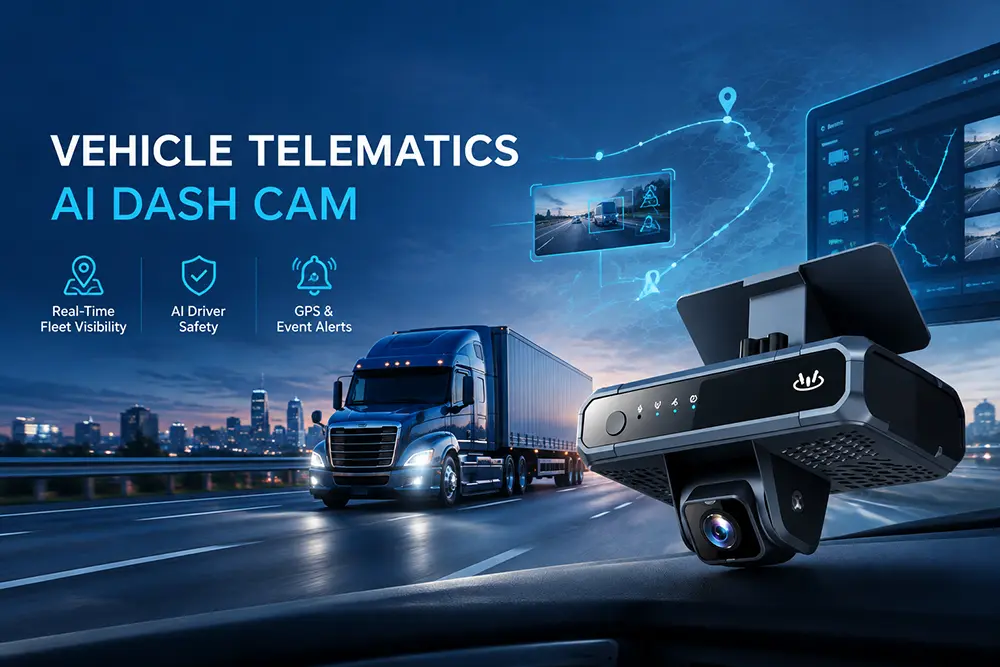
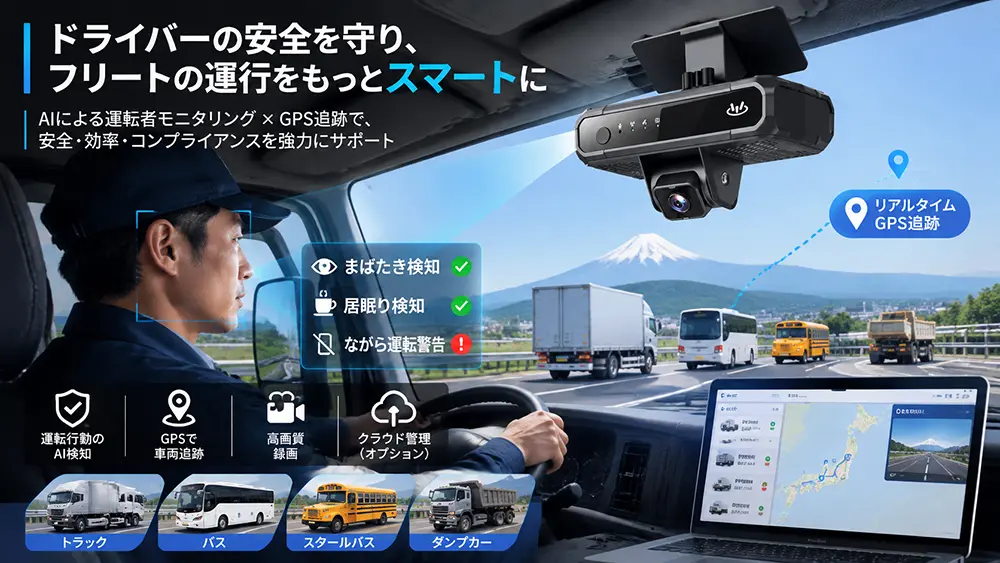
A DMS dash cam can be simply understood as: Standard Dash Cam + Cabin Camera + AI Driver Behavior Recognition + Connected Fleet Management. Traditional dash cams primarily record the road conditions ahead of the vehicle, and footage is retrieved only after an accident occurs. In contrast, DMS dash cams focus on whether "the driver is currently in a safe driving state."
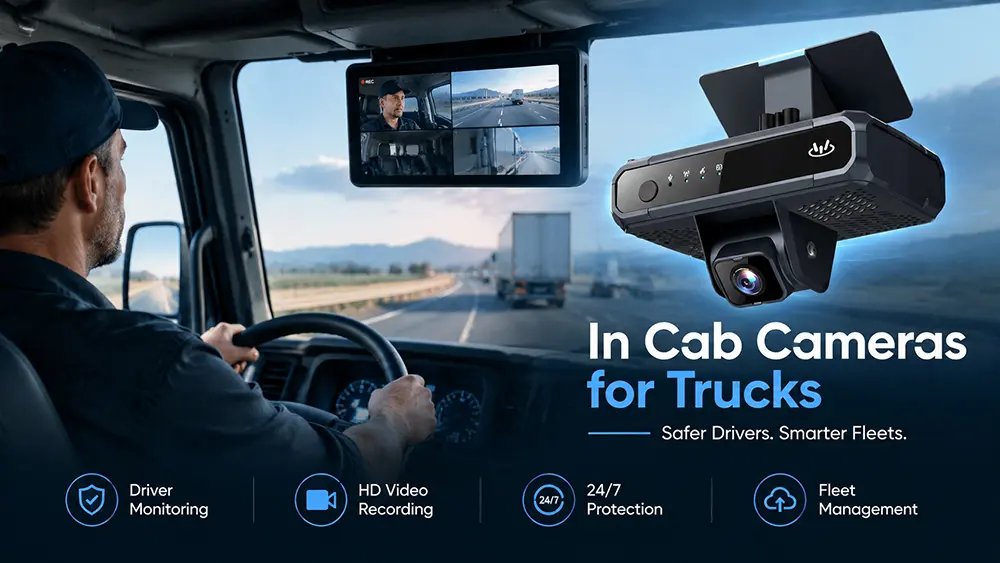
The device typically uses a camera installed inside the cab to analyze the driver's eye state, facial orientation, head posture, and partial driving behaviors. This allows it to identify abnormal behaviors such as fatigue, closed eyes, yawning, looking down, prolonged deviation of sight from the road, phone usage, and smoking, and provide reminders through voice prompts or alarms.
The DMS solution announced by YUWEI also includes functions such as fatigue monitoring, attention monitoring, and dangerous driving behavior recognition, such as closed eyes, yawning, phone use, smoking, and line-of-sight deviation.
For commercial fleets, more importantly, these abnormal events can also be combined with 4G communication, GPS positioning, and vehicle management platforms.
Fleet managers can not only see "which vehicle is where," but also further understand "when fatigued driving occurred," "which driver frequently exhibits distracted behavior," and "what the status of the driver and road environment was before an accident."
3 DMS Commercial Vehicle Dash Cams
If the procurement targets are Japanese logistics fleets, taxis, ride-hailing cars, buses, or corporate vehicles, YUWEI's three current representative models are V5, V5C, and V8N. All three products have DMS/DSM driver monitoring capabilities, but their product positioning differs.
V5 Multi-Channel Video Monitoring Device
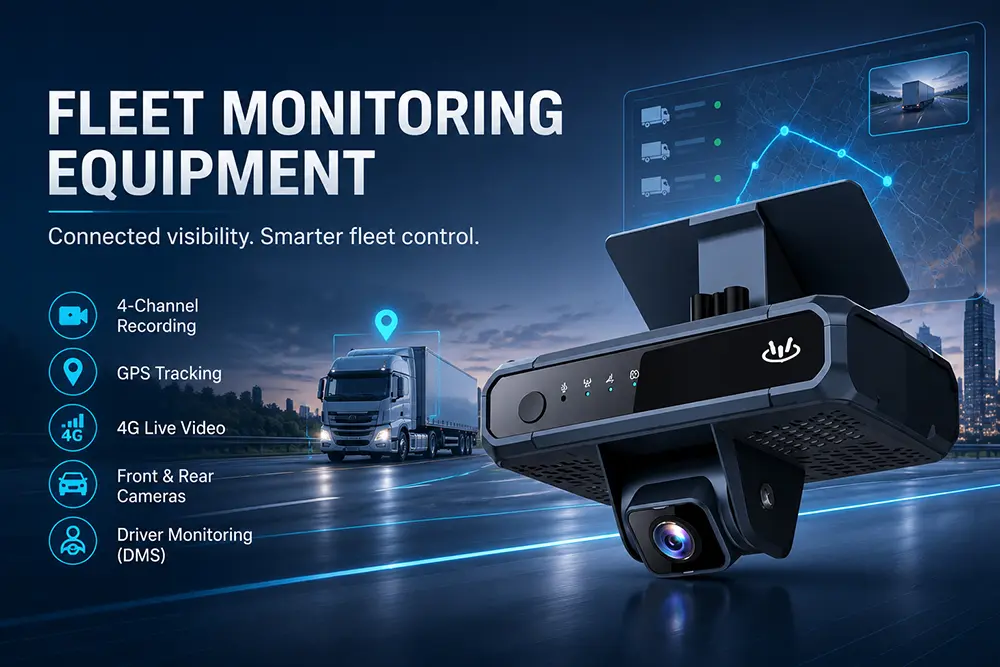
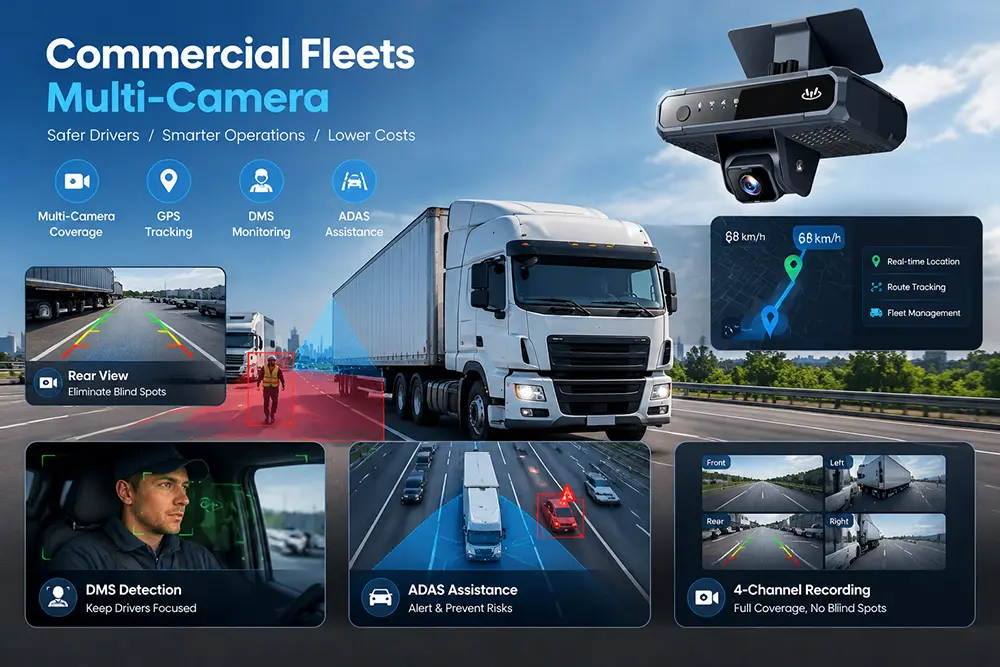
YUWEI V5 is a 4G smart in-vehicle video terminal. Compared with ordinary dual-camera dash cams, the biggest advantage of the V5 is not simply improving video resolution, but its ability to expand with more cameras.
The device supports up to 4 channels of video, configurable with 1 channel of 1080P front-facing camera and up to 3 channels of 720P extension cameras. Therefore, in addition to shooting the road ahead of the vehicle, it can also cover the cab, vehicle sides, rear, or cargo area depending on the vehicle type.
The V5 simultaneously supports 4G communication, GPS/BDS positioning, dual TF card storage, remote video viewing, video query, two-way voice, and OTA upgrades, while integrating ADAS and DMS/DSM algorithms. According to product materials, it can also support functions such as facial recognition and personnel statistics.
V5 DMS Functions
In terms of driver safety management, the V5 can use the cab camera in conjunction with AI algorithms to identify dangerous driving states such as fatigue and distraction, and combine driving events with in-vehicle video and positioning data.
For medium and large-sized logistics enterprises in Japan, the value of this design is obvious.
For example, a delivery truck not only needs to record the road ahead, but may also wish to observe the driver, vehicle sides, and rear loading area at the same time. In this case, the management value brought by four channels of video is usually higher than that of ordinary dual-camera solutions.
Therefore, the V5 is particularly suitable for logistics delivery fleets, freight companies, taxi companies, corporate fleet vehicles, and medium-to-large commercial fleets that require multi-angle video recording.
V5C DMS Dash Cam
If an enterprise does not need four cameras and instead wants to control the deployment cost per vehicle, the V5C will be more suitable.
The V5C adopts a front + cabin dual-camera structure.
The front camera supports up to 1080P at 25fps with a viewing angle of approximately 140°; the in-cabin camera supports up to 720P at 25fps with a viewing angle of approximately 150°.
The device has built-in 4G, Wi-Fi, GPS/BDS positioning, and a 3-axis G-sensor, while supporting ADAS, DMS/DSM, and Face ID, as well as up to 1TB TF card storage.
The operating voltage ranges from 9V to 36V, making it capable of covering common 12V and 24V commercial vehicles.
V5C DMS Functions
The V5C can analyze the driver's state through the in-cabin camera, identifying fatigue, distraction, and partial abnormal driving behaviors, while using ADAS to alert against risks ahead of the vehicle.
For enterprises with dozens of delivery trucks, taxis, or light commercial vehicles, a very complex four-channel video system is not necessarily required.
A single device simultaneously handles road recording, driver recording, DMS, ADAS, 4G communication, and GPS positioning, making installation and post-maintenance more straightforward.
Therefore, the V5C is especially suitable for Japanese small and medium-sized logistics companies, urban delivery fleets, taxis, ride-hailing cars, and budget-sensitive commercial fleets.
V8N AI Dash Camera
The V8N is equipped with a starlight-grade 1080P front-facing camera and an ultra-wide-angle in-cabin camera with infrared capabilities, achieving a cabin DFOV (Diagonal Field of View) of up to 180°, while supporting expansion up to 4 channels of recording.
The device supports dual TF cards, with up to 2TB storage per card, and integrates 4G, GNSS, ADAS, DMS, facial recognition, and driving behavior analysis.
Compared with the V5 and V5C, the V8N places more emphasis on active safety capabilities.
The ADAS section can provide Lane Departure Warning (LDW), Headway Monitoring Warning (HMW), Forward Collision Warning (FCW), and Pedestrian Collision Warning (PCW).
DMS is responsible for monitoring driver fatigue, distraction, phone usage, smoking, and other behaviors.
In addition, the V8N can expand with BSD (Blind Spot Detection), identify aggressive driving behaviors such as harsh acceleration, harsh deceleration, and sharp turns through a 6-axis sensor, while supporting CAN vehicle data collection and mobile APP management.
This makes it more suitable for long-distance transport, buses, large logistics enterprises, and fleets with higher requirements for accident prevention and driver behavior management.
What are the Differences Among V5, V5C, and V8N?
When comparing the three devices side by side, the differences are actually very clear.
How to Choose a DMS Dash Cam?
For Japanese enterprises, when purchasing a DMS dash cam, they should not merely compare whether the camera is 1080P. If they also need to manage dozens or even hundreds of vehicles, they must further consider 4G remote video, GPS trajectories, driving event uploads, driver identification, and backend fleet management capabilities.
Conclusion
For the Japanese commercial vehicle market, DMS driver monitoring deserves to be treated as one of the core configurations. Although Japan's mandatory DMS regulations will not apply to new vehicle types until September 2031, the policy direction has already been established, and driver fatigue and distraction monitoring will gradually become an important component of the vehicle active safety system.
If you want multi-camera coverage and complete fleet video management, you can choose the V5; if you want to control budget and rapidly deploy DMS for small-to-medium fleets, you can choose the V5C; if you place more emphasis on fatigued driving, distracted driving, ADAS, BSD, and driving behavior management, the V8N is more suitable.