












Fleet Management Solutions Philippines
Philippines Fleet Management Solutions
The logistics and transportation industry in the Philippines is undergoing a digital transformation. The e-commerce boom, mandatory government GPS compliance, and severe traffic congestion in Manila have made Fleet Management Solutions an essential tool for enterprises to reduce costs and increase efficiency.
Current Status of the Fleet Management Market in the Philippines
The Philippine fleet management market was valued at 129 million USD in 2024 and is expected to reach 322 million USD by 2032 (CAGR 13.91%). Growth drivers:
E-commerce Boom: Shopee and Lazada drive a surge in last-mile delivery.
Mandatory Government Compliance: LTFRB requires public utility vehicles to install GPS.
Congestion Costs: Daily traffic losses in Manila average 4 billion pesos.
Archipelago Logistics: 7,641 islands; multimodal transport costs are 30-50% higher than on the mainland.
Unique Challenges
LTFRB GPS Compliance Requirements
The Philippine government mandates the installation of the following in Public Utility Vehicles (PUVs):
GPS Positioning: Real-time recording of location, speed, and routes.
CCTV Monitoring: Mandatory in-vehicle video for certain vehicle models.
Speed Limiters: To prevent speeding.
Data Reporting: Regular submission of operational reports to the LTFRB.
Fleet Management Hardware Equipment Recommendations
Core Criteria for Hardware Selection
Fleet hardware in the Philippines must meet the following requirements:
Dual-Mode Positioning: BDS + GPS to ensure precise positioning across the archipelago.
4G Full Network Compatibility: Supports multiple operators like Globe, Smart, and DITO.
Offline Storage: Local saving during network interruptions, automatic upload upon recovery.
Wide Voltage Design: Adapts to 12V/24V vehicle batteries (9V-36V).
High-Temperature Resistance: Adapts to the tropical climate of the Philippines (-20°C to +70°C).
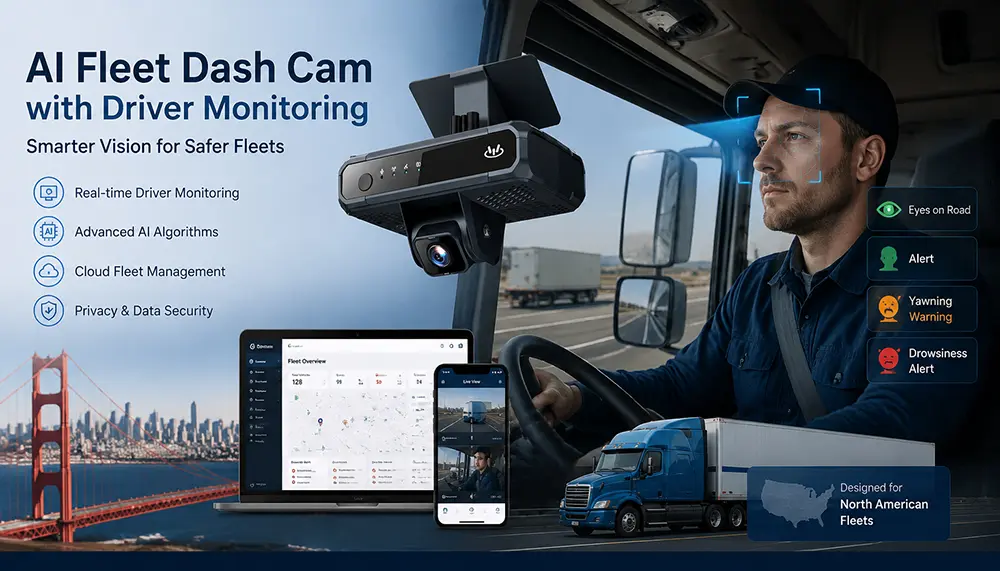
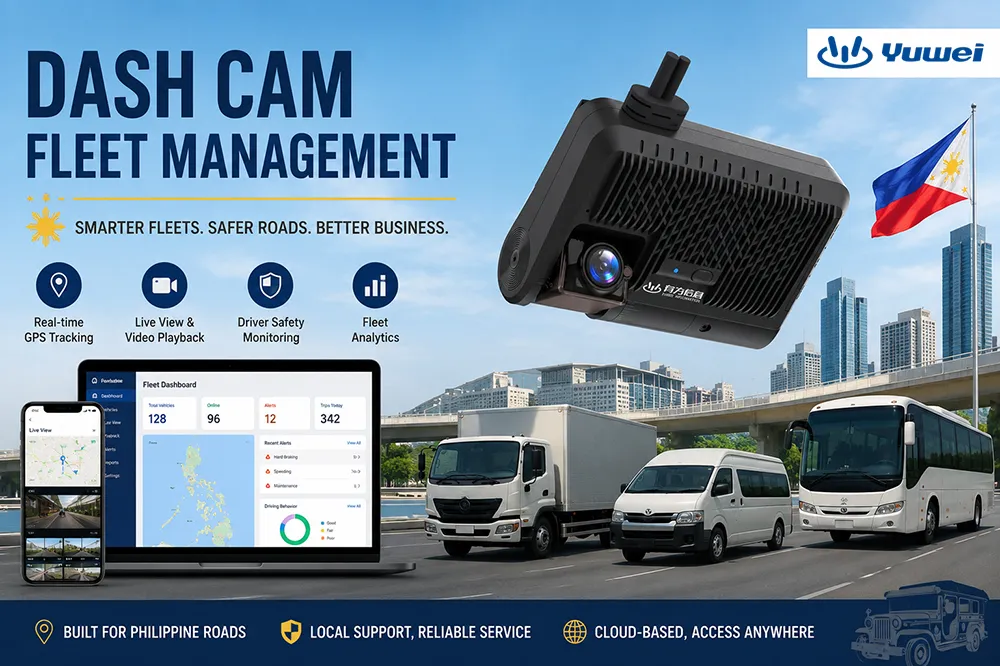
Recommended Equipment: YUWEI V5C Dual-Lens AI Dash Cam
YUWEI V5C is a highly cost-effective, all-in-one AI dash cam designed specifically for commercial fleets, perfectly matching the fleet management needs of the Philippines.
Core Specifications:
ADAS (Advanced Driver Assistance Systems): Lane departure warning, forward collision warning.
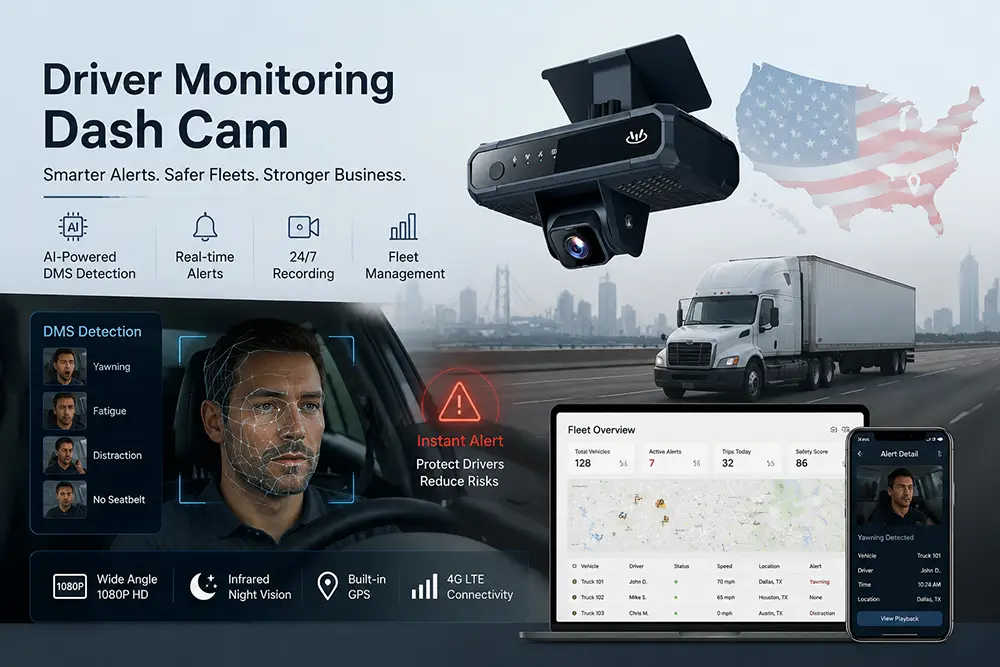
DSM (Driver Status Monitoring): Fatigue driving, distracted driving, smoking/phone call detection.
Face Recognition: Driver identity verification to prevent unauthorized driving.
G-Sensor Collision Detection: Supports HA/HB/HC detection (harsh acceleration/harsh braking/collision), automatically triggering recording and alarms.
Philippine Scenario Adaptation:Dual SIM Card Slots: Supports multi-operator switching to solve archipelago network coverage issues.
Wi-Fi Hotspot: 802.11 b/g/n, supports AP/STA modes for convenient on-site data export.
Two-Way Audio: Built-in microphone and 1.5W speaker; the dispatch center can communicate directly with the driver.
Tamper Alarm: Built-in tamper sensor; forced removal immediately triggers a backend alarm and uploads the last 1 minute of video.
Panic Button: Wired emergency alarm button for one-click reporting of unexpected events.
Deployment Advantages:Convenient Installation: Completed in 20 minutes, no rewiring needed.
Unified Multi-Vehicle Management: Supports unlimited vehicle access, grouping management by fleet/route/driver.
Open API: Provides standard interfaces for seamless integration with existing dispatch and fuel consumption systems.
Data Security: AES-256 encryption, local + cloud dual backup, supports automatic anonymous deletion within 15-90 days.
Certifications: CE, FCC, UKCA, NBTC certifications, complying with Philippine telecommunications and vehicle electronic equipment standards.
Applicable Scenarios: Logistics trucks, taxis, ride-hailing vehicles, buses, urban delivery vehicles, construction vehicles, tanker trucks, and all types of commercial vehicle fleets.
Top Fleet Management in the Philippines in 2026
Cloud Deployment vs. On-Premise Deployment
Cloud Deployment (SaaS) is the fastest-growing method in the Philippine market (CAGR 13.04%).
Industry-Specific Solutions
Logistics and Delivery
Pain Points: High fluctuation in e-commerce orders, inaccurate addresses, high cargo damage rate.
Solutions:
Smart route optimization to avoid Manila congestion.
Geofencing with automatic alarms for abnormal entry.
Electronic signature + photo receipt to reduce disputes.
Multimodal transport tracking for full cross-island visibility.
Public Transportation and Jeepney Modernization
Pain Points: Traditional jeepneys need replacement, non-transparent income.
Solutions:
Real-time arrival predictions, APP-based vehicle tracking.
Electronic payments + automatic revenue splitting.
Driving behavior monitoring to enhance passenger comfort.
Direct connection to LTFRB data for automated compliance.
Construction and Mining
Pain Points: Scattered equipment, high idle rates, fuel theft.
Solutions:
Automated equipment utilization statistics.
Liquid level sensors + abnormal fuel consumption alarms.
Remote reading of engine fault codes.
Construction site geofencing with out-of-bounds alarms.
Oil and Gas
Pain Points: High safety risks for tanker trucks, route confidentiality.
Solutions:
Real-time temperature and pressure monitoring.
Driver end only displays the current road segment; backend monitors the entire journey.
Electronic lead seals with alarms for illegal opening.
Automated carbon emission reports to meet DOE requirements.
FAQ
Is GPS tracking of employees legal in the Philippines?
Legal, but must comply with RA 10173 (Data Privacy Act):
Obtain written consent from employees in advance.
Clearly inform them of the tracking purpose, data scope, and retention period.
Tracking limited strictly to working hours (except for special security needs).
Data access is strictly limited to authorized personnel.
How much does fleet tracking software generally cost?
Monthly fees are typically PHP 1,500-5,000/vehicle. Small fleets (<20 vehicles) can choose the basic version (PHP 1,500-2,500/vehicle), while large enterprises can negotiate discounts. Cloud deployment is subscription-based; on-premise deployment requires additional server costs.
Cloud Deployment or On-Premise Deployment?
Cloud deployment is suitable for most Philippine enterprises:
No large IT investment required.
The provider is responsible for maintenance and upgrades.
Remote access, suitable for multi-island management.
Fastest market growth (CAGR 13.04%).
On-premise deployment is only recommended for: ultra-large enterprises, classified transport, and areas with perfect network coverage.
Which industries need it most?
Logistics and Delivery (E-commerce driven, fastest growing)
Public Transportation (Government-mandated modernization)
Construction and Mining (Scattered equipment)
Oil and Gas (High safety and compliance requirements)
BPO Enterprise Shuttles (Night shift safety needs)
How long does it take to see results?
1 Month: Data accumulation, establishing a baseline.
2 Months: Identifying issues (abnormal idling, route violations).
3 Months: Optimization takes effect, costs begin to drop.
6 Months: Full ROI turns positive.
The Philippine fleet management market is in an explosive growth phase. With stricter government compliance, surging e-commerce logistics, and maturing AI and electric vehicle technologies, early adopters will gain a significant competitive advantage.