






Telematics-based Fleet Management System
What is Fleet Management?
Fleet management is a core pillar of the real economy. It refers to the administrative control and strategic operation of an enterprise’s fleet vehicles, equipment, and professional drivers, covering administration, accident handling, maintenance, fuel management, asset management, driver safety, telematics, and compliance management.
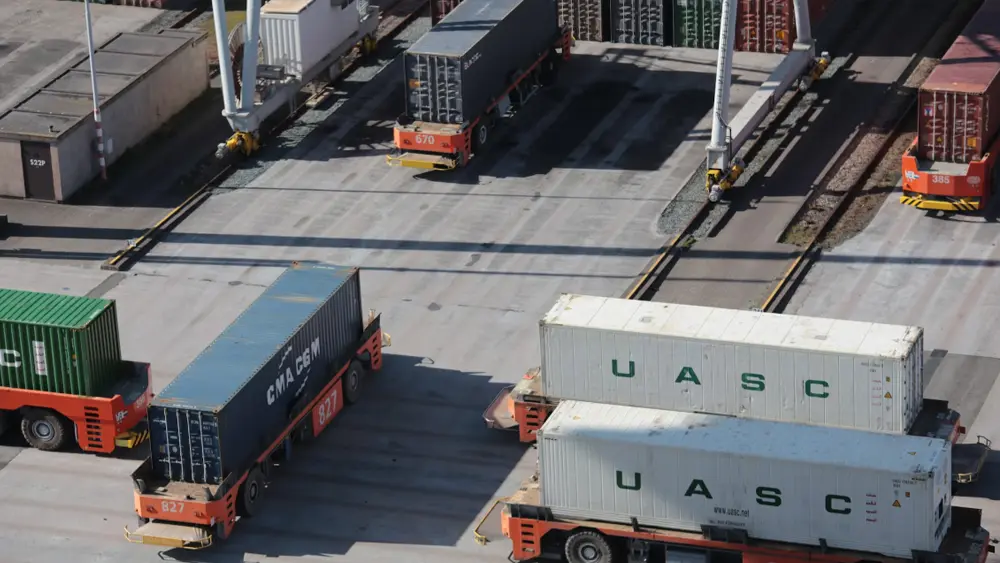
For enterprises with mobile assets, a reliable fleet management system enables them to control operational factors, reduce operational pressure, optimize operations, cut costs, and improve efficiency.
Importance of Fleet Management
1. Guarantee Operational Efficiency
Supervise vehicle logistics, maintenance, and procurement to ensure efficient operation, on-demand deployment, reduced idling time, and lower costs.
2. Ensure Compliant Operations
Help enterprises comply with industry regulations, safety, and environmental protection requirements, avoiding fines and operational restrictions.
3. Improve Customer Satisfaction
For enterprises relying on fleets, an efficient fleet is the key to quality services. For example, ATS leverages the system to achieve safe and on-time delivery of pharmaceuticals, and vehicle conditions demonstrate the professionalism of the enterprise.
4. Support Long-term Development
Ensure the smooth progress of daily processes, serving as an important foundation for the sustainable growth of enterprises.
Core Responsibilities of Fleet Managers
1. Driver Management
Responsible for driver recruitment and training, monitor performance and driving habits, and ensure compliance with safety regulations.
2. Cost Control
Formulate and monitor fleet budgets, covering fuel, maintenance, insurance, etc., while balancing efficiency and costs.
3. Vehicle Maintenance
Coordinate regular maintenance (e.g., oil changes) to ensure the safe and efficient operation of vehicles.
4. Fleet Tracking
Use GPS systems to obtain real-time vehicle locations and driver operation status.
5. Fuel Management
Monitor fuel consumption and reduce fuel costs through energy-saving driving and reduced idling time.
Major Challenges in Fleet Management
1. Rising Fuel Costs
Fluctuating oil prices increase expenses, requiring consumption control through route optimization and energy-saving driving.
2. Vehicle Maintenance Pressure
Ensure regular inspections and repairs to avoid operational disruptions, balancing costs and vehicle service life.
3. Complex Compliance Requirements
Adapt to updated environmental protection, tax, and transportation regulations to ensure full compliance.
4. Driver Safety Management
Supervise driving behaviors and conduct training to meet relevant requirements, which poses great management difficulties.
5. Sustainable Development Pressure
Transform to electric or hybrid vehicles, addressing issues related to charging infrastructure and costs.
6. Driver Recruitment and Retention
Facing a shortage of professional drivers, enterprises need to attract and retain talent through competitive salaries, benefits, and effective management mechanisms.
Fleet Management Software: A Technology-driven Solution
(1) Definition and Working Principle
Fleet management software is centered on telematics technology. Tracking devices installed on vehicles transmit real-time operation data to the cloud, which is then analyzed and visualized to provide data support.
The software features easy data access and user-friendly operation. It can display key metrics through customizable dashboards and set early warnings for important matters.
(2) Core Functions
1. Real-time Monitoring and Tracking
Visualize vehicle locations and status, helping dispatchers grasp the dynamics of mobile assets.
2. Task Scheduling and Route Planning
Optimize routes to improve efficiency and reduce invalid mileage.
3. Maintenance Management
Formulate regular maintenance plans and send automatic reminders to ensure timely execution.
4. Data Statistics and Analysis
Integrate relevant data to support decision-making.
(3) Core Advantages of the Software
1. Enhance Road Safety
Real-time GPS tracking and early warning functions regulate driving behaviors and reduce accident risks.
2. Improve Operational Efficiency
Automate scheduling and other tasks to reduce errors and enhance operational efficiency.
3. Reduce Operational Costs
Optimize routes and implement rational maintenance to cut costs and improve efficiency.
4. Ensure Compliant Operations
Help enterprises meet relevant standards and ensure operational compliance.
5. Strengthen Asset Supervision
Obtain real-time vehicle status to prevent theft and unauthorized use.
Introduction to YUWEI Truck Camera System
YUWEI Truck Camera System is a professional solution focused on improving fleet efficiency, ensuring safety, and controlling costs. It has been applied to logistics vehicles in more than 30 countries worldwide, with cooperative customers including well-known enterprises such as Yuxin Logistics, China State Construction Fourth Engineering Division Corp., Ltd., and China Resources Cement. The system is suitable for various vehicle types, including commercial trucks, semi-trailers, express delivery vehicles, and dump trucks.
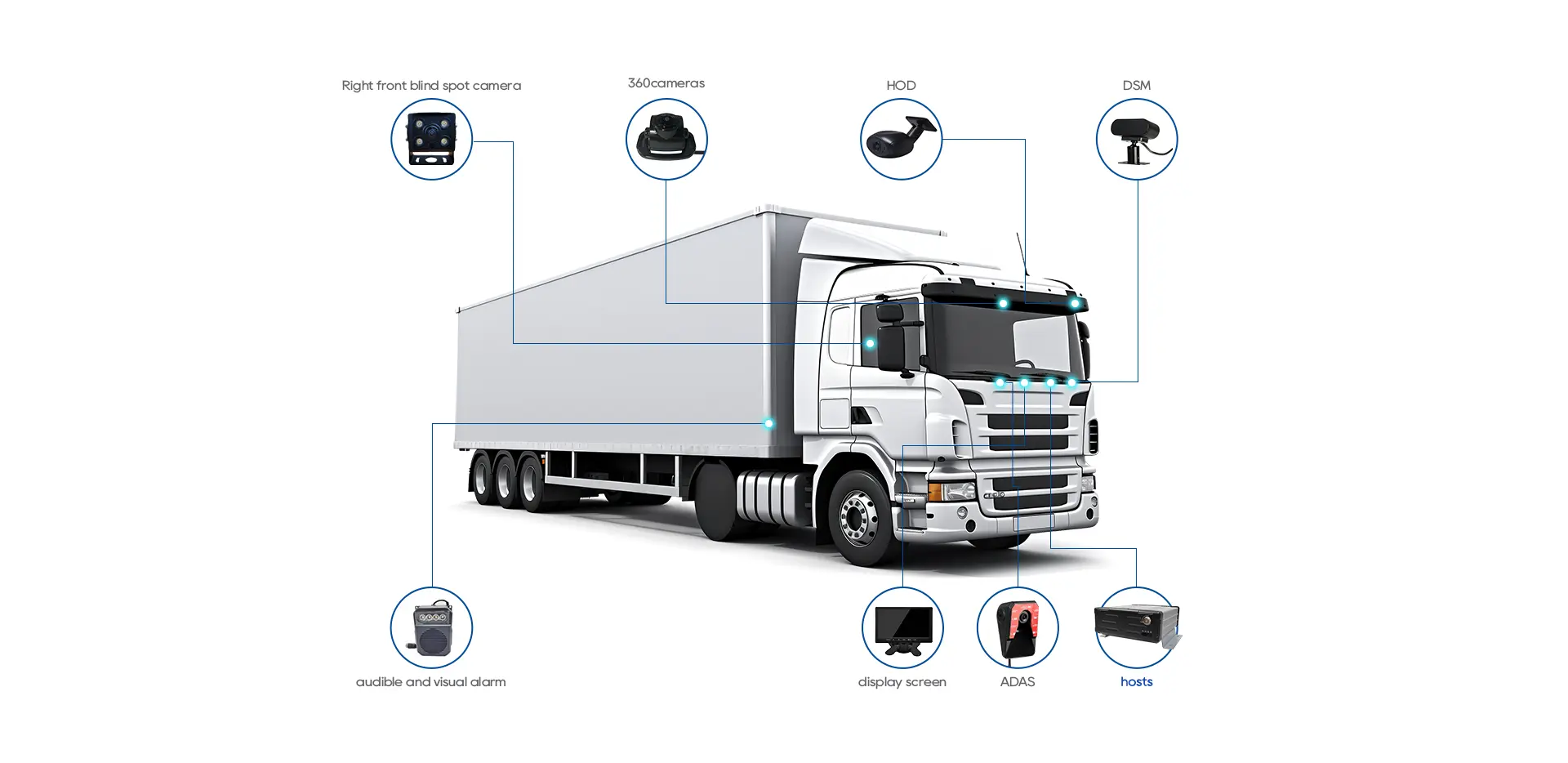
(1) Core Configuration
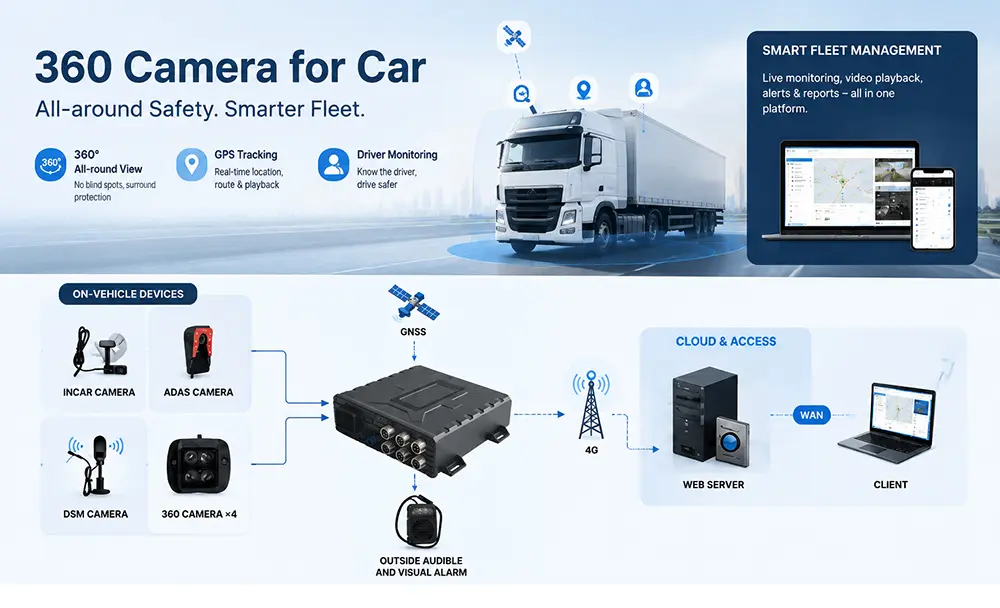
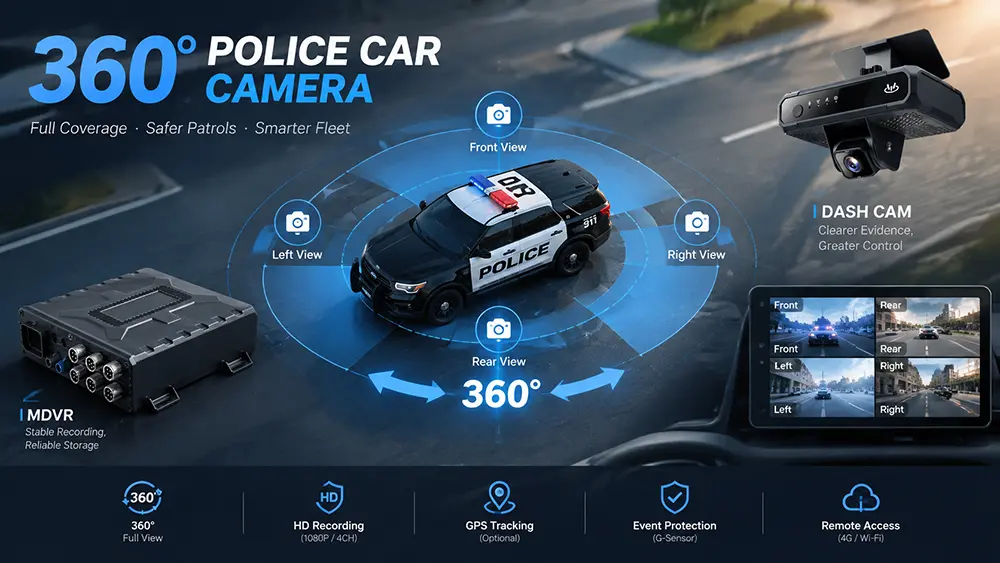
The system integrates GPS/BDS positioning, a main control unit, ADAS (Advanced Driver Assistance System), DSM (Driver Status Monitoring), HOD (Head-Up Display), multi-directional cameras (front/rear/right and 360° blind spot cameras optional), audio and video alarm, and load sensors (optional). It is also equipped with exclusive management software to achieve comprehensive monitoring and management.
(2) Key Functions
1. Accurate Positioning and Tracking
Obtain real-time vehicle locations via GPS/BDS and transmit data to the server, supporting route tracking and mileage statistics.
2. Driving Safety Assistance
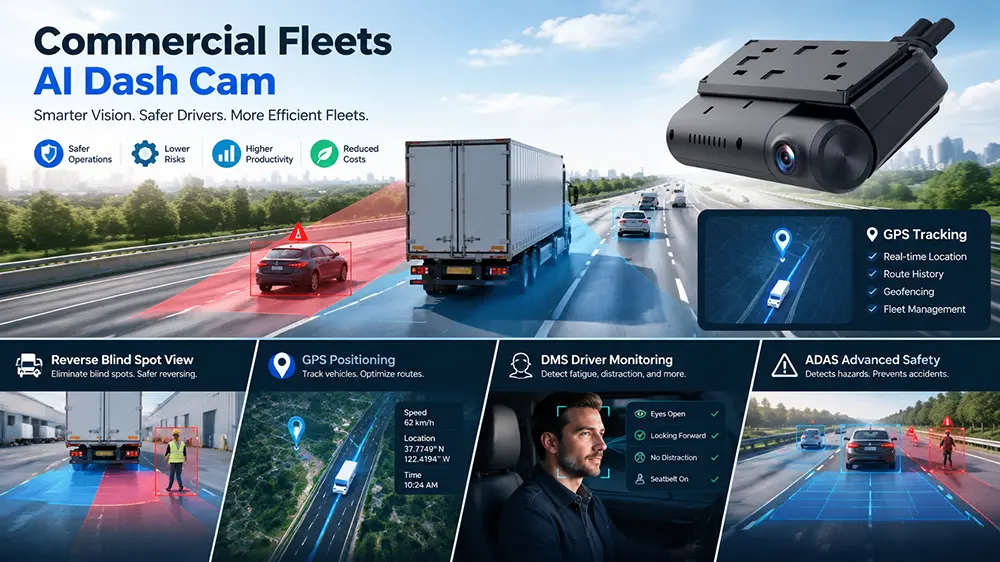
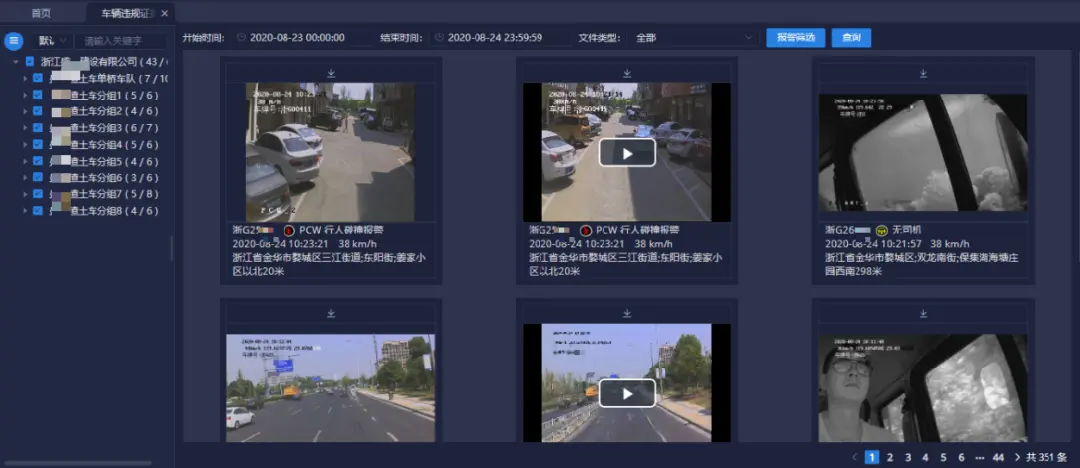
ADAS provides functions such as forward collision warning and lane departure warning. DSM uses facial recognition to detect dangerous behaviors including fatigue driving, distracted driving, smoking, and phone usage. HOD can detect steering wheel disengagement and seat belt wearing status, comprehensively avoiding driving risks.
3. Blind Spot Accident Prevention and Control
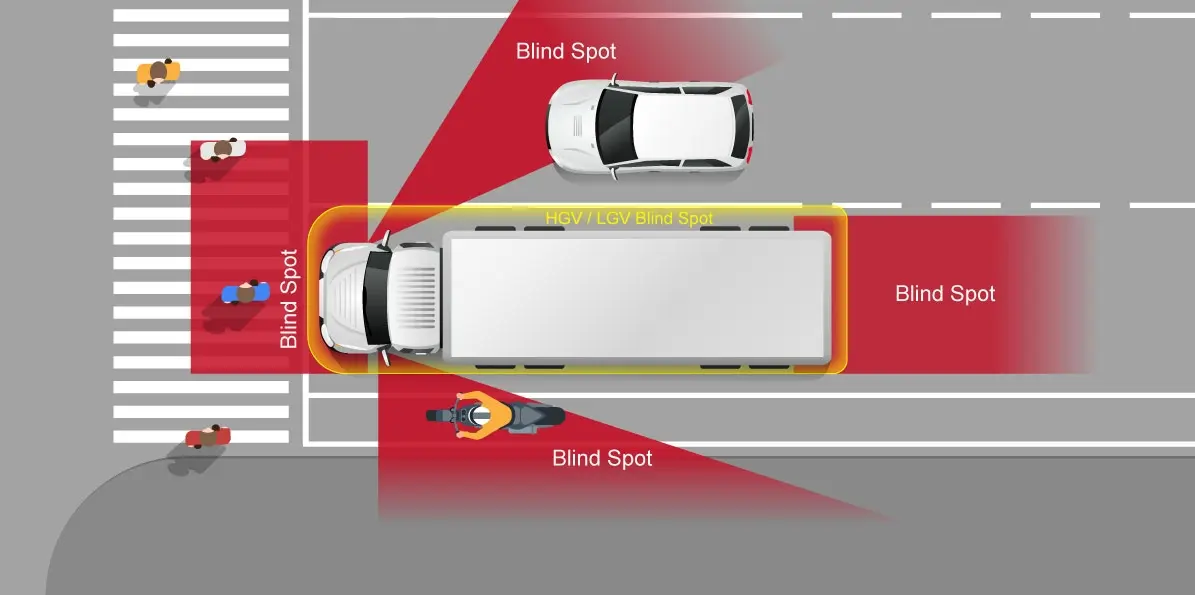
The BSD (Blind Spot Detection) system features wide coverage and accurate warning. It uses in-vehicle audio-visual prompts, external voice announcements, and light flashing to alert drivers and pedestrians to avoid blind spot hazards.
4. HD Video Recording and Storage
Supports 1080P HD video recording with night vision and wide-angle functions for clear and comprehensive image capture. It adopts cloud storage technology to store hours of footage, supporting streaming transmission and download, and providing strong evidence for insurance claims.
5. Intelligent Management and Data Support
The backend system enables waybill management, fuel monitoring, and vehicle operation status analysis, generating multi-dimensional statistical reports. It supports integration with third-party systems (e.g., vehicle electronic archives, risk control platforms) and can be secondary-developed according to enterprise requirements.
6. Emergency Support
Equipped with a one-click alarm function. In emergency situations such as extortion and robbery, drivers can quickly trigger the alarm and upload real-time locations, facilitating timely responses from managers.
Email:hello@yuweitek.com