










What is a Cloud-Based Dashcam and Security System?
Overview of Cloud-Based Dashcam and Security System
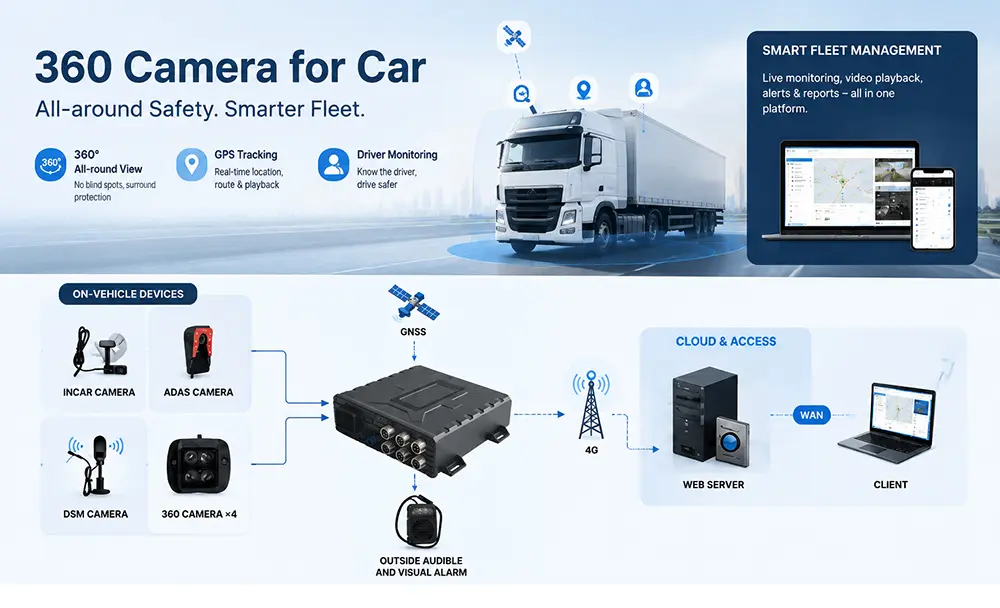
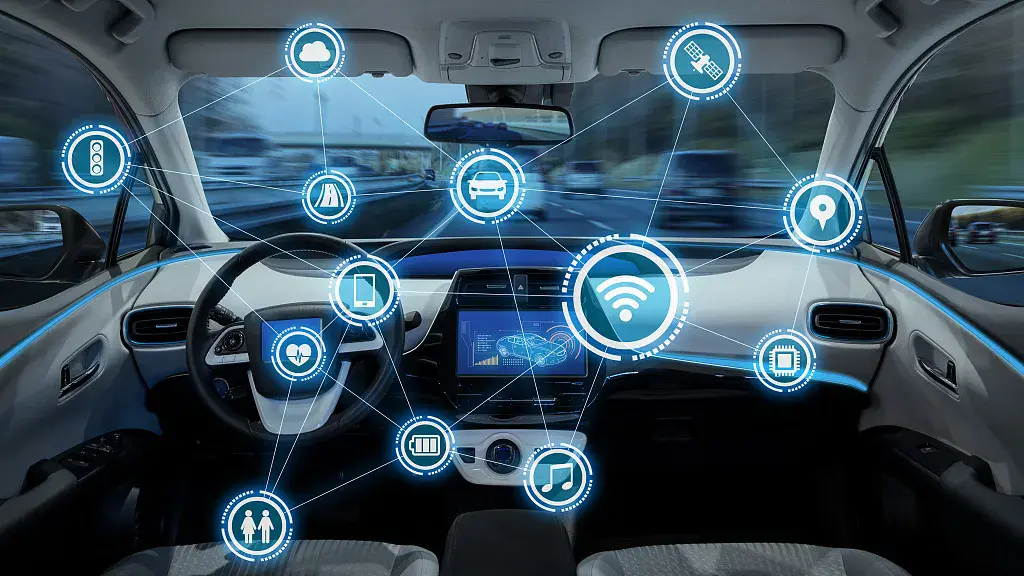
A cloud-based dashcam and security system is an advanced vehicle management solution that integrates the Internet of Things (IoT), cloud computing, and artificial intelligence (AI). Unlike traditional dashcams that rely on local video storage, this system collects vehicle operation data via on-board multi-functional sensors (including high-definition cameras, GPS locators, gyroscopes, and other sensors), and uploads the data to the cloud server platform in real time or near real time through mobile networks. Leveraging powerful computing capabilities and intelligent algorithms, the cloud platform completes data storage, analysis, and mining, and ultimately provides diversified safety monitoring and management functions for fleet managers, vehicle owners, and law enforcement personnel via web browsers or mobile applications.

Components of Cloud-Based Dashcam and Security System
1. Terminal Acquisition Layer
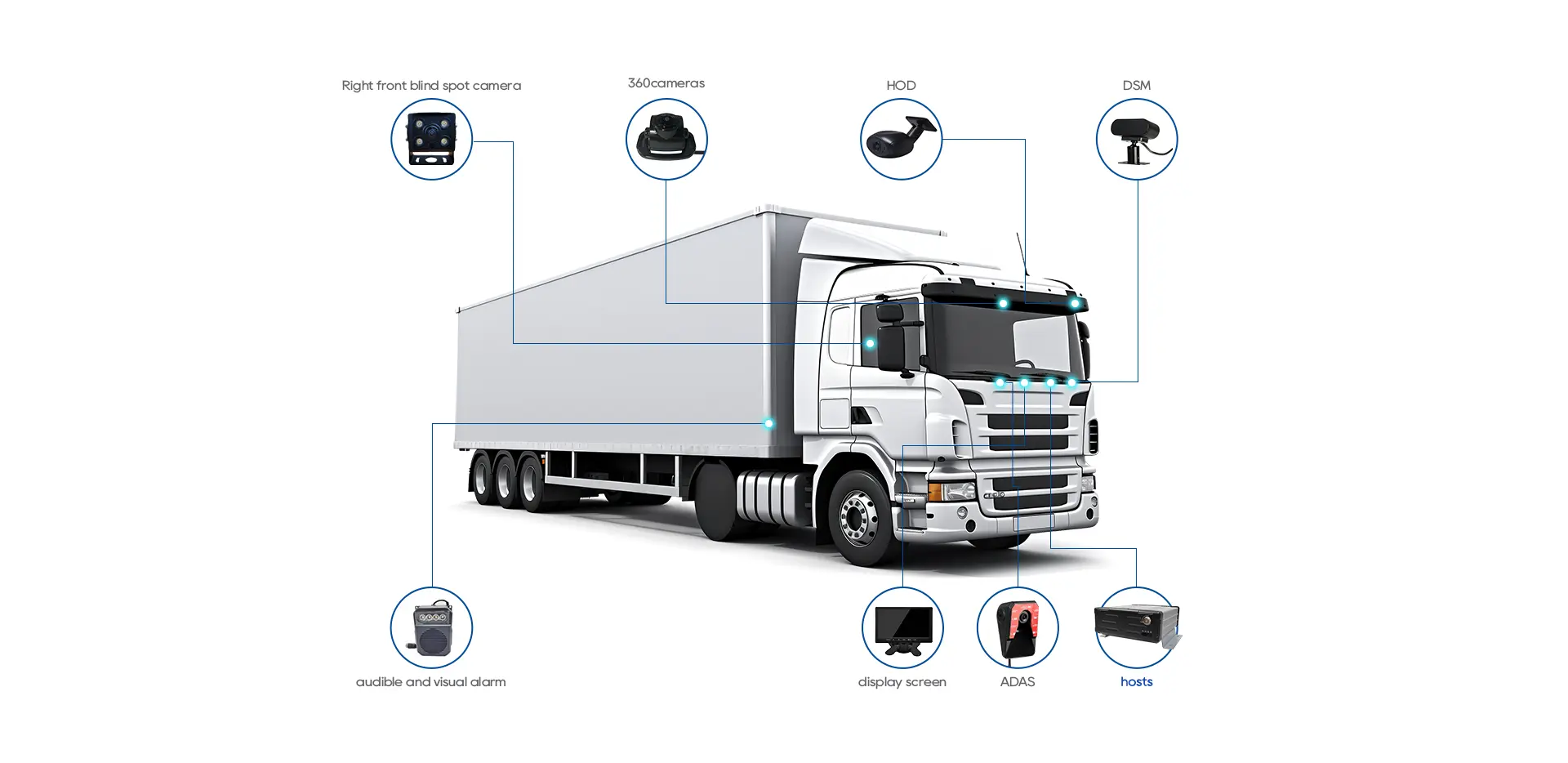
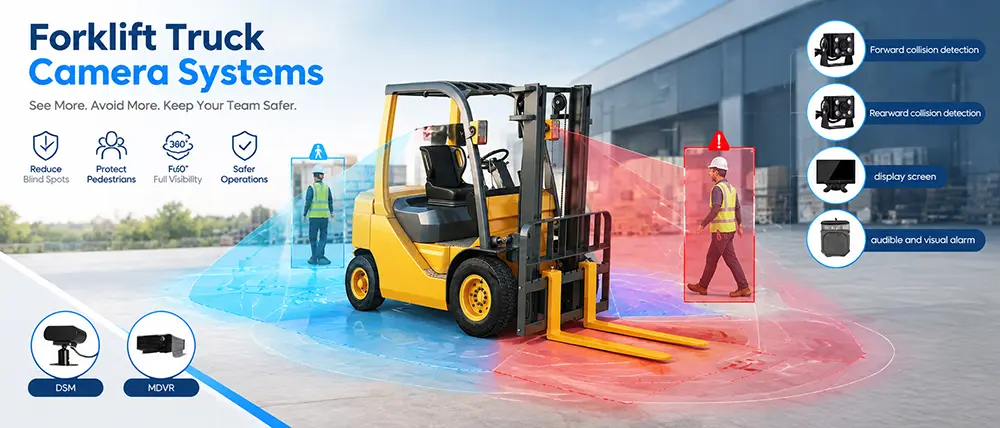
As the "sensory nerves" of the system, this layer is deployed on vehicles. In addition to multi-channel HD cameras (covering the front, interior, sides, and rear of the vehicle) and Mobile Digital Video Recorders (MDVR), it integrates GPS positioning modules, audio microphones, and gyroscope sensors (to detect sudden acceleration, sharp turns, collisions, and other statuses). High-end devices are equipped with edge computing capabilities to perform preliminary AI analysis.
2. Network Transmission Layer
Serving as the bridge for data transmission, this layer securely, reliably, and efficiently transmits terminal data to cloud servers via 4G/5G, Wi-Fi, and other technologies. Some systems are designed with contingency plans for network interruptions to ensure no loss of critical data.
3. Cloud Platform Layer
As the "brain" of the system, this layer is responsible for massive data storage (using distributed storage and multi-replica technology to ensure reliability), intelligent analysis (applying AI models for video analysis and driving behavior recognition), and application service output (providing real-time video viewing, track playback, report generation, and other functions). Meanwhile, a rigorous protection system is established to safeguard user privacy through data encryption and access control.
Differences from Traditional Dashcams
Feature | Traditional Dashcam | Cloud-Based Dashcam and Security System |
Data Storage | Local SD/TF card storage, prone to loss or damage | Dual backup (cloud + local), ensuring higher data security |
Function Focus | Post-incident evidence collection, passive recording | Proactive safety with pre-warning, in-process intervention, and post-incident analysis |
Data Application | Single-vehicle perspective, local viewing only | Multi-dimensional data fusion and analysis, supporting fleet management and big data insights |
Access Method | Data access requires removing memory card or direct device connection | Remote access anytime, anywhere via PC or mobile APP |
The system operates on a dynamic closed-loop process: terminals continuously collect vehicle operation and environmental data, which is then uploaded to the cloud via the network; the cloud platform processes the data in real time using algorithms such as Advanced Driver Assistance Systems (ADAS) and Driver Monitoring Systems (DMS). Once hazardous situations are identified (e.g., lane departure, forward collision risk, driver fatigue), the system immediately issues warnings to both the driver and the management center to enable rapid intervention. Meanwhile, all data is securely stored for subsequent analysis, report generation, and accident evidence collection.
Functions of Cloud-Based Dashcam
The cloud-based dashcam and security system integrates multiple functions to build a comprehensive, three-dimensional vehicle safety and management system.
2.1 Real-Time Monitoring and Cloud Video Recording
1. Real-Time Video Viewing
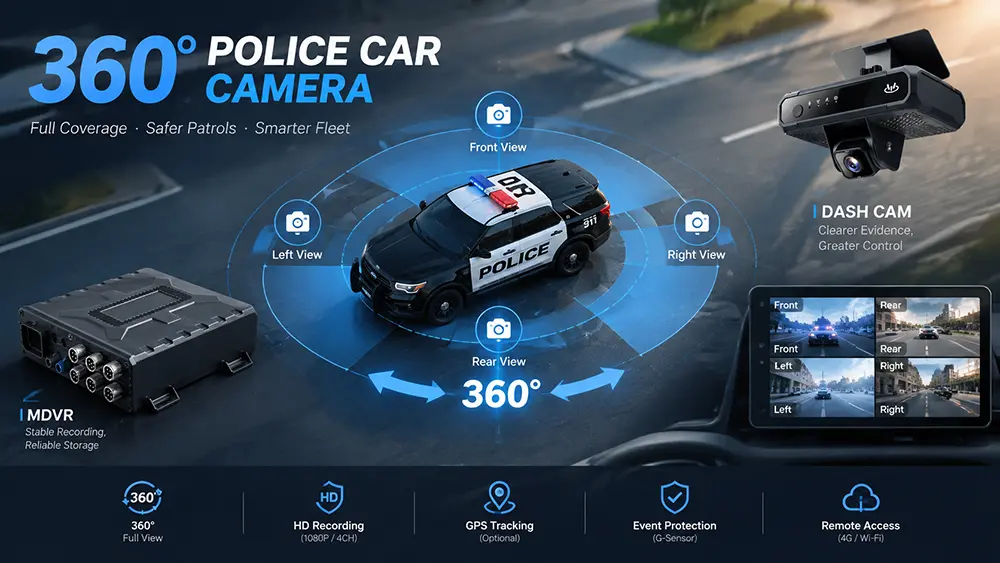
Fleet managers can retrieve real-time video feeds from inside and outside any vehicle at any time via computer or mobile APP. Some solutions support simultaneous viewing of multi-channel footage (front, rear, interior, blind spots, etc.) to achieve full-range monitoring.
2. 24/7 and Event-Triggered Cloud Recording
Two core recording modes are supported:
① Continuous recording: Uninterrupted video upload to the cloud, ensuring full-process record availability.
② Event-triggered recording: Automatic upload and locking of critical video segments before and after preset events (e.g., collisions, sudden braking), balancing evidence security with storage and traffic conservation.
2.2 Intelligent Analysis and Early Warning
Built-in AI algorithms are the core of achieving "proactive safety", with three key capabilities:
1. Advanced Driver Assistance System (ADAS)
Analyzes front-road video to provide real-time warnings for risks such as unintended lane departure, forward collision threats, and unsafe following distances, prompting drivers to correct their operations.
2. Driver Monitoring System (DMS)
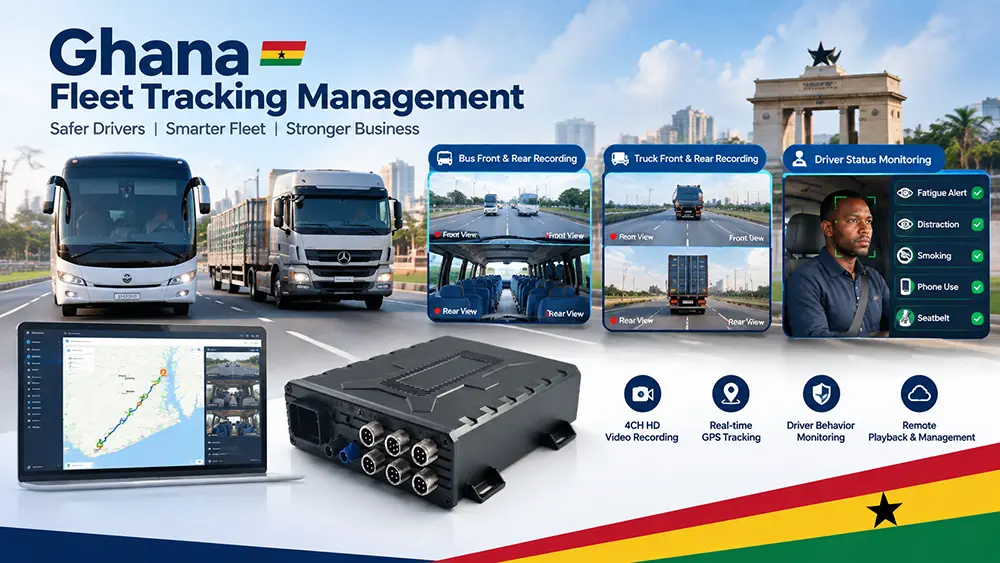
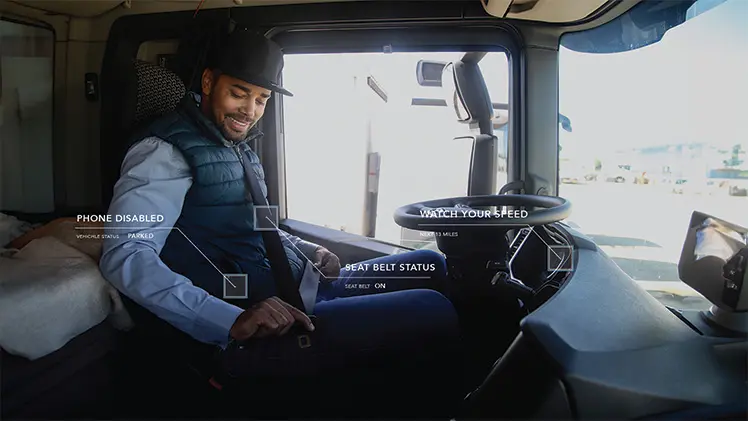
Uses driver-specific cameras to identify fatigue driving behaviors (yawning, prolonged eye closure) and distracted driving behaviors (head-down posture, mobile phone usage), triggering audio-visual alerts.
3. Blind Spot Detection (BSD)
Expands the field of vision via side cameras or radars to monitor vehicles or pedestrians in the rear-side blind spots during lane changes or turns, and issues timely warnings.
Function Module | Detection Targets | Example Warning Scenarios |
ADAS (Advanced Driver Assistance System) | Vehicle trajectory, distance to preceding vehicle, traffic signs | Unintended lane departure, failure to maintain a safe following distance |
DMS (Driver Monitoring System) | Driver's facial features, eye status, head posture | Fatigue driving, distracted driving (e.g., phone use) |
BSD (Blind Spot Detection) | Moving objects in the vehicle's rear-side blind spots | Presence of vehicles in blind spots during lane changes |
2.3 Data Security and Storage Management
Cloud storage establishes a complete security management mechanism:
1. End-to-End Encryption
AES-256 algorithm is applied throughout the entire data lifecycle (collection, transmission, storage) to prevent theft and tampering, ensuring privacy and data security.
2. Reliable Storage Architecture
Adopts distributed storage, erasure coding, and multi-replica technologies to avoid data loss caused by single-point failures. Some solutions integrate blockchain technology to store data hash values, ensuring data immutability and traceability.
3. Flexible Storage Policies
Users can set customized rules based on their needs, such as configuring retention periods for videos of varying importance, and intelligently adjusting upload strategies when bandwidth is limited, balancing real-time performance and data integrity.
2.4 Remote Management and Collaboration
1. Remote Configuration and Updates
Administrators can remotely and uniformly configure dashcam parameters and upgrade firmware, eliminating the need for on-site vehicle-by-vehicle operations and improving management efficiency.
2. Real-Time Communication and Dispatching
In the event of emergencies such as collisions, the system automatically pushes alarms and on-site video to the management center; the center can dispatch rescue resources and guide drivers in emergency handling via two-way voice communication.
3. Information Sharing
Traffic congestion information reported by vehicles (GPS location, vehicle speed, on-site photos) is uploaded to the cloud in real time and shared, helping other vehicles avoid congestion and improving overall traffic efficiency.
2.5 Driving Behavior Analysis and Compliance Reporting
Based on long-term driving data, the system generates quantitative reports that score and rate driver habits, and record the frequency of unsafe behaviors (e.g., sudden acceleration, sudden braking, speeding). The value is reflected in two aspects:
1. Precision Management
Managers can conduct targeted training and implement reward-and-punishment mechanisms based on the reports, optimizing driving skills, reducing accident rates, and cutting fuel and vehicle wear costs.
2. Compliance Automation
Automatically records and verifies the compliance of commercial vehicles with regulations regarding continuous driving hours and rest periods (in line with the EU Transport Package), generating reports and reducing administrative burdens.
Necessity of System Application
With the growth of vehicle ownership and the intensification of commercial transportation, traditional dashcams are no longer able to meet the requirements in terms of data security, management efficiency, and data value mining, leading to the emergence of cloud-based systems. The core advantages are threefold:
3.1 Data Security
Traditional dashcams rely on in-vehicle SD/TF card storage. In the event of vehicle fire, submersion, or theft, storage devices are vulnerable to damage or loss, resulting in the loss of critical evidence. Cloud-based solutions fundamentally solve this problem through cloud backup. Even if the dashcam is damaged, the data recorded at the time of the incident is already securely stored in the cloud, providing strong support for accident liability determination, insurance claims, and case investigation, achieving the ultimate guarantee of "data not lost with device damage".
3.2 Safety Management
For large-scale fleets such as logistics and passenger transport, the traditional manual method of checking memory cards is inefficient. Cloud-based systems enable centralized, automated, and remote management:
1. Centralized Monitoring
Administrators can monitor the real-time operation status and driver behaviors of the entire fleet from the command center, achieving "one-to-many" centralized control.
2. Proactive Warning
Transforms the management model from "post-incident accountability" to "pre-incident prevention and in-process intervention". When AI detects dangerous driving behaviors, it issues immediate warnings, potentially preventing accidents from occurring.
3. Automated Reporting
Driving compliance checks and behavior analysis reports are generated automatically, saving labor costs and improving the accuracy and objectivity of management.
Recommended Cloud-Based Dashcams
4.1 YUWEI V8N Intelligent Dashcam (High-End All-Round Model)
① Positioning: Targeted at commercial fleets with high security and high functionality requirements
② Core Features: Dual-camera integration (starlight-level wide dynamic front camera: 1080P, 139° wide-angle; 2-megapixel infrared interior camera: 720P, 180° wide-angle), supporting 4-channel recording; built-in ADAS, DMS, facial recognition, BSD, and aggressive driving detection; integrated 4G, Wi-Fi, and GNSS modules; dual TF card slots supporting up to 2TB × 2 storage; CAN bus data collection support; equipped with ultra-low power consumption mode and USB export interface.
③ Applicable Scenarios: Logistics transportation, dangerous goods transportation, high-end passenger transport, and other fields with stringent safety requirements.
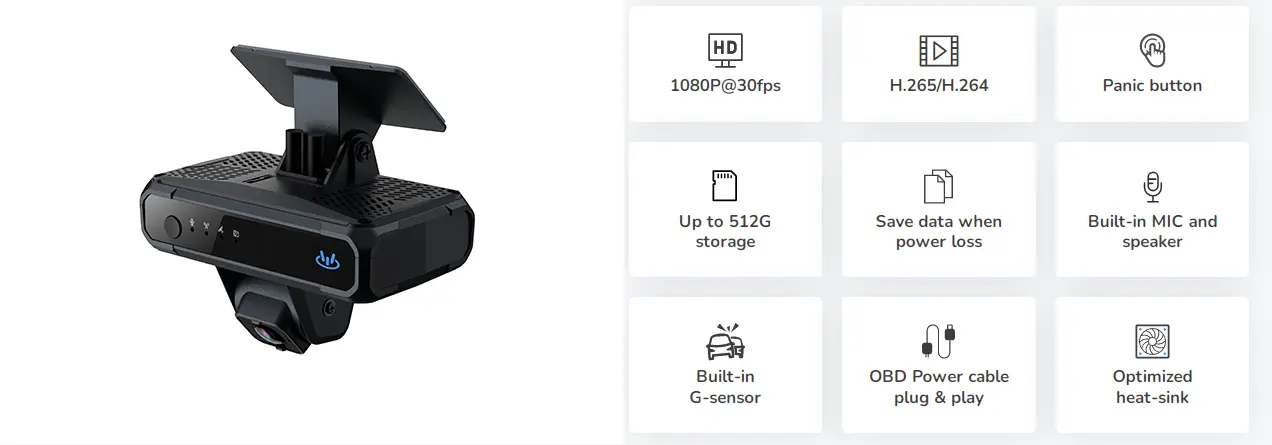
4.2 YUWEI V5C Dual-Lens AI Dashcam (Cost-Effective Option)
① Positioning: An economical and practical solution for small and medium-sized fleets
② Core Features: Compact dual-lens design (front camera: 1080P@25fps, 140° wide-angle; interior camera: 720P@25fps, 150° wide-angle); built-in ADAS, DSM, and facial recognition algorithms to meet basic monitoring needs; integrated full-network 4G, Wi-Fi, and BDS+GPS dual-mode positioning; supports mobile APP configuration, video playback and download, and real-time streaming; easy to install.
③ Applicable Scenarios: Urban distribution, ride-hailing services, taxis, small and medium-sized freight transport, and other budget-sensitive users.
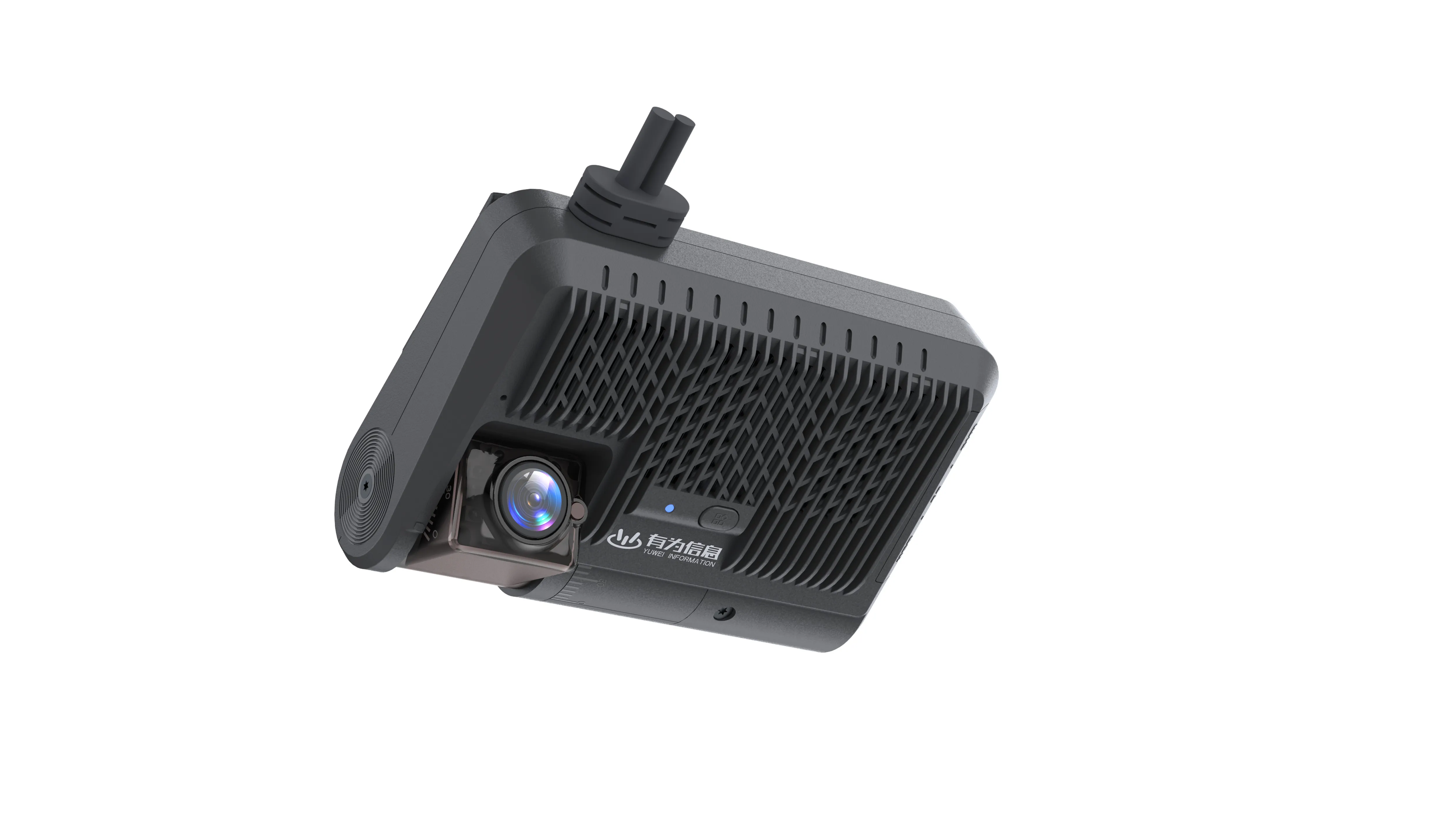
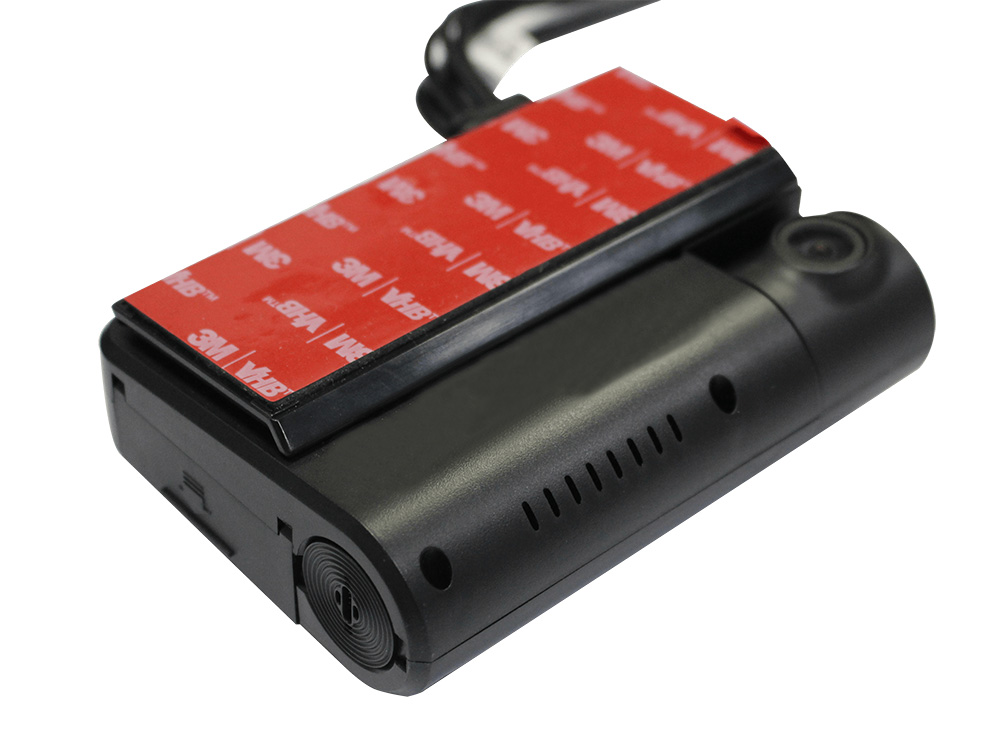
4.3 YUWEI V5 Intelligent Video Telematics Device (Entry-Level Model)
① Positioning: An entry-level product meeting basic video monitoring and fleet management needs
② Core Features: Supports 1-channel 1080P main camera + 3-channel external 720P cameras; compatible with JT/T808 communication protocol and JT/T1078 video protocol, supporting real-time viewing and remote playback; built-in facial recognition, mask-wearing detection, and passenger counting functions; dual TF card cyclic storage; encrypted file format ensures data security.
③ Applicable Scenarios: Ride-hailing services, taxis, urban distribution, official vehicles, and other primary users with strict cost control.
Functional Feature | V8N (High-End All-Round Model) | V5C (Cost-Effective Option) | V5 (Entry-Level Model) |
Video Quality | Front 1080P + Interior 720P, 4 channels | Front 1080P + Interior 720P, 2 channels | Main camera 1080P + 3 external 720P channels |
AI Safety Functions | ADAS + DMS + BSD + Facial Recognition + Aggressive Driving Detection | ADAS + DSM + Facial Recognition | Basic Facial Recognition + Passenger Counting |
Storage Expansion | Dual TF cards, up to 2TB × 2 | Single TF card, up to 1TB | Dual TF cards with cyclic storage |
Positioning System | GPS/BDS/GLONASS multi-mode | BDS + GPS dual-mode | GPS/BDS dual-mode |
Communication Capability | 4G + Wi-Fi + Bluetooth | 4G + Wi-Fi | 4G communication only |
Applicable Fleet Size | Large professional fleets | Small and medium-sized fleets | Small fleets / Entry-level users |
Applicable Fleet Types
The cloud-based dashcam and security system delivers significant benefits, especially for the following commercial fleets:
① Logistics Transport Fleets: Monitor cargo status, optimize delivery routes, standardize driving operations, ensure safe and on-time cargo delivery, and control operational costs.
② Passenger Transport Fleets: Monitor driver status to prevent fatigue and dangerous driving; supervise service quality, provide evidence for passenger disputes, and use passenger flow statistics to optimize scheduling.
③ Dangerous Goods Transport Fleets: Real-time monitoring of vehicle trajectories; automatic alarms for route deviations or abnormal parking to facilitate rapid emergency response.
④ Public Transportation Systems: Improve the service and safety levels of buses and taxis, supervise standardized operations, and provide evidence for complaint handling.
⑤ Car Rental Companies: Evaluate customer driving habits to assist with risk management and liability determination; provide tracking and evidence collection support in case of vehicle theft.
⑥ Insurance and Fleet Management Service Providers: Leverage the system to launch value-added services such as Usage-Based Insurance (UBI) and driving risk assessment, innovating business models.
Conclusion
Breaking through the single "video recording for evidence collection" function of traditional dashcams, the cloud-based dashcam and security system builds a comprehensive solution integrating proactive safety, efficient management, and data intelligence through the in-depth integration of cloud, terminal, and AI technologies.