













AI Dash Cam Driver Monitoring System
Why Do AI Dash Cams Need DMS?
In traffic accidents, the economic and life losses caused are extremely staggering. Research by the National Highway Traffic Safety Administration (NHTSA) shows that about 17% of fatal accidents involve accidents caused by drowsy driving; research by Zendrive further points out that about 26% of car accidents are caused by using a mobile phone while driving. Approximately 69 million American drivers use their phones while driving every day.
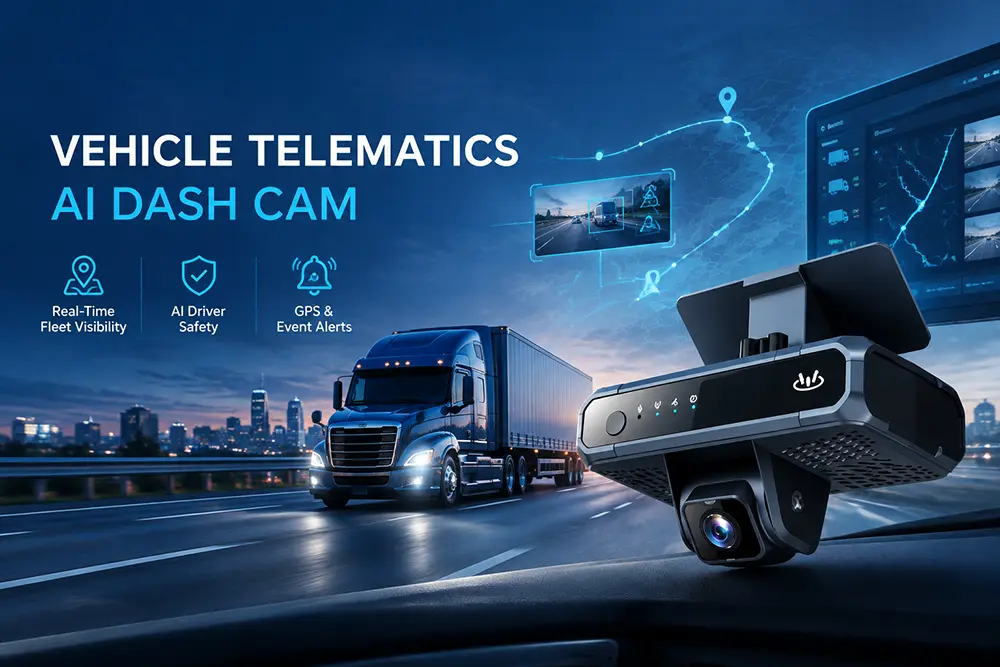
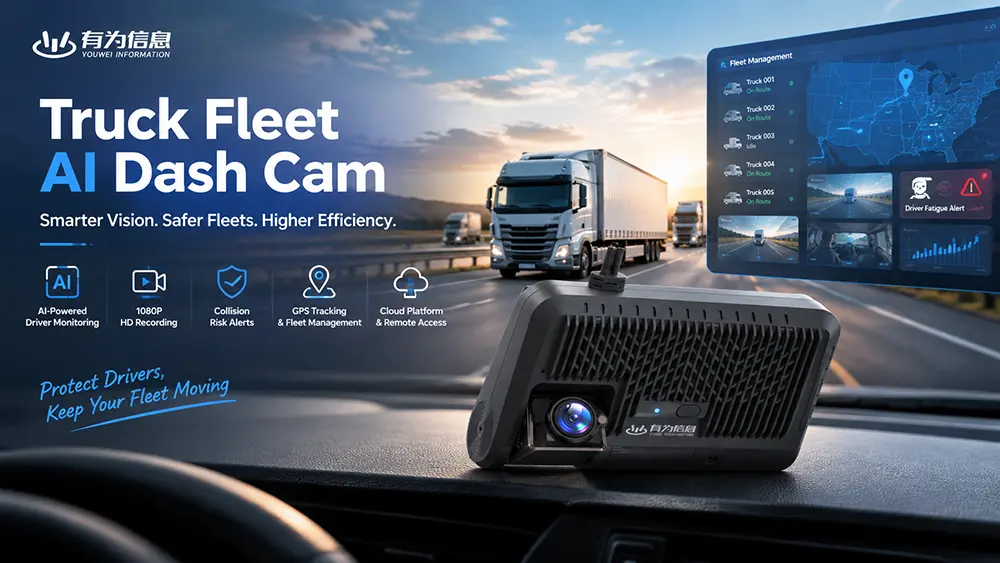
Traditional dash cams can only record passively, and problems can only be discovered during post-accident review. However, the AI systems of 2026 can analyze video streams in real-time and provide proactive early warnings before danger occurs.
hnweb_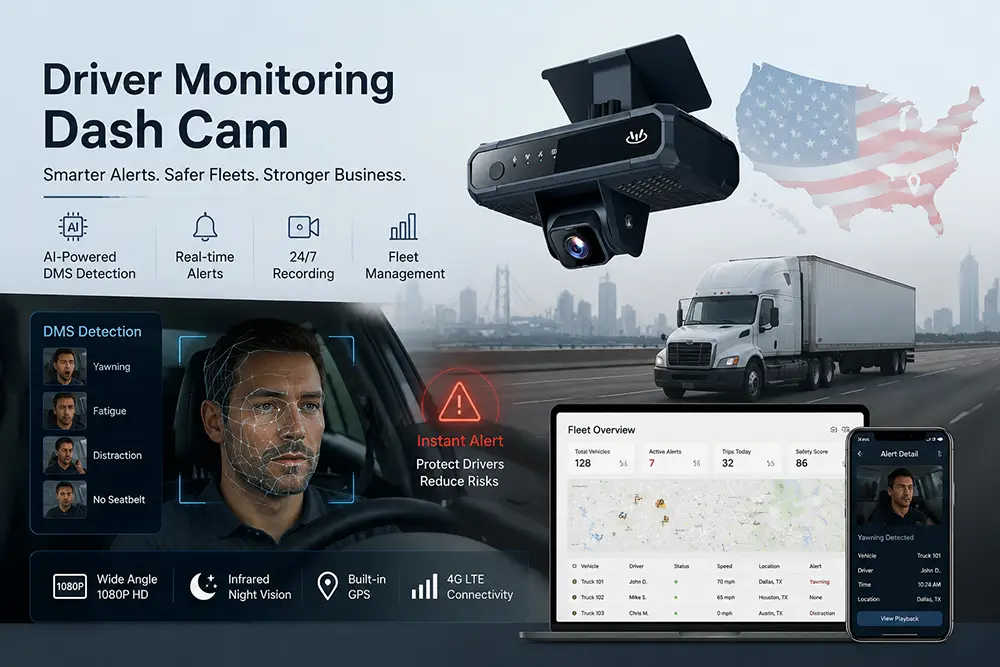
How Do AI Dash Cams Work?
System Architecture: Dual Cameras + Edge AI
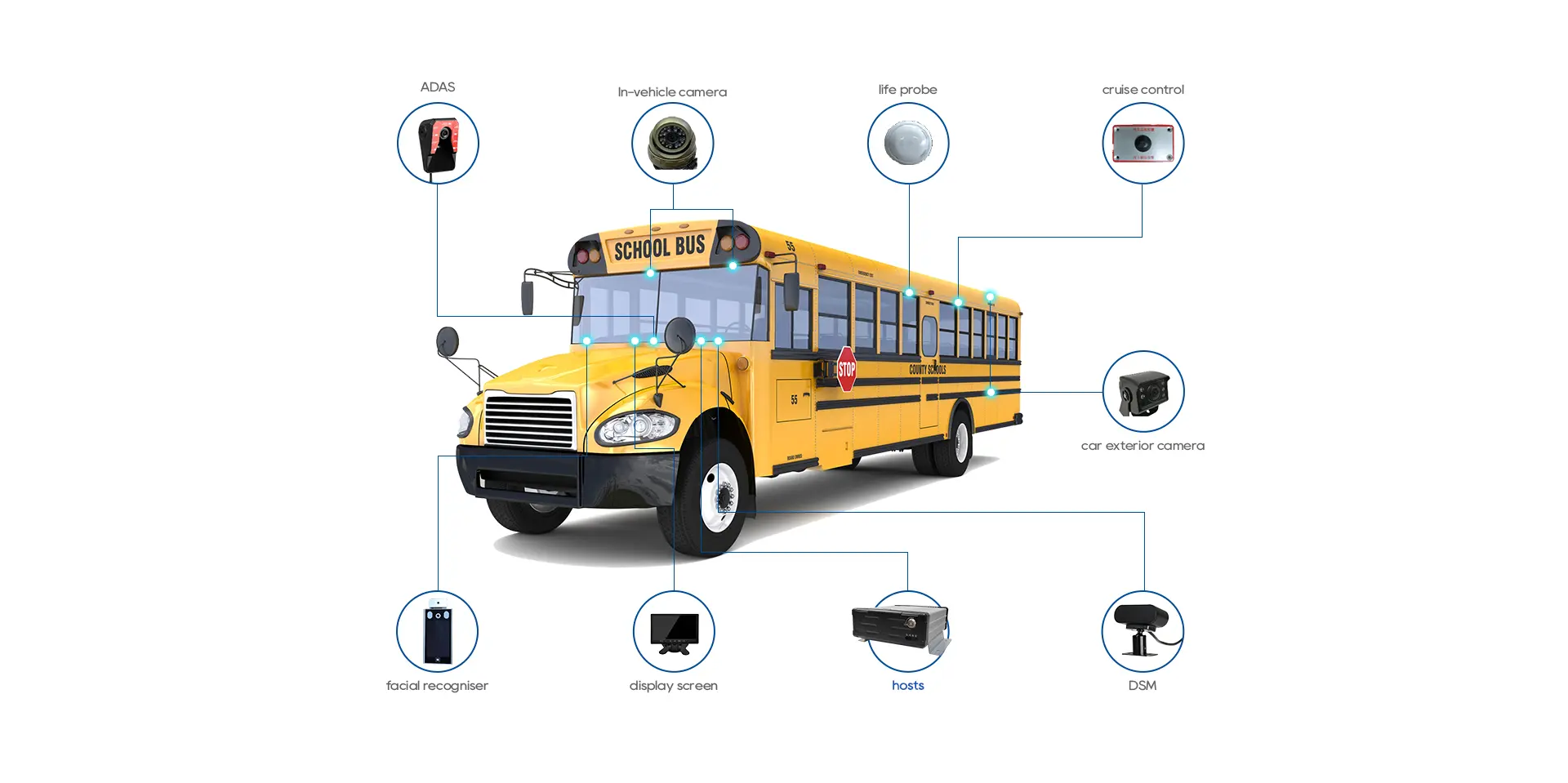
The AI dash cam monitoring system consists of two core components:
1.Road-facing Camera: Captures the environment ahead of the lane, supporting ADAS functions (Lane Departure Warning LDW, Forward Collision Warning FCW, etc.).
2.Driver-facing Camera: Faces the driver, utilizing AI to identify facial features, eye movements, and head posture to achieve DMS functions.
The core difference lies in: traditional cameras "only look but do not speak," while AI systems "understand what they see and react quickly."
DMS Driver Monitoring and Detection Capabilities
Major manufacturers' DMS systems can identify the following key risk behaviors and immediately trigger in-vehicle audio-visual warnings upon detection:
DMS System Workflow:
Infrared technology scans the driver's face → AI compares it with the initial baseline facial recognition → Detects micro-expressions such as eye movements, mouth changes, or yawning → Triggers dashboard warnings or audio reminders.
Mainstream Manufacturer Products
YUWEI (China)
YUWEI provides multiple DMS camera product lines, covering everything from entry-level to high-end commercial grades:
1.Basic Model: Streamlined, easy to install, and highly cost-effective; suitable for fleets deploying DMS for the first time.
2.Dual-channel Model: Monitors both the driver and road environment simultaneously, featuring built-in FCW + LDW.
3.High-end Model: High-definition wide-angle lens, advanced DMS sensors + AI chips, highly reliable under all lighting conditions.
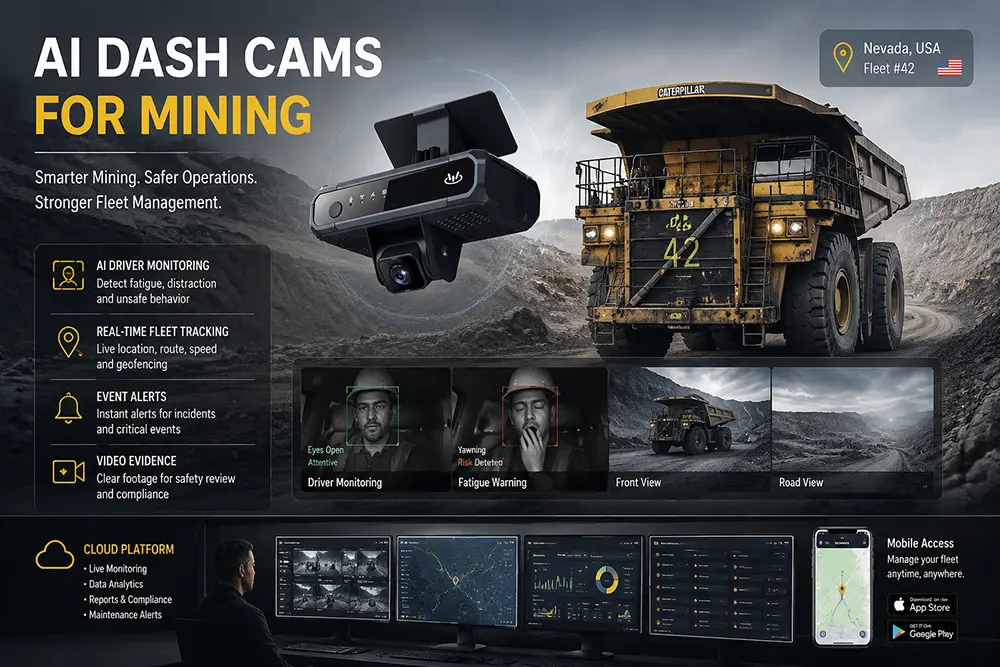
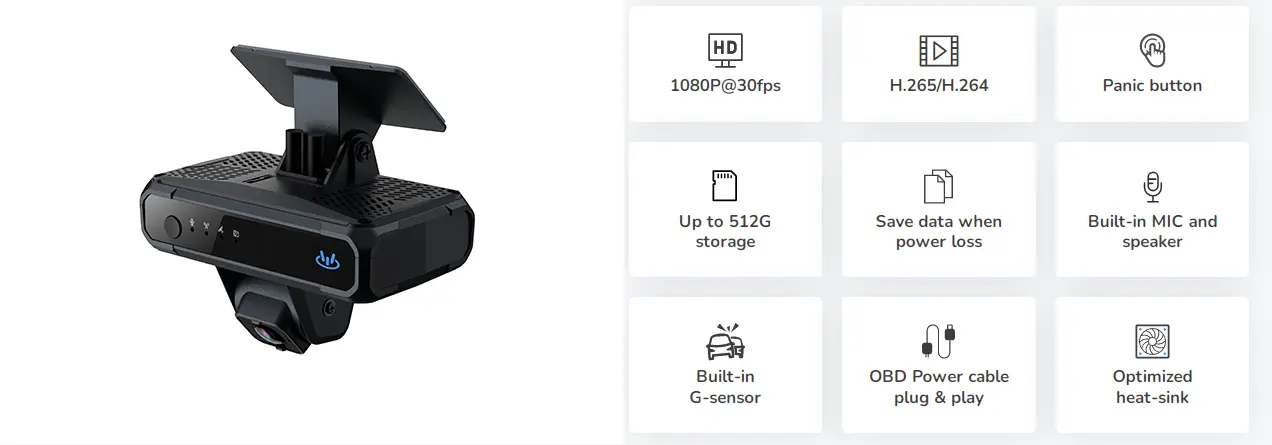
4.AI Smart Dash Cam: Integrates dash cam + ADAS + DSM into a 3-in-1 system.
5.Core Value: Not just a "witness" for accident evidence, but a proactive safety expert, reducing the TCO (Total Cost of Ownership).
Y13 DMS Camera
Product Features:
1.1/2.7" CMOS image sensor with 2 million pixels
2.AHD high-definition video output, providing a clear image
3.High sensitivity
4.Adaptive 3D digital noise reduction
5.Adapts to multiple algorithm scenarios
6.Supports a wide voltage supply of DC 9-16V
7.BMW connector
8.Adjustable and lockable lens pitch angle
9.High-temperature resistant, suitable for installation in automotive environments
10.Fixed with 3M adhesive/screws, making it convenient for installation
Installation Instructions:
When adjusting the angle during the installation process, please follow the steps below to prevent damage to the camera:
1.Connect the camera to the terminal to ensure that the camera device can capture the image normally.
2.Place the camera in the position to be installed and adjust the pitch angle of the camera to confirm that the shooting screen is normal.
3.Record the installation position and scale of the camera.
4.Keep the camera angle adjustment normal and tighten the buckle that fixes the viewing angle.
5.Remove the protective film of the double-sided tape and install the camera in the location recorded during debugging.
6.If there is a deviation in the up and down shooting angle of the camera after installation, repeat steps 2, 3, and 4 to fine-tune the pitch angle of the camera.
Conclusion
The AI dash cam + DMS of 2026 has evolved from a "video recording device" to an "active safety intelligent agent." They are no longer just tools for post-event evidence collection, but rather the "first line of defense" that proactively intervenes before danger occurs.
For fleet managers, the key is not "which one is the cheapest," but rather "which one can best integrate into the existing workflow, provide the most complete AI safety technology stack, and truly reduce risks in terms of total cost of ownership."
Email:hello@yuweitek.com