










Construction Equipment Fleet Management
Construction Equipment Fleet Management System
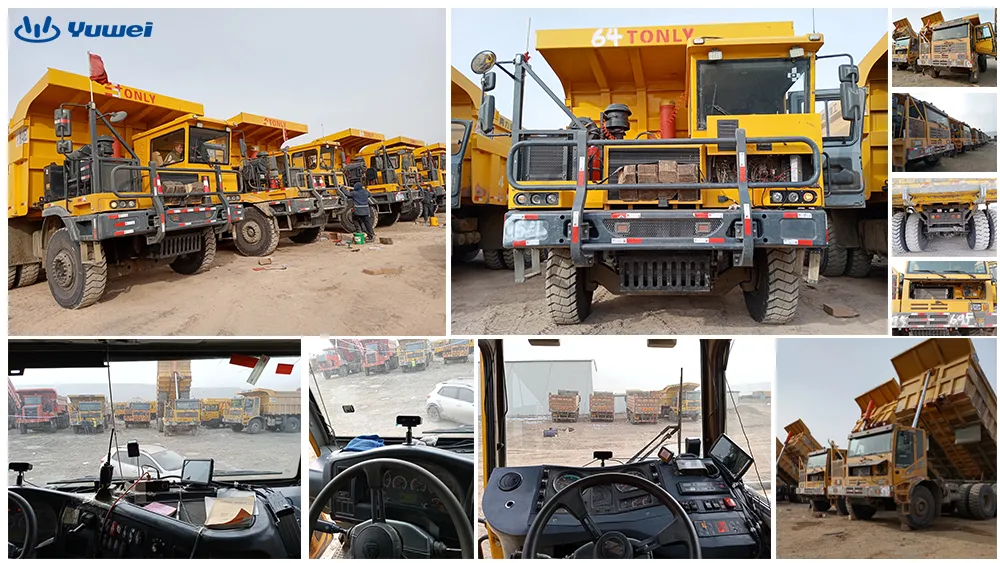
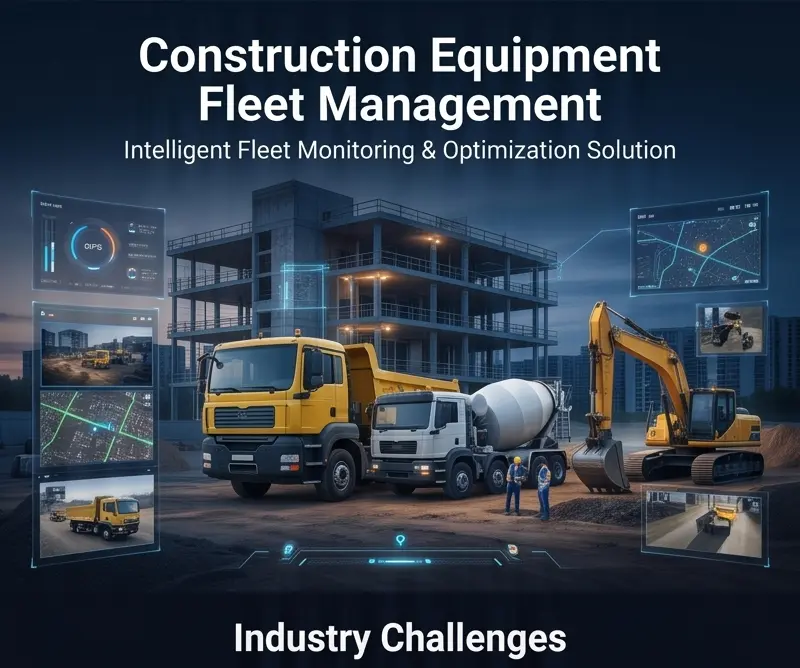
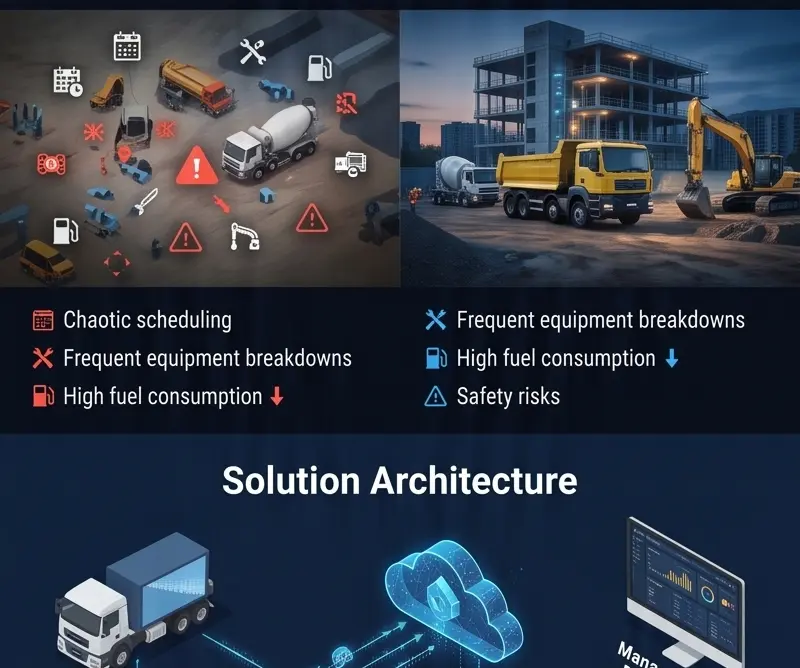
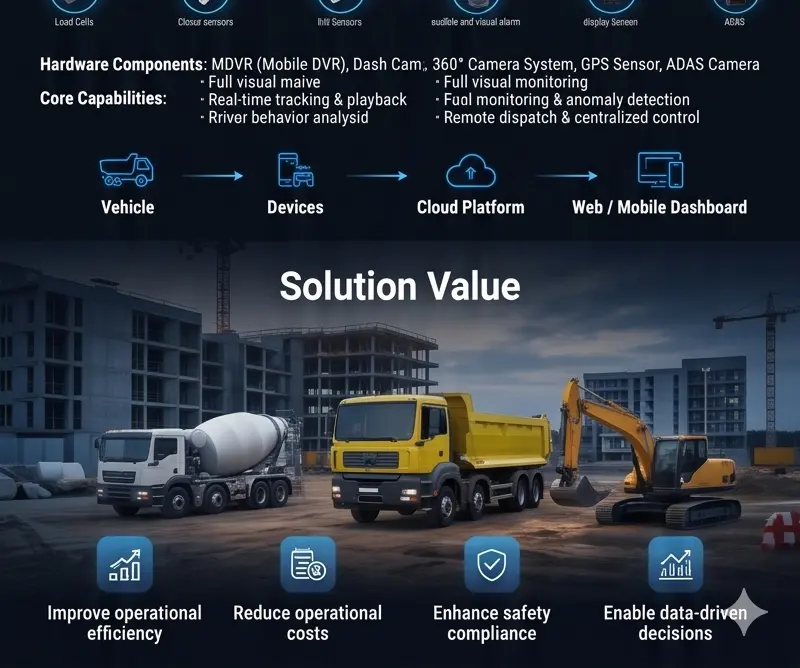
Chaotic scheduling on construction sites, frequent equipment breakdowns, high fuel consumption, and major safety hazards directly impact project schedules and profitability. The core of construction equipment fleet management lies in achieving precise scheduling and tracking management for construction equipment fleets by relying on video surveillance, DMS driver monitoring, telematics, and standardized processes.

Functions of Construction Equipment Fleet Management
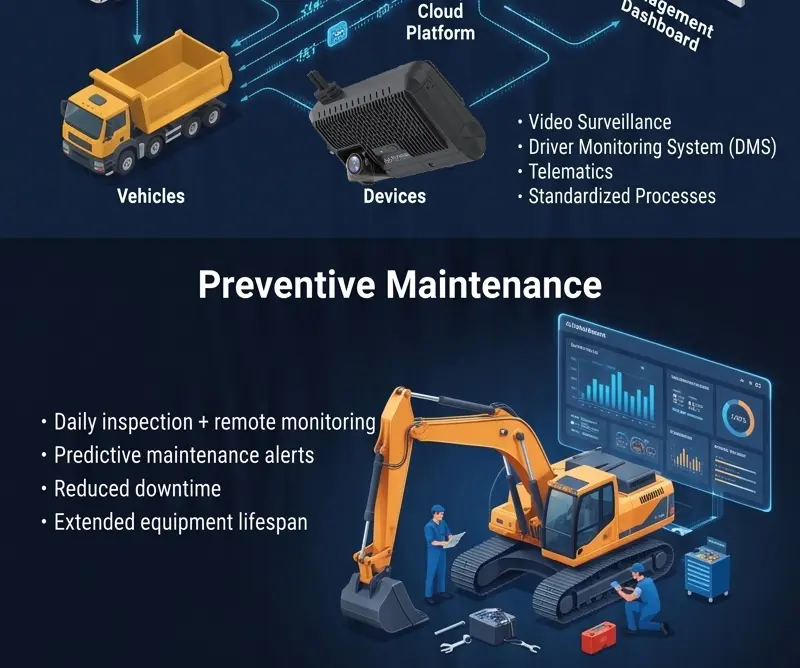
(1) Preventive Maintenance
As the foundation for the efficient operation of construction equipment fleets, telematics enables maintenance reminders, reducing downtime risks and extending equipment service life:
• Integration of daily inspections and remote monitoring: Operators check oil, tires, and safety devices before shifts, while the remote system synchronously collects operating data for dual hidden danger detection.
(2) Intelligent Video Surveillance System
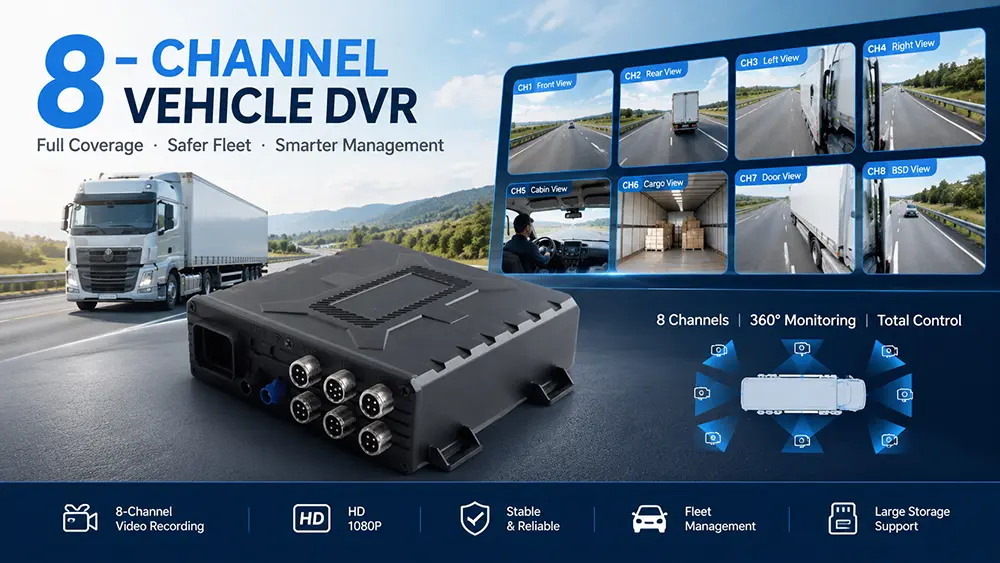
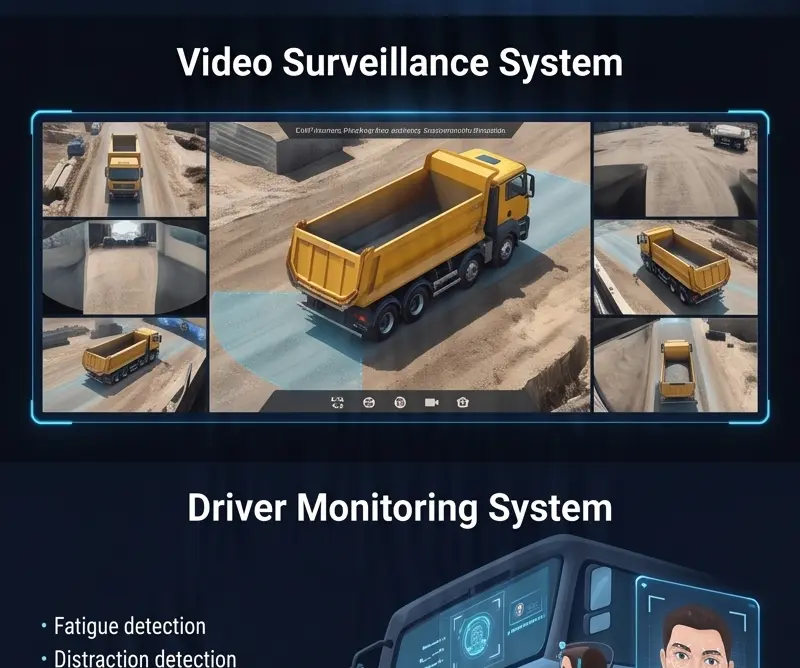
Video systems (360° panoramic view, reversing camera) eliminate blind spots, reduce accidents, and ensure traceable operations, serving as core hardware for safety management:
• 360° Panoramic Camera: Eliminates full-area blind spots
Addressing the limited visibility of engineering vehicles, the system captures the surrounding environment and stitches panoramic images to clearly display personnel and obstacles, avoiding collision risks. It is suitable for narrow construction sites and densely populated areas.
• Reversing Camera: Enhances rear protection
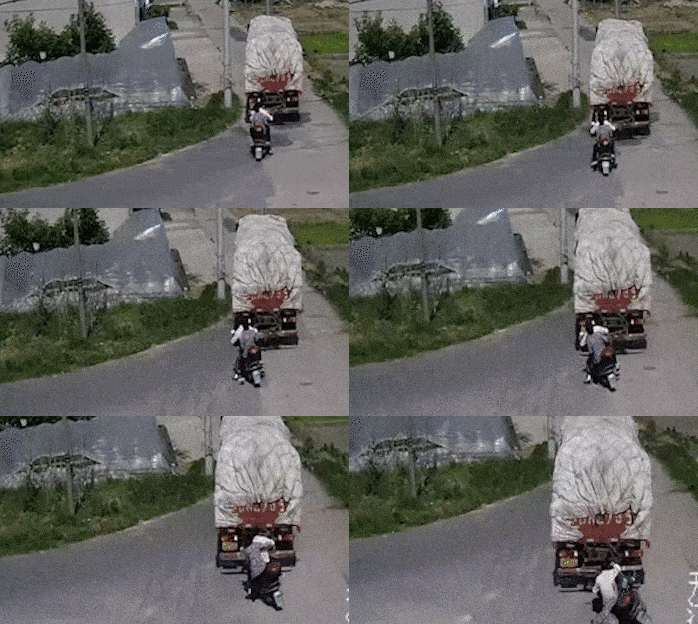
Engineering vehicles have large reversing blind spots. The camera transmits real-time rear footage with audible and visual alerts to remind drivers to avoid personnel and equipment, reducing reversing accidents and losses.
• Real-time monitoring and evidence retention
Some video systems support live streaming, recording, and playback, enabling remote operation monitoring and video evidence preservation for accident traceability and standardized operation.
(3) DMS Driver Monitoring System
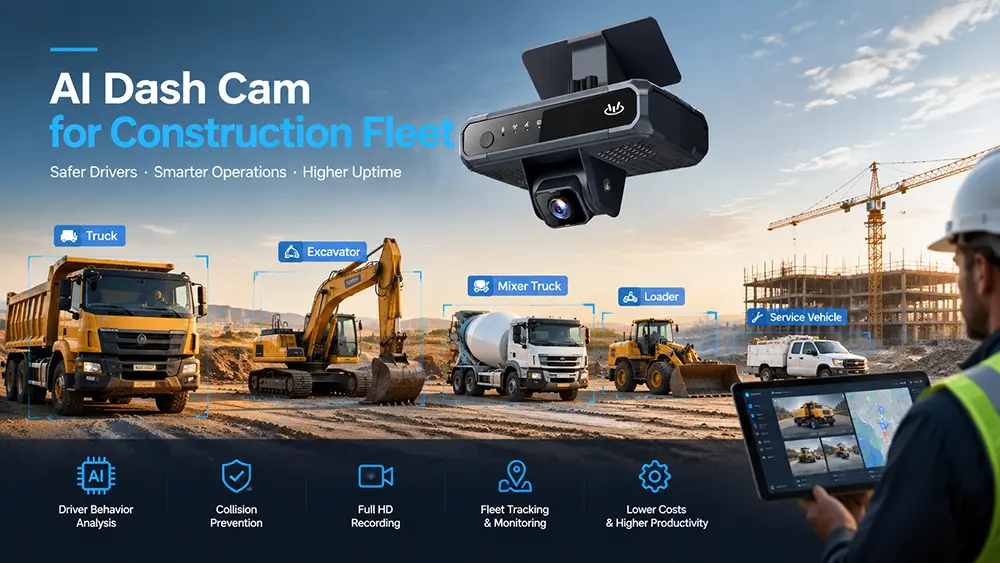
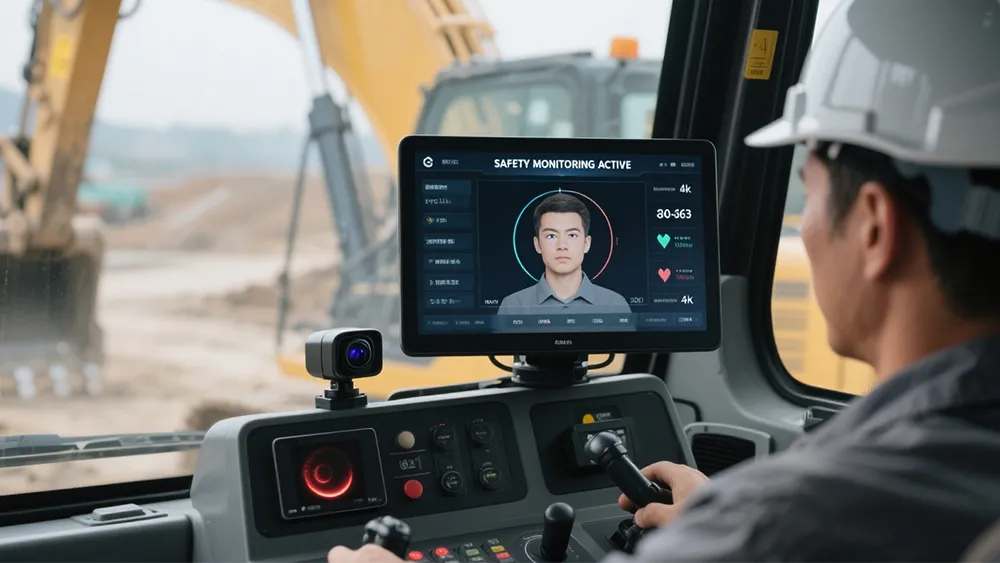
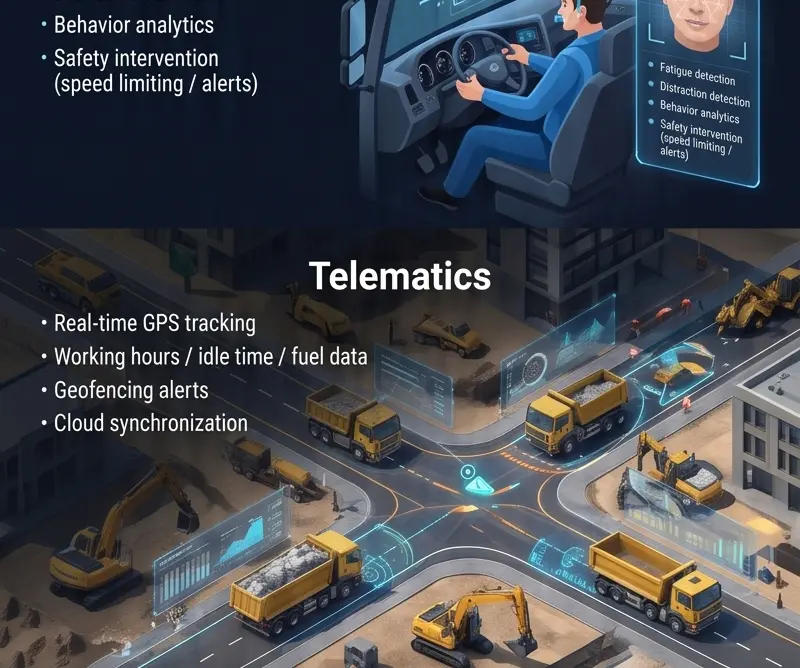
Drivers are the core of fleet safety. Through intelligent recognition, DMS monitors driver status in real time, eliminates violations such as fatigue and distraction, and prevents risks at the source:
• Real-time status monitoring: DMS captures facial features via cameras to identify fatigue and distracted driving, issuing real-time audible and visual alerts to guide standardized operations.
• Data recording and analysis: Automatically records violation data and generates analysis reports, providing a basis for training and assessment to strengthen safety awareness.
• Linked safety control: Some DMS can connect with vehicle control systems, limiting speed or prohibiting startup in case of serious violations, and synchronously pushing alarms for real-time intervention.
(4) Telematics Technology
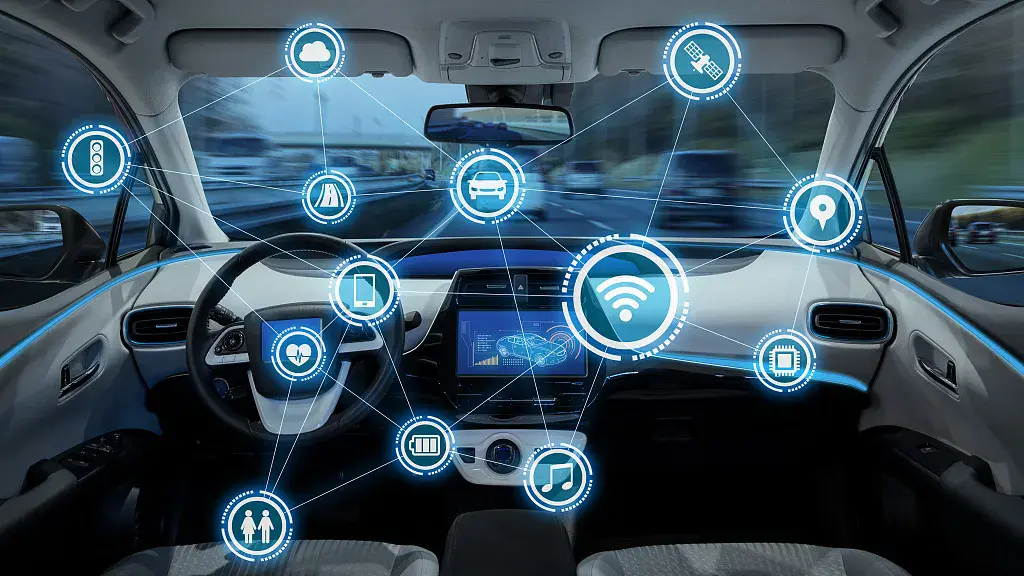
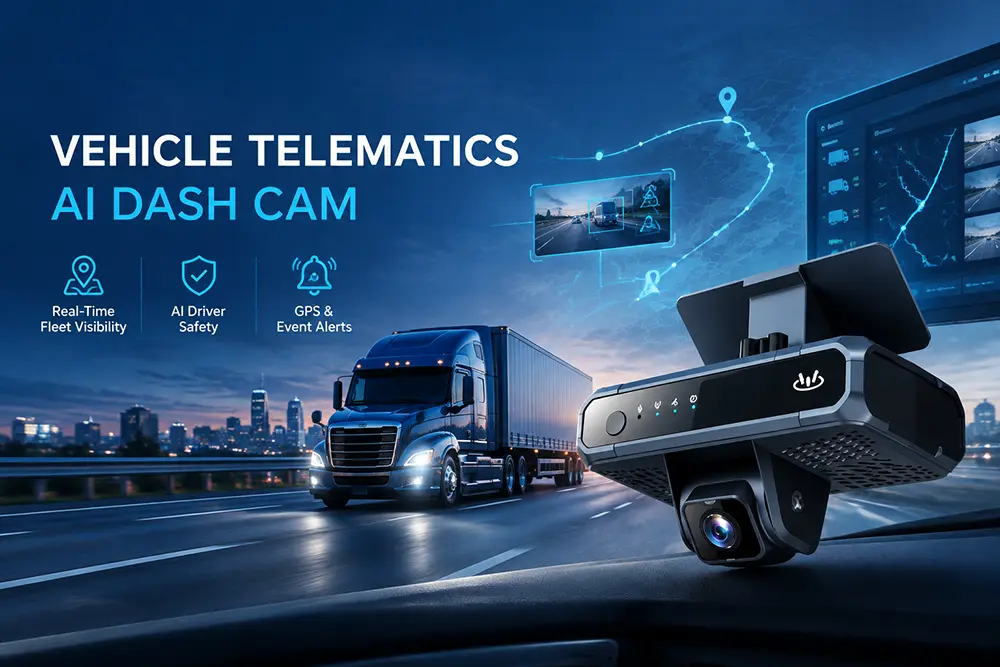
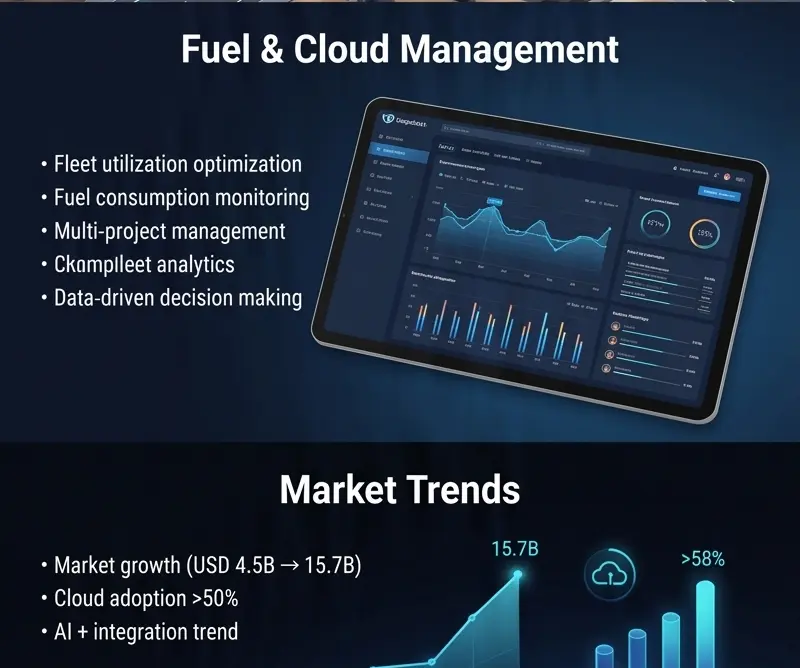
Telematics is the core of digital management. It integrates GPS positioning, data collection, and cloud transmission to connect the entire chain and achieve full-domain visual control:
• Real-time positioning and scheduling optimization: GPS satellites monitor equipment locations around the clock. Managers view assets via the cloud and mobile APPs, optimizing routes and reducing empty-drive fuel consumption.
• Operating data collection: Automatically records working hours, idling time, fuel consumption, and other data, identifies inefficient idle assets, issues equipment abnormality warnings, and cooperates with maintenance to reduce costs.
• Security and anti-theft control: Sets up electronic fences to trigger alarms for equipment boundary crossing or illegal startup. Combined with video surveillance, it quickly handles theft, robbery, and unauthorized use.
• Cloud-integrated management: Data synchronizes to the cloud platform, supporting multi-terminal access. It allows remote data viewing and report generation for centralized control of multiple projects.
(5) Fuel Management
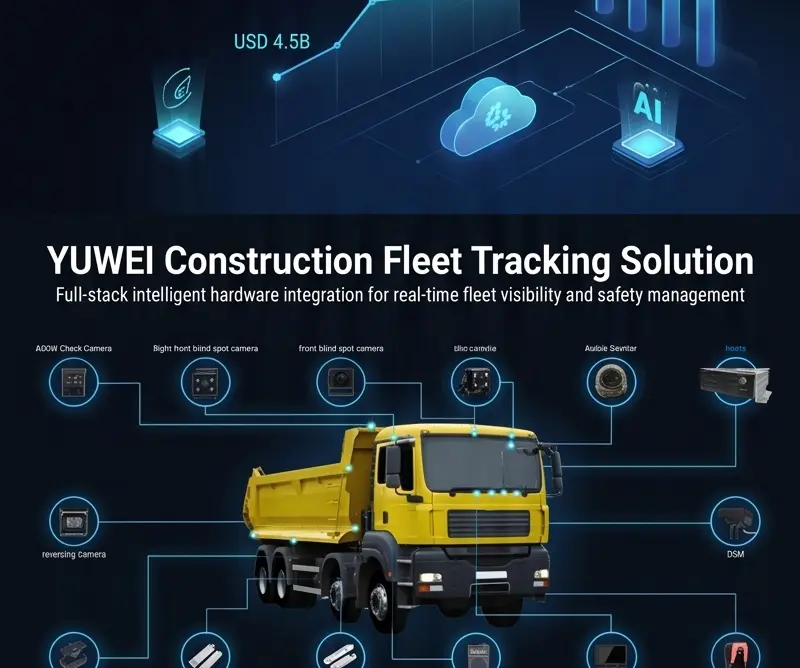
Combined with remote data, it optimizes asset allocation and fuel management to cut operating costs:
• Asset allocation optimization: Remotely monitors equipment utilization, evaluates demands and formulates plans before projects; redeploys equipment across projects to reduce idle time; regularly reviews and disposes of idle equipment.
• Refined fuel management: Remotely monitors fuel consumption to locate high-consumption equipment and inefficient operations; optimizes work plans, explores alternative energy sources, and prevents fuel theft via video surveillance.
Fleet Remote Cloud Management Platform
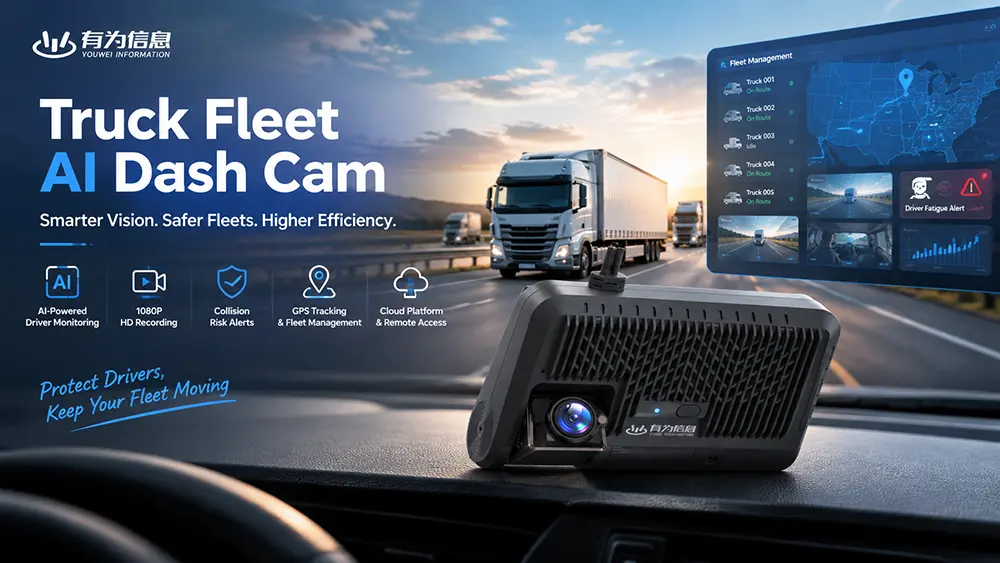
• Intelligent integrated monitoring: Integrates 360° cameras, reversing cameras, and DMS to transmit real-time footage and alerts, realizing visible operations and traceable safety.
• Remote operation and maintenance & early warning: Automatically collects operating data, generates maintenance plans, and pushes warnings to reduce maintenance costs and downtime.
• Safety and compliance management: DMS records operations, videos retain evidence, the remote system automatically generates compliance reports, and electronic fences enhance asset security.
• Data-driven decision support: Automatically generates various reports. Combined with monitoring data, it supports precise decisions on scheduling, procurement, etc.
• Cloud and mobile collaboration: Supports multi-terminal access and offline synchronization, adapting to offline construction site environments for real-time control and rapid anomaly handling.
Industry Market Trends
• The market size reached USD 4.5 billion in 2024, with a CAGR of 15.2% from 2025 to 2034, and is projected to exceed USD 15.7 billion by 2034, with a rising share of related solutions.
• Cloud deployment accounts for over 58%, becoming the first choice for small and medium-sized enterprises due to low cost, easy scalability, and remote accessibility.
• Technology is upgrading to "AI + integration", optimizing the accuracy of DMS and 360° cameras, realizing data interconnection and intelligent early warning, and shifting to "active prediction".
• North America, Europe, and Asia-Pacific are core markets, where infrastructure construction and policies drive enterprises to upgrade systems.
360° cameras, reversing cameras, DMS, and telematics are the key pillars of construction equipment fleet management. YUWEI's construction equipment fleet management solutions can effectively improve operational efficiency and safety.