







Forklift Monitoring System
What is a Forklift Monitoring System
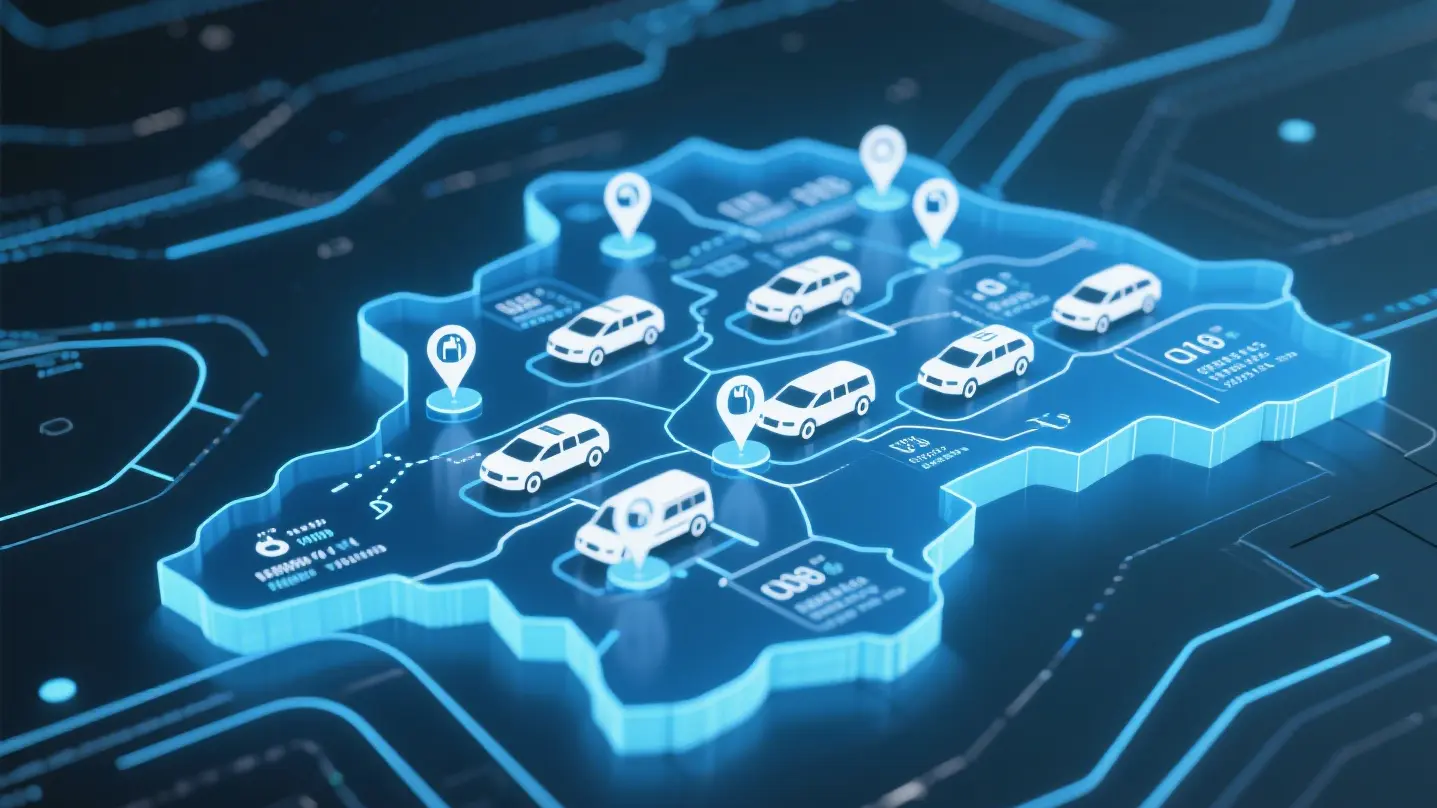
The forklift monitoring system is an intelligent comprehensive management platform designed for forklift fleets in warehouses, factories and logistics parks. Integrating technologies such as GPS positioning, video capture, sensor monitoring and data transmission, the system conducts full digital supervision over forklift operating status, working footage, driving behaviors and equipment conditions.
It replaces the traditional manual inspection mode, and integrates on-site visual monitoring, travel tracking, safety protection and equipment management. As a mainstream management tool for ensuring compliant, safe and efficient forklift operation in logistics and industrial scenarios in 2026, it is applicable to various working environments including indoor warehouses and outdoor yards.
Functions of Forklift Monitoring System
1.Positioning, Tracking & Travel Management
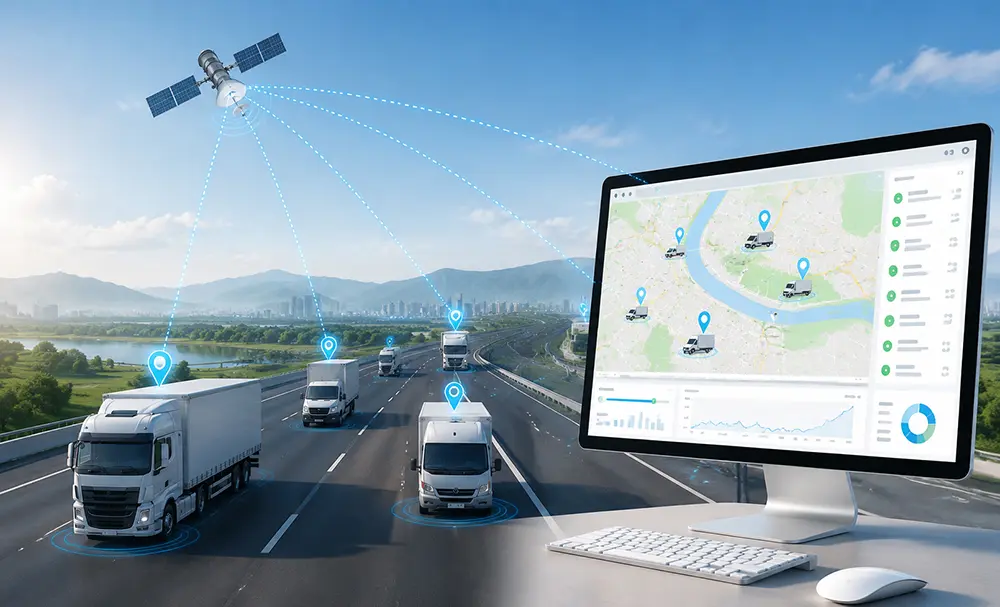
Relying on GPS technology, the system realizes all-weather real-time position tracking of forklifts. Managers can directly check vehicle distribution via the electronic map on the management terminal. The system automatically records driving tracks, mileage, working hours and idling hours, and generates operational data reports. It helps managers dispatch vehicles, optimize working routes and reduce unnecessary detours.
2.Video Monitoring & Rear View Assistance
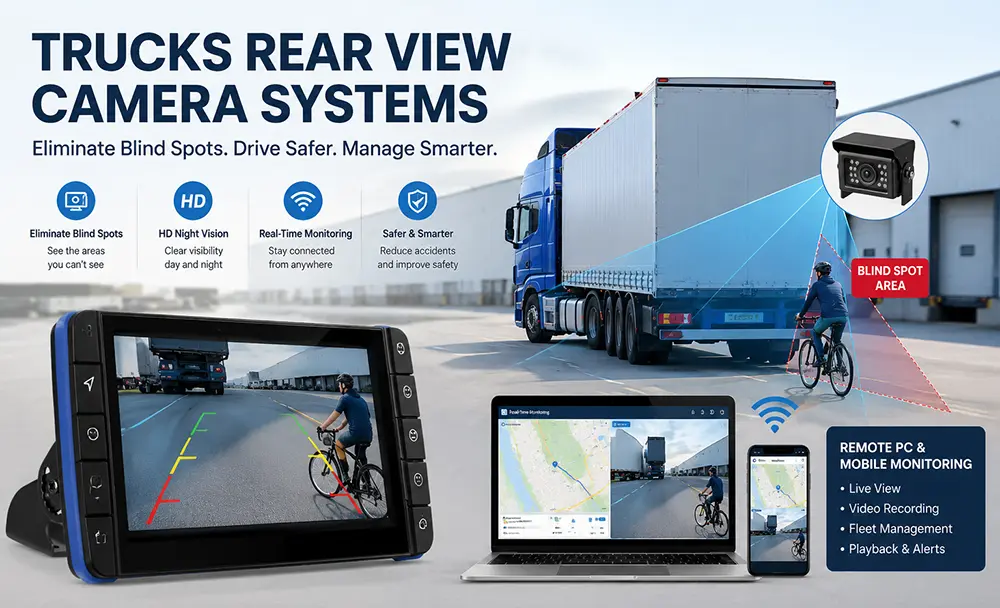
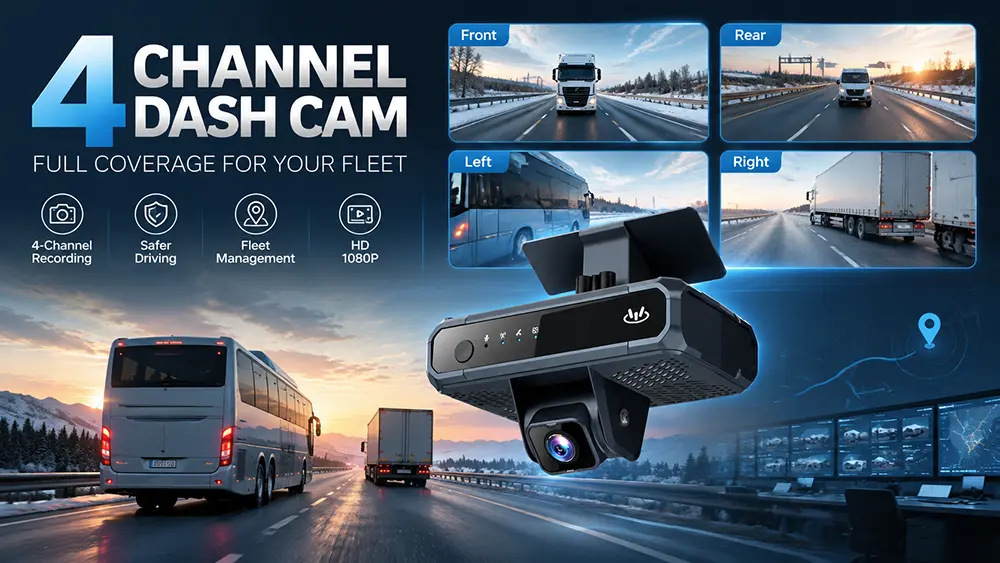
Cameras are installed on the entire vehicle to collect on-site footage and transmit data to the background in real time, enabling full visual supervision of operations. Equipped with the rear view function, images are synchronously displayed on the on-board screen to eliminate visual blind spots and prevent collisions with goods, walls or personnel during reversing. Some models support collision video recording, which fully saves videos before and after accidents for incident review and responsibility tracing.
3.Vehicle Status & Fault Monitoring
The system collects real-time data including driving speed, engine conditions and battery level, and identifies problems such as speeding, abnormal vibration and equipment failures. Once anomalies are detected, the system sends instant reminders and generates fault codes, enabling maintenance staff to troubleshoot quickly and reduce the risk of unexpected downtime.
4.Safety Control & Behavior Standardization
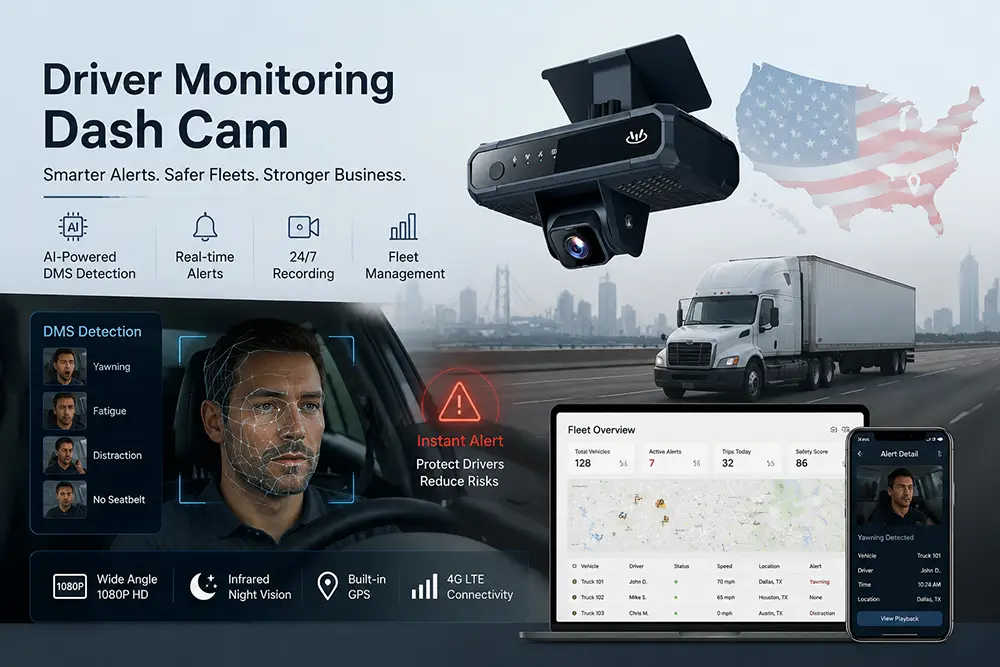
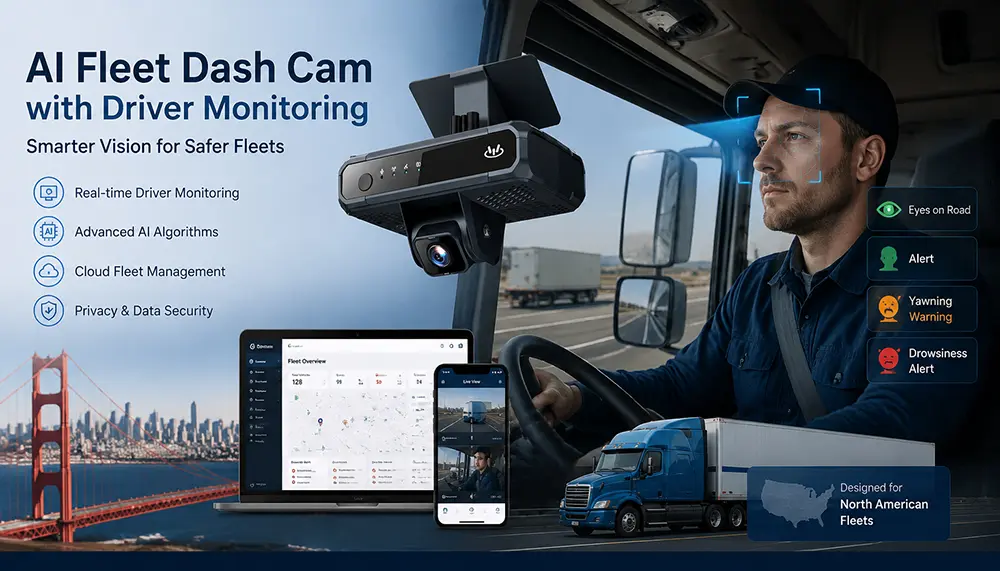
It supports speed limit control, regional speed limits and electronic fence settings. The system will trigger automatic alarms when vehicles enter restricted areas or exceed speed limits. With personnel identity verification, only authorized staff can start the forklift to prevent unlicensed operation. In case of collisions and other emergencies, the vehicle can be temporarily locked and reused after hidden dangers are eliminated.
5.Personnel & Maintenance Management
The system records the working hours and tracks of each operator to achieve traceable operation behaviors. Based on vehicle operational data, it automatically schedules maintenance cycles, sends maintenance reminders and establishes complete equipment maintenance files. For electric forklifts, it specially monitors battery conditions and gives early failure warnings.
6.Message Push & Remote Management
Abnormal alarms, fault prompts and maintenance notifications can be pushed to the background and mobile terminals in real time. Managers can remotely view video footage, vehicle locations and operational data to achieve efficient off-site management.
Hardware Configuration of YUWEI Forklift Monitoring System
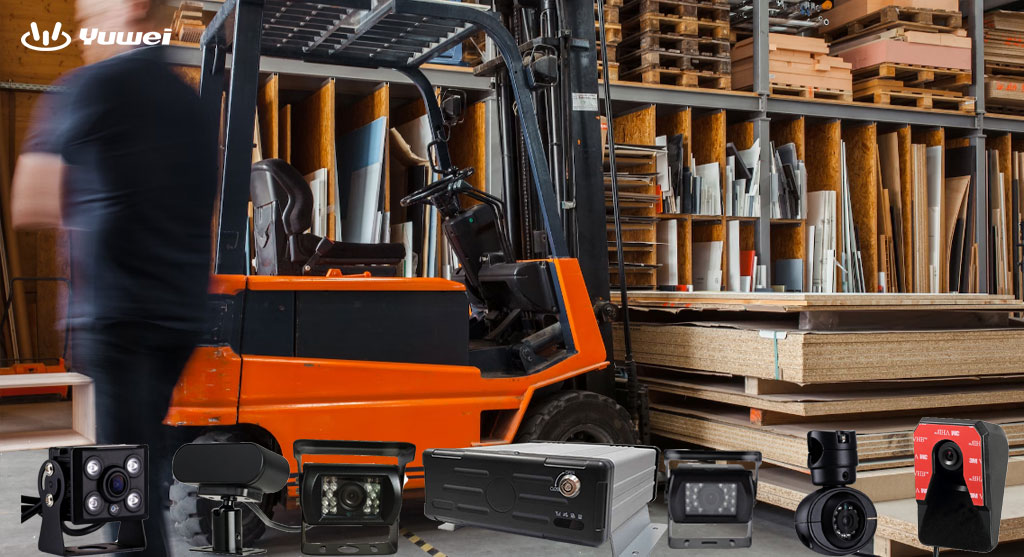
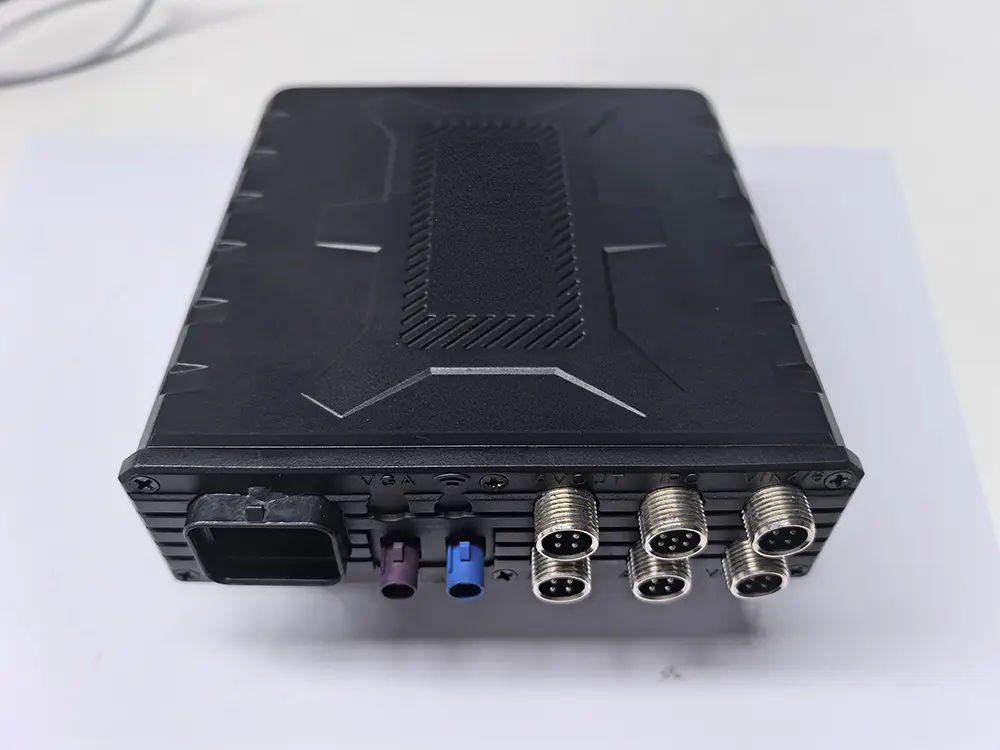
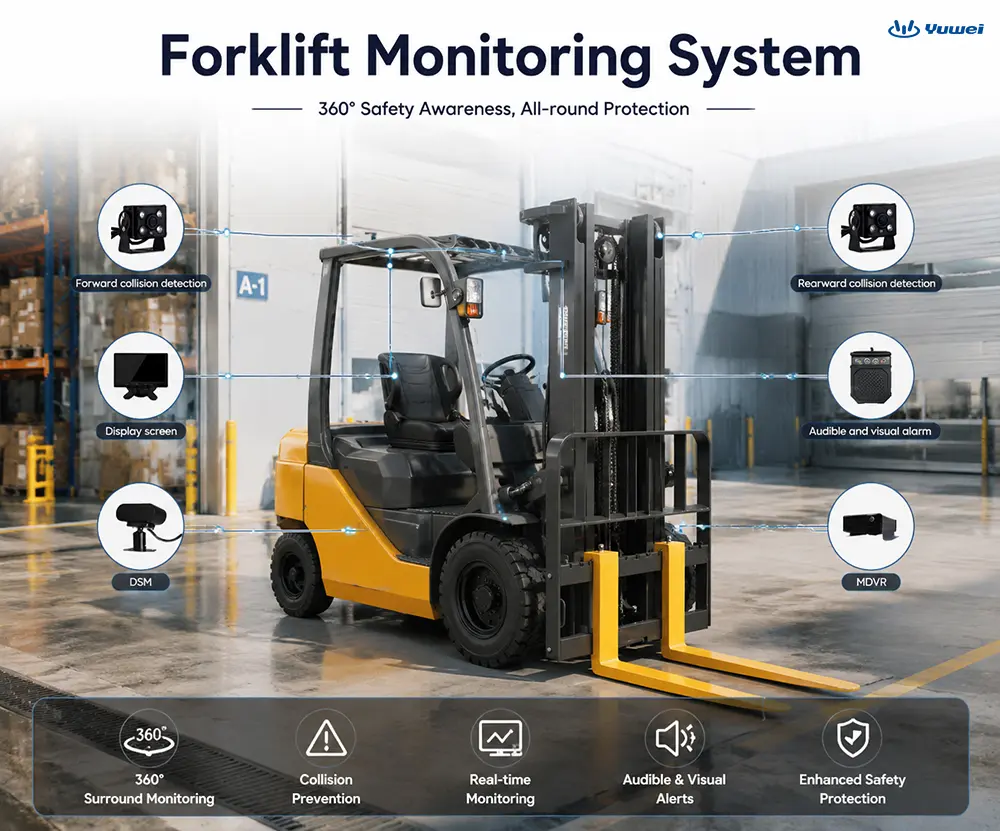
To meet the core demands of video monitoring, GPS tracking, rear view assistance and on-board display, the system hardware is divided into three categories: on-board devices, signal transmission devices and management terminals.
1.GPS Positioning Module
Built inside the forklift body, it receives satellite signals and collects real-time data including vehicle position, driving speed and moving direction. As the core hardware for track and position monitoring, it operates stably both indoors and outdoors.
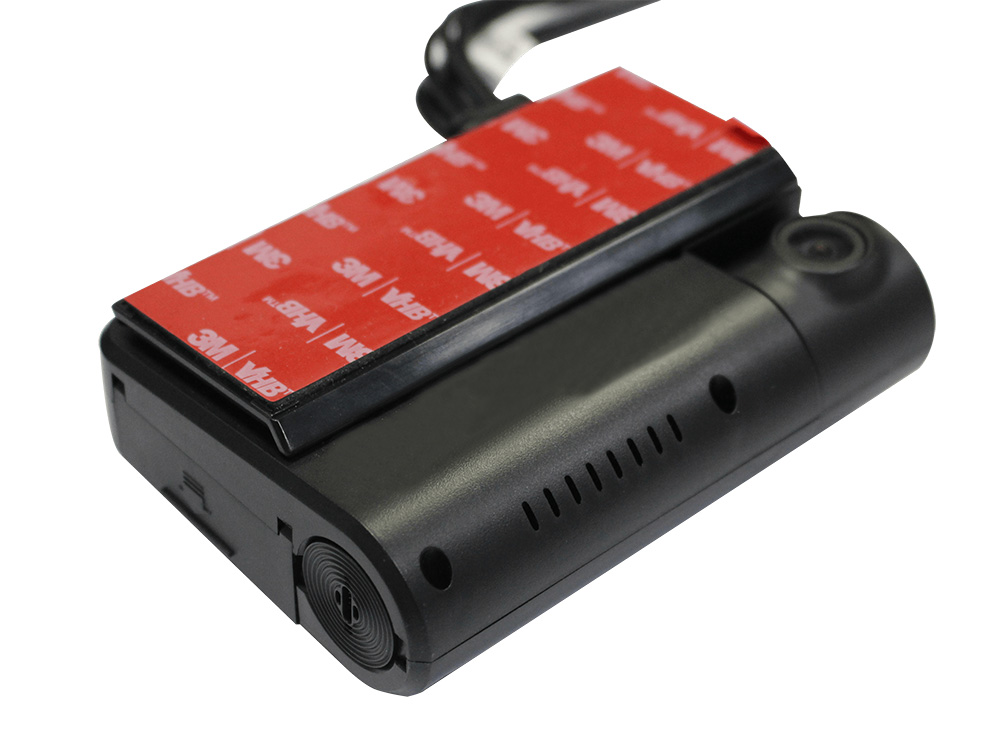
2.On-board Cameras
As the core components for video collection, cameras are installed at different positions:
• Front-view Camera: Monitors road conditions and driving footage ahead.
• Rear-view Camera: Dedicated to collecting rear view images. The wide-angle lens covers blind spots at the rear of the vehicle.
• Side-view Camera: Eliminates visual blind spots on both sides of the forklift.
• Collision-special Camera: Automatically saves footage before and after collisions for evidence collection and responsibility tracing.
3.On-board Display Screen
Mounted in front of the driver’s seat, it displays real-time rear view images, current speed, fault codes and system alarms. Drivers can also check basic operational data to keep track of vehicle status and surrounding environments in real time.
4.Rear View Auxiliary Devices
Consisting of reversing radars and audible & visual alarms, they work in linkage with rear-view cameras. When the vehicle approaches obstacles, the radar detects distances and triggers buzzing alerts. Combined with video images, they provide dual protection and greatly reduce reversing accidents.
5.Various Sensors
Including collision sensors, speed sensors, power sensors and more. Collision sensors capture impact signals, while speed sensors monitor driving speed in real time. All sensors work together to collect vehicle operational data.
6.Identity Recognition Components
Including card readers and personnel induction tags, which verify operator identities and control vehicle usage permissions.
7.Background & Management Terminals
Composed of servers, PC management terminals and mobile terminals. They centrally store video, positioning and operational data. Managers can view real-time footage, vehicle locations, various reports and alarm information via these terminals.
Advantages of Forklift Monitoring System
1.Full Visualization & Controllable Blind Spots
Multiple cameras, together with rear view systems and radars, completely eliminate visual blind spots during forklift operation and reversing. It significantly reduces safety accidents such as scratches, collisions and vehicle-personnel crashes.
2.Transparent Tracks & Efficient Scheduling
With real-time GPS positioning and track recording, managers can keep abreast of the status of every forklift at any time. It helps reasonably assign tasks, optimize driving routes and improve the overall operating efficiency of the fleet.
3.Real-time Status Monitoring & Effortless Maintenance
Linked hardware collects data on vehicle faults, battery levels, driving speed and other information. The system actively sends reminders for maintenance and anomalies, shifting the maintenance mode from passive repair to active upkeep. It extends the service life of forklifts and cuts maintenance costs.
4.Traceable Behaviors & Compliant Management
Long-term storage of video recordings, driving tracks and operation records ensures solid evidence for accidents and rule violations. Personnel permission control also complies with factory safety regulations and realizes standardized operation.
5.Easy Deployment & High Practicality
The main hardware includes cameras, GPS modules and on-board screens. Featuring simple installation, it is compatible with both new and old forklifts. The system is easy to operate, so both drivers and managers can get started quickly.
Email:hello@yuweitek.com