











Best Commercial Dash Cam Front and Rear
Commercial Dash Cam Front and Rear
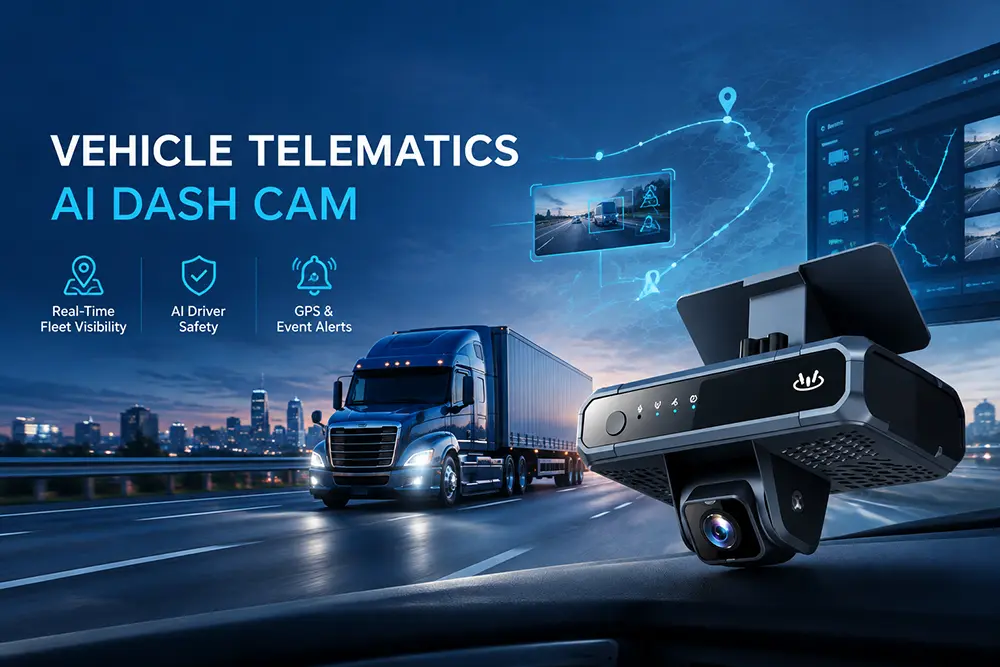
Mexico has a massive commercial transportation market. Logistics, urban delivery, taxis, and long-distance passenger transport all require more efficient vehicle safety management. For fleets, vehicle location, accident evidence collection, driver status, and cargo safety are all important. Traditional dash cams are mainly used for video recording. Modern commercial devices now integrate features such as 4G, GPS, ADAS, and DMS, which can be used for remote fleet management.
Is it mandatory for commercial vehicles to install front and rear dual-lens dash cams in Mexico?
At the federal level, Mexico does not uniformly require all commercial vehicles to be equipped with front and rear dual-lens dash cams. However, there are requirements for commercial transportation safety. For example, NOM-087-SCT-2-2017 regulates the driving hours and rest periods of federal transport drivers. Enterprises can also use devices with DMS cameras for management. Therefore, commercial dash cams with GPS, ADAS, and DMS can help fleets strengthen driving safety management.
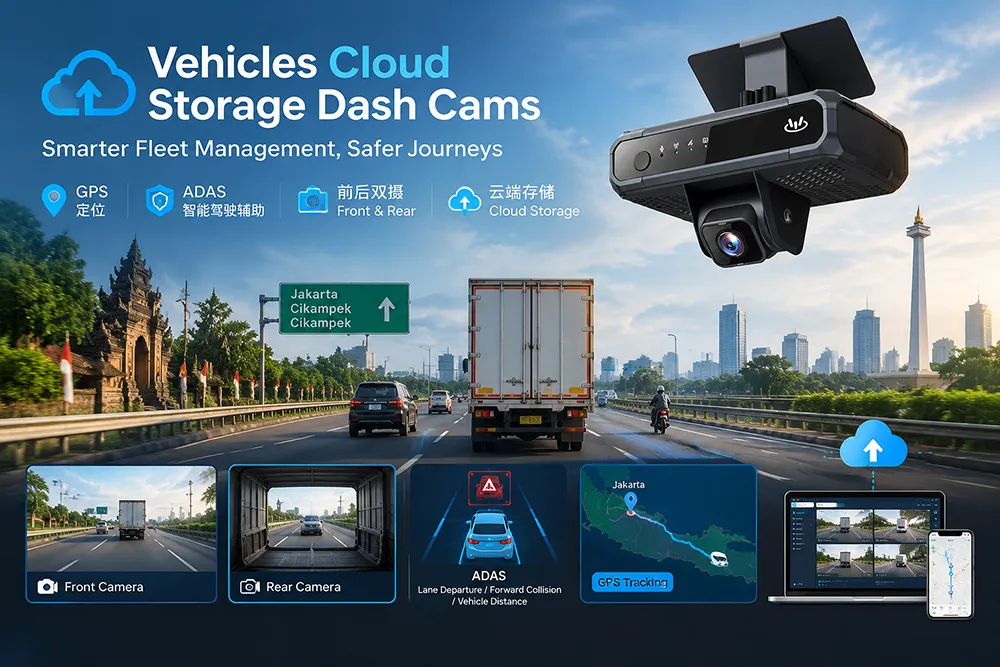
What is a commercial front and rear dual-lens dash cam?
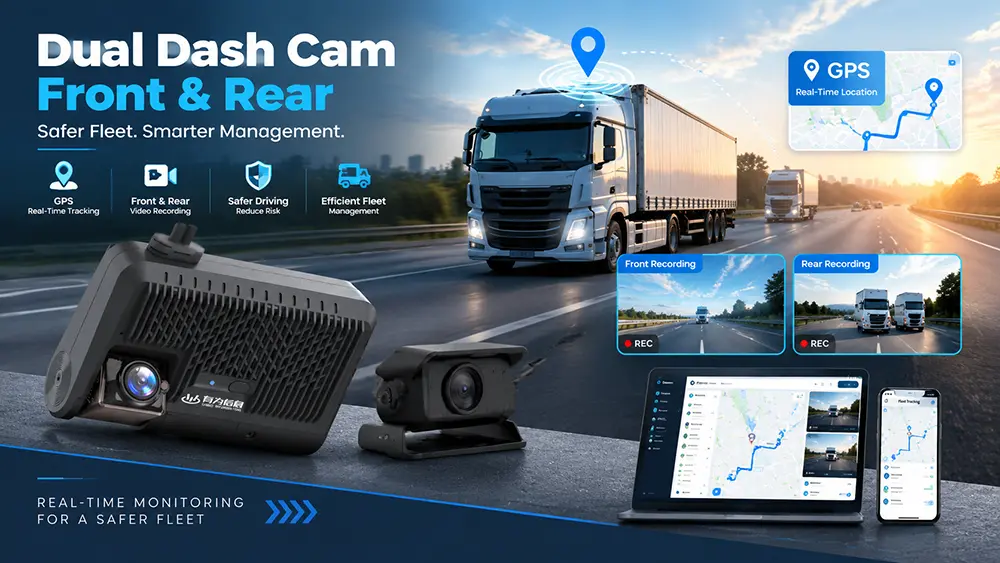
A commercial front and rear dual-lens dash cam is an on-board camera capable of front and rear dual recording. It goes beyond simple video recording by combining GPS, 4G, and driver monitoring to achieve remote fleet management.
Common dual-lens configurations include:
Front camera: Captures the road and vehicles ahead, used for accident evidence collection and ADAS.
Second camera: Can capture the cabin, the rear of the vehicle, or the vehicle sides.
It should be noted that a dual-lens setup does not necessarily mean "front + rear".
Recommended 3 commercial dash cams
YUWEI's V5, V5C, and V8N target different types of commercial fleets.
V5 emphasizes multi-camera expansion, V5C emphasizes an economical dual-lens setup, and V8N places more importance on AI active safety.
V5: Suitable for multi-angle monitoring fleets
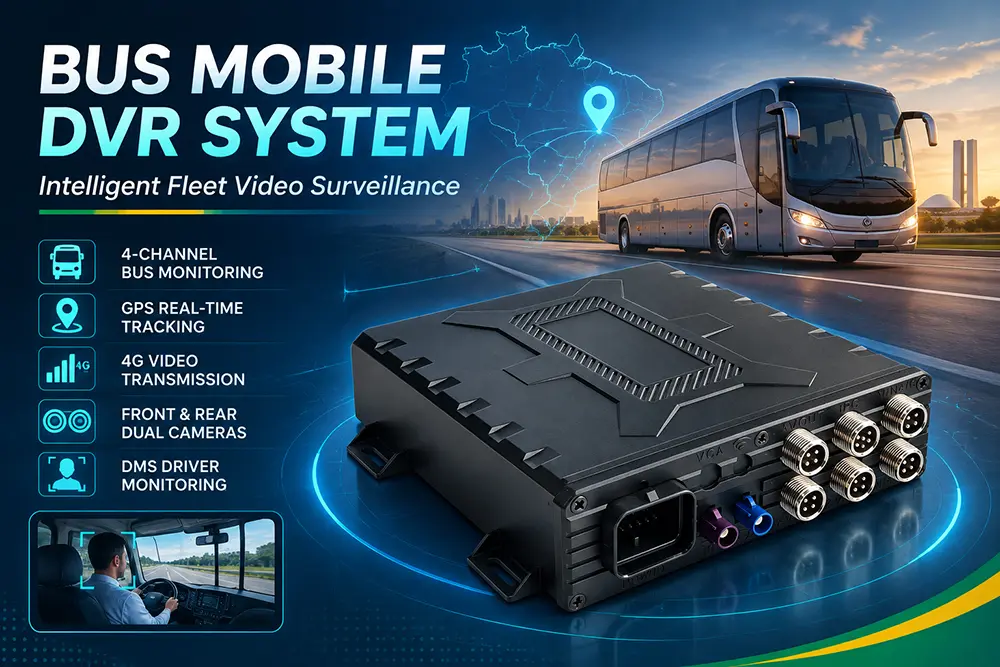
The YUWEI V5 is a 4G commercial vehicle-mounted video terminal. It supports up to 4 video channels, allowing connections to front, cabin, rear, and side cameras.
Dash cam features include:
1080P video: Records driving footage of the vehicle.
4G remote video: Supports remote viewing of vehicle video.
GPS/BDS: View real-time location and historical tracks.
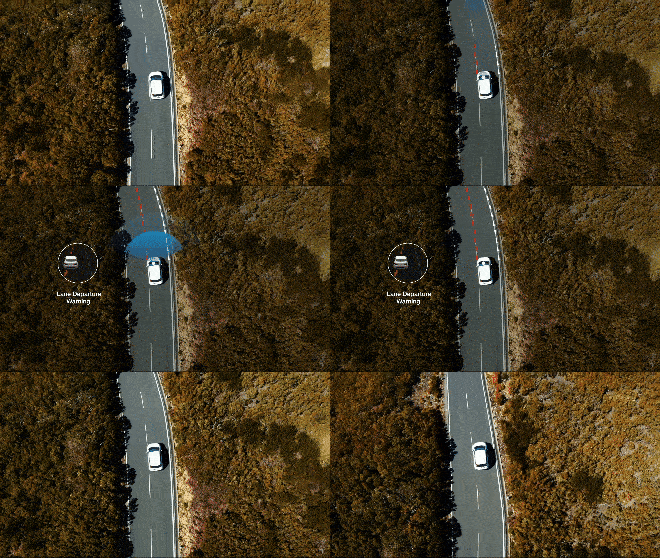
ADAS: Provides lane departure and collision warnings.
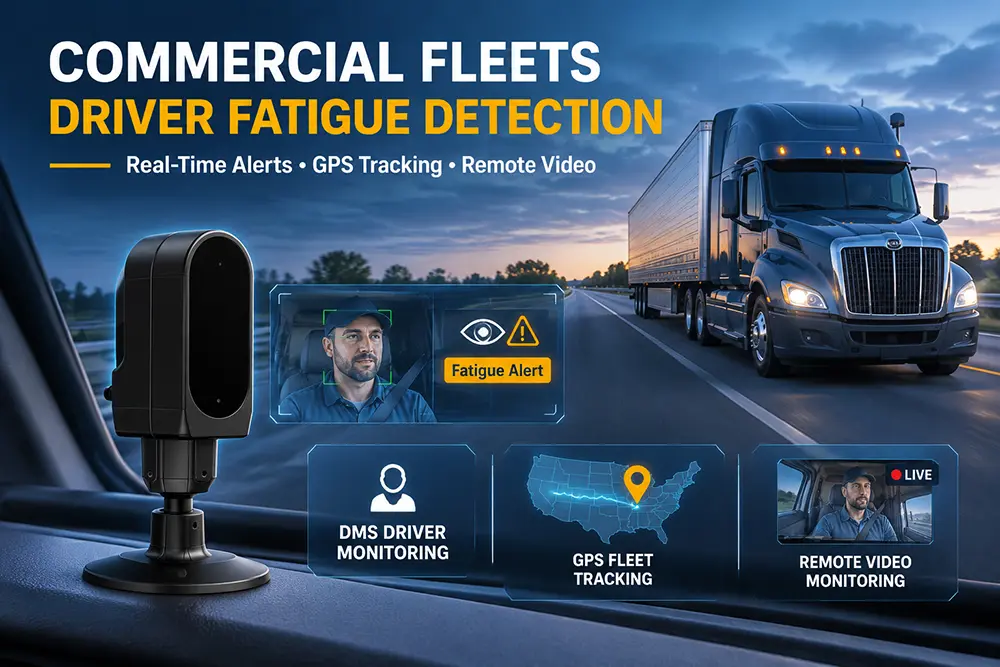
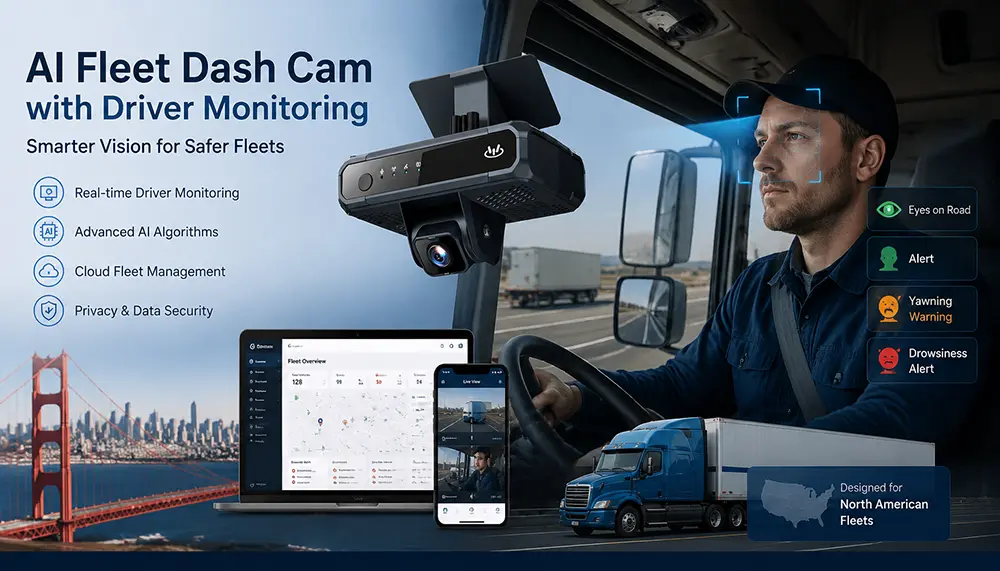
DSM: Identifies fatigue and distracted driving.
Dual TF cards: Supports longer recording durations.
Two-way audio: Facilitates communication between the fleet and the driver.
The biggest advantage of the V5 is its flexible camera expansion. Enterprises can add rear, side, or cabin cameras according to vehicle types.
Recommended fleets: Logistics transport, long-distance trucks, regional distribution, passenger transport, and medium-to-large fleets.
V5C: Suitable for small fleets with a dual-lens solution
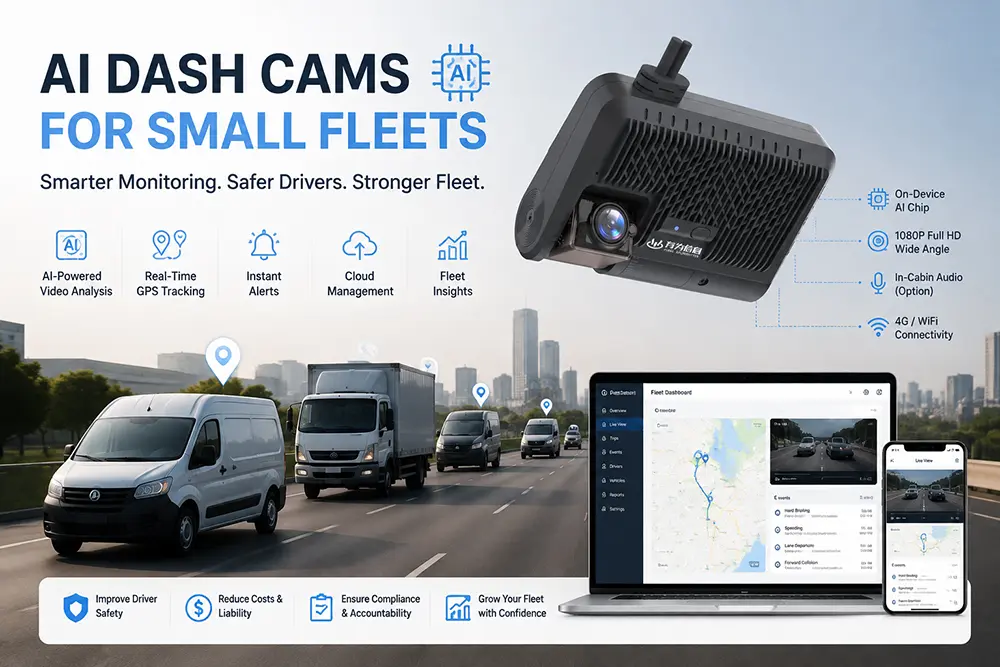
If road recording and driver monitoring are the main requirements, the V5C is simpler. It adopts an integrated dual-lens design for easy installation.
Main configurations include:
Front camera: 1080P, 140° viewing angle.
In-cabin camera: 720P, 150° viewing angle.
4G communication: Supports remote video transmission.
GPS/BDS: Provides vehicle positioning.
ADAS: Assists in identifying road risks.
DSM: Monitors driver status.
Facial recognition: Supports driver identity recognition.
TF card: Supports up to 1TB.
The V5C supports a wide voltage range of 9V—36V, making it usable for common 12V and 24V vehicles. It is more suitable for enterprises with limited budgets and a need for rapid deployment. Note that the second camera of the V5C mainly captures the cabin, not the rear of the vehicle.
Recommended fleets: Taxis, ride-hailing vehicles, light trucks, urban delivery, and small business fleets.
V8N: Suitable for fleets prioritizing AI safety
The V8N focuses more on driving risk monitoring and active safety. It is equipped with a starlight-level front camera and a 2MP infrared cabin camera, suitable for both day and night use.
Main features include:
1080P video: Records the road ahead.
Infrared night vision: Enhances in-cabin monitoring effects at night.
ADAS: Supports lane departure and collision warnings.
DMS: Identifies fatigue and distracted driving.
BSD: Expandable for vehicle blind spot monitoring.
4G: Supports remote real-time video.
GPS/BDS: Supports positioning and track queries.
Dual TF cards: Supports up to 2TB per card.
CAN interface: Can connect to partial vehicle data.
The V8N supports up to 4 video channels and allows external cameras to be added. It is better suited for night operations, long-distance transport, and high-risk vehicles.
Recommended fleets: Long-distance trucks, buses, school buses, cold chain transport, engineering vehicles, and large fleets.
Comparison of V5, V5C, and V8N
How to choose among the three products?
V5C: Suitable for small fleets with limited budgets.
V5: Suitable for fleets requiring multiple cameras such as rear and side views.
V8N: Suitable for fleets prioritizing fatigued driving and active safety.
What are the differences between front cameras, in-cabin cameras, and rear cameras?
Front camera Records the road ahead, vehicles, and traffic events, primarily used for accident evidence collection and ADAS.
In-cabin camera Captures the driver, used for fatigue, distraction, and driving behavior management.
Rear camera Captures the rear of the vehicle, suitable for reversing, rear-end collision evidence collection, and loading/unloading area monitoring.
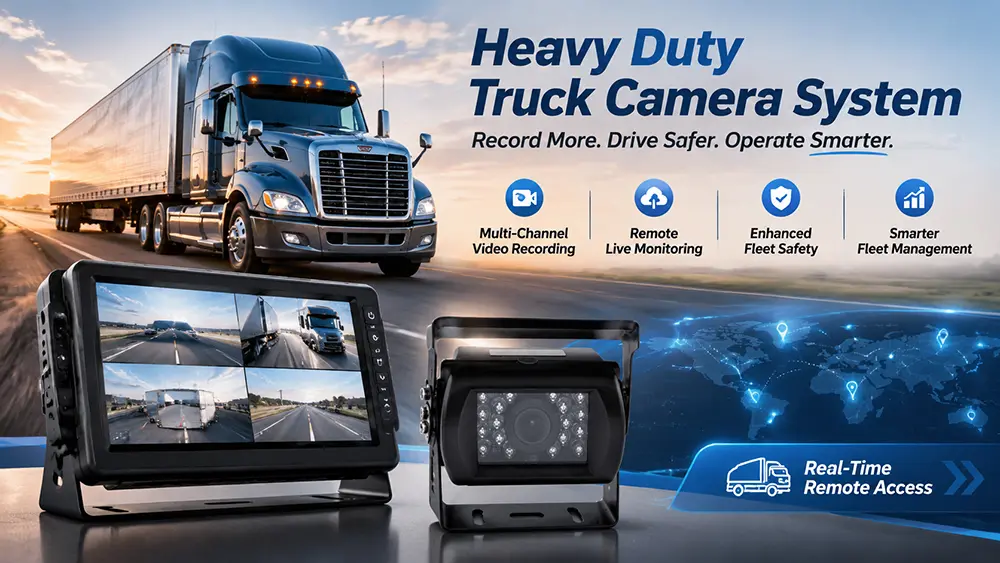
Side camera Covers the sides and blind spots of the vehicle, suitable for large trucks, buses, and engineering vehicles. Therefore, when purchasing, one must look not only at the number of cameras but also at the installation positions.
What else should you pay attention to when purchasing a commercial dash cam?
In addition to cameras, pay attention to the following points:
1. 4G compatibility Confirm that the device supports local carriers in Mexico, and test the SIM card and APN.
2. Video storage Choose the appropriate TF card capacity based on the required video retention time.
3. GPS positioning Confirm whether the vehicle's location and historical tracks are stable.
4. Management platform Check whether real-time video, video downloading, and alarm management are supported.
5. Installation and testing Before bulk purchasing, it is recommended to test-install on 5 to 10 vehicles first.
Summary:
When selecting a dash cam for fleets in Mexico, do not look at price alone. Consider vehicle types, transportation routes, camera positions, and safety management needs.
Email:hello@yuweitek.com