











How to Choose the Best Taxi Fleet Dashcams?
What is a Fleet Dashcam
A fleet dashcam is an in-cab built-in camera that adopts advanced technologies to meet commercial safety requirements. It can capture dangerous driving behaviors such as sharp turns and mobile phone usage, send audio alerts to correct risky actions, and support real-time streaming or continuous video recording, helping to avoid collisions and improve driving performance.

Why Fleets Need Onboard Video Safety Systems
Provide Accident Evidence
In 80% of collision accidents between trucks and passenger vehicles, the passenger vehicle is at fault. Dashcams can capture footage to exonerate drivers. When the vehicle is parked, motion detection can record hit-and-run incidents and malicious vandalism, simplifying the claims process. Installing users are expected to receive insurance premium discounts (New York State plans to offer a 5% premium reduction).
Prevent Unsafe Driving
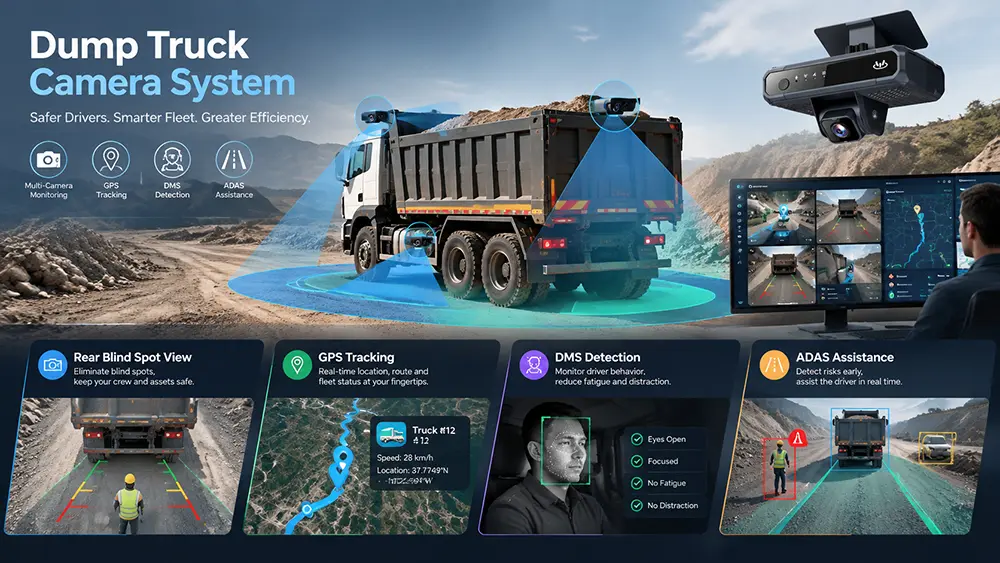
Equipped with ADAS, it alerts to speeding, following too closely and other violations. DMS can detect fatigued or distracted driving. With tools such as driver scorecards, it can optimize training programs and reward safe driving behaviors.
Fleet Dashcams vs. Consumer-Grade Dashcams
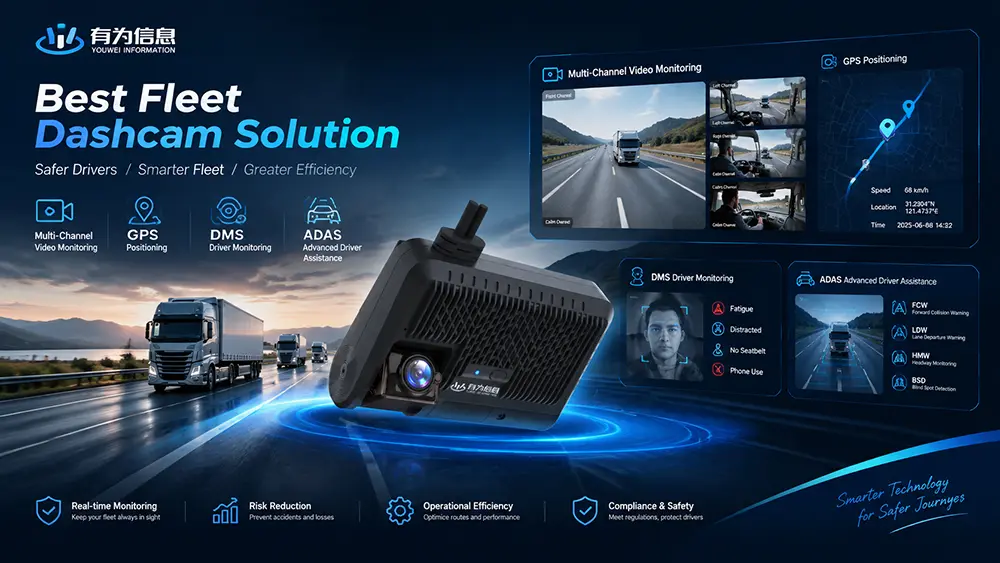
YUWEI fleet dashcams boast outstanding advantages, featuring AI-driven functions, real-time streaming, dangerous behavior detection and alert transmission. When connected to telematics devices, they can detect dangerous G-force events and automatically upload videos to the cloud, ensuring data security and easy access. Without manual video screening, they efficiently handle false claims and reduce manual operations.
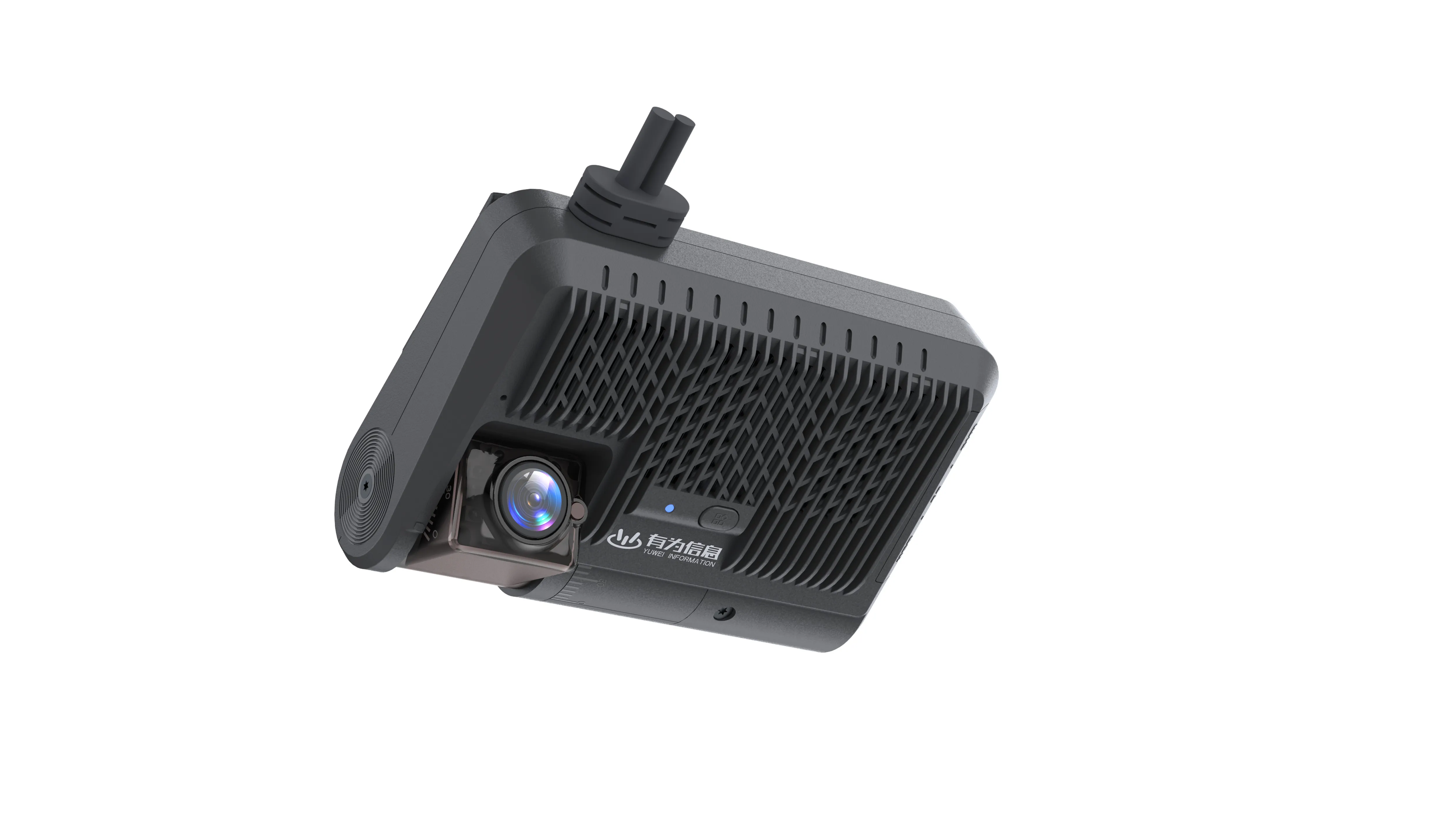
Recommended Model: YUWEI V5C Dual-Lens AI Dashcam
This model offers high cost-performance and comprehensive functions, making it the optimal choice for corporate fleets. It is compatible with various commercial vehicles including trucks and ride-hailing cars, especially suitable for users focusing on practicality and budget control. Its core features are as follows:
① Dual HD Lenses for Panoramic Coverage: The front lens features 1080P resolution with a 140° wide angle, capturing road conditions clearly. The in-cab lens features 720P resolution with a 150° wide angle, accurately monitoring driver behavior. License plate information can be clearly identified during playback.
② Dual-Mode Positioning + Efficient Networking: Built-in Beidou + GPS dual-mode positioning, combined with a 4G full-network module, enables cross-region precise positioning and real-time location transmission. It supports specific-specification WiFi for efficient wireless data transmission.
③ Intelligent Alerts + Diverse Monitoring: Integrated with ADAS, DSM systems and facial recognition, it alerts to road risks, detects dangerous states such as driver fatigue. It also supports facial recognition check-in, detects whether the driver is wearing a mask and sends timely voice reminders.
④ Secure Storage + Convenient Functions: Supports up to 1TB TF card storage, adopting dedicated video compression technology to efficiently store high-definition videos. Equipped with a built-in microphone and speaker, it enables two-way communication. It also supports 4-channel central access, and can trigger emergency alarms and report to the platform.
Common Types of Fleet Dashcams
① Front-Facing Dashcams: Installed on the windshield, only capture front collision footage without recording in-cab conditions, suitable for privacy-focused fleets.
② Dual-Lens Dashcams: Installed on the windshield with front and in-cab lenses, applicable to scenarios such as driver training and accident exoneration.
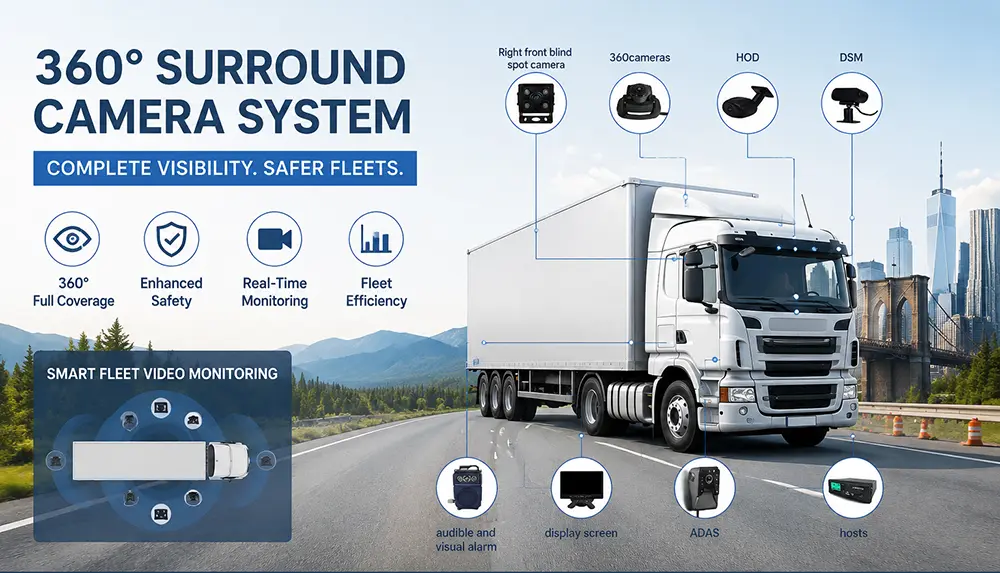
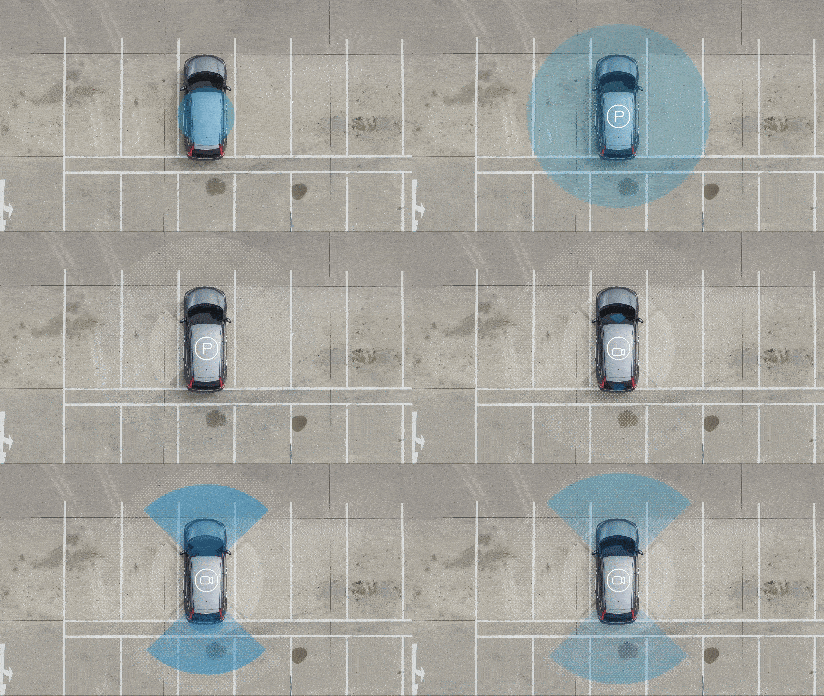
③ External Cameras: Mounted outside trucks, providing a 360° field of view to assist with blind spot management. Rear cameras can capture objects in the blind spot of rearview mirrors.
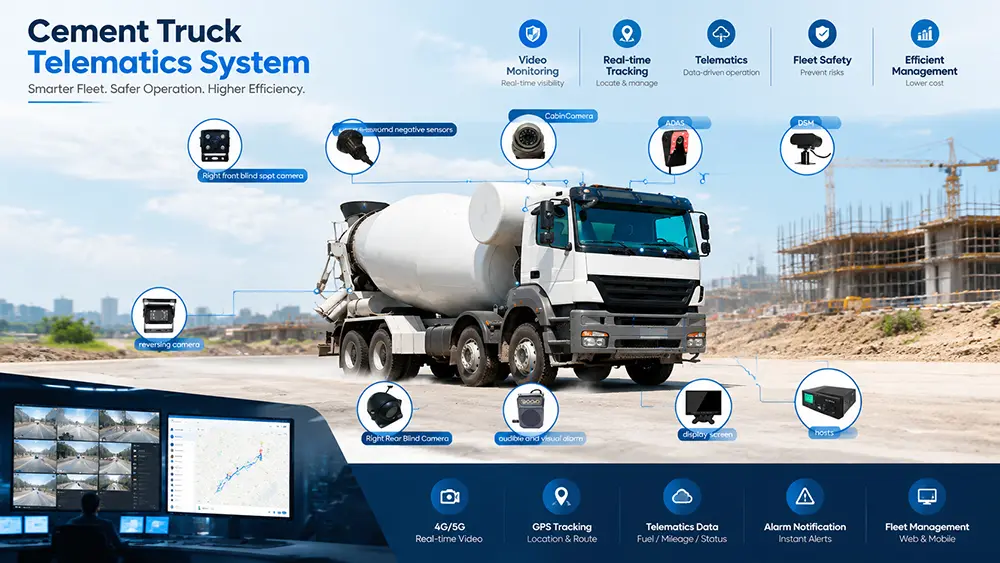
④ Built-In Cameras: Installable in multiple positions to ensure passenger and cargo safety, and obtain real-time data such as trailer loading capacity.
⑤ Multi-System Cameras: Expandable to support front/rear cameras and in-cab displays, achieving all-round blind-spot-free coverage, suitable for large vehicles such as semi-trailer trucks.
Key Points for Choosing a Dashcam
① High-Quality Imaging: Must be equipped with wide-angle lenses, 1080P high-definition video and HDR to ensure clear and identifiable accident footage.
② Easy Installation: Prioritize products with simple installation, and suppliers should provide high-quality customer service to support large-scale trouble-free deployment.
③ In-Cab Guidance Functions: Deliver real-time audio alerts for dangerous behaviors such as speeding to avoid collisions.
④ Driver Monitoring: Equipped with ADAS with collision avoidance technology and DMS for real-time driving behavior analysis, assisting driving training and collision prevention.
⑤ Data Analysis Tools: Must support data trend tracking and provide safety improvement suggestions to enhance fleet safety and profitability.