










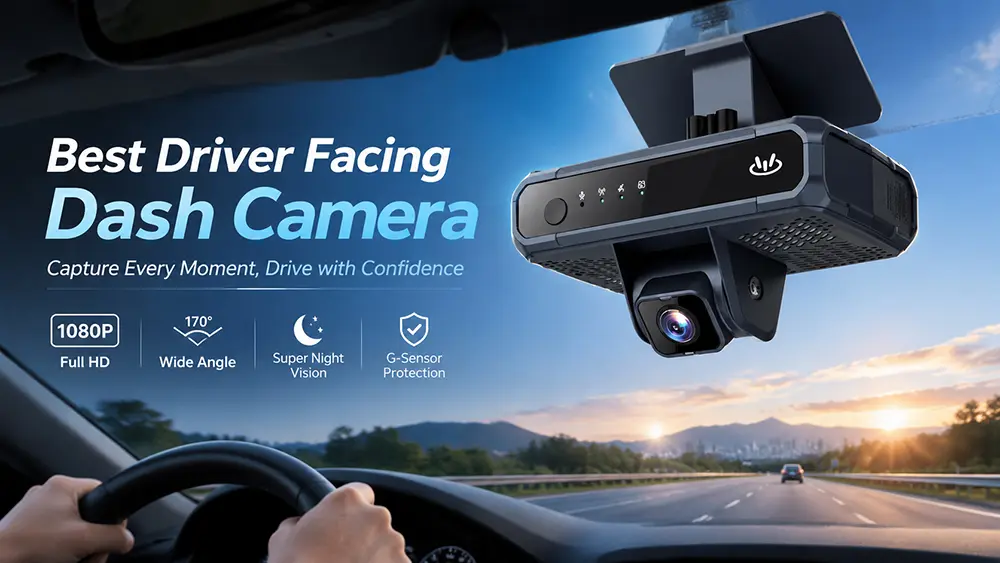
Best Driver Facing Dash Camera
Best Driver Facing Dash Cam
Driver-facing dash cameras are typically referred to as DMS (Driver Monitoring System) or dual-facing/interior-recording dash cameras. These devices utilize inward-facing cameras combined with AI algorithms to monitor the driver's real-time status and provide safety warnings. In 2027, as commercial vehicle management regulations intensify across various countries, dash cams with DMS functionality will be increasingly favored by fleet managers.
Driver-Facing Dash Camera Technology
1.Fatigue and Drowsiness Detection: Utilizes infrared or wide-angle cameras to track eyelid closure (PERCLOS), blink rate, yawning, and head-nodding postures to determine if the driver is fatigued.
2.Distracted Driving Monitoring: Identifies whether the driver is looking down, using a mobile phone, turning their head to look around, or keeping their eyes off the road for too long while driving.
3.Dangerous Behavior Alerts: When smoking, making phone calls, taking both hands off the steering wheel, or dozing off is detected, the device will issue audio or visual prompts to intervene.
4.Fleet and Data Management: Certain high-end devices (such as the YUWEI fleet solution) support 4G/5G networking, real-time video streaming, performance scorecards, and event playback, facilitating remote management for fleet managers.
Driver-Facing Dash Camera Classifications
1.Dual/Multi-Lens Dash Cameras (Front + Interior Recording): The main lens records road conditions ahead (ADAS), while a built-in or attached small infrared/wide-angle lens faces the cabin, balancing driving evidence collection with interior monitoring.
2.Vehicle-Specific / Automotive-Grade Aftermarket/Factory-Installed DMS: Commonly found in commercial vehicles, ride-hailing cars, logistics fleets, and new vehicle models that comply with EU safety regulations (the EU has had specific DMS requirements for vehicles seeking five-star safety ratings since 2020/2021).
Purchasing and Usage Considerations
1.Privacy and Legality: Interior-facing recording involves personal privacy. If used for ride-hailing, taxis, or corporate fleets, it generally must comply with local privacy protection regulations and clearly notify passengers/drivers. If it is for interior recording in a private car, the acceptance of family members must be carefully considered.
2.Night Vision and Infrared Fill Light: The cabin is dimly lit at night. The driver-facing lens must feature infrared (IR) night vision or LED/VCSEL fill light functions to accurately capture facial and eye features in unlit environments.
3.Storage and Loop Recording: It is recommended to pair the device with a high-endurance, industrial-grade MicroSD memory card, as dual recording or 24-hour monitoring imposes high demands on the card's write lifespan.
Email:hello@yuweitek.com