












Truck Camera Recording Systems
Truck Camera Recording Systems 2026
In the development of the freight industry, commercial trucks have become a key focus of traffic safety due to their large size and numerous blind spots. Accidents not only cause casualties but also result in huge losses for fleets. According to data from the U.S. FMCSA, the average cost of a fatal truck accident is $$1.13 million, while that of an injury accident exceeds $$334,000. Insurance fraud scams further cause unwarranted losses to fleets. Against this backdrop, commercial truck camera recording systems have emerged. They have evolved from simple video recording devices into comprehensive fleet safety management solutions integrating AI, GPS, and cloud storage, becoming a core configuration for fleet operations.
Functions of Commercial Truck Camera Recording Systems
(1) Multi-Lens Setup to Eliminate Blind Spots
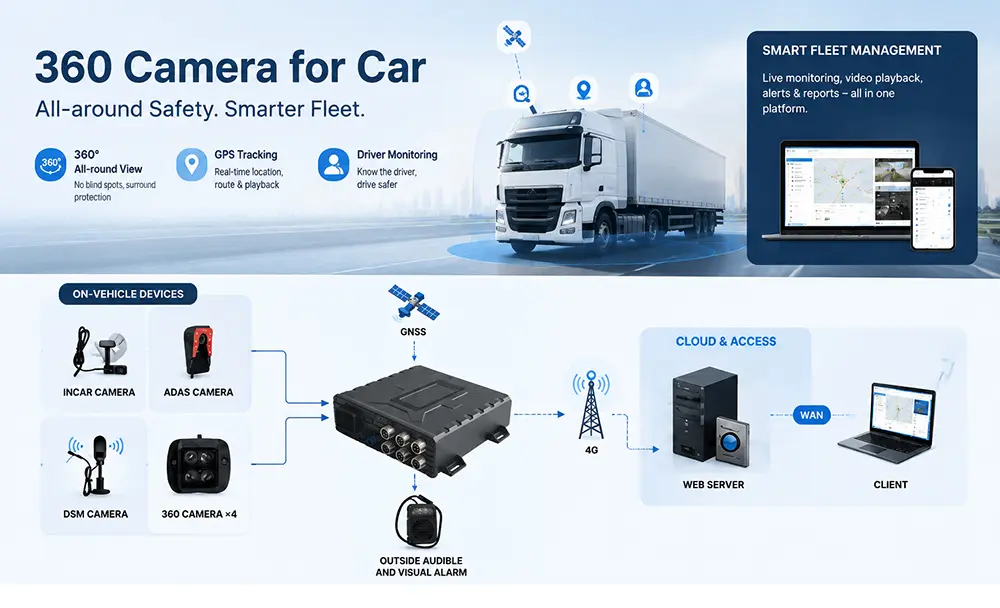
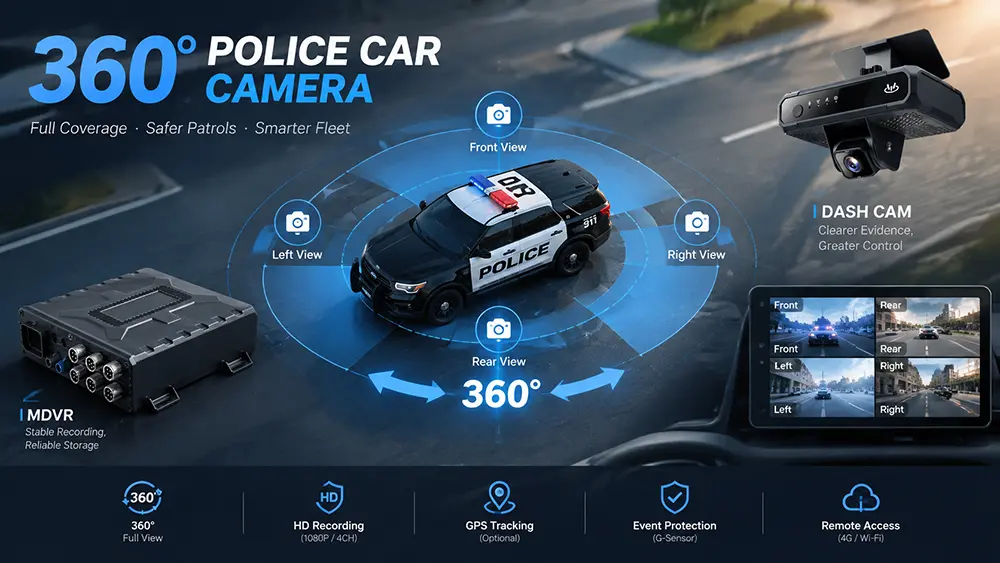
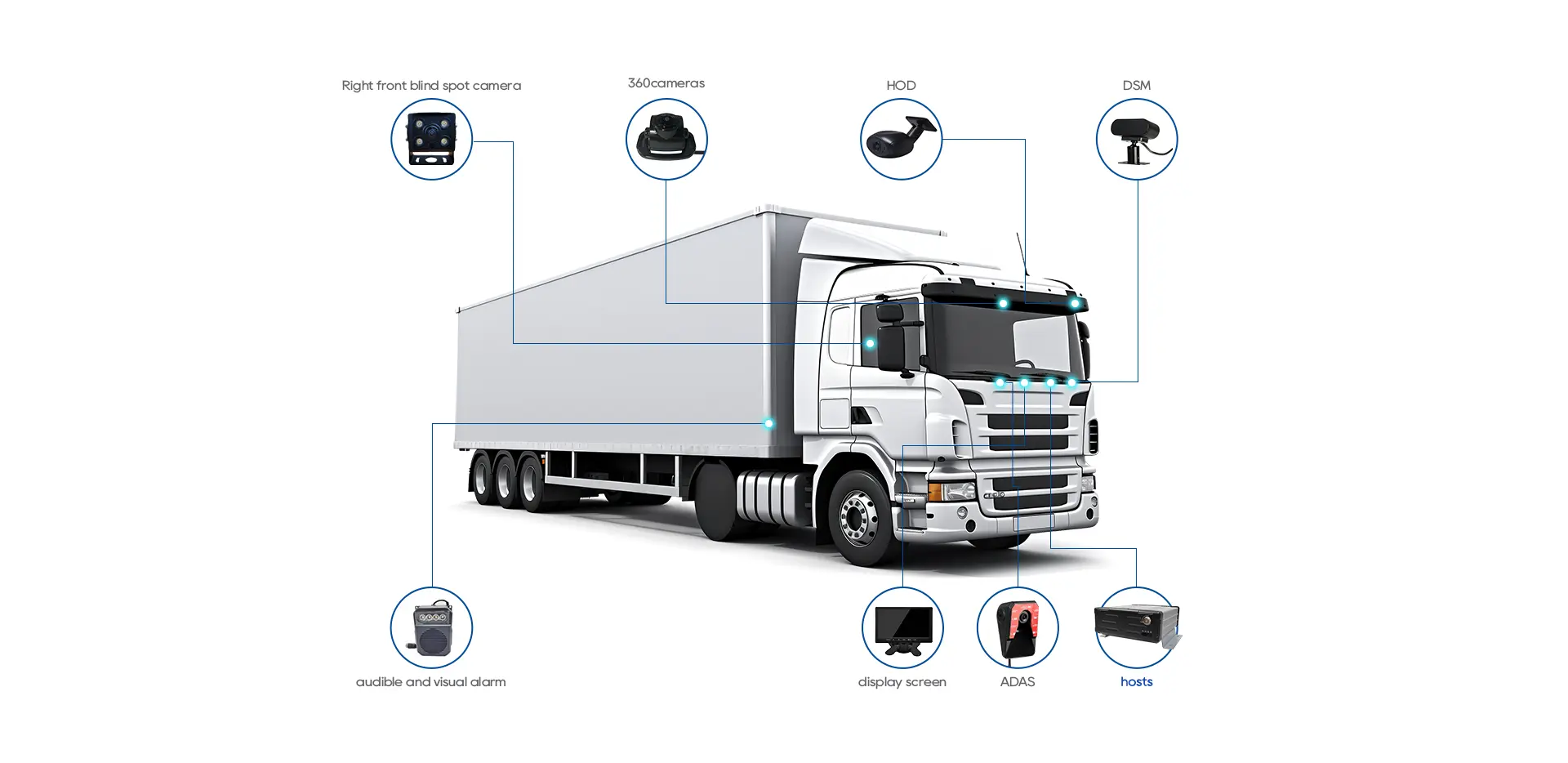
The system supports flexible camera configuration to achieve 360° all-round monitoring inside and outside the vehicle. Standard setups include front-view, rear-view, side-view, driver-facing, and cargo compartment cameras. YUWEI’s high-end systems can be equipped with up to 8 high-definition cameras per vehicle, fully covering blind spots.
1. External Cameras:
The front-view camera records road conditions and provides evidence for accident liability determination. The rear-view camera addresses the high incidence of rear-end collisions (accounting for 40% of such accidents), clearly displaying obstacles during reversing with a night vision range of 15 meters. Side-view cameras feature an ultra-wide angle (150° for some models) to avoid scraping during lane changes and turns. YUWEI offers IP69K waterproof, dustproof, and vibration-resistant reversing cameras suitable for complex driving environments.
2. Internal Cameras:
They monitor dangerous driver behaviors such as distraction, fatigue, and phone usage, protecting the safety of vehicle occupants. Cargo compartment cameras prevent cargo theft. Some models are equipped with infrared LED lights for clear night recording and feature anti-tampering designs.
(2) AI Intelligent Detection
AI technology upgrades the camera system from "passive recording" to "active prevention". Through deep learning algorithms, it accurately detects road hazards and dangerous driving behaviors and issues real-time warnings.
1. Pedestrian & Obstacle Detection:
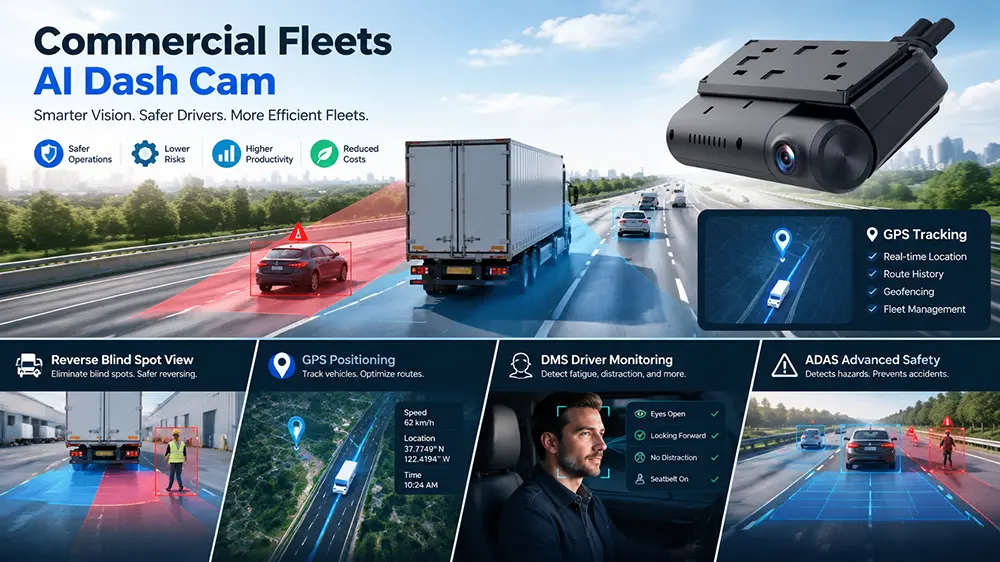
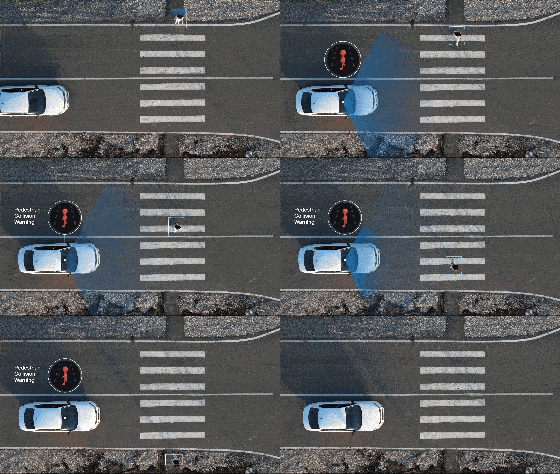
Targeting truck blind spots, AI cameras detect pedestrians and non-motor vehicles from multiple directions, triggering audible and visual alarms in dangerous situations to expand the field of vision.
2. Dangerous Driving Identification:
It automatically captures speeding, sudden braking, sharp turns, and other actions, identifies fatigue and distracted driving, and issues timely reminders to reduce accident risks.
3. Collision Warning:
Paired with collision warning sensors, the system detects hazards within a horizontal angle of 120° and vertical angle of 60°, warning of blind-spot collision risks during turns and reversing.
(3) GPS Positioning & Remote Monitoring for Fleet Management
Mainstream systems integrate GPS positioning deeply with video surveillance, providing refined management data and supporting remote monitoring to allow managers to track vehicle status in real time.
1. Real-Time Positioning & Track Tracking:
It accurately reports vehicle location, records driving routes, and supports geo-fencing with automatic alarms for unauthorized areas, preventing private use and route deviation.
2. Driving Behavior Analysis:
Combined with GPS and video data, it generates driver performance reports including sudden braking and speeding, providing a basis for assessment and training.
3. Real-Time Live Streaming & Remote Footage Retrieval:
4G LTE enables high-definition live streaming for anytime viewing by managers. Footage can be quickly retrieved after accidents to improve handling efficiency.
(4) Cloud Storage & Intelligent Alerts
1. Secure Cloud Storage:
Video and driving data are stored on encrypted cloud servers, preventing data loss even if the vehicle is damaged or stolen. Authorized users can access and search data via multiple terminals. YUWEI’s cloud storage retains video for 90 days, meeting traceability and management requirements.
2. Intelligent Alerts:
When critical events such as collisions or sudden braking are detected, the system automatically records and uploads footage to the cloud and sends notifications to managers. Alerts are also triggered if cameras are disturbed or the vehicle is involved in a collision.
(5) High-Definition Recording
All systems support 1080P high-definition recording, with some offering audio recording (switchable per state laws), providing valid evidence for accident liability and insurance claims. Optimized for harsh environments, the devices feature night vision, waterproofing, dustproofing, and vibration resistance for stable operation on complex roads.
Value of Commercial Truck Camera Recording Systems
For fleets, camera recording systems are not merely monitoring devices but strategic assets creating multi-dimensional value. Investments translate quickly into tangible benefits, supporting sustainable development.
(1) Protect Drivers’ Rights and Interests
In collisions between cars and trucks, most liabilities lie with passenger cars, yet truck drivers are often wrongly judged. Insurance fraud and staged accidents cause heavy fleet losses. High-definition video reconstructs accident scenes, clarifies liabilities, and helps exonerate drivers.
(2) Reduce Insurance Costs
High costs of truck accidents drive up insurance premiums. Installing camera systems lowers accident rates and claim amounts, with most insurance companies offering premium discounts.
(3) Optimize Driver Behavior
Through monitoring and data analysis, the system identifies dangerous driving practices and provides materials for training. Managers can conduct personalized training based on scorecards, encouraging drivers to proactively correct behaviors, develop safe habits, and build a safety culture.
(4) Improve Fleet Operational Efficiency
Integrated with GPS, the system helps reduce costs and increase efficiency:
1. Route Optimization: Analyze tracks and driving data to reduce empty runs and detours.
2. Lower Fuel & Maintenance Costs: Standardized driving cuts fuel consumption; fewer accidents reduce repair costs and extend vehicle service life.
3. Enhance Asset Management Efficiency: Prevent cargo theft and unauthorized vehicle use, and improve efficiency through rational scheduling.
How to Choose a Suitable Commercial Truck Camera Recording System
Faced with diverse systems, fleet managers should select adaptive, cost-effective, and well-serviced solutions based on actual needs to avoid blind investment.
(1) Determine Configuration Based on Fleet Actual Needs
Different fleets have distinct requirements: long-haul fleets prioritize fatigue detection, night vision, and remote monitoring; urban delivery fleets focus on pedestrian detection, blind-spot monitoring, and flexible configuration; hazardous materials fleets emphasize compliance, data security, and system integration. Fleet size determines scalability: small fleets choose basic configurations, while large fleets opt for high-end systems supporting unified multi-vehicle management.
(2) Focus on Core Technical Indicators
1. Image Quality & Recording: Prioritize 1080P or higher HD resolution with audio and night vision support for clear footage.
2. Durability: Prefer IP67 or higher waterproof/dustproof ratings and ISO-compliant vibration resistance.
3. Network Transmission: Support 4G/5G for smooth live streaming and data upload.
4. Storage: Select systems with stable cloud storage, compliant retention periods, and local backup.
(3) Emphasize System Integration & Scalability
High-quality systems integrate seamlessly with existing management platforms for data sharing, avoiding "information silos". They also offer scalability to add cameras and upgrade functions as needed, preserving investment value.
(4) Choose Professional Brands & Service Providers
Prioritize reputable brands with extensive experience in truck camera systems, whose products align with practical needs and come with professional installation, 24/7 technical support, and comprehensive after-sales service. Large fleets may select providers offering customized solutions and driver training.
For fleets, installing a camera recording system is no longer an "optional configuration" but a "necessary investment". Most fleets achieve positive returns within 6–12 months after installation, with immeasurable safety and brand value. Today, choosing the right system is key for fleets to ensure safety, improve efficiency, and achieve sustainable development.
Email:hello@yuweitek.com