











UK Taxi Fleet GPS Tracking System
UK Taxi Fleet GPS Tracking 2026
Cities across the UK including London, Reading and Manchester are plagued by road congestion, Ultra Low Emission Zone (ULEZ) regulations, competition from ride-hailing platforms and regulatory restrictions on in-vehicle video surveillance. Conventional manual dispatching and paper-based ledger management can no longer accommodate the development of the taxi industry. Starting in 2026, integrated fleet management solutions built around GPS positioning, Dash Cams as evidence collection devices for safety purposes and multi-channel video storage centred on MDVR have evolved into standard configurations for large-scale UK taxi fleets.
GPS Fleet Positioning System
1. Basic Principles & Types of GPS Positioning
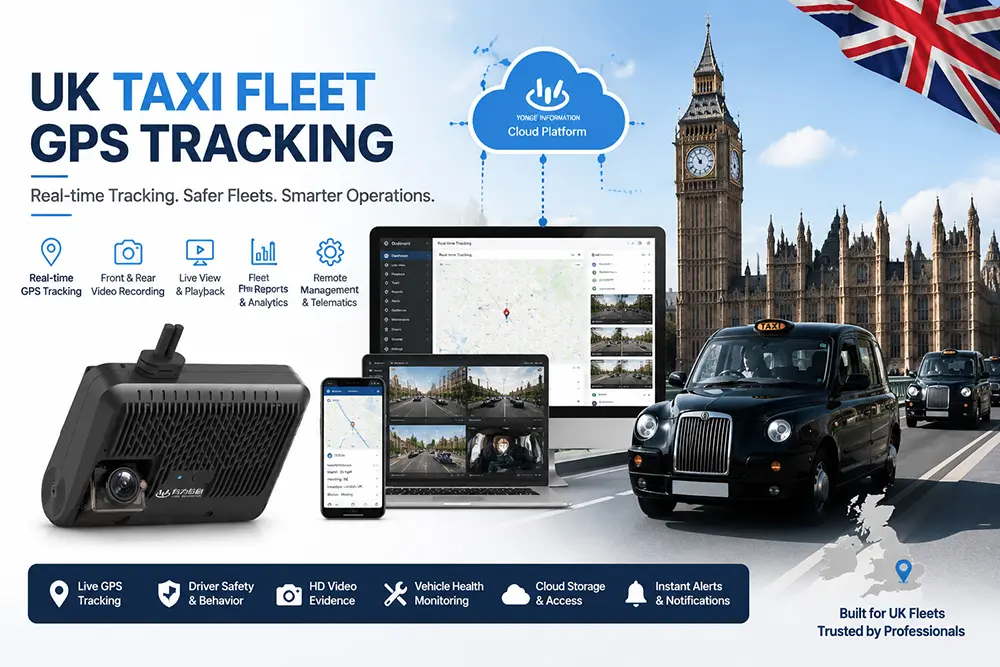
The taxi GPS system launched by YUWEI, a leading UK service provider, transmits location data via satellites and 4G cellular networks with positioning accuracy up to 3 metres. Its hardware is fully compatible with road networks across the UK and continental Europe and consists of two fleet-dedicated product lines:
• Wired GPS devices: Hardwired to vehicle CAN bus to capture real-time vehicle condition data and support driver ID card swiping for shift driver identification.
• Combined GPS & 4G Dash Cam devices: Synchronise positioning and video data from a single source, the preferred option for small and medium-sized fleets.
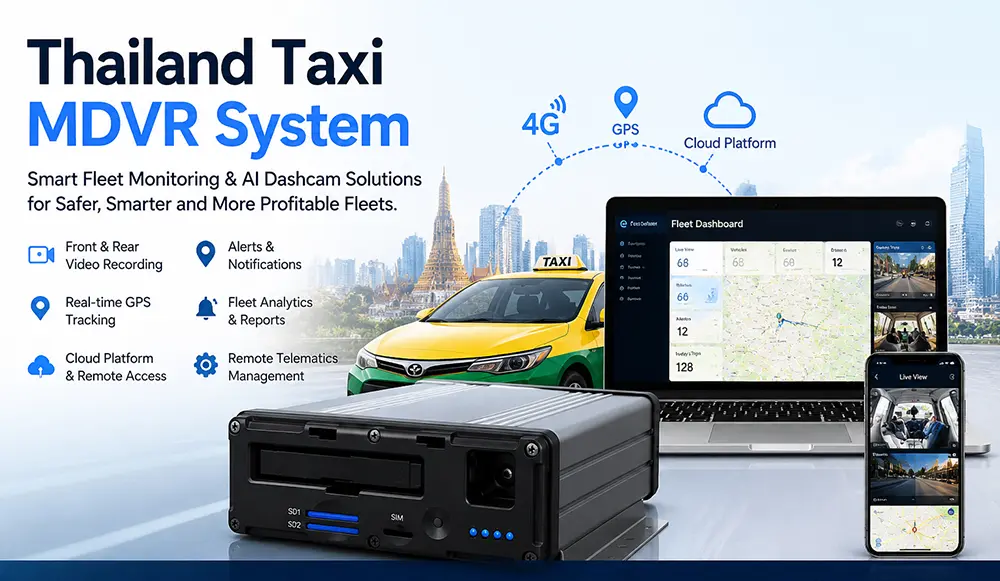
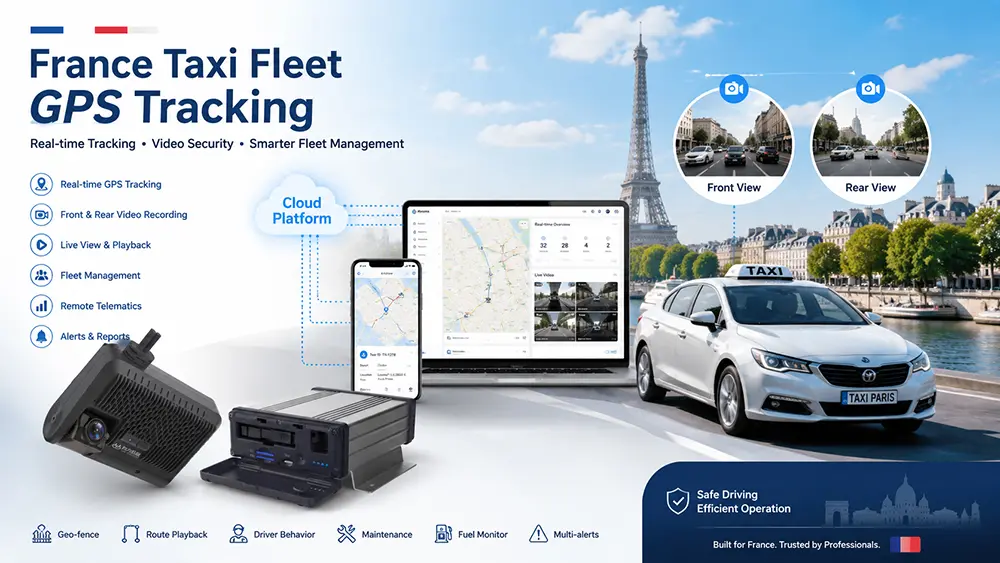
Via the exclusive cloud-based management portal and mobile APP Y-Tool, fleet administrators can check real-time online status, location and travelling speed of all fleet vehicles. The system automatically archives full driving trails and generates complete trip records for every vehicle.
2. Operational Values of Taxi GPS Systems
(1) Intelligent Dispatching & Route Optimisation
Integrated with real-time GPS location data, modern taxi dispatching systems automatically assign the nearest vacant taxis to passengers and eliminate mismatches and delays caused by manual order allocation. Connected to live UK traffic information, the system calculates optimal congestion-avoidance routes to cut empty mileage and engine idling time. After GPS dispatching deployment, average fleet operational efficiency rises by 60% and passenger waiting time is drastically reduced. For university-concentrated and nightlife-heavy towns such as Reading, GPS heat maps enable operators to predict passenger flow peaks and guide drivers to wait at designated pick-up spots to boost daily order volumes.
(2) Cost Control
The GPS system tracks abnormal driving behaviour including prolonged idling, harsh acceleration, sudden braking and speeding, and auto-generates driver performance reports to standardise driving habits and lower fuel consumption. CAN-bus connected GPS units collect real-time engine parameters and trigger automated maintenance reminders to prevent unexpected breakdowns and excessive repair expenses. In addition, most UK insurance carriers offer premium discounts for taxis fitted with approved anti-theft GPS hardware.
(3) Safety Risk Control
The electronic geofencing function lets administrators set restricted operating zones; instant platform alerts are triggered for unauthorised vehicle movement or cross-boundary travel. After boarding, passengers can share live vehicle locations with family and friends via a trip sharing link, safeguarding vulnerable groups including lone female travellers, students and elderly passengers during night journeys. An in-car emergency panic button links to precise GPS coordinates to enable rapid rescue responses from dispatch centres, forming a core night-safeguard mechanism for fleets.
3. Customised Onboarding Advantages for Fleets
Large-scale taxi fleets centrally monitor dozens to hundreds of operating vehicles via a unified management dashboard. Intelligent dispatching cuts labour expenditure while multi-dimensional driver KPI reports support refined staff assessment. The solution meets unified management demands for cross-city chained fleets and resolves persistent industry pain points such as chaotic scheduling, unmonitored operational blind spots and inflated running costs under legacy management models.
Taxi Fleet Dash Cams
1.UK In-Car Camera Regulatory Requirements Across Constituent Nations
In-vehicle CCTV legislation differs significantly across England, Wales, Scotland and Northern Ireland, forming core compliance benchmarks for fleet hardware selection and installation:
1. England: Local councils covering Rotherham, Southampton, Cambridge and numerous other municipalities mandate compulsory in-car CCTV installation with non-manually deactivatable equipment during operational hours. Installation remains voluntary in remaining cities, yet devices must pass municipal certification with encrypted video storage and visible surveillance warning stickers inside cabs. Continuous in-cabin audio recording is prohibited; audio capture is only permitted briefly during emergency SOS activation. Footage is cyclically retained for 7–28 days and solely accessible for police investigations and official inspections; drivers and operators are forbidden from unauthorised access or distribution, with ICO registration required for most deployments.
2. Wales: No nationwide mandatory installation rules, but official uniform guidance is issued and local authorities can impose compulsory fitting policies with identical audio-video compliance standards as England.
3. Scotland: No countrywide statutory installation obligations; operators in Glasgow, Edinburgh and other cities must submit pre-installation applications for municipal approval, with cameras hardwired to vehicle ignition systems to prevent manual power cut-off.
4. Northern Ireland: Governed under a unified central regulatory framework with voluntary dash cam installation; all deployments must comply strictly with GDPR data protection requirements alongside mandatory in-cab labelling and regulated audio-video capture protocols.
2.Two Mainstream Dash Cam Categories & Functional Features
(1) Single/Dual-Channel Connected Dash Cams
Standardised with 1080P HD recording and full-network 4G connectivity, single-lens units record forward roadway footage while dual-lens variants simultaneously capture in-cabin driver activity. Cloud remote video download synchronises footage with GPS coordinates and timestamps to supply valid evidence for traffic accident liability confirmation and passenger dispute resolution, preventing unfounded compensation claims. Compact size and straightforward installation make this variant the mainstream pick for small and mid-sized taxi fleets.
(2) AI-Powered Connected Dash Cams (ADAS+DMS Integrated)
Premium AI dash cams embed ADAS forward collision warning, lane departure alert plus DMS driver fatigue and distraction identification algorithms to push real-time hazardous driving notifications to backend systems. Equipped with infrared night vision lenses, they adapt to the UK’s frequent rainfall and high volume of night-time rides to guarantee clear round-the-clock footage. Auxiliary secondary cameras can be optionally fitted for dual-angle recording with minimal vehicle modification, suitable for all types of small-to-medium commercial taxi fleets.
3.Synergistic Benefits of Combined GPS & Dash Cam Deployment
GPS positioning and dash cam footage create a complete evidence chain: route diversion complaints filed by passengers can be verified by cross-checking driving trails against in-cabin recordings; synced location, speed and video data drastically shorten insurance claim settlement cycles following traffic collisions. Meanwhile, cross-referencing GPS risky driving logs with in-car footage enables targeted correction of irregular driver conduct, cutting fleet accident ratios and recurring maintenance expenditure.
MDVR Multi-Channel Mobile Digital Video Recorders: Premium Multi-Camera Solutions for Large Fleets
1.Core Distinctions Between MDVR and Conventional Dash Cams
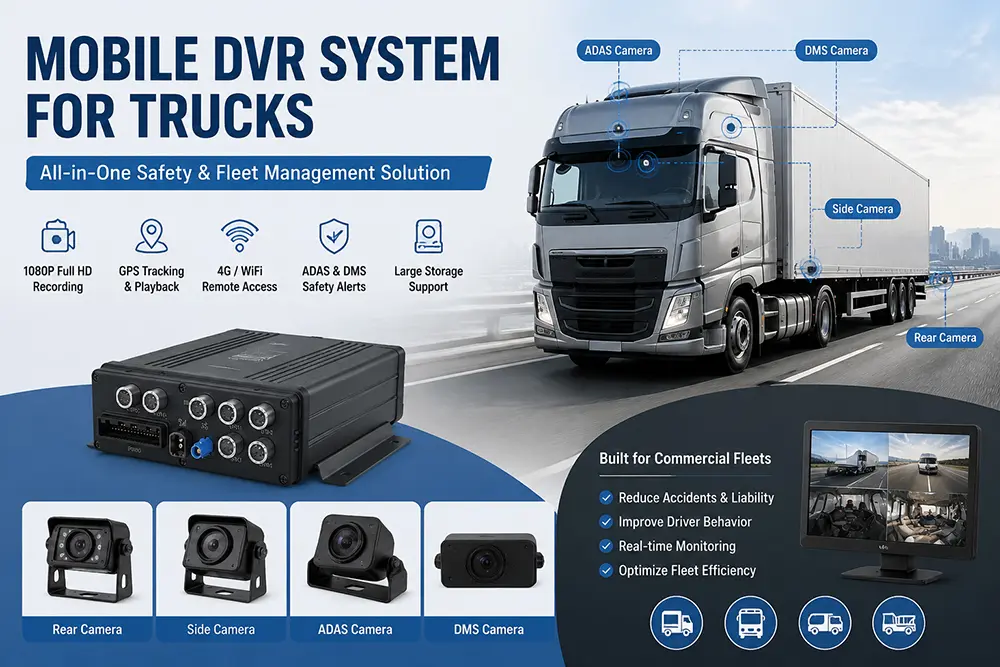
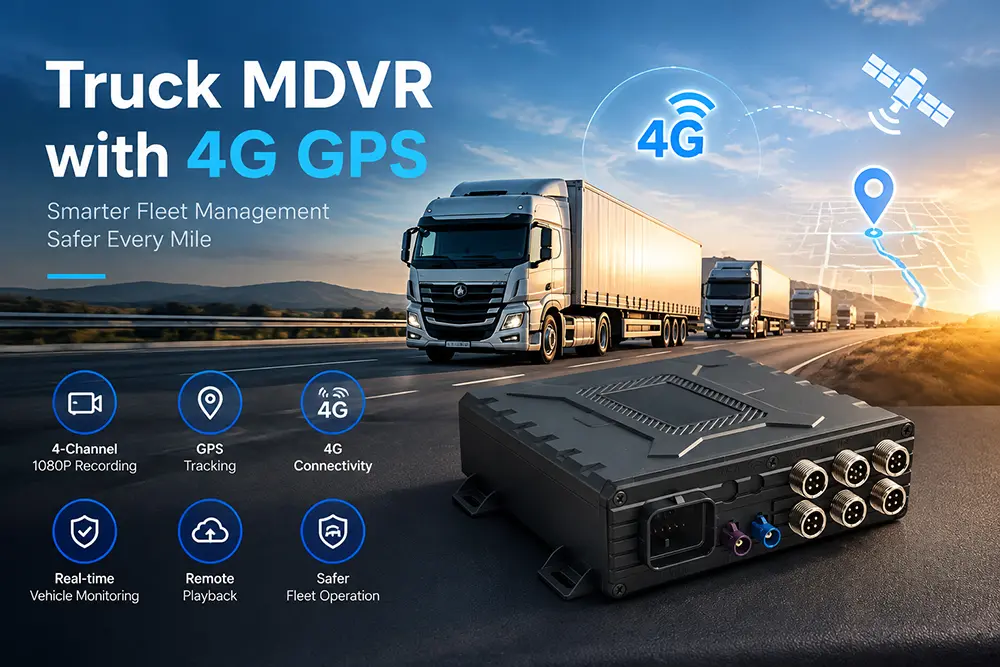
Per industrial specifications, standard dash cams only support 1~2 camera inputs with limited coverage scope. By contrast, MDVR multi-channel vehicle recorders accommodate four or more connected cameras to capture comprehensive footage of front road conditions, driver compartment areas, vehicle blind spots and trunk spaces, paired with high-capacity solid-state storage to satisfy full-coverage monitoring needs for medium-to-large taxi groups and premium private hire fleets. Engineered to withstand intense vehicle vibration during operation, MDVR continues local recording under offline conditions and auto-uploads archived clips to cloud servers upon network restoration, standing as factory-standard hardware for London licensed vehicles complying with DVS Direct Vision requirements.
Product Type | Camera Channels | Storage Mode | Applicable Fleet Scale |
Standard Fleet Dash Cam | 1~2 Channels | Single SD Card with Cyclic Overwrite | Small taxi fleets with under 10 vehicles |
Multi-Channel MDVR Host | 4+ Channels | Dual SD Cards / Vehicle-mounted SSD for High-Capacity Storage | Medium & Large Taxi Corporations, Premium Private Hire Fleets |
Integrated Telematics Video Devices | Multi-Channel + GPS Sync | Dual Local & Cloud Backup Storage | Cross-Regional Mixed-Vehicle Fleets |
2.Key MDVR Application Scenarios in Taxi Operations
1. Full-Cabin Safety Supervision: Multi-angle camera coverage over passenger compartments, vehicle blind zones and luggage compartments mitigates onboard conflicts, lost belongings and theft risks, perfectly fitting high-risk operations including long-distance overnight private hire and shared multi-passenger rides.
2. London New Regulation Compliance: Since October 2024, UK legislation enforces mandatory PSS safety systems alongside side blind-spot cameras for all licensed commercial vehicles exceeding 12 tonnes within London; MDVR multi-camera packages fully satisfy such statutory compliance, with large fleets progressively rolling out this configuration across regular taxi models.
3. Refined Service Evidence Management: Paired with GPS driving trails, omnidirectional archived video enables accurate audits against driver misconduct such as illegal fare surcharges, unapproved route alteration and unlawful ride refusal, supporting standardised service assessment and fleet quality control.
Customised GPS+Dash Cam+MDVR Deployment Guide by Fleet Size
(1) Small & Regional Taxi Operators (5~50 Vehicles)
Tiered hardware allocation based on vehicle application: regular short-distance street-hailing taxis adopt GPS + AI Dash Cam combinations; long-distance and bespoke private hire vehicles upgrade to entry-level 4-channel MDVR units to strike an optimal balance between upfront cost and monitoring capability. All GPS coordinates and video footage are centrally retrievable via a unified cloud platform with seamless cross-device data interoperability.
(2) Large-Scale Chained Taxi Conglomerates (Over 50 Vehicles)
Full-fleet standardised rollout of wired CAN-Bus GPS plus graded camera setups: street-sourcing taxis utilise AI Dash Cams while executive and airport shuttle vehicles deploy multi-channel MDVR hardware. All operational data converges into a unified integrated management backend to deliver end-to-end digitalisation spanning intelligent order dispatching, data analytics, scheduled maintenance oversight and historical video playback. Big data analytics optimises resource allocation to lower overall fleet operating expenditure.
Compliance Rules & Critical Implementation Notes
1.Core Privacy Compliance Guidelines
1. Continuous in-cabin audio recording is strictly prohibited; temporary audio capture is exclusively permitted during SOS emergency triggers, with mandatory surveillance warning labels affixed at all passenger entry points of vehicles.
2. Drivers must receive formal written notification regarding onboard positioning and camera installation; fleet operators assume full data controller responsibilities and complete required ICO registration as applicable.
3. Archived surveillance footage may only be accessed for accident investigations, official regulatory audits and passenger dispute mediation; all commercial exploitation and unauthorised external distribution of passenger video material are banned entirely.
AI cameras paired with GPS deliver proactive early warnings for high-risk road segments, while MDVR platforms are designed for seamless integration into smart city traffic infrastructures. With growing market penetration of electric taxis, this integrated solution will incorporate lithium battery monitoring functions to align with progressively tightened ULEZ environmental regulations. YUWEI’s unified GPS + In-Vehicle Video Management Suite is poised to become mandatory market access equipment for the entire UK taxi industry.
Email:hello@yuweitek.com