














Best ADAS Full HD Camera in 2026
Best ADAS Full HD Camera
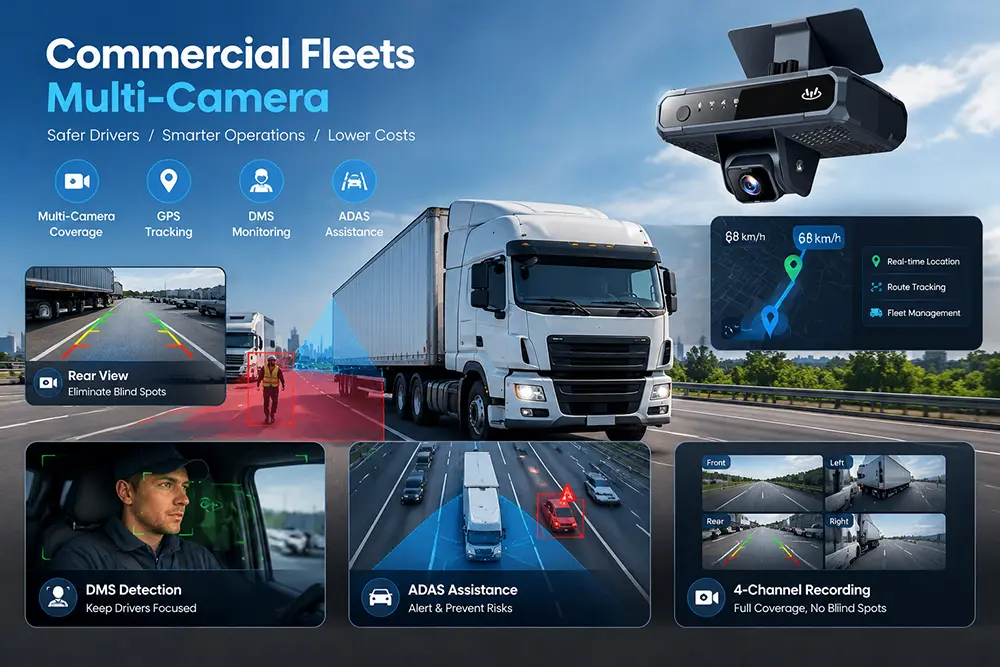
As road traffic complexity increases and fleet management needs upgrade, ADAS full HD cameras—integrating AI algorithms, high-definition imaging, and active safety warnings—have become core safety equipment for scenarios such as private cars, ride-hailing vehicles, logistics fleets, and public transit engineering vehicles. In 2026, ADAS cameras have been comprehensively upgraded in recognition accuracy, functional coverage, networking capabilities, and adaptability.
Working Principle of ADAS Cameras
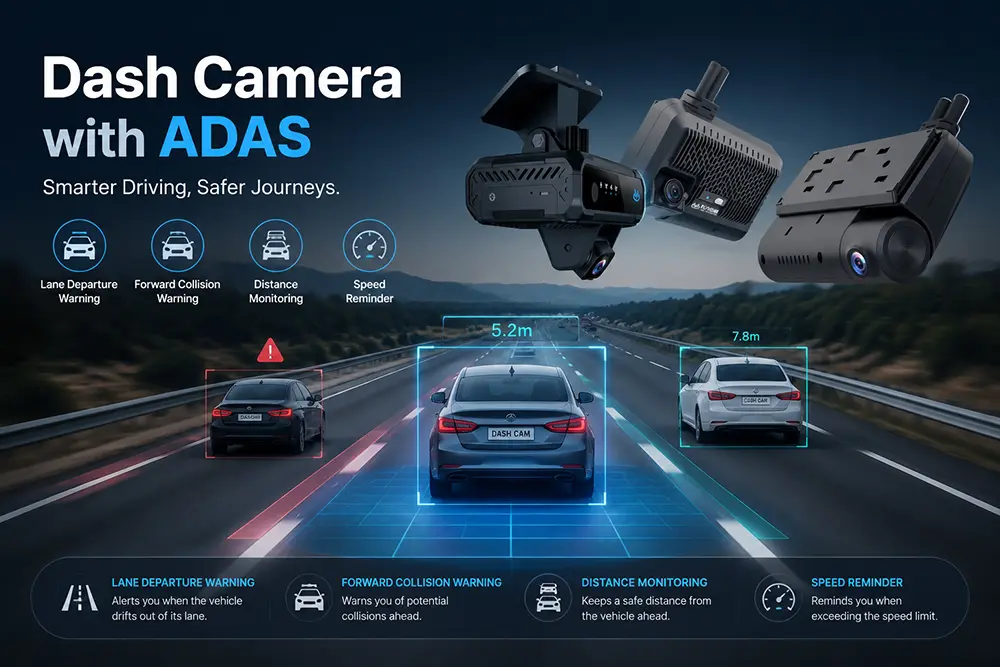
ADAS (Advanced Driver Assistance Systems) cameras are core in-vehicle components that rely on visual sensors, computer vision, and AI algorithms to perceive road conditions in real-time, recognize targets, and trigger safety warnings. Unlike ordinary dashcams, they possess active hazard recognition, real-time voice alerts, and data linkage upload capabilities, which can significantly reduce accident rates caused by human error.
Their working logic is: Camera captures road images → Algorithms recognize lane lines, vehicles, pedestrians, and traffic signs → Calculate distance and collision risk → Trigger warnings or linked interventions, coordinating with radar and positioning modules to achieve sensor fusion, enhancing recognition reliability in complex environments.
Features of ADAS Full HD Cameras
(I) Road Safety Warnings (Core of ADAS)
Lane Departure Warning (LDW): Immediately alerts when crossing lanes without using turn signals; suitable for highway and long-distance driving to prevent distracted drifting.
Forward Collision Warning (FCW): Monitors the distance from the vehicle ahead and warns when approaching at excessive speeds; can reduce rear-end collisions by approximately 27%.
Pedestrian Collision Warning (PCW): Recognizes pedestrians on the road; especially critical in urban scenarios.
Headway Monitoring Warning (HMW): Maintains a safe following distance to avoid sudden braking risks.
Traffic Sign Recognition (TSR): Recognizes speed limits, no-parking zones, traffic lights, and other information.
Front Vehicle Start Alert: Instantly notifies when the vehicle ahead moves while waiting at a stop, preventing traffic delays.
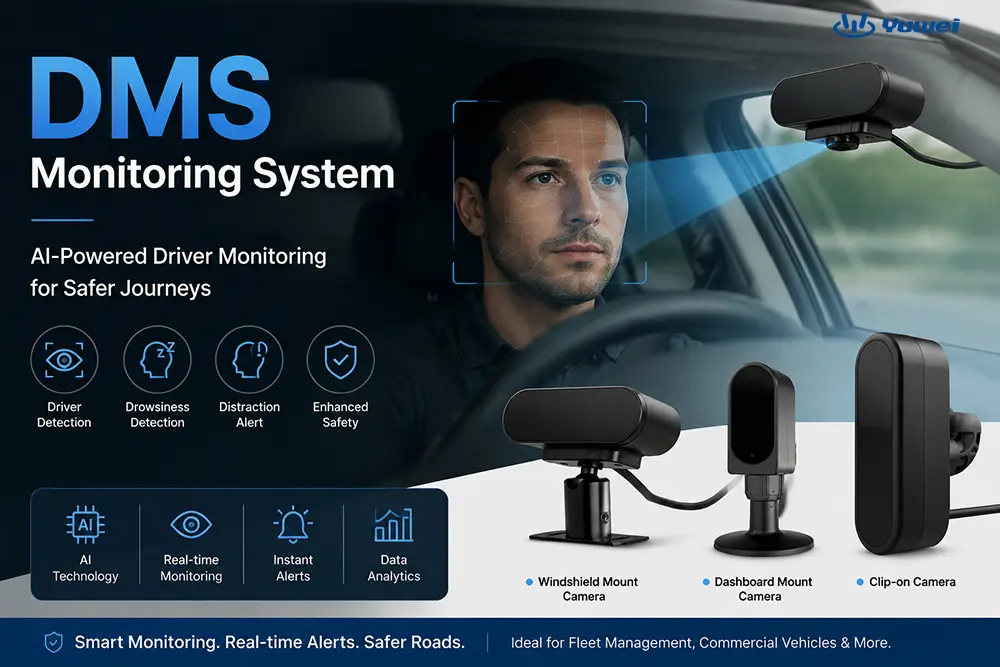
(II) Driver Monitoring System (DMS, Optional for Mainstream High-End Models)
Monitors driving behavior via an inward-facing camera to actively prevent dangerous states:
Fatigue Driving Warning (Eye closure, yawning recognition)
Distracted Driving Warning (Looking around, looking down)
Phone Usage Warning while driving
Unfastened Seatbelt Reminder
Some models support Smoking Detection and Hands-Off Detection (HOD)
(III) High-Definition Recording and Storage (Full HD Standard)
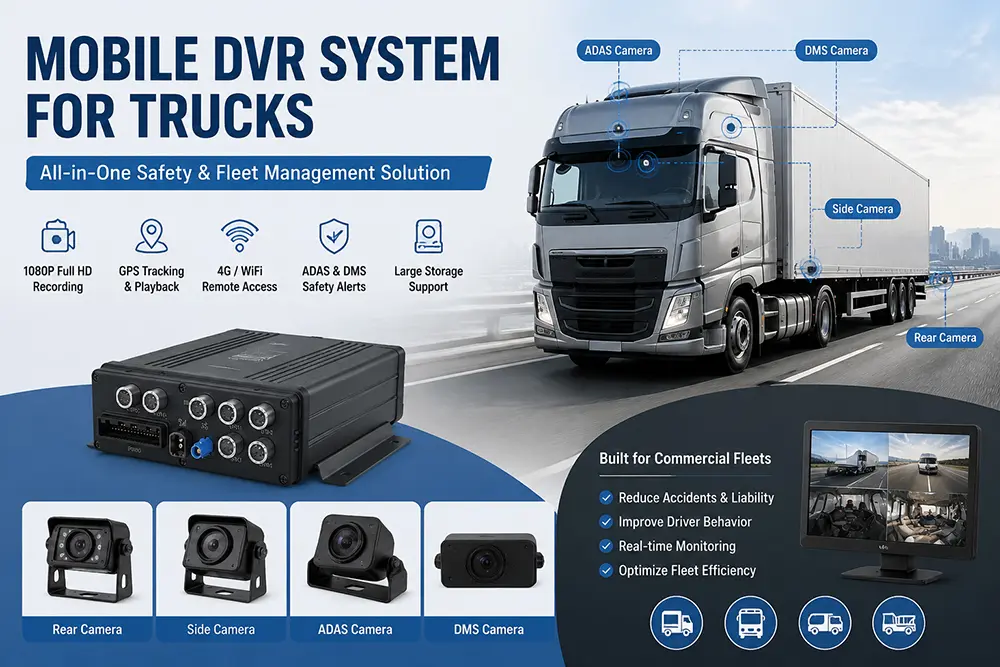
Resolution: 1080P Full HD is mainstream, with some supporting front/rear dual-lens / 4-channel / 8-channel panoramic recording.
Encoding: High-efficiency H.264/H.265 compression saves storage space.
Storage: Supports dual TF cards / hard drives up to 2TB; supports power-off evidence storage and event-marked uploads.
Night Vision: 0.1Lux low illumination, providing clear imaging in low-light environments.
(IV) Networking and Fleet Management (Key Upgrades in 2026)
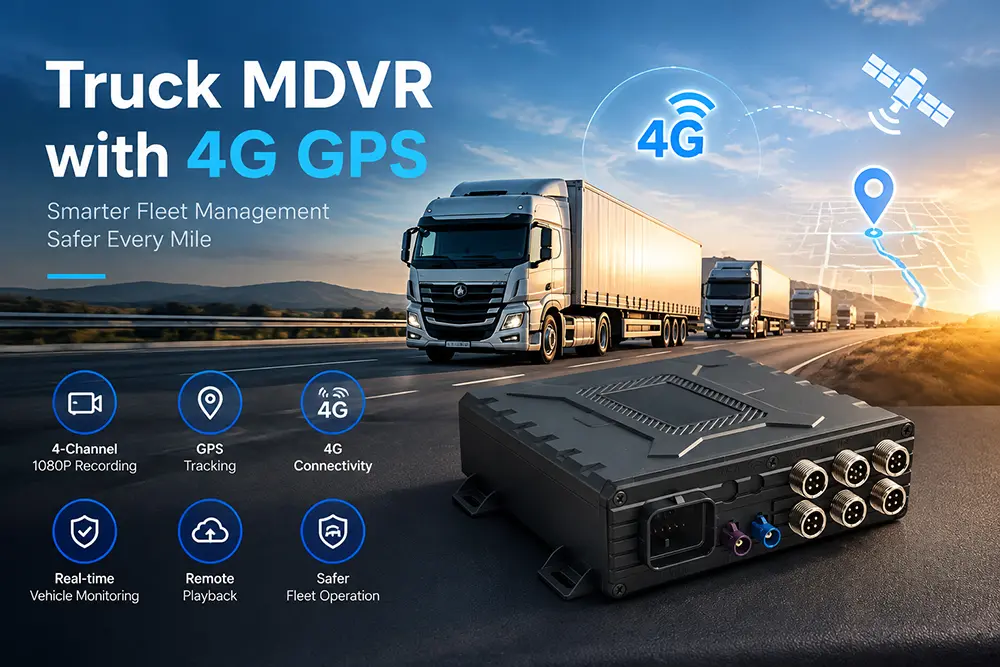
4G/5G Networking + WiFi, supporting real-time video streaming and remote viewing.
GPS/BDS dual-frequency positioning for high-precision vehicle tracking.
Integrates with IVMS and other management platforms to achieve trajectory playback, behavior analysis, route optimization, and remote dispatching.
Key Selection Criteria for ADAS Full HD Cameras in 2026
1. Imaging and Hardware Foundation
Resolution: 1080P Full HD as the baseline to ensure distinguishable details.
Sensor: 2-megapixel CMOS, supporting HDR (High Dynamic Range) to handle strong light/backlight scenarios.
Night Vision: Low illumination ≤0.1Lux for stable nighttime recognition.
Interfaces: Anti-interference automotive interfaces, adapting to wide voltages for stable operation in complex working conditions.
2. Algorithm and Warning Accuracy
False alarm rate <5%, fast recognition response without interfering with driving.
Supports adjustable sensitivity to adapt to highway / urban / congested scenarios.
3. Installation and Adaptation
Small Vehicles: Installed centrally under the rearview mirror on the front windshield without obstructing the view.
Medium/Large Vehicles (Trucks / Buses): Lower-middle part of the front windshield, adapted for large vehicle fields of view.
DMS Camera: 60–120cm from the driver's face, centered without obstruction, angle deviation ≤30°.
4. Environmental Reliability
Working Temperature: -30°C to 70°C, adapting to extremely cold and hot conditions.
Protection Level: Supports 6KV contact / 10KV air protection, resisting automotive circuit interference.
Best ADAS Full HD Cameras in 2026
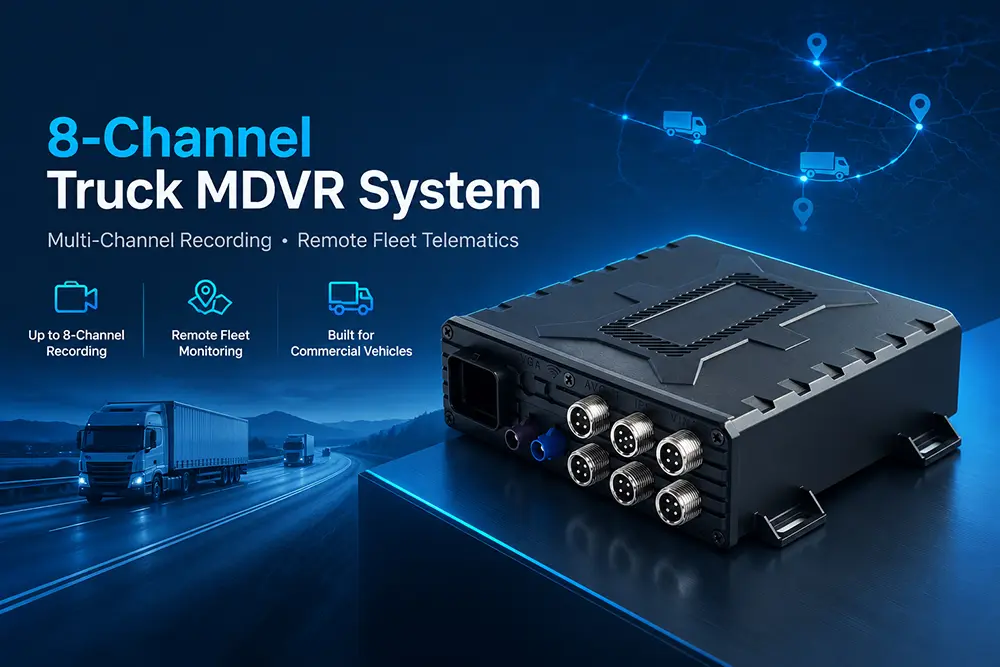
1. V8N 8-Channel AI Mobile DVR (Top Choice for Enterprises)
Channels: 8-channel panoramic, 360° blind-spot-free
Resolution: All channels 1080P, H.265 encoding
Core Features: Full-featured ADAS + DMS + BSD (Blind Spot Detection) + HOD (Hands-Off Detection)
Storage: Max 2TB HDD + Cloud, patented DXR streaming storage for better stability
Network: 4G+WiFi, GPS/BDS dual positioning
Adaptation: Heavy-duty trucks, buses, engineering vehicles, mining trucks, and other heavy fleets
2. V5 4-Channel AI Camera (Bestselling All-Rounder)
Channels: 4 channels (Front + Cabin + Left/Right Sides)
Features: Full-featured ADAS + DMS, two-way intercom
Storage: 256GB SD card + Cloud
Positioning: GPS/BDS dual mode
Adaptation: Ride-hailing cars, taxis, intra-city delivery, standard freight fleets
3. V5C 2-Channel Dual Camera (Cost-Effective Entry-Level)
Channels: Front + Cabin dual lenses
Features: Basic ADAS + DMS, low power consumption optimization
Storage: Max 128GB SD card
Adaptation: Car rentals, small-scale deliveries, lightweight management for private fleets
4. ADAS A1080PS Y5A (Dedicated Front-Facing HD Model)
Sensor: 1/3-inch CMOS, 2 megapixels
Illumination: 0.1Lux low light, auto-exposure / white balance
Viewing Angle: 60°, stable image without distortion
Features: LDW/FCW/PCW/TSR all standard, purely ADAS-focused model
Advantages and Precautions of ADAS Cameras
Core Advantages
Active Safety: Warnings cover lanes, collisions, pedestrians, and fatigue, significantly reducing accident rates.
Fleet Efficiency: Real-time positioning, behavior analysis, and remote management lower operating and insurance costs.
All-Scenario Adaptation: Usable from private cars to heavy fleets, and from cities to long-distance routes.
Reliable Evidence Collection: HD recording + event marking + cloud upload ensure clear attribution of responsibility.
Precautions
Strong light, heavy rain, and dense fog will affect visual recognition; it cannot completely replace human driver observation.
Recalibration is required after front windshield replacement or collision repair to ensure accuracy.
Regularly clean the lens to prevent smudges from reducing recognition effectiveness.
In 2026, ADAS full HD cameras have transitioned from high-end optional features to standard safety equipment. The best models generally possess six core capabilities: 1080P high definition, low false-alarm AI algorithms, all-scenario warnings, 4G networking, wide-temperature stability, and fleet platform adaptation.
Individual car owners should prioritize basic ADAS + HD recording models; fleet managers are recommended flagship models like the V8N/V5 that offer multi-channel, full-featured, and platform-manageable capabilities, balancing the triple value of safety, management, and cost to escort smart travel and efficient operations.
Email:hello@yuweitek.com