












Best The 10 Commercial Vehicle MDVR Camera Systems
Commercial Vehicle MDVR Camera Systems
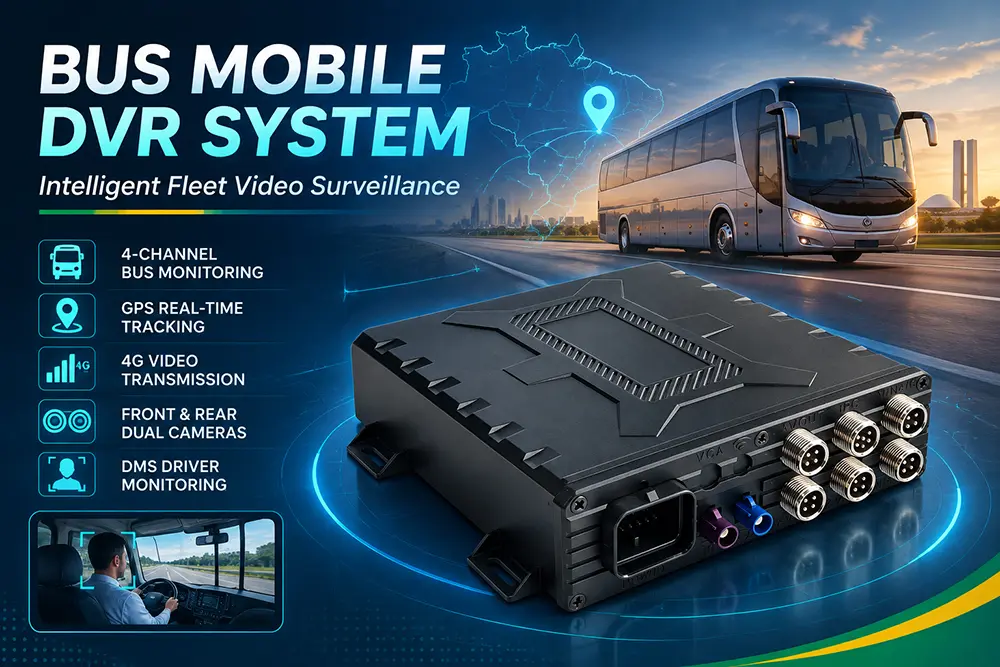
Entering 2027, an increasing number of commercial vehicle onboard monitoring systems (trucks, buses, school buses, delivery vehicles, garbage trucks, construction vehicles, and other commercial fleets) are integrating Mobile DVR (MDVR), multi-channel vehicle cameras, 4G/5G, GPS, AI, ADAS, DMS, BSD, and Fleet Management Platforms. Fleet managers not only need to record accidents but also want to reduce driving risks, cover vehicle blind spots, and remotely access video footage.
This article compiles the best 10 commercial vehicle MDVR camera systems in 2027 to help fleet managers in the US, Canada, the UK, Europe, and Australia find solutions that better suit their vehicles and operational environments.
What is a Commercial Vehicle MDVR Camera System?
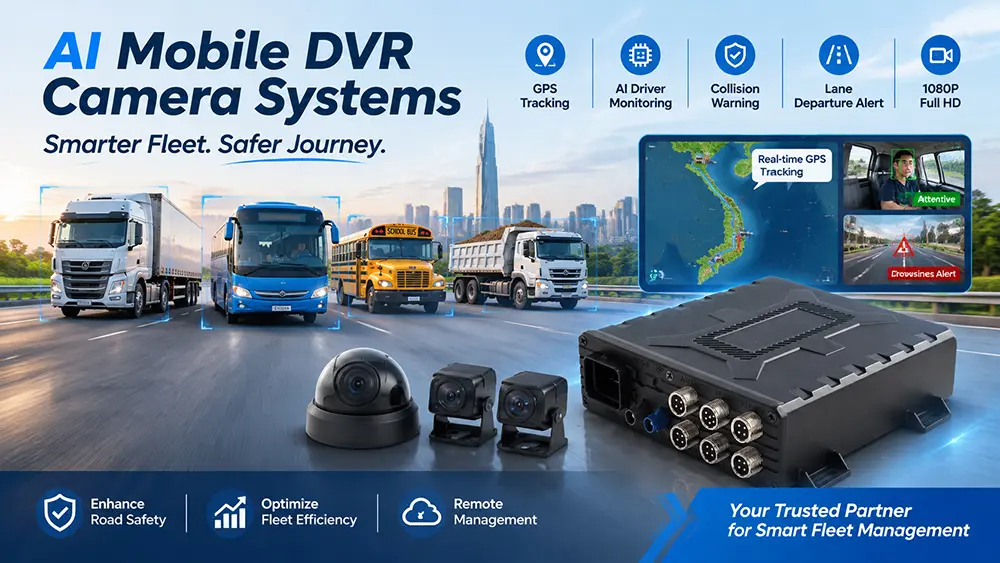
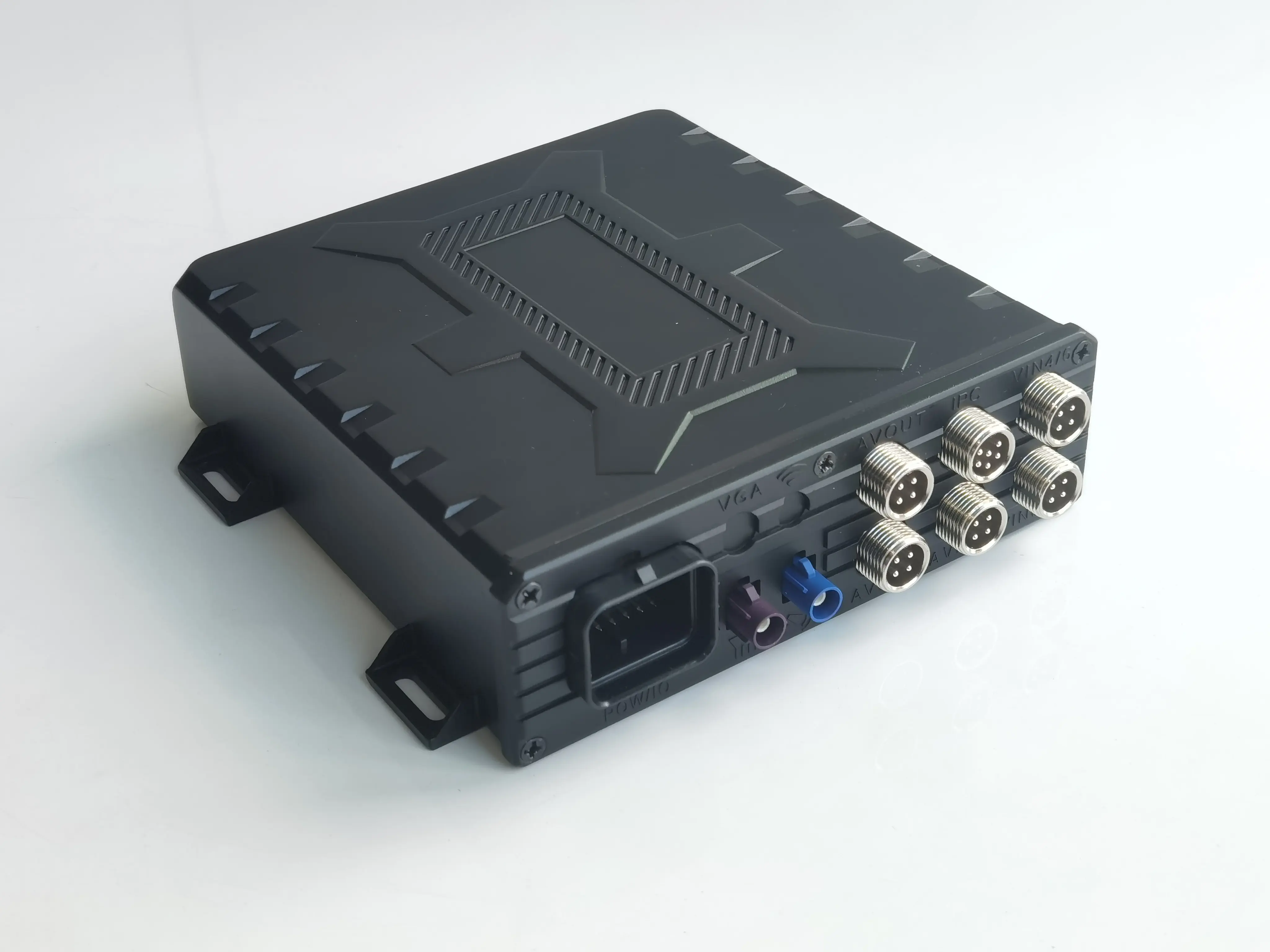
MDVR stands for Mobile Digital Video Recorder. Unlike a standard Dash Cam, an MDVR can typically connect to multiple cameras simultaneously and supports local vehicle recording, GPS tracking, 4G remote video, alarm uploads, and fleet management.
For example, a heavy-duty truck can be equipped with a forward-facing camera, a driver camera, left and right side cameras, a rearview camera, and a cargo area camera simultaneously, with the MDVR unifying the recording and data management.
Top 10 Commercial Vehicle MDVR Camera Systems in 2027
1. YUWEI F4/F6 mobile DVR
The YUWEI F4 can provide different camera channel configurations based on the project and integrates 4G, Wi-Fi, GPS/BDS, and local recording functions. Some solutions support 2/4/8 channels of video and can be configured with ADAS, DSM, and BSD to monitor forward road risks, driver status, and vehicle blind spots.
For a heavy-duty truck, forward-facing, driver, left-side, right-side, rear, and cargo cameras can be installed according to actual needs, achieving synchronized recording across different areas of the vehicle.

The F4 also supports storage methods such as hard drives and SD cards, enabling vehicles to continue local recording even in areas with poor 4G coverage.
The YUWEI F6 leans more toward complex vehicle environments. It supports H.265/H.264, 4G, Wi-Fi, GPS, as well as ADAS, DMS, and BSD, while supporting HDD/SSD and SD card storage.
Main Advantages: Flexible camera channel configuration, strong local recording capabilities, and support for AI driving safety functions, along with room for OEM/ODM and project customization. As primarily a Chinese manufacturer, prices are up to 30% lower than other manufacturers; bulk purchase discounts are even larger, and service efficiency is high.
2. Brigade Electronics MDVR-644
The UK's MDR-644 is a typical 8-channel vehicle recording solution that supports 4 analog cameras and 4 IP cameras, offering 1TB or 2TB SSD versions. Certain models can be configured with both 4G and Wi-Fi simultaneously.
This architecture is ideal for large vehicles that require multiple cameras installed around the body, such as garbage trucks, concrete mixers, construction machinery, and urban service vehicles.
Compared to a standalone AI Dash Cam, Brigade places greater emphasis on visual coverage around the vehicle and real-time visualization for the driver.
3. Safety Vision Observer 4824 AI
The US Observer 4824 AI is a Mobile NVR system that can connect to 16 IP cameras and 8 HD cameras, totaling up to 24 channels of video, and supports up to 16TB of storage. The system also integrates GPS, Wi-Fi, and Cellular Networking.
It simultaneously supports AI functions such as ADAS, BSD, DMS, and automatic passenger counting, making it particularly suitable for buses and large vehicles.
4. VisionTrack VT6.3
VisionTrack is a UK-based Video Telematics company that also offers true multi-channel MDVR products. Its VT6.3 is an 8-channel MDVR that can be combined with multiple commercial vehicle cameras to provide video coverage for the front, cab, sides, rear, and cargo area of the vehicle.
The VT6.3 is primarily aimed at commercial vehicles requiring multi-channel cameras and real-time/historical video data, integrating data such as GPS tracking, speed, and G-Sensor metrics.
A key feature of VisionTrack is that the MDVR can be integrated with its Autonomise.ai platform. Following a collision, Near Miss, or Harsh Driving Event, relevant video can be uploaded to the platform for accident investigation and risk management.
5. Lytx 360 Hub Kit
Released in 2026, the Lytx 360 Hub Kit can connect to 4 HD auxiliary cameras and expand to a maximum of 8 channels to cover the sides, rear, cargo areas, and Blind Zones. The system supports up to 1080P auxiliary cameras and can perform continuous local recording. Auxiliary camera video can be synchronized with DriveCam footage and accessed remotely via LTE.
Compared to traditional MDVRs, Lytx's core advantage leans more toward AI Safety and Driver Coaching, rather than simply pursuing large-capacity hard drive recording.
6. Netradyne Driver•i D-810
The Netradyne Driver•i D-810 is a highly AI-driven Fleet Camera System. It supports up to 8 AI cameras, which can cover the cab, trailer, and Blind Spots around the vehicle, utilizing Edge AI for real-time analysis.

The system not only analyzes hazardous events but also analyzes the entire driving process, helping drivers proactively correct risky behaviors through in-cabin alerts.
7. Samsara AI Multicam
In 2026, Samsara continued to expand its AI Multicam and 360 Camera capabilities, further increasing multi-angle video coverage around the vehicle. For a Fleet Manager, the value lies in being able to put Camera, GPS, Vehicle Telematics, Safety Events, and Fleet Operations onto a single platform. If an enterprise is already using Samsara for vehicle management, adding AI Video is typically much more convenient than building a separate MDVR platform.
8. Motive AI Dashcam Plus
Motive's AI Dashcam Plus, launched in 2026, integrates the AI Dash Cam and Vehicle Gateway into a single device and uses Stereo Vision to enhance forward distance and collision risk identification. It can identify various types of driving risks.

9. Geotab GO Focus Plus
Canada's Geotab is one of the major players in the global Fleet Telematics market. The GO Focus Plus integrates AI Dash Cam, ADAS, DMS, and Telematics data into the MyGeotab platform. The system can detect road risks such as Tailgating, Lane Departure, and Speeding, while identifying driver behaviors like phone use, fatigue, and distraction, providing real-time voice alerts.

10. Teletrac Navman Multi IQ
Teletrac Navman has an extensive Fleet Management footprint across North America, the UK, Australia, and New Zealand. Its Multi IQ Camera, in addition to built-in forward-facing and driver cameras, can connect to up to 5 auxiliary vehicle cameras for the cab, vehicle sides, rear, cargo area, and even the chassis. The Multi IQ is also integrated with the TN360 Fleet Management Platform, so fleets can manage AI Video and vehicle operational data within a single system.
Is a 4-Channel, 6-Channel, or 8-Channel MDVR Better for Commercial Vehicles?
For a standard Delivery Van, small Box Truck, or Service Vehicle, a 4-channel setup covering the front, driver, rear, and one side blind spot is typically sufficient to meet basic needs. For heavy-duty trucks, buses, and long-haul transport vehicles, 6-channel systems are more common, adding left and right side cameras as well as a cargo or rear camera.
What Should You Focus On When Choosing a Commercial Vehicle MDVR in 2027?
First, look at Camera Channels. If there is a possibility of upgrading from 4 channels to 6 or 8 channels in the future, it is best to choose a platform with expansion capabilities in advance.
Second, look at Local Storage. If vehicles frequently operate in mining areas, long-haul highways, remote regions, or areas with unstable cellular networks, a local HDD, SSD, or SD Card is crucial.
Third, look at 4G/5G Remote Video. Whether a Fleet Manager can remotely view Live Video, download accident footage, and check the vehicle's GPS location directly impacts accident handling efficiency.
Fourth, look at ADAS, DMS, and BSD. These functions are used for road risk, driver status, and vehicle blind spot monitoring respectively, and are increasingly important features of modern AI MDVRs.
Fifth, look at the Fleet Management Platform. For enterprises with over 100 or even 1,000 vehicles, the more cameras there are, the more complex management becomes if there is no unified platform.
Email:hello@yuweitek.com