











Best Front and Rear Dash Cam for Pickup Truck
Best Front and Rear Dash Cam for Pickup Truck 2026
With the extensive application of pickup trucks in daily commuting, off-road transportation and commercial scenarios, the Front and Rear Dash Cam for Pickup Truck has become a standard safety device. Compared with ordinary sedans, pickup trucks feature longer vehicle bodies, more blind spots and more complex application scenarios, hence they have higher reliance on the front + rear camera dash cam system.
Why Must Pickup Trucks Be Equipped with a Front and Rear Dual-Lens Dash Cam?
Pickup trucks have several typical drawbacks in actual driving:
• Large rear visual blind spots (especially during reversing and trailer towing)
• Higher risks of rear-end collisions and scratches during urban parking
• Unobservable potential hazards from behind when driving at high speeds
• Higher accident rates at night and in harsh weather conditions
For this reason, most fleets and professional drivers prefer to adopt the dual dash cam system or split front and rear camera systems to tackle these issues.
From industrial practical experience, the core values of front-and-rear dual-channel recording are as follows:
• Simultaneously capture road conditions ahead and driving behaviors of following vehicles
• Form a complete chain of accident evidence
• Improve the efficiency of insurance claims settlement
• Reduce the risk of liability disputes
Mainstream Types of Front and Rear Dash Cams in 2026
1. Standard Front + Rear Dual Dash Cam System
This is the most common configuration adopted by pickup trucks at present.
Typical structure:
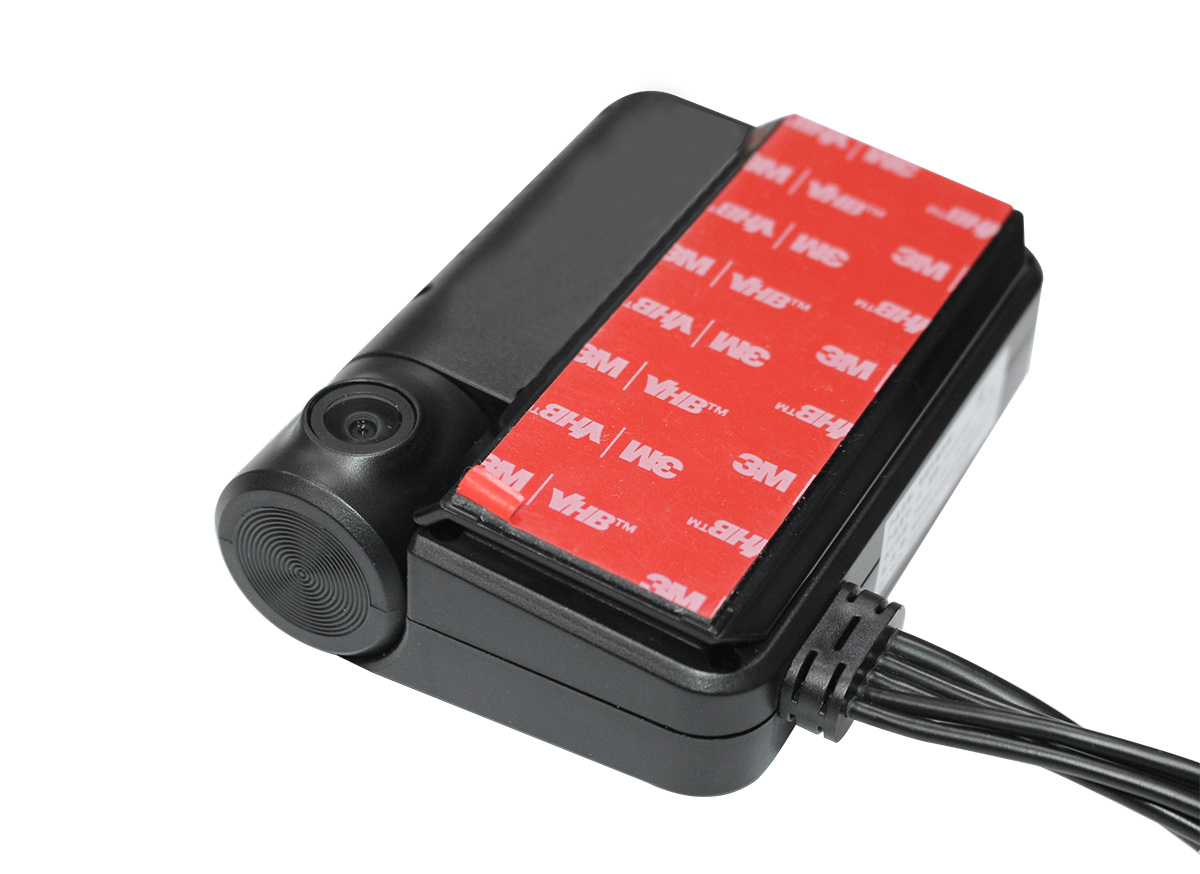
• Front camera: Captures the main forward road view
• Rear camera: Records rear-end collisions and driving behaviors of vehicles behind
The industry generally regards this type of system as the optimal basic solution for most users, suitable for daily driving and light commercial use scenarios.
2. High-Resolution Front and Rear Dash Cam System
Industry trends in 2026 indicate that high-end devices are widely equipped with the following configuration:
• Front camera with 1080P resolution
Its key advantages include:
• Higher accuracy for license plate recognition
• Richer image details in low-light night environments
• More stable video footage when the vehicle is moving at high speeds
Such systems have become the mainstream choice for high-end pickup truck owners.
3. Multi-Channel Dash Cam System
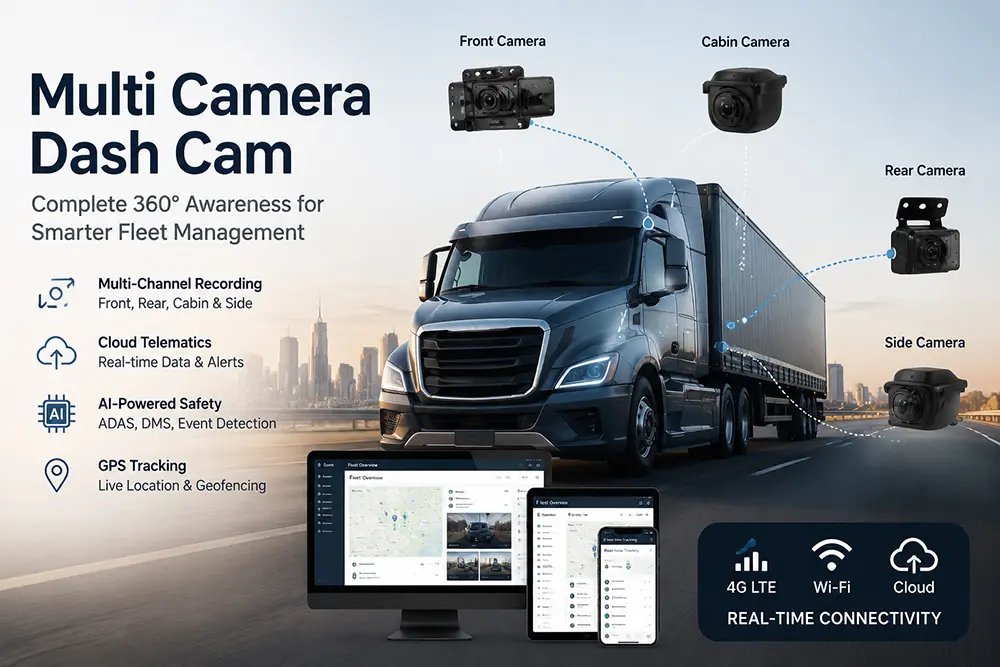
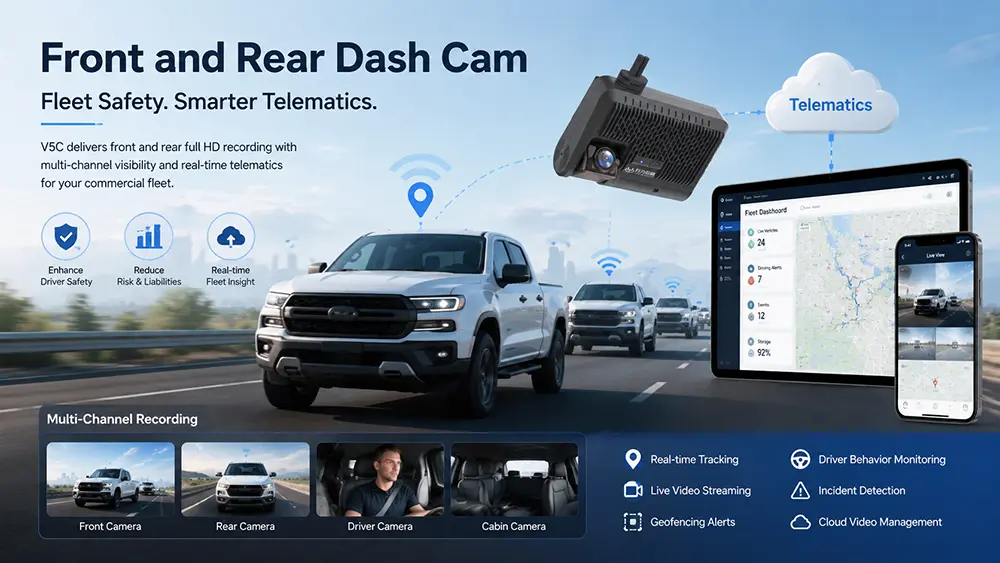
Some pickup truck users (especially for engineering vehicles and logistics trucks) will upgrade to the multi-channel configuration including:
• Front camera
• Rear camera
• In-cabin camera
• Side-view cameras
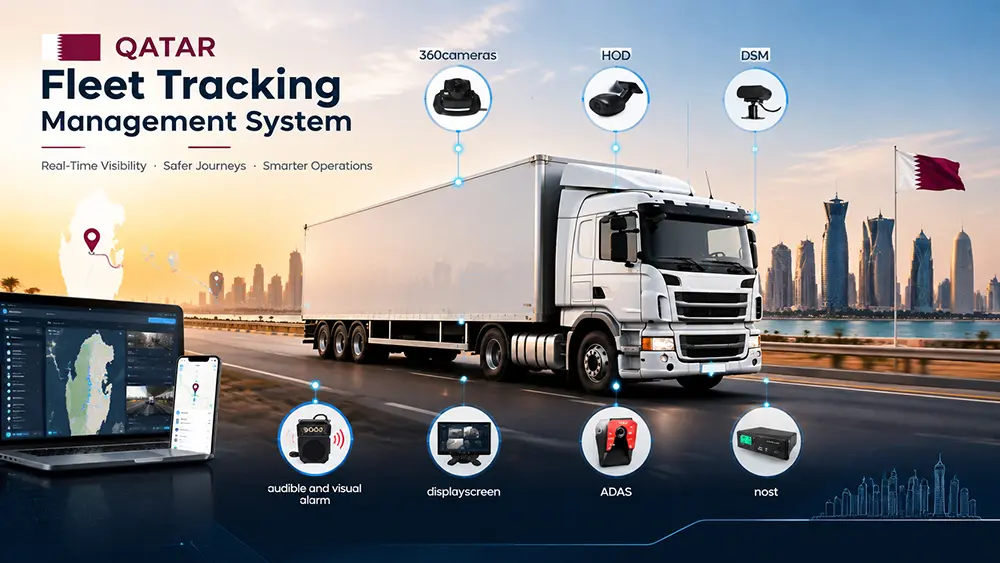
This type of system is close to fleet-level solutions and enables comprehensive vehicle monitoring.
Core Functional Modules of Front and Rear Dash Cams
1. Dual-Way Forward and Rearward Accident Recording
The dual-camera system synchronously records the following information:
• Traffic conditions ahead
• The whole process of rear-end collisions
• Sudden lane changes of adjacent vehicles
This function is critical for accident reconstruction of pickup trucks under complicated road conditions.
2. GPS & Driving Track Recording
Modern dash cams are usually embedded with a GPS module to realize the following functions:
• Record real-time driving speed
• Track driving routes
• Support accident location positioning
This feature plays a vital role in insurance claim processing.
3. Parking Monitoring Mode
After the vehicle engine is turned off:
• The device automatically switches to low-power monitoring mode
• Automatically triggers video recording upon collision or vibration detection
• Saves video clips of key incidents
This function is particularly essential for pickup trucks parked outdoors overnight.
4. Night Vision and Low-Light Image Enhancement
Mainstream technological trends in 2026 cover:
• Starlight-level night vision technology
• HDR dynamic range optimization
• AI noise reduction enhancement
These technologies are designed to solve the difficulty of license plate recognition at night.
Selection Criteria for Pickup Truck-Specific Dash Cams
Based on industry consensus, the key factors to consider when choosing the best dash cam for pickup truck are listed below:
1. Coverage Range
The device must cover three core scenarios:
• Forward road conditions
• Rear vehicle movements
• Vehicle parking surroundings
2. Video Resolution
Recommended mainstream specification:
• 1080P (basic configuration)
3. Operational Stability
Stability indicators include:
• High and low temperature resistance
• Shockproof performance
• Stable loop recording for long-duration use
4. Application Scenarios for Personal or Fleet Use
• Private pickup trucks: A standard dual-channel dash cam system meets demand
• Commercial pickup trucks: A multi-channel dash cam system is recommended
• Long-distance transportation: Devices equipped with AI analysis, GPS positioning and cloud management are preferred
Industry Trends: Upgrade Directions in 2026
According to public industrial data, front and rear dash cams are evolving toward the following directions:
● AI Driving Behavior Analysis
The intelligent system can identify risky driving behaviors such as:
• Driver fatigue
• Distracted driving
• Insufficient following distance
● Remote Cloud Access
Supported functions:
• Real-time live viewing via mobile phones
• Cloud video storage
• Remote video footage retrieval
● Multi-Camera Data Fusion
Dash cams have been upgraded from simple recording tools to:
Vehicle Safety Intelligence System |
For pickup truck users in 2026, the best front and rear dash cam for pickup truck is no longer merely a video recording device, but a comprehensive driving safety system.
Email:hello@yuweitek.com