








Best Reach Truck Camera System
Reach Truck Camera Systems
Reach trucks are widely used in warehouses, logistics centers, manufacturing plants, and distribution centers. These vehicles typically operate in narrow aisles and around high-bay racks. Drivers frequently need to move forward, reverse, steer, and stack goods. Consequently, visual blind spots, pedestrian collisions, reversing accidents, and driver distractions represent common safety risks.
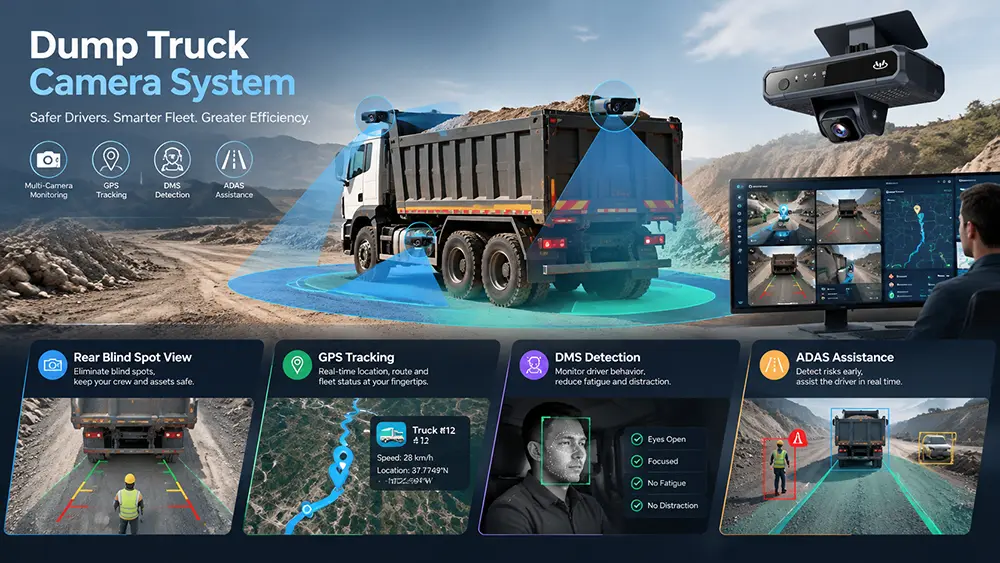
Forklift camera systems in 2026 are no longer just a simple "camera + monitor" setup. A more complete solution usually includes: AI collision detection, driver monitoring, real-time display, audible and visual alarms, video recording, and remote management.
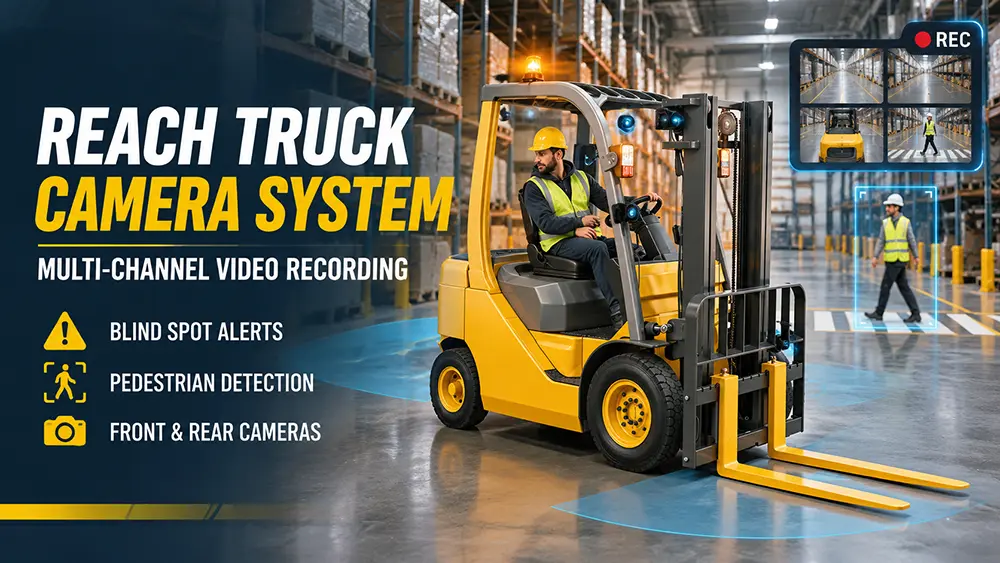
What is a Reach Truck Camera System?
A reach truck camera system is a visual safety system installed on reach trucks or narrow-aisle forklifts.
It helps drivers to:
1.View vehicle blind spots
2.Observe the front and rear environment
3.Identify potential obstacles
4.Alert on collision risks
5.Record operational footage
Forklift Accident Data
US: More Than 5,000 Severe Forklift Injuries in 10 Years
Latest OSHA severe injury reports in the United States show:
From 2015 to 2024, a total of 5,186 severe injury incidents involving forklifts were reported.
This averages out to roughly:9 severe injuries per week.
Why Do Reach Truck Accidents Happen?
Mast and Cargo View Obstruction
The mast, forks, and palletized cargo of a reach truck can obstruct the driver's line of sight. The larger the cargo size, the more pronounced the forward blind spot becomes. Therefore, a forward-facing camera serves as a crucial visual aid for the driver.
Reversing Blind Spots
Reach trucks frequently reverse within warehouses. If a driver fails to notice pedestrians or obstacles behind the vehicle in time, collisions can easily occur. Hence, rear-facing cameras and rear collision detection are essential.
Narrow Aisles and Intersections
Reach trucks are inherently designed for narrow aisles. The narrower the passage, the smaller the safety clearance between the vehicle and the racking.
High-risk locations include:
1.T-intersections
2.Aisle crossings
3.Warehouse doorways
4.Loading/unloading zones
5.Rack-shaded areas
These locations are prone to creating visual blind spots.
Pedestrian-Forklift Mixed Traffic
A major risk in warehouses occurs when pedestrians suddenly emerge from behind racks, doorways, or behind vehicles into the forklift path. Relying solely on the driver's naked eye cannot completely eliminate this risk. AI pedestrian detection adds an extra layer of safety protection.
Driver Fatigue and Distraction
Forklifts often operate continuously for long hours.
Drivers may experience:
1.Fatigue
2.Closed eyes
3.Decreased alertness
4.Mobile phone use
5.Distracted operation
Traditional reversing cameras cannot identify these issues. The DSM (Driver Status Monitoring) system introduces this critical safety dimension.
What Functions Do Reach Truck Camera Systems Offer?
YUWEI Reach Truck Camera System
The YUWEI solution is a comprehensive forklift safety architecture. It not only monitors the front and rear environment of the vehicle, but also tracks the driver's state.
Main hardware includes:
1.Forward Collision Detection
2.Rearward Collision Detection
3.Display Screen
4.DSM
5.Audible and Visual Alarm
6.MDVR
Forward Collision Detection
The forward detection device is installed at the front of the forklift, primarily monitoring the forward direction of motion. It helps drivers spot:
1.Pedestrians
2.Other forklifts
3.Racking units
4.Warehouse equipment
5.Frontal obstacles
When integrated with AI algorithms, it can automatically recognize potential high-risk targets.
Key Benefits
Reduces front visual blind spots.
Lowers the risk of collisions between the forklift and personnel, equipment, or racking.
Rearward Collision Detection
The rear camera primarily monitors the area behind the forklift. For a reach truck, this feature is critical because the vehicle needs to reverse frequently during cargo retrieval and maneuvering.
The system helps drivers spot rearward:
1.Pedestrians
2.Vehicles
3.Pallets
4.Obstacles
It can trigger alarms whenever necessary.
Key Benefits
Reduces reversing collision risks.
Particularly suited for warehouses, loading zones, and mixed pedestrian-vehicle traffic areas.
On-Board Display Screen
The display screen provides real-time video footage for the driver, offering a clearer, more intuitive view of the surrounding environment. This minimizes reliance on mirrors and shoulder checks.
Key Benefits
Expands the driver's field of view.
Enhances situational awareness regarding surrounding personnel and obstacles.
DSM Driver Status Monitoring
Driver Status Monitoring
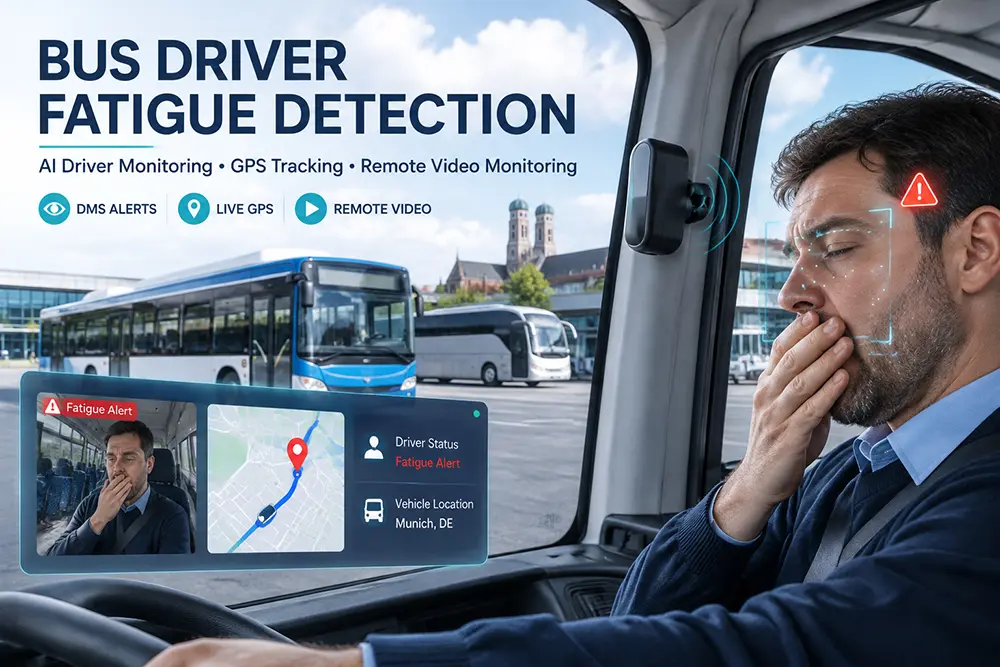
The DSM camera is installed near the driver to monitor their status.
Equipped with AI algorithms, it can identify:
1.Fatigue
2.Closed eyes
3.Yawning
4.Distraction
4.Mobile phone use
Key Benefits
Extends forklift safety management from "monitoring the vehicle" to "monitoring the driver."
Audible and Visual Alarm
Audible and Visual Alarm
Once a hazard is detected, the system needs to alert the driver immediately. The audible and visual alarm provides dual warnings using sound and light, which is far more immediate than merely showing risk indicators on a display screen.
Key Benefits
Enables drivers to detect hazards faster.
Adaptable to high-noise industrial environments.
MDVR Mobile Digital Video Recorder
Mobile Digital Video Recorder
The MDVR acts as the data center for the entire system. Cameras capture video, alarms trigger alerts, and the MDVR handles data storage and management.
Depending on configuration, the MDVR supports:
1.Multi-channel video recording
2.Event recording
3.Local storage
4.GPS positioning
5.4G/Wi-Fi connectivity
6.Remote video monitoring
7.Fleet management
This allows managers to analyze:
1.What happened prior to an accident
2.What the driver was doing at the time
3.Whether pedestrians were present nearby
4.Which areas trigger alarms most frequently
5.Which drivers regularly trigger risk events
Key Benefits
Improves the efficiency of accident investigation and fleet safety management.
Reach Truck Camera System Hardware Configuration
Based on the hardware layout, this solution mainly comprises:
Key technical specs to consider:
1.Camera pixel resolution
2.IP protection rating
3.Detection range
4.Display screen size
5.MDVR channel capacity
6.Storage capacity
How to Choose the Best Reach Truck Camera System?
Do not focus solely on camera pixels. The key is whether the system resolves your actual operational risks.
1.If your primary risk is reversing accidents, prioritize: Rear Collision Detection
2.If your warehouse has heavy pedestrian foot traffic, choose: AI Pedestrian Detection + Audible & Visual Alarm
3.If you operate a large fleet, focus on: MDVR + 4G + GPS + Fleet Management
4.If drivers operate over long continuous shifts, add: DSM Driver Monitoring
Email:hello@yuweitek.com