










Best Fleet Monitoring Equipment
Fleet Monitoring Equipment Manufacturer
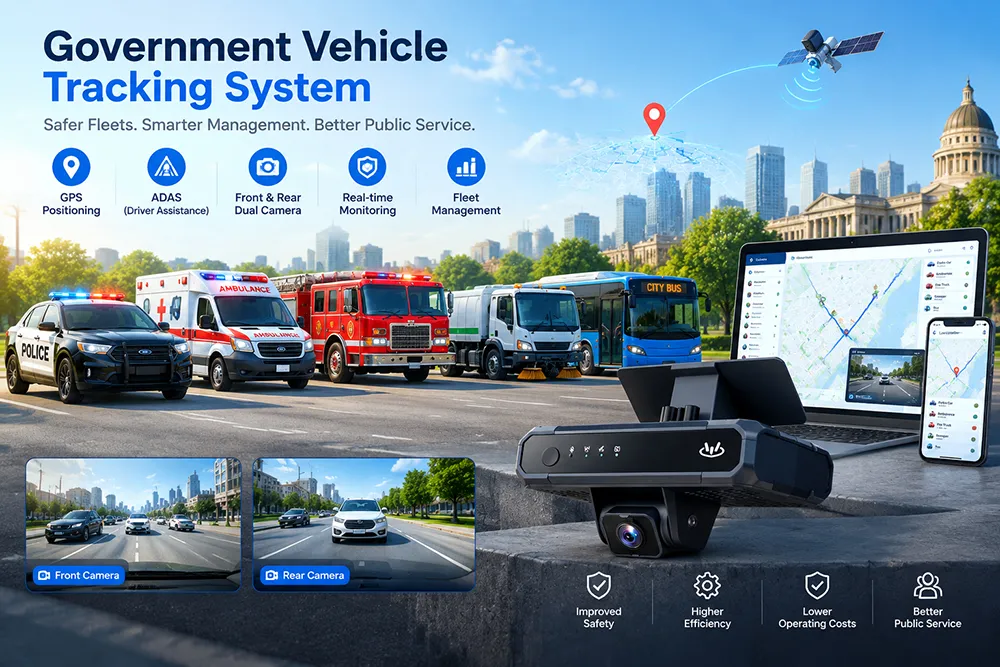
Modern fleet monitoring systems not only provide GPS tracking but also integrate high-definition video, 4G communications, AI driving analysis, and remote management features. Businesses can gain real-time visibility into vehicle location, driving behavior, and transit status.
What is Fleet Monitoring Equipment?
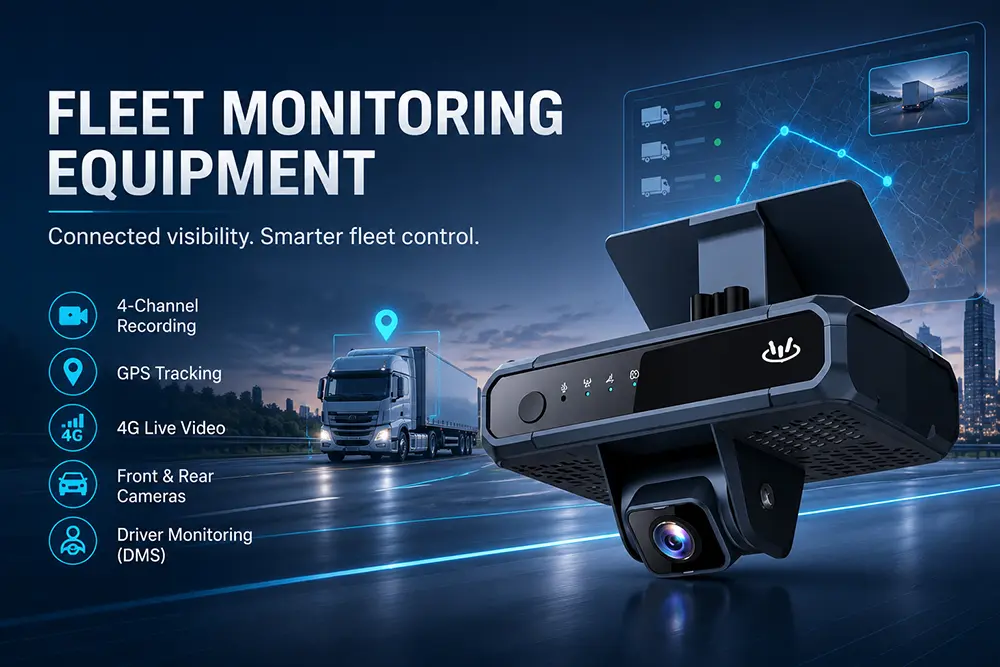
Fleet Monitoring Devices are electronic devices installed on commercial vehicles to monitor vehicle position, driving behavior, video footage, and operational status. These devices typically combine GPS positioning, cameras, sensors, wireless communications, and fleet management platforms to achieve remote vehicle monitoring.
The main functions of fleet monitoring equipment include:
1.Real-time Positioning: View vehicle location, route, and driving status.
2.Driving Safety: Identify dangerous driving behaviors such as fatigue and distraction.
3.Video Forensics: Save accident footage to assist in liability investigations.
4.Transit Monitoring: Understand in-cabin, external, and cargo transportation conditions.
5.Operation Optimization: Utilize data to improve route planning and vehicle dispatching.
6.Fleet Management: Enhance operational transparency and safety management capabilities.
Therefore, fleet monitoring equipment is not merely a GPS tracker or camera, but also a vital component of a modern Video Telematics System.
What Types of Fleet Monitoring Equipment Exist?
GPS Fleet Tracking Devices
GPS tracking devices are used to log vehicle location, speed, and driving trajectories. Through a fleet management platform, businesses can view real-time location, historical routes, and geofencing alerts.
1.Core Advantage: Improves vehicle dispatch efficiency, reduces irrational routing, and enhances visual management during transit.
2.Applications: Suitable for logistics delivery, vehicle rental, and commercial transport fleets.
AI Fleet Dash Cam
An AI fleet dash cam integrates HD video, GPS positioning, 4G communications, and driving safety analysis into a single unit. Compared to standard dash cams, it focuses more heavily on remote management and proactive safety warnings.
Common features include:
1.ADAS (Advanced Driver Assistance Systems)
2.DSM/DMS (Driver Status Monitoring / Driver Monitoring Systems)
3.Front-facing road and cabin video recording
4.GPS positioning and 4G remote video
5.Dangerous driving event alerts
6.Video storage and remote playback
Mobile Digital Video Recorder (Mobile DVR / MDVR)
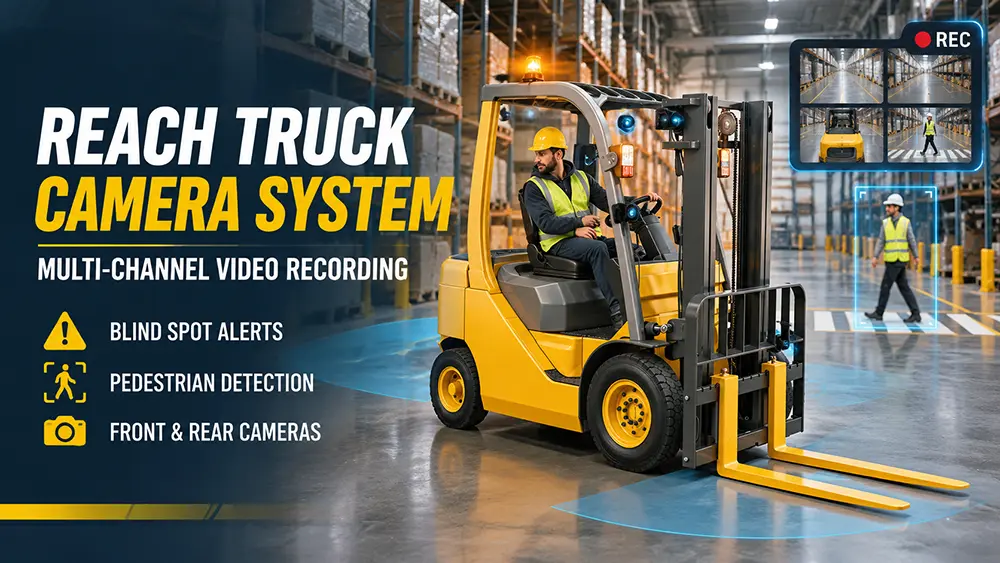
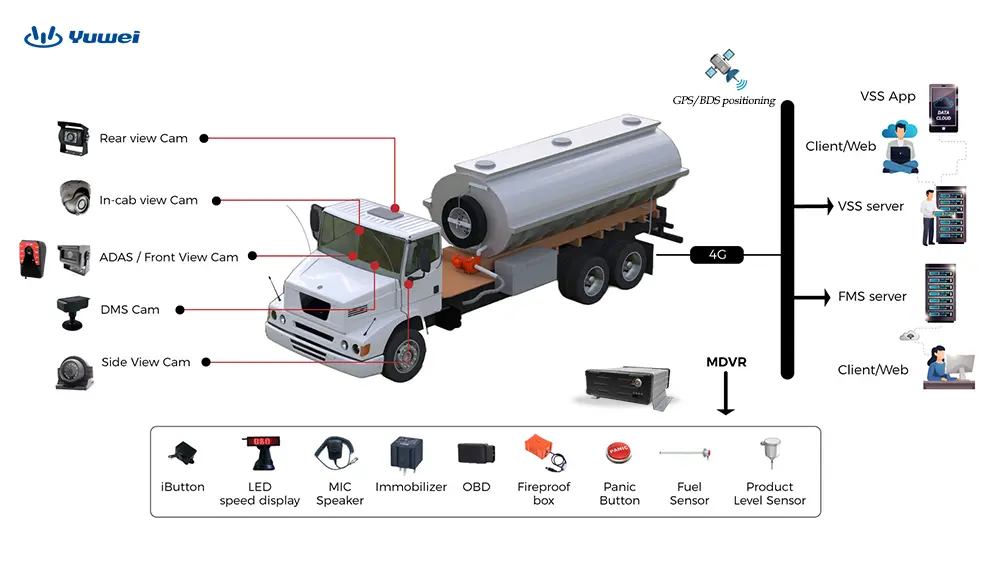
An MDVR is a multi-channel video recording device designed specifically for commercial vehicles. It can connect multiple cameras to monitor the front, sides, rear, and interior cargo area of the vehicle simultaneously. Compared to standard Dash Cams, MDVRs focus more on camera expandability, storage capacity, and environmental adaptability for vehicles.
1.Core Advantage: Reduces vehicle blind spots, supports multi-channel video evidence, and enables centralized management.
2.Applications: Suitable for heavy trucks, buses, school buses, construction machinery, and specialized vehicles.
Driver Monitoring Systems (DMS)
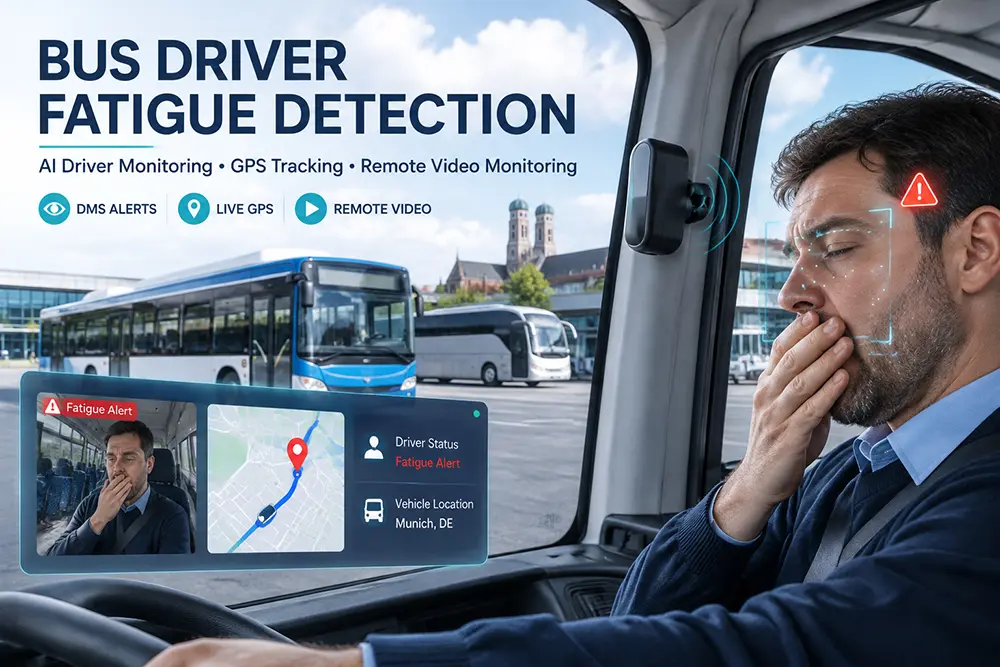
Driver Monitoring Systems utilize cameras and AI algorithms to identify driver status. Depending on device configuration, the system can detect behaviors such as eye-closing, yawning, distracted driving, or mobile phone usage.
Vehicle Telematics Devices & Vehicle Sensors
This category includes OBD/CAN terminals, fuel sensors, temperature sensors, and other vehicle data collection equipment. They can monitor vehicle operating status, engine metrics, and transport environments.
Core Advantage: Supports vehicle maintenance, fuel management, and transport quality analysis, helping enterprises optimize operational costs.
Recommended Best Fleet Monitoring Equipment
When selecting fleet monitoring equipment, enterprises should comprehensively evaluate vehicle type, monitoring range, AI capabilities, network connectivity, and storage requirements.
V5C Dual-Lens AI Dash Cam
Product Positioning: Cost-effective dual-lens AI fleet monitoring device
YUWEI V5C is a dual-lens dash cam integrating HD video, GPS positioning, 4G communication, and AI driving monitoring. The device features a compact structure, suitable for taxis, ride-hailing services, light trucks, and urban delivery vehicles.
Key Features:
1.Front 1080P camera, 140° diagonal field of view
2.Cabin 720P camera, 150° diagonal field of view
3.GPS/Beidou dual-mode positioning
4.4G LTE and Wi-Fi communication
5.ADAS and DSM driving monitoring
6.Facial recognition capability
7.G-Sensor for rapid acceleration and hard braking detection
8.Up to 1TB TF card storage
9.Two-way voice intercom and emergency SOS button
V5 4-Channel Fleet Dash Cam
Product Positioning: Multi-channel video monitoring and remote fleet management
YUWEI V5 is a 4G smart dash cam supporting multi-camera connection. Compared to the V5C, the V5 offers more flexible video expansion capabilities, making it ideal for commercial vehicles requiring multi-angle monitoring.
Key Features:
1.Supports up to 4 video channels
2.Built-in 1080P HD camera
3.Supports up to 3 external 720P cameras
4.GPS/Beidou positioning
5.4G remote communication
6.ADAS and DSM driving monitoring
7.Facial recognition and passenger counting features
8.Dual TF card storage, up to 2TB per card
9.Remote video viewing, playback, and download
10.Dangerous driving event alerts
V8N AI Dash Cam
Product Positioning: Advanced AI active safety and driver management
YUWEI V8N is an intelligent dash cam engineered for commercial transportation, focusing on driving safety monitoring and risk alerts. Combining HD video, infrared imaging, and AI analysis, it is well-suited for long-haul and nighttime transport fleets.
Key Features:
1.Front-facing 1080P HD road recording
2.Cabin infrared camera
3.GPS/Beidou positioning and 4G communication
4.ADAS forward collision risk alerts
5.DSM/DMS fatigue and distraction monitoring
6.Facial recognition and driver identity management
7.Dangerous driving event logging
8.Select configurations support BSD and camera expansion
9.Remote video viewing and event analysis
F4 MDVR Multi-Channel Recorder
Product Positioning: Industrial-grade multi-camera vehicle monitoring system
YUWEI F4 is an intelligent Mobile DVR for commercial vehicles supporting multi-channel video, remote communication, and vehicle data collection. Compared to standard Dash Cams, the F4 is better suited for the multi-angle monitoring demands of large vehicles.
Key Features:
1.Supports up to 6 analog video inputs
2.Supports 2-channel 1080P HD inputs
3.H.264/H.265 video encoding
4.4G, Wi-Fi, and GPS/Beidou positioning
5.Configurable ADAS, DSM, and BSD functions
6.Supports HDD/SSD and SD card storage
7.2.5-inch HDD support up to 2TB
8.CAN bus vehicle data acquisition
9.Power-off video protection and low-voltage protection
10.IP54 protection rating
F6 MDVR Waterproof Vehicle Recording Device
Product Positioning: High-protection-rating smart vehicle video monitoring
YUWEI F6 is a waterproof MDVR designed for specialized vehicles and harsh industrial environments. Compared to standard vehicle recorders, the F6 focuses on waterproofing, dustproofing, and stable operation under complex working conditions.
Key Features:
1.IP67 waterproof and dustproof rating
2.Current waterproof configuration supports up to 6 analog video channels
3.Supports multi-channel 720P recording
4.H.265 video compression
5.GPS/Beidou satellite positioning
6.Optional RTK high-precision positioning
7.4G remote video transmission
8.Configurable ADAS, DSM, and BSD functions
9.SD card and solid-state storage expansion
10.Power-off and low-voltage protection
Comparison of Five Fleet Monitoring Devices
Selection Recommendation: V5C is ideal for basic dual-lens monitoring; V5 fits multi-camera needs; V8N focuses on AI driving safety; F4 is tailored for heavy commercial vehicles; F6 is better suited for harsh operating environments.
What Functions Can AI Dash Cams and MDVRs Achieve?
Although AI Dash Cams and MDVRs differ in hardware structure, both combine GPS, 4G, AI algorithms, and fleet management platforms to enhance vehicle monitoring capabilities.
Real-time GPS Positioning: Enhance Vehicle Dispatching Efficiency
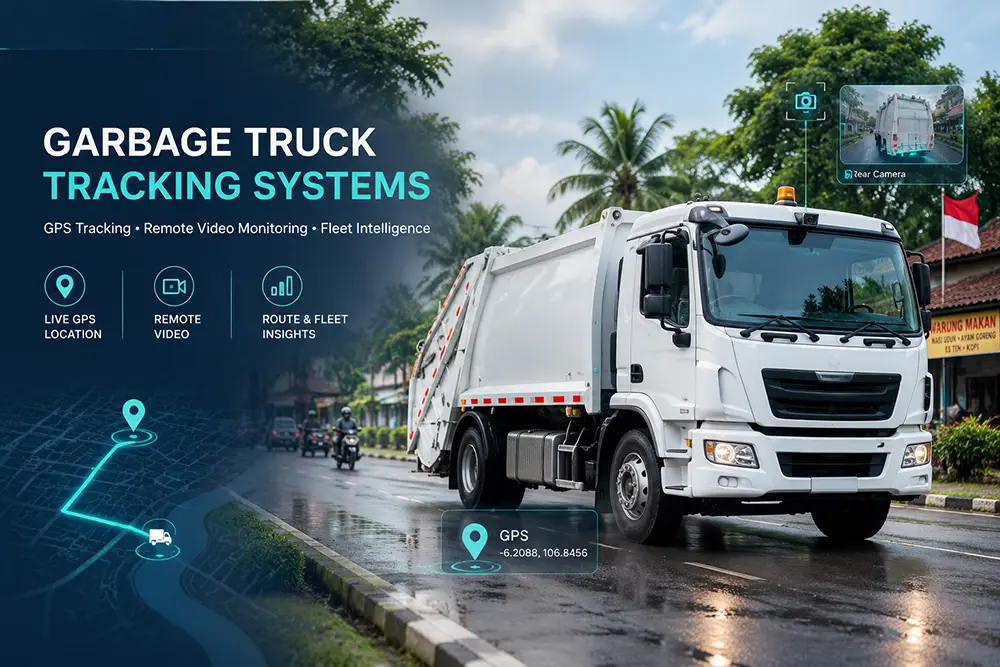
Functionality: Real-time tracking of vehicle locations, recording historical routes, and providing speeding or geofencing alerts.
Benefits:
1.Improves vehicle dispatching efficiency
2.Reduces unnecessary detours and idling
3.Enhances visibility throughout the transportation process
4.Improves customer service and fleet management
ADAS Driver Assistance: Reduce Potential Road Risks
ADAS (Advanced Driver Assistance Systems) utilizes cameras and algorithms to identify road hazards.
Functionality: Provides Forward Collision Warning (FCW), Lane Departure Warning (LDW), and Headway Monitoring Warning (HMW) based on configuration.
Benefits:
1.Timely alerts to drivers regarding potential hazards
2.Helps mitigate high-risk driving behaviors
3.Provides data for driver safety training
4.Assists enterprises in refining accident prevention measures
(Note: ADAS is an auxiliary warning technology and cannot replace normal driver operation.)
DSM/DMS Driver Monitoring: Improve Driving Behavior
DSM/DMS analyzes driver status via AI cameras.
Functionality: Identifies instances of fatigue, eye-closing, yawning, distraction, or mobile phone usage.
Benefits:
1.Warns drivers of fatigue risks
2.Improves driver safety awareness
3.Supports targeted driver training
4.Reduces manual inspection workloads
BSD Blind Spot Detection: Enhance Surround Safety
BSD (Blind Spot Detection) identifies potential risks in vehicle blind spots using cameras and algorithms.
Functionality: Monitors side vehicles, pedestrians, and other road users according to configuration, triggering alerts when necessary.
Benefits:
1.Enhances blind spot monitoring for large vehicles
2.Assists in turning and low-speed maneuvers
3.Heightens driver situational awareness
4.Helps enterprises manage complex road risks
Multi-Channel Video Recording: Increase Accident Forensics Efficiency
Functionality: Simultaneously records multiple angles including the road ahead, cabin interior, vehicle sides, and rear.
Benefits:
1.Preserves footage related to traffic accidents
2.Helps verify transport disputes
3.Increases accident investigation efficiency
4.Provides video evidence for insurance claims
(Note: Video evidence assists in accident investigations but does not guarantee lower insurance claim costs.)
4G Remote Monitoring: Enable Centralized Fleet Management
Functionality: Remotely view live video feeds, search historical recordings, and receive event alerts over 4G networks.
Benefits:
1.Reduces the need for on-site inspections
2.Accelerates awareness of vehicle anomalies
3.Lowers manual video retrieval costs
4.Supports cross-regional fleet management
Cloud Data Management: Optimize Operational Decision-Making
Functionality: Consolidates vehicle positions, video events, and telemetry data into a compatible fleet management platform.
Benefits:
1.Centralizes fleet information management
2.Analyzes driving risks and operational performance
3.Optimizes route planning and dispatching
4.Enhances safety management and reporting efficiency
Which Fleet Monitoring Device is Most Worth Choosing?
In 2027, fleet monitoring is evolving from simple GPS positioning and video recording toward AI safety alerts, remote monitoring, and intelligent management. AI Dash Cams and MDVRs help enterprises boost driving safety, strengthen accident forensics, and streamline overall transport management efficiency.
Email:hello@yuweitek.com