










Best Driver Fatigue Detection for Bus Operators
What is Driver Fatigue Detection?
Driver Fatigue Detection is an active safety technology that utilizes in-vehicle cameras and intelligent computer vision to monitor driver status in real-time and identify fatigue risks.
For long-distance passenger transport, tour bus, and public transit operators, drivers are required to maintain focus over long periods, especially during night trips and intercity routes where driver fatigue can significantly increase the risk of traffic accidents.
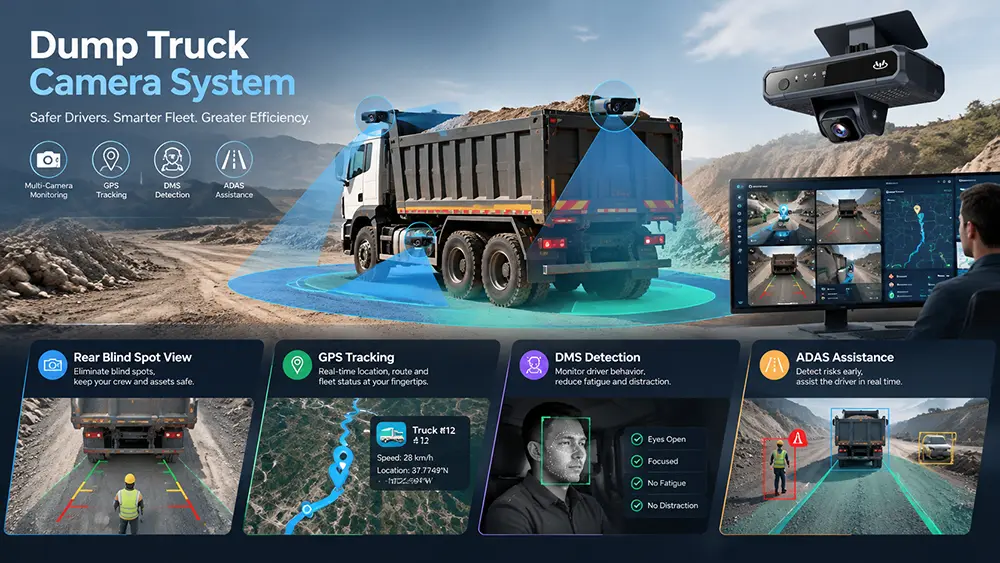
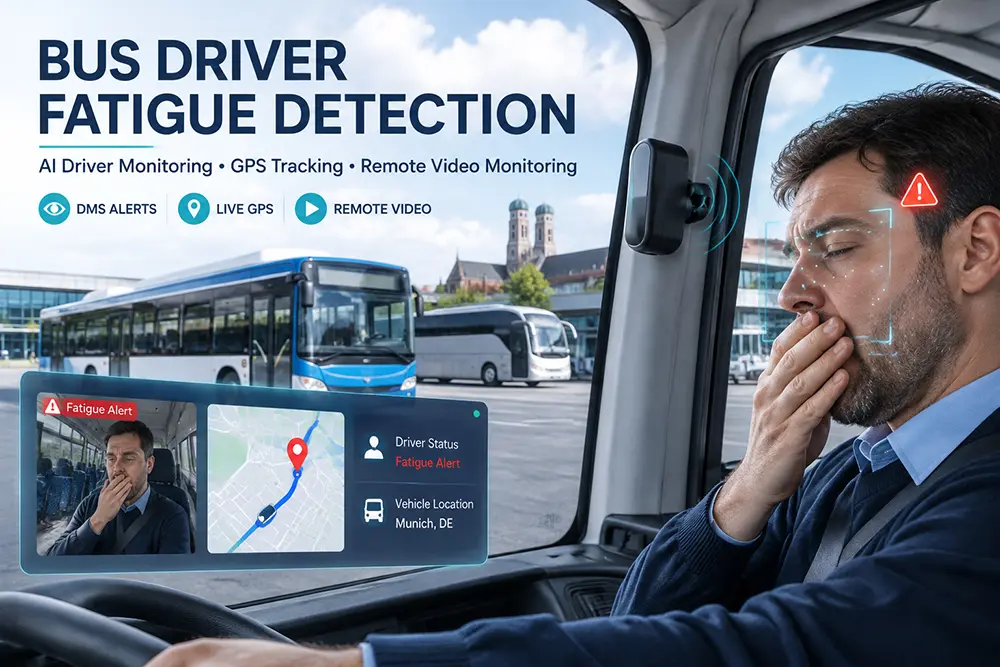
A DMS (Driver Monitoring System) uses a camera installed inside the cabin to capture images of the driver's face and head, analyzing the following behaviors:
1.Eye Closure: Detects prolonged eye closure and abnormal blinking patterns.
2.Yawning Detection: Identifies fatigue signs such as frequent yawning.
3.Head Pose Detection: Recognizes abnormal postures such as head dipping or nodding off.
4.Gaze Monitoring: Tracks line-of-sight shifts and distraction.
5.Phone Use Detection: Identifies dangerous behaviors such as using a phone while driving.
When the system detects abnormal behaviors, it can trigger in-cabin voice alerts and upload alarm events alongside relevant data to the fleet management platform.
Therefore, driver fatigue detection not only helps drivers become aware of fatigue risks in a timely manner, but also enables fleet managers to detect dangerous behaviors earlier and take corrective interventions.
Driver Fatigue is the Primary Factor in Passenger Bus Accidents
Fatigue driving and driver distraction are the major safety challenges facing passenger transportation. Passenger vehicles carry a large number of occupants, and any accident can lead to severe consequences.
According to 2024 traffic crash statistics released by the U.S. National Highway Traffic Safety Administration (NHTSA):
1.Total road traffic fatalities in the U.S. in 2024 reached 39,254.
2.Fatalities in crashes involving drowsy drivers totaled 644, accounting for 1.6% of total fatalities.
3.Fatalities in crashes involving distracted drivers totaled 3,208, accounting for 8.2% of total fatalities.
In Europe, survey data published by the European Transport Workers' Federation (ETF) in 2026 shows:
1.66% of surveyed bus and coach drivers reported regularly driving while fatigued.
2.One in four surveyed drivers reported having fallen asleep at the wheel while driving.
It should be noted that the above data represent accident statistics and driver self-reported surveys respectively, and cannot be directly equated to the exact proportion of passenger bus accidents caused by fatigue driving. However, they fully demonstrate the critical importance of driver fatigue management.
Traditional dashcams are primarily designed to record driving trips and generally cannot actively detect driver fatigue or distraction. For passenger transport operators, relying solely on manual inspections and post-event video reviews can no longer satisfy the active safety management requirements of modern fleets.
Features of Driver Monitoring System (DMS)
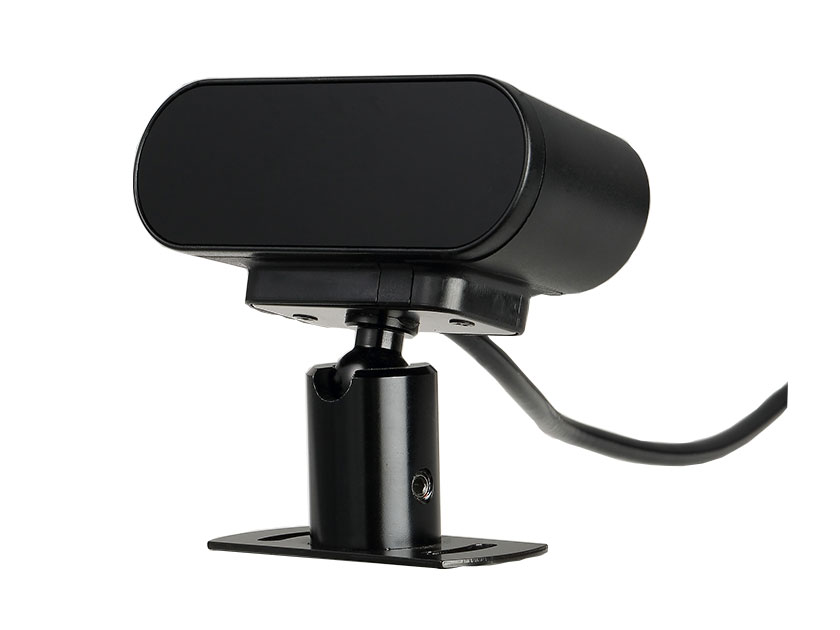
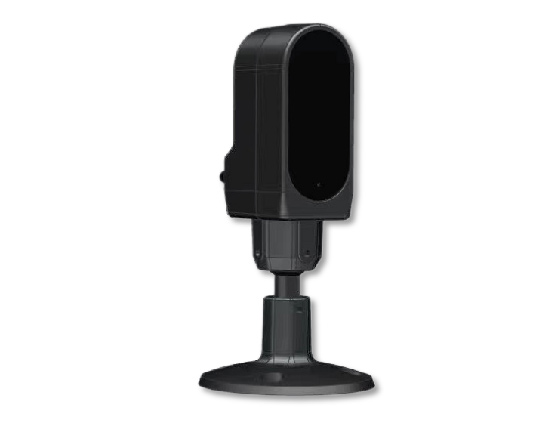
Y13: High-Definition Driver Monitoring Camera
When choosing driver fatigue detection equipment, image quality, night monitoring capabilities, installation flexibility, and compatibility with AI host units are all crucial considerations.
The Y13 (DSM-A720PS-Y13) is an HD camera designed for in-vehicle driver state monitoring applications, serving as the image acquisition device for DMS systems.
Y13 Detection Functions
1.Fatigue Driving Detection: Fatigue driving detection.
2.Smoking Detection: Smoking behavior detection.
3.Phone Call Detection: Making/receiving phone calls detection.
4.Distracted Driving Detection: Distracted driving detection.
5.Abnormal State Detection: Abnormal driver state detection.
Y13 Main Technical Specifications
Why Choose YUWEI Y13?
HD Image Capture: Features a 2-megapixel CMOS sensor to provide clear image inputs for driver status recognition.
Adapted for Vehicle Environments: Supports a wide voltage input of DC 9–16V and operates across temperatures from -20℃ to 70℃, suitable for diverse vehicle environments.
Flexible Installation: Supports angle adjustment, allowing selection of appropriate installation positions based on different passenger vehicle cabin layouts.
Multi-Behavior Monitoring: Works in tandem with AI algorithms to achieve detection of fatigue, distraction, smoking, and mobile phone usage.
Note: The Y13 primarily handles image capture. Full AI recognition, voice alarms, event storage, and remote uploading require pairing with a compatible AI host, MDVR, and management platform.
Intelligent Fleet Management Solution for Passenger Transport
For large passenger transport enterprises, simply monitoring driver status is not enough. Companies also need real-time insight into vehicle positions, driving routes, interior conditions, and surrounding road risks.
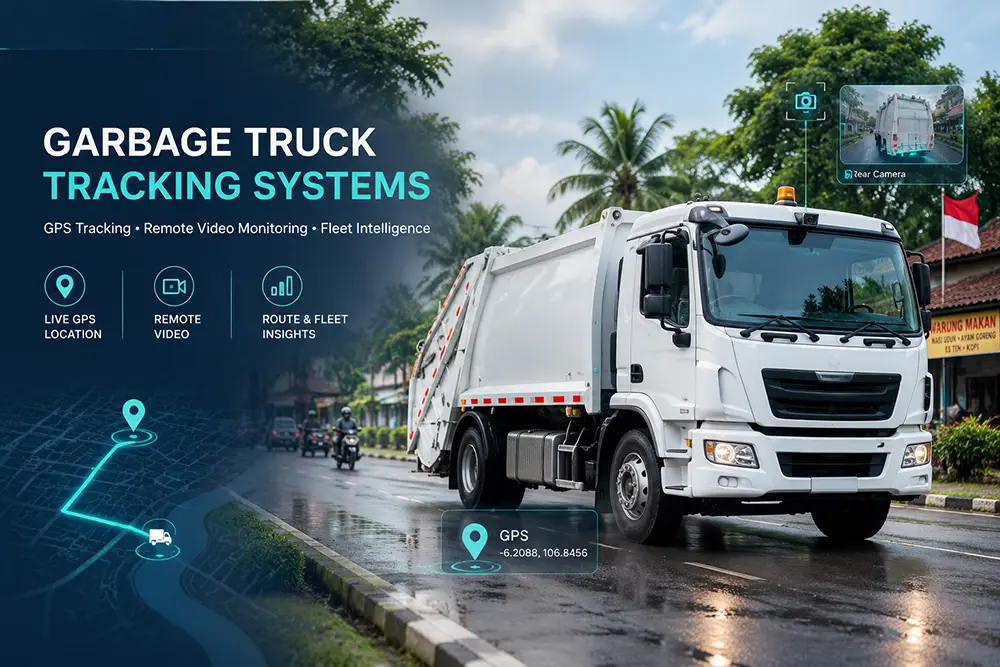
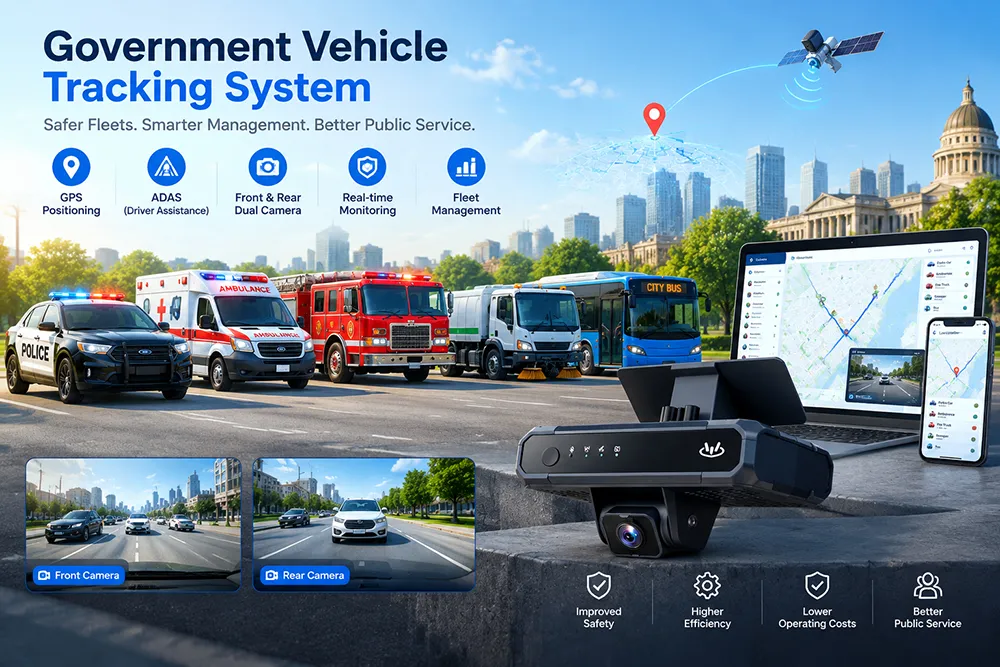
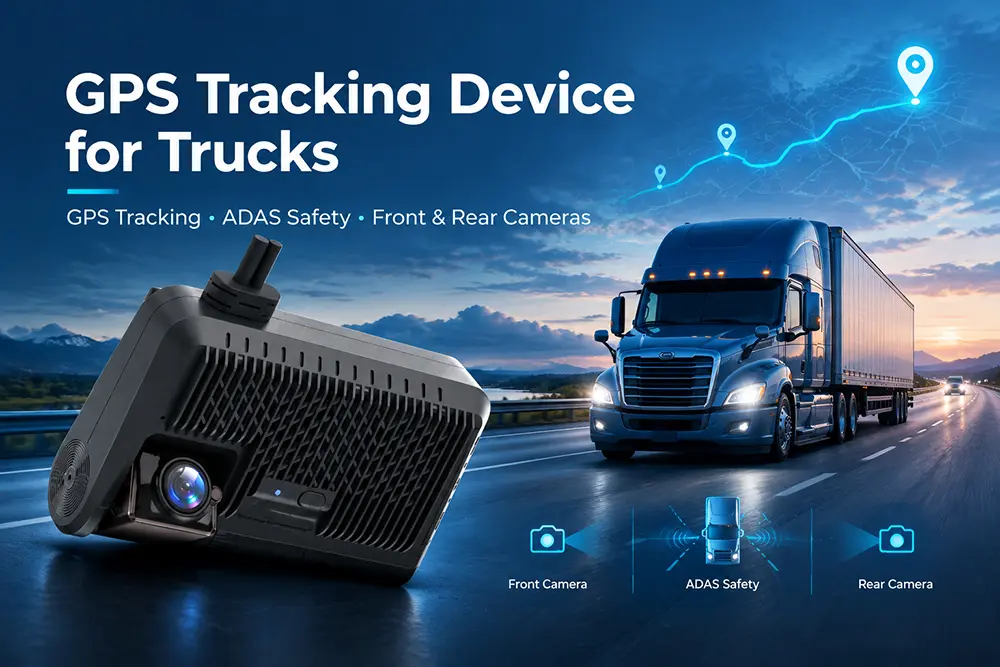
The YUWEI Bus Fleet GPS Tracking Management System integrates DMS, ADAS, BSD, MDVR, GPS positioning, and a cloud management platform to deliver a comprehensive safety management solution for long-distance coaches, tour buses, and public transit vehicles.
Real-Time GPS Positioning & Route Tracking
Through GPS/BDS positioning and 4G communication, managers can:
1.View real-time vehicle locations.
2.Query historical driving tracks.
3.Monitor parking durations and operational status.
4.Set geofences.
5.Detect abnormal situations such as vehicle deviations from preset routes.
DMS Driver Status Monitoring
Utilizing in-vehicle DSM cameras, the system recognizes behaviors like fatigue, distraction, smoking, and phone usage. Working together with the onboard host, it enables local voice alerts, event logging, and remote uploads.
ADAS Forward Driving Assistance
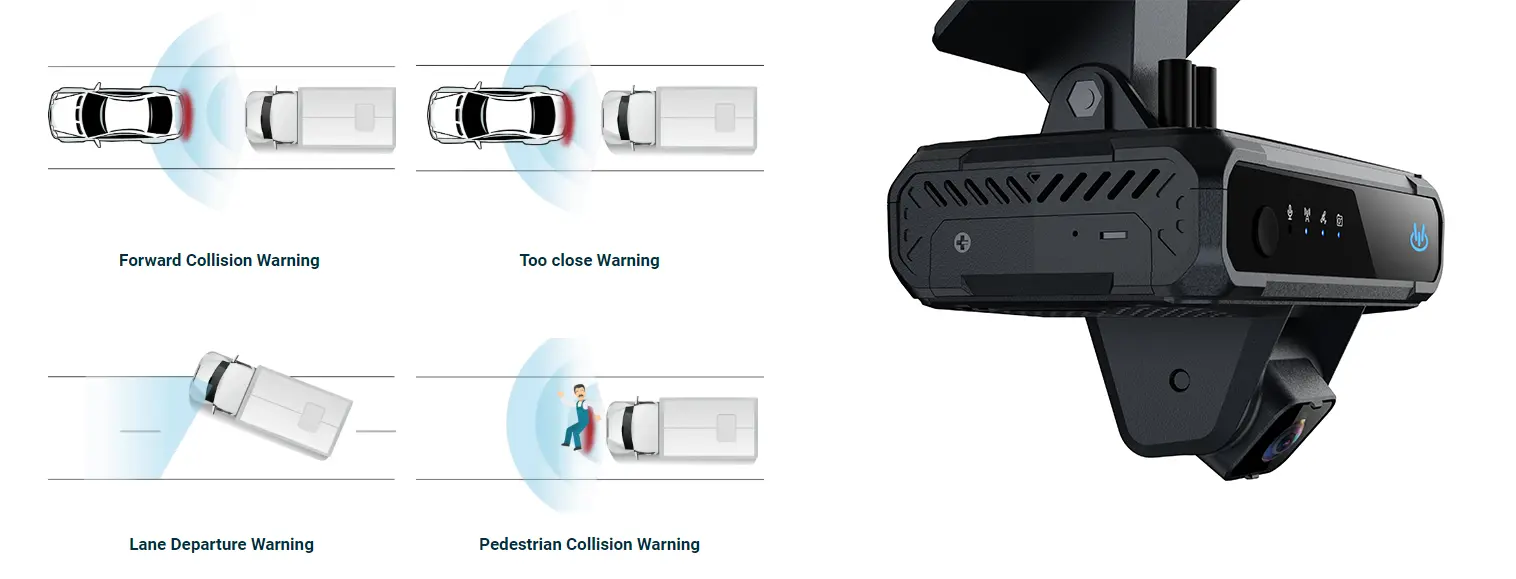
Monitoring the road environment via a forward-facing camera, the system achieves the following functions based on system configuration:
1.Forward Collision Warning: Forward collision warning.
2.Lane Departure Warning: Lane departure warning.
3.Safe Following Distance Warning: Safe following distance warning.
4.Pedestrian Collision Warning: Pedestrian collision warning (depending on configuration).
While DMS primarily monitors the driver, ADAS focuses on the road ahead of the vehicle. Combining both provides more comprehensive active safety protection.
BSD Blind Spot Detection
Large buses are prone to visual blind spots during turns, lane changes, and reversing. The BSD system uses side-mounted cameras to monitor vehicles, pedestrians, and obstacles within specific blind spots, issuing alerts when risks are detected.
Multi-Channel Video Surveillance
By connecting cameras across the cabin, passenger area, doors, front/rear, and sides of the vehicle, multi-angle video monitoring is achieved.
Primary applications include:
1.Driver status monitoring.
2.Passenger area cabin monitoring.
3.Boarding and alighting door area monitoring.
4.Vehicle perimeter (front, rear, and sides) monitoring.
5.Historical video playback and event traceability.
Cloud Fleet Management Platform
Uploading vehicle video, positioning, and alarm data to the management platform via 4G/5G networks, the platform supports:
1.Real-time GPS positioning and historical track query.
2.Real-time video monitoring and video playback.
3.Fatigue driving and dangerous behavior alarms.
4.Driver behavior statistics.
5.Vehicle operational status monitoring.
6.Remote two-way voice intercom.
7.Emergency panic alerts and event logging.
Through a unified platform, fleet managers can simultaneously oversee driver status, vehicle location, and overall fleet operations.
Hardware Configuration for Passenger Transport Solutions
Recommended Hardware Configuration
Additionally, storage devices, speakers, microphones, and communication antennas can be configured according to specific project requirements.
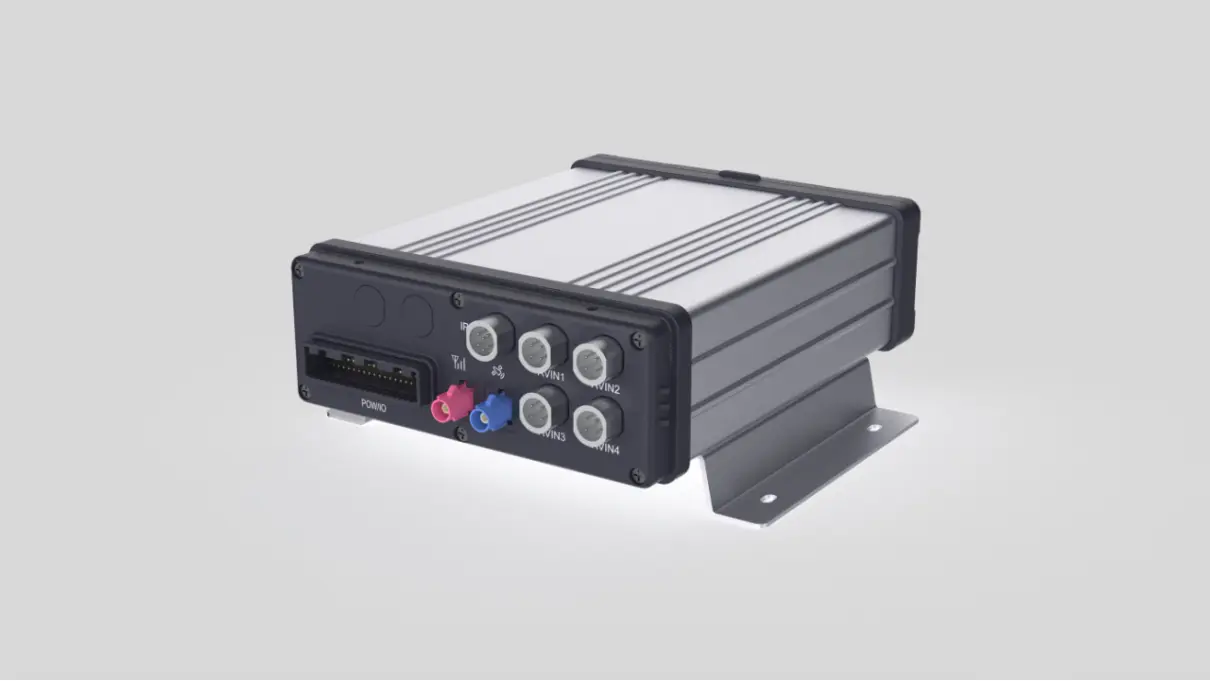
F4 AI MDVR
The YUWEI F4 AI Mobile DVR is a core component of professional passenger vehicle solutions.
According to product technical documentation, its key capabilities include:
1.Support for 4G and Wi-Fi communication.
2.Support for GPS/BDS dual-mode positioning.
3.Support for up to 6 channels of analog video input and 2 channels of 1080P HD video input.
4.Support for H.264/H.265 video compression.
5.Support for HDD/SSD and SD card storage.
6.Support for ADAS, BSD, and DSM intelligent monitoring.
7.Support for CAN bus data acquisition.
8.Support for remote video streaming, video playback, and downloading.
The F4 integrates multi-channel onboard video and intelligent monitoring data, making it suitable for large passenger vehicles requiring driver monitoring, passenger area surveillance, and vehicle perimeter monitoring.
Configuration Recommendations for Fleets of Different Scales
Basic Configuration: Small Tour Buses & Regional Passenger Vehicles
4G onboard video recording device.
GPS positioning module.
ADAS forward camera.
Local storage device.
In-cabin alert device.
Focuses primarily on implementing fatigue driving detection, GPS positioning, and abnormal behavior alarms.
Standard Configuration: Long-Distance Coaches & Airport Shuttle Fleets
1.DSM driver monitoring camera.
2.ADAS forward camera.
3.YUWEI V5 4G Fleet Dash Cam.
4.Passenger cabin monitoring camera.
5.GPS/BDS positioning module.
6.4G communication and cloud management platform.
7.Emergency panic button.
The V5 supports GPS/BDS positioning, 4G communication, up to 4 camera inputs, dual TF card storage, and ADAS/DSM features, making it ideal for fleets needing unified positioning and video surveillance.
Professional Configuration: Large Passenger Transport Groups & Double-Decker Tour Buses
1.DSM Camera Y13.
2.F4 AI Mobile DVR.
3.ADAS forward camera.
4.BSD blind spot monitoring cameras.
5.Passenger cabin, door, front, rear, and side cameras.
6.GPS/BDS positioning module.
7.4G/5G communication equipment.
8.Onboard display monitor.
9.Emergency panic button.
10.Driver identification device.
11.Cloud fleet management platform.
This complete tier achieves driver monitoring, multi-channel video recording, vehicle positioning, and centralized fleet management.
Actual hardware configurations should be confirmed based on vehicle interfaces, camera counts, storage requirements, and regional operating regulations.
How to Choose the Best Driver Fatigue Detection Solution?
For passenger transport operators, choosing the best driver fatigue detection solution requires comprehensive consideration of vehicle types, operating routes, driving hours, and fleet size.
If a company is primarily concerned with identifying fatigue driving, choosing a DSM camera paired with basic alert equipment may suffice. If the enterprise operates long-distance passenger lines, night buses, or large tour fleets, it is better suited for a comprehensive solution that integrates DMS, ADAS, BSD, MDVR, GPS/BDS, and a cloud management platform.
Email:hello@yuweitek.com