







Dash Cam Fleet Management
Why is a Dash Cam System Essential for Fleet Management?
The core challenges facing fleet operations remain unchanged: accident liability disputes, rising insurance costs, difficulty in monitoring driver behavior, and lack of cargo security.
According to data from the Federal Motor Carrier Safety Administration (FMCSA), the average cost of a commercial vehicle accident is as high as $91,000 (property damage only), and it can soar to over $200,000 if injuries or fatalities are involved. A comprehensive dash cam fleet management system not only records the accident process in real-time but also uses AI analysis to prevent accidents, helping fleet managers shift from "reactive response" to "proactive prevention."

What is Dash Cam Fleet Management?
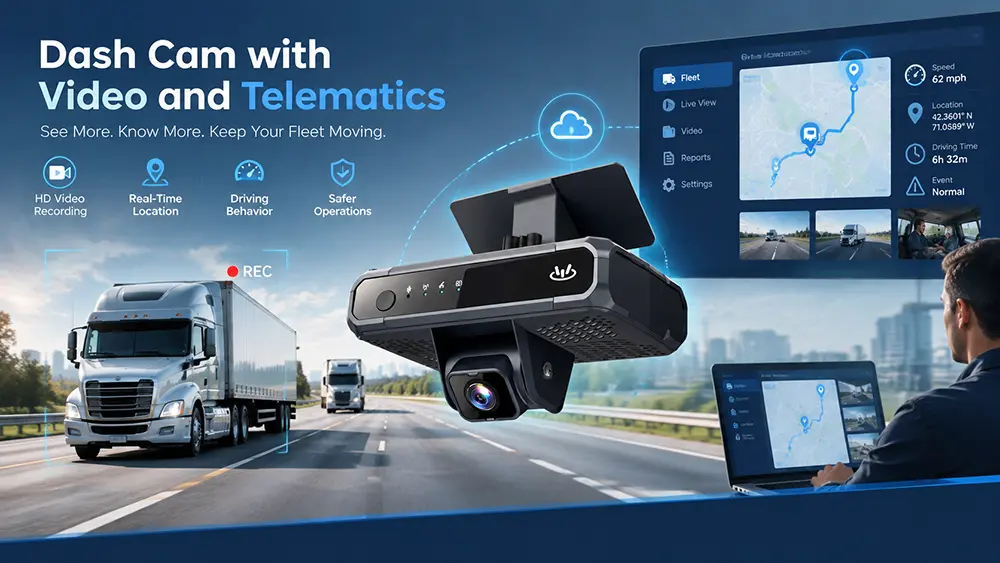
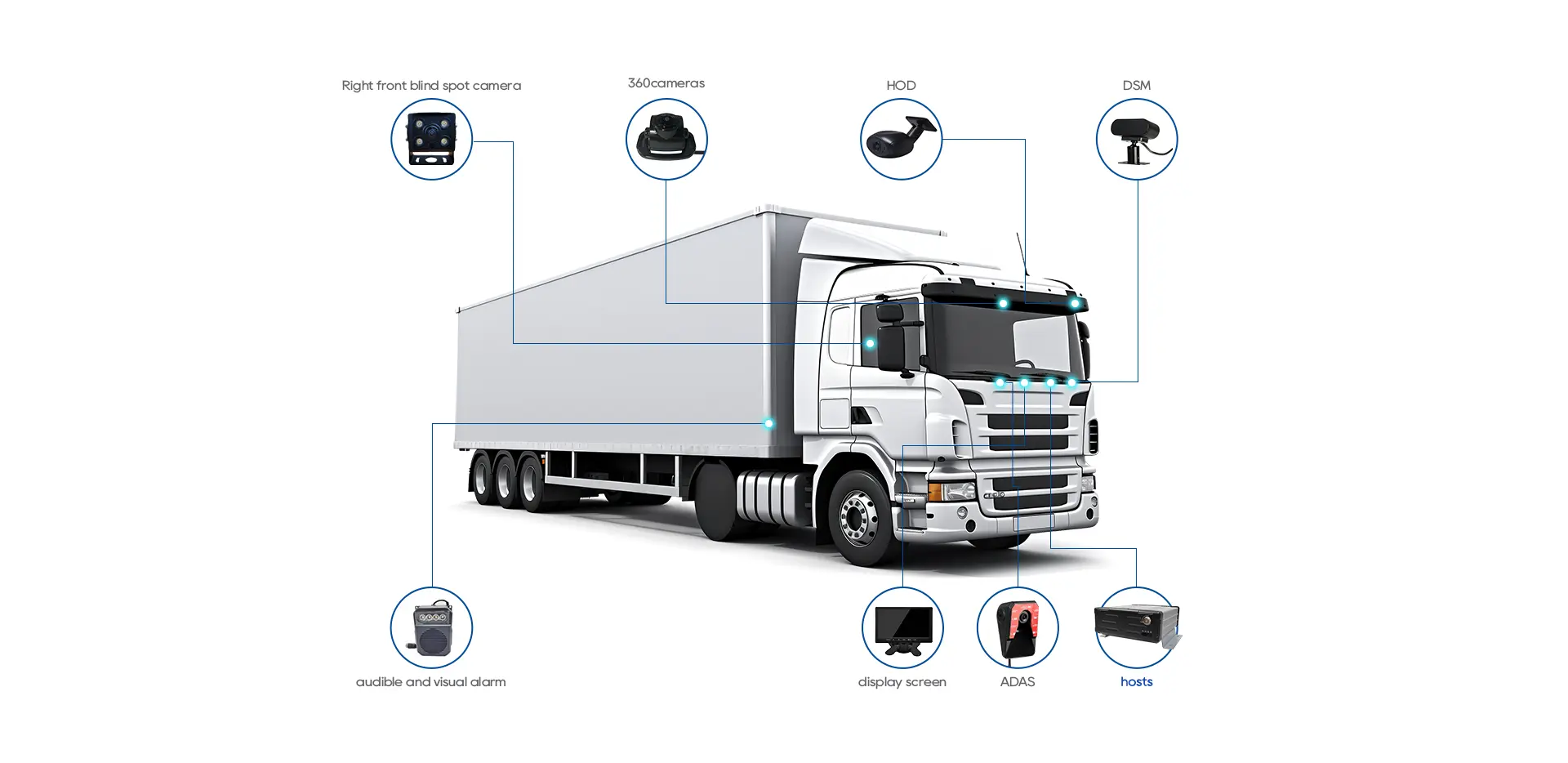
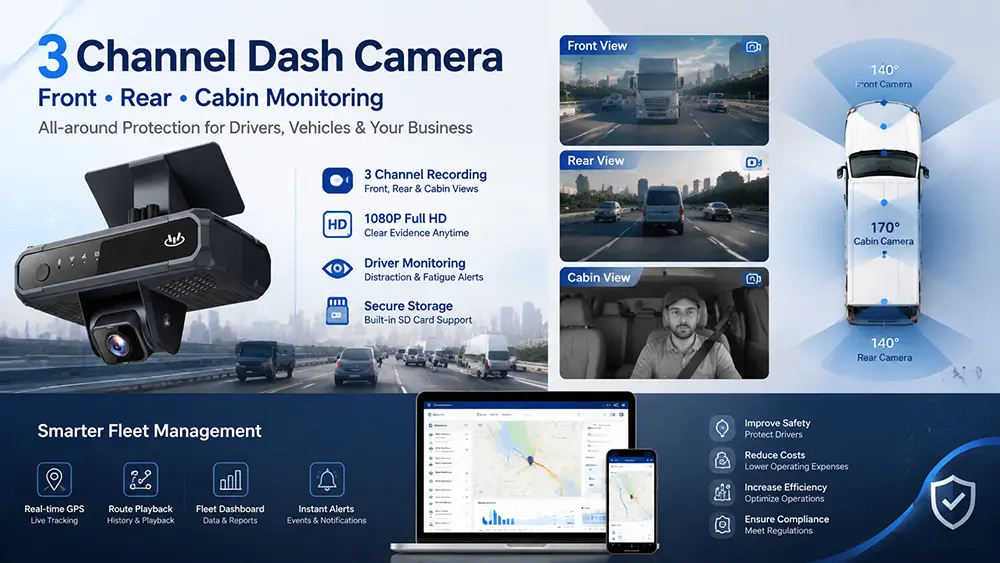
Dash cam fleet management is a comprehensive solution that integrates hardware (in-vehicle cameras), software (fleet management platform), and AI analysis engines.
Core System Components:
Unlike traditional standalone dash cams, a fleet management system emphasizes centralized management, real-time alerts, and data-driven decision support.
Core Functions and Capabilities
Real-time Remote Video Access
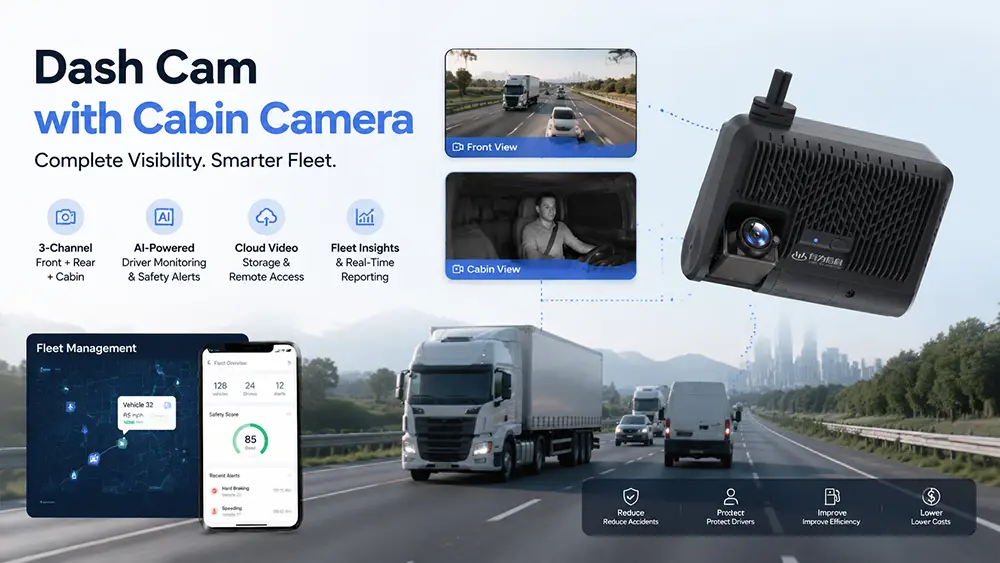
Managers can access real-time footage or historical recordings of any vehicle via PC or mobile devices, supporting rapid retrieval by time, location, or event type.
AI Driving Behavior Analysis (DMS + ADAS)
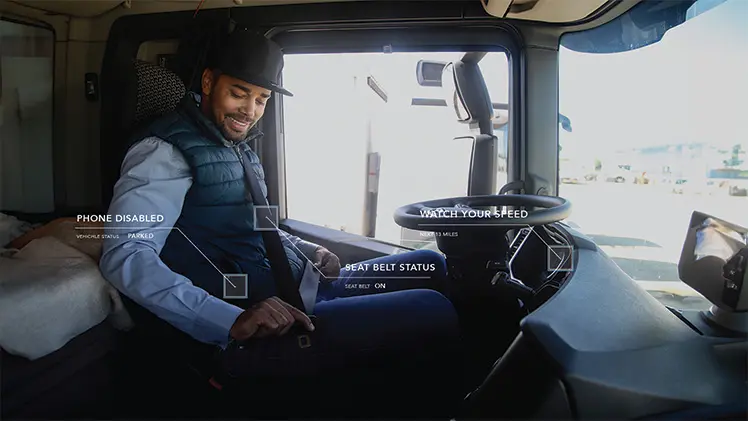
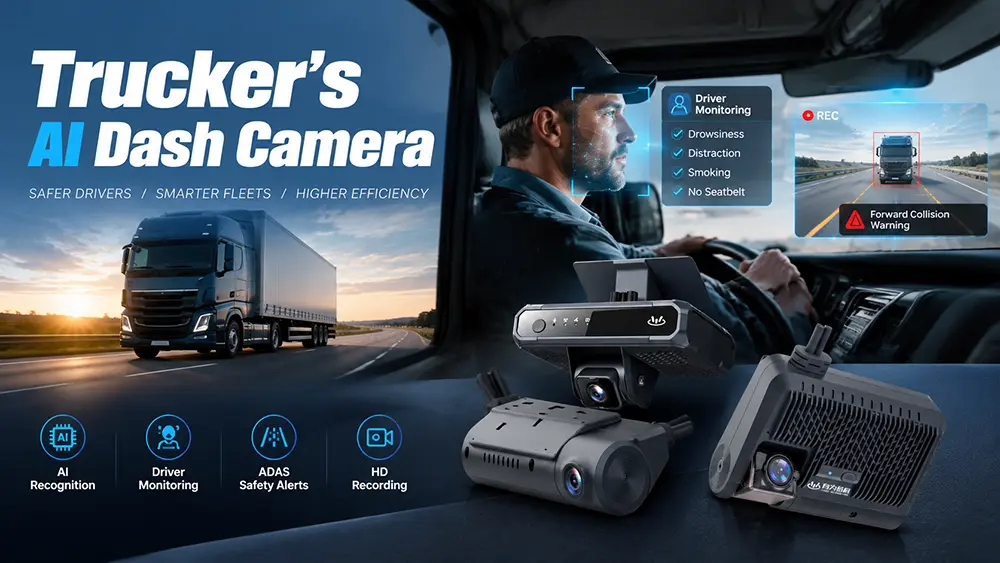
Driver Monitoring System (DMS): Detects fatigue, phone use, smoking, and unfastened seatbelts.
Advanced Driver Assistance System (ADAS): Provides forward collision warnings, lane departure warnings, and pedestrian detection.
Risk Scoring Mechanism: Generates safety scores for each driver to identify high-risk personnel.
Automatic Event Detection and Upload
When the system detects harsh braking, rapid acceleration, sharp turns, or abnormal G-force impacts, it automatically tags 10–30 seconds of video before and after the event and uploads it to the cloud to ensure key evidence is preserved.
GPS and Video Linkage
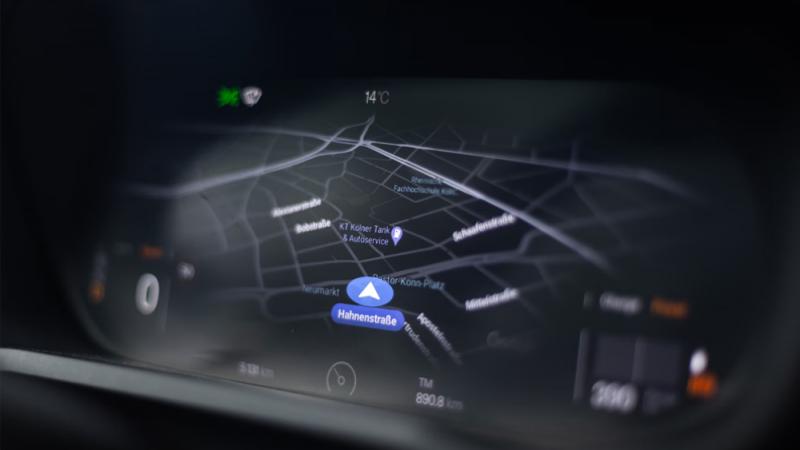
By clicking any location on a map, managers can replay the video for that specific period, achieving precise positioning through "spatio-temporal correlation."
Voice Intercom and Real-time Intervention
Managers can send voice alerts to drivers through the system to correct dangerous behaviors instantly.
Cloud Storage and Data Security
Supports dual backup (Local SD card + Cloud). Video retention periods are customizable (usually 30–90 days) to meet industry compliance requirements.
Industry Application Scenarios
Logistics and Long-haul Transportation
Full visibility of cargo to prevent theft and damage disputes.
Compliance monitoring of driver hours to avoid fatigue-related fines.
Ride-hailing and Shared Mobility
Evidence collection for driver-passenger disputes to protect the rights of both parties.
Real-time safety monitoring to enhance platform brand trust.
Government and Rental Fleets
Monitoring for personal use of official vehicles to reduce unauthorized usage.
Tracking rental vehicle status to prevent overdue returns.
School Buses and Special Vehicles
Student safety monitoring with optional real-time viewing for parents.
Full supervision of hazardous material transport to meet government compliance.
Construction and Engineering Vehicles
Blind spot monitoring on-site to prevent personnel injuries.
Equipment usage hour recording to optimize maintenance plans.
Hardware Recommendation: YUWEI V5C
In the selection of fleet management hardware, the performance of the front-end camera directly determines the value of the system. Based on a comprehensive evaluation of mainstream commercial dash cams, we recommend YUWEI V5C as the core hardware choice for fleet-level deployment.
Why Choose YUWEI V5C?
YUWEI is a manufacturer focused on intelligent vehicle monitoring equipment. The V5C model is designed specifically for commercial fleet scenarios, achieving an excellent balance between video quality, AI capabilities, and deployment flexibility.
YUWEI V5C Core Specifications
V5C AI Feature Highlights
Fleet Deployment Advantages
Plug-and-Play, Fast Launch: The V5C supports OBD power supply; installation takes only 15–20 minutes per unit. A fleet of 100 vehicles can be fully deployed within 1–2 weeks.
Multi-Platform Compatibility: Provides standard APIs for seamless integration with platforms like Samsara, Geotab, or self-developed TMS.
Global Network Adaptation: Supports mainstream carrier bands in Southeast Asia, Europe, and America, with FCC/CE certifications.
Controllable Costs: As a hardware solution, V5C offers one-time purchase options to avoid long-term SaaS lock-in, significantly reducing TCO (Total Cost of Ownership).
Target Fleet Types
Small/Medium Logistics Fleets (10–200 vehicles)
Ride-hailing/Taxi Platforms
Government/Rental Fleets
School Bus/Shuttle Operations
Engineering/Special Vehicles
Frequently Asked Questions (FAQ)
What is the difference between dash cam fleet management and a standard dash cam?
A standard dash cam only records video for a single vehicle. A fleet management system enables centralized multi-vehicle management, remote access, AI behavior analysis, GPS linkage, and cloud data integration for enterprise-level operations.
Does installing this system affect driver privacy?
Not under compliant deployment. Best practices include: prior written notification, physical covers for cabin cameras, strict data access limits, and clear retention periods. Many systems support a privacy mode where cabin recording is only activated during an accident.
Can the system integrate with existing software like Samsara or Geotab?
Yes. Mainstream providers offer open APIs to interface with TMS, ERP, and insurance platforms. Always confirm integration documentation with the supplier.
Is video storage safer locally or in the cloud?
We recommend a hybrid architecture: Local SD cards store full-cycle video, while key event clips are automatically uploaded to the cloud. Ensure cloud providers have SOC 2 or equivalent security certifications.
What is the typical Return on Investment (ROI) period?
Depending on fleet size and accident rates, it is usually 6–18 months. The primary gains come from insurance discounts, accident reduction, and litigation avoidance.
Can Southeast Asian network environments support real-time video?
Yes, but it requires solutions supporting multi-carrier SIMs or eSIMs, and verifying that the supplier has local CDN nodes or data centers to minimize latency.
Email:hello@yuweitek.com