












Best AI Dash Cam for Construction Fleet Tracking
Construction Fleet Tracking Ai Dash Camera
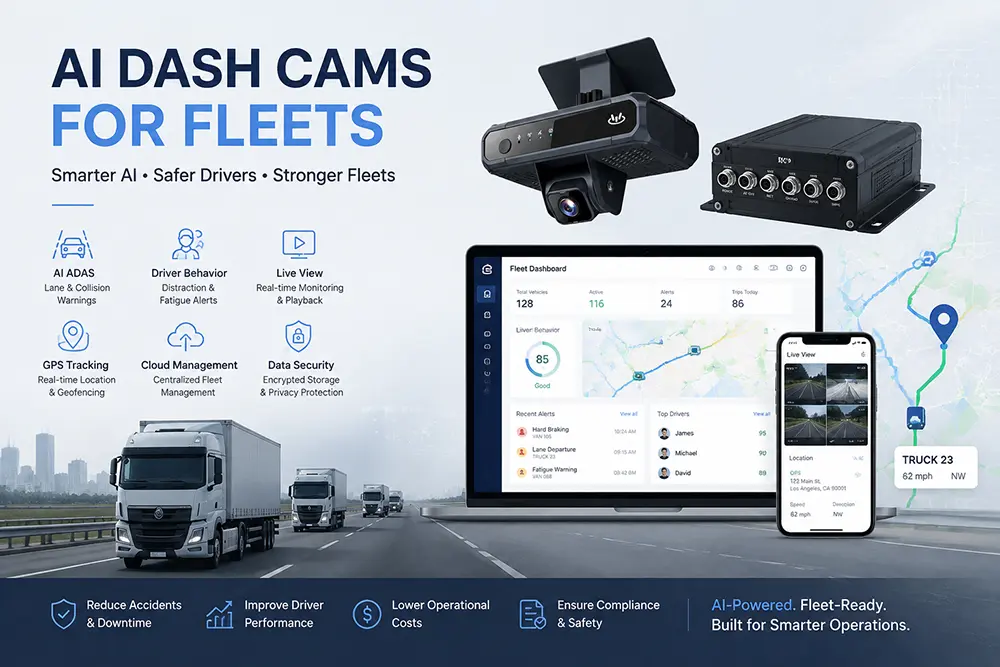
For fleet managers managing construction fleets, the real pain point is never "whether there is video recording," but whether the vehicles can still be monitored, warned, and held accountable after leaving the dispatch center. Dump trucks entering and exiting construction sites, transit mixers supplying materials at night, construction pickup trucks frequently switching between factory areas and roads, and excavators transferring on flatbed trailers reversing on narrow roads—the equipment demands of these scenarios cannot be covered by consumer-grade dash cams. They require caching in weak network conditions, night-time recognition, driver fatigue alerts, right-side blind spot warnings, and the ability for the platform to pull up video for a specific second on a specific day based on the license plate.
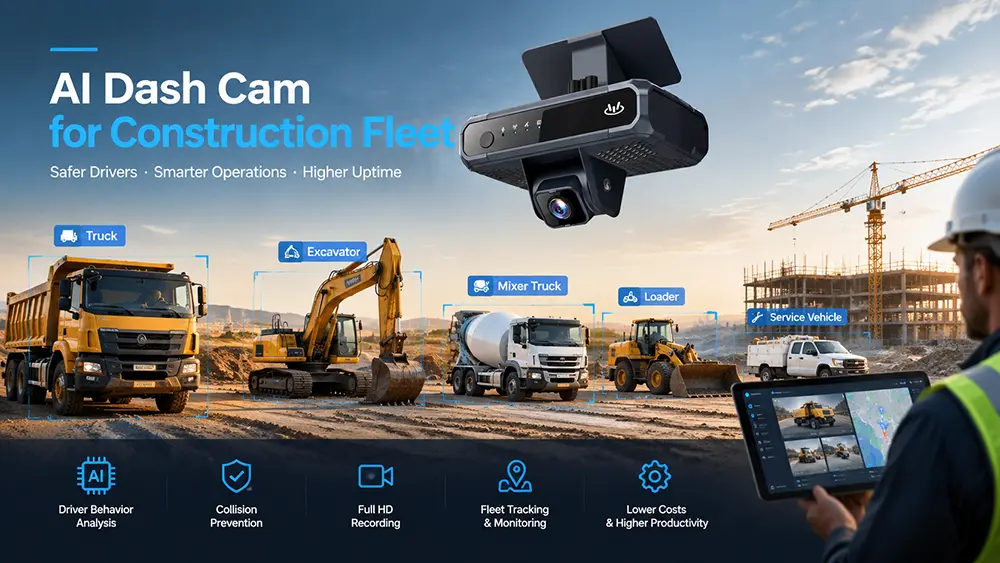
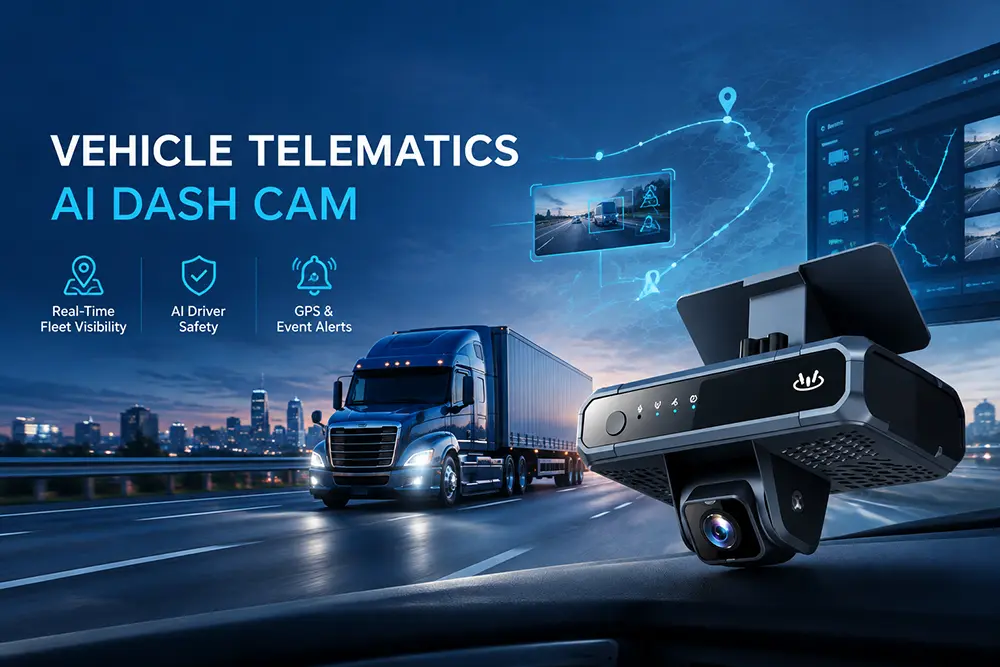
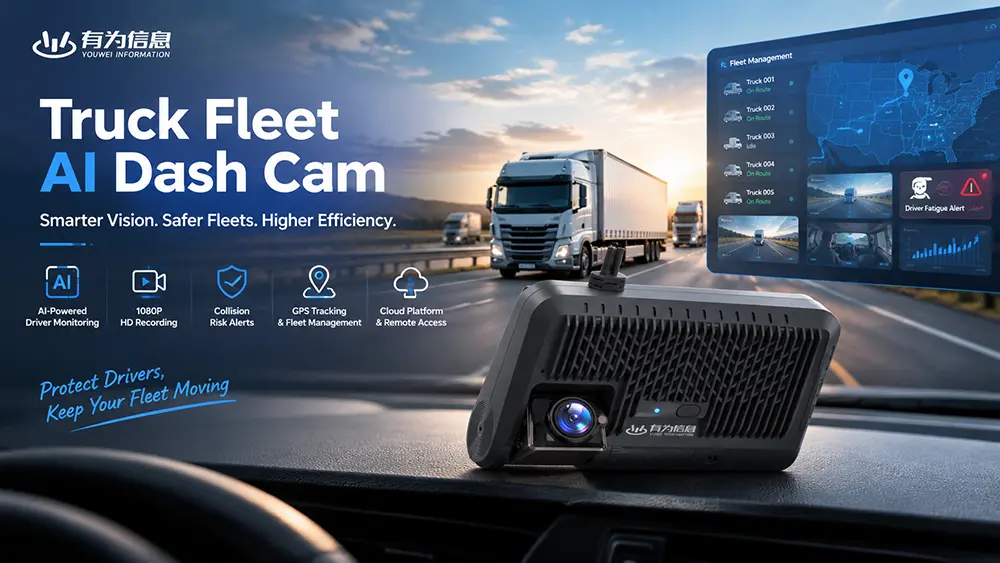
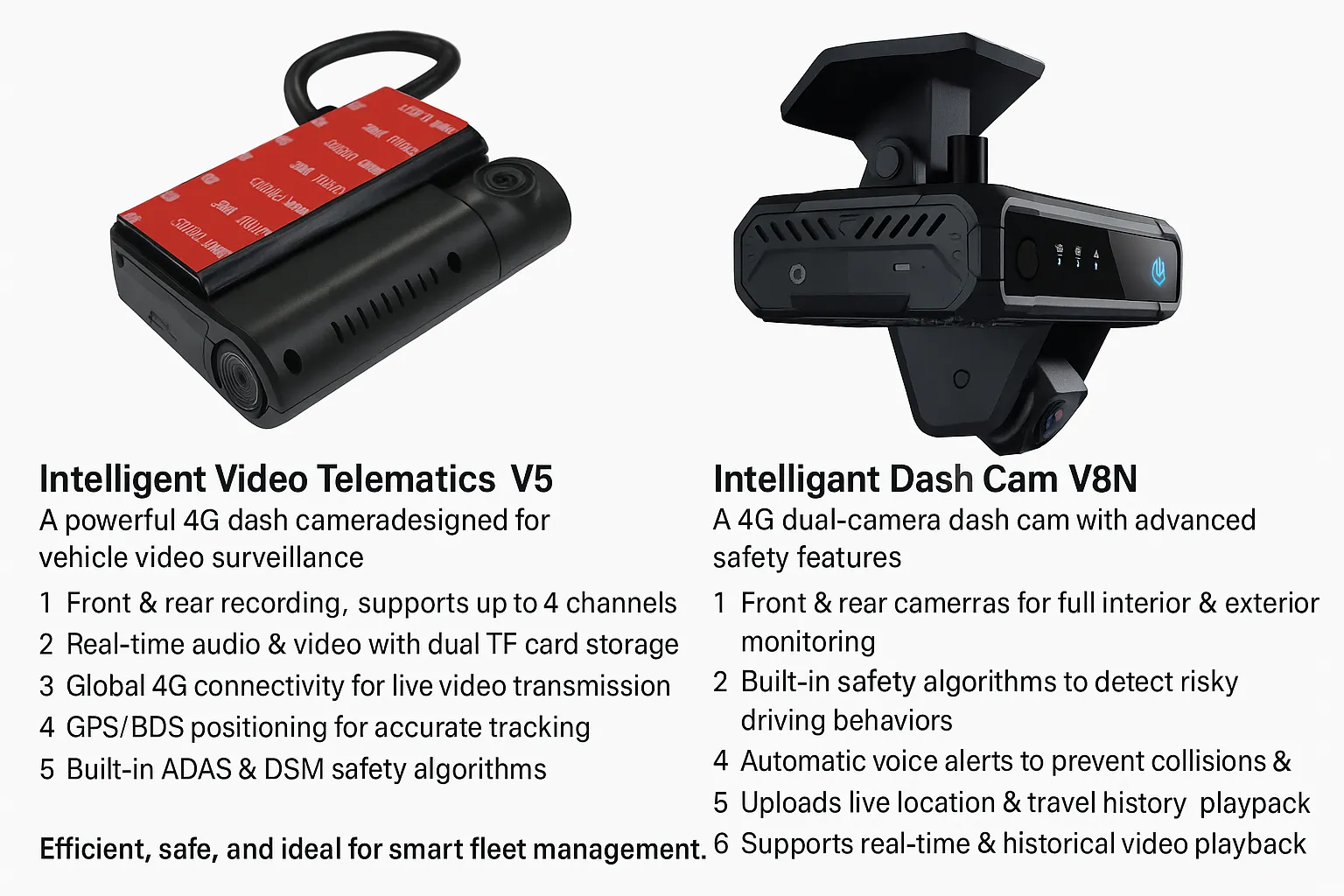
In 2026, the procurement standard for construction fleet tracking has upgraded from "dual-channel video + GPS" to "multi-channel video + edge AI + vehicle bus data + management platform." In YUWEI's construction fleet solution, the V5 and V8N are two multi-channel AI dash cams that fleet managers should prioritize evaluating: one leans towards large-scale deployment and dispatch management, while the other focuses on high-intensity construction sites, complex blind spots, and in-depth behavioral analysis.
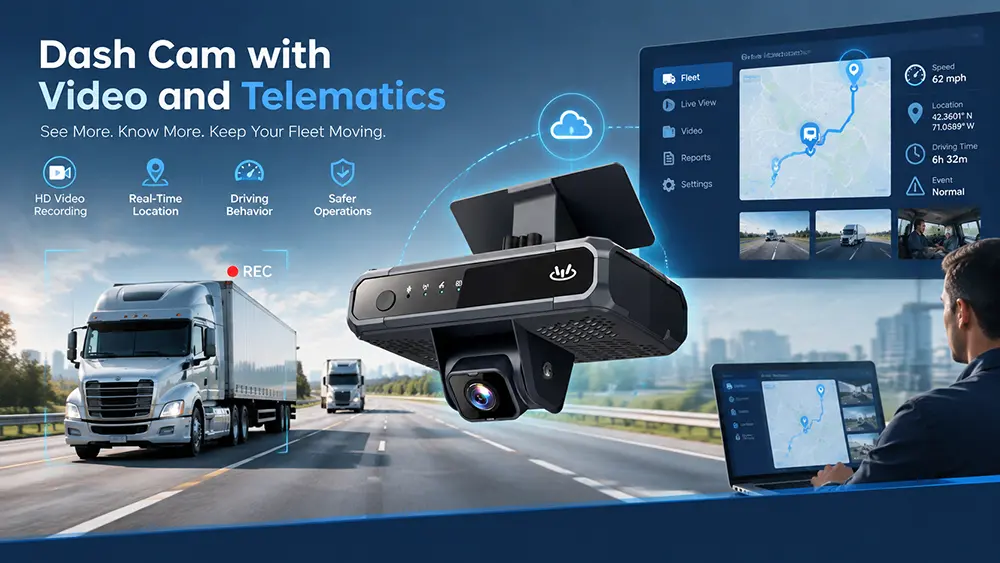
Construction fleets need an AI dash cam that first calculates road footage, driver status, vehicle signals, positioning trajectories, and alarm events locally on the device, and then pushes them to the management platform via 4G/Wi-Fi.
V5: 4-Channel Dash Cam
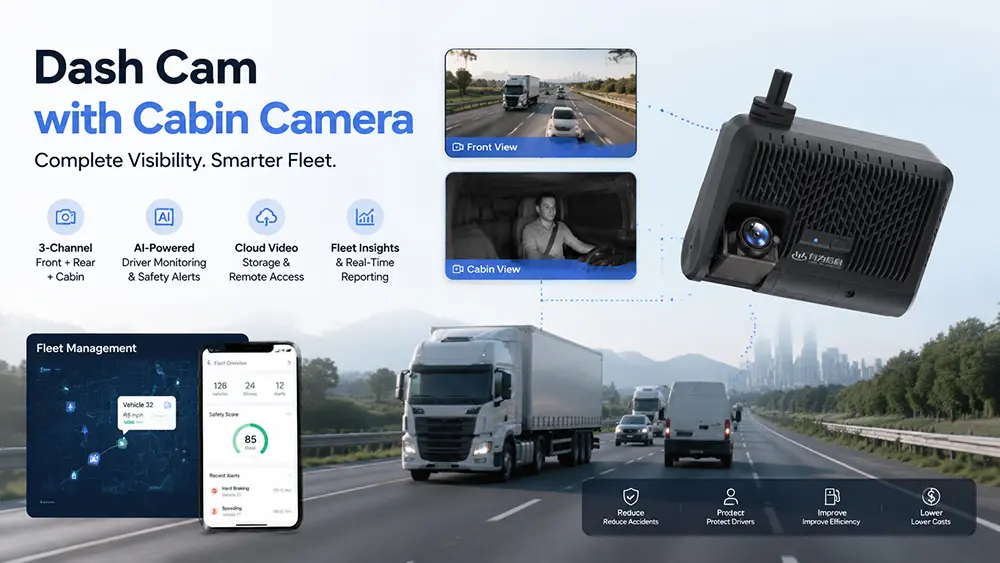
The V5 targets large-scale construction fleets. It features built-in dual-mode GPS/BDS, supports global 4G and Wi-Fi, and has a main unit with a 1080P ADAS forward-facing camera, expandable with three AHD channels: simultaneously capturing the road ahead, cabin, cargo area, and rearview/right-side blind spots.
Fleet managers receive real-time trajectories, geofencing, speeding, idling, route deviation, and driver status events. ADAS manages forward collisions and lane departures, while DSM monitors closed eyes, distraction, phone usage, smoking, and driver switching. FaceID supports check-ins for construction commuter vehicles and outsourced personnel.
It supports dual TF cards up to 2TB×2, DXR Stream loop recording, weak network caching, and resume uploading upon connection recovery. Accident clips are prioritized for retention, and the backend can pull footage by license plate, time, and alarm type without sending someone to extract the card.
Suitable for: Municipal engineering, earthwork, factory transshipment, construction equipment rental, and medium-to-large mixed fleets.
V8N: AI Dash Cam
The V8N is designed for high-risk construction sites. The starlight-grade front camera is adaptable to unlit mixing plants, mine entrances, and temporary construction roads; the built-in infrared cabin lens with 152° HFOV / 180° DFOV makes it easier to catch drivers bowing their heads, turning sideways, or not wearing seatbelts.
ADAS covers lane, following distance, forward collision, pedestrians, crosswalks, and front vehicle start alerts. DSM covers fatigue, distraction, phone usage, smoking, and facial authentication. The external AHD serves as BSD (Blind Spot Detection), recognizing non-motorized vehicles and pedestrians on the right and rear—a high-frequency source of right-turn claims for dump trucks.
The V8N comes with CAN Bus, binding vehicle speed, RPM, braking, and load signals with video events. A 6-axis accelerometer provides scoring for rapid acceleration, harsh braking, and sharp turns, which is more suitable for dump trucks and heavy trucks than a 3-axis one. It operates in temperatures from -30°C to 80°C, has an ultra-low standby current of 2mA/5mA, and uses a supercapacitor to save key clips after a power loss.
Suitable for: Muck trucks, transit mixers, mining trucks, bridge and tunnel construction, night-time material supply, and right-turn intensive urban road sections.
How to Choose Between the V5 and V8N Dash Cams?
For ordinary construction pickup trucks, inspection vehicles, and shuttle fleets, choosing the V5 dash cam is sufficient: four channels, basic AI protection, platform tracking, and good cost control.
For dump trucks, muck trucks, transit mixers, mining trucks, and heavy construction trucks that frequently enter the city, choosing the V8N dash cam is more reliable: starlight night vision, BSD, CAN data, 6-axis sensor, wide temperature range, and ultra-low standby.
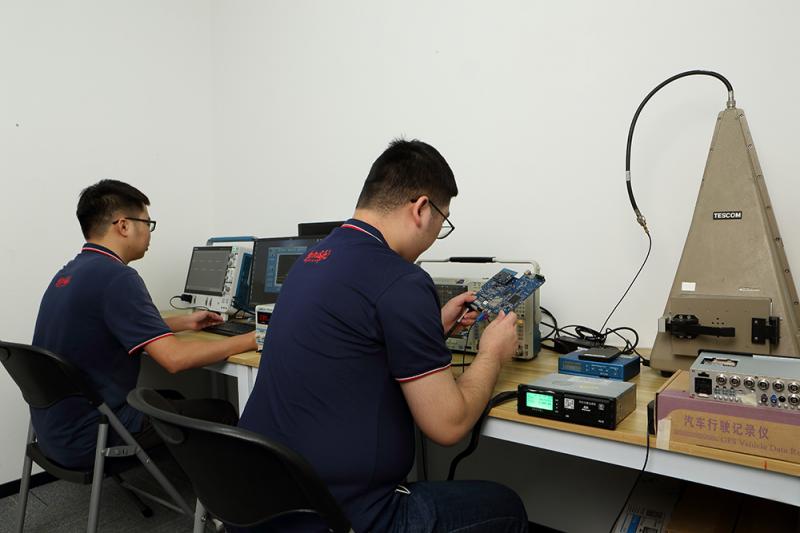
This is also where YUWEI aligns more closely with construction clients compared to manufacturers that simply "sell vehicular cameras": the equipment is not an isolated piece of hardware, but a terminal layer integrating video, GPS positioning, AI intelligence, vehicle data, and remote maintenance.
7 Key Points to Consider When Choosing an AI Dash Cam for Construction Fleets:
1.Whether it supports dual-mode GPS/BDS + 4G real-time transmission.
2.Whether it has at least four channels: road ahead, driver, cargo area/carriage, and rear or side blind spots.
3.Whether ADAS + DSM alerts are uploaded to the platform, rather than just sounding an alarm in the vehicle.
4.Whether it has BSD blind spot monitoring, especially right-side and non-motorized vehicle recognition.
5.Whether it supports CAN/OBD vehicle data for behavioral scoring.
6.Whether it can still secure evidence under weak networks, power outages, high temperatures, and vibrations.
7.Whether the platform can playback footage by license plate, time, alarm type, driver, site, and project.
Conclusion
When buying construction fleet dash cams in 2026, multiple aspects should be considered, such as video clarity, water and dust resistance, whether it has AI intelligence, and whether it can be centrally managed via a platform. The V5 and V8N new devices can effectively provide assistance to fleet managers.
Email:hello@yuweitek.com