












Dash Cams with GPS Tracking AI Detection Driver Coaching
Dash Cameras with GPS Tracking AI Detection Driver Coaching
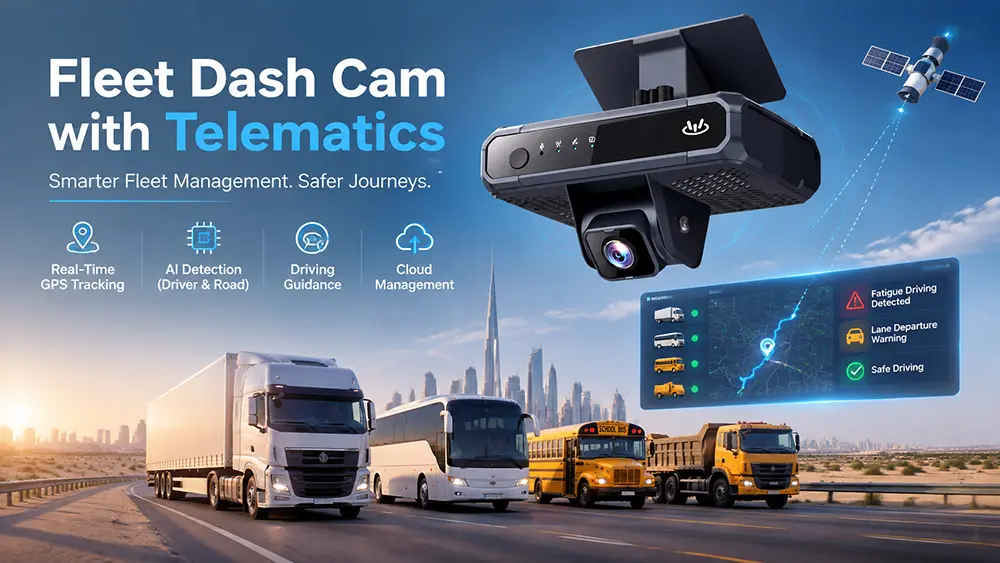
For Middle Eastern enterprises planning to upgrade their fleet safety systems in 2027, traditional dash cams used solely for video recording are increasingly struggling to meet demands. A more worthwhile procurement is an AI Dash Cam that simultaneously supports real-time GPS tracking, 4G remote video, AI driving risk detection, ADAS driving assistance, DSM/DMS driver status monitoring, and fleet backend management.
What is a Fleet AI Dash Cam?
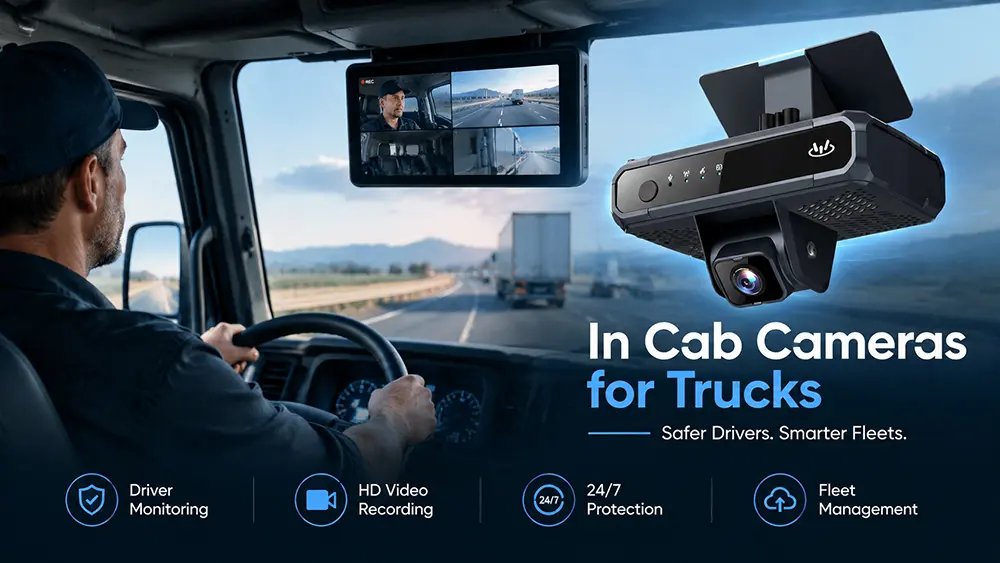
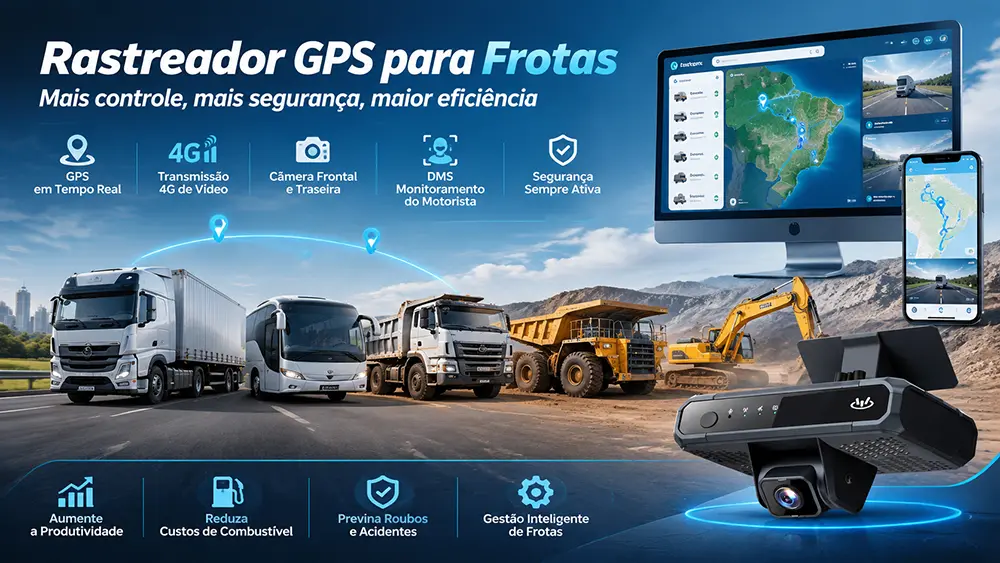
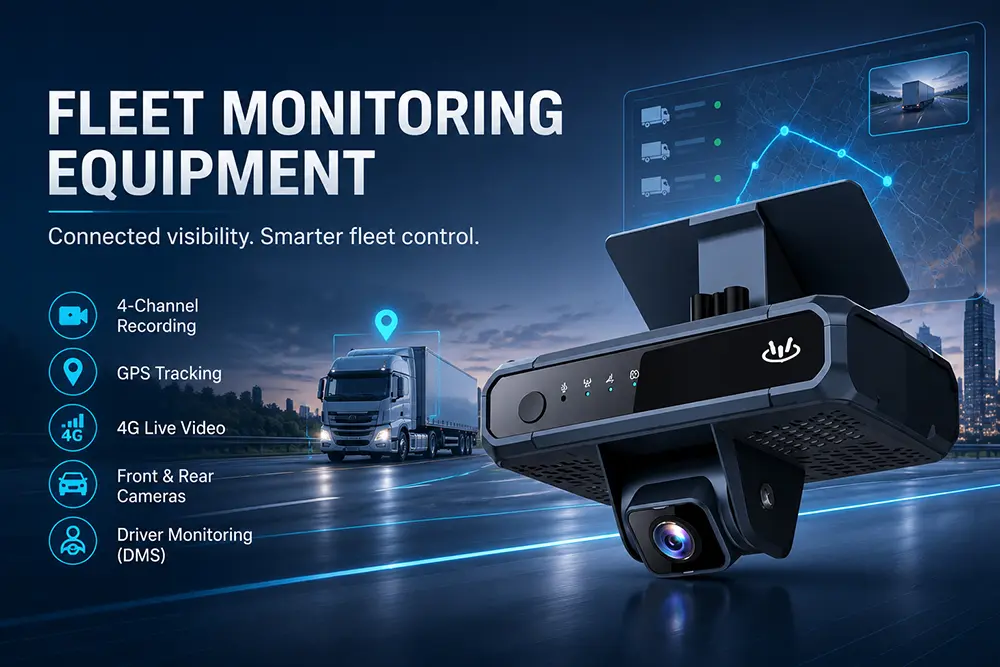
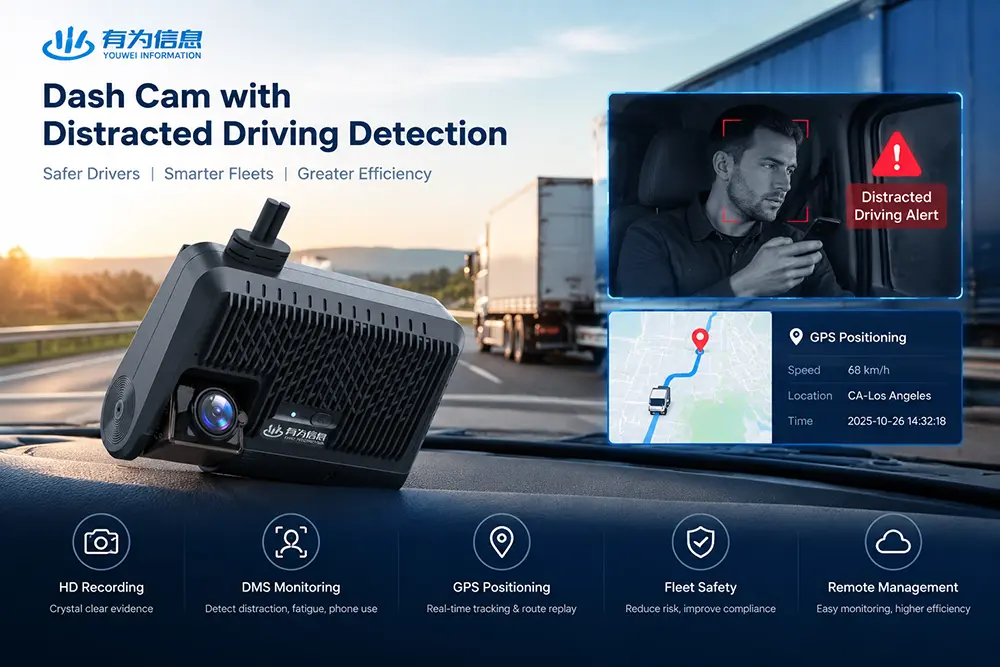
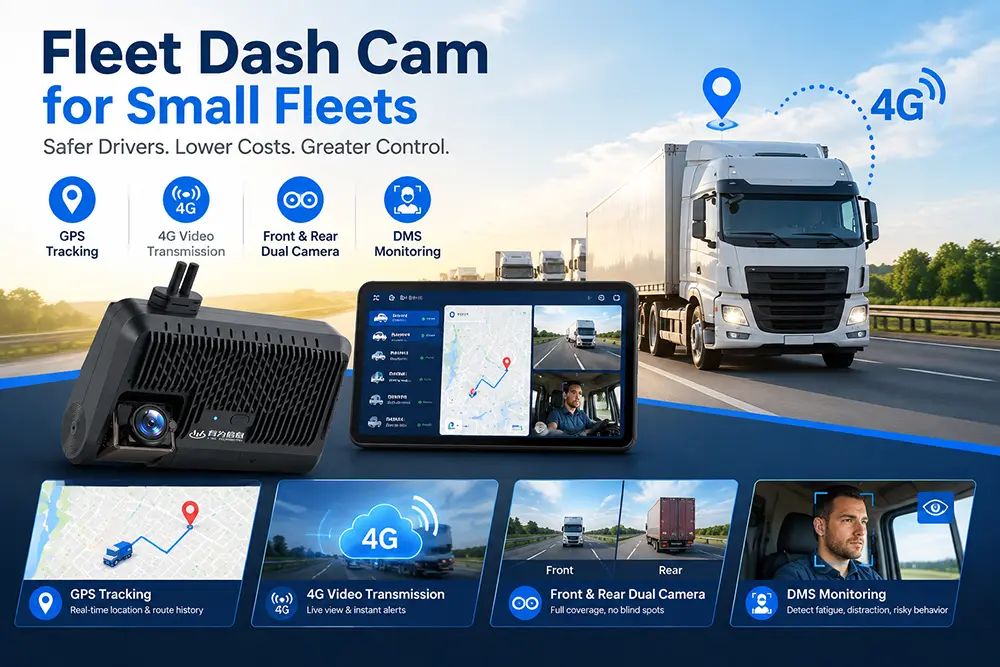
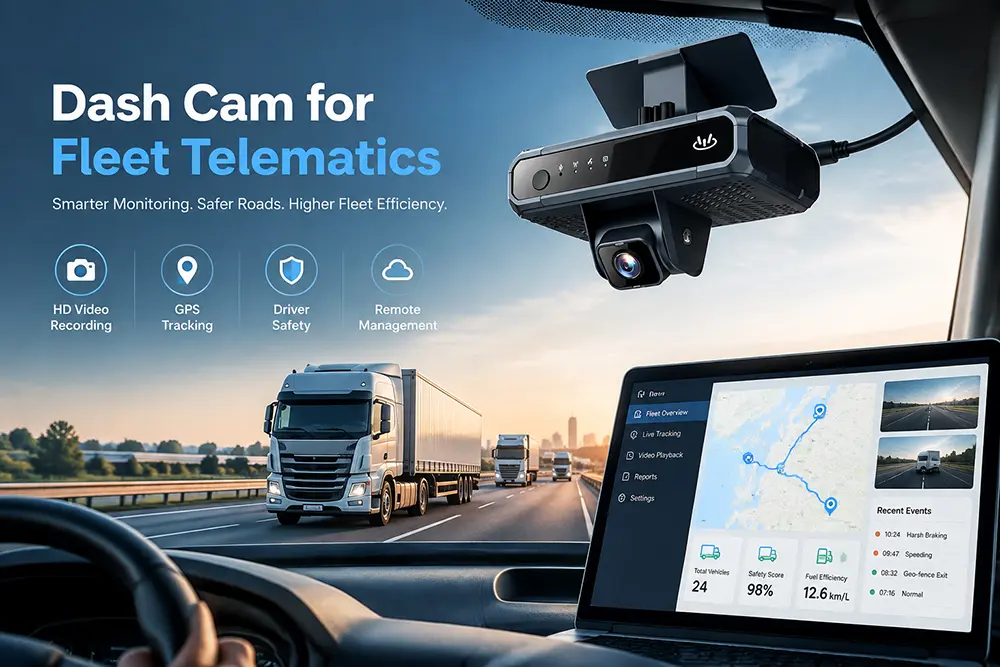
A Fleet AI Dash Cam is an intelligent in-vehicle terminal that combines high-definition video recording, GPS/GNSS positioning, 4G communication, AI visual recognition, and a fleet management platform.
An AI Dash Cam solves three main problems:
First, where is the vehicle? Through GPS/BDS positioning, managers can view the vehicle's current location, historical track, speed, and route conditions.
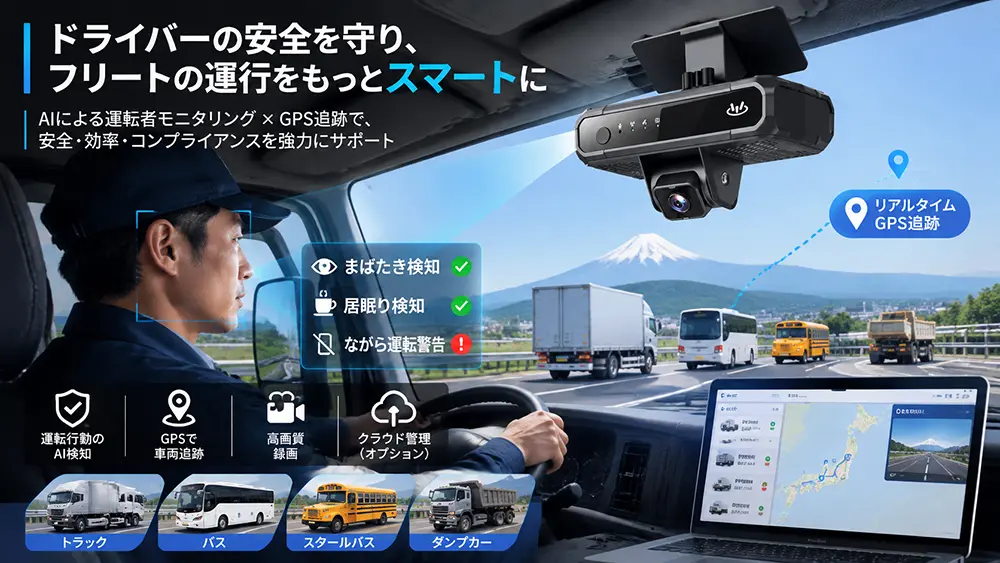
Second, is the driver currently at risk? DSM/DMS can identify dangerous driving states such as fatigue, distraction, and mobile phone usage, issuing real-time alerts based on the device configuration.
Third, is there a risk of an accident ahead of the vehicle? ADAS uses a forward-facing camera and AI algorithms to identify lane departure, following distance, and potential collision risks, issuing timely warnings to the driver.
Berg Insight predicts that the number of fleet management systems in use in the Middle East will grow from approximately 6.4 million units in 2025 to about 12.5 million units in 2030, representing a compound annual growth rate (CAGR) of about 14.4%. Multiple YUWEI AI DASH CAM models have already been implemented and installed across various Middle Eastern countries. Inquiries are welcome.
Demand for Fleet AI Dash Cams in the Middle East
Saudi Arabia and the UAE focus more on large fleet digitization, AI safety, system integration, and remote management; Qatar, Kuwait, and Oman show a clear demand for applications in logistics, engineering vehicles, and the energy industry; Egypt has a large commercial vehicle base, but customers typically focus more on cost.
Among them, the Saudi fleet management market is continuously expanding. A 2026 market study projects its market size will grow from approximately $300 million in 2025 to about $490 million in 2030, with a CAGR of about 10.2% from 2025 to 2030. Digital transformation, logistics development, and road safety are all key driving factors.
The UAE, on the other hand, possesses a relatively mature ecosystem for logistics, taxis, delivery, and commercial fleets. Relevant market research indicates that the UAE video telematics market will be approximately $18.6 million in 2025 and is expected to maintain an annual compound growth rate of about 18% from 2026 to 2035.
Three Recommended YUWEI AI Dash Cams for 2027
V5C: Cost-Effective AI Dash Cam
If a customer owns taxis, ride-hailing vehicles, light logistics vehicles, urban delivery vehicles, or wishes to run a pilot with 20–50 vehicles first, the V5C is a more easily deployable solution.
The V5C adopts an integrated dual-camera design:
1.Forward-facing camera: Up to 1080P@25fps, 140° viewing angle
2.In-cabin camera: Up to 720P@25fps, 150° viewing angle
3.GPS + BDS positioning
4.4G LTE
5.Wi-Fi
6.ADAS
7.DSM
8.Face ID
9.G-Sensor
10.Two-way audio
11.SOS emergency button
12.Max 1TB TF card
The value of the V5C lies not in installing the most cameras, but in accomplishing the following at a lower per-vehicle deployment cost:
Road Recording + Driver Monitoring + GPS Positioning + AI Alarms + 4G Remote Management
It is particularly suitable for taxi, ride-hailing, and urban delivery operators in Saudi Arabia, the UAE, Qatar, Bahrain, and Egypt.
The V5C supports a 9V–36V wide voltage input, adaptable to common 12V and 24V vehicles, with an operating temperature of -20℃ to +70℃.
V5: Multi-Channel Fleet Dash Cam
If a customer wants to monitor not only the road and the driver but also the rear of the vehicle, sides, cargo area, or passenger boarding areas, the V5 is a more suitable choice than the V5C.
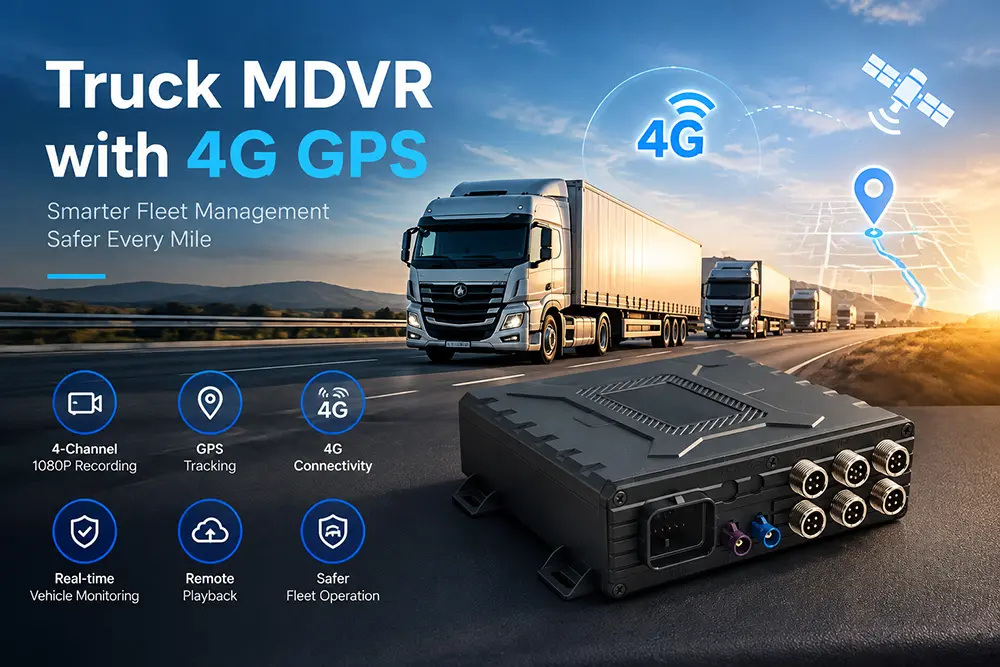
The V5 supports up to 4 channels of video:
1 built-in 1080P forward-facing camera + up to 3 external 720P cameras
Therefore, different combinations can be designed according to different vehicles, for example:
Logistics Trucks:Front + Driver + Rear + Right Side
Buses:Front + Driver + Passenger Area + Door
Corporate Vehicles:Front + Cabin + Rear + Side
The V5 also supports:
1.GPS/BDS
2.Global 4G communication
3.ADAS
4.DSM
5.Facial recognition
6.Passenger counting
7.Dual TF cards
8.Max 2TB per card
9.Max total storage of approx. 4TB
10.JT/T808
11.JT/T1078
12.Remote video viewing
13.Historical video playback and download
14.Two-way audio
For medium to large fleets that require long-term video recording or post-accident reviews from multiple angles, the advantages of the V5 are significantly greater than those of a simple dual-camera dash cam.
V8N: Dash Cam with Advanced AI
The V8N is positioned for more advanced AI active safety scenarios. Its forward-facing camera utilizes a starlight-grade wide dynamic range (WDR) solution supporting 1080P; the in-cabin camera adopts a 2MP IR-CUT infrared ultra-wide-angle design, and the system can be expanded to a maximum of 4 video channels.
The ADAS of the V8N supports:
LDW: Lane Departure Warning
HMW: Headway Monitoring Warning
FCW: Forward Collision Warning
PCW: Pedestrian Collision Warning
For driver monitoring, it supports DMS and can be combined with facial recognition and dangerous driving behavior analysis.
In addition, the V8N also supports:
1.BSD blind spot detection expansion
2.Harsh acceleration detection
3.Harsh deceleration detection
4.Harsh cornering detection
5.6-axis sensor
6.CAN Bus vehicle data acquisition
7.4G
8.Wi-Fi
9.GPS/BDS
10.Mobile APP
11.Dual TF cards
12.Max 2TB per card
13.Max approx. 4TB local storage
14.Supercapacitor power-off protection
15.8V–36V operating voltage
16.-30℃ to +80℃ operating temperature
Therefore, the V8N is particularly suitable for:Long-haul trucks, night logistics, cold chain transport, school buses, public transportation, engineering vehicles, high-risk transport, and large corporate fleets.
For the Middle Eastern market, the operating temperature range of -30℃ to +80℃ is also one of the vital advantages of the V8N.
Advantages of a Fleet AI Dash Cam
Real-Time GPS Tracking:
Once the AI Dash Cam is equipped with built-in GPS/BDS, managers can not only know the vehicle's current location but also combine it with the platform to view:
1.Historical track
2.Driving speed
3.Stopping locations
4.Route deviation
5.Speeding events
6.Geo-fencing
7.Vehicle operating time
For logistics companies with tens, hundreds, or even thousands of vehicles, combining video with location data is far more valuable than GPS alone.
ADAS:
Fleet managers are more concerned about whether the vehicle can avoid dangers. For instance, when a vehicle gradually drifts out of its lane, gets too close to the vehicle ahead, or faces a potential collision, the system can alert the driver through audio warnings.
This is particularly important for highways, long-haul transport, and nighttime operations.
DSM/DMS:
For cross-city transport, night logistics, long-distance operations, and shift-driving fleets, merely monitoring the vehicle itself is not enough.
DSM/DMS can identify specific dangerous driving behaviors and upload the events to the management platform. Fleet managers can further use the data for driver safety reviews and training.
4G Remote Video:
Traditional dash cams usually require the SD card to be removed to view videos. A 4G AI Dash Cam, however, allows authorized managers to remotely use platform functions to:
1.View real-time vehicle status
2.Retrieve event videos
3.View historical footage
4.Receive AI alarms
5.View vehicle tracks
6.Analyze driver behavior
For Middle Eastern logistics companies with vehicles distributed across multiple cities or operating cross-regionally, this significantly reduces management difficulty.
Multi-Camera:
For heavy vehicles, a forward-facing camera alone cannot solve all problems. Trucks, buses, and engineering vehicles typically have:
1.Right-side blind spots
2.Rear blind spots
3.Passenger boarding areas
4.Cargo boxes
5.Engineering operation areas
Therefore, multi-channel expansion solutions like the V5 or V8N are more suitable for large commercial vehicles.
High-Temperature Adaptability:
When Middle Eastern customers purchase Dash Cams, they should pay special attention to: Operating Temperature. The reason is very simple: in-vehicle electronic devices must face high temperatures, strong sunlight, and long-term operation.
Among the three models:
V5C: -20℃ to +70℃
V5: Approx. -20℃ to +70℃
V8N: -30℃ to +80℃
For vehicles subjected to high temperatures, high loads, and long-term operations, the environmental adaptability range of the V8N has more of an advantage.
Nighttime Transport:
Many logistics vehicles choose to operate at night or in the early morning. The V8N uses a starlight-grade forward-facing camera and an infrared in-cabin camera, making it much more suitable for nighttime long-haul operations and driver monitoring scenarios.
YUWEI V5C, V5, and V8N Specifications Comparison
Product parameters are compiled based on existing product data for the YUWEI V5C, V5, and V8N. The actual 4G bands, camera combinations, storage capacities, AI algorithms, and interface configurations in bulk projects should be subject to the final project BOM and technical confirmation documents.
How to Choose Fleet AI Dash Cam?
If Your Fleet Has 10–50 Vehicles
Priority consideration:YUWEI V5C
Suitable for:
1.Taxi
2.Ride-hailing
3.Urban Delivery
4.Light Truck
5.Small Business Fleet
Core reason:Lower cost + simple installation + fully equipped with GPS + 4G + ADAS + DSM.
If Your Fleet Needs Multi-Angle Recording (Front, Rear, Left, Right)
Priority consideration:YUWEI V5
Suitable for:
1.Logistics Truck
2.Bus
3.Corporate Shuttle
4.Regional Distribution
5.Medium Fleet
Core reason:Up to 4 channels of video + large-capacity dual TF storage + AI + GPS.
If Vehicles Belong to Long-Haul, High-Risk, or Nighttime Operations
Priority consideration:YUWEI V8N
Suitable for:
1.Long-haul Truck
2.School Bus
3.Cold Chain
4.Engineering Vehicle
5.High-risk Fleet
6.Large Commercial Fleet
Core reason:More complete ADAS/DMS + BSD expansion + night vision + CAN + 6-axis sensor + -30℃ to 80℃ environmental adaptability.
Conclusion:
A Fleet Dash Cam in 2027 should no longer merely serve a "recording" function.
For commercial fleets in Saudi Arabia, the UAE, Qatar, Kuwait, Oman, and other Middle Eastern markets, if pursuing low-cost and rapid deployment, the YUWEI V5C is a more reasonable choice; if multi-channel cameras and more complete video coverage are needed, the YUWEI V5 is more suitable; if more advanced AI active safety, nighttime monitoring, BSD, and complex vehicle data management are required, the YUWEI V8N is better suited for large and high-risk fleets.
Email:hello@yuweitek.com