










GPS Tracking System & DMS Camera for UK Taxis
UK Taxis GPS Tracking System & DMS Camera
According to 2024 statistical data released by the UK Department for Transport (DfT), England has approximately 313,000 licensed taxis and Private Hire Vehicles (PHVs) in total, including around 56,400 black cabs and 256,600 private hire vehicles, representing an 8.2% year-on-year increase. The number of registered Heavy Goods Vehicles (HGVs) across the UK stands at roughly 534,000.
Meanwhile, an increasing number of UK local authorities (such as boroughs mandating in-vehicle CCTV installation) and Traffic Commissioners under the Operator Licence scheme are tightening regulatory controls over driver fatigue and speeding violations. In compliance with the Health and Safety at Work etc. Act 1974 and the Management of Health and Safety at Work Regulations 1999, fleet operators are required to establish verifiable fatigue risk management systems. Multiple regions have either incentivised or enforced the installation of Driver Monitoring System (DMS) devices as valid compliance evidence.
Against this regulatory backdrop, intelligent vehicle-mounted systems integrating GPS tracking, ADAS and DMS have become the optimal compliance solution for UK taxi companies and logistics fleets.
hnweb_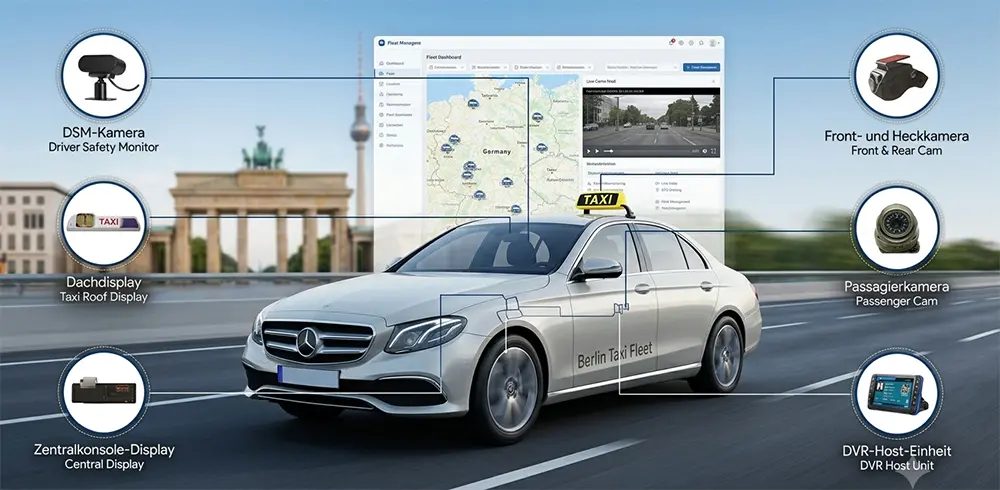
Regulatory Background for Mandatory DMS & Speeding Warning Systems in the UK
Fatigue driving is recognised as a leading contributor to severe road traffic collisions in the UK. The Royal Society for the Prevention of Accidents (RoSPA) estimates that fatigue is a factor in approximately 20% of all fatal road accidents. The core regulatory frameworks are outlined below:
• Obligations for HGV/PSV Operator Licence Holders
Traffic Commissioners oblige licensed operators to formulate written fatigue management policies, conduct regular reviews of driver hours data recorded by Digital Tachographs. Systematic failures to comply may result in full revocation of the Operator Licence.
• Local Industry Restrictions for the Taxi Sector
Multiple UK cities (including several London boroughs and other major metropolitan areas) have made in-car CCTV a mandatory renewal condition for taxi and PHV licences, while regulators are increasingly scrutinising records of excessive consecutive working hours and abnormal driver behaviour.
• Employer Health & Safety Legal Liabilities
Employers who fail to implement reasonable preventive measures (including shift scheduling and technical monitoring tools) to mitigate foreseeable fatigue risks may be held jointly negligent if accidents occur.
Conventional tachographs only record vehicle ignition and movement timestamps, with no capacity to detect real-time driver hazards such as eye closure, yawning, phone usage or unintentional lane departure. Combined DMS and ADAS active early-warning systems fill this critical compliance gap.
Overview of YUWEI Integrated DMS + ADAS Solution for UK Taxis & Commercial Vehicles
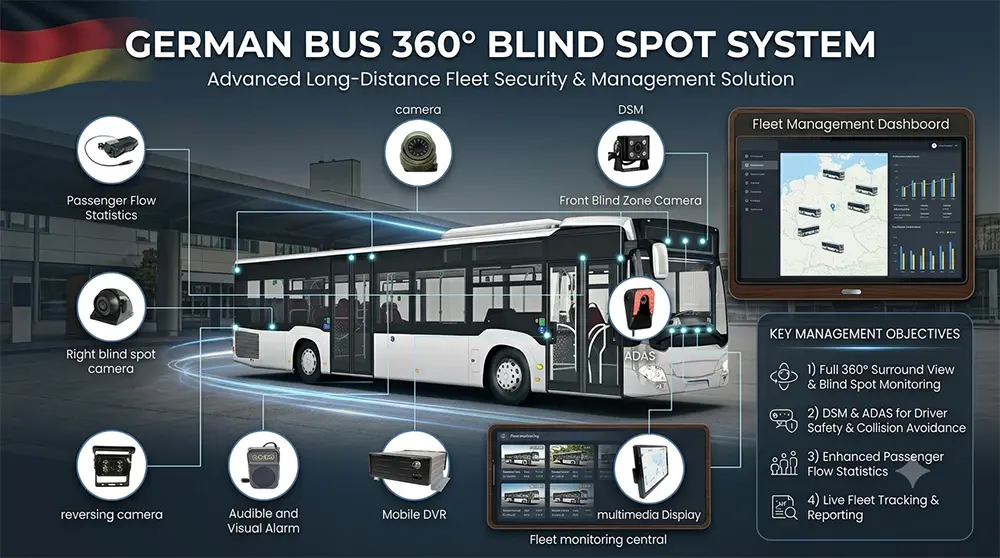
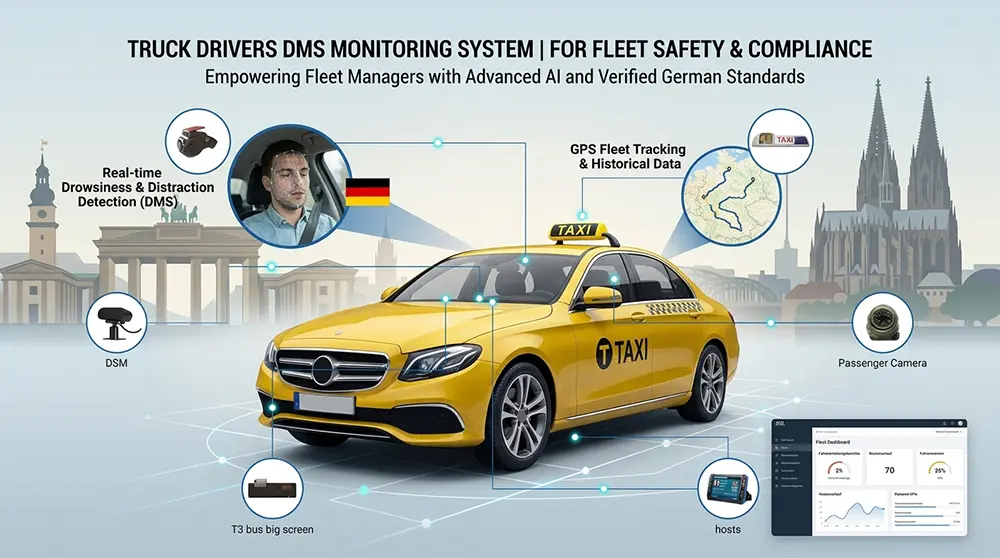
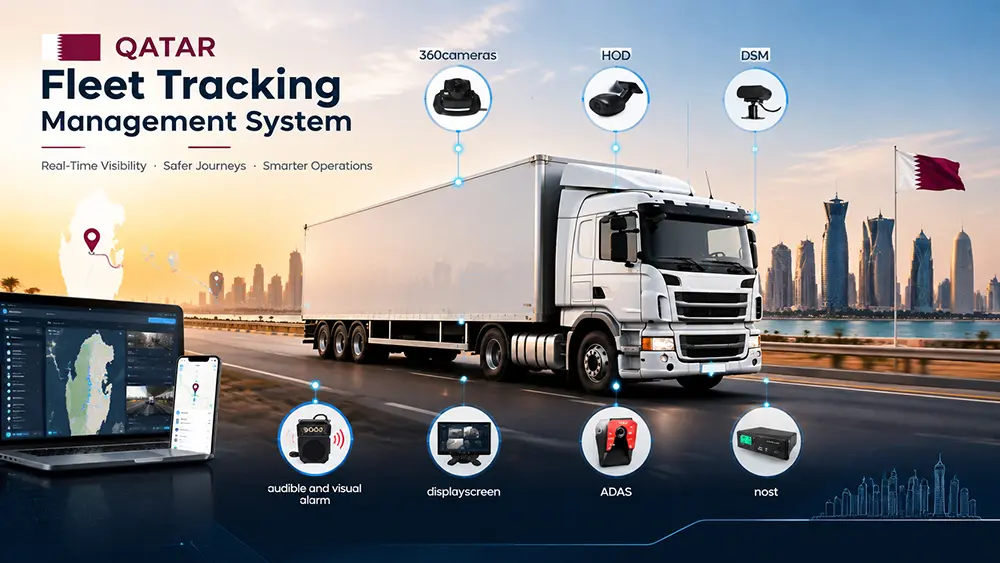
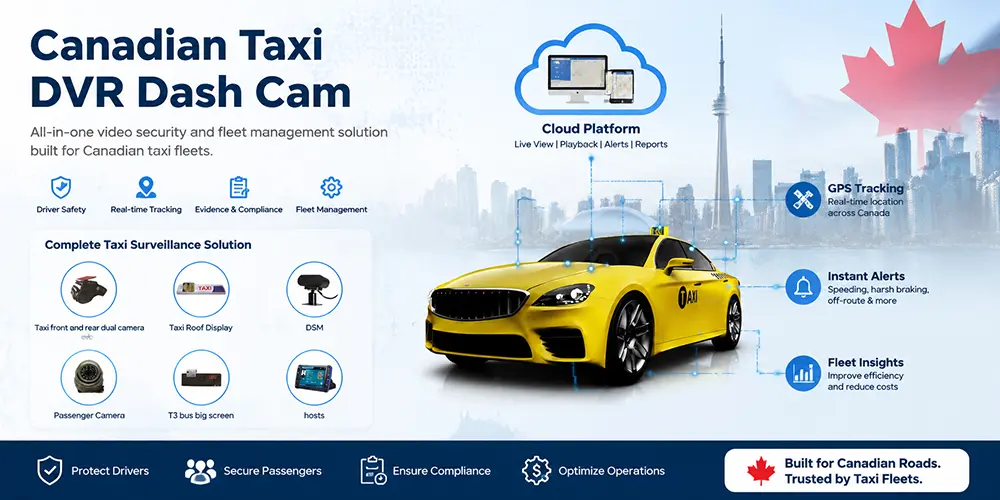
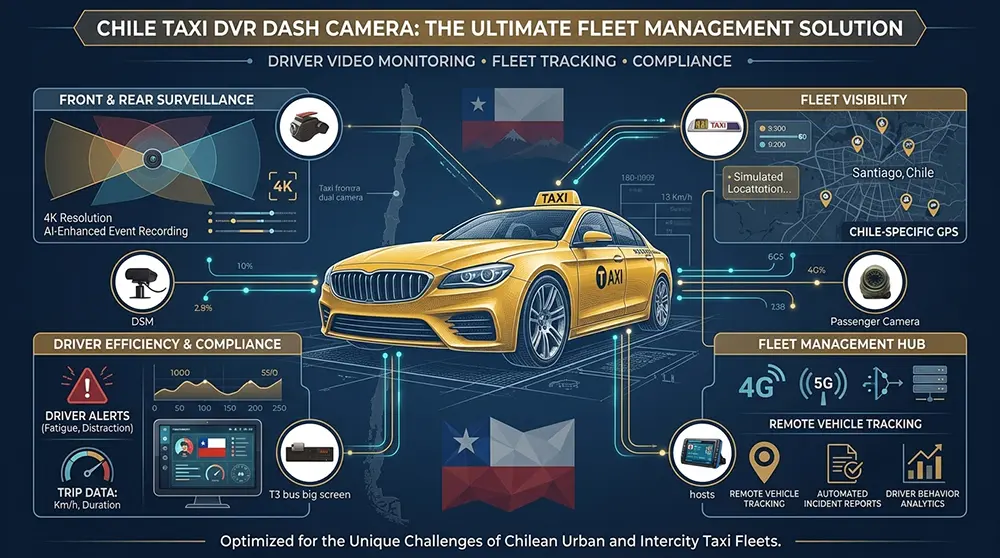
Tailored to the operational demands of UK taxi fleets and light/heavy commercial vehicle fleets, YUWEI delivers an all-in-one intelligent fleet management system built around a 4G MDVR host, dual AI cameras (forward-facing ADAS + in-cabin DMS) and GPS/Beidou positioning modules:
• Forward-Facing ADAS Camera
Monitors distance to preceding vehicles and road lane markings to deliver multiple safety alerts: Forward Collision Warning (FCW), Lane Departure Warning (LDW, Headway Monitoring (HMW) and Traffic Sign Recognition (TSR) including speed limits and no-parking signs. The cloud platform automatically triggers alarms once speeding is detected.
• In-Cabin DMS Camera
Equipped with infrared night vision to capture drivers’ facial features and upper bodies. AI algorithms accurately identify fatigue (eye closure, yawning), distracted driving (constant off-road gazing), mobile phone use, smoking and unfastened seatbelts. The system activates local audio-visual alerts and synchronises all violation data to the cloud platform.
• GPS / Beidou + Real-Time 4G Data Transmission
Precisely records full vehicle travel tracks, instantaneous speed and idle duration. Customisable speeding thresholds can be configured on the cloud platform, with automatic flagging and alerts for excessive continuous driving hours, meeting the Operator Licence’s evidence requirements for driver hour supervision.
• Optional In-Vehicle Display Screen
Enables drivers to view real-time safety warnings and dispatch scheduling notifications.
Hardware Configuration for the Management System
Recommended Hardware Combination
Component | Recommended Model | Core Functions |
Mobile Digital Video Recorder (MDVR) | Full HD Car Mobile DVR (6-channel AHD input, built-in 4G/GPS, H.265 video compression, dual HDD & SD card storage) | Video storage, 4G remote data transmission, GPS track recording, power supply for auxiliary cameras |
Forward ADAS Camera | ADAS-A1080PS-Y5 / Y5A (1080P CMOS sensor, 6mm lens, 52° horizontal field of view, 0.1Lux low-light sensitivity) | FCW / LDW / HMW / TSR forward road safety warning |
Driver DMS Camera | DSM-A720PS-Y9 (Y10A series, 720P AHD, 3.9mm lens, 72° horizontal FOV, 2m infrared range; compatible with overhead dashboard mounting) or Y7/Y13 series | Detection of fatigue, distraction, phone calls, smoking and seatbelt violations |
Optional In-Vehicle Display | Vehicle Infotainment Screen | Local audio warning playback, real-time dispatch message display |
GPS Positioning Module | Integrated within MDVR, equipped with Fakra-C antenna interface | Real-time latitude & longitude, speed, mileage recording, historical track playback |
Typical Application Scenarios
• London Black Cabs & Private Hire Vehicle Fleets (PHV / Uber Partners)
Hardware installed on the overhead ceiling of the driver compartment: the DMS camera faces the driver’s face, while the ADAS camera is mounted above the front windscreen. The MDVR is concealed inside the boot or under seats. The setup satisfies local authority CCTV surveillance mandates while providing AI-powered active safety warnings.
• HGV Trucks & Logistics Delivery Vehicles
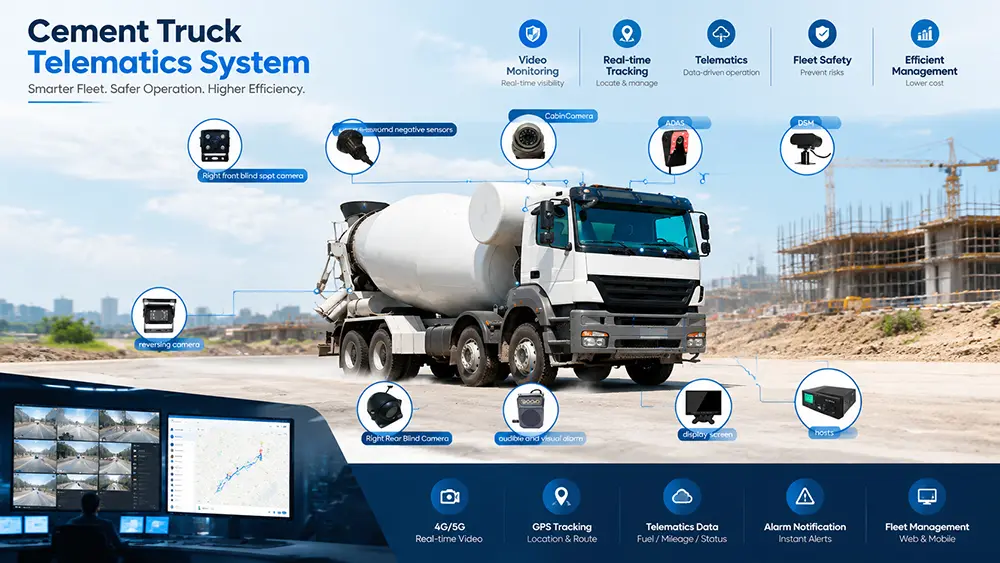
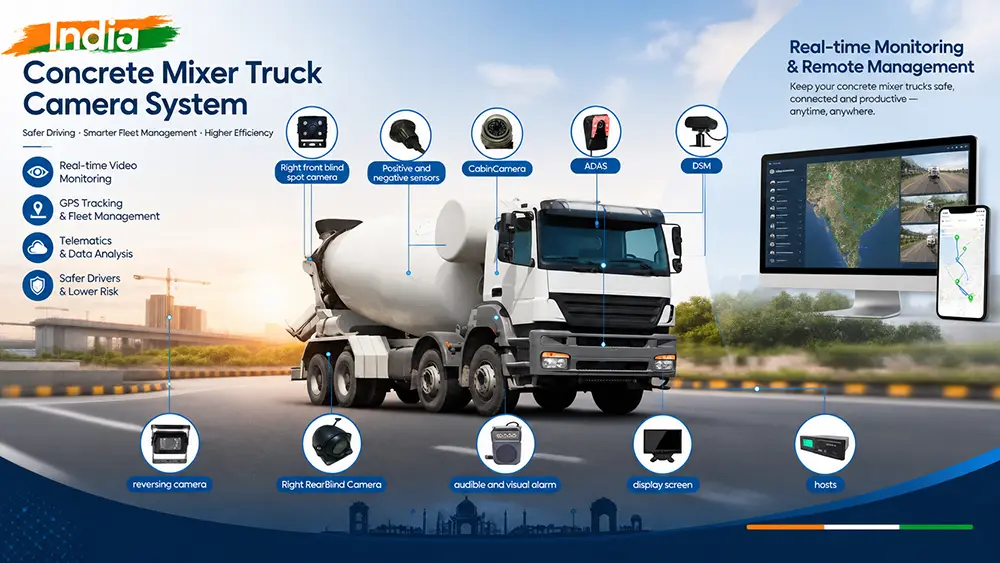
Dual cameras paired with the MDVR connect to the central fleet management platform. Transport Managers can remotely review driver violation alerts, high-risk speeding zones and records of excessive consecutive driving hours to demonstrate proactive compliance management to Traffic Commissioners.
• Airport Shuttles, School Buses & Passenger Coaches
Dual interior and exterior video recording plus DMS technology safeguards passenger safety, with instant alerts for speeding and abnormal driving behaviour pushed to the dispatch centre.
Core System Functionalities
• Automatic Real-Time Safety Warnings
Fatigue triggers (eye closure ≥2 seconds, yawning) and distracted driving (off-road gaze >3 seconds), mobile phone use and smoking activate in-cabin buzzer alerts alongside pop-up notifications on the cloud platform. FCW and LDW alerts warn of potential rear-end collisions and accidental lane drifting; HMW alerts notify drivers of unsafe following distances.
• Speeding & Excessive Driving Hour Monitoring
GPS real-time speed data is cross-referenced with customisable speed limits pre-set on the platform (e.g. 30mph in urban UK zones, 70mph on motorways). Sustained speeding beyond configured limits triggers alarms. Continuous driving exceeding legal thresholds (default aligned with EU 4.5-hour driving rules, UK-specific adjustable parameters) flags "excessive driving time" and notifies dispatchers to arrange mandatory rest breaks.
• Geofencing & Historical Track Playback
Custom operational boundary zones (geofences) trigger out-of-area violation alarms. Post-incident retrieval of continuous video footage and GPS travel tracks supports liability determination after collisions.
• SOS One-Click Emergency Alarm
Drivers under threat can press the dedicated emergency button to instantly transmit vehicle location data to the dispatch centre.
• Web & Mobile App Fleet Management Platform
Multi-language interface with native English support. Automatically generates analytical reports covering total mileage, estimated fuel consumption and violation statistics to support data analysis and official audits for UK fleet operators.
Why Choose YUWEI DMS + GPS Tracking System for UK Taxis & Commercial Vehicles
As a professional manufacturer of vehicle surveillance, ADAS and DMS hardware, YUWEI supplies CE and RoHS certified automotive equipment for the UK and broader European markets, holding ISO 9001 quality management and ISO 14001 environmental management factory certifications. Our Taxi Fleet GPS Tracking Management System has been deployed in over 80,000 vehicles across multiple domestic cities. Mature, refined AI visual recognition algorithms accurately distinguish genuine fatigue states from natural blinking, drastically reducing false alarm rates. For the UK market, we deliver the following exclusive support:
• Fully English-language web-based fleet management platform + open API integration capability
• Wide-voltage MDVR units compatible with UK 12V / 24V vehicle electrical systems (operating range: 9–32V)
• Custom OEM / ODM manufacturing services for local distributors and system integrators
• Complete one-stop supply chain covering ADAS cameras, DMS cameras, 4G MDVRs and vehicle display screens
If you require quotations and detailed technical datasheets for DMS + GPS tracking systems for UK taxi or HGV fleets, please contact the YUWEI sales team.
Email:hello@yuweitek.com