


Best Fleet Tracking Telematics 2026

Best Fleet Tracking Telematics

Date Time: May 25, 2026
Reading volume: 5
Author: YUWEI

Best Fleet Tracking Telematics 2026


Fleet tracking telematics serves as an essential tool for modern commercial fleets to cut costs, boost efficiency, strengthen safety protection and meet compliance requirements. With fleet scale expansion, selecting high-quality tracking systems is pivotal for refined fleet management.

Best Fleet Tracking Telematics 2026

Comparison of Mainstream Fleet Tracking Technologies

Three mainstream fleet tracking technologies are widely applied, including GPS positioning, RFID identification and telematics, matching diverse operational scenarios.


GPS realizes full-range real-time positioning via satellites, supporting geofencing and route optimization, ideal for long-distance cross-regional fleets. Its drawbacks lie in vulnerable signal shelter and relatively high costs of devices and services.


RFID identifies vehicle tags through electromagnetic signals. Passive tags feature cost-effectiveness while active tags deliver longer transmission distance, suitable for factory asset management and access control. This technology is susceptible to signal interference, unfit for large-scale tracking and requires substantial upfront infrastructure investment.


Telematics integrates GPS and onboard diagnostic systems. It collects multi-dimensional data covering positioning, fuel consumption, vehicle conditions and driving behaviors to implement safety supervision and predictive maintenance. The downsides are massive data volume and high costs & complexity of software and hardware deployment.


Function Dimension

GPS Tracking

RFID Tracking

Telematics

Real-time Monitoring

Full-process dynamic positioning

Limited short-range identification

Full-coverage real-time monitoring

Coverage

Global availability

Restricted within device coverage

Full coverage via cellular network

Data Accuracy

Only location data

Basic identity records

Complete data of vehicle status, driving performance and location

Cost Input

Moderate to high

Cost varies by tag type

Relatively high overall investment

Applicable Scenarios

Long-haul trunk transportation

Factory asset management

Comprehensive refined fleet management


System Hardware Configuration

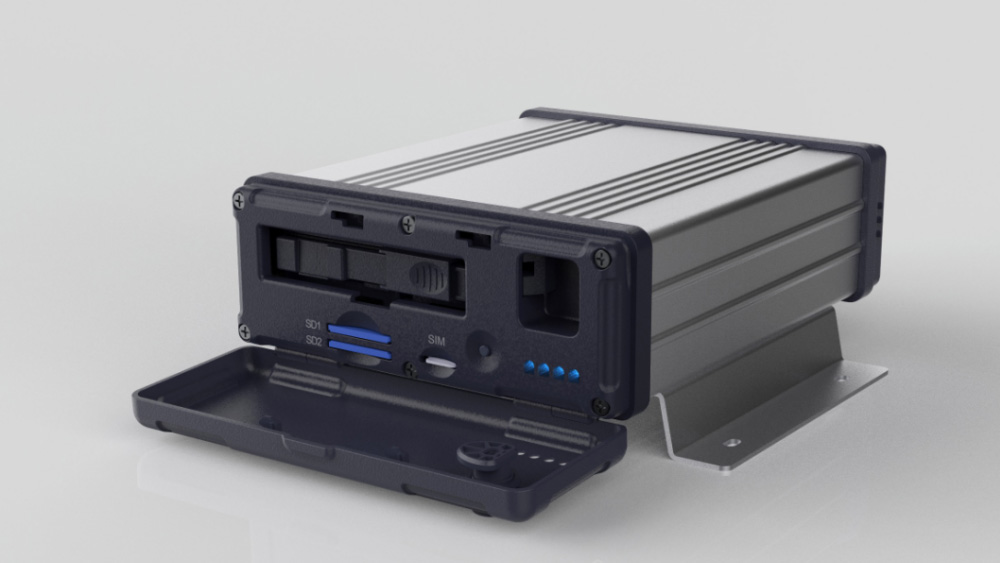
High-quality terminals adopt modular design, compatible with various automotive communication protocols. They can connect with data from mainstream vehicle manufacturers to achieve unified one-stop management.


Diversified hardware types meet varied demands. Rugged terminals adapt to harsh working conditions; solar-powered locators fit trailers and idle assets. Expandable onboard network helps reduce data traffic expenses.


Complete supporting accessories facilitate daily operation. Identity recognition devices standardize driver attendance. Adapter wiring harness enables rapid installation on multiple vehicle models. Anti-dismantling accessories prevent artificial interference. Devices automatically switch to satellite mode in remote offline areas to ensure continuous data transmission.


Platform Functions

1.Visualized Operational Management

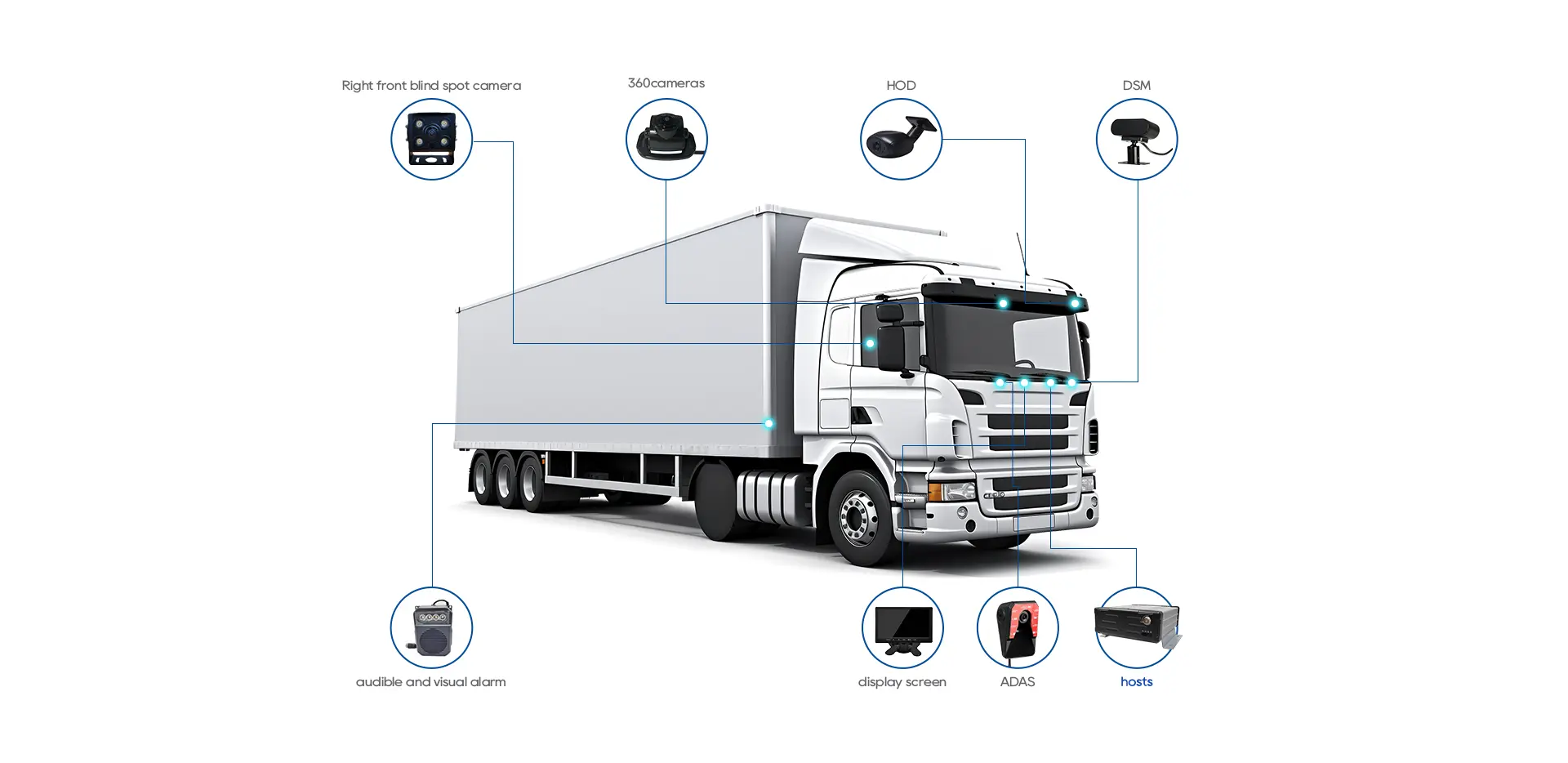
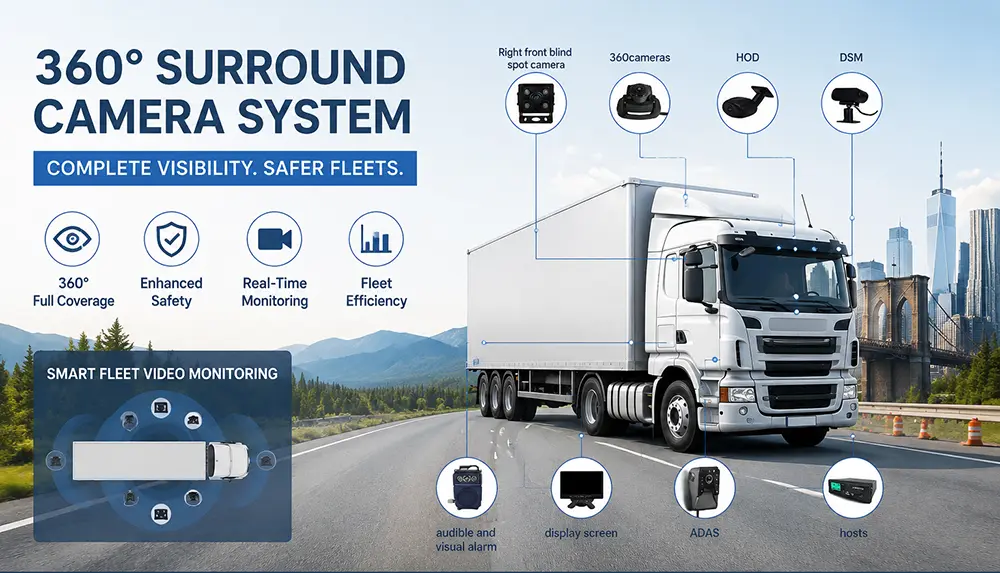
The platform displays real-time vehicle location, driving tracks and operating status, and formulates compliant routes intelligently based on road conditions. Equipped with intelligent imaging devices, it automatically detects speeding, fatigue driving and other risks, lowering accident rates, simplifying office procedures and improving dispatching and inspection efficiency.


2.Safety & Compliance Risk Prevention

Built-in compliance modules automatically generate driving logs, inspection documents and tax statements. It regulates driving hours to avoid regulatory penalties. Driver safety scores are generated based on driving data to restrain improper behaviors and give early alerts on potential vehicle faults.


3.Energy Consumption & Cost Optimization

Real-time monitoring on fuel consumption and idling conditions curbs unnecessary fuel waste. Predictive maintenance based on vehicle data eliminates hidden troubles in advance, minimizing downtime losses, extending vehicle service life and raising asset utilization rate.


4.Data Interconnection & Operation Maintenance

Remote vehicle fault diagnosis supports efficient troubleshooting. Open access interfaces ensure compatibility with mainstream management systems, enabling fast data synchronization with existing management frameworks.


Differences Between Telematics and Fleet Management Software

The two systems feature clear division of labor and complementary functions. Telematics collects original vehicle operating data through onboard hardware. Fleet management software analyzes data on cloud platforms and executes practical management work including dispatching, maintenance and statistics.

Combined application facilitates customized maintenance schemes, optimized driving routes and standardized driving behaviors, comprehensively reducing overall fleet operating costs.


Key Criteria for Selecting Premium Systems

1. Fast positioning response, track playback and geofencing functions for accident investigation and verification

2. Route analysis capability to accurately estimate travel duration and elevate customer service quality

3. Access to vehicle fault data and automatic maintenance reminders to reduce breakdown downtime

4. Embedded compliance programs that generate regulatory reports automatically to pass industry audits effortlessly

5. Intelligent monitoring system providing real-time alerts against dangerous driving behaviors

6. Comprehensive after-sales support guaranteeing long-term stable system operation


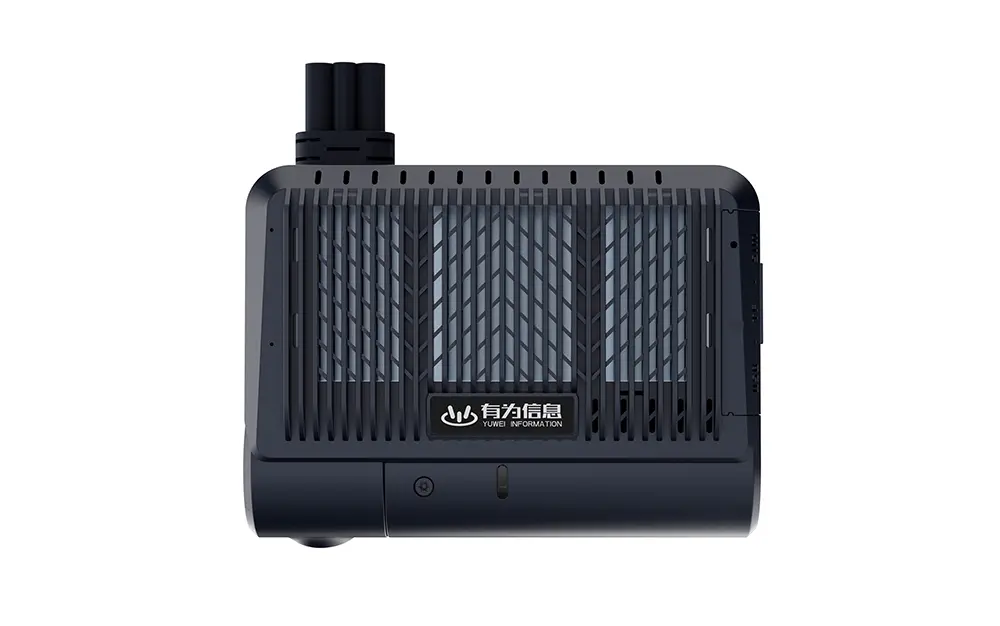
Recommended YUWEI V5C Dash Cam

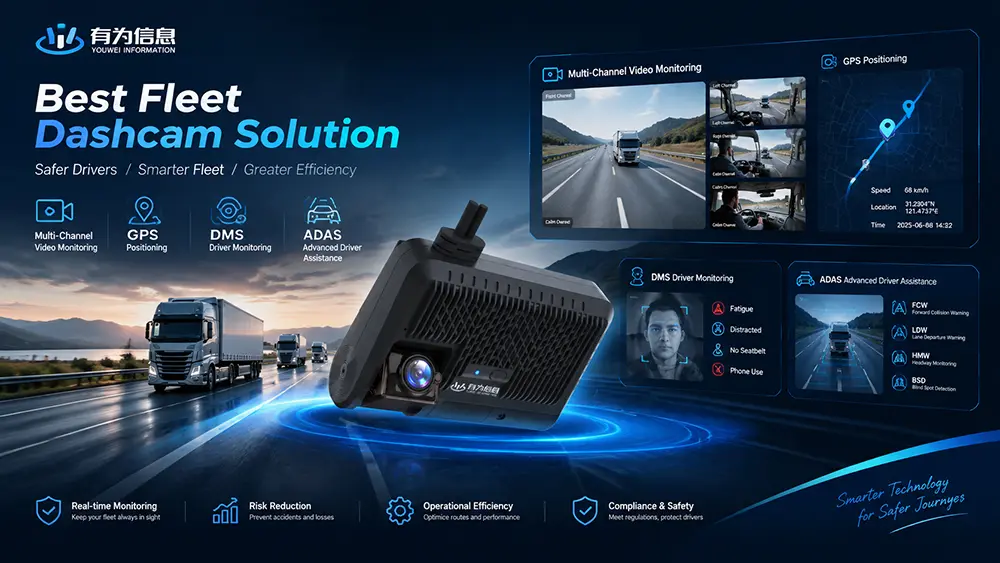
Among various fleet tracking devices, YUWEI V5C stands out with stable performance, comprehensive functions and cost advantages. It is the preferred terminal for small and medium-sized fleets, applicable to urban distribution, short-to-medium haul logistics and other commercial transportation businesses.

Best Fleet Tracking Telematics

Core Advantages

1.Precise & Stable Positioning
Dual Beidou & GPS positioning, 4G full-network transmission and local Wi-Fi transmission deliver accurate full-range real-time positioning and steady data uploading.


2.Dual-channel High-definition Camera
1080P wide-angle front lens and 720P wide-angle in-car lens synchronously record road conditions and driving status, providing complete and valid evidence.


3.AI Active Safety Protection
Built-in ADAS driving assistance and DMS driver monitoring identify lane departure, forward collision risk, driver fatigue and distraction. Facial verification further safeguards driving safety.


4.Easy Deployment & Wide Compatibility
Wire-free quick installation saves deployment time. Open API interfaces support seamless connection with mainstream fleet management platforms.


5.Reliable Security Protection
AES-256 encryption technology, dual storage backup on memory card and cloud server, as well as anti-tampering sensors trigger instant alarms upon unauthorized disassembly.


6.Applicable Scenarios

Suitable for urban distribution, short-to-medium haul logistics, hazardous goods transportation and small & medium commercial fleets. Ideal for fleets requiring budget-controlled, refined safety supervision and compliance management.

Email:hello@yuweitek.com
Communicating with us can make you find a better fleet management equipment supplier
Get a quote
MESSAGE
*
*
*
*