











Cloud-based Fleet Camera Systems
Cloud based security Fleet Camera Systems
Cloud-based fleet camera systems are revolutionizing the way fleet management is conducted. Unlike traditional driving recorders, these systems integrate video recording, GPS positioning, artificial intelligence analysis and remote management via Internet connectivity, allowing fleet managers to remotely monitor fleet conditions via mobile phones or computers.
Real-time Connectivity and Intelligent Management
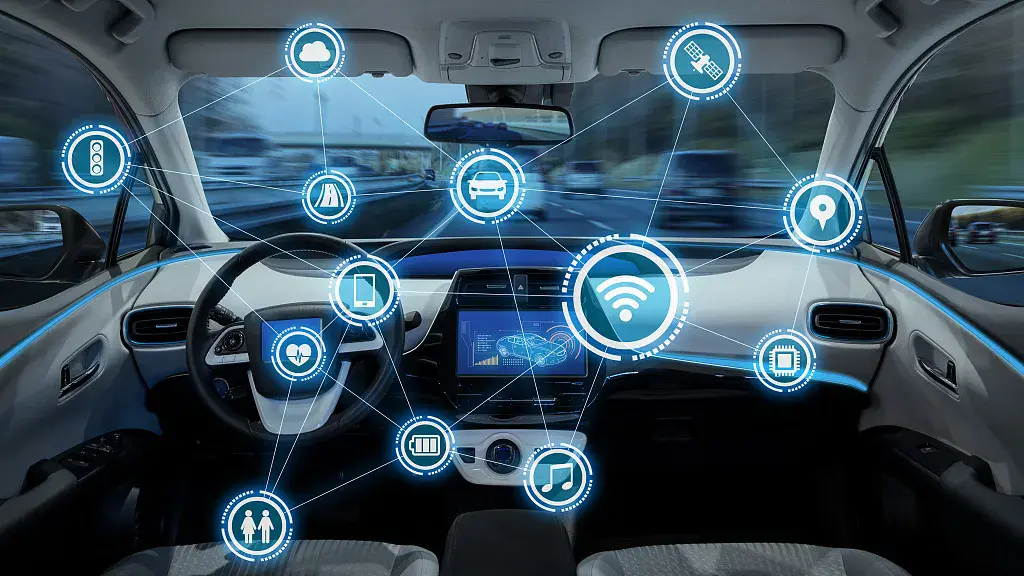
Cloud-connected fleet cameras automatically upload recorded footage to secure cloud storage via cellular networks or Wi-Fi. This means administrators can access video anytime and anywhere without physical contact with the devices. When critical events such as collisions or sudden braking occur, the system automatically detects and uploads relevant clips, eliminating the hassle of manual downloading.
GPS integration is another major highlight. It synchronizes video footage with precise vehicle location, travel routes and timestamps. This not only facilitates incident verification and route optimization, but also converts video into actionable insights to assist in analyzing driver behavior.
Artificial Intelligence and Comprehensive Analysis
Modern systems are more than just recording devices. They utilize artificial intelligence to automatically identify unsafe driving behaviors such as tailgating, mobile phone usage or distracted driving. These insights help safety teams prioritize targeted coaching, thereby reducing accident rates in the long run.
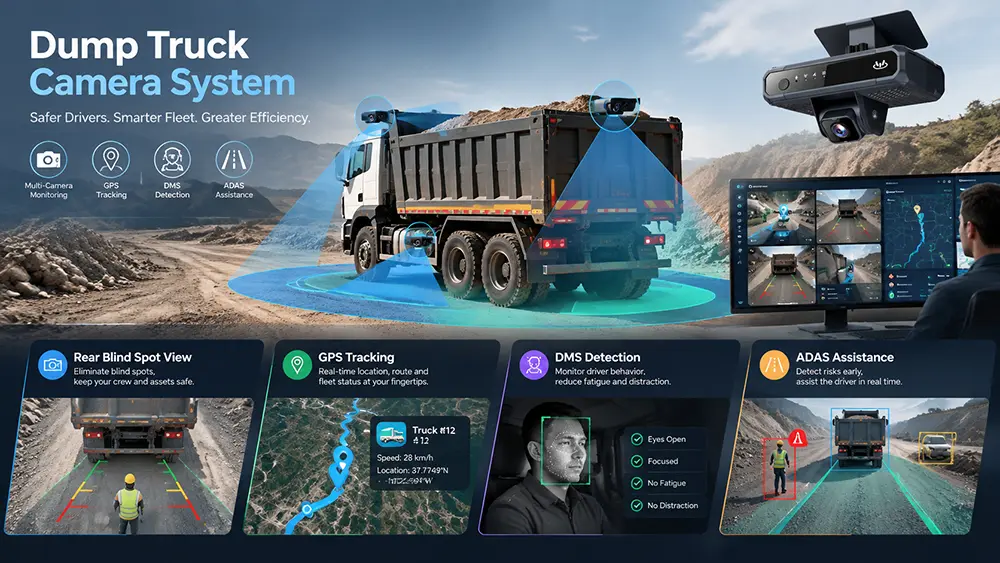
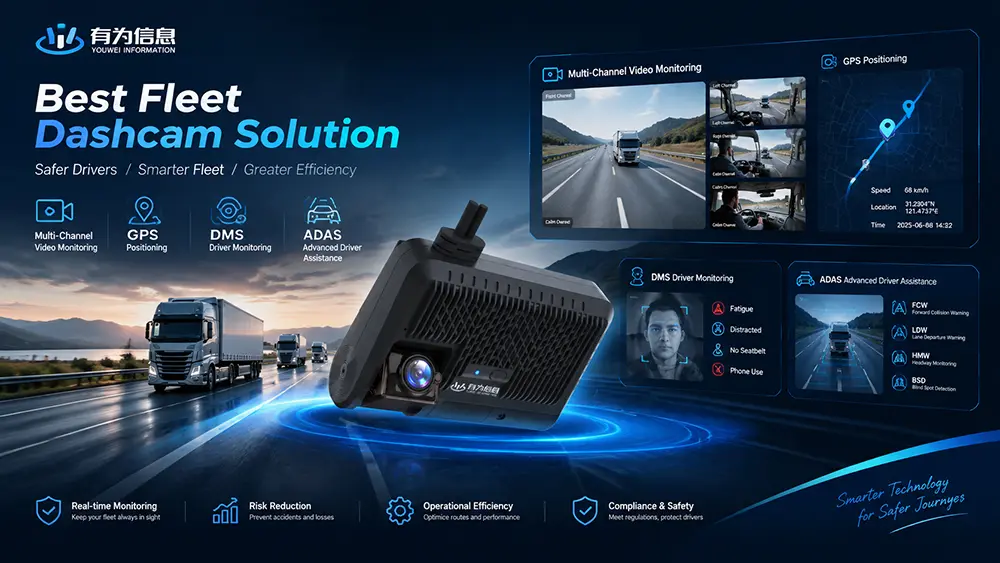
Taking the advanced AI driving recorder such as YUWEI V8N as an example, it integrates 4G communication, Wi-Fi and GNSS modules to achieve true cloud-based interconnection. Equipped with a built-in starlight ultra-wide-angle front-view camera and an infrared in-cabin camera, it supports up to 4-channel video recording, providing managers with an all-around field of view. More importantly, it deeply integrates ADAS (Advanced Driver Assistance System) and DMS (Driver Monitoring System) functions.
ADAS functions include lane departure warning, headway monitoring warning, forward collision warning and pedestrian collision warning, which can remind drivers in real time via voice before dangers occur.
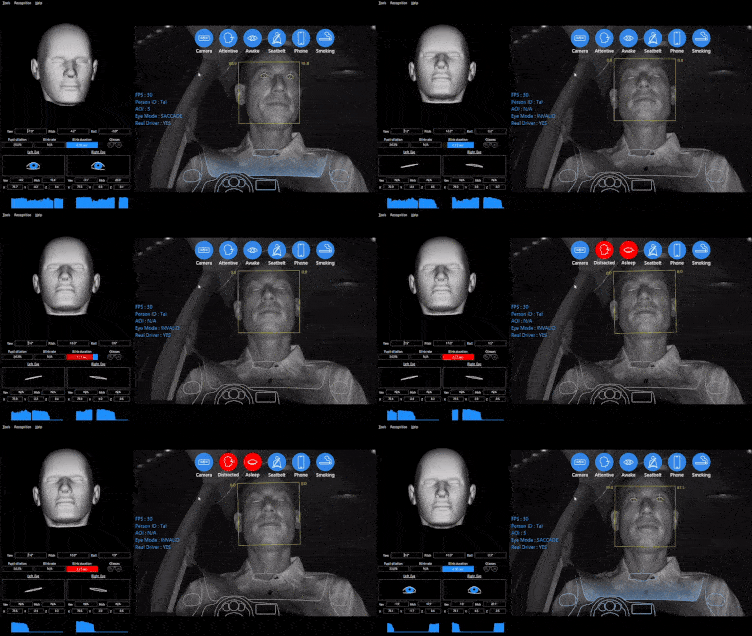
DMS functions can accurately detect fatigued driving (yawning, eyes closed), distracted driving, phone calls, smoking, seatbelt unfastened and other unsafe behaviors, and support facial recognition for effective driver identity supervision.
In addition, the system supports blind spot monitoring and aggressive driving detection (sudden acceleration, sudden deceleration, sharp turns), safeguarding driving safety in all aspects. All events and alarm attachments are automatically uploaded to the cloud management platform for easy traceability and analysis.
Furthermore, by combining video with telematics data (such as speed, braking), the system can identify driving patterns that increase vehicle wear and tear (e.g., sudden acceleration, frequent sudden braking) or inefficient routes. Such data can be directly fed into preventive maintenance programs to generate service alerts, helping balance safety and operational efficiency while reducing downtime.
All-round Coverage and Security Assurance
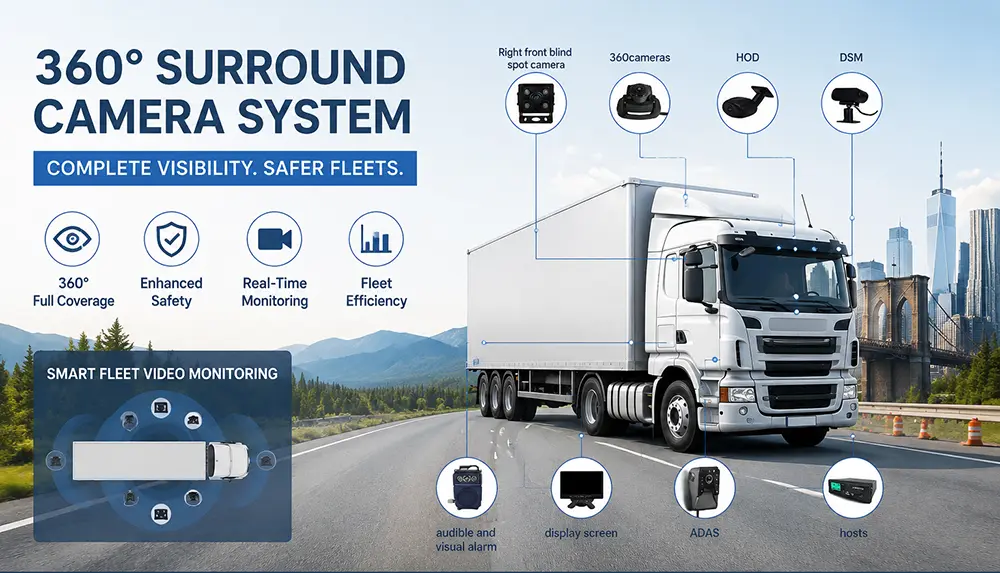
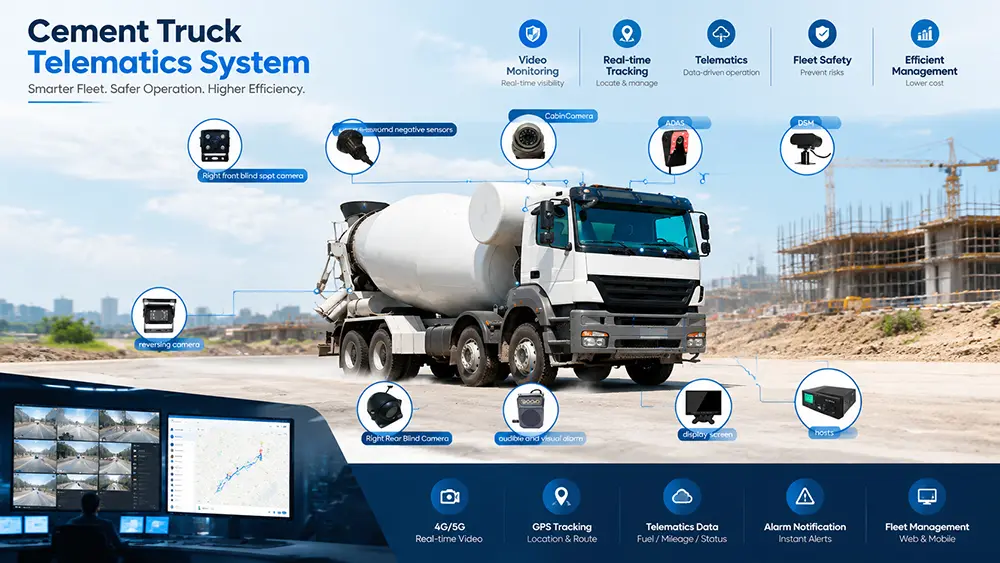
To provide a more comprehensive field of view, advanced fleet camera systems have expanded coverage to include in-cabin, side and rear cameras. In-cabin cameras provide critical context when incidents occur, while side and rear cameras help eliminate blind spots and assist with parking maneuvers.
Data security is critical. Reliable systems use encryption technology to protect video data during transmission and storage, and implement role-based access control to ensure only authorized personnel can view sensitive information. Cloud storage solutions not only eliminate the hassle of managing physical storage devices, but also meet compliance requirements through customizable retention policies.
Mobile Management
Through a dedicated mobile application, fleet managers can control the entire system at their fingertips, enabling real-time video streaming, viewing historical footage, monitoring system status and receiving alert notifications.
Cloud-based fleet camera systems elevate simple video recording to a powerful fleet operation and safety platform through real-time connectivity, intelligent analysis and centralized management.