












Best Mobile DVR for Trucks
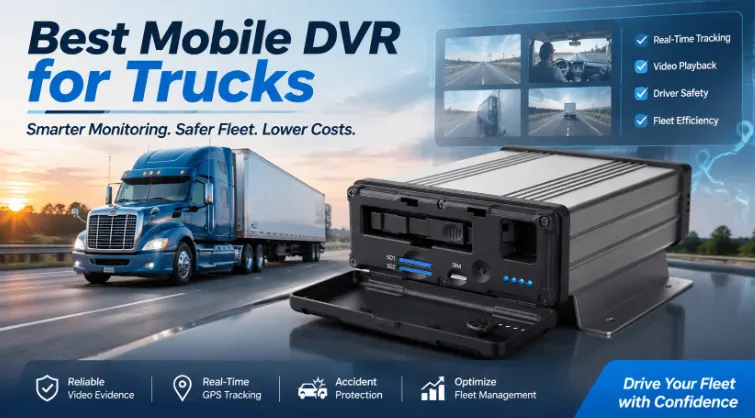
Mobile DVR for Trucks
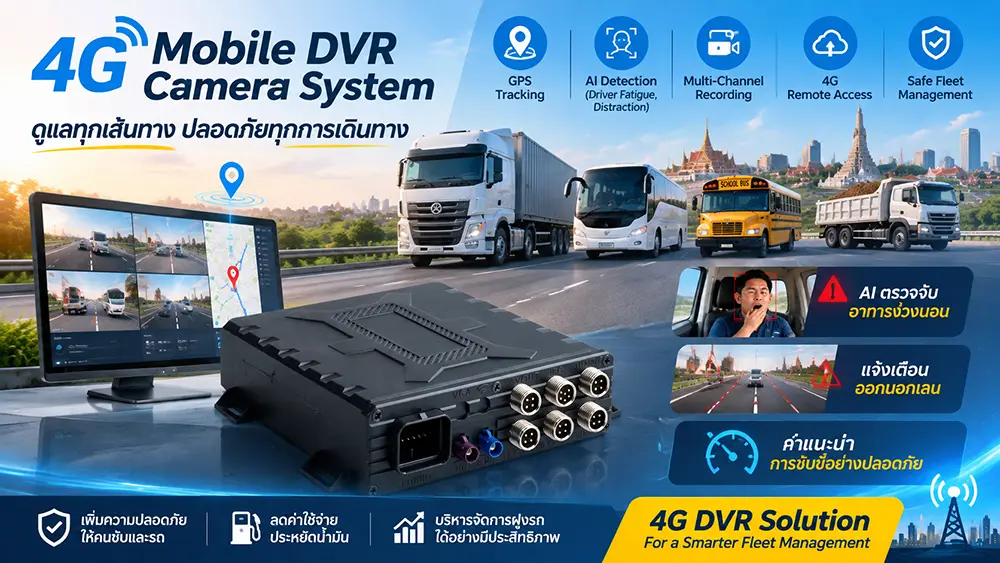
For Canadian fleet managers, an excellent truck mobile DVR requires more than just 1080p HD recording; it should also support driving risk alerts, GPS positioning, remote monitoring, and accident evidence management.
The YUWEI F4 and F6 AI Mobile DVR systems provide multi-channel video surveillance and intelligent driving safety features, making them suitable for general freight fleets and complex operating environments, respectively.
Canadian Commercial Truck DVR Regulations
As of November 2026, Canada has no unified federal regulation requiring all commercial trucks to install a DVR. However, transportation companies must still comply with relevant regulations regarding hours of service, road safety, and personal privacy.
Differences Between ELD and DVR
Transport Canada requires commercial vehicles subject to regulations to use certified Electronic Logging Devices (ELDs) to record driving time and duty status.
However, ELDs are primarily used for hours-of-service compliance, while DVRs are primarily used for video surveillance and accident evidence collection; the two cannot directly replace each other.
For cross-border transportation fleets operating between Canada and the United States, ELD compliance and DVR usage requirements should be confirmed separately.
PIPEDA and Driver Privacy Protection
Canada's Personal Information Protection and Electronic Documents Act (PIPEDA) and applicable provincial privacy laws set requirements for the collection and use of employees' personal information.
When installing cab cameras, fleets should:
1.Clearly define the purpose of video surveillance and inform drivers.
2.Restrict unnecessary in-cab audio recording and monitoring.
3.Specify video access permissions and retention periods.
4.Protect video and GPS location data.
5.Avoid unnecessary monitoring of drivers during rest periods.
The Office of the Privacy Commissioner of Canada previously investigated Trimac Transportation's in-cab audio and video monitoring, focusing on monitoring transparency, audio collection, and data access permissions.
Therefore, when deploying AI DVRs, Canadian fleets should prioritize both safety management and driver privacy.
Recommended F4 and F6 AI Mobile DVR Systems for 2027
F4: Suitable for Long-Haul Freight and Logistics Fleets
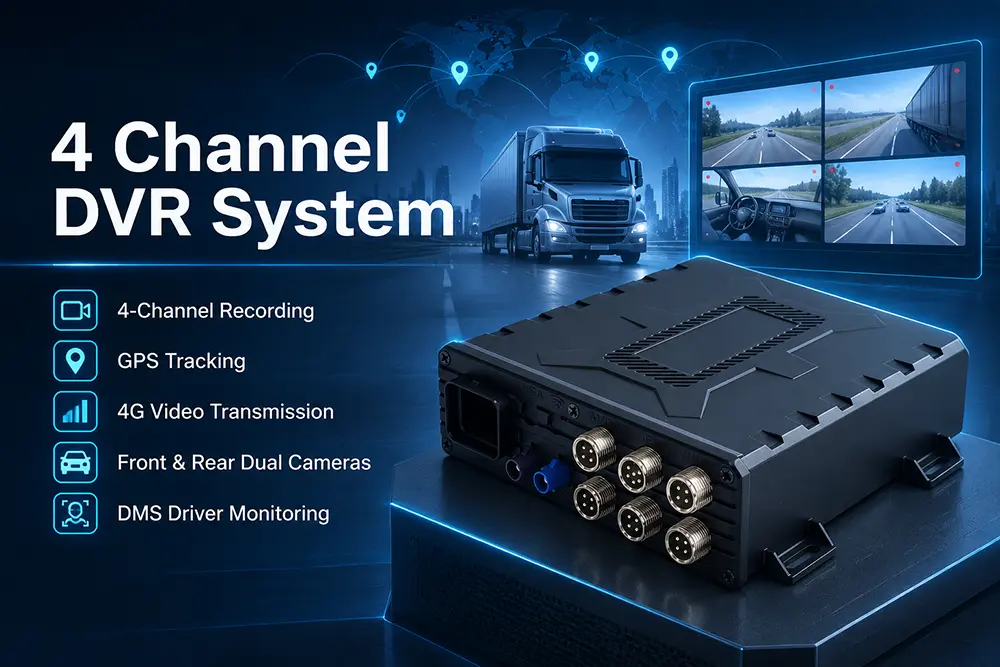
The YUWEI F4 is a mobile hard disk video recorder that supports multi-channel video input, 4G communication, GPS positioning, and AI driving safety monitoring.
The F4 supports up to 6 channels of analog video input, including 2 channels of 1080P input, and provides an IPC interface. The device supports H.264/H.265 video encoding, as well as 2.5-inch HDD/SSD storage.
Key Advantages of the F4:
1.Multi-Channel Recording: Capable of monitoring the road, cab, sides of the vehicle, and cargo box.
2.AI Safety Alerts: Supports ADAS, DSM, and BSD-related functions.
3.Large-Capacity Storage: Supports 2.5-inch HDD or SSD, suitable for continuous recording.
4.4G and GPS: Supports remote vehicle management and location tracking.
5.Power-Off Protection: Reduces the risk of data corruption caused by abnormal power loss through the UPR function.
For Canadian long-haul transportation, urban delivery, and cold chain logistics fleets, the F4 is better suited for applications requiring multi-angle recording and longer video retention times.
F6: Suitable for Engineering and Complex Operating Environments
The YUWEI F6 is an intelligent vehicle DVR featuring a die-cast aluminum housing, with the main unit achieving an IP67 protection rating, making it suitable for dusty, humid, and other complex environments.
The F6 supports up to 6 channels of analog video input, 4G, Wi-Fi, GPS/BeiDou positioning, and optional RTK high-precision positioning.
Key Advantages of the F6:
1.IP67 Protection: Enhances the main unit's suitability in humid and dusty environments.
2.AI Driver Monitoring: Supports ADAS, DSM, and BSD functions.
3.Compact Structure: Facilitates installation in vehicles with limited space.
4.Positioning Functions: Supports GPS/BeiDou and optional RTK positioning.
5.Industrial-Grade Design: Suitable for engineering vehicles, port equipment, and special transportation scenarios.
For construction vehicles in Alberta, mining haul trucks, and port operation vehicles, the F6 is a solution worth evaluating closely.
It should be noted that IP67 is the protection rating for the main unit and does not mean that all external cameras and wiring harnesses possess the same level of protection.
Features of AI Mobile DVR Camera Systems
1. ADAS: Reducing Road Driving Risks
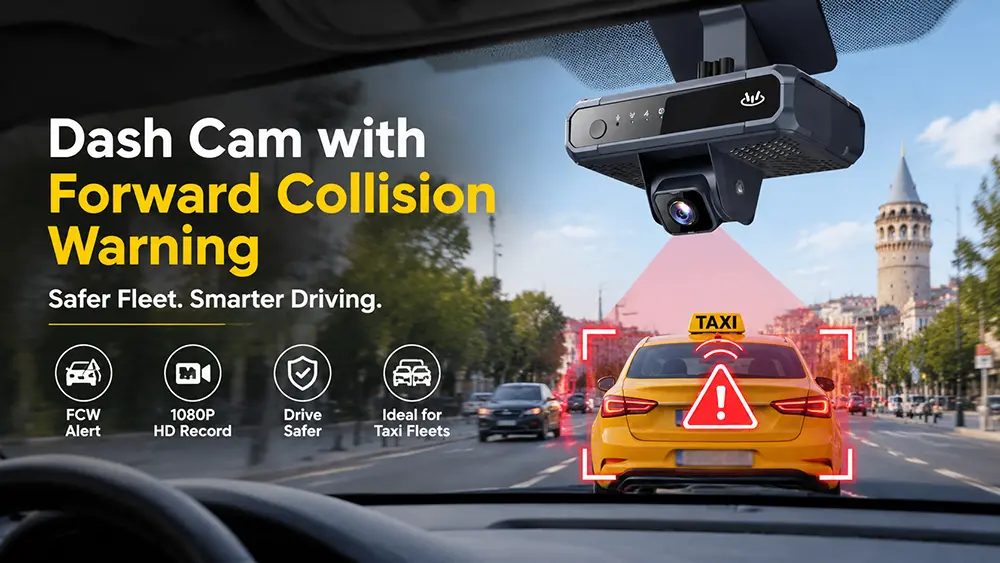
The Advanced Driver Assistance System (ADAS) provides warning functions such as forward collision, lane departure, and headway monitoring.
For trucks frequently traveling on Canadian highways, ADAS can assist drivers in identifying risks and provide safety training data for the fleet.
2. DSM: Monitoring Fatigue and Distracted Driving
The Driver Status Monitoring (DSM) system assists in identifying behaviors such as fatigue, yawning, distraction, and mobile phone use.
Given the long distances of Canadian long-haul freight routes, DSM helps safety managers identify high-risk driving events and improve training effectiveness.
3. BSD: Improving Blind Spot Safety for Large Trucks
Blind Spot Detection (BSD) uses corresponding cameras and algorithms to assist in identifying hazardous areas around the vehicle.
For urban delivery scenarios such as Toronto and Vancouver, BSD helps drivers observe risks during turning, reversing, and lane changing.
4. 4G and GPS: Enabling Remote Fleet Management
Through 4G communication and GPS positioning, fleet managers can use compatible platforms to view vehicle locations, surveillance footage, and alarm events.
For example, after an accident occurs, managers can quickly locate relevant video footage based on time and location.
In remote areas of Canada, local storage is particularly important. When the network is interrupted, the vehicle should still be able to continue recording and upload data according to platform capabilities once the connection is restored.
5. H.265 and Local Storage: Reducing Recording Costs
H.265 video encoding helps reduce the amount of data required for video storage and transmission.
For fleets with dozens or hundreds of trucks, properly configuring recording bitrates, storage capacity, and retention periods can reduce long-term operating costs.
For example, with 4 cameras recording continuously for 12 hours a day at an average bitrate of 1.5 Mbps per channel, retained for 14 days, the theoretical video data volume is approximately 454 GB, excluding additional storage overhead.
6. Low-Temperature Adaptability: Meeting Canadian Winter Operating Needs
The publicly stated operating temperature for both the YUWEI F4 and F6 main units is -30°C to +70°C.
This means the devices can be used within the specified operating temperature range, but normal operation cannot be guaranteed in environments below -30°C.
For winter fleets in Manitoba, Saskatchewan, and Alberta, it is recommended to focus on testing low-temperature startup, power supply stability, lens frosting, and recording integrity.
Technical Specification Comparison: F4 vs. F6
Note: Parameters are compiled based on publicly available YUWEI product materials; specific configurations are subject to the official specification sheet. The F6 webpage title mentions 1080P, but there are discrepancies in the detailed analog capture parameters; actual recording resolution should be confirmed before purchasing. AI functions and certain modules may be optional.
How to Choose Between F4 and F6?
1.Choose YUWEI F4: If the fleet is primarily engaged in long-haul freight, urban delivery, or cold chain transportation, and requires multi-channel recording and larger local storage capacity, the F4 is more suitable.
2.Choose YUWEI F6: If vehicles frequently enter construction sites, ports, or mining areas, and require higher dust and water resistance for the main unit, the F6 is more worth considering.
Both devices can be used for AI fleet safety management. When purchasing, you should also confirm cameras, AI licensing, communication frequency bands, platform services, and installation costs.
Summary
For Canadian transportation companies preparing to upgrade their video surveillance equipment in 2027, the YUWEI F4 and F6 offer two distinct options.
The F4 is better suited for general freight and logistics fleets, while the F6 is better suited for complex working conditions and special vehicles.
Fleet managers should select equipment based on vehicle type, recording requirements, winter environments, data security, and total cost of ownership.
For large-scale fleets, it is recommended to test on a small number of vehicles first before deciding on mass deployment.
Email:hello@yuweitek.com