










Best GPS Tracking Systems for Fleet Vehicles
What is a GPS Fleet Tracking System?
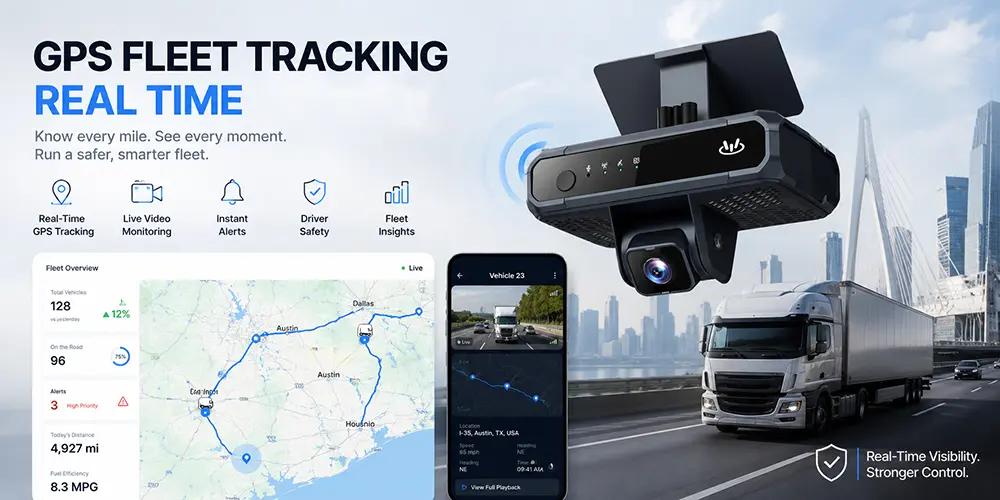
The Global Positioning System (GPS) is a satellite-based navigation system consisting of at least 24 satellites. It operates anywhere in the world, unconstrained by weather conditions or geographic location. A GPS fleet tracking system utilizes this technology by installing GPS tracking devices on fleet vehicles to determine their real-time locations and transmits the data via cellular networks (3G/4G LTE) to a central server for analysis and processing.
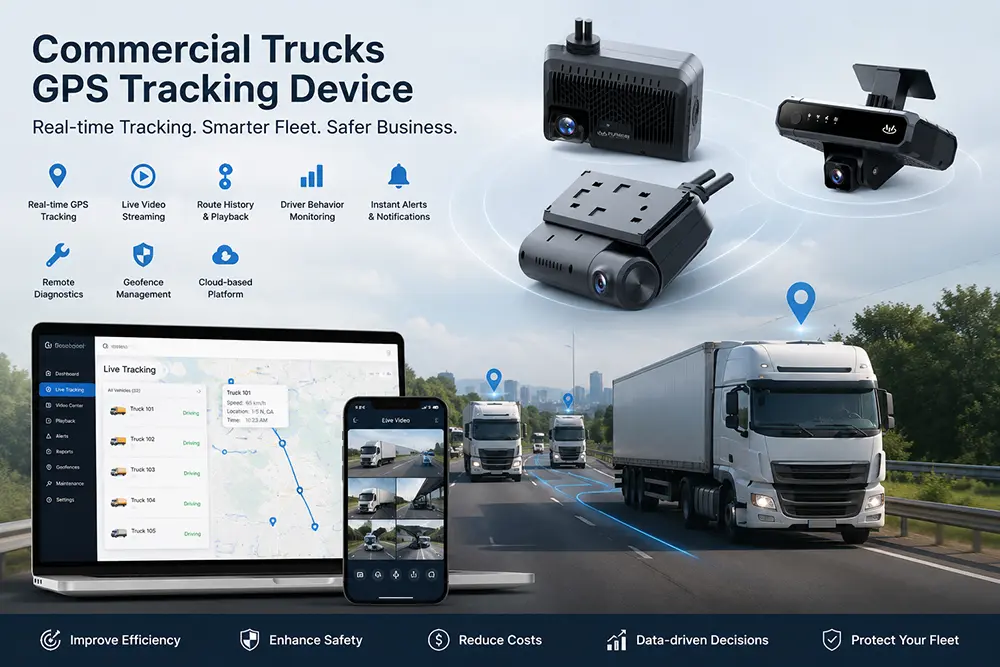
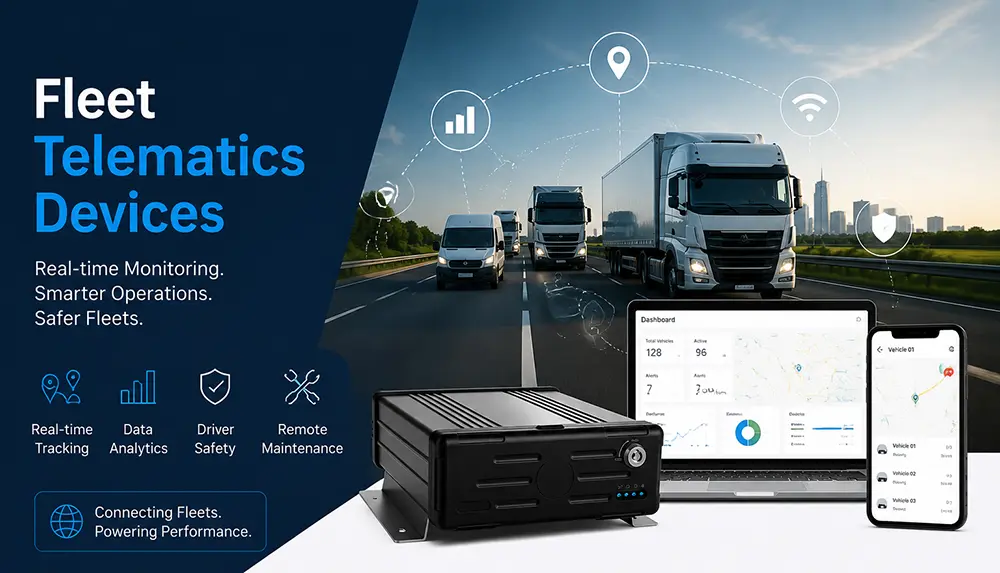
For enterprise management, the core value of GPS fleet tracking goes far beyond simply "knowing where the vehicle is." It is a comprehensive Telematics management system that helps enterprises achieve operational visibility by collecting multidimensional data, including vehicle location, speed, fuel consumption, engine diagnostics, and driver behavior.
How the System Works
1.Device Installation: Plug the GPS tracker into the vehicle's OBD-II diagnostic port or hardwire it to the vehicle's power system. Most installations can be completed within 5 minutes.
2.Data Collection: The device uses satellite signals to calculate the vehicle's precise location in real-time while reading vehicle diagnostic data from the Engine Control Module (ECM).
3.Data Transmission: The device transmits real-time information such as location, speed, engine data, and driving events to the cloud platform via cellular networks like 4G LTE.
4.Data Analysis and Presentation: Managers can view real-time maps, reports, and alerts through a dashboard on a computer or mobile device to make data-driven decisions.
Core Takeaways: GPS tracking devices typically offer two installation methods: Plug-and-Play and Hardwired.
1.The Plug-and-Play type plugs directly into the OBD-II port, requiring no professional installation.
2.The Hardwired type connects to the vehicle's wiring harness and is installed covertly, offering advantages like tamper resistance and a continuous power supply, making it more suitable for commercial truck fleets.
GPS Fleet Tracking System Features
1.Real-Time Location Tracking
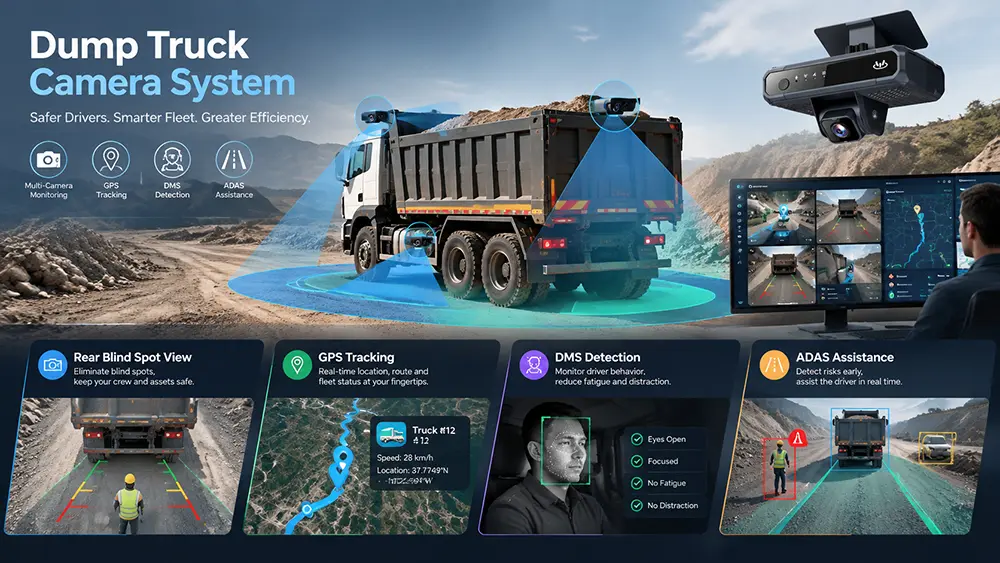
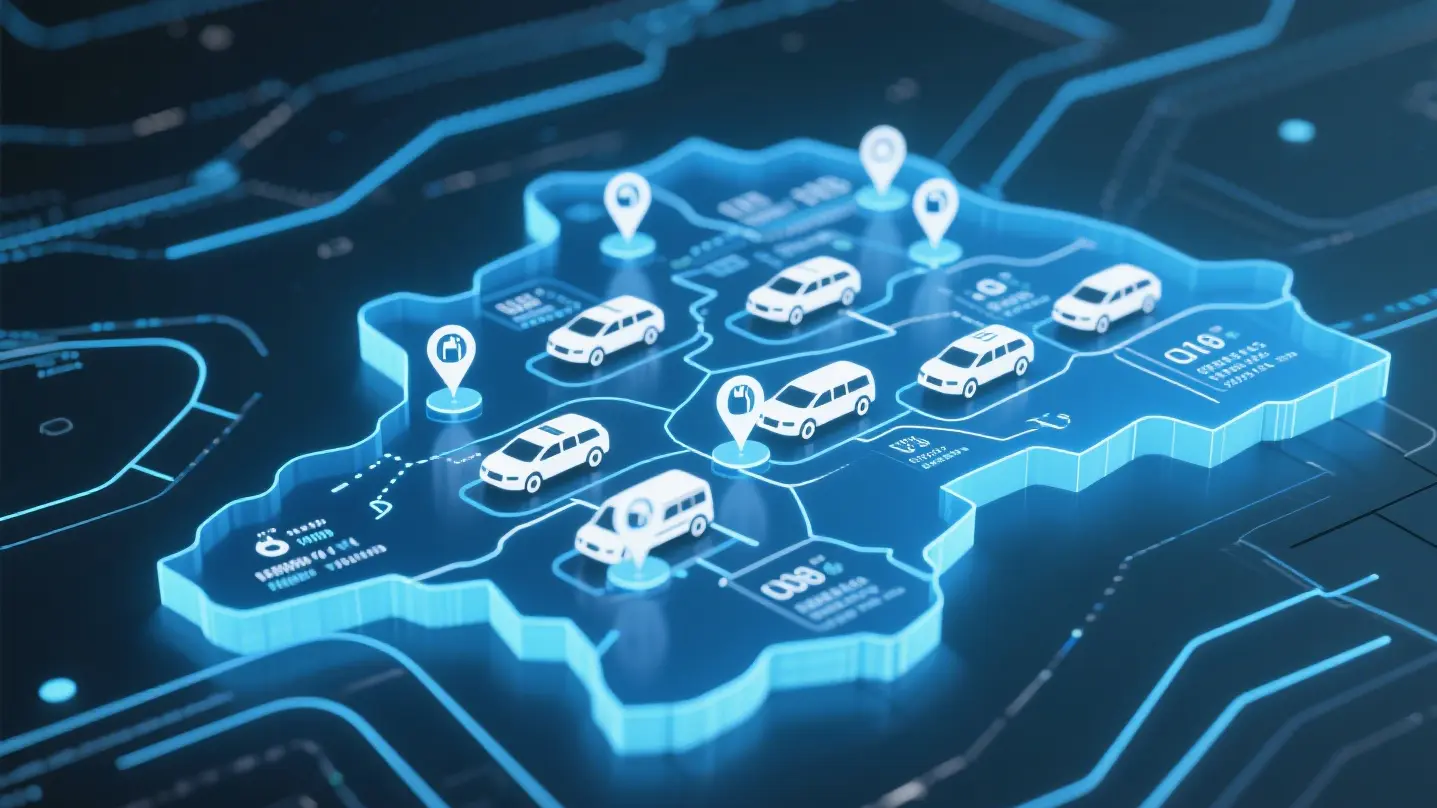
The most basic and important function of a GPS fleet tracking system is to display the location of each vehicle in real-time on interactive 2D, 3D, or satellite maps. Managers can view the real-time status of the entire fleet on a single dashboard, including vehicle location, driving speed, driver information, heading, etc.
2.Geofencing
Geofencing allows managers to draw virtual boundaries (polygonal areas) on the map. When a vehicle enters or exits a designated area, the system automatically sends an alert notification. This feature is widely used to:
a.Monitor whether vehicles deviate from authorized operating areas.
b.Detect unauthorized use during non-working hours.
3.Driver Behavior Monitoring
a.The system automatically records and analyzes driving behavior data, including events such as harsh acceleration, hard braking, sharp cornering, speeding, and extended idling.
4.Vehicle Diagnostics and Maintenance Management
The GPS tracking device connects directly to the vehicle's ECM, allowing it to read key data in real-time, such as Diagnostic Trouble Codes (DTC), coolant temperature, fuel level, battery voltage, and seatbelt usage status. Combined with mileage and time information, the system can automatically generate maintenance calendars and reminders, proactively schedule maintenance plans, and reduce unexpected breakdowns and downtime.
5.Fuel Consumption Management
By monitoring vehicle performance in real-time with data, including speed, idle time, and route optimization, the GPS tracking system helps enterprises accurately identify and eliminate unsafe driving habits (such as hard braking, speeding, and extended idling), thereby significantly reducing fuel consumption and operating costs.
Dash Cams and AI Safety Systems
Modern GPS fleet tracking systems are no longer limited to location tracking but are deeply integrated with dash cams to form a dual safety guarantee system of "Video + Data." This trend has become even more prominent in 2026.
a.Dual-Lens AI Dash Cam
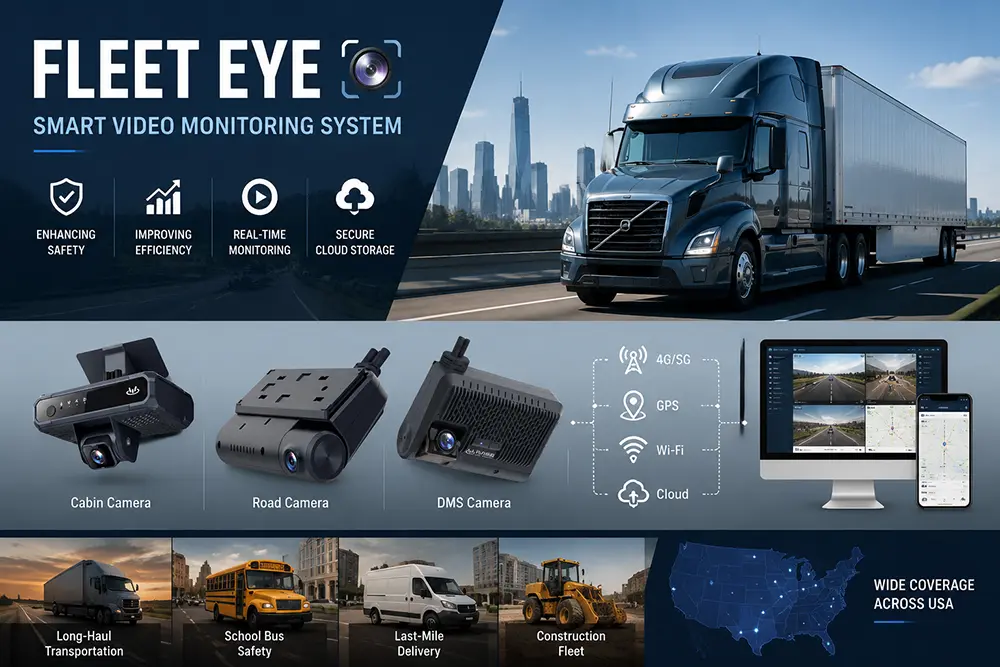
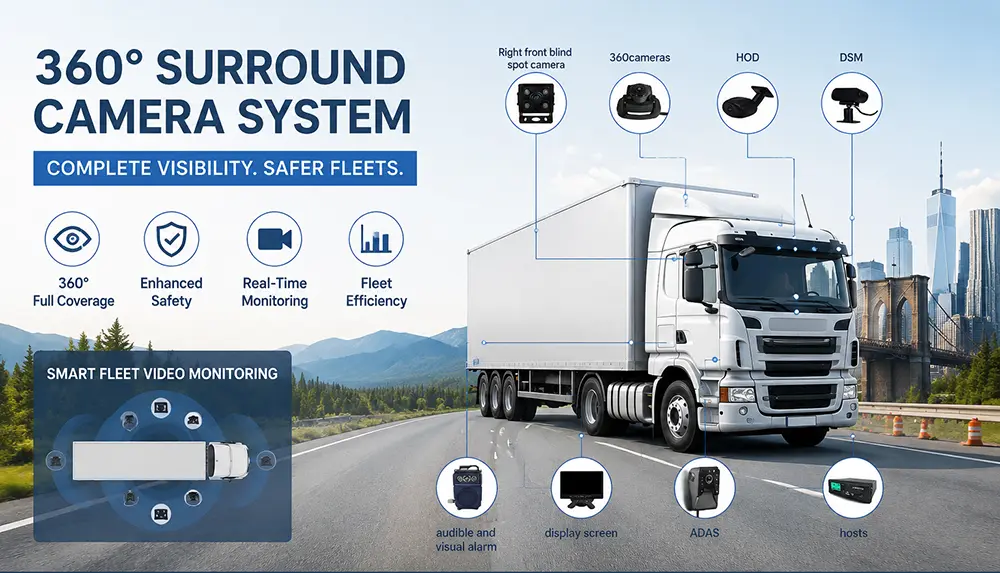
Leading fleet management systems (such as the YUWEI V5C AI Dash Cam) adopt a dual-lens design facing both the road and the cabin simultaneously, combining artificial intelligence technology to achieve:
1.Real-time detection of unsafe driving behaviors: Speeding, tailgating, hard braking, distracted driving, and phone usage.
2.Driver Monitoring System (DMS): Closed eyes/distraction detection response time < 0.5 seconds, with graded fatigue index warnings.
3.Pedestrian recognition accuracy > 98% (supports night mode), with customizable minimum safe distances.
4.High-definition video recording (1080P@30fps wireless transmission), with 90-day historical traceability in the cloud.
b.Video Data Safety Management
When the dash cam is integrated with the GPS tracking system, managers can not only see the vehicle's location data but also understand the real situation inside and outside the vehicle through high-definition video.
c.Industrial Vehicle AI Safety System (Forklift Dedicated)
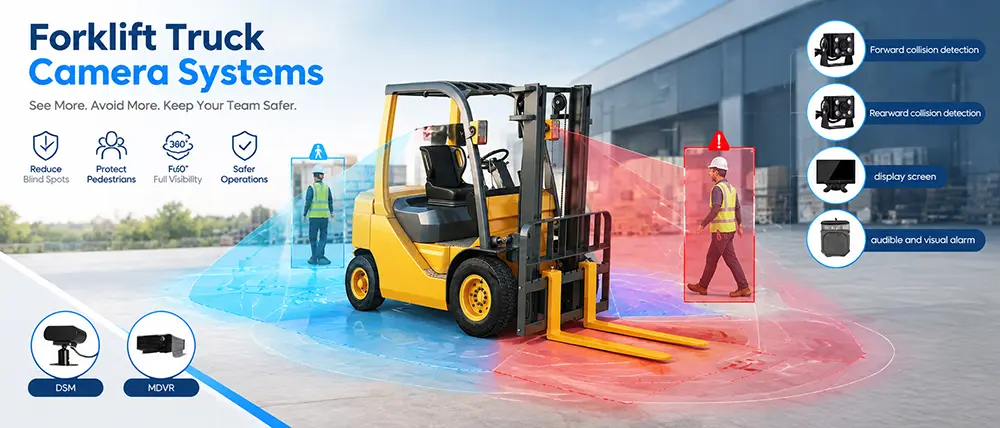
For warehousing and logistics scenarios, dedicated AI forklift safety systems are rapidly gaining popularity. Taking the YUWEI system as an example, its core capabilities include:
1.Multi-dimensional visual perception: Fork camera (0.1m accuracy), 360° panoramic view, and rear anti-collision camera.
2.LiDAR: Detects dynamic obstacles within a 15-meter radius.
3.High-precision GPS module: Trajectory tracking error < 2cm.
4.Extreme environment resistance: Anti-fog lens adaptable to -30°C ~ 60°C, IP68 waterproof rating.
5.Flexible networking: Supports 4G/5G/WiFi communication methods, and supports BeiDou/GPS dual-mode positioning.
Industry Data: Globally, forklift safety accidents cause over 100,000 injuries annually (OSHA data), resulting in billions of dollars in direct economic losses. 80% of forklift reversing accidents stem from visual blind spots (NIOSH research). After deploying the AI forklift safety system, the risk factor in pedestrian-dense areas can be reduced by 82%, and cargo turnover efficiency can be increased by 22%.
Conclusion
A GPS fleet tracking system has evolved from an "optional choice" to a "necessity" for commercial fleet operations. Whether it is a small service fleet or a national heavy-duty truck network, a suitable GPS tracking solution can bring significant cost reduction and efficiency improvement results—an average of 10% in fuel savings, 15% in efficiency improvements, and a 67% reduction in accidents.
Email:hello@yuweitek.com