












Best Ready Mix Truck Cameras System
Ready Mix Truck In-Vehicle Safety Monitoring Requirements
Ready mix trucks are vital equipment in construction engineering and ready-mix concrete transportation. Compared with standard freight trucks, ready mix trucks feature a larger body, a larger turning radius, significant right-side blind spots, and frequent entry and exit at construction sites. In urban road environments, narrow job sites, and reversing scenarios, limited driver visibility and difficulties in judging distances to pedestrians increase the risk of accidents.
Therefore, the value of an in-vehicle camera system lies not only in post-accident video evidence retrieval, but also in driver behavior monitoring, vehicle blind spot observation, transport process tracking, and fleet operations management.
Market Overview: Thailand, Vietnam, and India
1. Thailand: GPS Regulations & Fleet Digitalization
IndexBox data shows that Thailand imported approximately 60 fully built concrete mixer trucks in 2024, with an average import unit price of around $55,000. Thailand enforces GPS regulations on certain heavy-duty trucks, allowing fleets to further deploy multi-channel cameras, DMS, and blind spot detection systems.
2. Vietnam: Market Demand & Regulatory Upgrades
Vietnam imported approximately 337 fully built concrete mixer trucks in 2024, with total import value reaching around $41 million. Relevant regulations require certain transport vehicles to be equipped with driver image recording devices starting in 2028; fleet operators should plan equipment configuration and data compliance in advance.
3. India: Market Growth & Active Safety
Industry forecasts indicate that concrete mixer truck sales in India will grow from approximately 11,250 units in FY2024 to about 34,808 units in FY2029. As safety requirements for heavy trucks gradually upgrade, in-vehicle video surveillance, driver monitoring, and active safety systems present substantial opportunities for further development.
Device Features & Overview
Why Ready Mix Trucks Need Multi-Camera Monitoring Systems
1. Right-Side Blind Spots & Pedestrian Safety
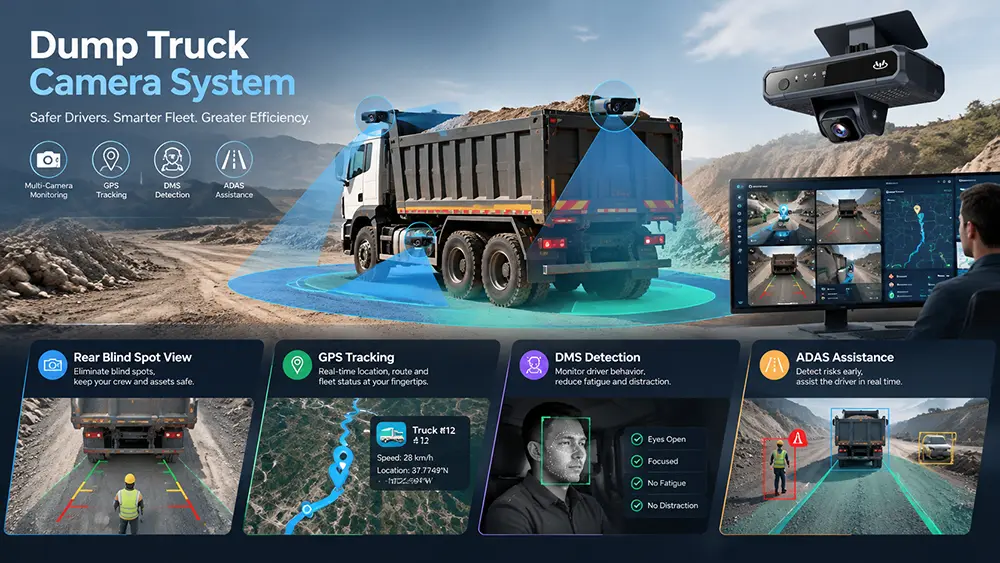
Mixer trucks have a tall body profile with significant blind spots on the right side and near-vehicle zones. BSD cameras assist in identifying pedestrians and other road users, triggering audio-visual alerts to warn the driver.
2. Reversing & Construction Site Operations
Mixer trucks frequently reverse and maneuver inside narrow construction sites. Side-view cameras, rear-view cameras, and in-cab displays help drivers observe surrounding environments, effectively mitigating blind spot risks.
3. Driver Fatigue & Distraction
Driving for extended hours easily induces fatigue and distraction. Based on specific hardware configurations, DMS can detect behaviors such as closing eyes, yawning, and using mobile phones, issuing timely warnings.
4. Accident Evidence Retrieval & Fleet Management
Multi-channel video recordings reconstruct accident scenes accurately. Combined with GPS location, vehicle speed, and timestamp data, managers can track vehicle routes, parking events, and abnormal incidents.
5. Transport Process Visualization
Cameras can cover loading/unloading zones and key operational areas, providing fleets with visibility into the entire transportation process. The specific camera layout should be determined by combining vehicle structure, operational needs, and privacy requirements.
Therefore, mixer truck surveillance should not be limited to forward-facing recording; it should combine actual risk profiles to configure road-facing, driver, side-view, and reverse monitoring functions.
MDVR + DASH CAM: Multi-Camera Surveillance Solutions
V5: Integrated Dash Cam
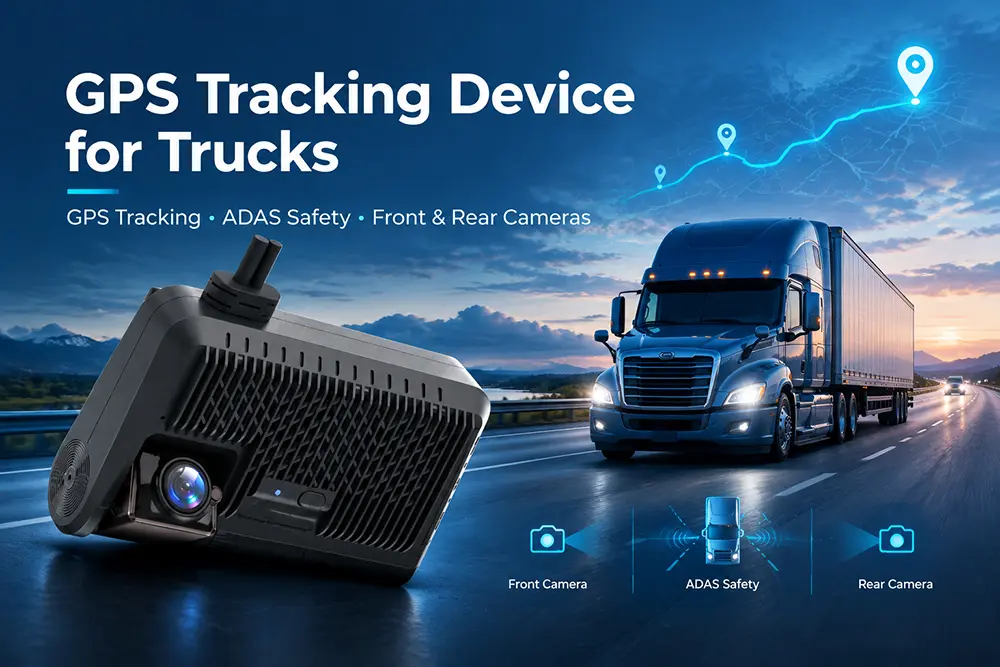
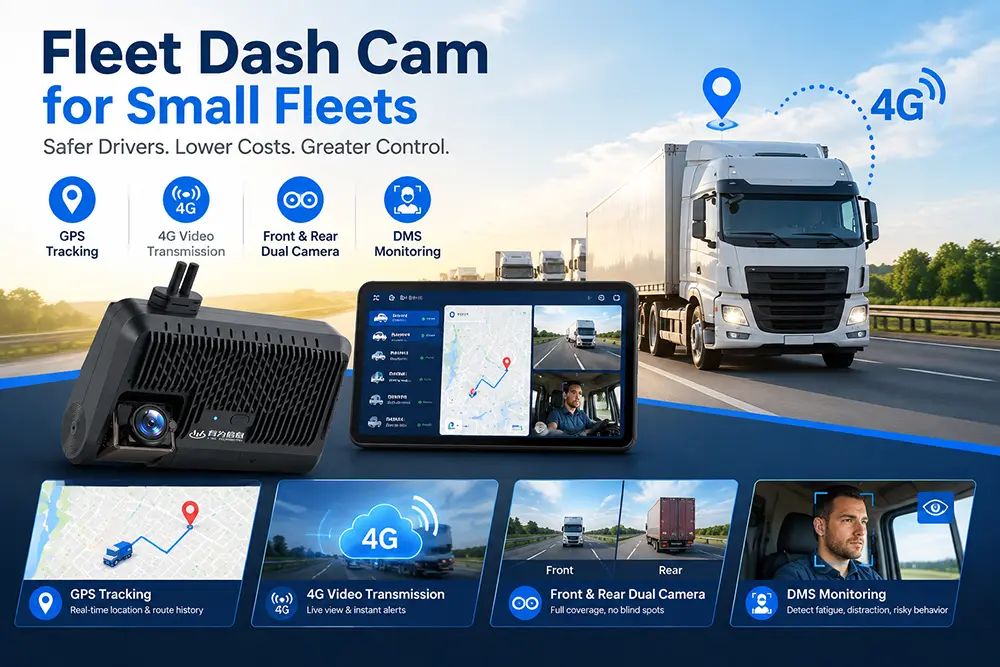
The YUWEI V5 supports 4G cellular communication, GPS/Beidou positioning, and multi-channel camera connectivity. Key features include:
1.Multi-Camera Support: Connects up to 4 cameras, covering road views, driver monitoring, and other critical areas.
2.Remote Connectivity: Supports 4G video transmission and GPS/Beidou positioning for convenient remote monitoring.
3.AI Safety Features: Supports optional ADAS and DMS functions depending on configuration.
4.Local Storage: Features dual TF card slots for reliable local video recording management.
The V5 primarily handles driving recording, driver monitoring, and basic video-based fleet management.
F4: Multi-Channel Mobile Digital Video Recorder (MDVR)
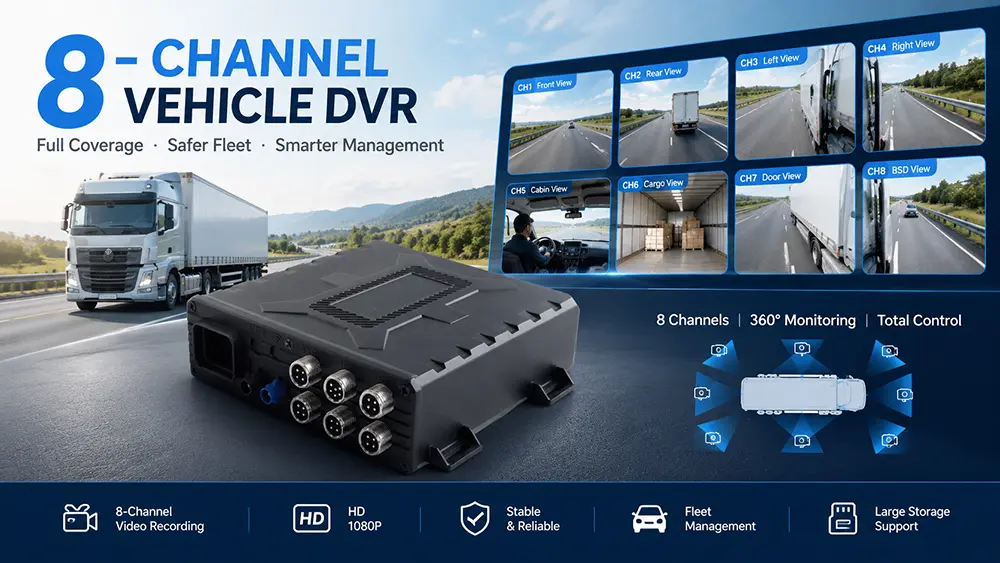
The YUWEI F4 is designed for multi-channel video surveillance requirements in commercial vehicles. Key features include:
1.Video Inputs: Supports up to 6 analog video inputs with corresponding high-definition camera configurations.
2.Connectivity: Supports GPS/Beidou positioning, 4G, and Wi-Fi communications.
3.Storage & Protection: Supports hard drive (HDD/SSD) and SD card storage, equipped with power-off protection design.
4.AI Enhancements: Supports ADAS, BSD, and DSM functions depending on system configuration.
On mixer trucks, the F4 expands video recording and storage across side views, rear views, reversing zones, and other critical areas.
Advantages of Joint F4 + V5 Configuration
Deploying both devices allows them to work collaboratively to deliver a comprehensive monitoring solution:
V5: Manages driving recording and corresponding intelligent safety monitoring.
F4: Expands multi-channel video inputs and high-capacity storage.
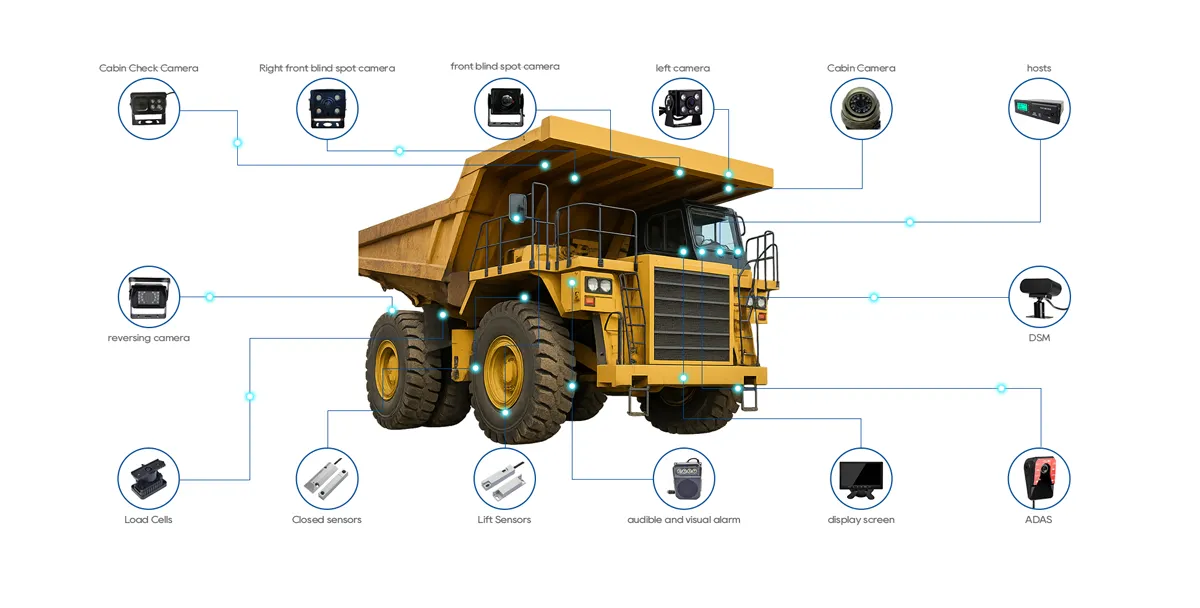
Cameras: Cover the right-side blind spot, rear end, reversing zone, and other vital areas.
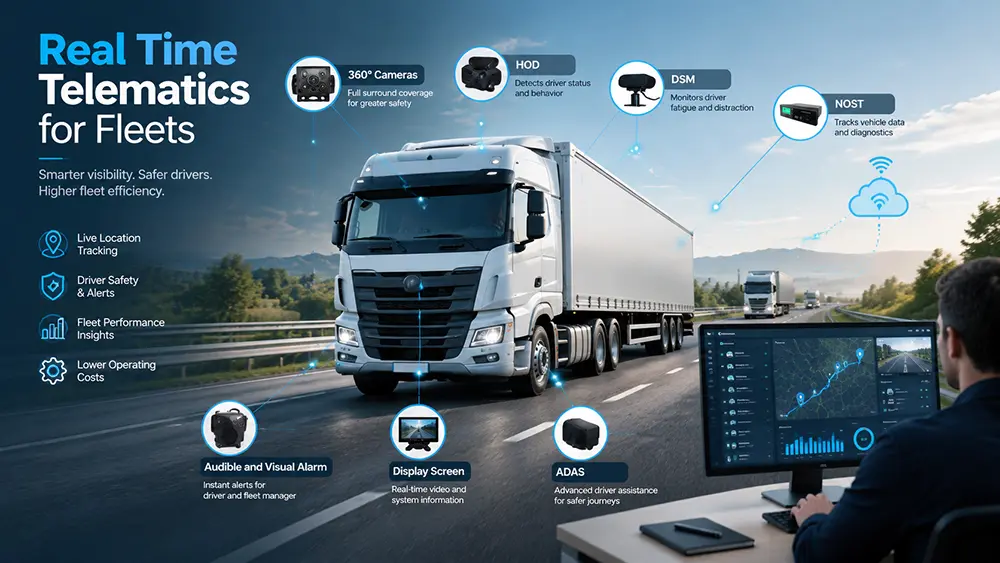
Management Platform: Integrates video, location data, and alarm alerts for remote management and post-incident investigation.
YUWEI's public solutions demonstrate a combined F4 and V5 deployment architecture supporting up to 8 camera channels.
This combined deployment preserves the core strengths of each unit while flexibly expanding monitoring coverage to meet diverse fleet requirements.
Deployment Recommendations for Thailand and India
1.Thailand: GPS Compliance & Multi-Channel Surveillance
Prioritize compliance with applicable vehicle GPS regulations. Consider the V5 dash cam with built-in GPS first, then evaluate a combined MDVR configuration to extend side-view, rear-view, and intelligent monitoring capabilities. Focus coverage on high-risk areas such as right-side blind spots, reversing zones, and job sites.
2.India: Fleet Monitoring & Vehicle Safety Homologation
The F4 and V5 can be deployed for multi-channel recording, driver monitoring, and fleet management. For mandatory safety systems—such as AEBS, BSIS, MOIS, DDAW, and LDWS—it is essential to verify compliance with applicable AIS standards, vehicle type approval, and scope of application.
When supplying new vehicles or undertaking complete vehicle exports, the OEM, equipment vendor, and local compliance consultants should jointly validate the integration architecture.
Conclusion
1.Thailand prioritizes vehicle GPS regulatory compliance.
2.Vietnam requires advance planning for driver image recording regulations.
3.India is progressively advancing active safety system requirements for heavy-duty trucks.
A multi-camera system not only records accidents but also improves driver visibility, eliminates vehicle blind spots, provides early warnings for hazardous behaviors, and boosts overall fleet management efficiency.
The V5 delivers integrated driving recording and intelligent safety monitoring, while the F4 expands multi-channel video inputs and robust storage. Fleets can tailor their camera configurations—covering side-views, rear-views, and driver status—based on specific vehicle requirements.
Email:hello@yuweitek.com