










Best Transportation Occupancy Counter
Transportation Occupancy Counter
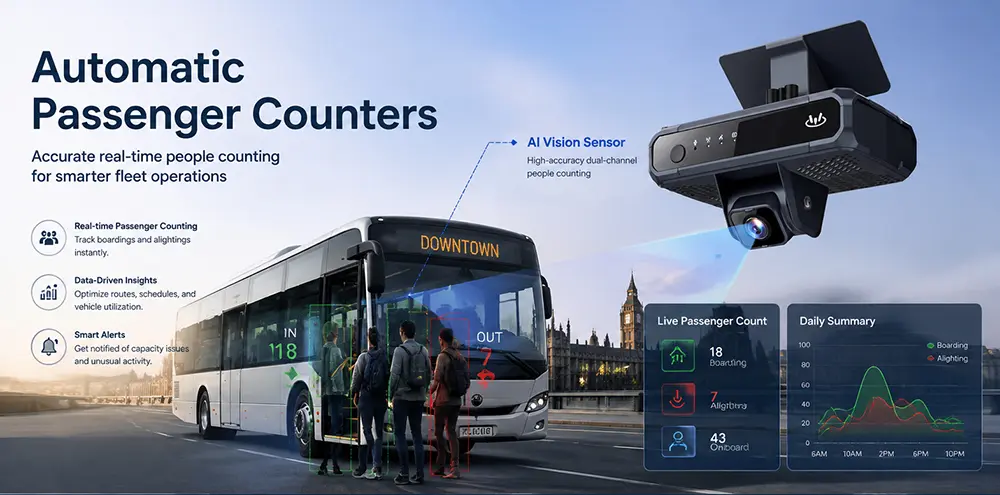
By deploying sensors at the doors (or inside the cabin), the transportation occupancy counter automatically identifies every passenger getting on and off, distinguishes their direction, and calculates the current number of passengers in the cabin in real-time.
Technical Principles
The working chain of mainstream systems can be summarized in three steps:
Installing counting devices above the doors → Identifying and distinguishing each boarding and alighting passenger → Calculating the real-time cabin occupancy using the formula "number of boarding passengers − number of alighting passengers".
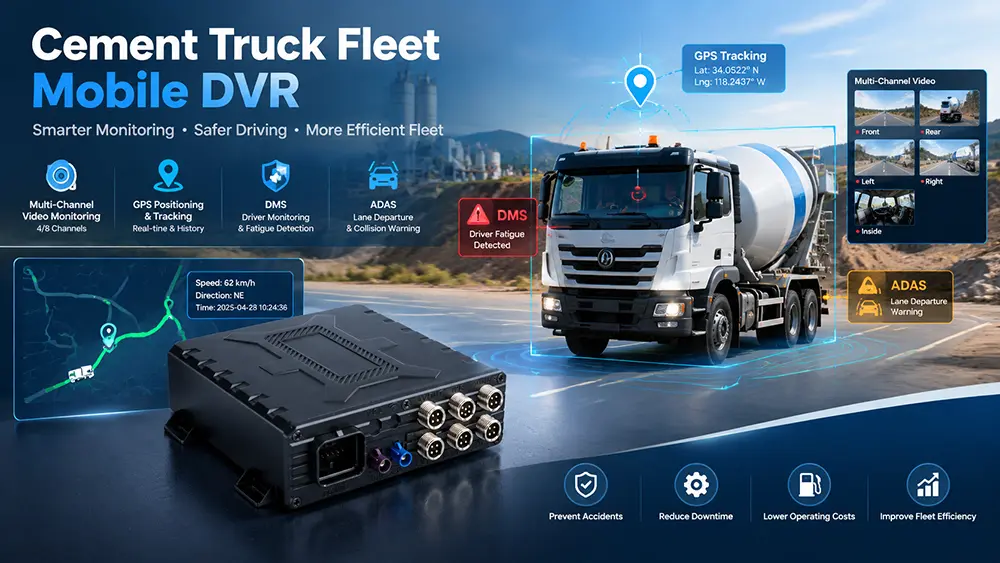
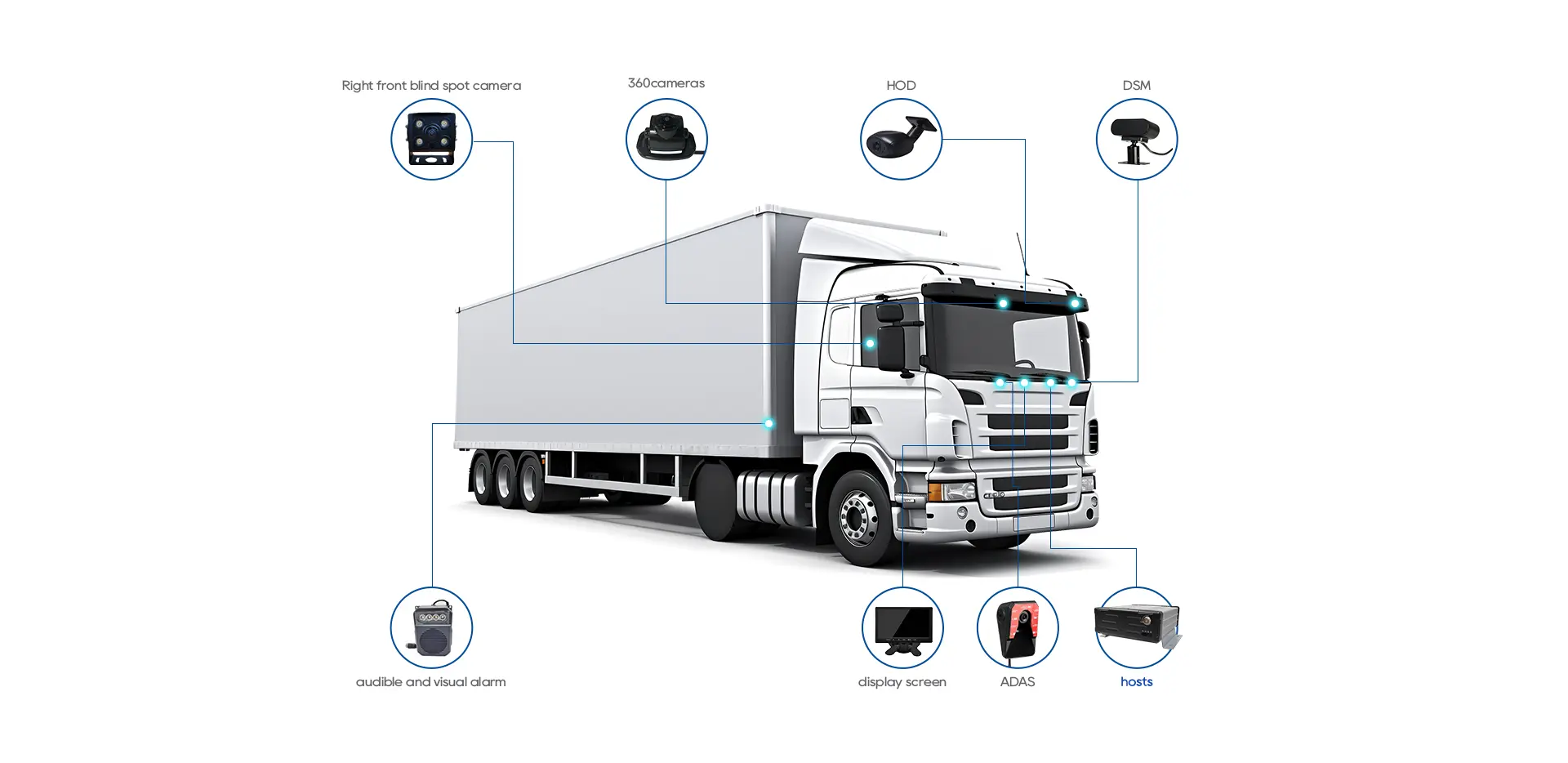
AI MDVR Integration: Fusion of Counting, In-Vehicle Video, and Positioning
YUWEI and Vehicle-MobileDVR represent the integrated route of "Binocular/AI Camera + MDVR (Mobile Digital Video Recorder)".
YUWEI's Solution: This system uses "720P AHD dome cameras above the doors to capture video," which is handed over to F4 or F6 model AI MDVRs running the AI Passenger Counting System (PCS) for real-time analysis. With the help of built-in 4G/Wi-Fi, counting data and event logs are instantly uploaded to the VSS platform. The system supports up to 3 cameras and adapts to multi-door buses.
Vehicle-MobileDVR's Solution: Their 4CH APC system uses "binocular lenses + high-speed DSP intelligent algorithms to identify head/shoulder/body features and boarding/alighting movements" to achieve >98% accuracy. It integrates 3G/4G/Wi-Fi/GPS/RS232/485, runs on a Linux system, and covers preview, recording, playback, counting, network transmission, positioning, and AI analysis, targeting 1–4 door city buses.
The Operational Value of Occupancy Counting
Accurate, real-time occupancy data is the foundation for public transportation to transition from "experience-based dispatching" to "data-driven dispatching". Synthesizing various sources, its core value is primarily reflected in four aspects:
Capacity–Demand Matching: Dispatching additional vehicles during peak hours and switching to smaller vehicle models or reducing frequency during off-peak hours based on real-time occupancy.
Overload Prevention & Service Quality: Monitoring passenger volume in real-time, balancing loads to prevent overcrowding, and enhancing the passenger experience using signal lights/displays or real-time guidance.
Network & Timetable Optimization: Stop-by-stop boarding and alighting data reveals demand hotspots and segments with wasted capacity, guiding adjustments to routes, stops, and timetables.
Revenue & Operational Transparency: Actual passenger flow is used for revenue reconciliation and allocation, as well as to prevent ticketing fraud.
Optimizing fleets and reducing unnecessary driving based on passenger data can reduce fuel consumption and emissions, making occupancy counting an integral part of green operations.
Summary
In 2026, the "transportation occupancy counter" is no longer just a standalone "passenger counter," but a real-time occupancy management hub integrating Stereo 3D / AI Video + Object Recognition + 4G/Wi-Fi/GPS Networking + Fleet Platforms.
Email:hello@yuweitek.com