











Best Truck Camera Monitoring Systems
Truck Camera Monitoring Systems
When choosing a truck camera monitoring system, do not fall into the misunderstanding of "the more lenses, the better." For commercial trucks, the best solution is not the longest parameter list, but the ability to clearly answer three questions: Which blind spots need to be eliminated? What types of events require early warnings? How soon can evidence be obtained after an accident?
What is a truck camera monitoring system?
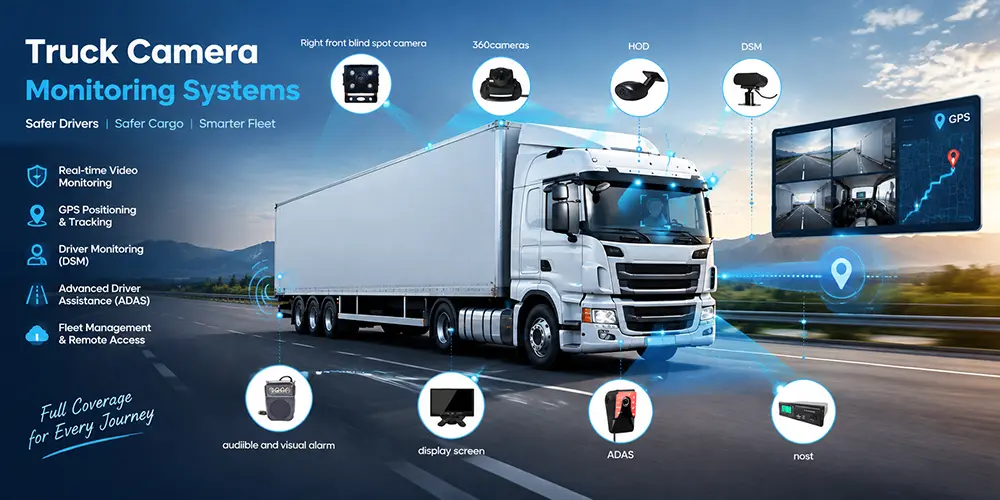
It is not a single dash cam, but an in-vehicle video system designed around truck risks: consisting of front-facing, in-cabin/DSM, side-facing, rear-facing, cargo box, or 360° surround-view cameras, connected to a Mobile DVR/AI host, and integrated with 4G, GPS/Beidou, storage, and fleet platforms. The core objective is to put external road conditions, driver status, location trajectories, and alarm events on the same synchronized timeline, facilitating accident reconstruction, active early warning, and remote tracking management.
Common kit configurations include:
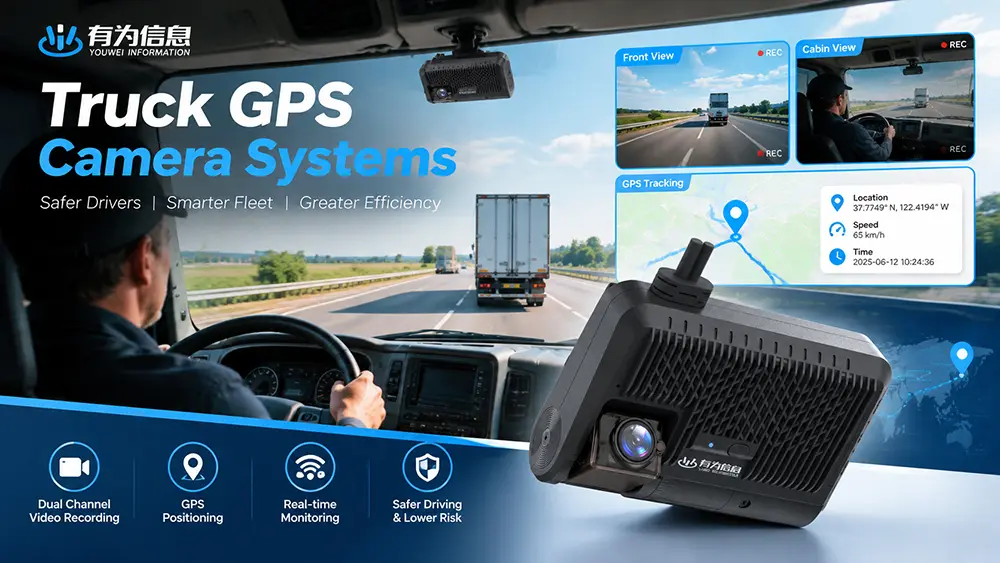
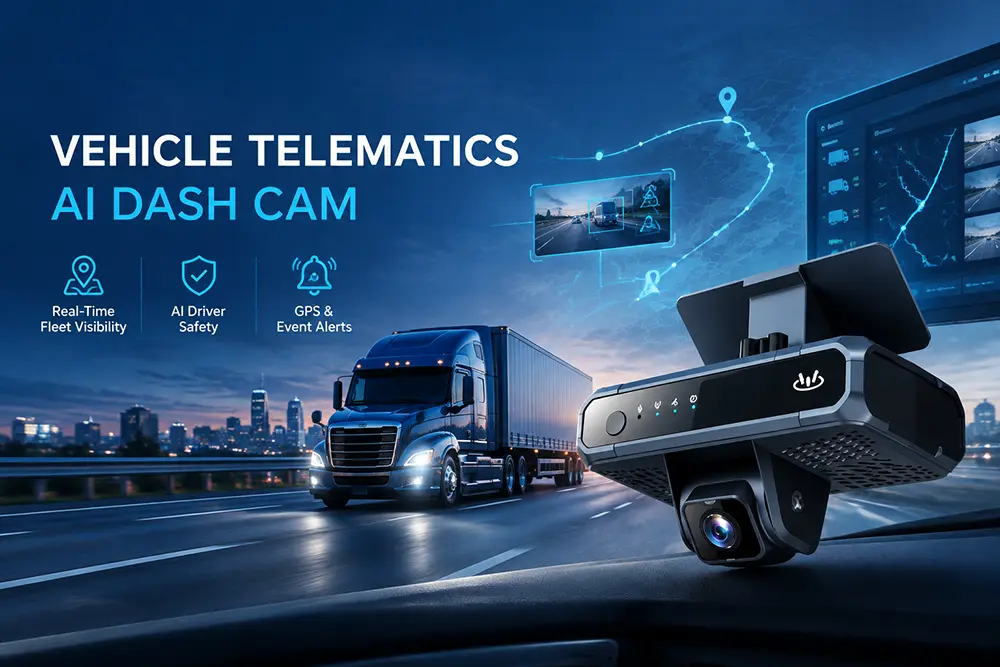
1.Front-facing/Dual-channel AI Dash Cam: Solves road evidence and driver behavior monitoring.
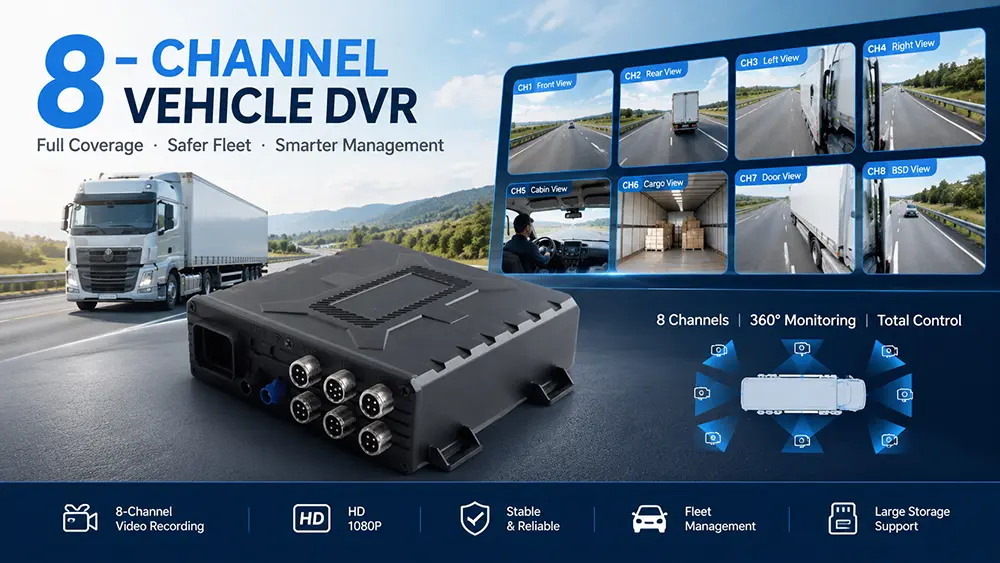
2.Multi-channel Mobile DVR: Suitable for tractor-trailers, semi-trailers, and construction vehicles, synchronously recording front, interior, side, rear, and cargo box perspectives.
3.Rear-view/Side-view Cameras: Serve reversing, docking, merging, wide turns, and right-side blind spots.
4.Cargo Box Dome/Cargo Camera: Used for trailers, box trucks, cold chain, and cargo status viewing.
5.360° Surround View: Uses four wide-angle channels stitched into a bird's-eye view for low-speed yards, parks, and loading areas; it supplements the maneuvering field of vision and is not equivalent to multi-channel synchronization for accident evidence collection.
What are the functions of a truck camera monitoring system?
1.Configure perspectives based on risk: The front view observes traffic and liability, the interior view observes status, the left and right sides observe lane changes/turns, the rear view observes reversing, and the cargo box observes loading; perspectives serve the scene, not just to make up numbers.
2.Synchronized recording and timeline: Multi-channel videos share the same clock and storage; before, during, and after an accident can be reviewed as the same event.
3.DMS Driver Monitoring: Fatigue, closed eyes/yawning, distraction, making phone calls, smoking, leaving the post, lens occlusion; local reminders + platform reporting.
4.ADAS Active Safety: FCW (Forward Collision Warning), LDW (Lane Departure Warning), HMW (Headway Monitoring Warning), PCW (Pedestrian Collision Warning), etc.
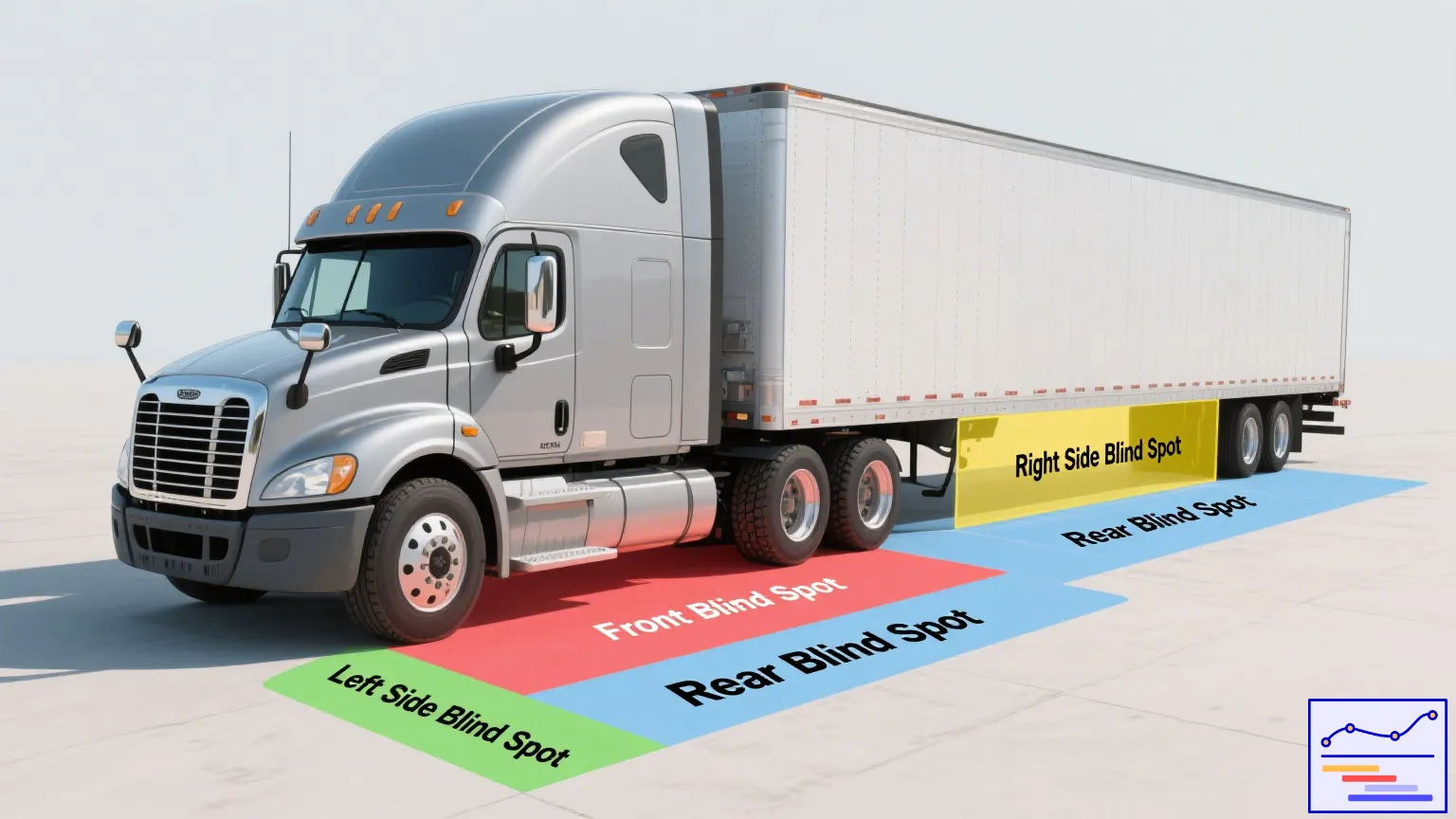
5.BSD/Pedestrian Blind Spot Reminder: Right-side blind spots, turning/reversing risks; especially needed for urban distribution, sanitation, and construction vehicles.
6.4G/LTE Event Uploading: Full-time live streaming is not necessary; uploads clips, locations, and device health information according to event rules, reducing data traffic costs.
7.GPS/Beidou Positioning: Trajectory playback, electronic fences, overspeed/deviation/stay alarms.
8.Automotive-grade Reliability: Wide voltage, low voltage protection, delayed power-off, anti-vibration brackets, high/low temperature and IP protection, waterproof connectors.
9.Evidence-grade Storage: Dual TF/SSD, H.264/H.265, event locking, anti-overwriting, health alarms, export traceability.
10.Platform Closed-loop: Event retrieval, permission classification, offline alarms, remote configuration/OTA, reports, API/JT/T808/JT/T1078 docking.
Benefits of a truck camera monitoring system
1.Event Prevention: ADAS/DMS/BSD remind the driver when risks form.
2.Complete Evidence: Multi-perspective synchronized evidence reduces disputes and accelerates insurance and legal processing.
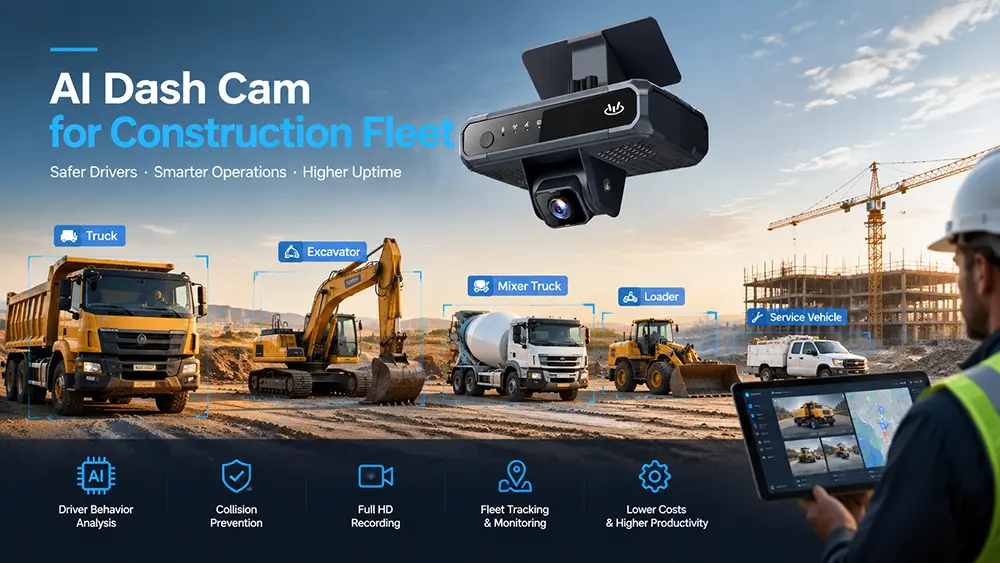
3.Blind Spot Elimination: Long-haul tractors focus on front view and trailer side-rear; urban distribution focuses on the right side and pedestrians; construction vehicles focus on low-speed surround view and audio-visual reminders.
4.Higher Efficiency: Event-based uploading + platform retrieval is faster than flipping through entire video recordings.
5.Reliable Hardware: Key files can still be saved under voltage fluctuations, vibrations, rain and fog, and high/low temperatures.
6.Management Compliance: Driver privacy, retention periods, access permissions, and regional regulations are configurable; when entering markets with legal requirements for blind spots/vulnerable road users, compliance must be verified according to the specific system and vehicle.
2026 Truck Fleet GPS Tracking and Management System
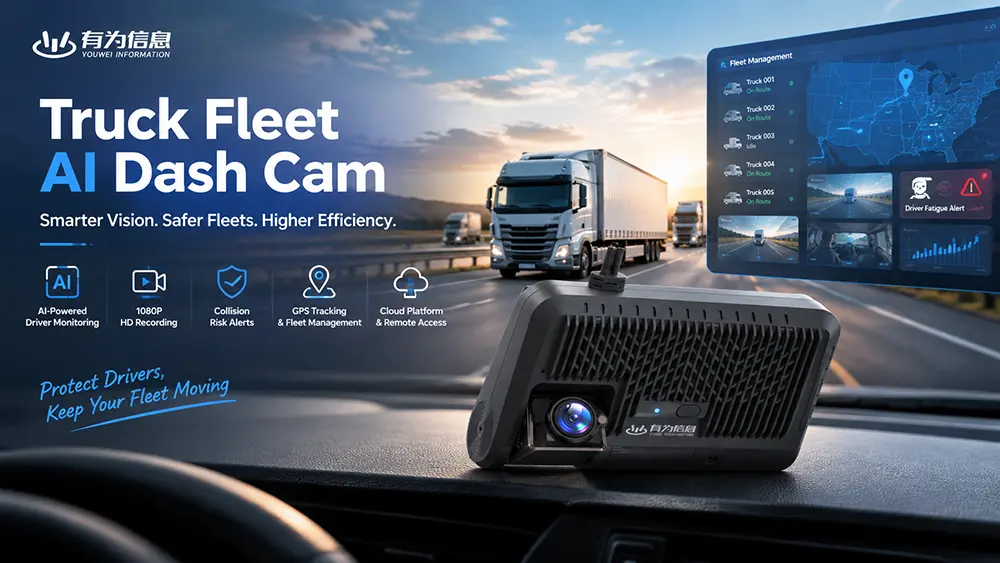
According to the method of "reverse engineering configurations based on operational problems": Long-haul trunk lines can start with a front-facing LTE Dash Cam; semi-trailer/mixed fleets are more suitable for synchronized front, interior, left, right, and rear recording; construction, sanitation, and yard vehicles prioritize multi-channel Mobile DVR + blind spot/pedestrian reminders. The value of YUWEI lies in connecting the above terminals to the same fleet platform: providing GPS/Beidou real-time positioning, ADAS/DSM/HOD/BSD alarms, 1080P video playback, driving behavior profiling, mileage/trip/fuel/waybill reports, and supporting docking with third-party platforms.
Its solutions can cover scenarios such as tractors, semi-trailers, box trucks, dump trucks, cold chain/urban distribution, construction, and sanitation; in fleet markets across Europe, America, the Middle East, Africa, and Southeast Asia, it is used to help fleet managers remotely track vehicles, verify event videos, review routes, manage driver behavior, and reduce operational risks.
Top 3 Best-Selling Truck Dash Cam Recommendations
1.V5: Scalable multi-channel 4G video terminal: 1-channel 1080P host + up to 3-channel 720P expansion, dual TF cards, GPS/Beidou, ADAS/DSM, JT/T808/JT/T1078, TTS, and OTA. Best suited for: Medium-sized logistics, taxis/ride-hailing, and official vehicles; requires front and rear dual recording while reserving side/rear expansion.
2.V5C: Cost-effective dual-lens AI Dash Cam: Front 1080P + in-cabin 720P, 4G/Wi-Fi, Beidou/GPS, ADAS/DSM/Face ID, G-sensor, SOS, anti-tamper/power-off protection. Best suited for: Small fleets of 10-50 vehicles, urban distribution, ride-hailing, and taxis; rapid deployment and cost control.
3.V8N: Flagship active safety: Starlight front view 1080P + infrared wide-angle in-cabin, expandable to 4-channel AHD, dual TF up to 2×2TB, global 4G, Beidou/GPS, CAN, six-axis G-sensor, ADAS + DMS + BSD + aggressive driving detection, -30°C to 80°C. Best suited for: 50+ high-risk fleets, hazardous chemicals, transit/passenger transport, cross-border, and construction vehicles.
Deployment Tips: AI recognition is affected by installation angles, calibration, rainy nights, glare, and occlusions; before a formal rollout, daytime/nighttime, rainy day, loading/unloading, reversing, and trailer-changing tests should be conducted on representative vehicles.
The standard for the "best truck camera monitoring system" in 2026 is: perspectives are designed according to risks, video recordings can be synchronously reconstructed, AI can issue on-site early warnings, 4G/positioning can transmit data back, the platform can retrieve and manage, and the hardware can withstand fleet working conditions. If on a limited budget, choose the YUWEI V5C; if you need front and rear evidence collection while balancing scalability, choose the V5; for high-risk, large-scale fleets, choose the V8N, and then connect it to the YUWEI fleet management platform.
Email:hello@yuweitek.com