












Brazil Concrete Mixer Truck Dashcam MDVR
Brazil Concrete Mixer Truck Tracking Management
Brazil is currently in a critical cycle of infrastructure expansion. From the extension of new subway lines in São Paulo and the mass delivery of residential housing, to the construction of industrial parks in Rio de Janeiro and Minas Gerais, almost every construction site cannot operate without Concrete Mixer Trucks. In 2025, the market size for Concrete Mixer Trucks in South America was approximately $1.24 billion, with Brazil leading at $580 million. The number of newly registered Concrete Mixer Trucks exceeded 2,100, and the proportion of new energy vehicles rose to 12.5%. Over 40% of the existing Concrete Mixer Truck fleets in Brazil have been in use for more than 8 years, ushering in a peak period for renewal. It is estimated that tens of thousands of mixer trucks and pump trucks will be replaced.
hnweb_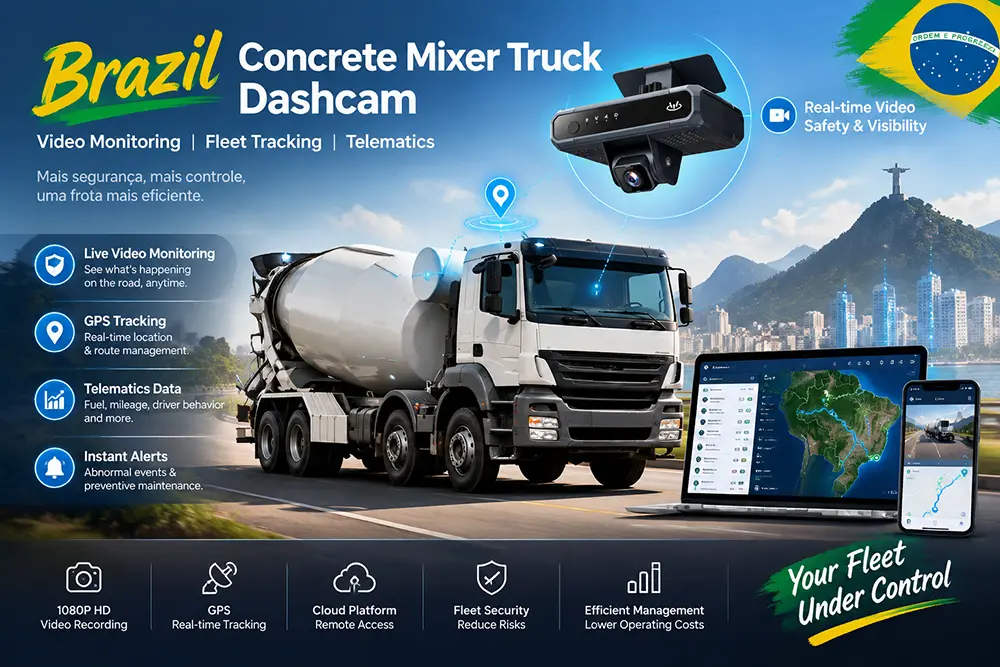
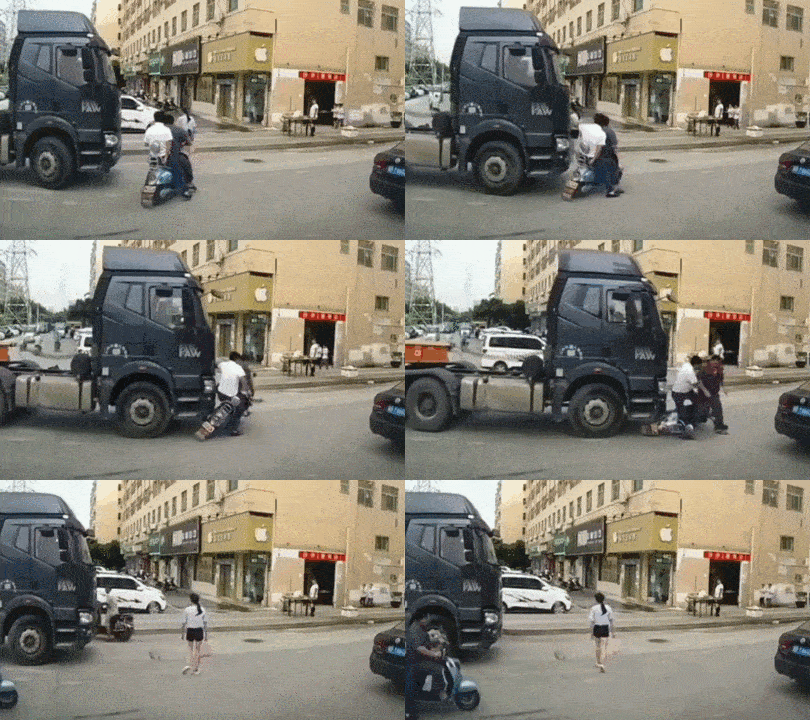
With more Concrete Mixer Trucks, the risks are simultaneously amplified. The mixing drum is mounted above the chassis, resulting in a center of gravity much higher than that of ordinary trucks. When fully loaded, wet concrete will flow, causing an instant shift in the center of gravity during sharp turns or sudden braking. The high vehicle body, large blind spots, and long turning radius result in an inner wheel difference of more than 1.5 meters when turning right.
Common Traffic Accidents at Brazilian Construction Sites:
1.Deviation from prescribed routes: Taking shortcuts to save time, entering restricted areas, and leaving the dispatcher's line of sight.
2.Fatigue driving: Concrete has an initial setting time limit. With construction sites urgently demanding materials and working at night, drivers work continuously without breaks.
3.Speeding: Attempting to haul more loads and run faster, rushing to save time on city roads.
4.Spillage along the route: Overloading or failure to stop drum rotation causes concrete to overflow and pollute the road surface.
Why "Installing a Few Cameras" Cannot Solve the Problem
Simply installing a GPS or dash cam can only tell you "what happened after the fact" but cannot "prevent the accident beforehand." The specific nature of Brazil's operating environment poses more detailed requirements for fleet management:
1.Compliance implementation: CONTRAN Resolution No. 1007 (published in April 2024, effective in May) revised the safety system regulations for dump body trucks. CONTRAN Decree No. 798 stipulates that both fixed and portable radars must be marked after installation, and speed measurement prompts must be set on speed-limited road sections. What fleets need is a three-in-one certificate of "Active Safety Warning + High-Definition Video Recording + Driving Record" recognized by regulators, rather than fragmented modified parts.
2.Unauthorized unloading and fuel consumption are hidden losses: Diesel costs in Brazil fluctuate greatly. Fuel theft and unauthorized unloading are long-standing issues, and manual statistics cannot form closed-loop evidence.
3.Security environment requires evidence retention: Nighttime transportation in places like São Paulo and Rio de Janeiro faces risks of vehicle smashing, robbery, and theft. A complete video evidence chain is crucial for reporting to the police and filing insurance claims.
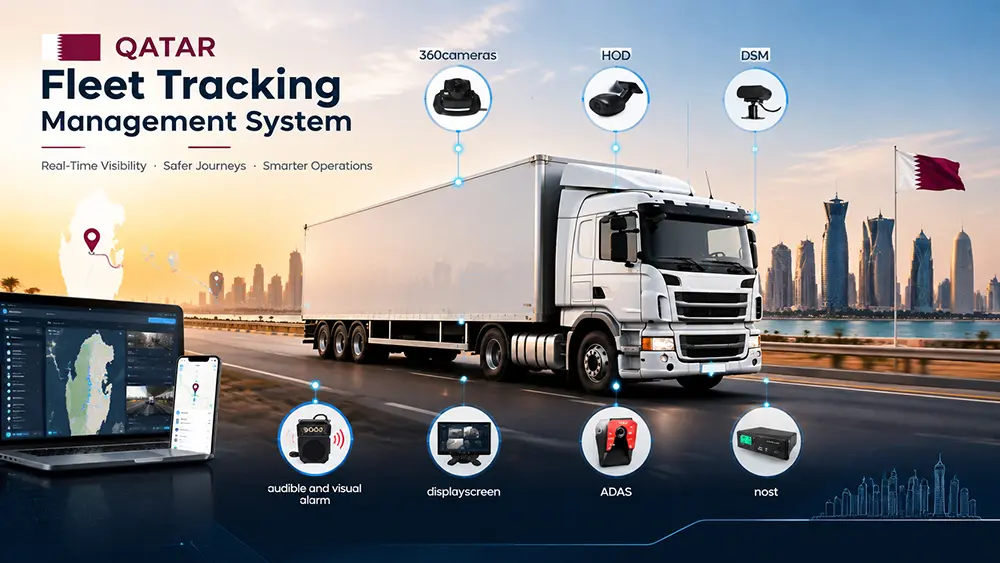
Concrete Mixer Truck Dash Camera System
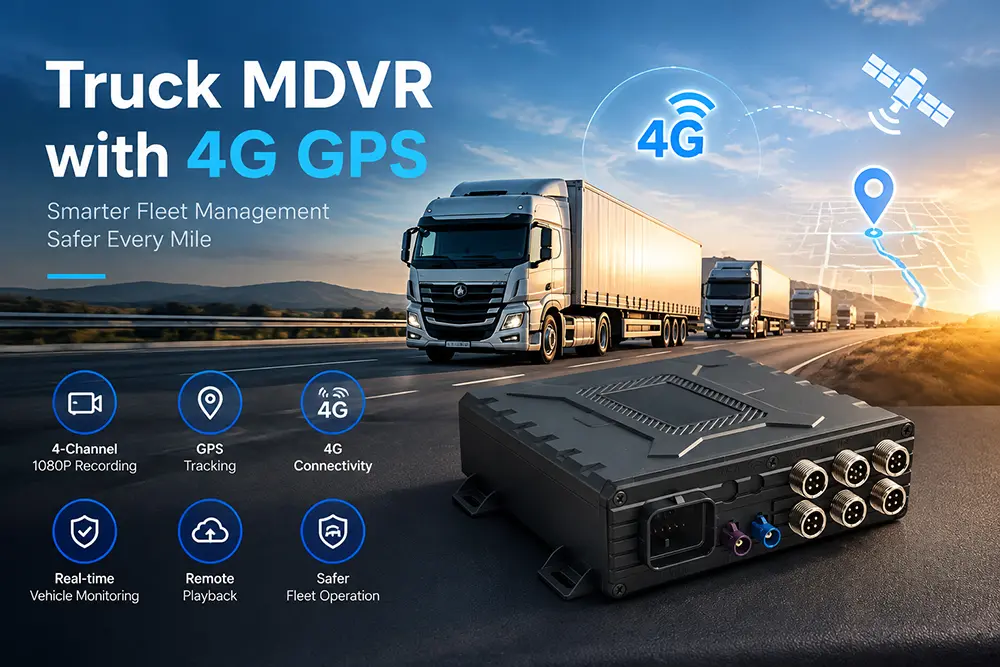
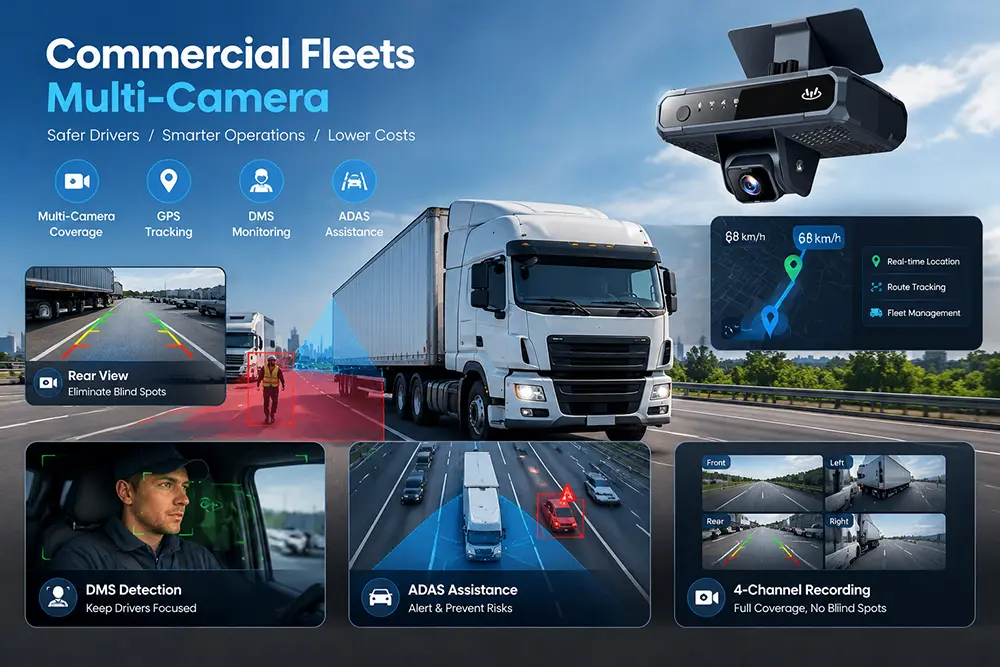
YUWEI provides a comprehensive set of Concrete Mixer Truck active safety solutions designed for concrete transportation scenarios. Based on GPS positioning, 4G communication, and high-definition AI cameras, it integrates vehicle location, driver status, operational status, load weight, and fuel consumption into a single platform, achieving a transformation from passive response to active early warning.
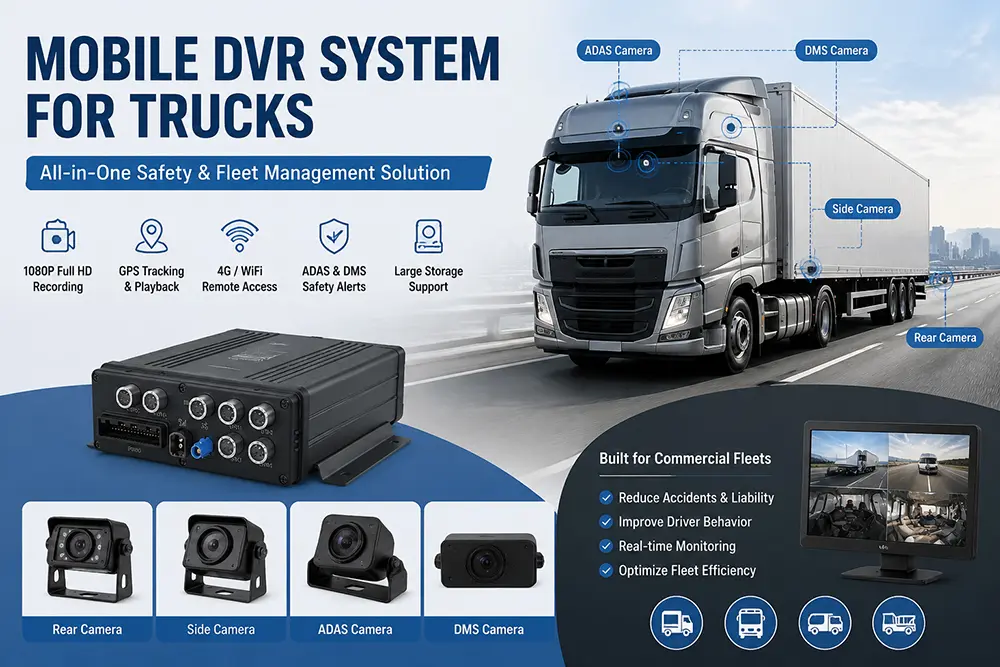
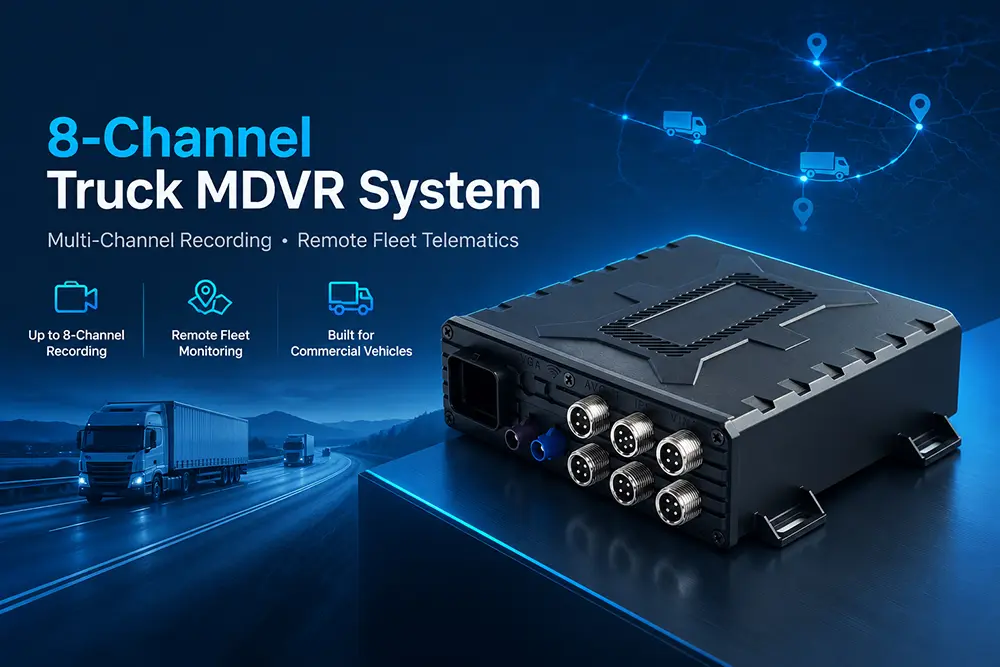
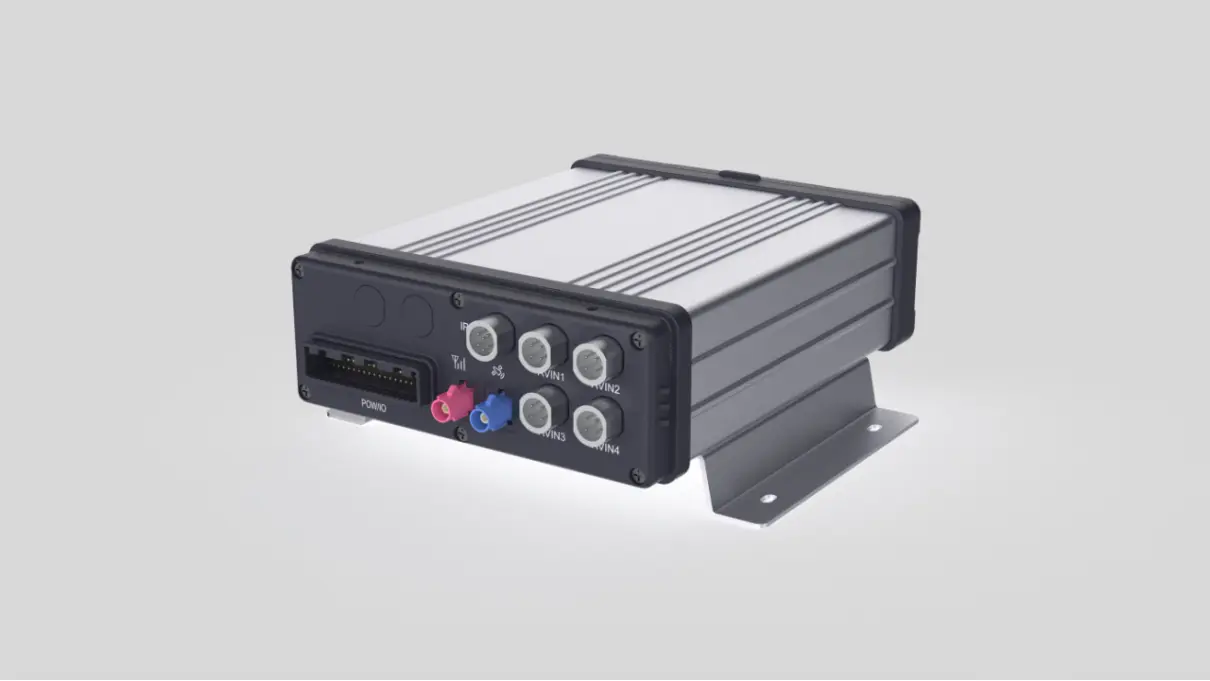
The system is expanded around a YUWEI MDVR host (such as the V8N model), supporting a maximum of 8 high-definition cameras, and adapting to the harsh operating environment of mixer trucks, including prolonged bumps, high humidity in the rainy season, and high dust levels at night.
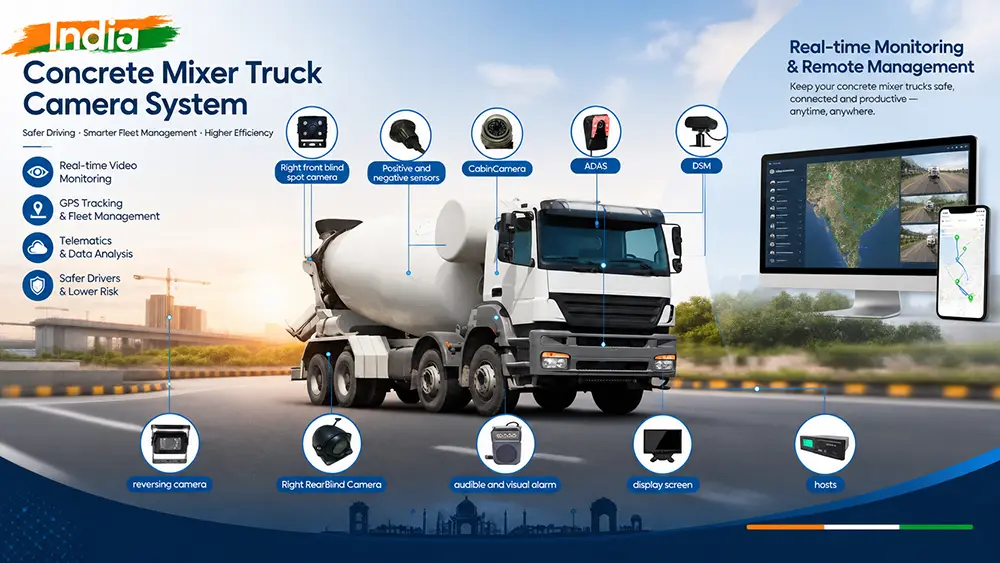
Concrete Mixer Truck Solution Hardware Configuration
1.Vehicle Right Side: Blind Spot Detection (BSD) Camera + Millimeter Wave Radar — Detects pedestrians, motorcycles, and bicycles during right turns.
2.Rear of Vehicle: Waterproof Reversing Camera (IP67/IP69K) — Provides reversing images and trajectory.
3.Front Windshield: ADAS Camera — Offers forward collision, lane departure, and close following distance warnings.
4.Inside the Cabin: DMS Facial Recognition Camera — Detects fatigue, distraction, smoking, and phone calls.
5.Dashboard: Dash Cam with GPS and Dual Recording — Handles forward and in-cabin recording along with positioning.
6.Mixing Drum: Forward/Reverse Rotation Sensor + Load Sensor — Monitors drum status and load weight.
7.Cabin Interior: In-Vehicle Display + Audio & Visual Alarm — Shows real-time monitoring footage and issues driver-side early warnings.
Concrete Mixer Truck Camera System Functions
1.Smart Real-Time Video Monitoring: Up to 1080P resolution, 4G transmission, multi-vehicle concurrent online access, and cloud-searchable video recordings.
2.Smart Right-Side Blind Spot BSD Detection: Radar + visual fusion to identify two-wheelers and pedestrians, triggering audio and visual alarms.
3.Forward and Reverse Rotation Monitoring: Real-time determination of forward rotation, reverse rotation, or stopped status, with automatic alarms for abnormal downtime.
4.Load Detection: The load cell automatically weighs and uploads data, with instant alerts for overloading.
5.Facial DSM Fatigue Detection: Facial recognition login, detecting closed eyes, yawning, looking down, and making phone calls.
6.LED Display Alarm: External screens alert pedestrians with the message "Caution: Right Side Blind Spot".
7.Speeding and Overloading Voice Reminders: Real-time voice prompts on the driver's side—remind first, collect evidence later.
8.Audio and Visual Early Warning Alarms: Triggered in stages by combining BSD and driving behavior events.
9.Monitoring Center Data Reports: Automatically generates reports for alarms, mileage, fuel consumption, load weight, and duration, supporting data exports.
Solving 4 Major Management Problems
Video Monitoring
1.Comprehensive, blind-spot-free, high-definition real-time monitoring covering the front view, right side, vehicle rear, mixing drum, and cabin.
2.4G two-way intercom allowing the dispatch center to call individual vehicles directly.
3.Speeding, spillage, and unauthorized unloading are automatically linked to video clips to form a traceable evidence package.
4.Remote dispatch and video retrieval eliminate the reliance on phone calls.
Automated Management
1.Load sensors automatically weigh and upload data, enabling automatic reconciliation of unloading quantities and concrete volumes.
2.Real-time fuel consumption monitoring, with automatic alarms for abnormal fuel levels and automatic report generation.
3.Forms a closed-loop evidence system against nighttime fuel theft, detour refueling, and falsely reported fuel consumption.
Active Prevention and Control
The system identifies and issues early warnings for: distraction, smoking, looking around, yawning, making phone calls, hands off the steering wheel, close following distance, and lane departure. Unlike pure recording devices, alarms are triggered instantly on the driver's side—first giving audio and visual voice reminders to the driver, then synchronously reporting to the platform, forming a complete "reminder—correction—record" chain.
Operational Status Statistics
Custom detection of forward rotation, reverse rotation, air conditioning, and idle states. The mixer truck drum must maintain a low-speed rotation of 1-3 rpm during transportation. The system monitors this in real-time and immediately alarms for abnormal stops to prevent concrete solidification that could result in the drum being scrapped.
Solution Advantages
1.Meets Compliance Requirements: "Three-in-one" active safety warning, DVR high-definition video recording, and driving recorder. The configuration and video formats comply with the requirements of relevant Brazilian CONTRAN resolutions for engineering vehicle safety systems, facilitating regulatory docking and insurance audits.
2.Full-Process Operational Control: A maximum of 8 high-definition cameras for comprehensive real-time site viewing. Real-time detection of forward rotation, reverse rotation, and air conditioning statuses, with abnormalities pushed to the dispatch center immediately.
3.Smart Monitoring: ADAS early warning (LDW lane departure, FCW forward collision, HMW close following distance) + DSM fatigue alarms (fatigue, distraction, poor driving behavior). Abnormal driving videos are automatically saved as evidence with clear and traceable responsibilities.
4.Operating Cost Control: Automatic alarms for abnormal fuel levels and unauthorized unloading, and automatic report generation. This replaces manual ledgers, tracking data down to each specific vehicle and driver.
5.4G Real-Time Intercom: Low-latency 4G two-way intercom between the center and the vehicle. Dispatch instructions go straight to the cabin without needing mobile phone calls.
6.Speeding Video and Picture Alarms: If speeding exceeds 30 seconds, the system automatically captures 5 seconds of forward-facing video and 1 photo and uploads them, forming a traceable evidence package used for performance evaluation and accountability.
Why is This System Needed?
From an operational perspective, the return on this system comes from more than just "having fewer accidents":
1.Insurance and Claims: A complete evidence chain shortens the claims process and supports premium rate negotiations with insurance companies.
2.Driver Performance: Alarm, fuel consumption, and mileage data are archived per individual driver, replacing subjective assessments.
3.Customer Delivery: Transportation, stoppage, and unloading times are fully traceable, making reconciliation and volume settlement far more transparent.
4.Vehicle Lifespan: Data on overloading, rapid acceleration, and sudden deceleration are incorporated into maintenance judgments, reducing abnormal wear and tear on tires and braking systems.
YUWEI provides complete services from equipment selection and local installation to platform deployment and remote maintenance. It supports a Portuguese interface and technical support, and can seamlessly adapt to fleet sizes ranging from 5 to 500 vehicles.
Email:hell@yuweitek.com