












Colombia Truck Camera System
Colombia Truck Tracking Management
The commercial vehicle market in Colombia maintains sustained growth. Around 2025, the overall market for commercial vehicles (including trucks, light commercial vehicles and passenger transport vehicles) entered a steady expansion phase. Industry research indicates its compound annual growth rate falls within the range of 5% to 7%, primarily driven by demand for logistics and infrastructure transportation. Meanwhile, fueled by e-commerce delivery, port logistics and mining transport, demand for heavy-duty and medium-sized commercial vehicles keeps rising steadily. Based on the current growth momentum, Colombia’s commercial freight vehicles are conservatively projected to maintain an annual incremental expansion of approximately 4% to 6% over the next 3 to 5 years. This lays a foundation for continuous fleet expansion and simultaneously accelerates the widespread adoption of truck camera systems, GPS fleet tracking and Telematics solutions.
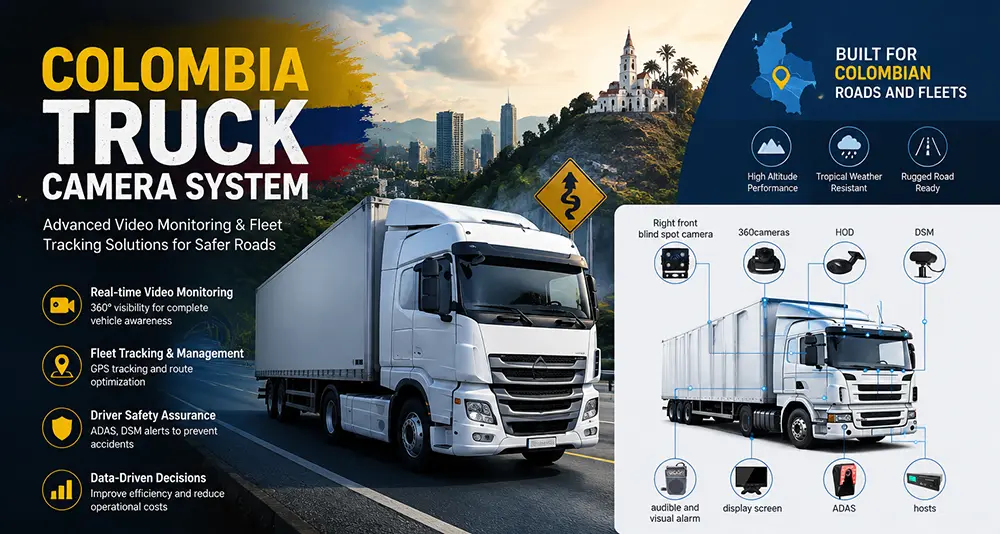
Challenges of Colombia’s Transportation Environment for Fleet Management
Colombia’s road network features prominent complexity:
• Mountain roads with steep gradients and numerous sharp bends
• Severe traffic congestion and mixed traffic flow in urban areas
• Long-distance transport routes spanning vast distances
• High safety risks for driving at night and in rainy seasons
In such operating conditions, GPS positioning alone cannot meet comprehensive management requirements. Managers need to not only know where vehicles are located, but also grasp what happens to vehicles during operation.
Typical pain points include:
• Occurrences of drowsy driving or high-risk night driving
• Speeding or loss of vehicle control on mountain curves
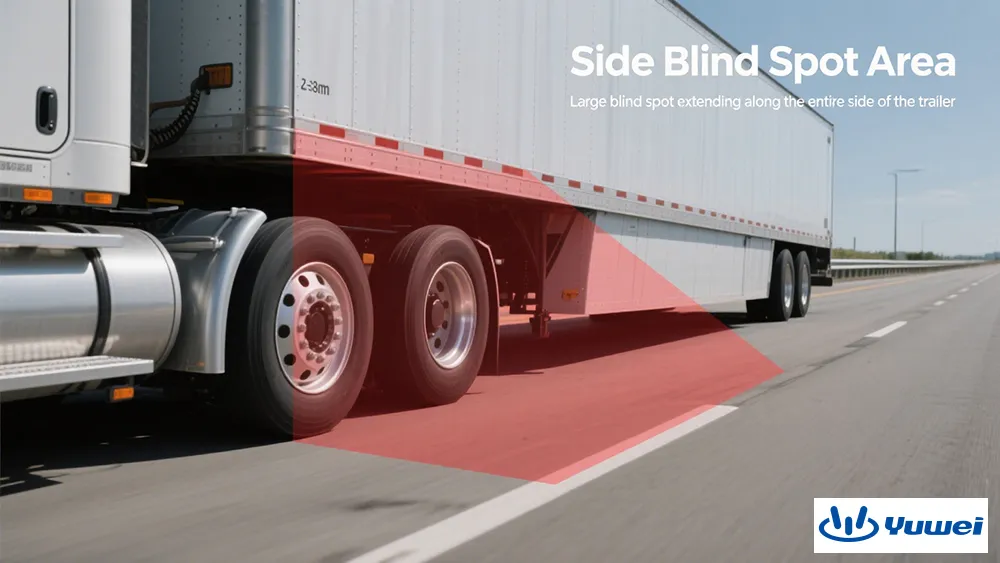
• Potential collision hazards in blind spot zones
• Abnormal vehicle idling during cargo transit
• Rapid reconstruction of accident scenarios after collisions
These challenges have fueled the popularization of video-based, intelligent fleet management systems.
Architecture of Truck Camera Systems
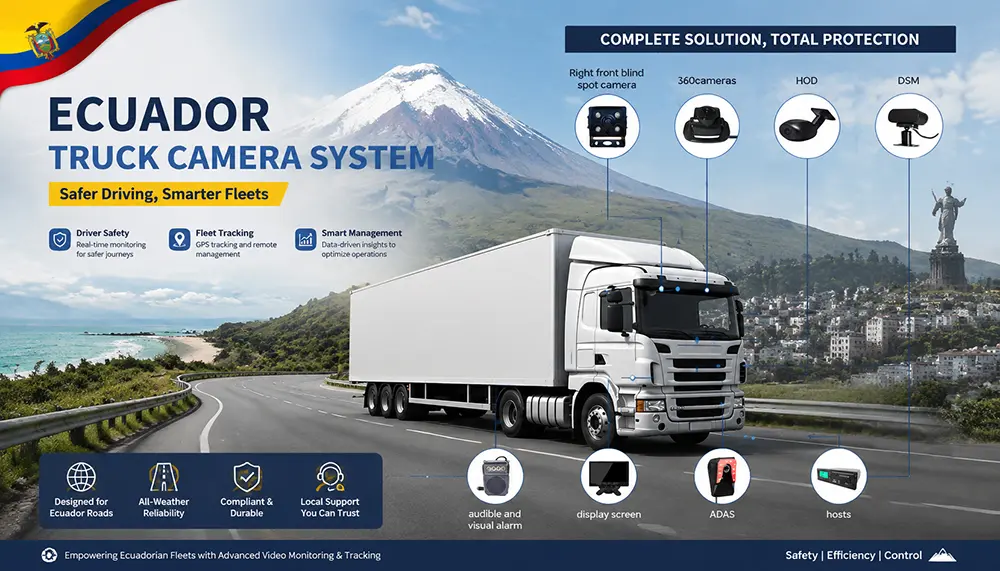
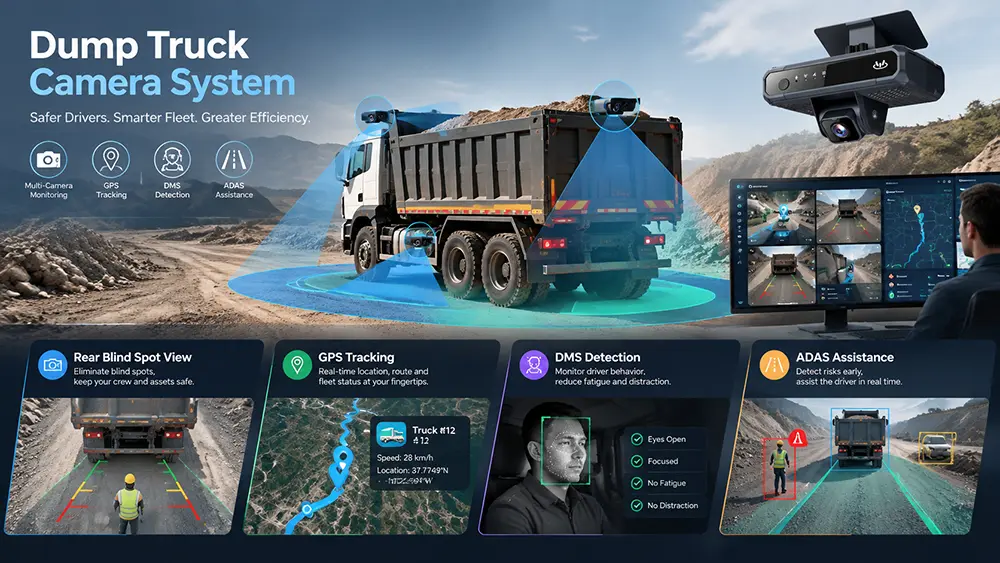
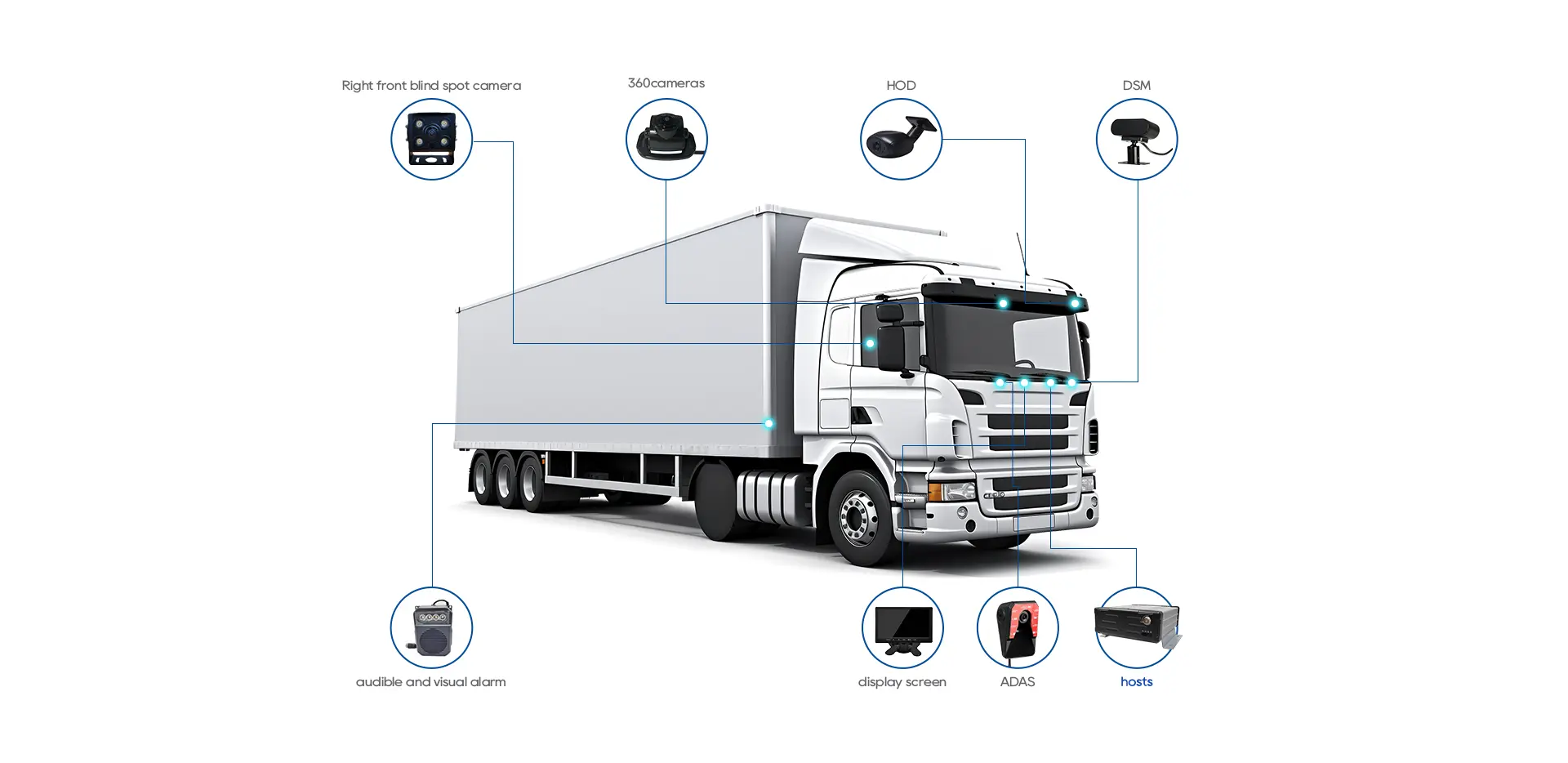
Fleets across Colombia generally adopt an integrated architecture consisting of onboard terminal + multi-camera array + cloud platform to realize synchronized management of data and video footage.
Core structural components:
• Forward and surrounding camera systems
• Onboard data collection terminals
• AI driving behavior analysis module
• Cloud-based remote management platform
• Real-time alarm and event transmission mechanism
This architecture transforms vehicles from simple transport equipment into perceivable data nodes.
Core Equipment Composition & Functional Description
1. Dash Cam – Basic Driving Recording & Remote Video Monitoring
Fleet Dash Cam
The dash cam serves as the foundational component of the whole system, recording front road conditions and full driving processes.
Core functions:
• High-definition forward video recording
• Synchronized GPS/BDS positioning
• 4G real-time remote video streaming
• Automatic footage storage triggered by abnormal events
Applicable to light-duty trucks, urban delivery fleets and basic fleet monitoring scenarios.
2. MDVR – Multi-channel Onboard Video Management Hub
Full HD Mobile DVR
The MDVR acts as the core control unit of the entire onboard video system, designed for complex transportation scenarios.
Supported capabilities:
• Multi-channel camera access (front / rear / side / cargo compartment / blind spot cameras)
• Local video storage and cloud upload
• GPS vehicle positioning
• Linked alerts for abnormal events
• Remote cloud platform administration
Compared with single standalone cameras, MDVR enables the construction of a complete full-vehicle visual monitoring network.
3. ADAS – Active Driving Hazard Early Warning
ADAS Camera for Commercial Vehicles
The ADAS system identifies road risks via forward visual perception and delivers real-time driving assistance.
Key functional modules:
• Forward collision warning
• Lane departure alert
• Following distance monitoring
• Pedestrian detection reminder
It drastically reduces accident risks on Colombia’s mountain highways and expressways.
4. DSM – Driver Status Monitoring System
DSM Camera Y9
The DSM system monitors drivers’ operating behaviors and physical mental states.
Detectable risky behaviors:
• Drowsy driving
• Distracted driving
• Phone calling while driving
• Smoking and other abnormal movements
Upon detecting hazardous conduct, the system triggers synchronized voice alerts and backend platform alarms.
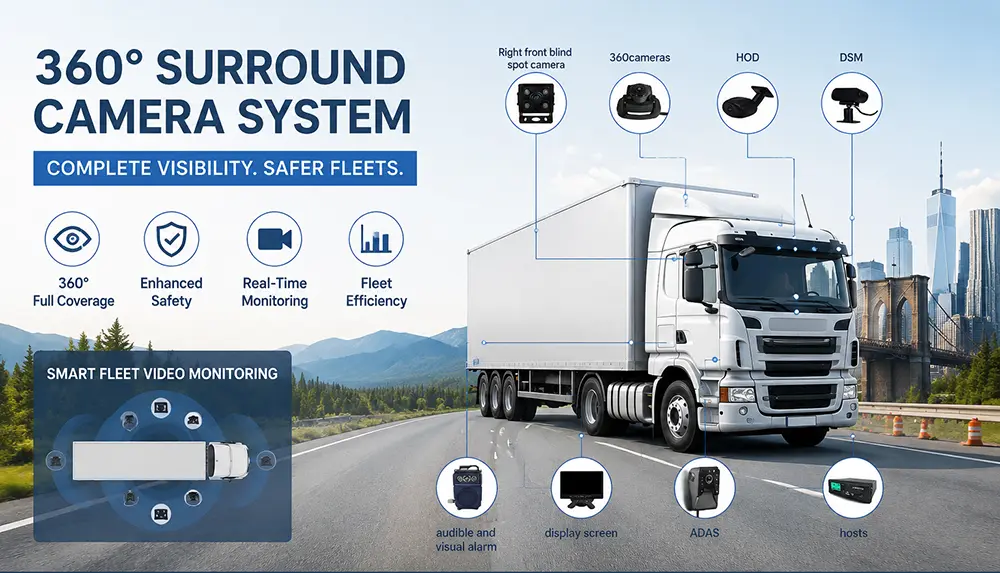
5. 360° Surround View System – Perception of Surrounding Vehicle Environment
HD Panoramic Driver Camera
A combination of multiple cameras delivers full panoramic vision around the vehicle to eliminate visual blind spots.
Monitoring coverage:
• Side body blind zones
• Rear reversing area
• Low front undercarriage area
• Critical turning zones
Suitable for urban delivery trucks, port haulers and mining operation vehicles.
6. Onboard Display Screen – In-Cabin Visual Assistance
Commercial Vehicle Infotainment Screen
The onboard display provides real-time video feedback for drivers.
Main application scenarios:
• Reversing visual assistance
• Blind spot inspection during turns
• Quick switching between multi-camera video feeds
It enhances drivers’ intuitive judgment and minimizes human driving errors.
7. Audible & Visual Alarm System – External Safety Reminders
Audible-Visual Alarm Device
The audible and visual alarm unit delivers external safety warnings to surrounding road users.
Core functions:
• Reversing reminder alert
• Turning warning signal
• Blind spot hazard notification
It effectively cuts collision risks in low-speed, complex traffic environments.
8. Waterproof Blind Spot Camera – External Key Area Surveillance
Heavy-Duty Waterproof Backup Camera
Supplementary visual equipment to cover external vehicle blind spots.
Applicable operating environments:
• Rainy and muddy road conditions
• Rugged mountain terrain
• Low-light night driving scenarios
It features full waterproof, dustproof and night vision performance to ensure stable clear imaging under harsh conditions.
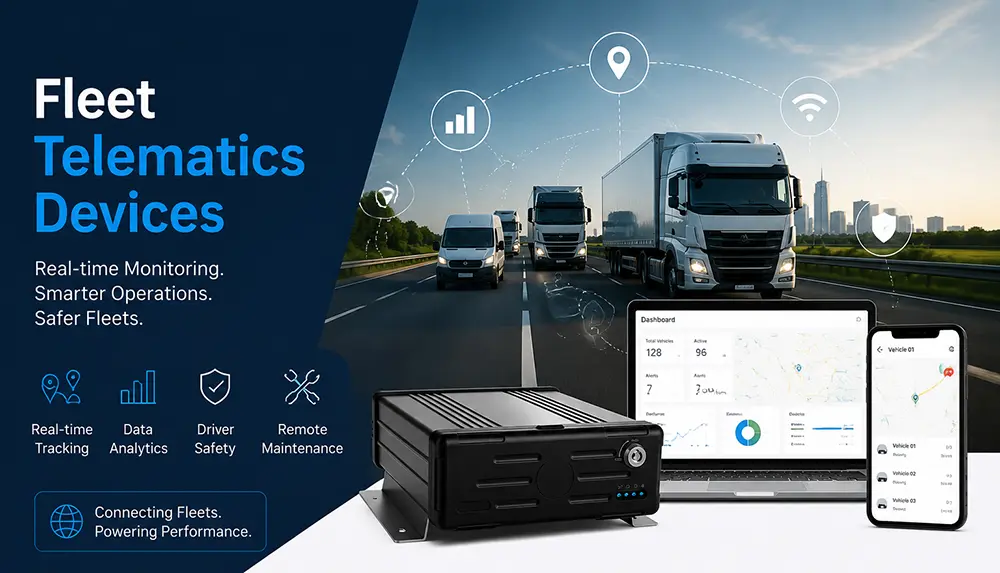
Telematics Functional Capabilities
The core value of truck camera systems lies in integrated data aggregation, rather than simple video recording only.
The platform centrally unifies management of the following data categories:
• Real-time vehicle geolocation
• Complete driving track logs
• Live video stream data
• Full driving behavior records
• Abnormal alarm event archives
• Operational statistical analytics
It enables the establishment of a digital vehicle operation model.
1. Real-Time Vehicle Tracking
Powered by GPS positioning and cloud platform technology, the system realizes:
• Instant vehicle location tracking
• Full route supervision
• Automated abnormal driving detection
It boosts dispatch efficiency and full transport transparency.
2. Video Playback & Incident Analysis
Remote access to historical video footage supports:
• Accident scene reconstruction
• Resolution of transport cargo disputes
• Insurance claim verification
• Investigation of customer delivery complaints
It greatly lowers manual communication and negotiation costs.
3. Data-Driven Driving Behavior Analysis
The system automatically identifies and statistically records:
• All speeding violations
• Drowsy driving incidents
• Distracted driving operations
• All non-compliant driving events
A standardized driver performance scoring system is generated based on collected data.
4. Operational Optimization Functions
Data analytics supports multi-dimensional operational improvements:
• Intelligent route optimization
• Fuel consumption cost control
• Scheduled vehicle maintenance planning
• Overall transport efficiency upgrading
It facilitates the industry’s shift from experience-based management to data-driven management.
5. Risk & Liability Administration
When accidents or abnormal incidents occur:
• Rapid reconstruction of full event timelines
• Complete playback of driving procedures
• Clear division of accident liability
• Accelerated insurance claim processing workflows
It reduces commercial disputes and economic losses for fleet operators.
Typical Application Scenarios in Colombia
1. Long-Distance Mountain Transportation
Mitigates safety risks arising from steep slopes, sharp curves and driver fatigue.
2. Port Logistics Haulage
Improves safety standards and dispatch efficiency for container transport fleets.
3. Urban Delivery Logistics Networks
Addresses complex road conditions and mixed pedestrian-vehicle traffic flow.
4. Mining & Energy Resource Transport
Adapts to high-risk operation sites with low visibility conditions.
5. Cold Chain & Food Product Transportation
Guarantees delivery timeliness and full visibility of the entire cold chain transit process.
System Configuration Recommendations
Basic Small-Scale Fleet Setup
• Dash Cam
• Basic GPS positioning module
• Front and rear standard cameras
Medium & Large-Scale Enterprise Fleet Setup
• Full MDVR system
• Complete multi-camera visual network
• Integrated DSM + ADAS modules
• Cloud fleet management platform
High-Risk Special Transport Vehicles
• 360° panoramic surround view system
• Multiple waterproof blind spot cameras
• Audible & visual external alarm system
• In-cabin monitoring display screen
Conclusion
Truck camera and intelligent monitoring systems are driving Colombia’s transportation industry to transition from experience-based dispatch to data-driven fleet management.
Through the coordinated operation of Dash Cam, MDVR, ADAS, DSM, 360° surround view systems and Telematics cloud platforms, transport enterprises can achieve elevated safety control, optimized operational efficiency and comprehensive risk management capacity.
Against the backdrop of complicated road infrastructure and high-volume transport demand, such intelligent monitoring systems have become critical core infrastructure for modern commercial fleet management.
Email:hello@yuweitek.com