









Ecuador Truck Camera System & Tracking Management & Telematics
Ecuador Truck Tracking Management
Ecuador’s commercial vehicle and freight transportation market is entering a phase of recovery and growth. Public market statistics show that sales of commercial vehicles in Ecuador reached approximately 19,668 units in 2025, representing a year-on-year increase of 32.8%. Among these, trucks, the core vehicle type for freight transport, recorded around 13,189 units sold in 2025, a year-on-year rise of 40.1%. This growth is primarily driven by demand from commercial circulation, agricultural exports, port logistics, urban distribution and corporate fleet renewal. Based on the current market recovery momentum, commercial trucks in Ecuador are conservatively projected to maintain an annual growth rate of roughly 3%–5% over the next 3 to 5 years, creating sustained market demand for truck camera systems, GPS fleet tracking management and Telematics platforms.

Why Ecuadorian Fleets Need Intelligent Camera Systems
Transportation scenarios across Ecuador feature distinct regional disparities. Coastal regions rely heavily on ports and export logistics; mountainous roadways pose hazards including steep gradients, sharp bends and low visibility; urban delivery routes are plagued by traffic congestion, mixed pedestrian-vehicle flow and frequent stop-start driving conditions.
For fleet operators, conventional GPS solutions can only answer the question of where a vehicle is located, yet fail to fully address the following critical concerns:
• Whether drivers engage in fatigued or distracted driving behaviour
• Whether vehicles travel safely on winding, sloped or night-time road segments
• If blind spot risks exist during reversing, turning and lane changes
• Occurrences of unplanned stops, route deviation or cargo damage disputes mid-transit
• Fast on-site reconstruction and liability determination following traffic accidents
Accordingly, Ecuadorian freight enterprises require more than basic positioning tools—they demand an integrated intelligent fleet safety system combining video surveillance, AI recognition, real-time alert notifications and cloud-based data management.
Truck Camera System for Ecuador
Ecuadorian truck camera systems generally consist of three core components:
On-board Hardware Devices + Mobile Communication Network + Cloud Fleet Management Platform
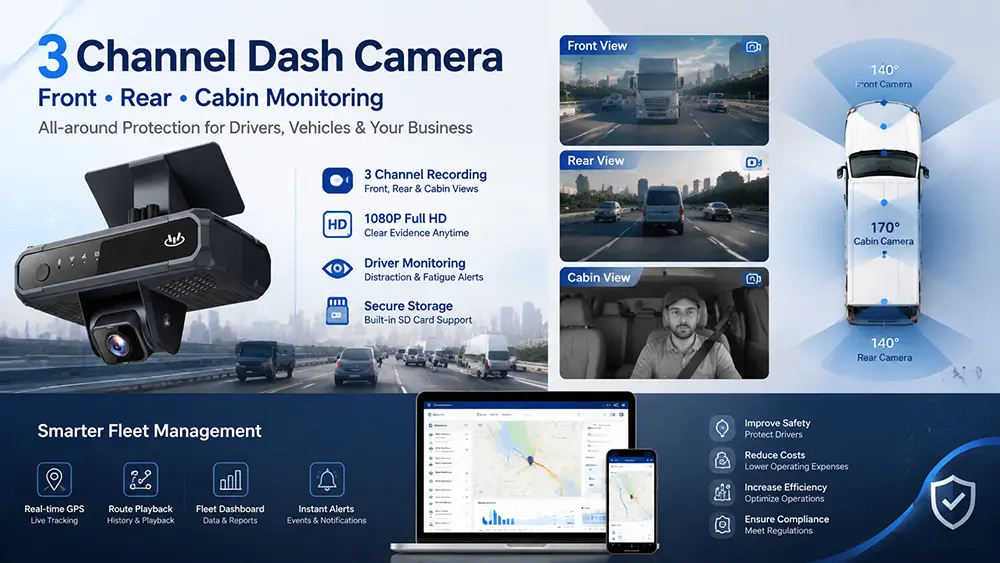
The system captures footage of road conditions, driver cabins, vehicle surroundings and blind spots via on-board cameras. Combined with GPS positioning, AI algorithms and alert data, it transmits real-time vehicle operational status to the backend management platform.
Core functional capabilities:
• Real-time vehicle positioning and historical track playback
• Multi-channel video monitoring and remote live viewing
• Driver behaviour state recognition
• Active safety early warning alerts
• Blind spot monitoring and reversing assistance
• Statistical analysis of alert incidents and operational performance
This transforms commercial vehicles from simple transport equipment into monitorable, analysable and traceable mobile data terminals.
Core Hardware Components
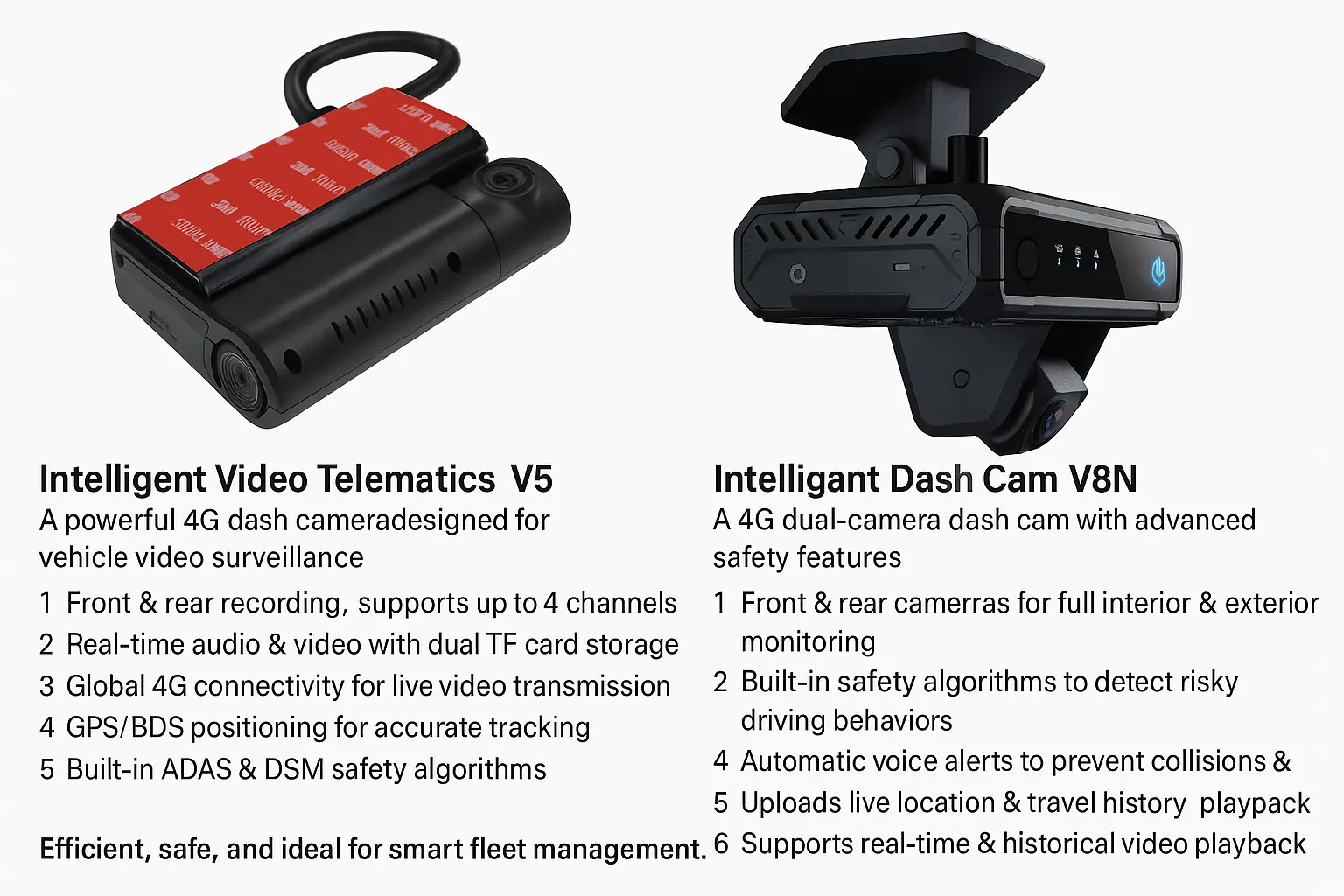
1. Dash Cam – Fleet Vehicle Driving Recorder
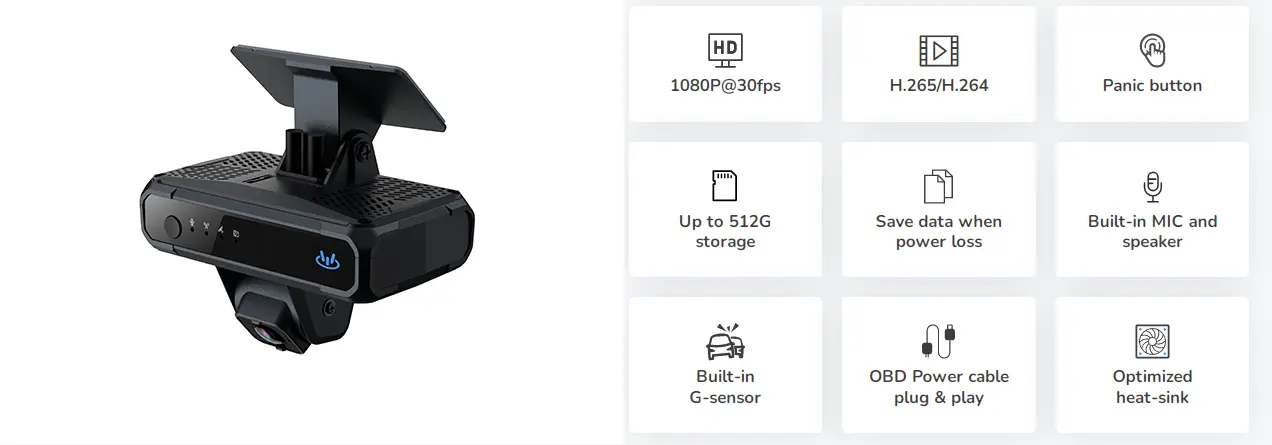
The Dash Cam serves as the foundational hardware unit of the truck camera system, designed primarily for forward road recording, full-drive footage capture and remote video access.
Supported functions:
• High-definition forward-facing video recording
• Synchronised GPS/BDS positioning
• 4G-enabled real-time remote video streaming
• Locked footage storage for collision, hard braking and other abnormal events
• Backend remote viewing of vehicle operational status
For Ecuador’s urban distribution fleets, small-scale logistics operators and light commercial trucks, Dash Cams act as an entry-level video management solution that delivers fundamental safety oversight and accident evidence collection.
2. MDVR – Multi-Channel Mobile Digital Video Recorder
The MDVR functions as the central host for multi-camera on-board video systems, suited for medium and heavy-duty trucks, long-distance haulage vehicles, port machinery, refrigerated trucks and construction transport vehicles.
Compatible camera inputs for MDVR units:
• Forward-facing cameras
• Rear-view reversing cameras
• Left and right side cameras
• Cabin interior driver monitoring cameras
• Cargo hold cameras
• Dedicated blind spot cameras
Its key advantage lies in unifying multi-channel video footage, positioning data, alert events and remote administration within a single platform, forming a complete chain of visual evidence.
Ecuadorian fleets requiring simultaneous oversight of driver conduct, vehicle peripherals, cargo integrity and delivery routes benefit most from large-scale MDVR deployment as the core monitoring hardware.
3. ADAS – Advanced Driver Assistance System for Active Safety Warnings
ADAS cameras identify road hazards ahead of the vehicle and notify drivers before dangerous incidents unfold.
Detectable road risks:
• Impending front collision hazards
• Unintended lane departure
• Insufficient following distance
• Vulnerable pedestrian and stationary obstacle risks
On Ecuador’s mountainous highways, arterial expressways and night haulage routes, ADAS technology enables drivers to spot potential dangers in advance, cutting the incidence of rear-end collisions, lane drift and frontal impact accidents.
4. DSM – Driver Status Monitoring System
DSM cameras are mounted inside vehicle cabins to track driver physical state and behavioural patterns.
Monitorable unsafe driving actions:
• Fatigued driving
• Eyes closed and yawning
• Distracted downward gazing
• Mobile phone calls while driving
• Smoking behind the wheel
• Prolonged off-road line of sight
Upon detecting abnormal behaviour, the system triggers audio prompts, built-in buzzers or backend platform alerts to notify both drivers and fleet management staff.
For long-distance haulage, overnight urban delivery, mining site transport and high-intensity operation fleets, DSM shifts corporate safety management from post-incident accountability to proactive risk prevention.
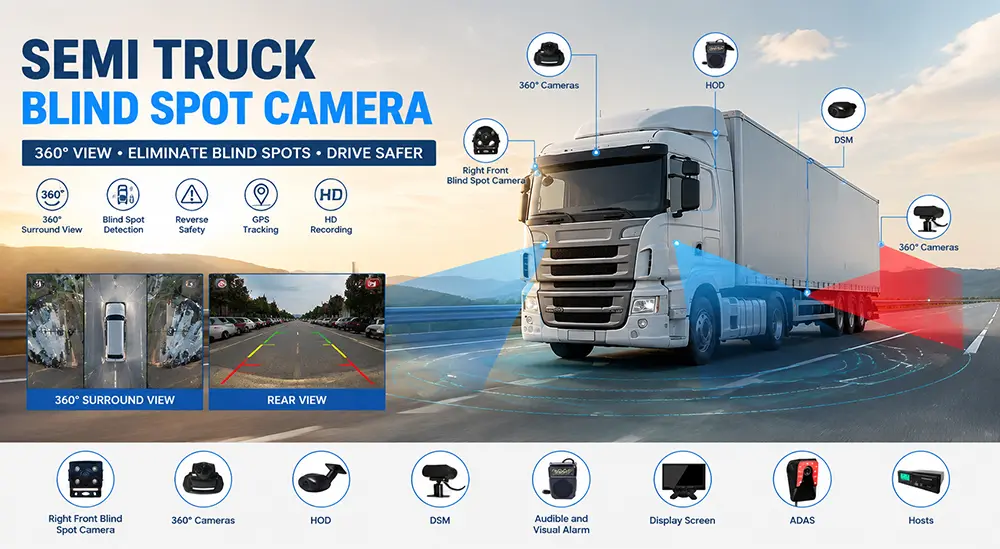
5. 360° Surround View & Multi-Camera Systems
Heavy-duty trucks, box lorries and construction machinery feature extensive visual blind zones, especially during right-hand turns, reversing, low-speed manoeuvring and travel along narrow roadways.
360° surround view systems integrate multiple cameras to render a full visualisation of the vehicle’s surrounding environment.
Coverage scope:
• Left and right vehicle side blind spots
• Rear reversing zones
• Low forward blind areas
• High-risk turning zones
• Pedestrians and obstacles surrounding the vehicle body
This system is particularly applicable to port logistics fleets, urban delivery vehicles, mining roadway transport, construction site machinery and warehouse yard vehicles.
6. On-Board Display – Real-Time Visual Assistance for Cabins
On-board display screens installed inside driver cabins stream live footage from rear, side, blind spot or multi-channel cameras.
Primary use cases:
• Live reversing video feed display
• Right-turn blind spot visibility
• Lane change auxiliary observation
• One-click switching between multiple camera views
• Synchronised visual alerts linked to the warning system
When vehicles enter port terminals, warehouse districts, dense urban streets or narrow mountain passes, drivers rely on the display to directly observe high-risk zones, eliminating judgement errors caused by sole dependence on side and rearview mirrors.
7. Audible & Visual Alarm System – External Safety Reminders
Audible and visual alarm devices alert pedestrians and ground personnel near the vehicle, deployed primarily for reversing, turning and blind spot warning scenarios.
Key functionalities:
• Voice reversing reminder announcements
• Combined light and sound turn warnings
• Alert for pedestrians approaching blind zones
• Visible and audible prompts for night-time or low-visibility environments
For waste collection trucks, construction vehicles, port tractors, refrigerated lorries and urban delivery fleets, audible-visual alarm systems effectively reduce low-speed collisions and pedestrian-vehicle contact accidents.
8. Waterproof Blind Spot Cameras – External Monitoring for Harsh Operating Conditions
Sections of Ecuador’s road network are exposed to heavy rainfall, mud, dust, steep mountain gradients and poor night illumination, meaning external cameras must deliver robust environmental adaptability.
Mounting positions for waterproof blind spot cameras:
• Vehicle rear tail section
• Right side of the vehicle body
• Lower front fascia
• Exterior cargo hold surfaces
• High-risk turning blind spot locations
These cameras supplement visual coverage of areas unreachable by direct driver sightlines, delivering clear footage for safe reversing, turning and low-speed transit.
How Telematics Improves Fleet Management
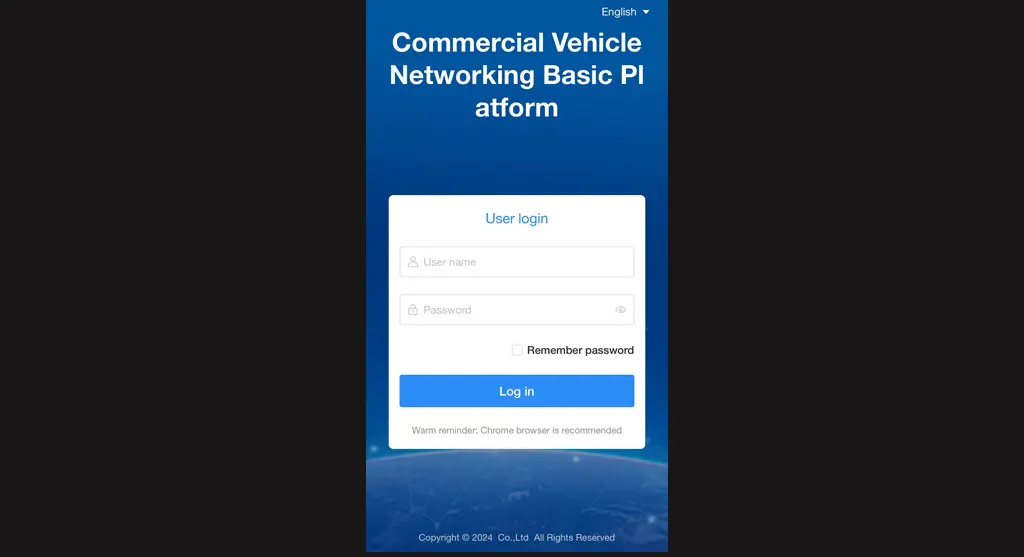
The core value of truck camera systems extends far beyond basic video recording; they centralise video footage, location tracking, driver behaviour data, alert events and operational metrics within a unified remote management platform.
1. Real-Time Positioning & Route Supervision
The system captures live vehicle coordinates via integrated GPS/BDS positioning modules and transmits data to the cloud platform.
Managers can access the following information:
• Current real-time vehicle location
• Complete historical travel tracks
• Instances of unapproved route deviation
• Extended unplanned stationary periods
• Unauthorised entry into restricted zones
This functionality delivers critical operational value for port logistics, inter-provincial haulage, agricultural export transport and high-value cargo shipments.
2. Remote Live Video Viewing & Historical Footage Playback
The backend platform supports instant remote live camera feeds and retrieval of archived recorded footage.
Common applicable scenarios:
• Traffic accident evidence collection
• Resolution of cargo damage disputes
• Addressing customer delivery complaints
• Insurance claim supporting documentation
• Internal review of driver operating behaviour
Video recordings provide far more intuitive, objective evidence than verbal driver statements, streamlining internal corporate administration workflows.
3. Statistical Analysis of Driving Behaviour Alerts
The system automatically logs all high-risk driving events and generates categorised statistics filtered by vehicle unit, assigned driver, timestamp and incident type.
Standard alert categories:
• Fatigued driving
• Distracted driving
• Lane departure warnings
• Front collision risk alerts
• Excessive speeding
• Hard sudden braking
• Blind spot hazard notifications
Enterprises leverage alert records to build driver safety scoring frameworks for targeted training, performance assessment and operational risk mitigation.
4. Operational Efficiency Analytics
Telematics platforms aggregate full-spectrum vehicle operational data to help logistics businesses optimise delivery efficiency.
Analysable operational metrics:
• Total vehicle travel mileage
• Cumulative stationary idle time
• Route performance efficiency ratings
• Frequency of safety alert incidents
• Delivery task completion rates
• Overall vehicle utilisation rate
Using this dataset, fleets optimise delivery scheduling, cut empty load mileage, control fuel consumption and schedule preventative vehicle maintenance rationally.
Typical Application Scenarios in Ecuador
1. Port & Import-Export Logistics
Ecuador’s coastal ports handle massive volumes of import and export freight. Terminal vehicles perform frequent reversing, tight turns and low-speed movement, creating elevated blind spot safety risks.
Recommended hardware configuration:
• MDVR unit
• Multi-channel camera array
• On-board display screen
• Audible-visual alarm system
• Waterproof reversing cameras
2. Agricultural Produce & Refrigerated Transport
Export goods including bananas, seafood, fresh flowers and fruits impose strict requirements on delivery timeliness and cargo integrity.
Recommended hardware configuration:
• Dash Cam
• GPS positioning module
• MDVR recording host
• Cargo hold monitoring cameras
• Cloud remote video playback platform
3. Mountainous & Long-Distance Freight Haulage
Mountain roadways feature steep gradients and continuous sharp curves, raising stringent safety standards for driver operation.
Recommended hardware configuration:
• ADAS active safety warning system
• DSM driver monitoring cameras
• Forward-facing road camera
• GPS track management module
• Full driver behaviour alert system
4. Urban Delivery Vehicles
City delivery fleets regularly navigate congested roadways, mixed pedestrian and electric two-wheeler traffic, and narrow residential streets.
Recommended hardware configuration:
• Dash Cam
• Dedicated blind spot cameras
• On-board visual display
• Audible-visual alarm system
• 360° surround view monitoring system
5. Construction & Specialised Operation Vehicles
Construction machinery, sanitation trucks and municipal service vehicles perform frequent low-speed work, creating persistent safety hazards for ground staff surrounding the vehicles.
Recommended hardware configuration:
• MDVR central recording unit
• Multi-camera monitoring array
• Audible and visual warning system
• Waterproof external blind spot cameras
• Cloud-based remote fleet management platform
Hardware Configuration Recommendations for Different Fleet Types
Basic Light Logistics Fleets
Ideal for light commercial trucks, urban last-mile delivery and small-scale transport enterprises.
Suggested equipment package:
• Fleet Dash Cam
• GPS positioning module
• Dual front and rear cameras
• Cloud remote real-time video viewing access
Medium & Large-Scale Freight Fleets
Suitable for cross-regional long-distance haulage, refrigerated logistics and in-house corporate transport fleets.
Suggested equipment package:
• MDVR main recording host
• Multi-channel camera set
• ADAS active safety early warning system
• DSM driver state monitoring solution
• Full cloud fleet management platform
High-Risk Operation Fleets
Designed for port terminals, construction sites, mining zones, municipal services and heavy vehicle operation environments.
Suggested equipment package:
• 360° full surround view camera system
• Heavy-duty waterproof blind spot cameras
• Cabin on-board display screen
• Audible-visual external alarm unit
• MDVR cloud remote video recording system
VII. Evolving from Single-Vehicle Monitoring to Full Intelligent Fleet Management
The functional value of Ecuador’s truck camera systems is evolving from standalone video recording hardware into comprehensive end-to-end intelligent fleet management ecosystems.
A fully integrated system delivers the complete closed-loop workflow below:
Vehicle Positioning → Video Surveillance → Driver Behaviour Recognition → Blind Spot Hazard Warnings → Cloud Alert Upload → Operational Data Analysis → Accident Evidence Archiving → Delivery Performance Optimisation
By combining Dash Cams, MDVR units, ADAS, DSM, 360° surround view systems, cabin display screens, audible-visual alarms and waterproof blind spot cameras, transport operators can build safer, more transparent and fully controllable fleet operation systems.