













Fleet Management IOT Device
What is a Fleet Management IoT Device?
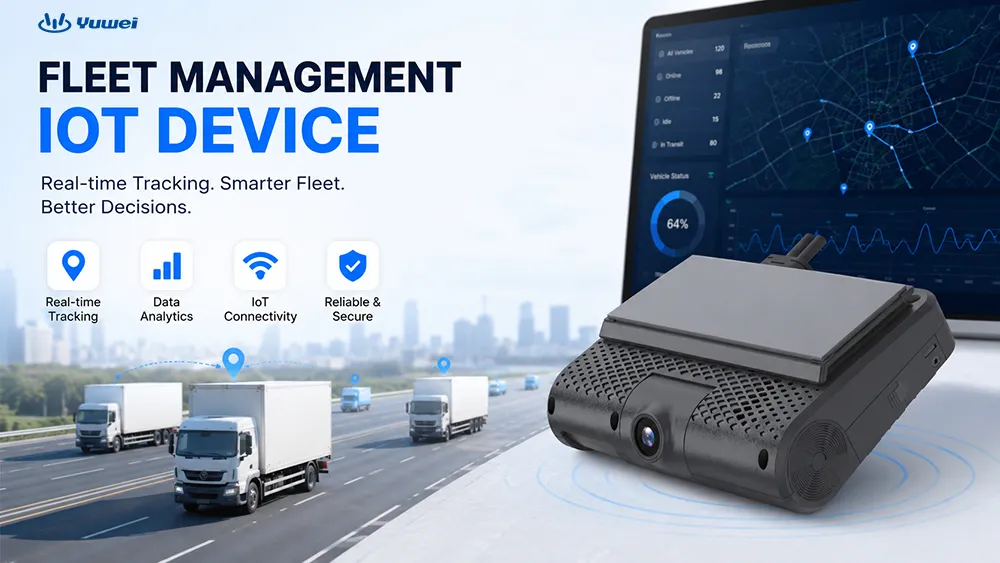
A Fleet Management IoT Device refers to an intelligent hardware terminal that utilizes sensors, GPS positioning, wireless communication, and cloud computing technologies to achieve real-time collection, transmission, and analysis of vehicle location, operating status, driving behavior, and cargo environment.
These types of devices are typically installed inside or outside the vehicle and operate via an OBD-II interface, dedicated wiring harness, or independent power supply. They upload vehicle data to a cloud management platform, helping fleet managers transition from an "artificial experience-driven" to a "data intelligence-driven" approach.
Core Working Principle
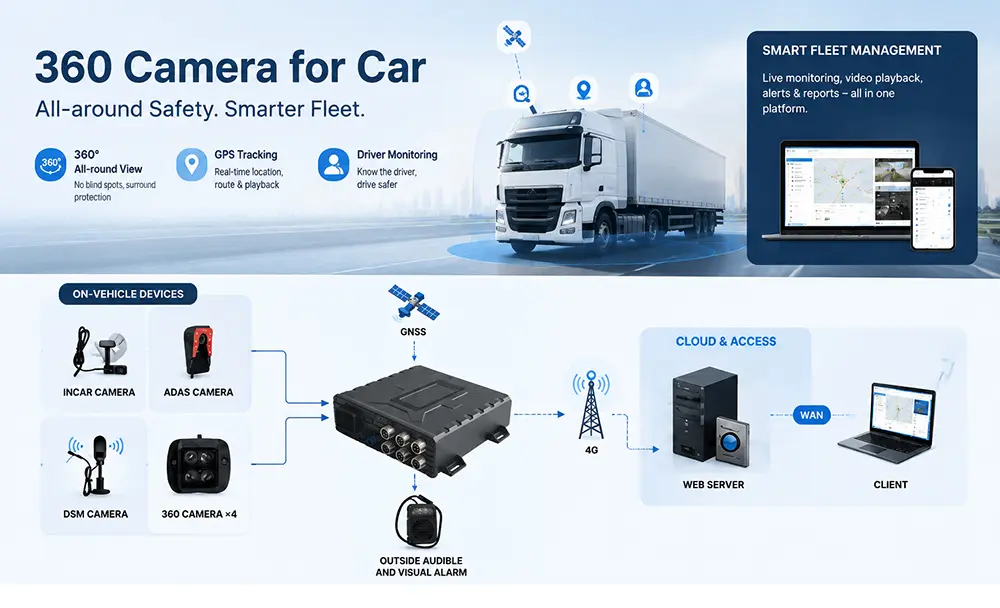
Sensor Collection → Edge Computing Processing → 4G/5G Transmission → Cloud Analysis → Visual Decision-Making = Real-Time Early Warning and Reverse Control
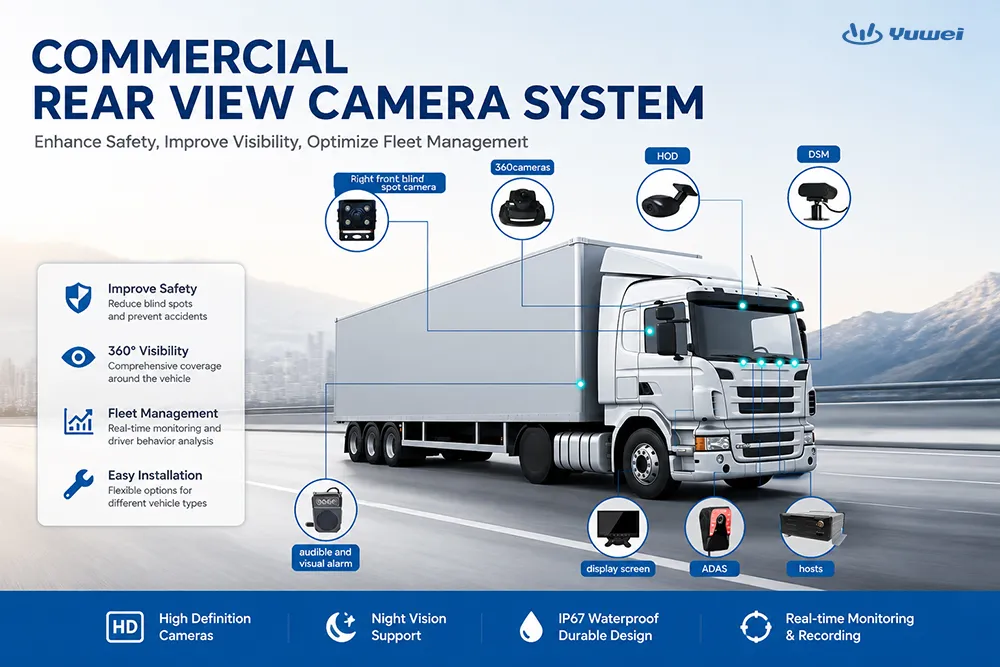
Components of Fleet Management IoT Devices
IoT Fleet Management vs. Traditional Fleet Management
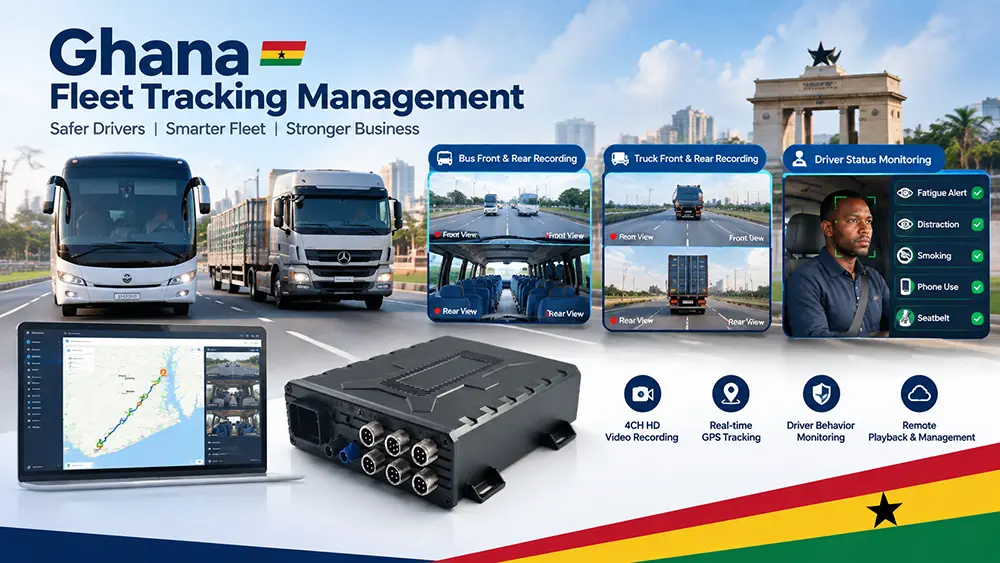
Applications of Fleet Management IoT Devices
Logistics and Trunk Line Transportation
Pain Points: Difficult to guarantee cargo safety, driver traffic violations, slow customer inquiry response.
IoT Solution: Real-time location sharing, electronic lock monitoring, driving behavior scoring.
Urban Distribution and Express Delivery
Pain Points: High pressure on delivery timeliness, chaotic vehicle scheduling, difficult to monitor last-mile delivery.
IoT Solution: Dynamic route optimization, estimated time of arrival (ETA) prediction, automatic check-ins at delivery nodes.
Public Transportation and Passenger Transport
Pain Points: High on-time performance requirements, passenger safety, vehicle congestion management.
IoT Solution: Real-time arrival time broadcasting, passenger flow statistics, driver fatigue monitoring.
Construction Engineering and Special Vehicles
Pain Points: Low equipment utilization rate, frequent illegal operations, high maintenance costs.
IoT Solution: Automatic calculation of working hours, geofences to restrict operating areas, fault early warnings.
Cold Chain Transportation
Pain Points: Temperature fluctuations leading to cargo damage, difficulty in defining responsibility.
IoT Solution: Full-process monitoring of temperature and humidity, automatic over-temperature alarms, data evidencing.
Recommended Fleet Management Hardware Devices:
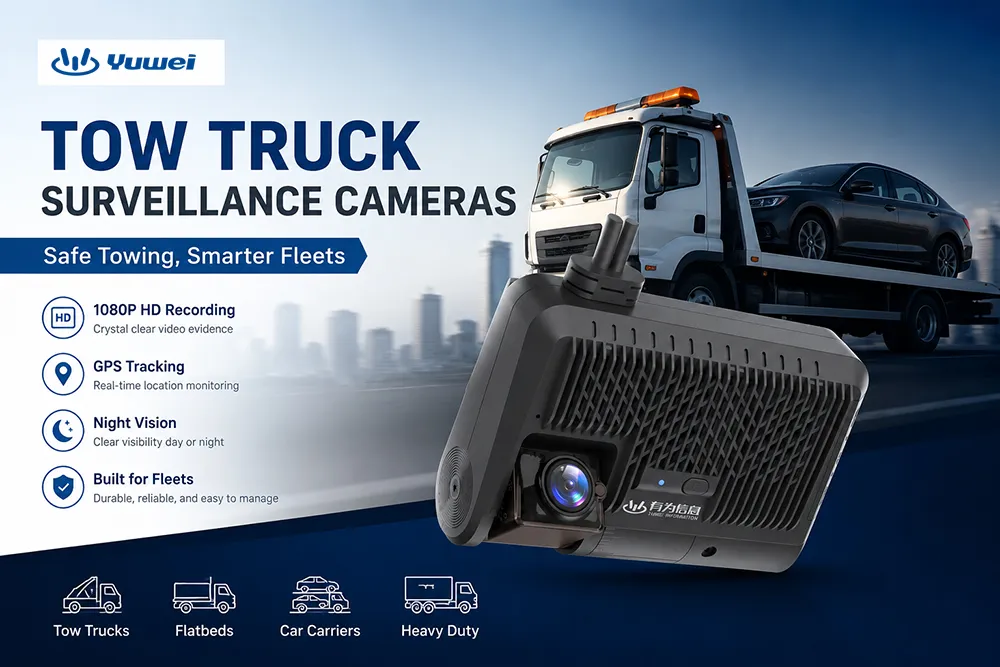
Among numerous fleet management IoT devices, the YUWEI V5C is a highly cost-effective, all-in-one intelligent terminal designed specifically for commercial fleets, integrating video monitoring, AI driving assistance, real-time positioning, and two-way communication.
Core Product Advantages
Dual-Lens High-Definition Monitoring
Front Camera: 1080P@25fps, 140° wide angle, clearly records road conditions and license plates.
In-Cabin Camera: 720P@25fps, 150° wide angle, real-time monitoring of driver status.
Supports H.264/H.265 high-efficiency compression; a single 1TB TF card can store approximately 15 days of footage.
Built-in AI Intelligent Algorithms
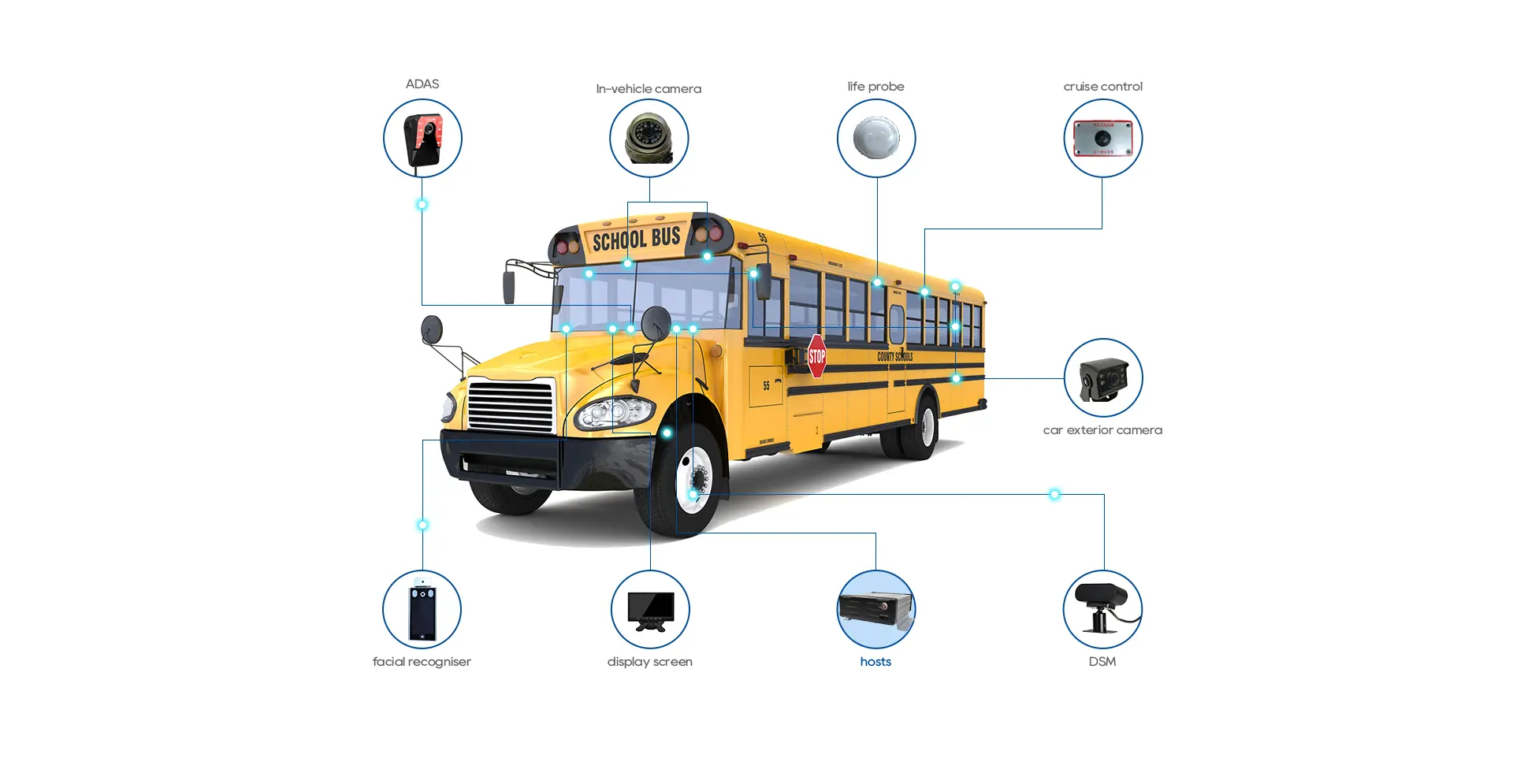
ADAS (Advanced Driver Assistance Systems): Lane departure warning, forward collision warning.
DSM (Driver Status Monitoring): Fatigue driving detection, distracted driving recognition, smoking/phone call alarms.
Facial Recognition: Driver identity verification, preventing unauthorized vehicle use.
Full Network Real-Time Interconnection
Built-in 4G full netcom module, supporting global multi-band networks.
Dual-mode positioning: BDS + GPS, high positioning accuracy, supports real-time trajectory playback.
Wi-Fi 802.11 b/g/n, supports AP/STA dual modes, facilitating on-site data downloading.
Vehicle Safety Perception
3-axis acceleration sensor, accurately detects sudden acceleration (HA), hard braking (HB), and collisions (HC).
Power-off protection function: Automatically saves key video clips in the event of an unexpected power outage.
Tamper alarm: When illegal removal of the device is detected, it automatically triggers a backend alarm and uploads the last 1 minute of video.
Rugged and Durable Design
Operating voltage 9V~36V, adaptive to 12V/24V vehicle batteries.
Operating temperature range -20°C ~ +70°C, adaptable to severe cold and extreme heat.
Dimensions only 111 × 81 × 36 mm, weight 215g, convenient installation (completed in approx. 20 minutes).
Applicable Fleet Types
The V5C is widely applicable to the following commercial scenarios:
Long-haul freight trucks and logistics fleets
Ride-hailing vehicles, taxis, and buses
Urban distribution and intracity logistics vehicles
Official vehicles and law enforcement vehicles
Engineering vehicles (dump trucks, excavators)
Management Platform Capabilities
The fleet management platform accompanying the V5C supports:
Unlimited Vehicle Access: Group management by fleet, route, and driver.
Automatic Generation of Operations Reports: Monthly/quarterly statistics of driving violations, route summaries, and accident rate analysis.
Multi-user Concurrent Access: Administrators and dispatchers can view data online simultaneously.
Open API Interfaces: Can seamlessly dock with existing dispatching systems and fuel consumption management systems.
Data Security Guarantee: AES-256 encrypted storage, supporting 15-90 day data retention policies.
Product Specifications at a Glance
How to Choose the Right Fleet Management IoT Device
Hardware Compatibility
Does it support your vehicle type (12V/24V battery)?
Do the interface protocols match (OBD-II, J1939, CAN bus)?
Does it support future expansion (external sensors, additional cameras)?
Positioning and Communication Capabilities
Positioning Mode: Single GPS or BDS + GPS dual-mode?
Network Coverage: Does it support all frequency bands in your operating area?
Offline Capability: Can it store data locally when the network drops and automatically resume upload?
AI and Intelligent Analysis
Does it feature ADAS driving assistance functions?
How accurate is the Driver Status Monitoring (DSM)?
Does it support customizable alarm rules?
Data Security and Privacy
Is video and data transmission encrypted?
Is there a comprehensive data access permission management system?
Does it comply with local data compliance requirements (e.g., GDPR)?
Platform Usability
Does the management backend support Chinese/multi-language?
Do the reporting functions meet your KPI evaluation needs?
Does it provide an open API for easy system integration?
Total Cost of Ownership (TCO)
Device unit price vs. feature richness
Monthly data card fees and data plans
Platform subscription fee model (per vehicle / per function / per data volume)
After-sales service and warranty period