








Real-Time Telematics for Fleets
Real-Time Telematics for Fleets 2026
In modern logistics and fleet operations, real-time telematics for fleets is a core technology. It integrates positioning, wireless communication, in-vehicle electronics, and cloud data analysis to help fleets break away from passive management models and achieve comprehensive upgrades in safety, efficiency, cost, and compliance.
Telematics is Not Equivalent to GPS Tracking
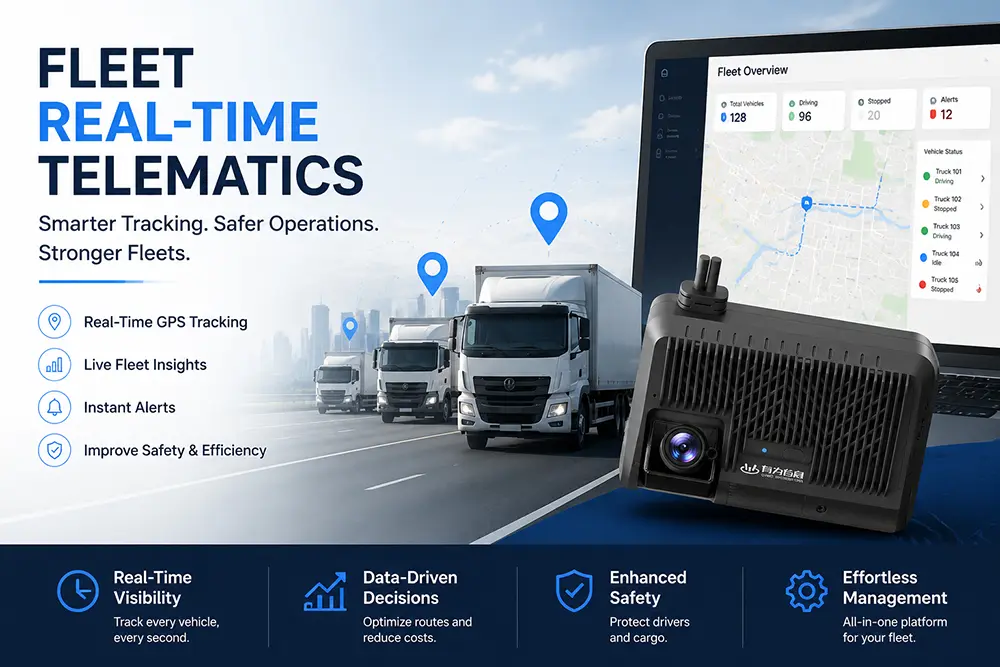
Real-time fleet telematics is an integrated management system combining GPS positioning, in-vehicle sensors, wireless transmission, and cloud analysis. It serves as the core hub for the digital operation of fleets, with functions far superior to simple GPS location tracking.
Real-time location tracking: Only realizes vehicle position monitoring. Relying on GPS and mobile networks, it provides basic data such as location, trajectory, and estimated time of arrival (ETA) to support basic dispatching and customer notification.
Real-time telematics: Encompasses positioning functions while synchronously collecting multi-dimensional information such as vehicle diagnostics, driving behavior, energy consumption, maintenance status, and compliance data. It helps managers comprehensively analyze fleet operational performance and supports precise decision-making.
In short, GPS tracking is a foundational function of telematics, while telematics is an all-scenario intelligent management system covering positioning, operations, and compliance.
How Fleet Telematics Works
Real-time telematics relies on a complete closed loop of "hardware collection — network transmission — cloud analysis — scenario application" to achieve the practical application of real-time data:
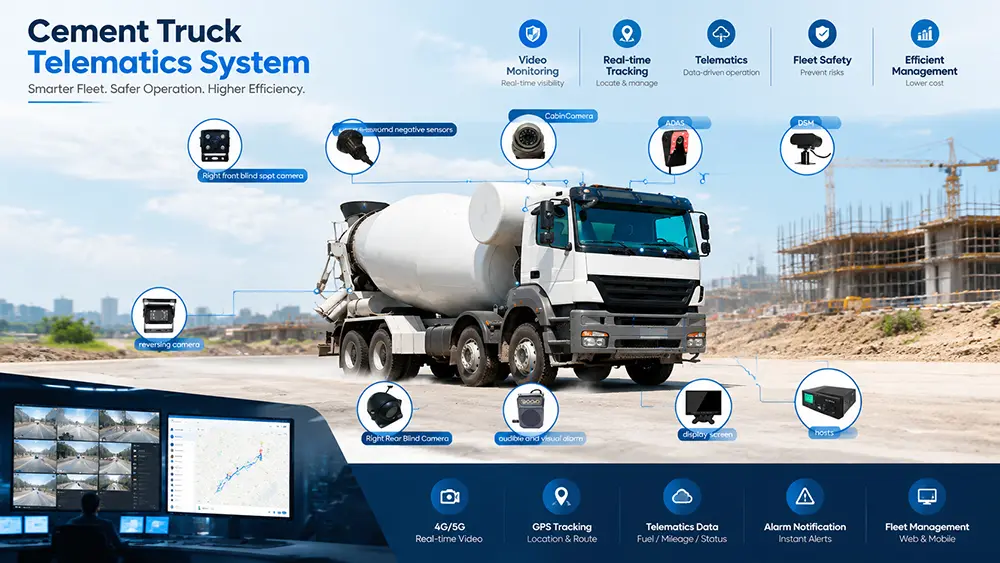
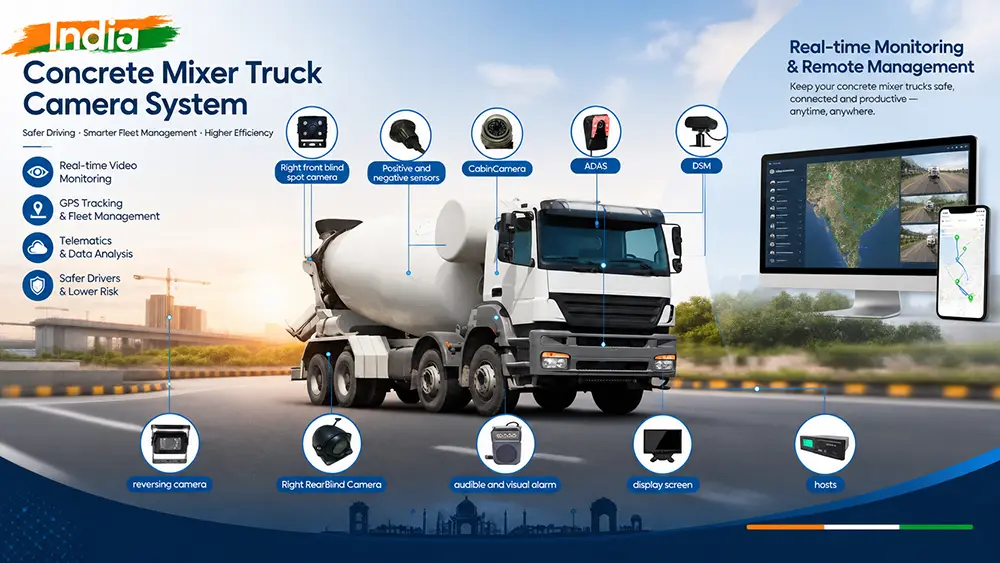
Hardware collection: Devices such as vehicle gateways, OBD terminals, asset trackers, and AI cameras collect core data like vehicle location, speed, operating conditions, energy consumption, and driving behavior in real-time.
Network transmission: Through 4G/5G cellular networks or satellite communications, data is uploaded to the cloud in real-time. Remote areas can rely on satellite networks to ensure continuous connectivity.
Cloud analysis: The platform automatically cleans and analyzes data to generate real-time alerts, visual reports, and operational dashboards, supporting multi-terminal viewing at any time.
Scenario application: Administrators rely on the backend for coordinated dispatching, while drivers use mobile terminals to complete inspections, reporting, and compliance submissions, achieving efficient collaboration for all personnel.
Functions of Fleet Telematics
1. Real-Time Control of Fleet Dynamics
High-precision GPS real-time tracking restores vehicle locations and driving trajectories, supporting the overlay of smart layers such as traffic conditions, weather, and charging stations.
Customized geofencing with automatic alerts for vehicles entering or exiting, effectively preventing illegal driving and abnormal asset movement.
Supports real-time location sharing, pushing accurate delivery times to customers to enhance delivery transparency and service quality.
Unified management of various powered and non-powered assets, including internal combustion engine vehicles, electric vehicles, trailers, and construction machinery.
2. Enhance Driving Safety
Real-time monitoring of dangerous driving behaviors such as speeding, harsh acceleration, and hard braking, automatically generating driving scores and immediate warnings.
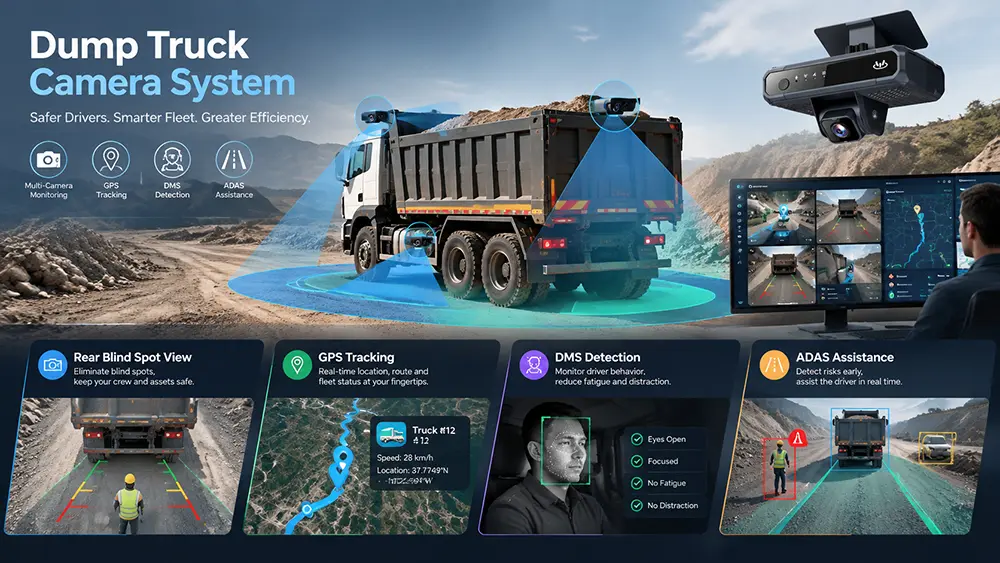
Paired with AI cameras and 360° panoramic monitoring, it intelligently identifies driving risks and supports real-time in-cabin reminders and post-accident reviews.
Automates electronic logs, driving hours, vehicle inspections, and tax report statistics to easily pass industry compliance audits.
When an accident or breakdown occurs, it quickly locates the vehicle and links dispatching and rescue to reduce the loss of safety accidents.
3. Reduce Operating Costs
Real-time monitoring of vehicle idling and fuel consumption data to identify fuel waste and inefficient driving behaviors, optimizing fuel-saving operations.
Adaptable to electric vehicle fleets, monitoring battery energy consumption, charging status, and battery health, intelligently planning charging routes to support the electrification transition.
Remote diagnosis of vehicle operating conditions to foresee potential faults in advance, implement preventive maintenance, and reduce vehicle breakdowns and unplanned maintenance expenses.
4. Fleet Operations
Intelligently plans routes based on vehicle conditions, road conditions, and traffic restriction rules to shorten driving mileage and save operating time.
An all-in-one mobile workflow simplifies daily operations for drivers, such as inspections, dispatching, repair requests, and reporting.
Customized data reports for safety, compliance, energy consumption, and maintenance to quantify operational results and support refined management decisions.
Value of Fleet Telematics
Combined with industry application cases, real-time telematics can bring intuitive commercial value to fleets:
Cost reduction and efficiency increase: Strictly controls idling waste, optimizes routes, and advances maintenance, significantly reducing fuel, repair, and mileage costs.
Safety upgrade: AI intelligent risk control standardizes driving behavior, significantly reducing accident rates, insurance claims, and premium expenses.
Compliance guarantee: Automated data recording and reporting avoids compliance fines, simplifies audit processes, and enhances corporate compliance reputation.
Operation efficiency improvement: Enhances vehicle utilization and dispatch efficiency, reduces customer complaints, and optimizes driver retention rates.
Asset protection: Real-time positioning and anti-theft alerts reduce the risk of equipment and vehicle loss, safeguarding the full life-cycle value of assets.
V5C Dual-Lens AI Dash Cam
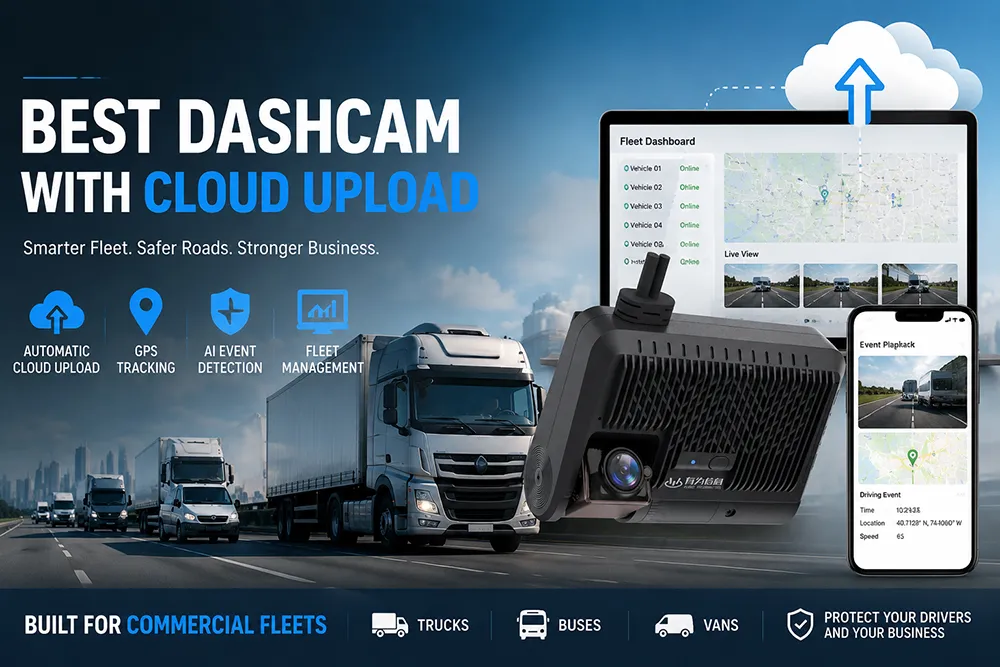
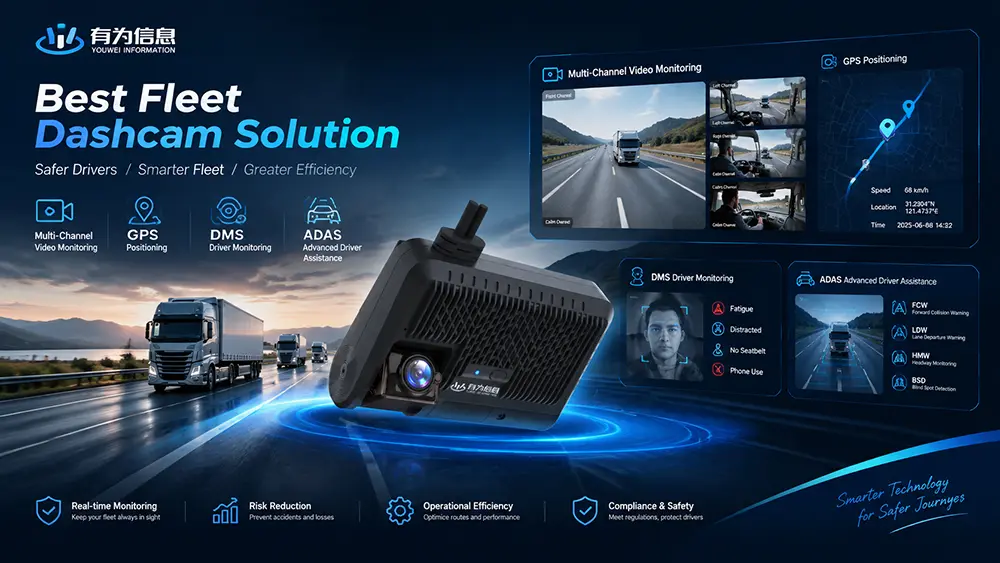
Compared to various fleet telematics terminals on the market, the YUWEI V5C has become the preferred adaptive equipment for various commercial vehicle fleets due to its stable performance, AI risk control capabilities, and high cost-effectiveness, balancing practicality and cost advantages.
1. Core Product Advantages
Dual-lens panoramic monitoring: The front-facing 1080P high-definition wide-angle lens records road conditions, while the inward-facing 720P wide-angle lens precisely monitors driver operations, achieving full internal and external panoramic coverage.
High-precision real-time positioning: Built-in GPS + BDS (Beidou) dual-mode positioning, paired with 4G full netcom transmission, ensuring accurate positioning and stable data uploading, while supporting Wi-Fi local linkage.
Full-dimensional AI intelligent warning: Integrates advanced driver assistance and driver status monitoring functions. It can warn against lane departure and forward collisions, identify driver fatigue and distraction, and support facial verification authorization.
Stable, safe, and durable: Uses AES-256 data encryption, large local memory + dual cloud backup, anti-tampering design, and a wide-temperature operating design to adapt to various complex in-vehicle scenarios.
Easy deployment and compatibility: Quick installation without wiring, open API interfaces, seamless integration with mainstream fleet management platforms, and rapid incorporation into existing telematics systems.
2. Applicable Scenarios
Widely suitable for logistics freight, urban distribution, ride-hailing, taxis, and small to medium-sized commercial vehicle fleets. It is the first choice for high cost-effectiveness entry-level smart terminals.
Industry Adaptation and Hardware Selection
1. Covered Industries
Suitable for all-industry fleets including logistics and transportation, public transit, engineering and infrastructure, oil and gas energy, municipal services, emergency rescue, and vehicle leasing, adapting to large, medium, and small operational scales.
2. Mainstream Hardware Selection
Vehicle gateways: Adaptable to fuel and electric vehicles, collecting full-dimensional vehicle conditions and operational data.
Asset gateways: Separately manage powered vehicles and non-powered assets like trailers and containers, achieving comprehensive coverage.
Environmental monitoring devices: Designed specifically for cold chain fleets, conducting real-time monitoring of cargo temperature to ensure compliance and cargo safety.
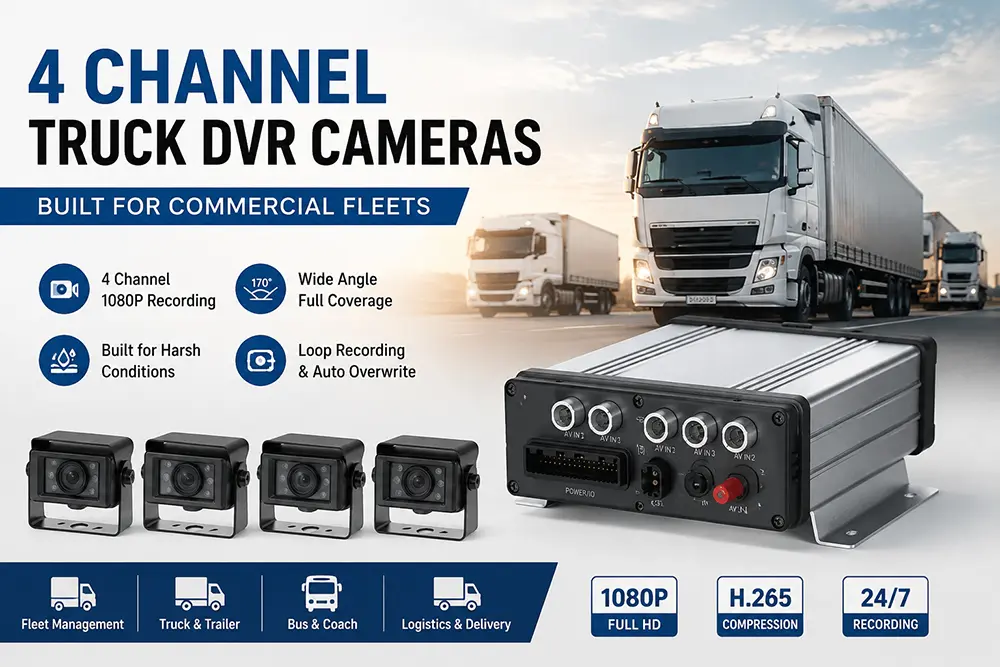
AI camera terminals: Represented by the YUWEI V5C, achieving active safety prevention and control, driving reviews, and risk evidence collection.
Satellite trackers: Suitable for remote areas without cellular network coverage, ensuring uninterrupted asset monitoring.
Real-time telematics relies on real-time data to break down information barriers, driving fleet operations from an experience-driven model to a data-driven model. Paired with professional smart terminals like the YUWEI V5C, it helps quickly build a fleet management system.
Email:hello@yuweitek.com