









Saudi Arabia Taxi Digital Tracking and Management
Saudi Arabia Taxi Ai Dash Cam
Saudi Arabia is accelerating the digitalization of its taxi industry. The updated 2025 taxi regulations by the Saudi Transport General Authority (TGA) require operators to connect to designated electronic platforms, install approved technical and safety equipment in vehicles, display unified electronic identification codes, standardize the use of electronic payments, and continuously upload driver, vehicle, and trip data. The latest official public data also shows that Saudi Arabia deployed 5,000 taxis during the 2026 Hajj season to provide transportation services for pilgrims.
These regulations indicate that Saudi Arabia's management of taxis is shifting from vehicle licensing and manual inspections to the unified supervision of vehicle identity, equipment status, payment information, and operational data.
"Approved Technical Equipment" is More Than Just Cameras
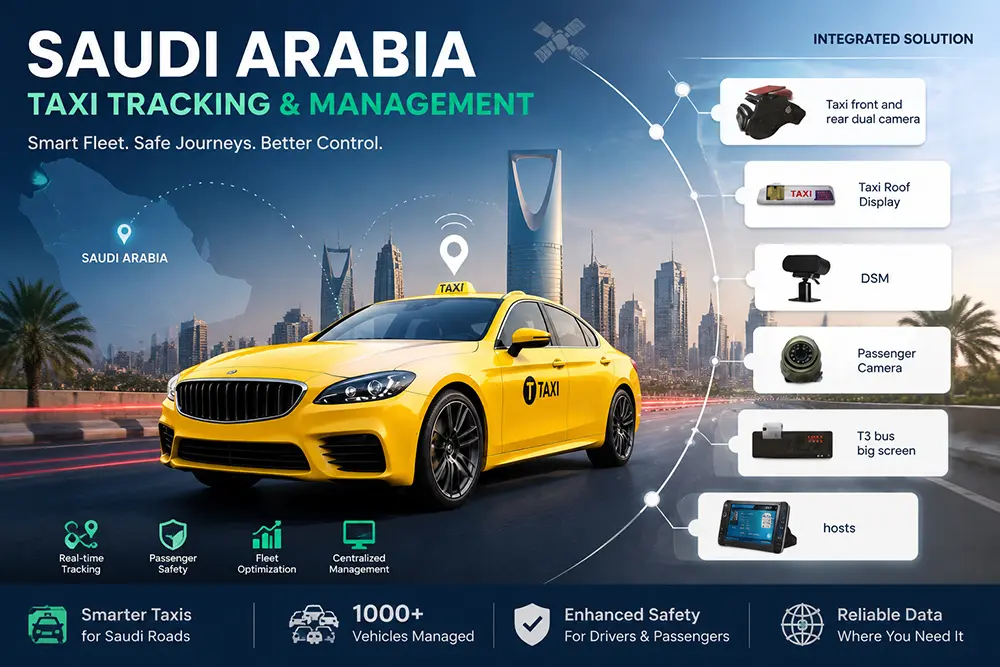
Current Saudi regulations do not explicitly stipulate that all taxis must uniformly install AI cameras. What the regulations require is that taxis must be equipped with approved devices that meet technical, safety, and data access standards, and these must be installed by service providers authorized by the Transport General Authority.
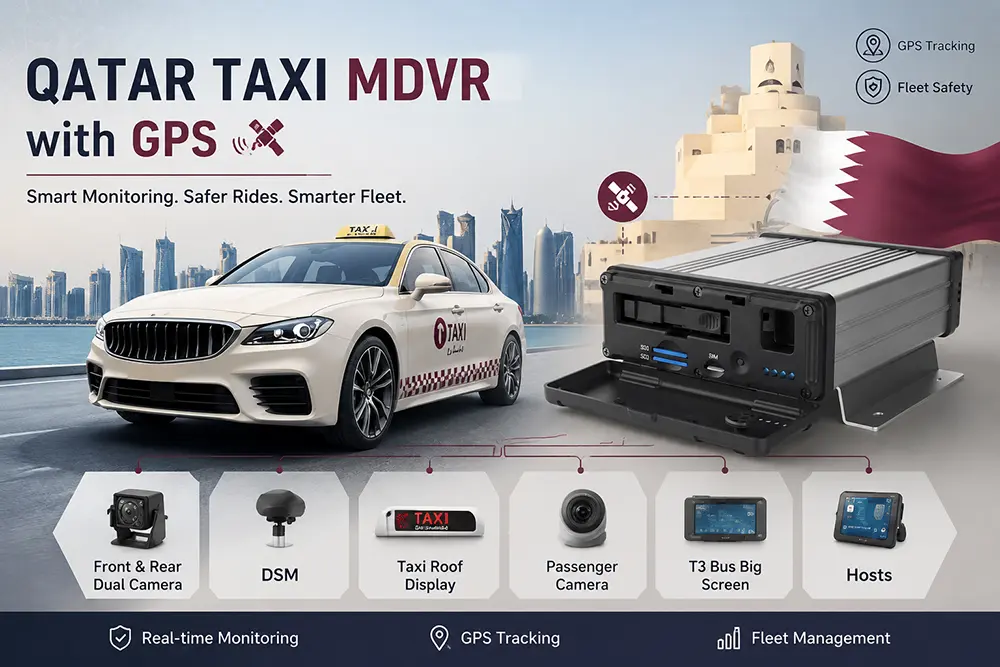
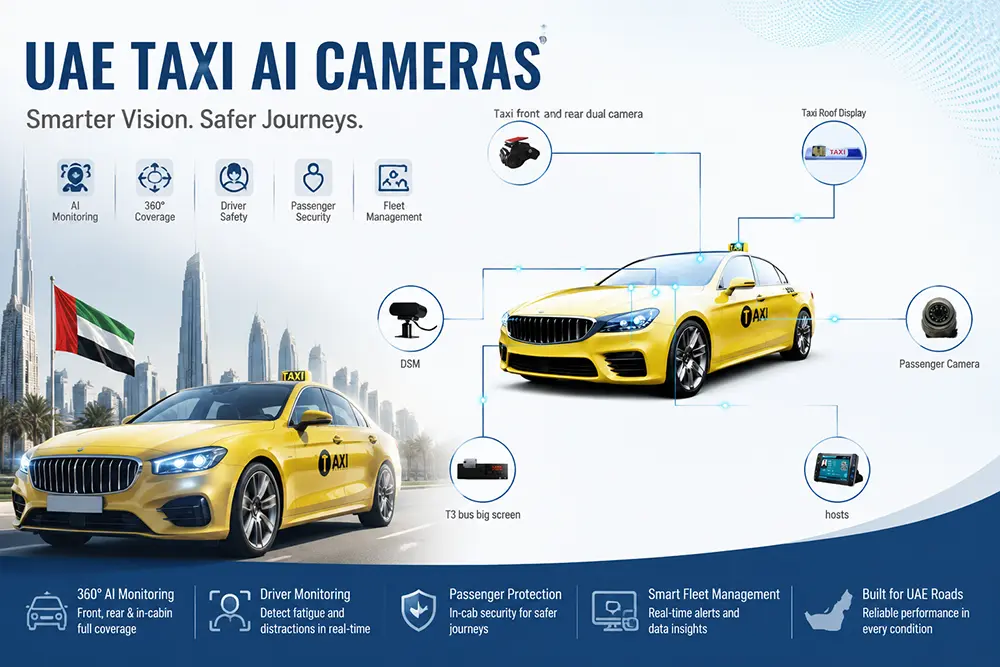
These devices typically include electronic meters, GPS tracking terminals, vehicle identification devices, electronic payment equipment, data upload terminals, and fleet management systems. Depending on operational projects and safety requirements, interior cameras, AI Dash Cams, MDVRs, ADAS, and DSM devices can also be added.
Therefore, it is more accurate to understand AI cameras as an important component of the Saudi taxi digital system, rather than as isolated video recording devices.
1. Monitoring Driver Behavior
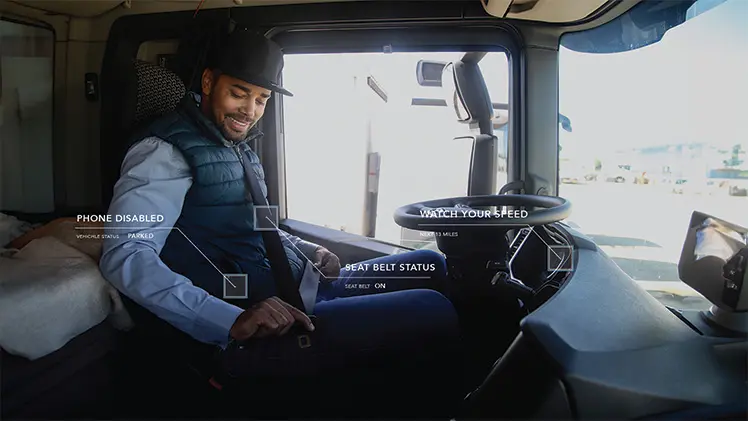
Taxi drivers need to drive for long hours every day. Behaviors such as fatigue, distraction, using a mobile phone, and not wearing a seatbelt can increase the risk of accidents.
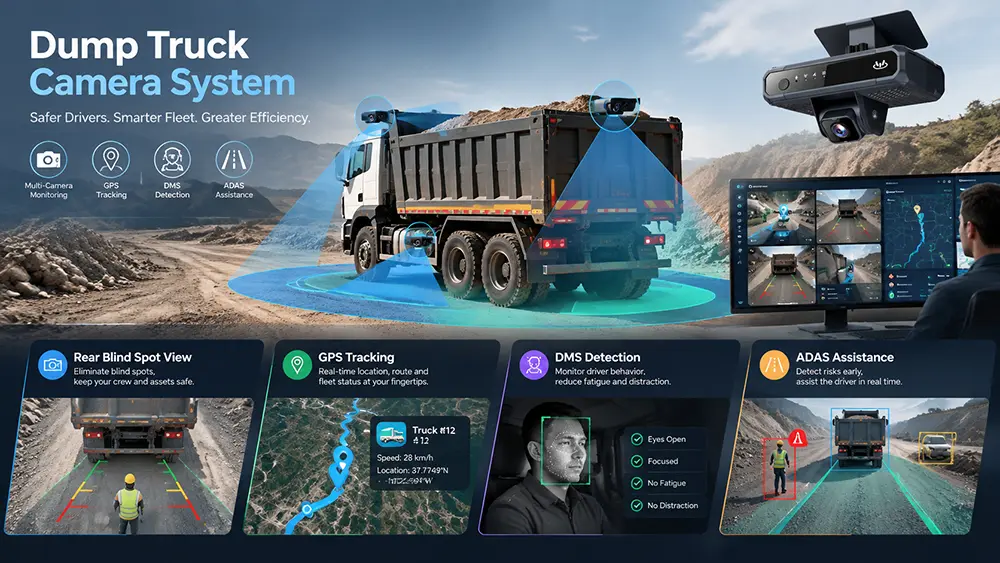
DSM (Driver Status Monitor) cameras can analyze the driver's face and movements to identify behaviors like closing eyes, yawning, looking down, smoking, making phone calls, looking away from the road, and not wearing a seatbelt.
Once the system detects an anomaly, it can immediately issue a voice alert. Meanwhile, the event type, time, vehicle location, and relevant video clips can be uploaded to the backend. Managers do not need to review the entire recording; they only need to process the risk events flagged by the AI.
For large taxi companies, this approach can improve management efficiency and provide a basis for driver training, risk rating, and shift adjustments. The taxi fleet system can integrate DSM, GPS, real-time video, and alarm events into a unified management platform. ([YUWEI][2])
2. ADAS Monitoring Road Risks
While driver monitoring cameras focus on the driver's state, ADAS (Advanced Driver Assistance Systems) front-facing cameras focus on the road ahead of the vehicle.
ADAS can identify risks such as lane departure, forward collisions, following distances that are too close, and pedestrian collisions. When the vehicle gets too close to the car in front or deviates from the lane, the system can immediately warn the driver.
Risk events can also be correlated with vehicle speed, GPS location, and forward-facing video, and uploaded to the fleet backend. Managers can analyze high-accident road sections, the frequency of dangerous driving, and the driving performance of different drivers.
When DSM is combined with ADAS, they can simultaneously answer two questions: whether the driver is maintaining normal driving, and whether there are dangers ahead of the vehicle.
3. Protecting Passenger and Driver Rights
Taxis are relatively enclosed public service spaces. Disputes may arise between passengers and drivers regarding routes, fares, service behavior, property damage, or personal safety.
Interior cameras can record the driving area, rear passenger area, doors, and luggage area. The video recordings can also be correlated with the taximeter, orders, time, and GPS tracks.
If a passenger complains about a driver taking a detour, driving dangerously, or providing improper service, the operator can cross-reference the driving route with the corresponding video. When drivers encounter malicious complaints, robberies, or other emergencies, the recordings can also provide evidence.
Therefore, the taxi camera system does not unilaterally monitor the driver, but rather establishes a relatively objective trip record for passengers, drivers, operators, and regulatory authorities.
4. Helping to Find Passengers' Lost Items
Mobile phones, wallets, passports, luggage, and electronic devices are commonly lost items in taxis.
Saudi taxi regulations require operators to establish a mechanism for handling lost items and provide channels for passenger complaints and lost item reports. Upon finding lost items, drivers are also required to keep them, report them, and hand them over according to regulations.
With interior cameras installed, staff can pinpoint the vehicle based on the order time, pick-up and drop-off locations, and GPS tracks, and then review the footage of the rear seats, floor mats, doors, or luggage areas.
If the vehicle is equipped with a trunk camera, the process of loading and unloading luggage can also be verified. This can narrow down the search scope and improve the efficiency of recovering lost items.
5. Meeting Vehicle Identity and Operational Data Regulatory Requirements
The new Saudi taxi regulations require operators to link the relevant licenses with a unified electronic identification code and place the code in a prominent position. The electronic platform also needs to save driver, vehicle, and trip information, and provide data to the Transport General Authority as required.
The unified electronic identification code is mainly used to confirm the legal identity of the operator and the vehicle, and is not equivalent to automatic camera recognition. However, in a complete Internet of Vehicles (IoV) system, it can be bound with the license plate number, vehicle terminal, driver identity, and order data.
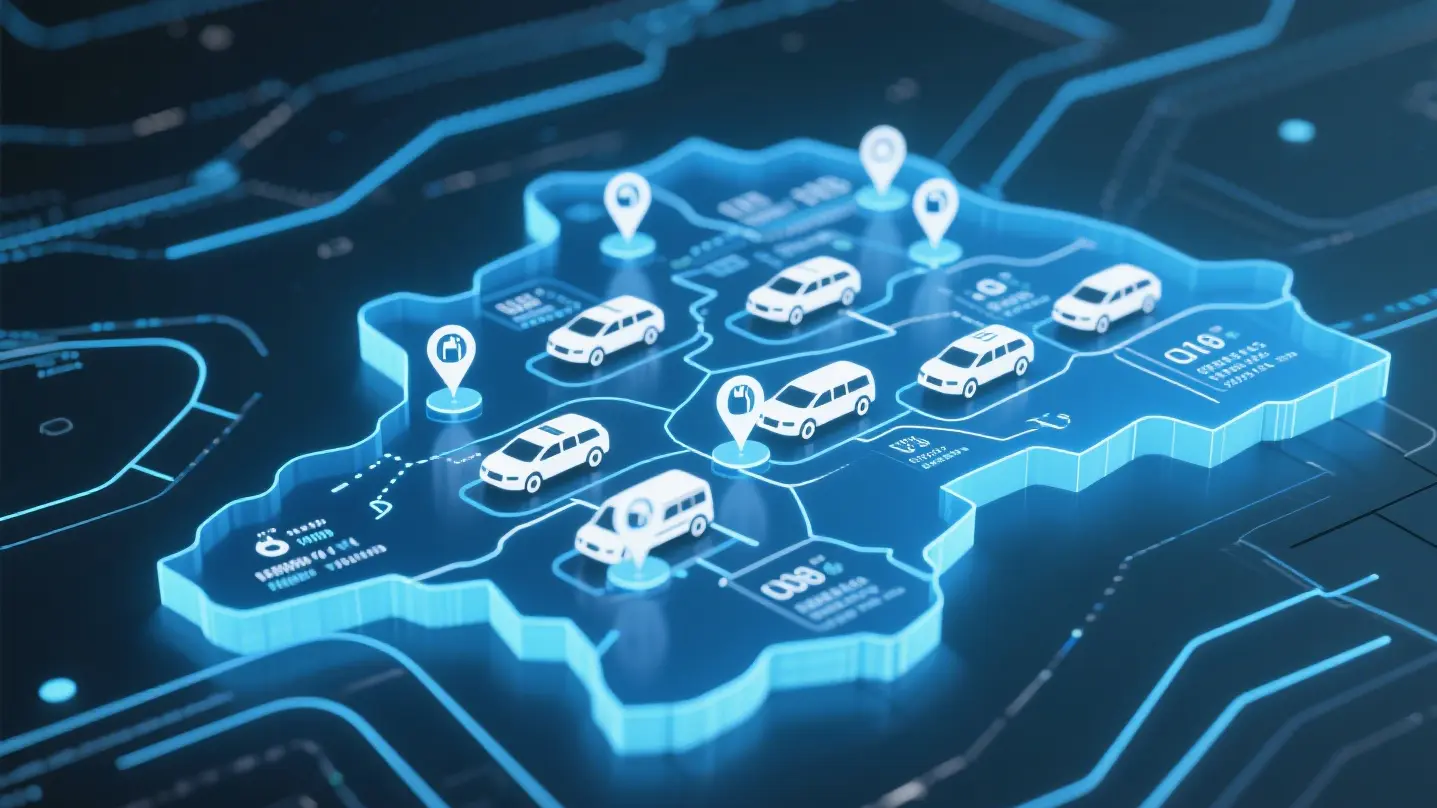
GPS and fleet terminals can continuously record vehicle location, speed, route, stop time, and operational status. The backend can use this to identify situations such as abnormal parking, speeding, deviating from operating areas, or device offline status.
This regulatory approach can reduce unlicensed operations and the fraudulent use of vehicles, and it also makes it easier for regulatory authorities to quickly verify a vehicle's status.
6. Supporting Electronic Metering and Electronic Payment
Saudi taxi drivers are required to turn on the electronic meter at the start of a trip. Vehicles should also prominently display a notice: if the meter is not started, the relevant trip will be considered free of charge.
Electronic meters can calculate the fare based on mileage, time, and billing rules. Payment terminals can support bank cards, QR codes, or other electronic payment methods, and generate electronic orders and payment records.
The in-vehicle display screen can show passengers the driver and vehicle information, current fare, route, payment prompts, safety reminders, and an entry point for service evaluation.
When the meter, payment terminal, GPS, and camera system are connected to the same platform, operators can verify the actual route, metered amount, and payment result, thereby reducing fare disputes.
7. How to Configure the Taxi AI Camera System
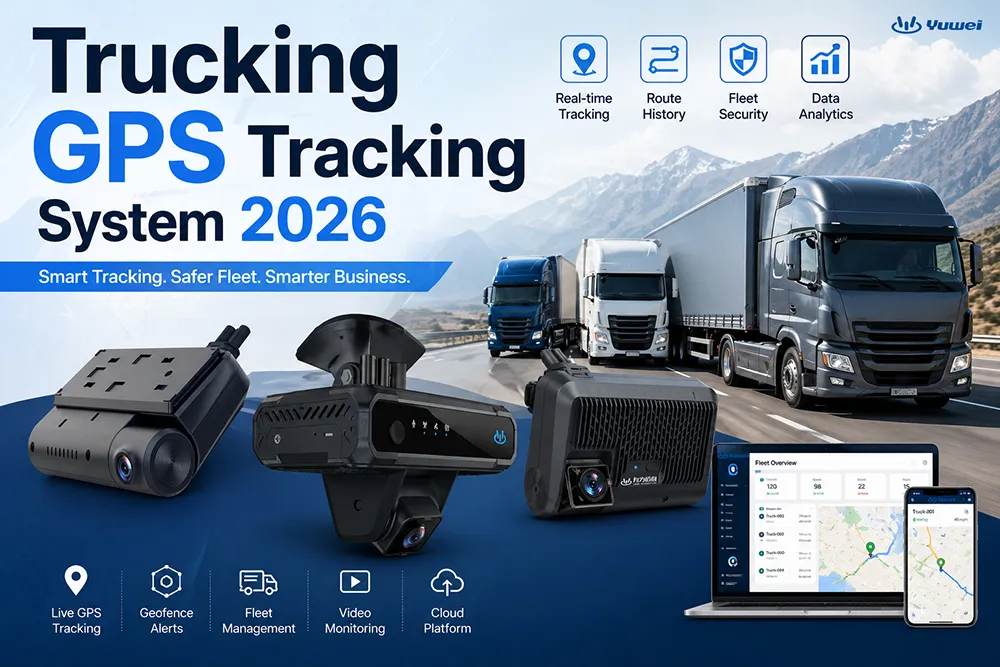
A complete intelligent taxi management system in Saudi Arabia typically includes the following equipment.
AI Dash Cam
Suitable for small vehicles requiring two to four channels of video. The device can integrate GPS, 4G communication, local storage, real-time video, and basic AI analysis.
MDVR (Mobile Digital Video Recorder)
Suitable for taxis that need to connect more cameras. MDVRs can centrally manage front-view, driver, rear seat, door, and vehicle perimeter videos, and provide a larger storage capacity.
DSM (Driver Status Monitor) Camera
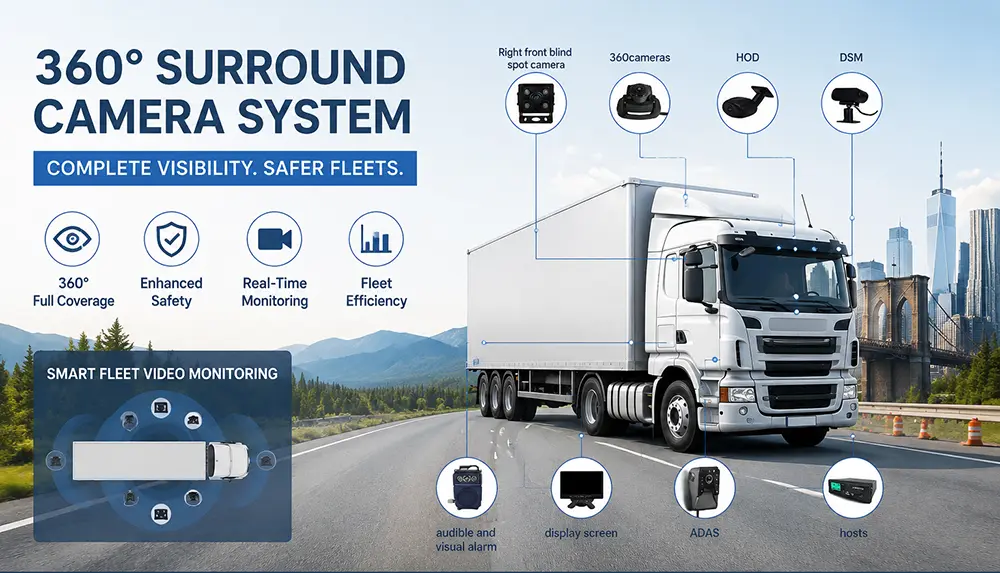
Used to identify behaviors such as fatigue, distraction, making phone calls, smoking, and not wearing a seatbelt.
ADAS (Advanced Driver Assistance Systems) Front Camera
Used to identify risks such as lane departure, forward collisions, pedestrians, and unsafe following distances.
Interior and 360-Degree Cameras
Used to cover the driving area, rear seats, doors, luggage area, and vehicle surroundings, reducing monitoring blind spots.
GPS and 4G/5G Communication Terminals
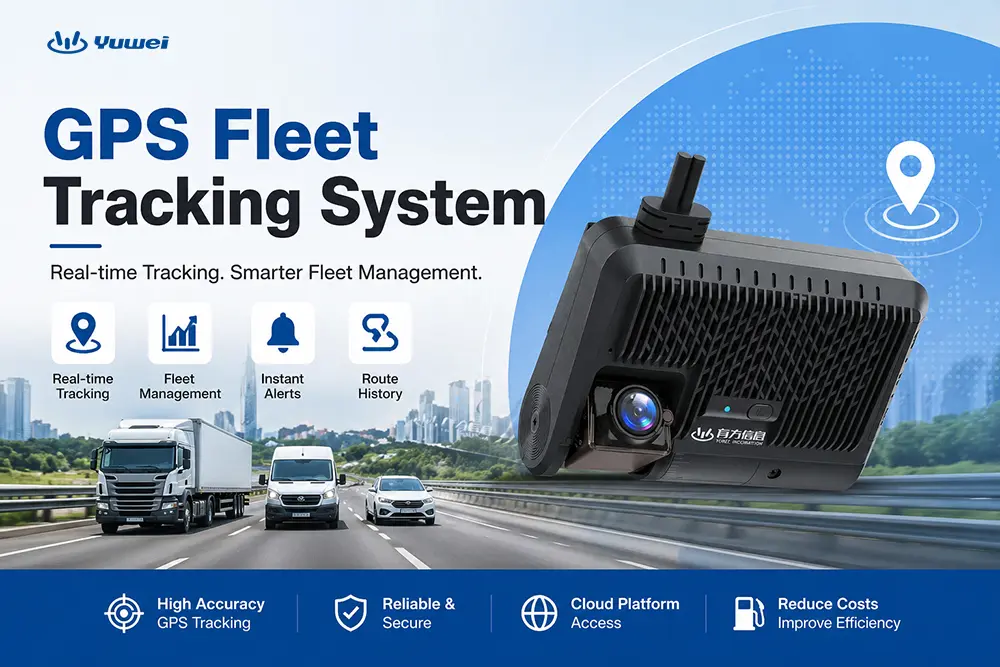
Used to record vehicle location, routes, and speed, and transmit data to the regulatory platform or fleet backend.
In-Vehicle Display Screen
Used to show fares, routes, payment information, vehicle identity, safety tips, and service content.
Fleet Management Platform
Used to view vehicle locations, real-time video, historical recordings, alarm events, operational reports, and driver performance, as well as to execute vehicle dispatching and remote device management. Relevant taxi solutions are already capable of connecting GPS/BDS, 4G/5G, video surveillance, ADAS, DSM, electronic payments, and operational analysis to a unified backend.
The core of Saudi Arabia's new digital taxi regulations is not simply adding a camera, but integrating vehicle identity, electronic metering, electronic payment, GPS tracking, and operational data into a unified regulatory system.
Within this system, AI cameras can take on tasks such as driver status monitoring, road risk warning, passenger rights protection, lost item investigation, and accident evidence collection.
For taxi companies, a more reasonable approach is not to buy ordinary consumer-grade dash cams, but to configure AI Dash Cams, MDVRs, ADAS, DSM, interior cameras, in-vehicle display screens, GPS communication terminals, and fleet management platforms based on the number of vehicles and management goals.
Only by connecting these devices with electronic metering, payment, and regulatory platforms can a smart taxi management system be formed that is capable of real-time perception, proactive reminding, rapid evidence collection, and continuous optimization.
Email:hello@yuweitek.com