







Top Rated AI Dash Cams for Transit
Why Transit Fleets Need AI Dash Cams
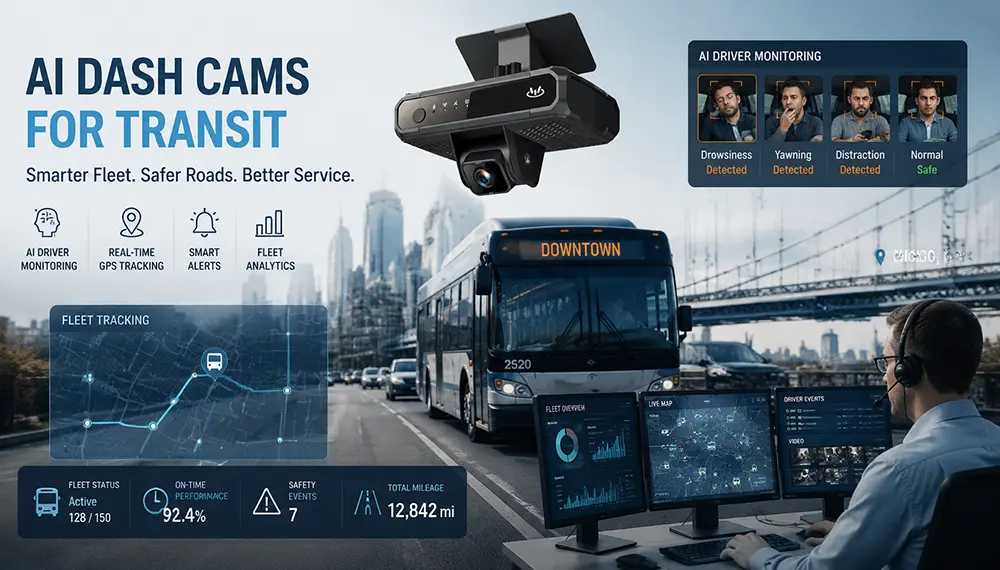
Public transit carries our most valuable asset: human lives. Whether it's a school bus, an intercity coach, or a taxi, every trip involves the safety of dozens of passengers. Consequently, the passenger transport industry has zero tolerance for poor driving behavior. While traditional passive dash cams only offer post-accident video evidence, modern AI dash cams proactively warn of dangers before they occur, fundamentally revolutionizing fleet safety management.
Core Pain Points of the Transit Industry
1.Passenger Safety Pressures: Accidents involving school buses, city buses, or coaches carry high casualty risks and severe social impacts.
2.Driver Fatigue & Distraction: For long-haul transit drivers, fatigue and lack of focus are the leading causes of accidents.
3.Fraudulent Claims: Large vehicles with significant blind spots are prime targets for crash-for-cash scams and false liability claims.
Transit Fleet Requirements
Transit vehicles have vastly different technical requirements compared to standard freight trucks:
1.Multi-Camera Coverage: Simultaneous monitoring of the driver, the road ahead, blind spots, the passenger cabin, and exterior boarding areas.
2.High-Resolution Recording: Must clearly capture license plates, road signs, and pedestrians at high speeds.
3.Real-Time Two-Way Audio: Dispatchers need instant voice communication with drivers during emergencies.
4.Passenger Behavior Monitoring: Crucial for tracking school bus boarding and maintaining public transit security.
5.Panic Button: Allows drivers to trigger an instant alarm and upload video when facing danger.
AI Technology: ADAS & DMS
The intelligence of modern AI dash cams relies on two core systems: ADAS (Advanced Driver Assistance Systems) for monitoring the road, and DMS (Driver Monitoring Systems) for monitoring driver status. Together, they create a comprehensive safety shield.
ADAS (Advanced Driver Assistance Systems)
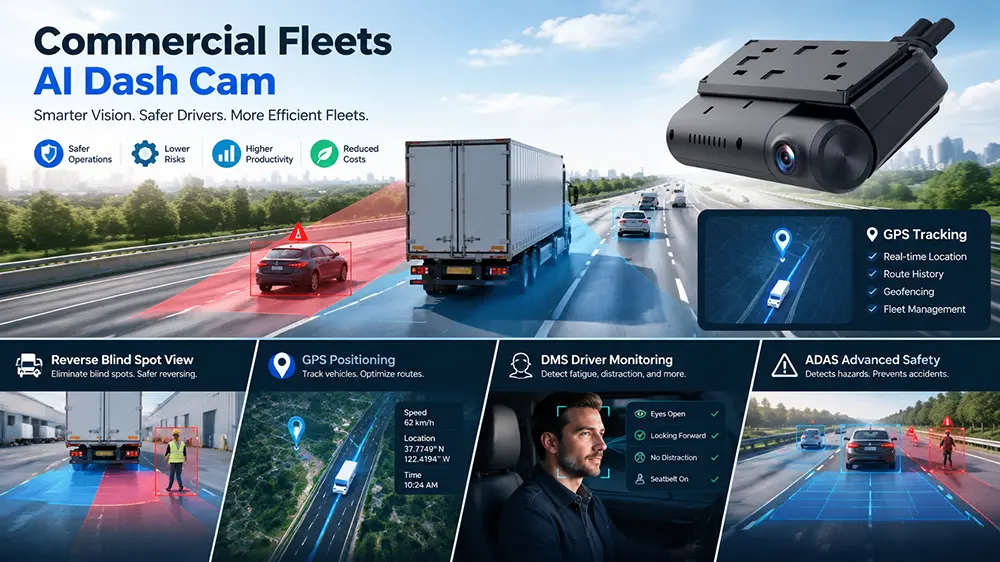
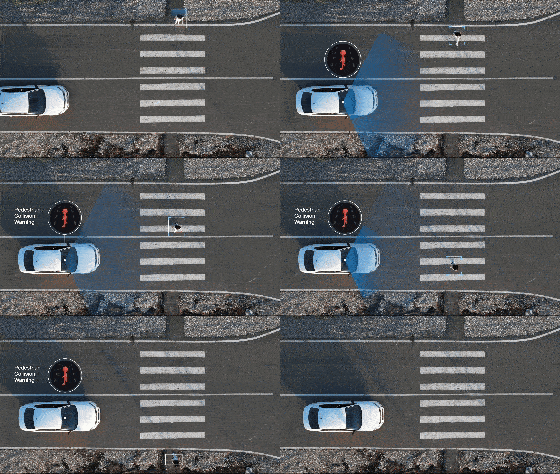
ADAS uses a forward-facing camera and AI algorithms to analyze road conditions in real-time, identifying potential hazards and issuing instant warnings.
DMS: Driver Status Monitoring
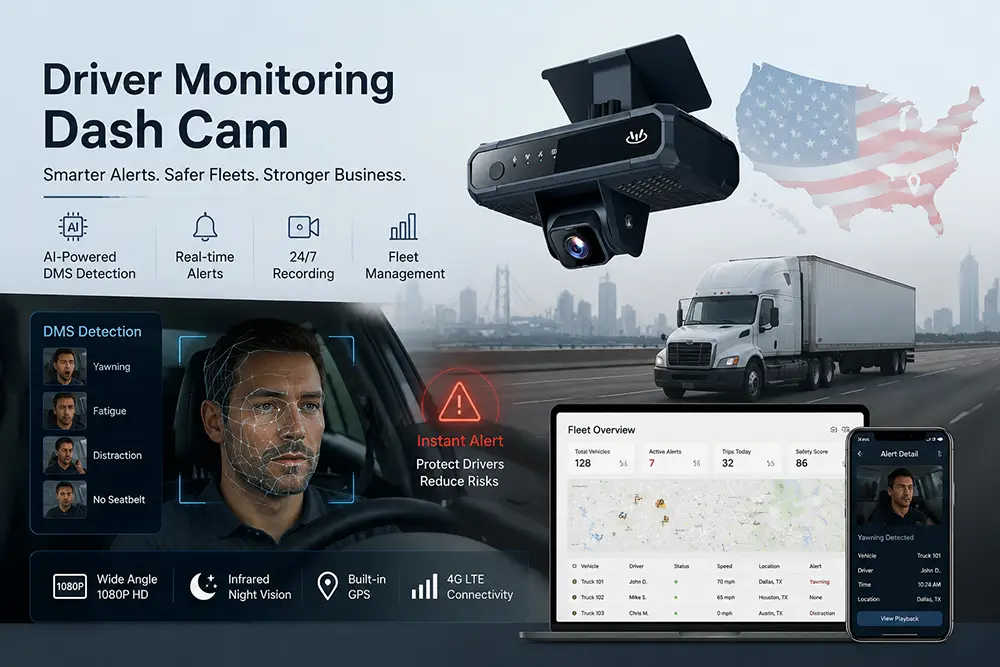
Using an inward-facing infrared camera, DMS applies facial recognition to analyze the driver's eyes, head pose, and facial movements to accurately assess their mental state.
Real-Time Alert Mechanism
1.Detection: On-board AI chips identify risky behaviors in milliseconds.
2.Instant Alert: In-cabin speakers issue immediate voice warnings (e.g., "Watch your following distance", "Lane departure").
3.Behavior Correction: Drivers are given a 10-second grace period to correct their behavior without penalizing their safety score.
4.Event Upload: If uncorrected, the video clip is automatically uploaded to the cloud and fleet managers are notified.
5.Remote Intervention: Managers can communicate directly with the driver via real-time audio.
Featured Product: YUWEI V5 Dash Cam
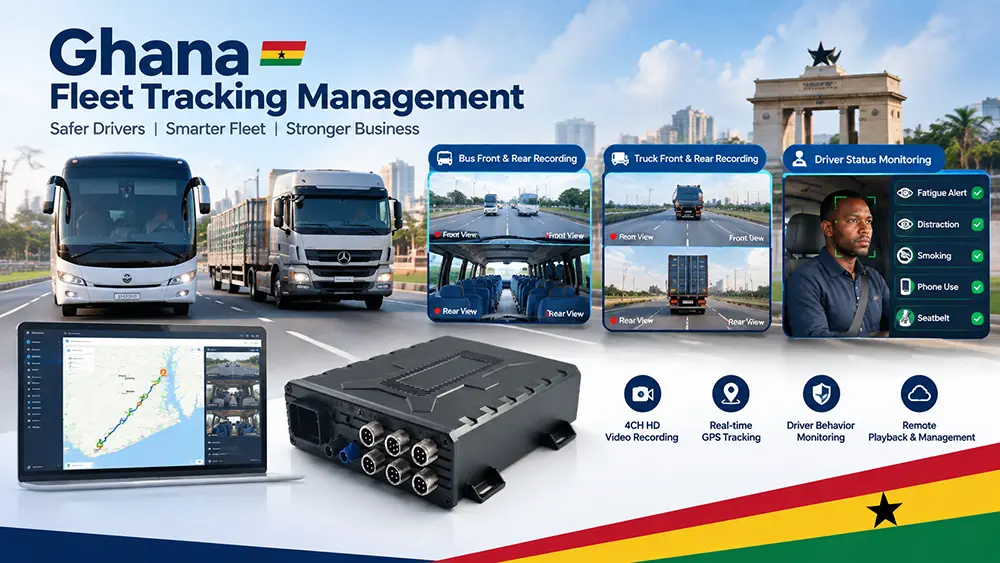
The YUWEI V5 integrates a telematics unit, live video streaming, a forward ADAS camera, and a DMS camera into a single, compact device. This eliminates the need for multiple separate systems, significantly simplifying installation.
1.Forward Camera (ADAS): Detects lane departure, forward collisions, pedestrians, following distance, and speed limits.
2.Driver Camera (DMS): Monitors yawning, eye closure, distraction, smoking, phone usage, seatbelts, and driver ID.
3.Built-in 6-Axis G-Sensor: Accurately records harsh acceleration, hard braking, and sharp cornering.
4.Dual TF Card Storage: Supports highly efficient H.265/H.264 video compression.
5.9V-36V Wide Voltage: Fully compatible with all types of commercial transit vehicles.
Transit Fleet System Selection Guide
Step 1: Identify Core Needs
Step 2: Choose Camera Configurations
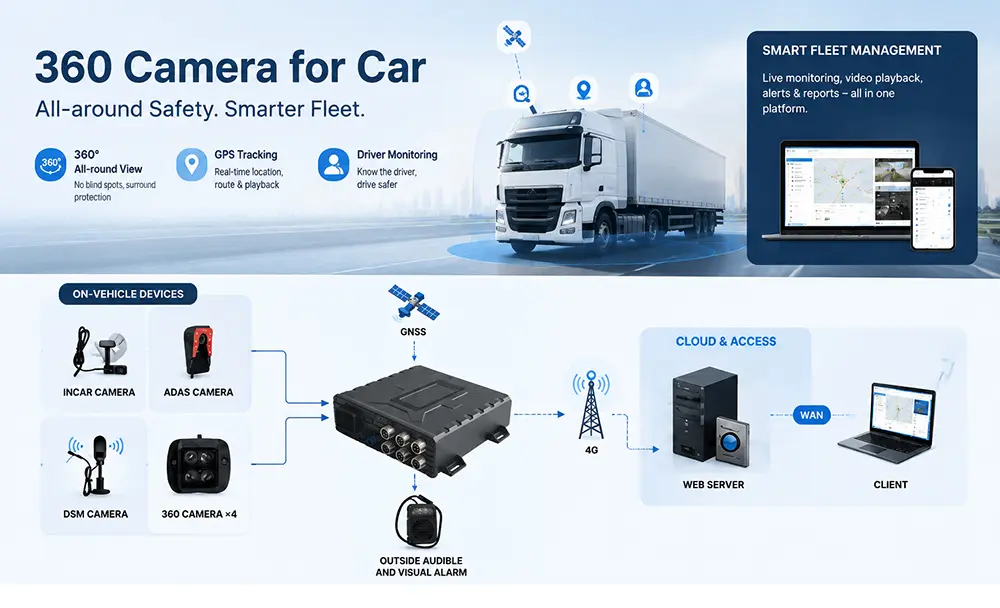
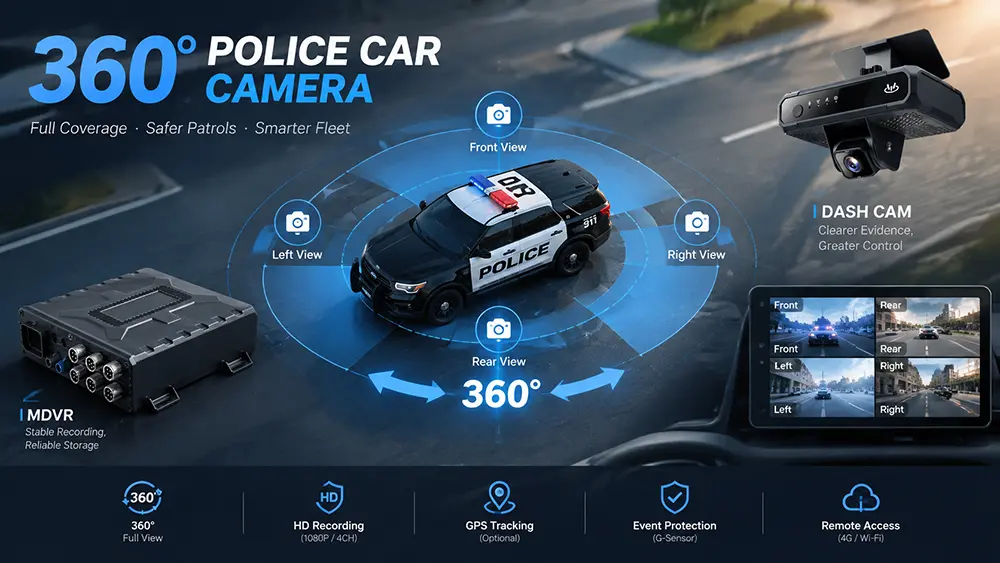
Transit vehicles typically require multiple cameras working in sync. Here is a standard layout:
1.Cabin Camera (DSM): Infrared night vision; monitors the driver's face and upper body.
2.Forward Road Camera (ADAS): Center-mounted on the windshield; 120°+ front visibility.
3.Side Blind Spot Cameras: IP67 waterproof with 50-foot infrared night vision; covers both sides.
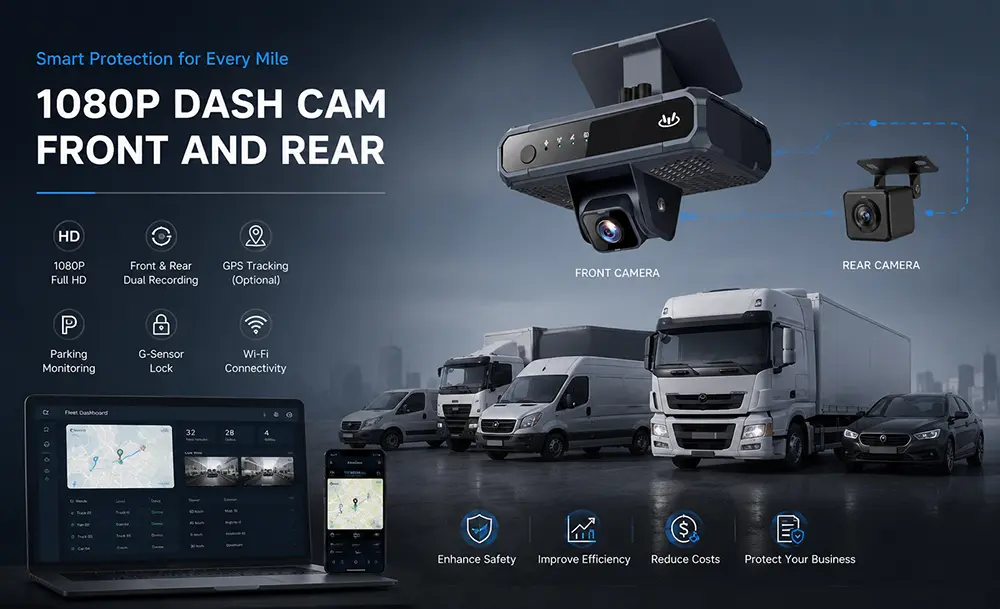
4.Rear Camera: Monitors reversing safety and approaching rear traffic.
5.Passenger Cabin Camera: Essential for school/city buses to record interior activity.
6.Exterior Zone Cameras: Targets boarding doors, luggage compartments, and wheelchair lifts.
In 2026, AI dash cams have evolved from "optional accessories" to the "core infrastructure" of fleet safety management. Whether you are a contractor operating 5 school buses or a municipal agency managing 500 city buses, deploying the right AI dash cam system will deliver measurable safety improvements and substantial cost savings.
Email:hello@yuweitek.com