





UAE Taxis Equipped with AI Vehicle Cameras
UAE Taxis Equipped with AI Vehicle Dash Cameras
The UAE has a massive taxi market. According to the latest verifiable public data, the number of registered taxis in Dubai reached 14,476 in 2025. The official Abu Dhabi page lists 6,390 taxis, while Sharjah has 4,850 taxis equipped with AI cameras. The combined total for these three regions is at least 25,716 vehicles.
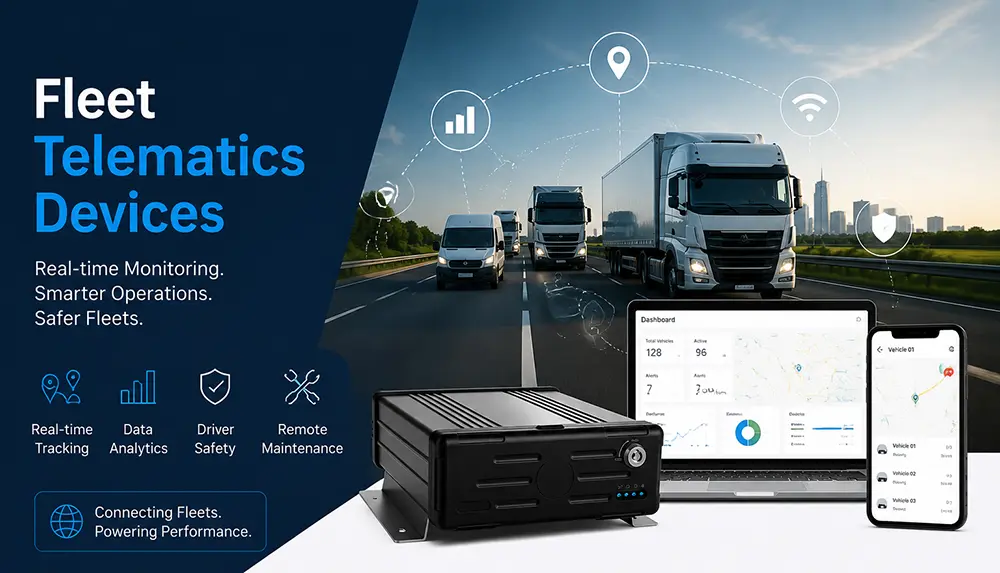
As the number of taxis grows, the UAE is accelerating the application of artificial intelligence technology in the public transportation sector. The new generation of in-vehicle camera systems is no longer solely responsible for recording video; it can also integrate AI analysis, GPS positioning, mobile communication, and fleet management platforms to help operators improve safety, service, and dispatch efficiency.

In February 2025, the Sharjah Roads and Transport Authority announced the installation of AI smart cameras in all 4,850 taxis across the emirate. The system can analyze the behavior of drivers and passengers inside the vehicle and also assist in locating items lost by passengers.
This type of equipment is not an ordinary consumer-grade dash cam, but rather a networked AI video system designed for taxi companies and traffic management departments.
Monitoring Driver Behavior
Taxi drivers spend long hours driving every day. Behaviors such as fatigue, distraction, using a mobile phone, and not wearing a seatbelt can all increase the risk of accidents.
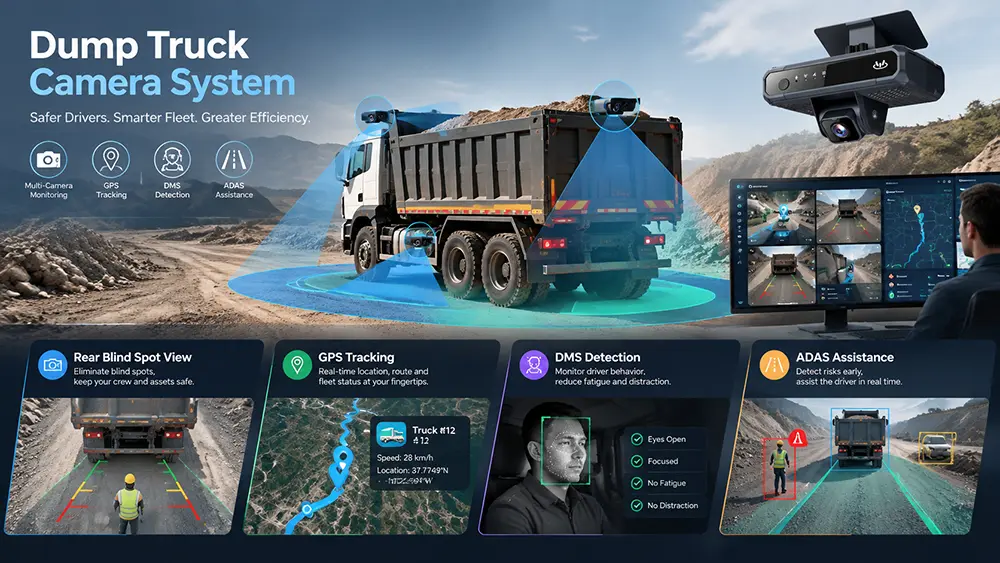
The DSM (Driver Status Monitor) camera can analyze the driver's face and movements to identify behaviors such as closing eyes, yawning, looking down, smoking, making phone calls, deviating sight from the road, and not wearing a seatbelt.
Upon detecting anomalies, the system can issue immediate voice alerts. Simultaneously, the event type, time of occurrence, vehicle location, and relevant video clips can be uploaded to the backend. Managers do not need to watch the entire recording; they only need to review the risk segments marked by the system.
The ADAS (Advanced Driver Assistance Systems) forward-facing camera is responsible for analyzing the road ahead of the vehicle. It can provide warnings for lane departure, forward collision, following distance being too close, and pedestrian collision.
DSM primarily determines "whether the driver is driving normally," while ADAS primarily determines "whether there is a danger ahead of the vehicle." Combining the two creates a more comprehensive active safety system. Taxi management solutions can also integrate ADAS, DSM, GPS positioning, video monitoring, and alarm functions into a single platform.
Protecting Passenger Rights
Taxis are a relatively enclosed public service space. Disputes between passengers and drivers may arise regarding routes, fares, service attitudes, luggage damage, or personal safety.
Traditional handling methods rely primarily on statements from both parties, making it difficult to quickly reconstruct the facts. After installing in-vehicle cameras, operators can correlate the video with the order time, GPS location, driving route, and vehicle speed.
If a passenger complains about a driver taking a detour, driving dangerously, or providing non-standard service, managers can retrieve the video and trajectory of the corresponding trip. When drivers encounter malicious complaints, robberies, or other emergencies, the relevant recordings can also provide evidence.
Therefore, the AI camera is not a one-sided tool for supervising drivers. It can establish a more objective trip record among passengers, drivers, taxi companies, and regulatory authorities.
Locating Lost Items
Mobile phones, wallets, passports, luggage, and electronic devices are commonly lost items in taxis.
Traditional search methods rely on passengers remembering the license plate number, driver information, or accurate pick-up and drop-off locations. If the information is incomplete, it is difficult for the taxi company to pinpoint the vehicle.
A networked camera system can combine order times, GPS trajectories, and in-vehicle recordings. After a passenger submits a lost item report, staff can first locate the vehicle based on the ride time and location, and then check the recordings of the rear seats, floor mats, or luggage area.
If the vehicle is equipped with trunk or door cameras, the process of loading and unloading luggage can also be verified. The Sharjah AI camera project has explicitly listed lost item tracking as one of its primary uses.
What truly improves the retrieval efficiency is not just the camera capturing the item, but the ability to quickly search video, time, order, and GPS data within the same backend system.
Optimizing Vehicle Dispatch
Taxis operate continuously on city roads every day. The GPS trajectories, driving speeds, dwell times, and alarm events generated by a large number of vehicles can reflect the actual usage of the roads.
The backend platform can analyze which roads are frequently congested, which areas have higher ride demand, which time periods have a higher empty-cruising rate, and which road sections frequently experience sudden braking or collision warnings.
When demand increases at airports, commercial centers, hotels, and tourist attractions, the platform can dispatch nearby vehicles to take orders. When a certain road experiences sustained low speeds or an abnormal concentration of vehicles, managers can also determine whether congestion, accidents, or temporary traffic controls have occurred.
The system can also generate reports on mileage, fuel consumption, routes, vehicle status, and driving events, helping fleets transition from experience-based management to data-driven management. Taxi GPS management platforms typically support real-time positioning, route recording, vehicle dispatching, video viewing, and operational analysis.
AI Dash Cam Fleet Management
Ordinary consumer-grade dash cams primarily save recordings on local memory cards. Taxi AI camera systems also need to accomplish video capture, algorithmic analysis, positioning, networking, alarming, storage, and backend management.
A more comprehensive taxi solution typically includes the following equipment.
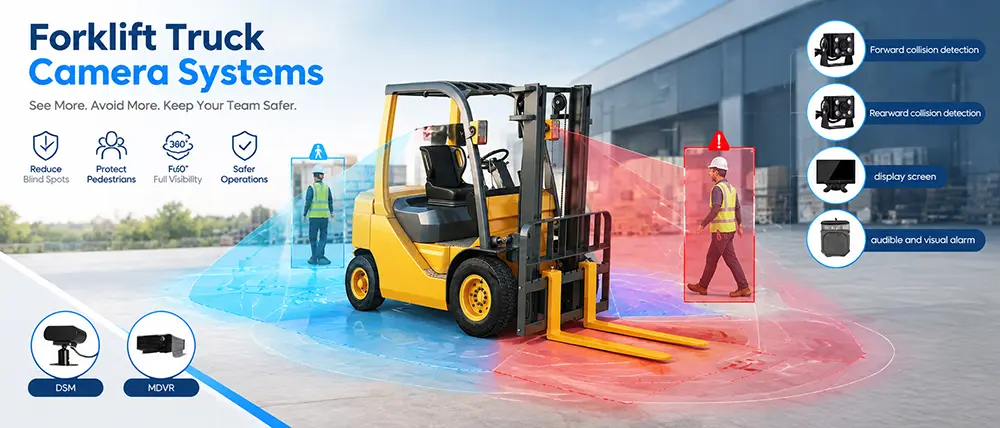
AI Dash Cam or MDVR Host
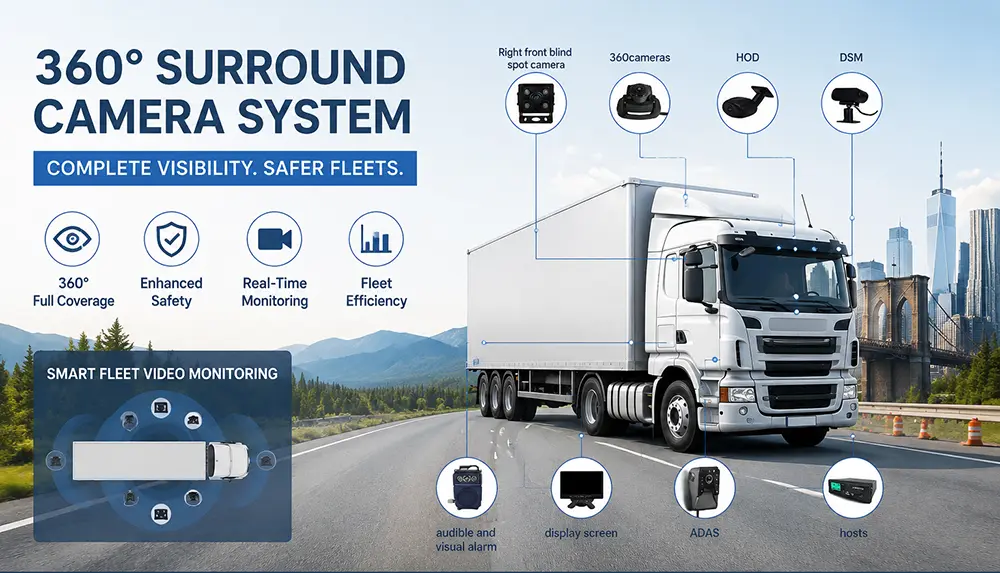
The host is responsible for connecting multiple cameras, completing video recording, local storage, AI event analysis, and data uploading. The device usually supports 4G or 5G communication, GPS or BDS positioning, real-time video, historical video querying, and multi-channel camera access. When there are fewer vehicles and a limited number of cameras, a highly integrated AI Dash Cam can be used. When more in-vehicle, exterior, and luggage area cameras need to be connected, an MDVR is better suited to undertake the centralized recording and storage tasks.
DSM Driver Monitoring Camera
The DSM is installed in front of the driver and is used to identify behaviors such as fatigue, distraction, making phone calls, smoking, not wearing a seatbelt, and looking away from the road.
ADAS Forward-Facing Camera
ADAS is installed near the front windshield to identify lanes, preceding vehicles, pedestrians, and potential collision risks, and issues warnings to the driver.
In-Vehicle and 360-Degree Cameras
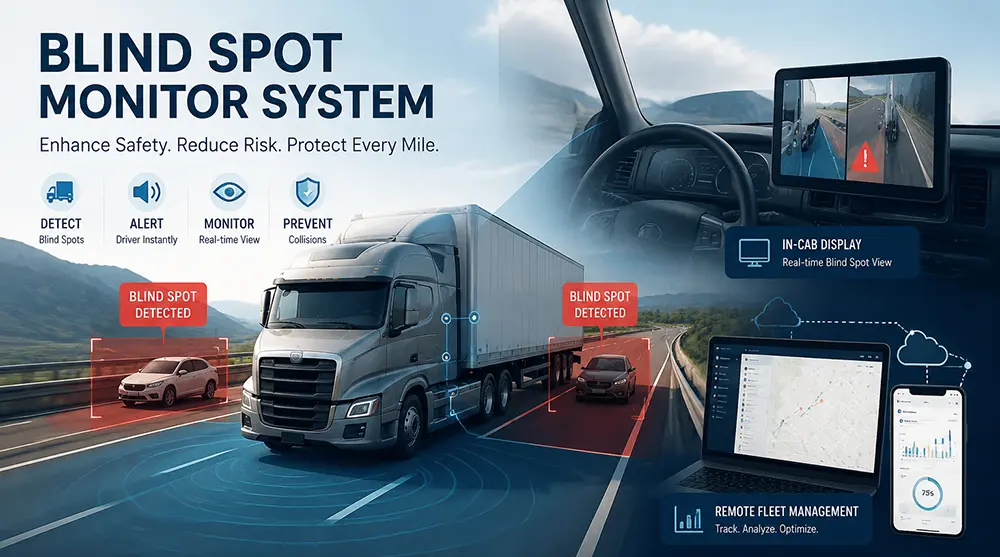
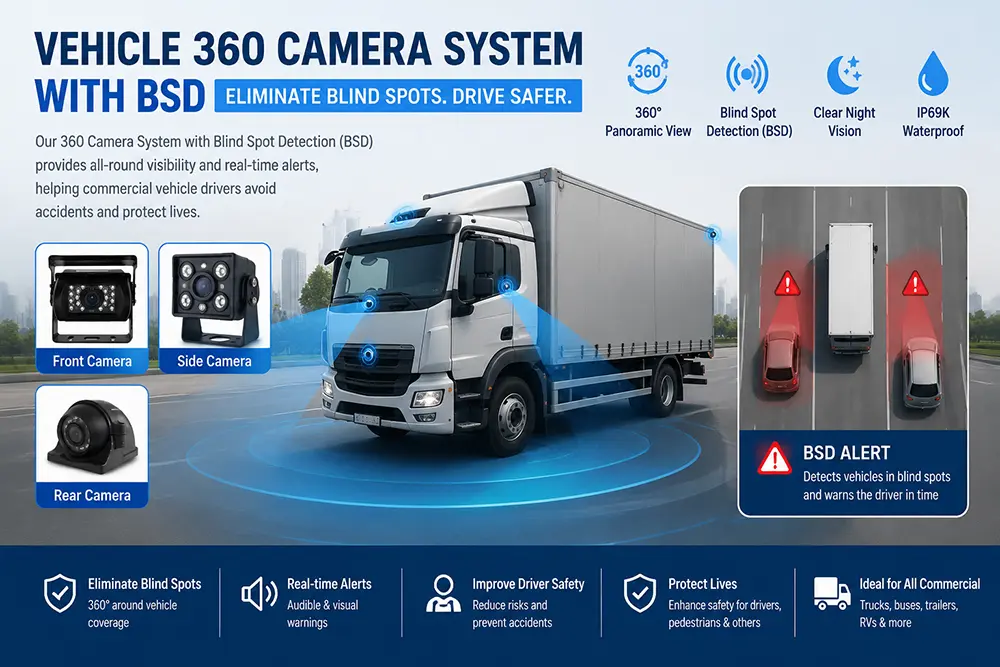
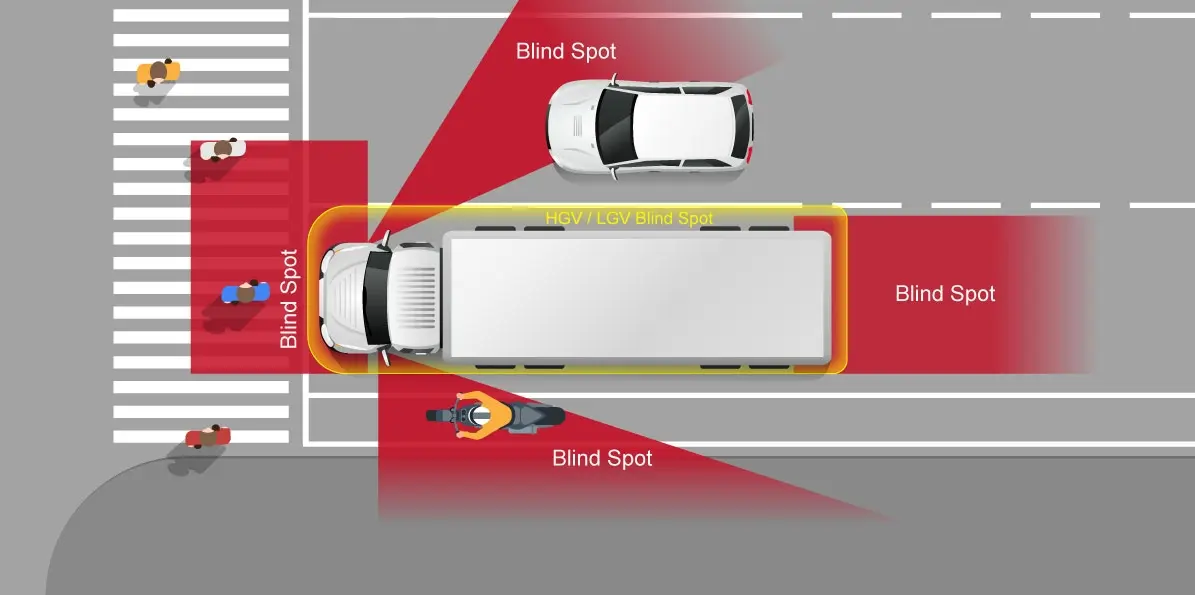
In-vehicle cameras can cover the driving area, rear passenger area, doors, and luggage area. A 360-degree camera system can also observe the vehicle's surroundings, reducing side and rear blind spots.
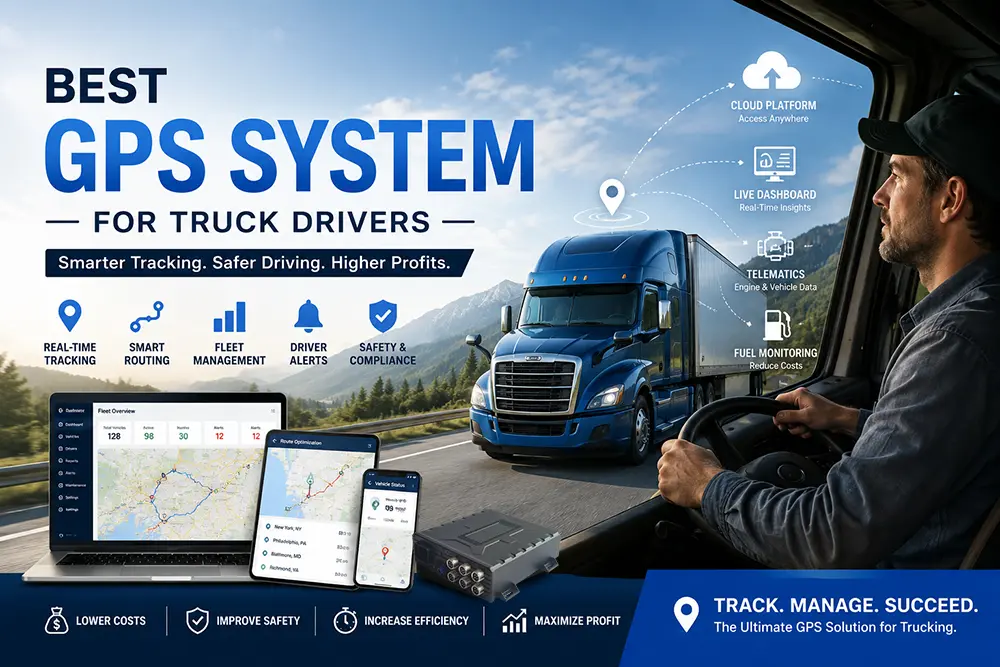
GPS and Mobile Communication Modules
The GPS is responsible for recording the vehicle's location, route, and speed. The 4G or 5G module is responsible for transmitting positioning, alarm, and video data to the fleet backend.
In-Vehicle Display Screen
The display screen can show routes, fares, service information, payment prompts, safety reminders, and advertising content, and can also receive information broadcast from the backend.
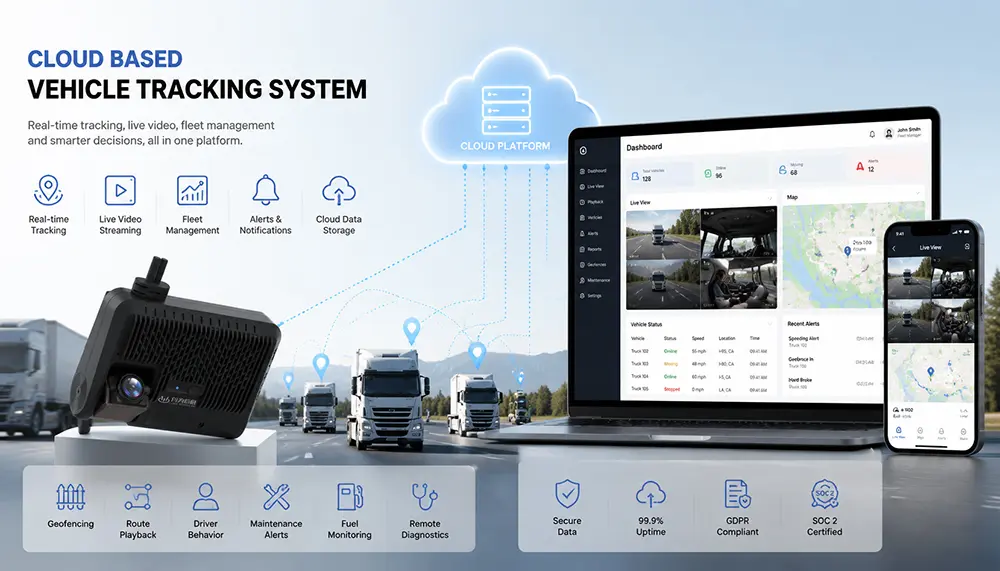
Fleet Management Backend
The backend is used to view vehicle locations, real-time video, historical recordings, driving risks, alarm events, and operational reports; it can also execute vehicle dispatching, information publishing, and remote management. A complete taxi management solution can connect 4G/5G communication, GPS/BDS positioning, AI analysis, video monitoring, ADAS, DSM, in-vehicle display screens, and alarm equipment to a unified platform. ([Yuwei][3])
The Key is Not Installing Cameras, But Forming a Management Loop
Cameras can only capture footage. Whether the system can generate practical value depends on whether recognition, reminding, uploading, processing, and improvement can form a closed loop.
For example, after the DSM detects that a driver's eyes are continuously closed, the device first issues a warning inside the vehicle. Subsequently, the alarm event and a short video are uploaded to the backend. Managers can contact the driver, request them to pull over and rest, or adjust subsequent shifts. Finally, the event is entered into the driving safety report for training and risk assessment purposes.
Throughout this process, the AI camera transforms from a recording device into an active safety tool.
In-vehicle video also involves the privacy of drivers and passengers. Operators need to clarify the camera's purpose, recording retention time, access permissions, data encryption methods, and operation logs, as well as set up clear recording notices inside the vehicle.
Installing AI cameras in UAE taxis is, on the surface, an addition of in-vehicle camera equipment; in essence, it is integrating taxis into an intelligent traffic management platform.
The system can monitor driver status, protect passenger rights, locate lost items, and analyze road and vehicle operational conditions. Its role is shifting from post-accident video evidence collection to pre-accident active warning and data management during the operational process.
For taxi companies and traffic management departments, the focus of the project is not simply selecting a higher-resolution dash cam, but rationally configuring AI Dash Cams, MDVRs, ADAS, DSM, in-vehicle cameras, 360-degree cameras, in-vehicle display screens, alarm equipment, GPS communication modules, and fleet management platforms based on fleet size and management goals.
Email:hello@yuweitek.com