








AI Dash Cam Integration with Vehicle Telematics
What is the Integration of AI Dash Cams and Vehicle Telematics
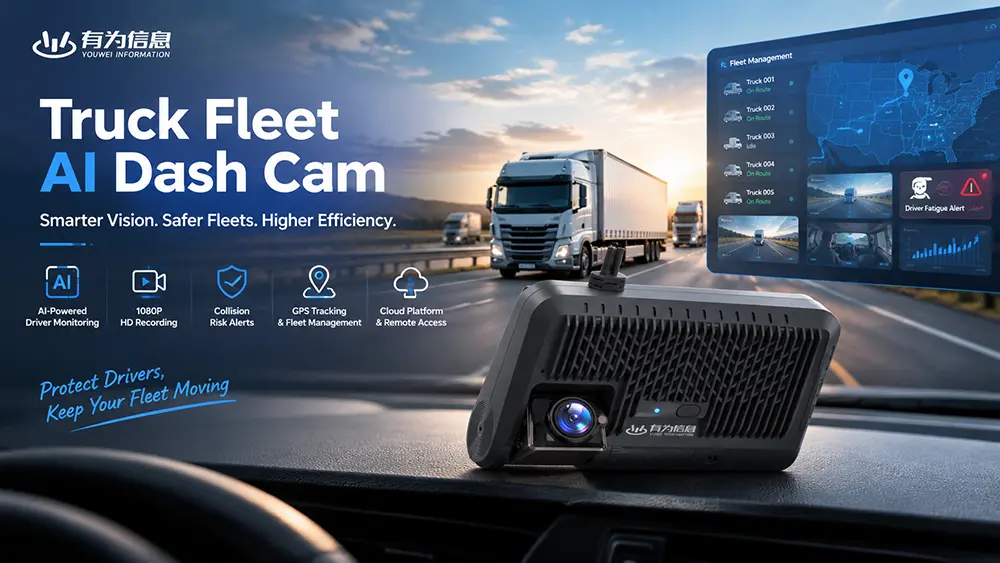
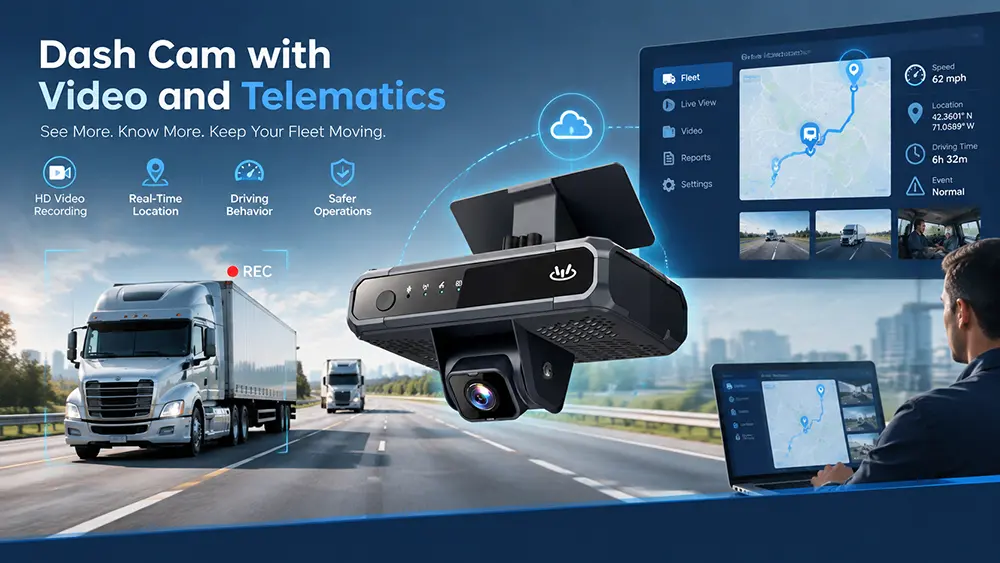
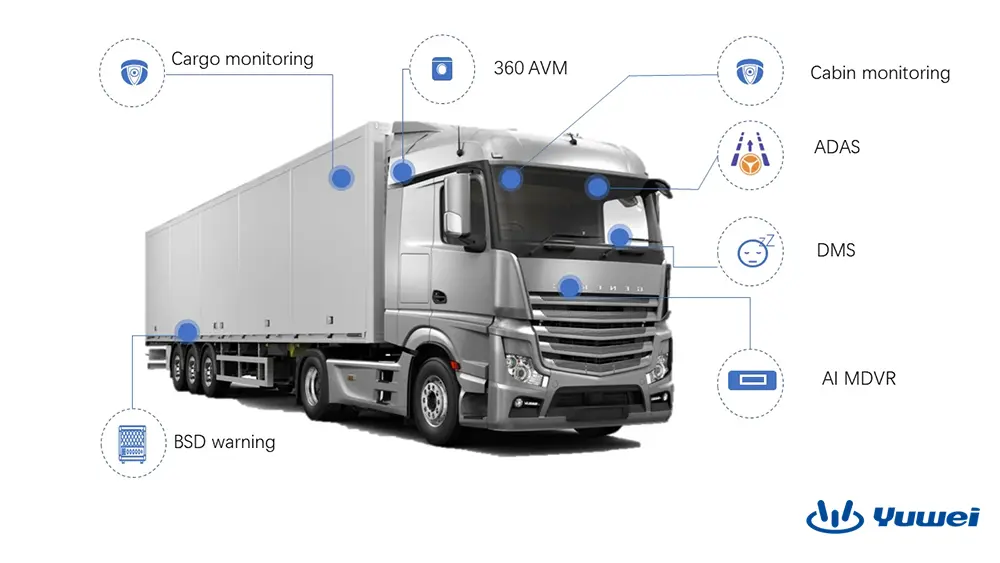
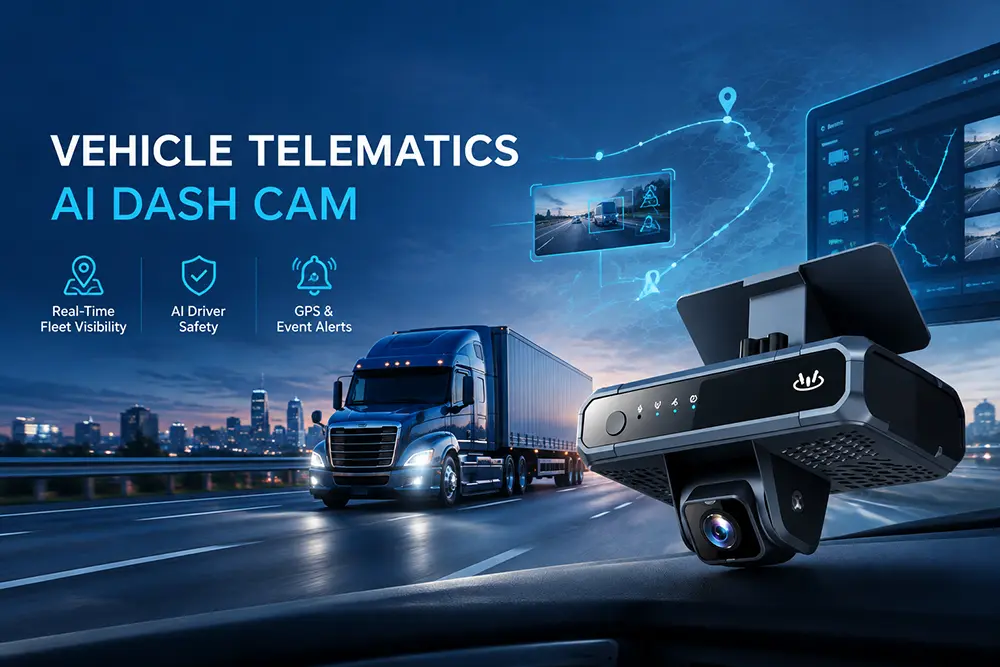
The integration of AI dash cams and vehicle telematics refers to combining the visual AI capabilities of in-vehicle cameras (ADAS forward warning + DSM driver status monitoring) with 4G/GNSS positioning, CAN bus operating conditions, HOS (Hours of Service), and fuel consumption data. Through unified timestamps and standard protocols (such as CMSV6), these data are merged into a fleet management cloud platform to form a complete fleet management system.
The key difference between this and an ordinary dash cam is that the camera is no longer just a video recording device, but an edge AI node within the fleet telematics ecosystem.
Why Fleet Management Must Upgrade to AI Dash Cam and Telematics Integration in 2026
1.According to Spytec's 2026 fleet statistics, fleets deploying AI dual-recording cameras saw a 20%–40% decrease in at-fault claims, and a 5%–15% return on insurance premiums.
2.Both FMCSA HOS compliance in North America and EU GDPR in-cabin video governance require fleets to provide a continuous chain of evidence for driver behavior accompanied by GPS trajectories.
3.Oxmaint data shows that fleets experiencing a 30%–50% drop in accident rates within 12 months almost all rely on a closed-loop system of "AI Recognition — Real-time Intervention — Cloud Coaching."
4.Market Outlook: Research Intelo projects that the commercial vehicle AI video telematics market will grow from $4.8 billion in 2025 to $15.4 billion in 2034, with a CAGR of approximately 14%.
How ADAS and DSM Provide Real-Time Intervention at the Vehicle End
Forward ADAS Warning
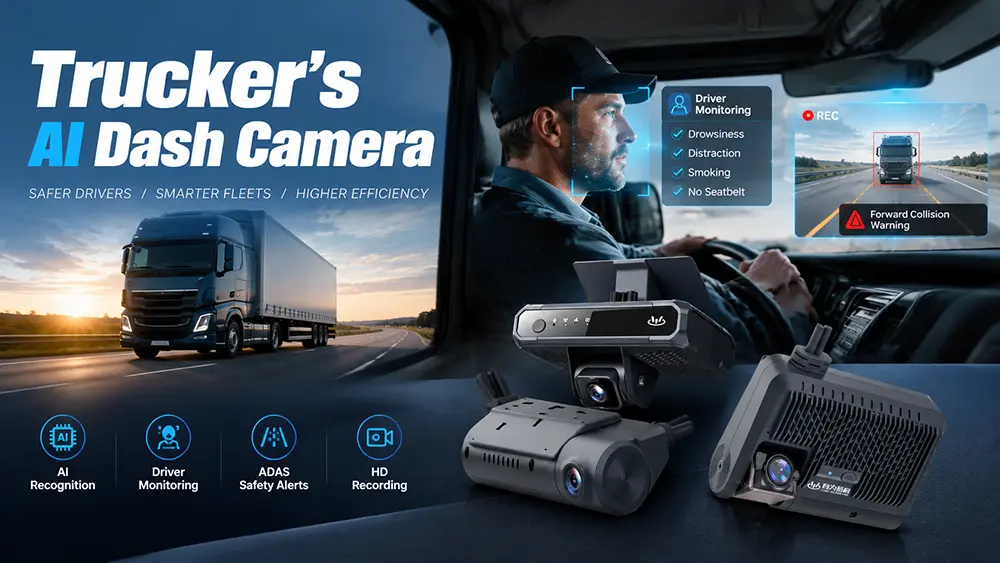
The V8C forward visual algorithm covers six types of high-frequency risks:
1.FCW (Forward Collision Warning): Immediate voice prompt when following too closely;
2.PCW (Pedestrian Collision Warning): For intersections and crosswalk scenarios;
3.LDW (Lane Departure Warning): Identifies unintentional lane crossing;
4.HMW (Headway Monitoring Warning): Real-time headway alerts;
5.UVM (Urban Vision Monitoring): Moving target monitoring in urban scenarios;
6.FOD (Forward Obstacle Detection): Recognition of scattered objects and stationary obstacles ahead.
Every warning is uploaded to the cloud with time, location, and speed tags, becoming coaching material for drivers.
In-Cabin DSM (Driver Status Monitoring)
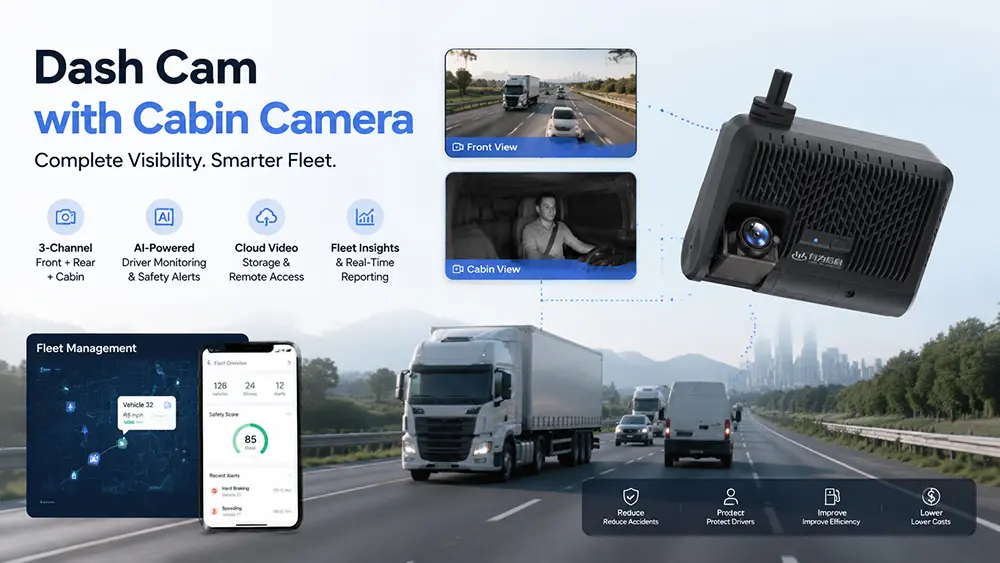
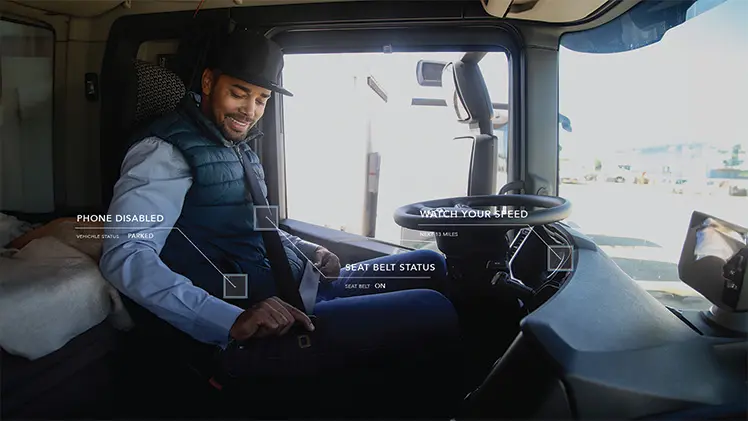
The V8C infrared in-cabin lens stably identifies four types of high-risk behaviors at night and against backlight: fatigue/distraction, smoking, making phone calls, and face absence. Upon detection, it provides an instant local voice alert and synchronizes the event footage to the cloud, allowing the safety team to conduct targeted communication before the driver reaches the next stop.
Industrial-Grade Reliable Hardware
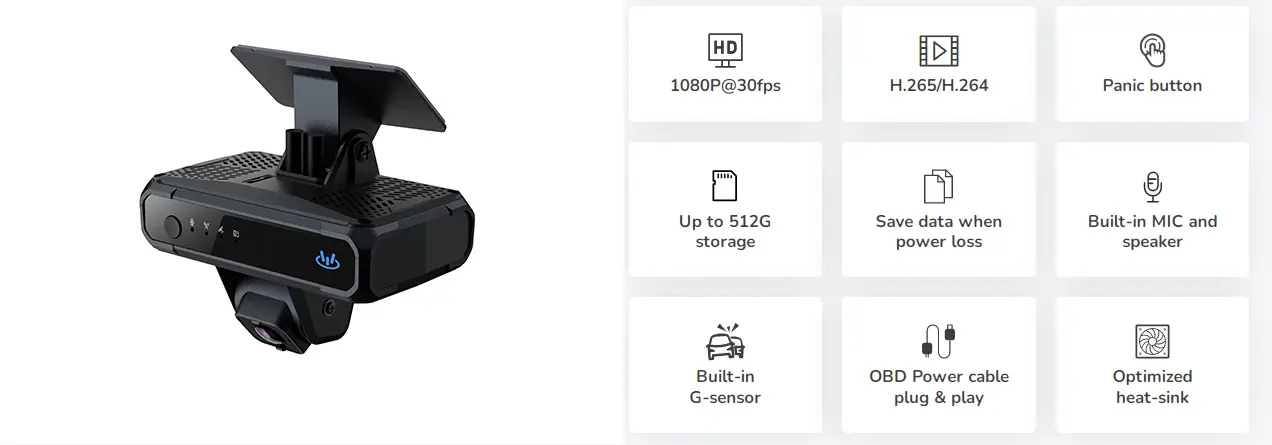
The V8C features an operating voltage of 9V–36V (compatible with 12V/24V) and an operating temperature of -20°C to +70°C. It supports dual TF card expansion (up to 2TB per card) and supercapacitor power-off protection—ensuring stable operation from Nordic winters to Middle Eastern summers.
Integration of V8C with Vehicle Telematics Systems
GNSS + 4G Positioning
The V8C integrates 4G LTE with multi-mode GNSS (GPS/BeiDou/GLONASS). Paired with INS (Inertial Navigation System) backup, it maintains continuous positioning even in weak signal areas. On the platform, every ADAS/DSM event is bound to the trajectory, speed, and route, allowing direct playback of "what kind of warning was triggered by what behavior, at what speed, and at which kilometer mark on a specific highway by a specific driver."
Collision Detection + GPS Trajectory Playback + Geofencing
A three-axis vibration sensor automatically locks and uploads video during sudden braking, sharp turns, and collisions. Combined with GPS trajectory playback and Geofencing, managers can quickly answer three questions: Where did the vehicle go yesterday? Did it leave the authorized area? What was the complete trajectory when the collision occurred? Once aligned with the TMS (Transportation Management System), this data directly translates into the basis for route optimization and abnormal stop investigations.
Remote Real-Time Video and Overspeed Alerts
The V8C supports proactive backend retrieval of any vehicle's real-time footage and remote snapshot capture without waiting for an event trigger. When dealing with customer complaints, abnormal stops, or driver appeals, the scene can be reconstructed in minutes. Overspeed alerts are linked with GNSS speed and can be threshold-configured by road segment, time period, and driver group.
Fuel Consumption Monitoring and HOS Compliance
Via the CAN bus, the V8C connects vehicle operating conditions to the Telematics platform, supporting fuel consumption monitoring, idling analysis, and HOS (Hours of Service) logging. Driver status videos, driving events, and work hours are recorded on the same timeline, eliminating the need to piece together multiple systems for North American/European regulatory audits.
CMSV6 Protocol Integration
The V8C natively supports the CMSV6 industry-standard protocol and provides APIs. It can serve as a front-end perception node to connect to the fleet's existing third-party Telematics platforms, TMS, or in-house dashboards—without the need to replace the entire backend system or retrain dispatch and safety personnel.
What Kind of Fleets Should Evaluate YUWEI V8C
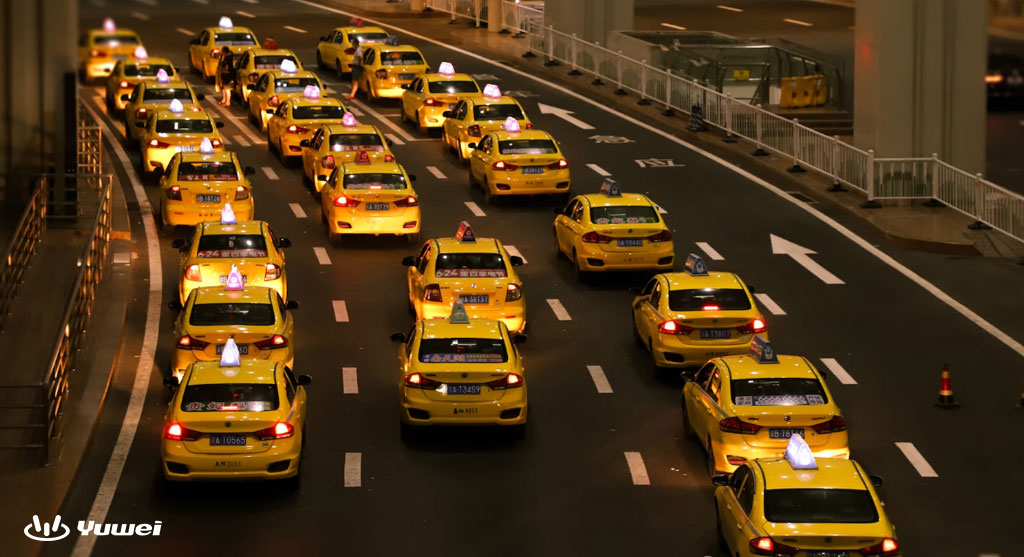
The V8C is designed for operational fleets in fleet management: urban distribution and trunk line logistics, passenger shuttle buses, engineering and special purpose vehicles, and cross-regional transportation enterprises.
The five questions you really should ask suppliers during selection:
1.Is the ADAS and DSM inference processed locally on the vehicle edge, or does it rely on the cloud?
2.Do the event data come with unified timestamps, GNSS trajectories, and vehicle IDs?
3.Does it support CMSV6 or standard APIs, and can it integrate into existing platforms?
4.Are collisions, remote video, geofencing, HOS, and fuel consumption closed-loop within the same backend?
5.In weak signal areas and extreme temperatures, are critical events still reliably recorded and supplementally uploaded?
YUWEI V8C's answer to all five of these questions is a resounding "Yes."
Conclusion: AI Dash Cam + Telematics Integration is the Best Fleet Solution for 2026
The camera is the entry point, edge AI is the brain, and the Telematics platform is the nervous system. Ultimately, what drives profit and safety is whether this closed-loop system can run smoothly in real-world operations. The YUWEI V8C is worth focused evaluation by fleet managers in 2026, not just because of individual specs, but because from its inception, it was designed as an edge AI node that can be embedded into existing telematics architectures—allowing safety events, driving behaviors, vehicle conditions, and location trajectories to be understood, intervened upon, and reviewed within a single data stream.
Email:hello@yuweitek.com