










Backup Camera System for Bus
Backup Camera System for Bus 2026
Buses, as public transportation vehicles carrying a large number of passengers, have always had reversing safety as a top priority in their operation and management. Due to the massive vehicle body and visual blind spots in rearview mirrors, it is difficult for drivers to clearly observe the rear road conditions when reversing, which can easily cause safety accidents such as collisions and scratches. To this end, professional bus backup camera systems have emerged, becoming key equipment to guarantee the safety of drivers, passengers, and pedestrians on the road.
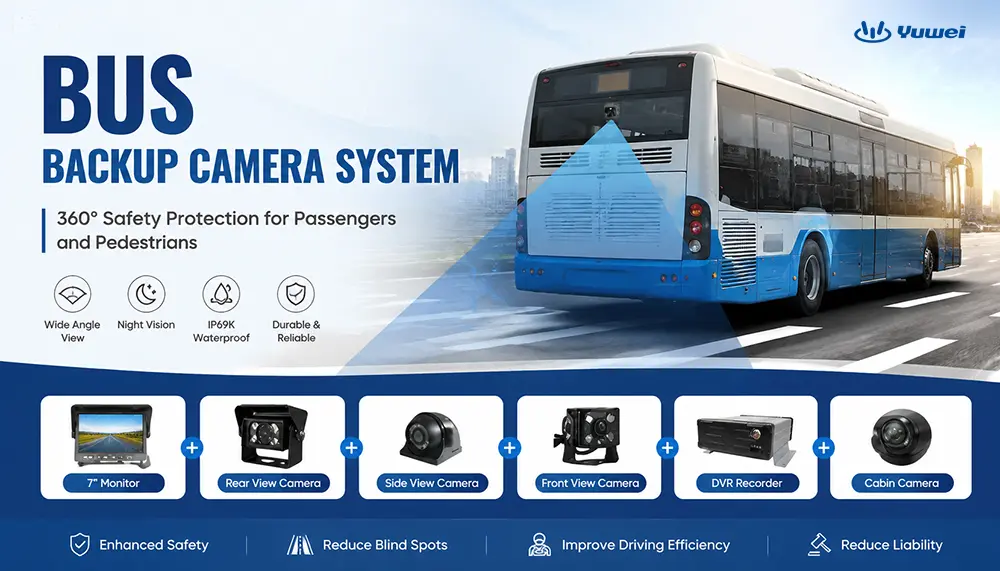
The Value of Bus Backup Camera Systems
Bus backup camera systems are specially designed for large passenger vehicles, effectively solving the problem of reversing blind spots and significantly reducing safety risks. Whether for school buses, long-distance coaches, city buses, or shuttle buses, the system can provide drivers with a clear rear view, making up for the observation shortcomings of traditional rearview mirrors, and reducing hidden collision dangers in scenarios such as roads, parking lots, and operation sites. At the same time, it provides an effective basis for accident responsibility determination and dispute resolution, comprehensively enhancing the safety and standardization of bus operations.
Functions of Bus Backup Camera Systems
(I) High-Definition Vision and Dynamic Assistance
Professional backup camera systems are equipped with high-definition camera equipment, providing 720P and higher resolution images, clearly presenting details such as rear obstacles and pedestrians. Some high-end systems have a dynamic viewing angle function, where the image automatically adjusts according to the vehicle's steering angle and reverse gear, allowing drivers to grasp the vehicle's driving trajectory in real-time, making reversing operations more precise.
(II) All-Weather Clear Observation
The system is equipped with night vision functions, adopting infrared technology or low-illumination sensors to ensure that clear images can still be output in low-light environments such as night, dim tunnels, and rainy weather. This achieves all-weather uninterrupted safety observation, completely solving the problem of poor visibility when reversing at night.
(III) Rugged and Durable Industrial-Grade Design
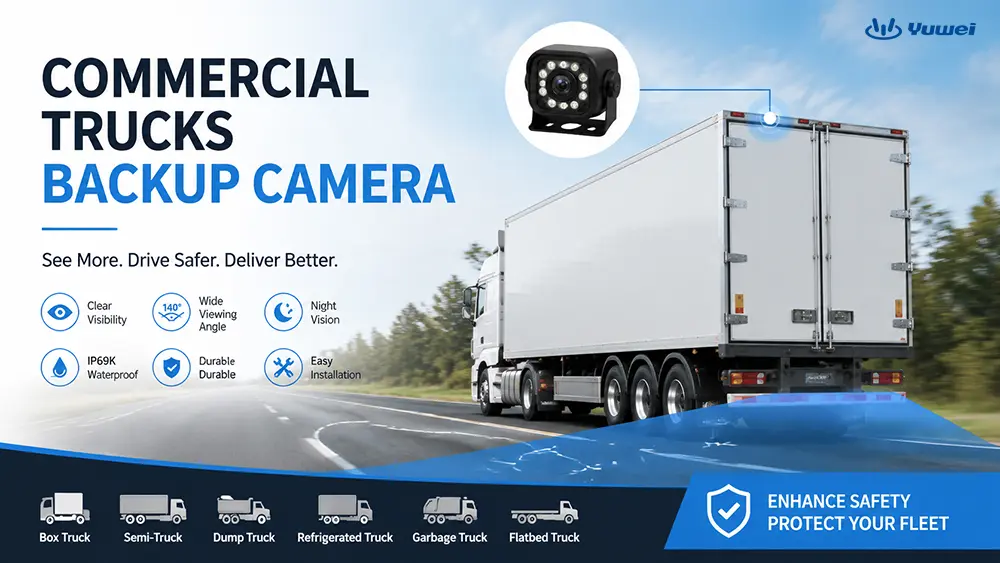
The operating environment for buses is complex, facing long-term vibrations, extreme weather, and the invasion of dust and muddy water. Professional reversing camera equipment adopts a heavy-duty engineering design, featuring anti-vibration, waterproof, dustproof, and high/low-temperature resistance characteristics. Some products reach the IP69K protection level, adapting to various harsh road conditions to guarantee long-term stable use.
(IV) Video Recording and Traceability
Most systems can be paired with an in-vehicle Mobile DVR (Digital Video Recorder) to achieve synchronized audio and video recording, acting as the "black box" of the bus. Recorded content can be fully saved; after an accident occurs, footage can be quickly retrieved to serve as direct evidence for responsibility determination and dispute handling. It also makes it convenient for operators to standardize driver operations and trace vehicle driving trajectories.
(V) 360° Panoramic Surround View Assistance
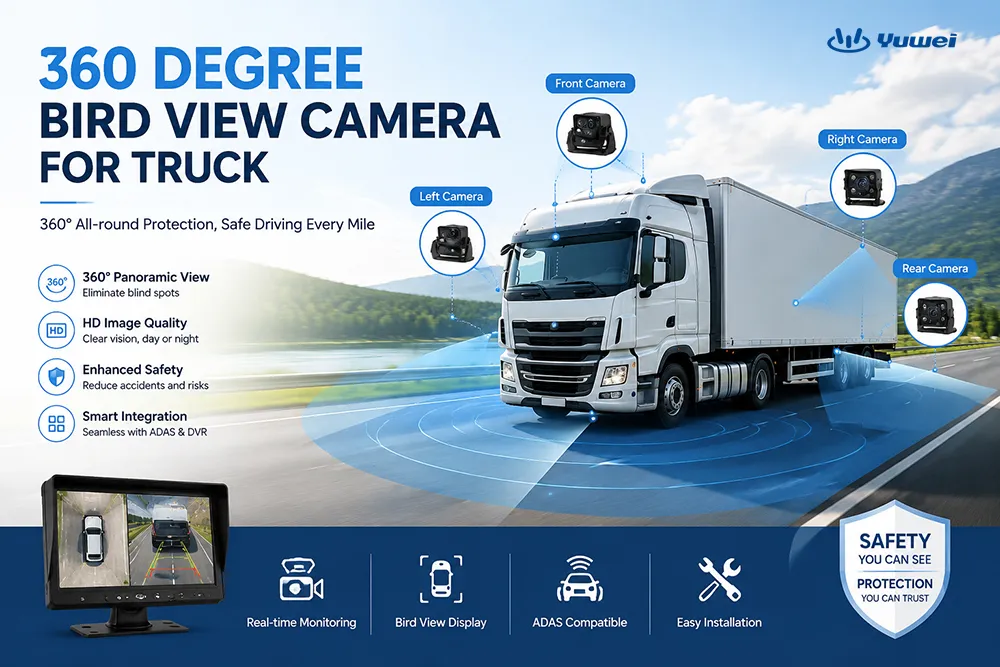
High-end solutions are equipped with a 3D 360° panoramic bird's-eye view system. Through a multi-camera combination, it achieves dead-angle-free coverage around the vehicle body, providing drivers with a panoramic view and completely eliminating blind spots on the sides, rear, and corners. It is especially suitable for the reversing and parking operations of large buses, RVs, and freight vehicles.
(VI) Radar Warning Linkage
Some systems integrate ultrasonic reversing radars that can detect obstacles up to 5 meters away at the rear of the vehicle. Combined with distance display and a buzzer alarm, it provides a dual reminder for drivers to pay attention to safety. When the vehicle is shifted into reverse gear, the screen automatically switches to the reversing image and the radar starts simultaneously, achieving a "visual + auditory" dual warning, further improving reversing safety.
YUWEI Bus Monitoring DVR Solution
YUWEI has created a complete set of in-vehicle video monitoring and backup camera systems for city buses. Through the collaborative work of multiple cameras and industrial-grade storage equipment, it builds a comprehensive safety protection network.
(I) Whole-Vehicle Multi-Point Camera Layout
Reversing Camera: Installed at the rear of the vehicle, it provides a dedicated high-definition view for reversing. It is the core equipment of the backup camera system and works with the DVR to achieve real-time display and recording of the reversing image.
Front Blind Zone Camera: Installed in the front area of the vehicle to eliminate visual blind spots below and to the front sides of the vehicle head, assisting the driver in observing intersections, pedestrians, and low obstacles.
Right Blind Spot Camera: Designed for the "deadly blind spot" on the right side of large vehicles, providing side-view support for changing lanes and pulling over, reducing scraping accidents with non-motorized vehicles and pedestrians.
In-Vehicle Camera: Installed inside the cabin, it can monitor passengers getting on and off the bus and cabin order, while cooperating with passenger flow counting equipment to collect passenger volume data.
Passenger Flow Statistics: Installed in the door area, it automatically counts the number of boarding and alighting passengers, providing data support for operation scheduling.
(II) Intelligent Driving Assistance and Alarm System
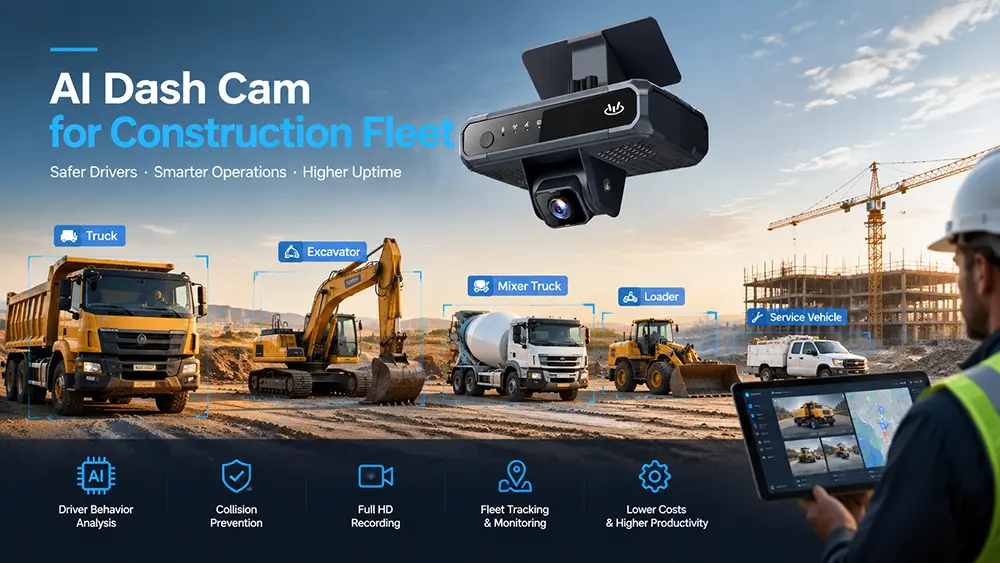
ADAS (Advanced Driver Assistance System): Real-time monitoring of lane departure and forward collision risks via in-vehicle cameras, issuing early warnings to drivers to reduce accidents caused by fatigue driving and distraction.
DSM (Driver Status Monitor): Real-time monitoring of dangerous behaviors such as driver fatigue, yawning, and making phone calls, using voice or sound-and-light reminders to correct poor driving habits.
Audible and Visual Alarm: When the reversing radar, ADAS, or DSM system triggers an early warning, it synchronously emits audible and visual signals to strengthen the reminder effect and ensure timely driver response.
(III) Industrial-Grade Mobile DVR and Storage Configuration
As the core storage and management unit of the entire system, the Mobile DVR undertakes the task of receiving, processing, and recording video signals for the whole vehicle:
Supports simultaneous access of multiple cameras, capable of 24/7 continuous recording of reversing images, blind spot monitoring, and in-vehicle video.
Adopts anti-shock and wide-temperature industrial-grade design, adapting to the bumpy and high-temperature-difference operating environments of buses, ensuring stable data storage.
Can be built with a large-capacity hard drive and supports loop recording to ensure the complete retention of video data during key periods, providing a reliable basis for accident traceability and operation management.
(IV) Cockpit Multimedia Display Terminal
The cockpit is equipped with a Multimedia Display, which can achieve:
Automatically switching to the reversing camera image when reversing, overlaying distance scales to visually display the position of rear obstacles.
Manual switching of the front blind zone, side blind zone, and in-vehicle monitoring images, allowing the driver to view different areas as needed.
Synchronous display of warning information from the ADAS and DSM systems, achieving "multi-display on one screen" and reducing driver distraction.
Bus Backup Camera System Accessories
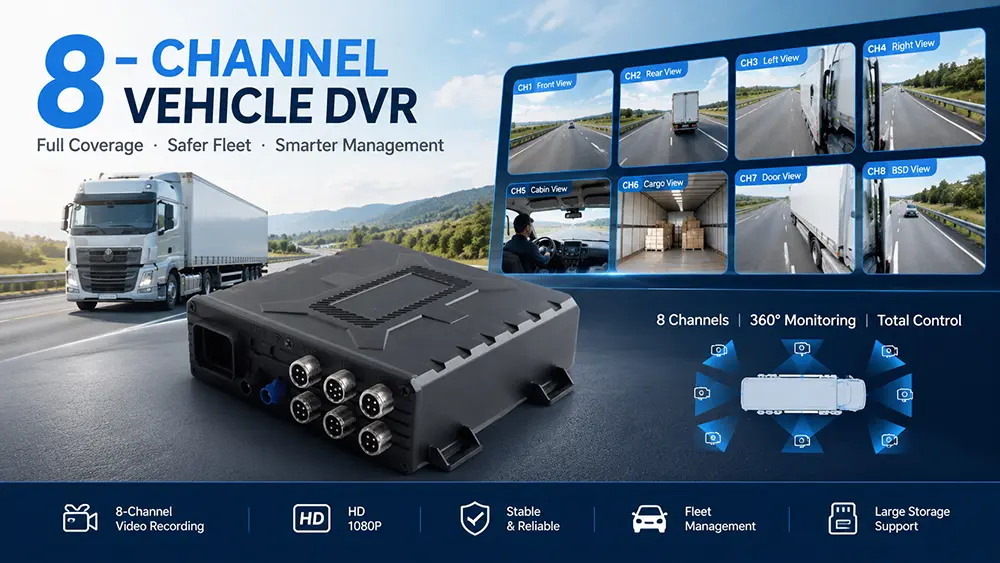
Multi-Channel Monitoring System: Supports 8-channel high-definition camera access, covering the inside, outside, front, rear, and sides of the vehicle to achieve dead-angle-free monitoring of the entire vehicle. Paired with 4G, WIFI, and GPS modules, it can remotely view images and locate vehicles in real-time, adapting to the remote management needs of bus fleets.
Multifunctional In-Vehicle Display Equipment: Equipped with a dedicated display screen, supporting multi-channel video input. It can simultaneously present reversing images, side views, in-vehicle monitoring, etc. The interface is clear and the operation is convenient, adapting to the installation environment of the bus console.
Dedicated Camera Products: Includes rear mini-wedge reversing cameras, side-mounted cameras, in-vehicle dome security cameras, etc. Customized for different installation positions on buses, featuring anti-glare, vandal-proof, and high-definition imaging characteristics to meet diverse observation needs.
Multi-Camera Combination Kits: Some manufacturers provide integrated kits, including monitors, cables, and up to 4 cameras, which can be flexibly paired with various models such as school buses, city buses, ambulances, and fire trucks. They are easy to install and highly cost-effective.
In addition to the core reversing safety functions, the system can also help improve bus operational efficiency. Through features like GPS fleet tracking, wireless video downloading, and device health monitoring, operators can grasp vehicle locations and operating statuses in real-time, standardizing drivers to drive according to routes and stop properly. Combined with technologies like AI passenger flow statistics and automatic lane violation monitoring, it can also optimize operation scheduling, reduce fuel consumption, and improve on-time rates, achieving a dual guarantee of safety and efficiency.