










Best Fleet Cameras and GPS
Why Fleets Need Camera + GPS Systems
If you manage a fleet and haven't invested in dash cams yet, now is the time. Dash cams are effective tools for implementing a robust fleet safety program, capable of driving measurable Return on Investment (ROI).
Statistics show that when dash cams are combined with driver coaching, safety-related incidents can be reduced by 52%. Fleets equipped with cameras and GPS tracking systems see a significant reduction in accident-related costs, and insurance companies will even actively compete for your business due to visible safety improvements.
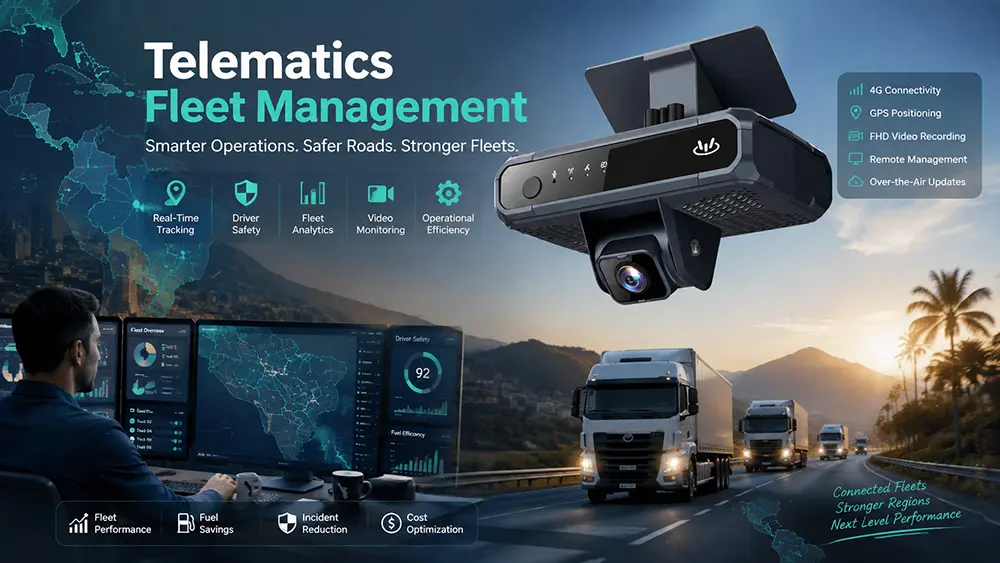
Core Insight: Most fleet cameras do more than just record events; they synchronize video with sub-second GPS positioning, speed, and vehicle behavior data, making every incident searchable, contextualized, and defensible.
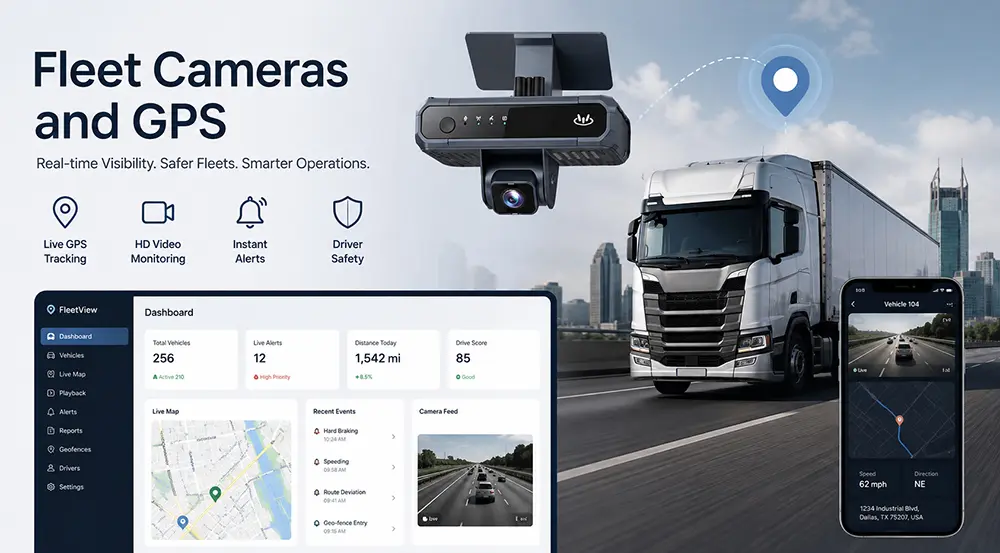
Five Core Values
1.Exoneration Evidence: High-definition video evidence protects innocent drivers from false claims. 90% of YUWEI clients successfully exonerated their drivers in the past year.
2.Driver Behavior Improvement: AI real-time detection of distracted driving, fatigue, and cell phone use, paired with instant in-cab audio alerts, helps drivers correct their behavior before an accident occurs.
3.Operational Efficiency Enhancement: Real-time GPS tracking monitors vehicle locations and dwell times, providing alternative route suggestions to reduce idle time and delays.
4.Insurance Cost Reduction: After deploying AI fleet cameras, an Australian fleet's accident payouts dropped from nearly $9 million annually to under $200,000 in 2024.
5.Theft Prevention & Asset Protection: Magnetic GPS trackers provide instant visibility for trailers and unpowered equipment, and geofence alerts notify you immediately when assets leave a designated area.
Best Fleet Camera and GPS Products of 2026
Below are the mainstream fleet camera and GPS tracking products on the market in 2026, covering brands from China, the US, South Korea, the UK, and other countries. Prices range from $80 to $429, meeting the budget needs of fleets of different sizes.
Brand / Origin | Reference Price | Resolution | Core Features |
YUWEI (China) | From $80 | Dual Cameras | Front/Rear Dual Cameras · GPS/BDS Dual Positioning · 1080P · 3G/4G/WiFi · ADAS · DSM · Night Vision · Live Streaming · Parking Monitor · Cloud Storage · AI Analysis |
Thinkware (South Korea) | From $300 | Dual Cameras | HD 1080P · Front/Rear Dual Cameras · Night Vision · GPS Tracking · Parking Monitor Mode |
BlackVue (South Korea) | From $400 | 4K Front | 4K Front + 1080P Rear · WiFi · GPS · Cloud Storage Support |
Garmin (USA) | From $250 | Wide Angle | Wide Angle Recording · 1440P · GPS Positioning · Voice Control |
Nextbase (UK) | From $250 | 1440P | 1440P · WiFi · GPS · Emergency SOS · Smart Parking Mode |
Aditi (India) | — | HD 720P | HD 720P · Supports 256GB Storage · Live Video · GPS Tracking · Cloud Storage · Remote Monitoring |
Vestige (USA) | — | 360° Multi-Cam | Multi-Camera AI System · 4G LTE · 180-Day Cloud Storage · Live Streaming · Night Vision |
Samsara (USA) | — | AI Dual Cam | AI Dual Cameras · 1080P · In-Vehicle WiFi · Auto Event Upload · Driver Coaching Tools |
Zonar (USA) | — | Dual/Multi-Cam | Dual 1080P · IR Night Vision · 90-Day Cloud Storage · Sub-second GPS · Scalable Multi-Cam |
Fleetly (Global) | — | Full HD | Full HD 1080P/30fps · H.264 Compression · Night Vision · Live Video · Two-Way Communication |
ODT (USA) | Up to $429 | Multi-Type | Magnetic GPS Tracker · Battery Powered · Geofencing · Motion Alerts · Dedicated for Anti-Theft |
Feature Breakdown
A. Number of Cameras and Layout
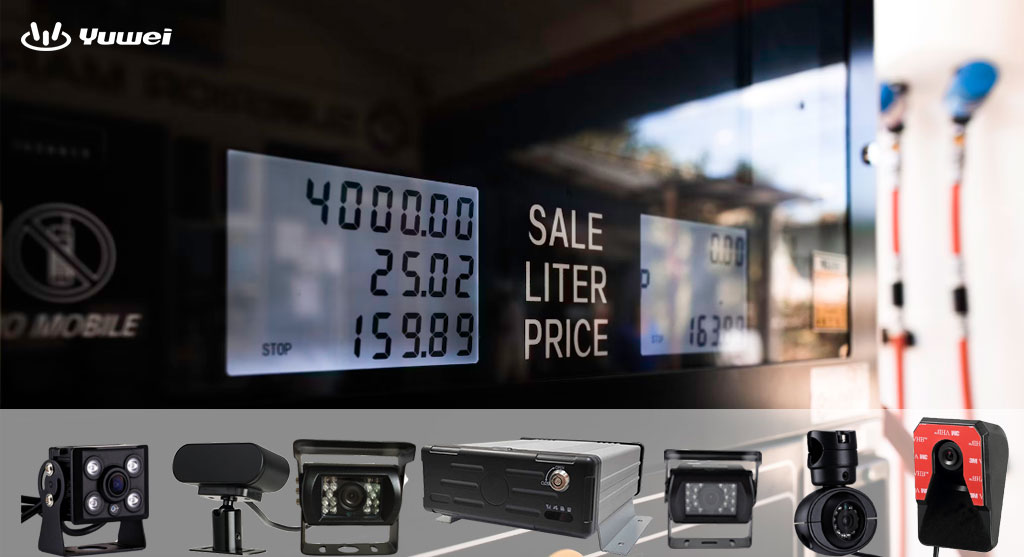
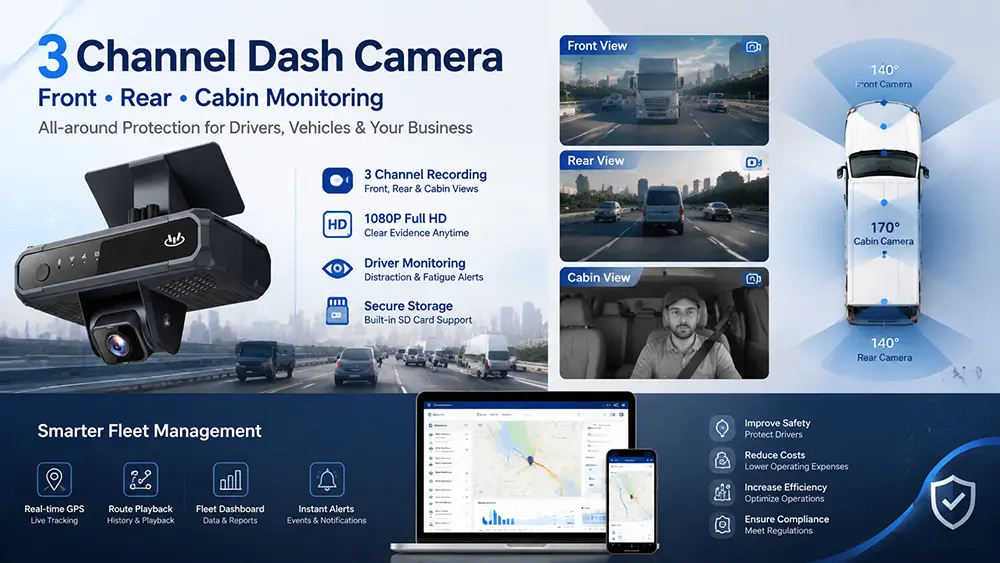
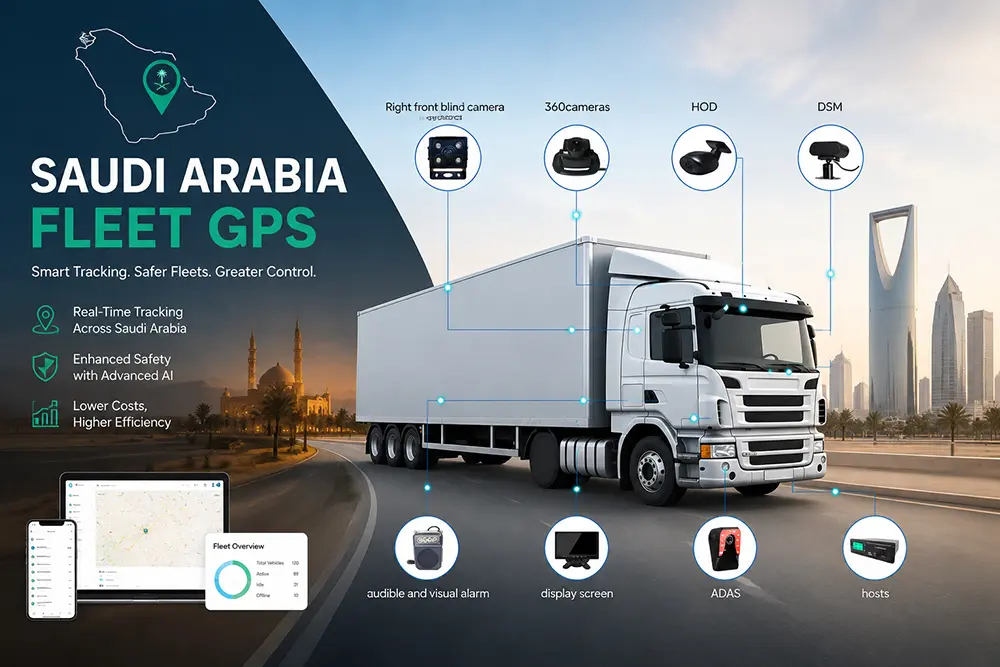
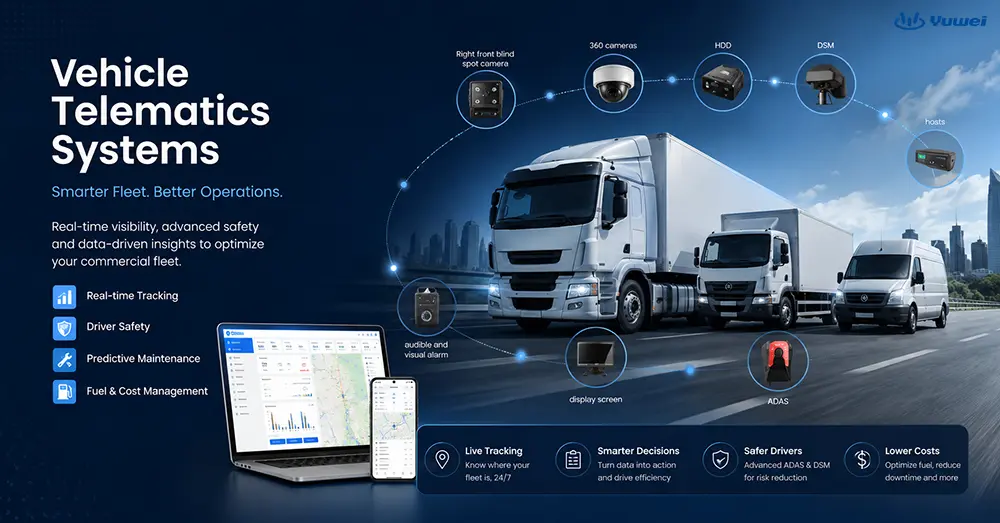
A single camera only records the front windshield perspective; dual cameras add in-cab driver monitoring, suitable for taxis and passenger fleets; three or more cameras are ideal for professional fleets, providing additional exterior views. High-end systems like YUWEI support up to 5 synchronized cameras, achieving 360° panoramic coverage.
B. Video Resolution
1.1080P Full HD: The gold standard for standard fleet use, sufficient for clearly identifying license plates and road conditions.
2.4K Ultra HD: Provides sharper image details but consumes more storage space and bandwidth.
3.720P: Used in some economy solutions, meeting basic recording needs.
Recommendation: 1080P is entirely sufficient for standard fleet operations. Higher resolutions require more memory and bandwidth and should be weighed against actual needs.
C. GPS Tracking and Positioning
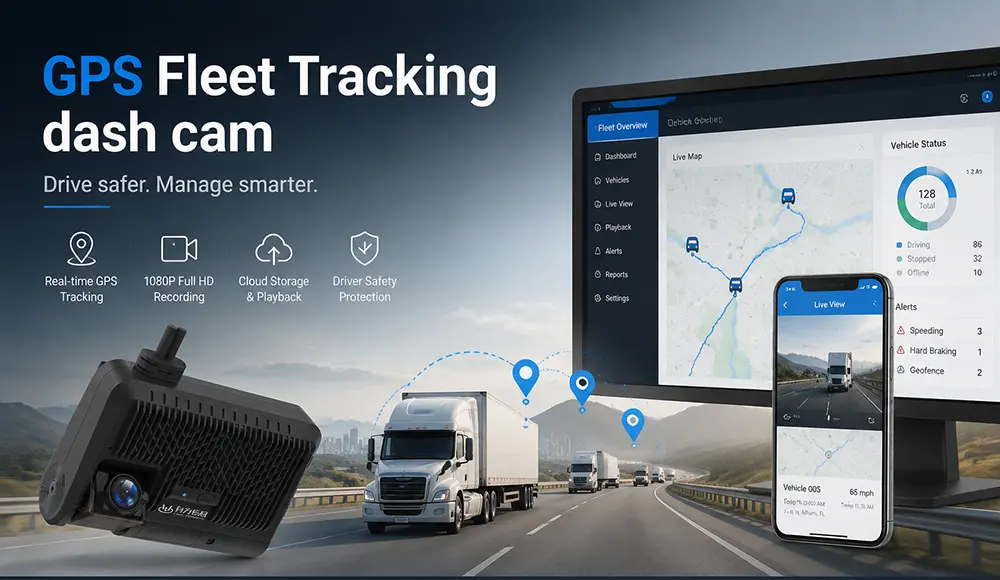
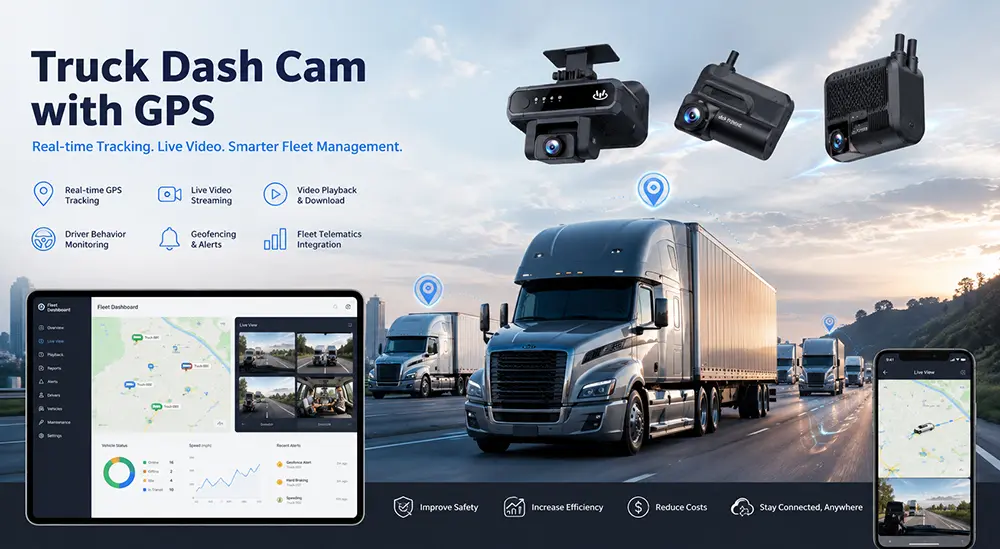
Fleet cameras with built-in GPS/BDS dual-mode positioning can automatically associate every trip and event with precise route history, speed data, and time-stamped coordinates. For vehicles without in-vehicle infotainment systems, dash cams with satellite navigation are particularly worth considering.
1.Real-Time Location Tracking: View current vehicle locations and dwell times at any time.
2.Route Playback: Synchronize route playback with video footage to verify stops.
3.Geofencing: Trigger immediate alerts when assets leave designated areas.
4.Sub-Second Synchronization: High-end solutions like YUWEI offer sub-second synchronization of GPS and vehicle data for precise event reconstruction.
D. Network Connectivity (4G LTE / WiFi)
Internet connectivity is crucial for fleet cameras to function as active safety tools. Networked cameras can automatically upload safety incident footage to the cloud, enabling fleet managers to coach drivers in real-time and exonerate innocent drivers. In contrast, consumer-grade products with only local storage require manual SD card retrieval, which poses security risks and is highly inefficient.
E. Storage Solutions
1.Local Storage: microSD cards, requiring regular manual management.
2.Cloud Storage: Automatic event uploads. Vestige offers 180-day storage, while YUWEI provides 90 days + unlimited archiving for flagged events.
3.Hybrid Mode: Local loop recording + cloud backup for critical events.
F. Night Vision and Low-Light Performance
Infrared (IR) LEDs and HDR (High Dynamic Range) technology ensure clear footage capture even at night or in low-light conditions. YUWEI's dual 1080P setup is equipped with IR night vision, and Samsara also supports a night vision mode. This is a must-have feature for fleets with frequent night operations.
AI Safety Monitoring
The most advanced fleet camera systems in 2026 feature built-in Artificial Intelligence (AI), capable of proactively detecting safety issues without relying on G-force triggers, marking a leap from "passive recording" to "proactive prevention."
ADAS (Advanced Driver Assistance Systems)
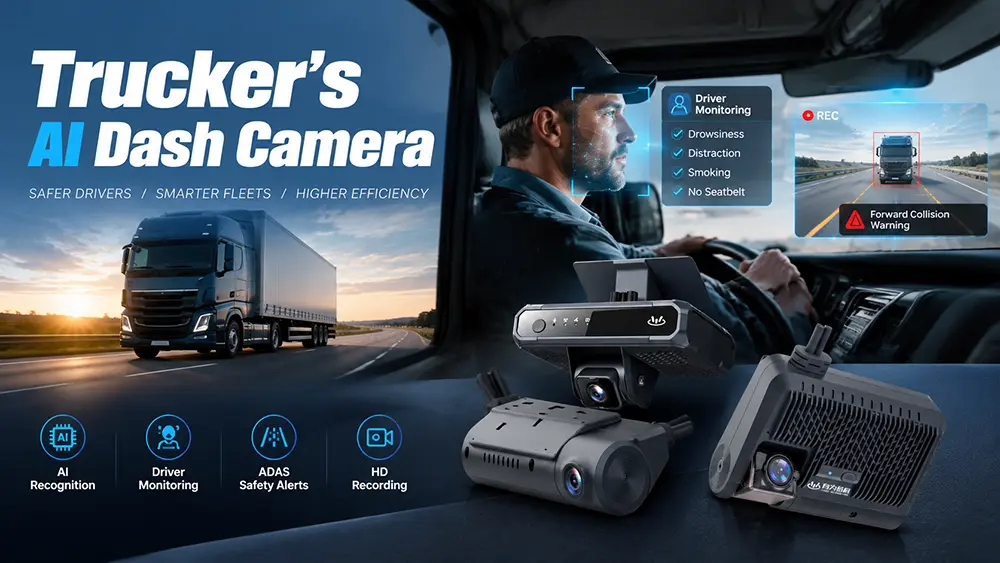
1.Forward Collision Warning: Analyzes road conditions ahead and notifies the driver in advance to help them react faster and avoid collisions.
2.Lane Departure Warning: Detects unsafe lane changes, suitable for logistics fleets like trucks, buses, and school buses.
DSM (Driver Status Monitoring)
1.Distracted Driving Detection: Identifies behaviors like driver inattention or cell phone use and issues instant in-cab alerts.
2.Fatigue Driving Detection: Analyzes facial features to determine fatigue levels and reminds drivers to take a break in a timely manner.
3.Other Behavior Monitoring: Identifies abnormal behaviors such as smoking or yawning.
Automatic Event Detection and Response
The system automatically detects incidents like impacts, hard braking, or SOS activations. Critical footage is immediately locked and uploaded to the cloud, preventing it from being overwritten by loop recording. Drivers can communicate with management via a single click using the emergency button.
Real-World Impact: YUWEI clients typically see a 35-40% reduction in collision rates; large fleets adopting a complete AI safety solution (dual cameras + in-cab alerts + AI coaching) have reduced collision rates by approximately 75% within 30 months.
How to Choose the Right Fleet System
1.Internet Connectivity: Ensure support for 4G LTE or in-vehicle WiFi for automatic cloud uploads and real-time access.
2.AI Capabilities: Evaluate ADAS + DSM coverage and whether real-time in-cab alerts are supported.
3.Camera Configuration: Choose single/dual/multi-camera setups based on needs, and verify the field of view and night vision capabilities.
4.Platform Integration: Prioritize unified platforms (video + vehicle data + driver management) to avoid tool fragmentation.
5.Storage Strategy: Confirm cloud storage duration, local storage capacity, and event retention mechanisms.
6.Scalability: Check if the system supports adding extra cameras and peripherals (e.g., fuel sensors, temperature sensors).
7.Durability: Ensure the hardware can withstand vibrations, extreme temperatures, and continuous operation.
Recommendation: Do not focus solely on the camera hardware; the software platform is equally important.
Industry Application Use Cases
Industry | Application Value |
Long-Haul Trucking | Uses multi-camera visibility and AI alerts to reduce highway accidents. |
Last-Mile Delivery | Monitors driver behavior and verifies routes using video evidence. |
Construction | Rugged hardware + 360° visibility adapts to active job site environments. |
Passenger / School Buses | In-cab monitoring + collision alerts enhance passenger safety; supports stop-arm enforcement. |
Municipal / Government | Location-aware video data supports compliance reporting and operational logs. |
Taxi / Ride-Hailing | In-cab dual-camera monitoring protects the rights of both drivers and passengers. |
Trailers / Assets | Magnetic GPS trackers provide asset visibility under unpowered conditions. |
Conclusion
Fleet camera and GPS tracking systems in 2026 have evolved from simple "recording tools" into comprehensive fleet management platforms integrating AI safety monitoring, live video streaming, precise positioning, and cloud-based evidence management.
Email:hello@yuweitek.com