










Bus Front and Rear Camera System
What is a Bus Front and Rear Camera System
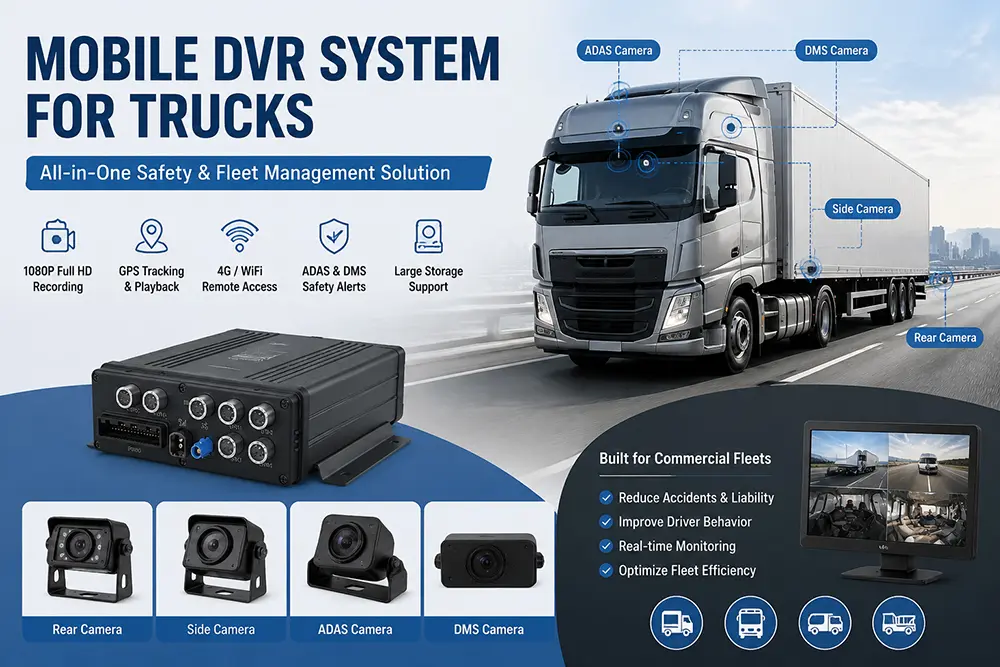
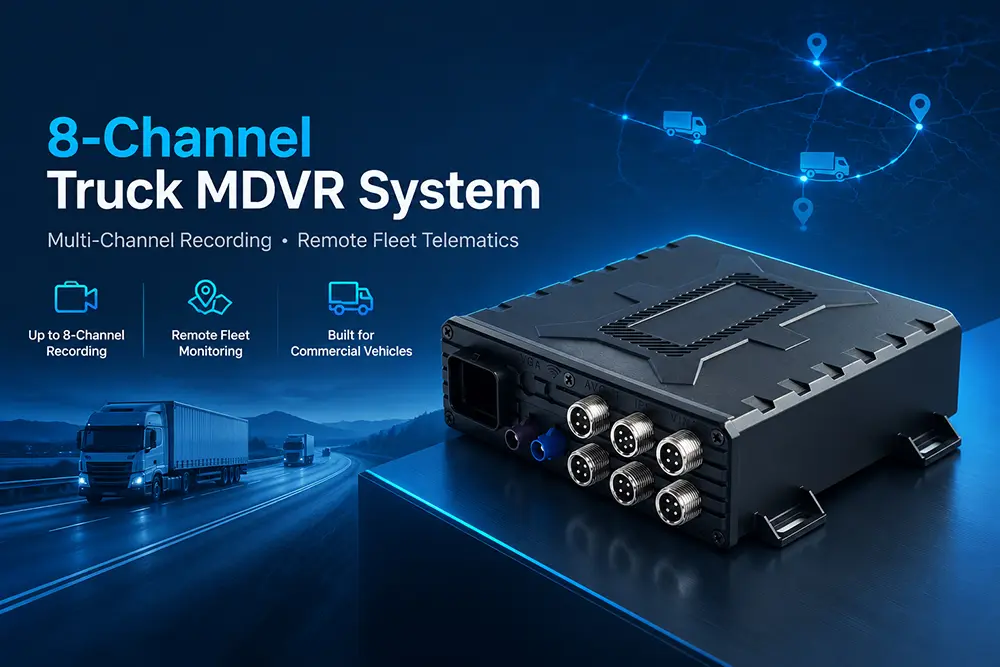
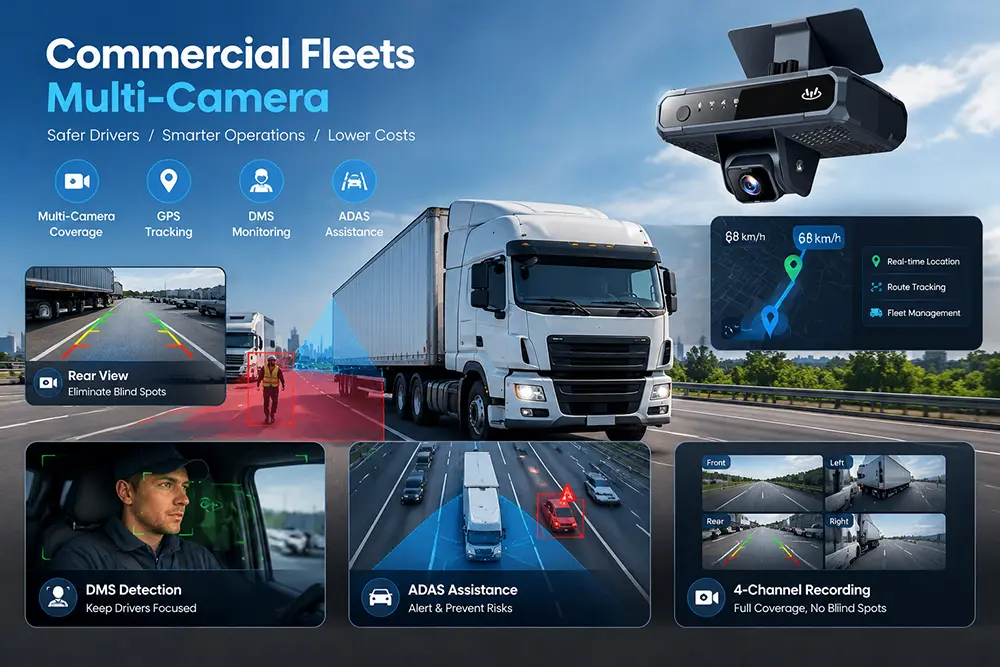
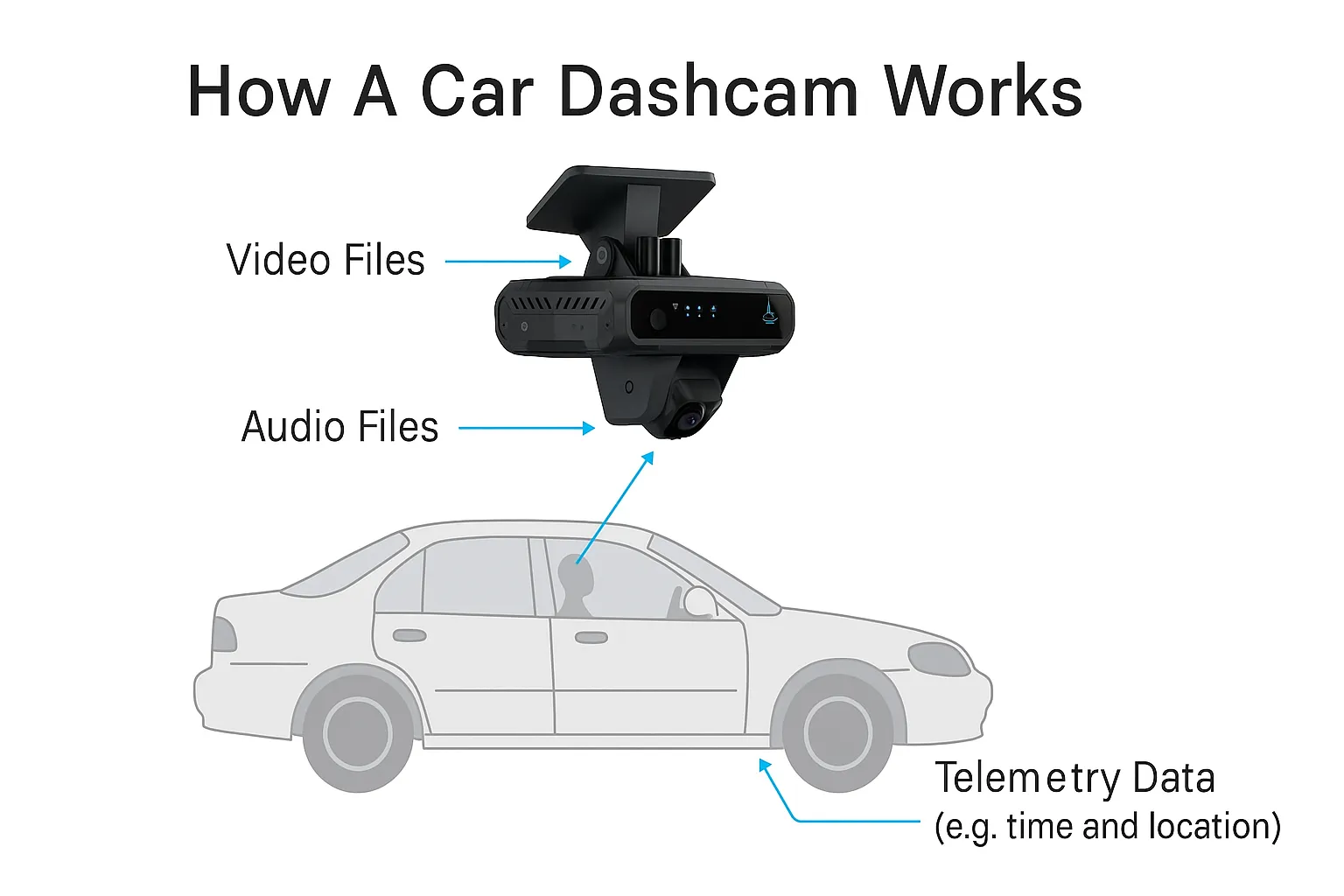
The bus front and rear camera system consists of a front camera and a rear camera, achieving dual-channel synchronized recording through an in-vehicle DVR host. The front camera records the road conditions ahead, while the rear camera monitors reversing blind spots and dynamics inside the vehicle. The system is often linked with GPS positioning and 4G remote transmission to build a complete fleet safety network.
Unlike a 360° surround view system, the front and rear dual-camera solution has a lower cost and simpler installation, making it suitable for fleets with limited budgets but requiring basic safety coverage.
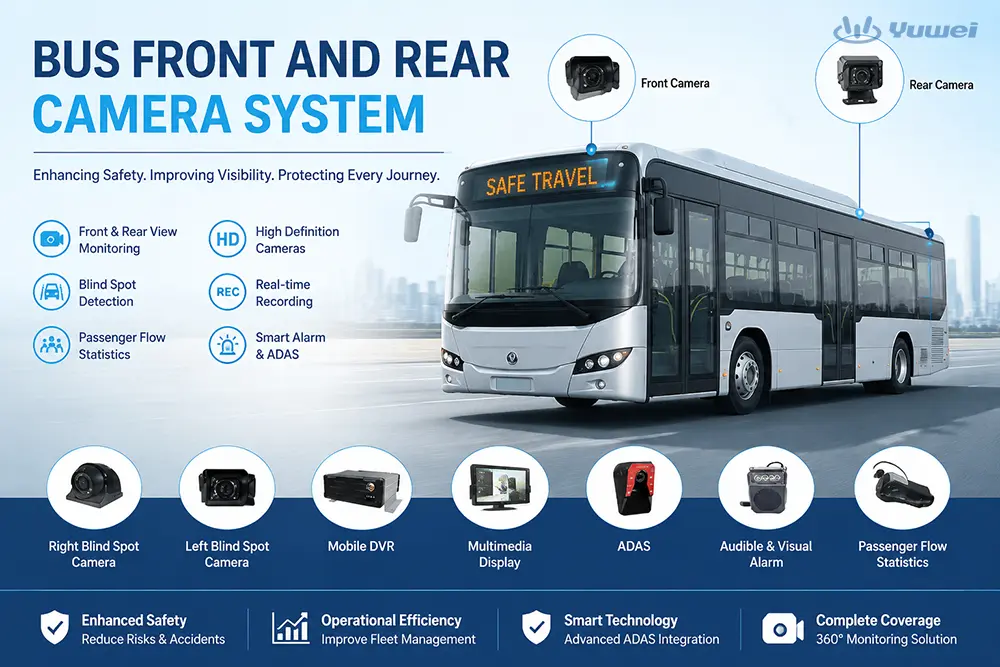
Core Components of the System
Essential Features for 2026
Mainstream systems in 2026 have been comprehensively upgraded. The following features are indispensable:
4K/1080P HD Recording — Clearly captures license plates and road condition details
WDR (Wide Dynamic Range) Technology — Imaging remains clear against backlight and at night
AI Intelligent Detection — Pedestrian blind spot detection (BSD), lane departure warning (LDW), forward collision warning (FCW)
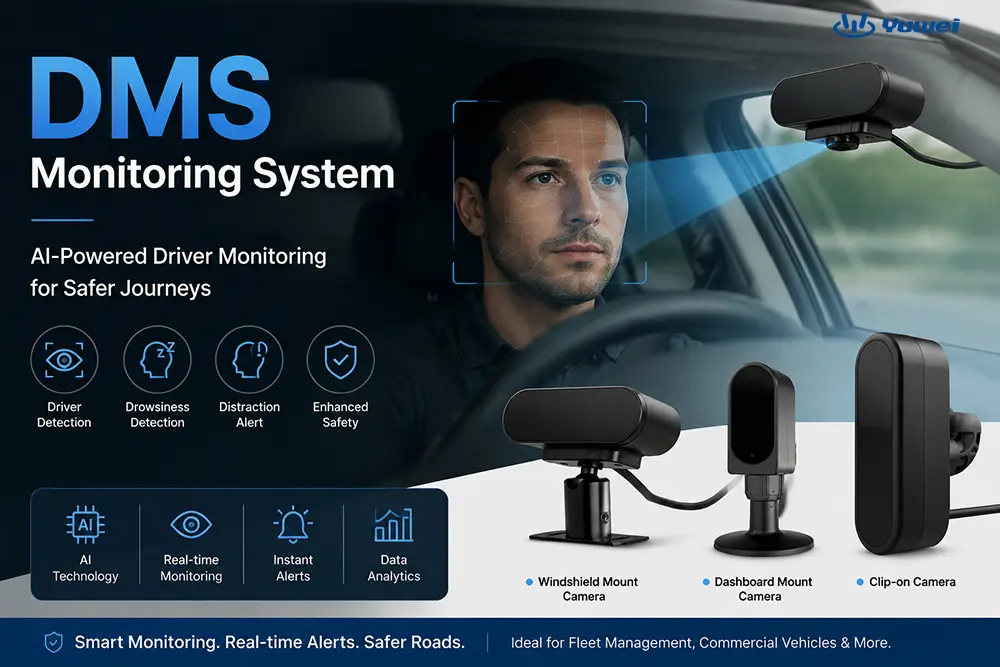
DMS Driver Monitoring System — Real-time identification of dangerous behaviors such as fatigue, distraction, and phone calls
4G Remote Monitoring — Fleet managers can check real-time vehicle conditions at any time
GPS/BDS Dual-Mode Positioning — Accurately tracks driving trajectories
Solid-State Storage — No mechanical hard drive, shockproof and high-temperature resistant, safer data
Differences Between Front and Rear Cameras
Recommendation: Use both in combination to achieve an all-around coverage of "front warning + rear monitoring."
Comparison of Bus Camera System Types
Installation Locations and Best Practices
Front Camera: Installed at the upper center of the windshield to ensure the viewing angle covers the hood and the road ahead. Avoid placing it near the wiper area to prevent obstruction.
Rear Camera: Installed at the rear center of the vehicle or above the license plate. The recommended height is 1.2–1.5 meters above the ground. It automatically switches to the rear view when reversing to assist the driver in judging distances.
Wiring Recommendation: Hide the wiring along the roof interior trim panel and connect it to the DVR host in the cockpit. Use waterproof connectors to ensure long-term stability.
Why Choose YUWEI Bus Camera Systems
YUWEI is a globally leading provider of in-vehicle monitoring solutions. Its products have been deployed in over 30 countries and 100 cities, with an installation volume exceeding 100,000 units. Its bus front and rear camera systems possess the following advantages:
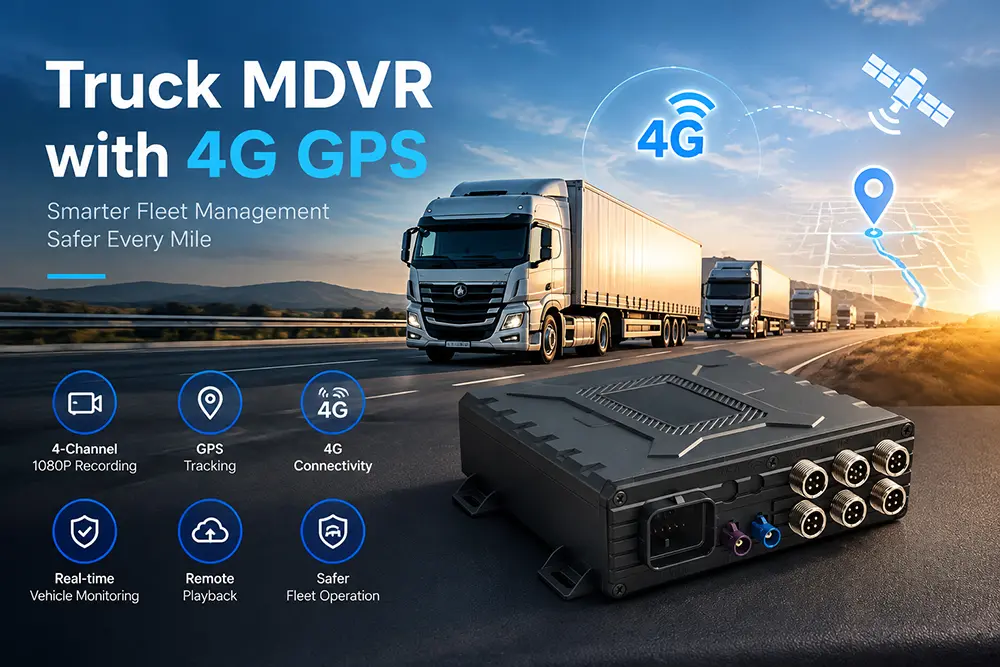
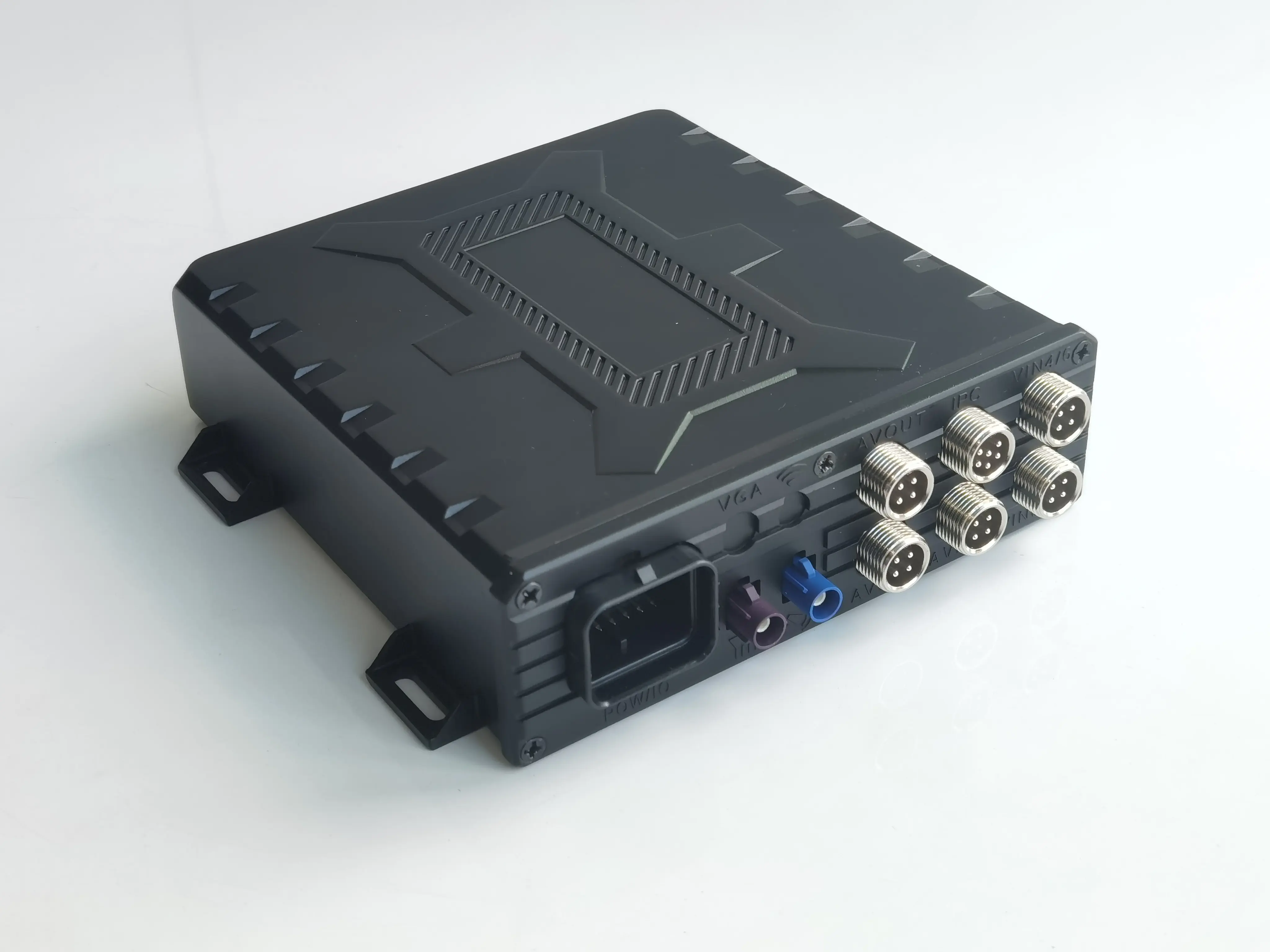
Core Product: YUWEI V5 Smart In-Vehicle Terminal
Four-Channel HD Input: Supports front, rear, and two interior cameras, 1080P synchronized recording
AI Safety Algorithms: Built-in ADAS (lane departure, forward collision warning) and DMS (fatigue, distraction, phone call detection)
4G Real-Time Transmission: Global network coverage; fleet managers can view remotely at any time
GPS/BDS Dual-Mode Positioning: Accurately tracks vehicle location and driving trajectory
Dual TF Card Storage: Ensures data integrity without loss
Authoritative Certifications: Passed CE, FCC, UKCA, ISO9001 certifications
Core Product: YUWEI V5C Dual-Camera AI Dash Cam
Integrated Front and Rear Dual-Lens Design: Simultaneously monitors road conditions and the cockpit
Facial Recognition Algorithm: Accurately identifies driver identity and dangerous behaviors
Compact Body: Fits various small and medium commercial vehicles, easy to install
4G+GPS: Meets the remote supervision needs of fleets
System Expansion Capabilities
The YUWEI solution can flexibly expand with the following modules:
BSD Blind Spot Detection: Automatically monitors pedestrians when the vehicle starts, turns, or reverses
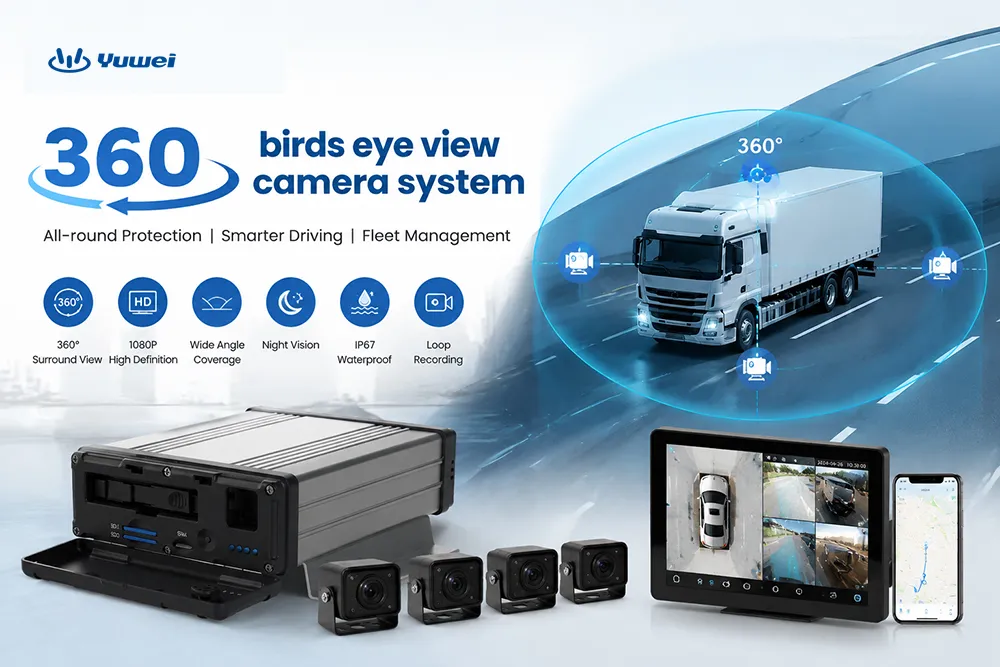
360° Surround View System: Four-camera stitching, eliminating full-body blind spots
One-Button Alarm: Drivers can instantly report to the monitoring center in an emergency
Passenger Flow Statistics: Automatically counts boarding and alighting passengers to optimize operational efficiency
Frequently Asked Questions (FAQ)
Can bus cameras record clearly at night?
A: Mainstream products are equipped with infrared night vision and WDR technology, providing clear visibility within 15–50 feet at night.
How long can recordings be saved?
A: It depends on the storage capacity and recording resolution. A 512GB storage can hold 1080P video for about 7–15 days, and key event markers are retained permanently.
Is the system waterproof?
A: Exterior cameras typically reach an IP67/IP68 rating, making them dustproof, waterproof, and shockproof.
How to choose between front and rear dual cameras and a 360° system?
A: Choose front and rear dual cameras for a limited budget; choose the 360° surround view if complete blind spot elimination is needed. Both are upgradable and compatible.
How long does installation take?
A: A front and rear dual-camera system for a single bus takes about 2–4 hours, while a 360° system takes about 4–6 hours.