











Mexico Taxi DVR Dash Cam System
Mexico Taxi Tracking Management
The Mexico taxi and rideshare market stands as one of Latin America’s largest and most digitalized mobility ecosystems. Per 2025–2026 industry research statistics, the Mexico rideshare market has reached an approximate market size of USD 3–4.7 billion, with an estimated 8%–13% CAGR growth rate projected through 2030. Meanwhile, within Mexico City alone, active drivers across platforms including Uber, DiDi and InDrive have hit a volume of hundreds of thousands. The overall mobility market is rapidly shifting toward platform-based operation and data-driven dispatching. On the traditional taxi front, Mexico retains a massive number of registered Sitio Taxis and street-hail cabs nationwide, forming a dual-track market structure marked by fierce competition alongside integrated coexistence with rideshare services.
Against this market backdrop, urban transportation in Mexico displays three prominent traits: severe traffic congestion, high-frequency short-distance trips, and rigorous safety demands (passengers require full traceability of every ride). Conventional fleet management systems relying solely on GPS location tracking can no longer satisfy real-world operational needs. The entire industry is undergoing a rapid upgrade toward intelligent fleet architectures centered on DVR video recording, AI driving analytics, and cloud-based Telematics remote information processing platforms.
Core Management Challenges Facing Mexico Taxi Operators
Mexico features complex urban transportation networks. Core metropolises including Mexico City, Guadalajara and Monterrey expose both taxis and rideshare vehicles to the following universal pain points:
• Severe urban gridlock leading to unpredictable average trip durations
• Coexistence of rideshare vehicles and legacy taxis with inconsistent regulatory standards
• High share of nighttime trips accompanied by elevated safety hazards
• Frequent passenger disputes involving circuitous routing, billing discrepancies and service complaints
• Public security risks and unforeseen incidents in select regional zones
Legacy GPS-only systems merely output vehicle positional data yet fail to resolve critical operational questions:
• Are dangerous driving behaviors such as harsh braking, speeding and drowsy driving occurring?
• Can trip authenticity be verified or falsified routes identified?
• Is tangible proof available to validate passenger complaints?
• How can accident liability be quickly determined?
• Can onboard safety incidents be fully documented?
For these reasons, Mexico fleets are transitioning from basic location tracking to a comprehensive traceable management ecosystem powered by video footage, operational data and AI algorithms.
Architecture of Mexico Taxi DVR Systems
Modern intelligent taxi systems adopt a standard three-tier framework:
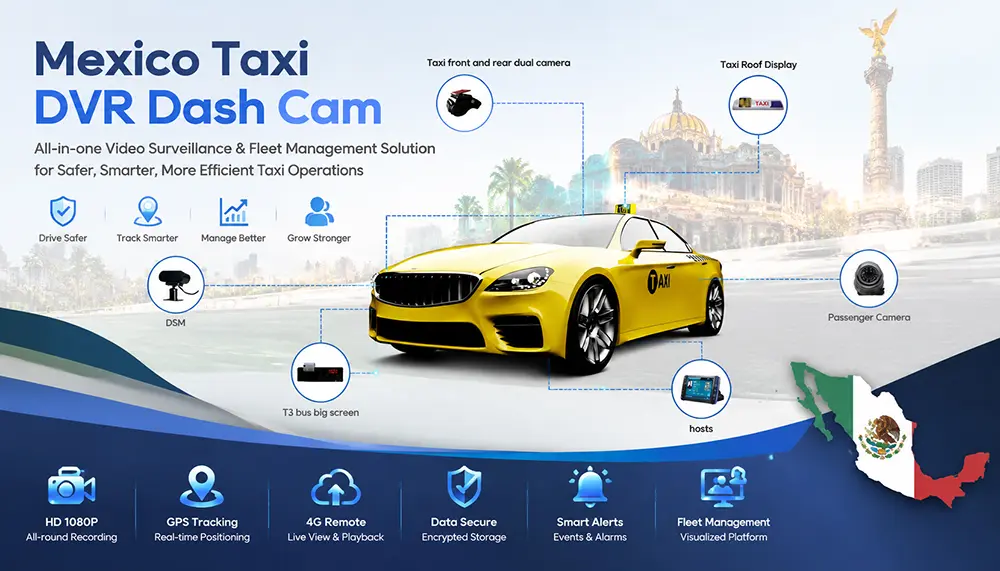
Onboard Sensing Layer + Communication Transmission Layer + Cloud Telematics Management Platform
Multi-sensor fusion within the system delivers the following core functionalities:
• Real-time vehicle geotracking
• Multi-channel video surveillance (interior cabin + exterior road views)
• Automated driving behavior recognition
• Instant alerts for high-risk incidents
• Cloud dispatching and operational performance analytics
Each vehicle evolves from a simple transport unit into a Mobile Data Node.
Core Onboard Hardware Systems
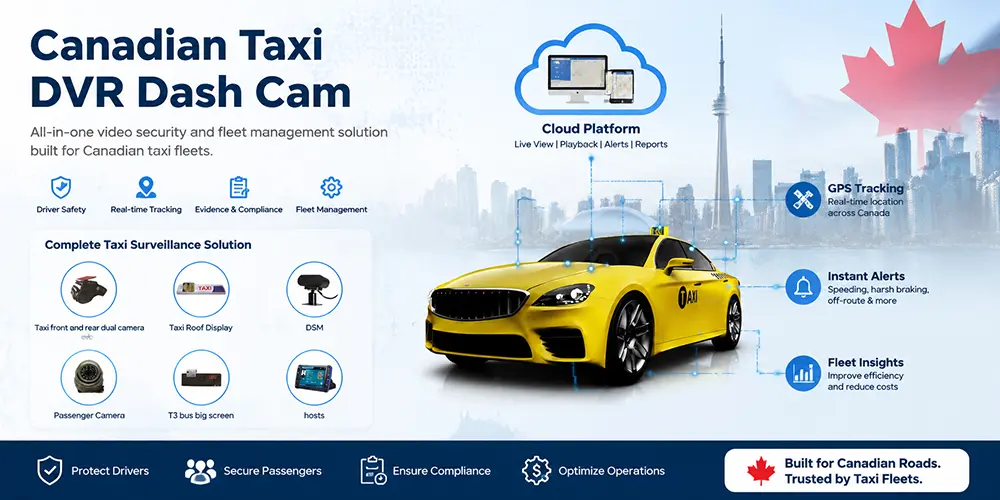
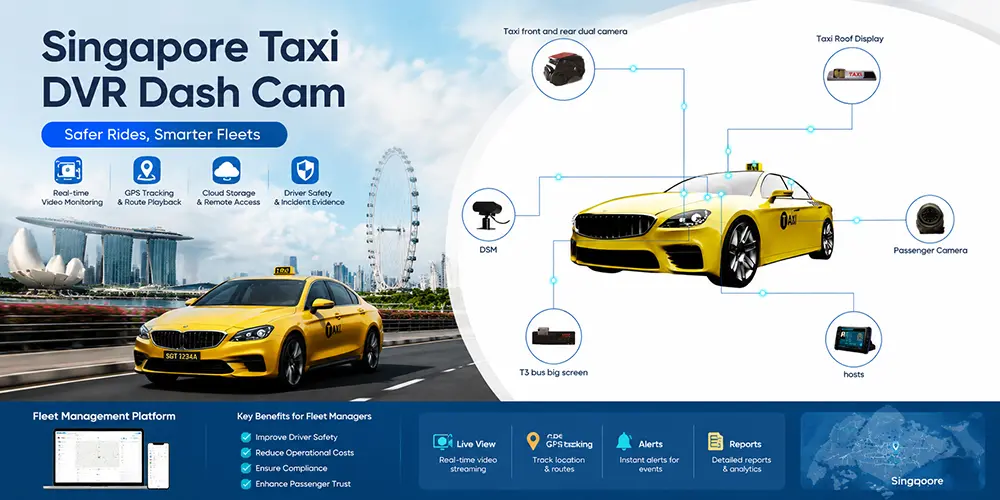
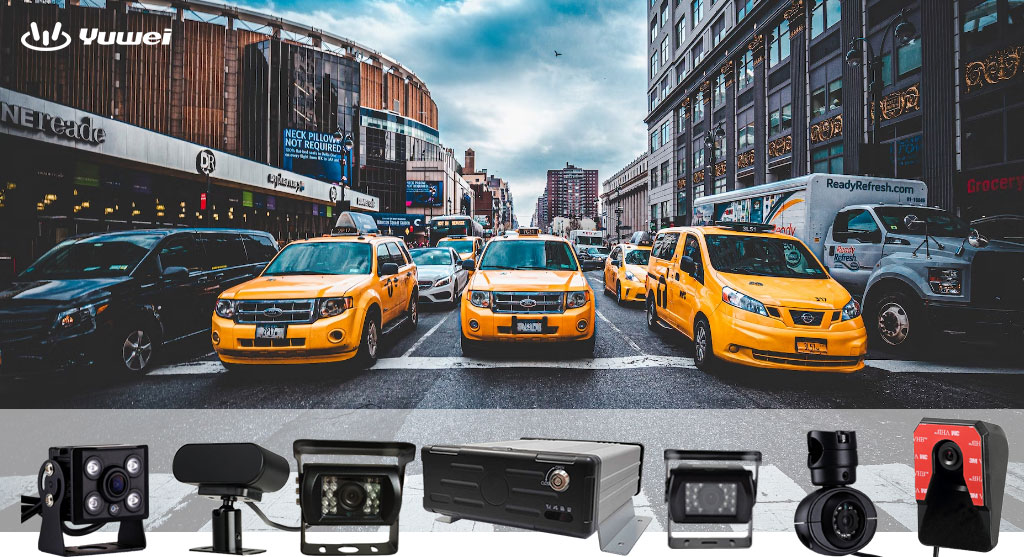
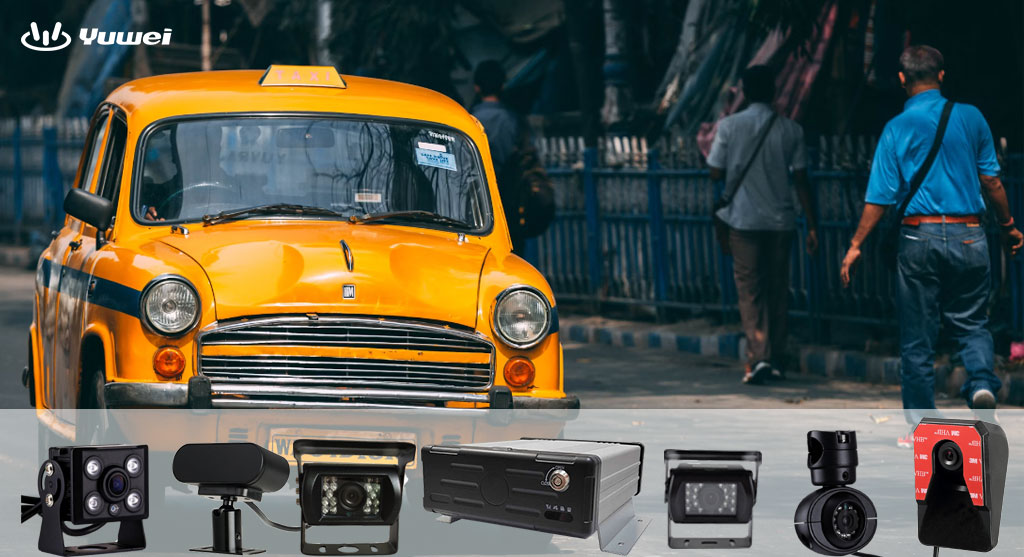
1. Dash Cam: YUWEI V5C
As the foundational hardware for rideshare and taxi fleets, this device records full driving footage and preserves evidentiary footage for collision incidents.
Core Capabilities
• High-definition forward-facing video recording
• Synchronized GPS trajectory logging
• 4G-enabled remote live viewing
• Automatic video file locking upon collisions or hard braking events
• Cloud storage for convenient evidence retrieval
Optimized for individual independent drivers and lightweight rideshare fleets.
2. MDVR
The MDVR functions as the central data hub for the entire intelligent fleet system.
Supported Camera Inputs
• Forward road-facing camera
• Cabin passenger monitoring camera
• Driver behavior capture camera
• Rear-view and blind-spot surveillance cameras
Core Capabilities
• Simultaneous multi-channel video recording
• Synchronized GPS geotagging paired with video streams
• Full remote fleet administration via cloud servers
• Triggered auto-recording for abnormal high-risk events
Enables complete 360-degree visual oversight of each vehicle.
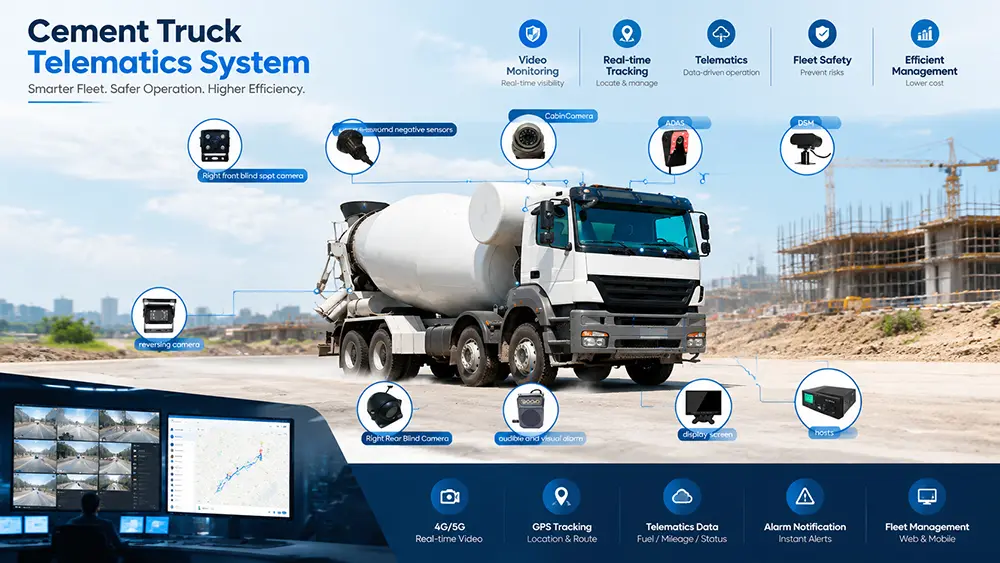
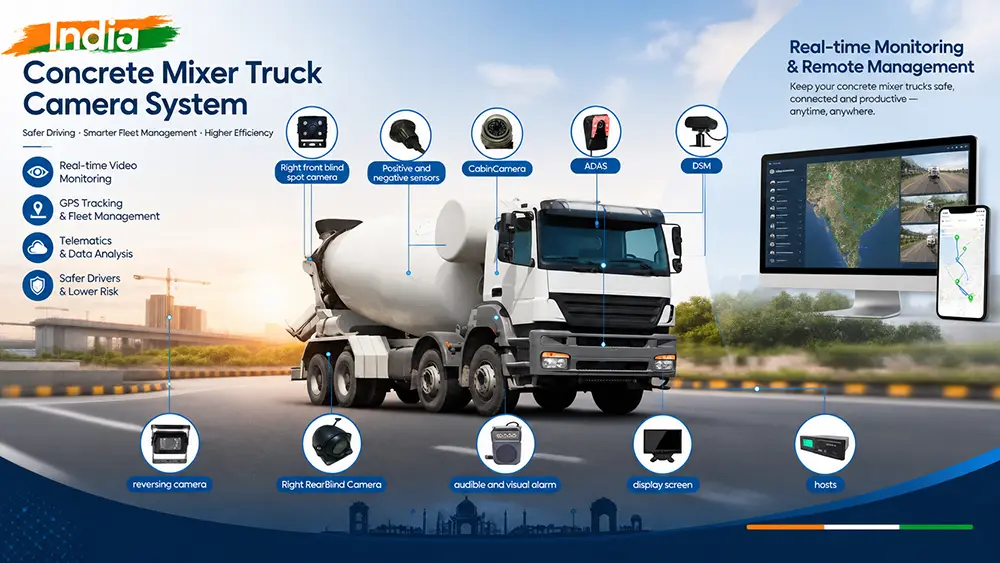
3. ADAS
Tailored for Mexico’s densely crowded urban traffic conditions, ADAS delivers proactive collision prevention safety features.
Risk Recognition Functions
• Forward collision hazard detection
• Lane departure warnings
• Tailgating distance alerts
• Pedestrian crossing risk identification
Measurable Safety Improvements
• Reduced urban rear-end collision frequency
• Mitigated nighttime driving risks
• Fewer accidents triggered by sudden emergency braking
4. DSM | Driver Status Monitoring System
Engineered to detect risky driver behavioral patterns.
Detectable Hazardous Behaviors
• Drowsy driving
• Visual distraction
• Mobile phone usage while operating the vehicle
• Smoking and other unsafe onboard conduct
Alert Trigger Mechanisms
• In-cabin voice audio reminders
• Audible buzzer alarms
• Real-time risk notification uploads to cloud platforms
Realizes proactive accident prevention before dangerous incidents unfold.
5. Onboard Display Terminal | Visual Interactive Unit
Supports driving assistance functions and real-time data visualization.
Integrated Functionalities
• Live feed display from all connected vehicle cameras
• Visual reversing and blind-spot monitoring
• One-touch switching between multi-channel video streams
• Synchronized pop-up alerts linked with risk event triggers
Boosts driver decision-making efficiency and overall road safety.
Telematics Remote Information Processing Platform
The most transformative upgrade for Mexico’s taxi industry lies not in physical hardware, but robust data processing capacity.
This unified platform aggregates multi-source datasets including:
• GPS travel trajectory logs
• Continuous video streaming data
• Driver behavioral analytics metrics
• High-risk incident alert records
• End-to-end dispatching and operational statistics
All datasets form a fully closed-loop fleet management workflow.
1. Real-Time Fleet Dispatching Optimization
• Live visual mapping of all active vehicle locations
• Priority order assignment for high-demand hot zones
• Reduction in empty mileage driving
• Improved order acceptance efficiency for drivers
2. Video-Based Mediation for Passenger Disputes
Evidentiary footage resolves all common conflict scenarios:
• Disagreements over travel routes
• Billing and fare disputes
• Formal passenger service complaints
• Full recreation of onboard safety incidents
Recorded video footage serves as authoritative core evidence chains.
3. Automated Driver Behavior Scoring System
Generates standardized digital driver profiles with automated analytics:
• Comprehensive safety performance scores
• Individual driving style classification analysis
• Tiered risk level segmentation
Practical Industry Applications
• Platform internal performance evaluations
• Customized vehicle insurance premium pricing
• Proactive fleet risk mitigation and control
4. Operational Cost Reduction via Data Analytics
Data-backed optimization strategies cut total fleet expenses:
• Fuel and electric power consumption analysis
• Intelligent route planning optimization
• Minimized empty vehicle travel distances
• Streamlined dispatching workflow efficiency
5. Risk Administration & Insurance Claim Support
Post-incident platform capabilities streamline liability resolution:
• Complete chronological reconstruction of accident timelines
• Clear liability demarcation between involved parties
• Standardized video evidence for insurance claim submissions
• Lower legal dispute settlement costs for fleet operators
Typical Deployment Scenarios in Mexico
1. Urban Rideshare Vehicles (Uber / DiDi / InDrive)
• High-volume daily order throughput
• Mandatory platform regulatory compliance
• Integrated driver safety rating frameworks
Recommended Hardware Configuration: Dash Cam + DSM + Telematics Platform
2. Traditional Fixed-Station Sitio Taxis
• Station-based fixed operational zones
• Legacy manual dispatching workflows
• Urgent demand for digital operational transformation
Recommended Hardware Configuration: MDVR + Dash Cam + Onboard Display Terminal
3. Night-Shift High-Risk Operation Vehicles
• Peak hours with elevated public security threats
• Elevated probability of onboard safety incidents
Recommended Hardware Configuration: DSM + ADAS + Dash Cam
4. Airport & Intercity Long-Distance Transport Vehicles
• Extended continuous driving durations
• Frequent highway cruising scenarios
Recommended Hardware Configuration: MDVR + ADAS + DSM
Mexico’s taxi and rideshare market has entered an era defined by parallel intensive platformization and tightened regulatory oversight. Driven by a fleet base of hundreds of thousands of active drivers and sustained market expansion, the industry is undergoing a full transition from basic location tracking toward an integrated workflow: GPS geotracking → real-time video surveillance → AI-powered driving behavior analytics → cloud intelligent dispatching → full end-to-end traceable management. Within this comprehensive operational ecosystem, the combined suite of DVR Dash Cam, MDVR, ADAS, DSM and Telematics cloud platforms constitutes the core digital infrastructure enabling fleet modernization across Mexico.
Email:hello@yuweitek.com