








Mine Fleet Video Monitoring Management Solution
Mine Fleet Video Monitoring Management Solution
YUWEI Intelligent Dispatching & Safety Management Solution for Mine Fleets targets open-pit mines, underground mines, transportation fleets of large mining areas, and operation scenarios of small & medium-sized mines. It supports the management of various mining vehicles including mining trucks, excavators, loaders, engineering vehicles, oil tank trucks, blasting vehicles, etc.
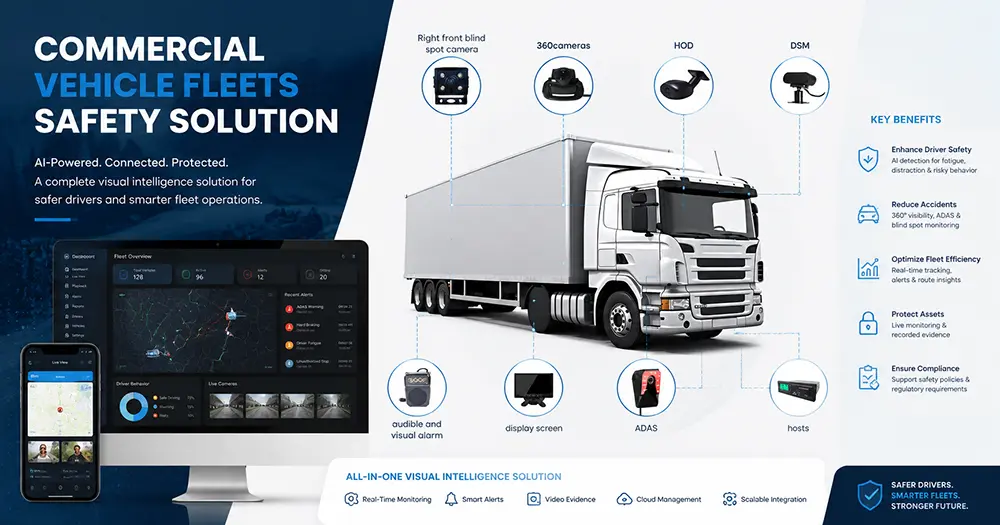
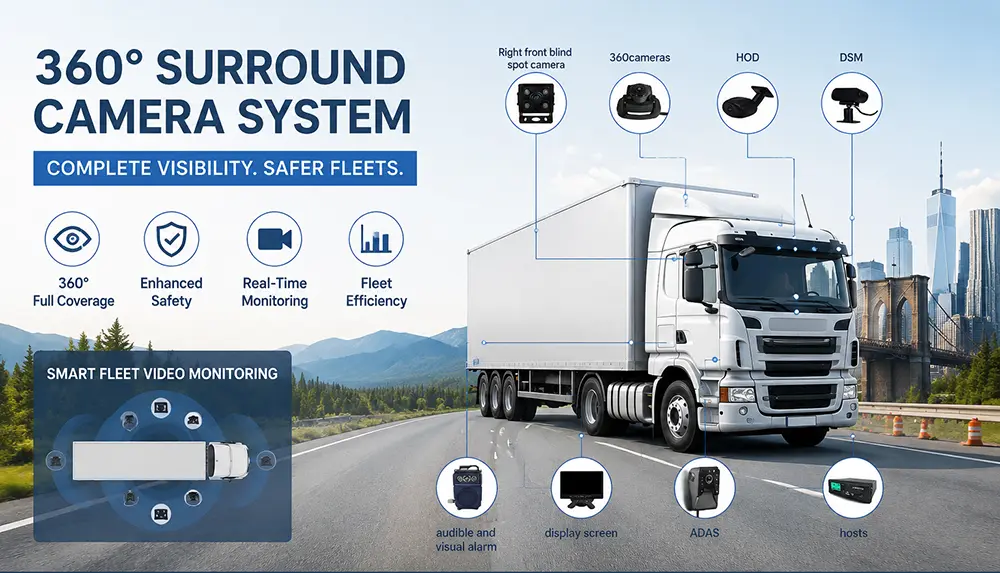
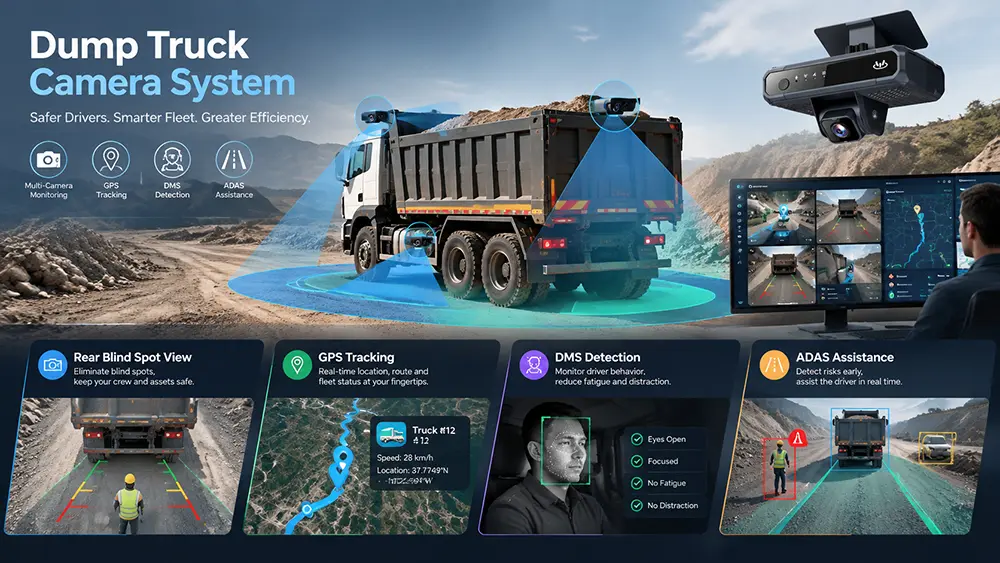
Built on vehicle-mounted intelligent hardware and centered on a cloud management platform, this solution integrates equipment such as GPS/BDS/UWB positioning modules, high-definition video surveillance, ADAS active safety systems, DMS driver status monitoring, HOD hands-off detection, BSD blind spot monitoring, 360° panoramic imaging, MDVR video storage, AI dash cam intelligent analysis, millimeter-wave radars, door magnetic sensors, tire pressure & temperature monitoring modules, audible and visual alarms, and vehicle-mounted displays. It delivers integrated management covering vehicle positioning, video supervision, intelligent dispatching, loading & unloading supervision, route control, safety early warnings, efficiency statistics, and accident traceability.
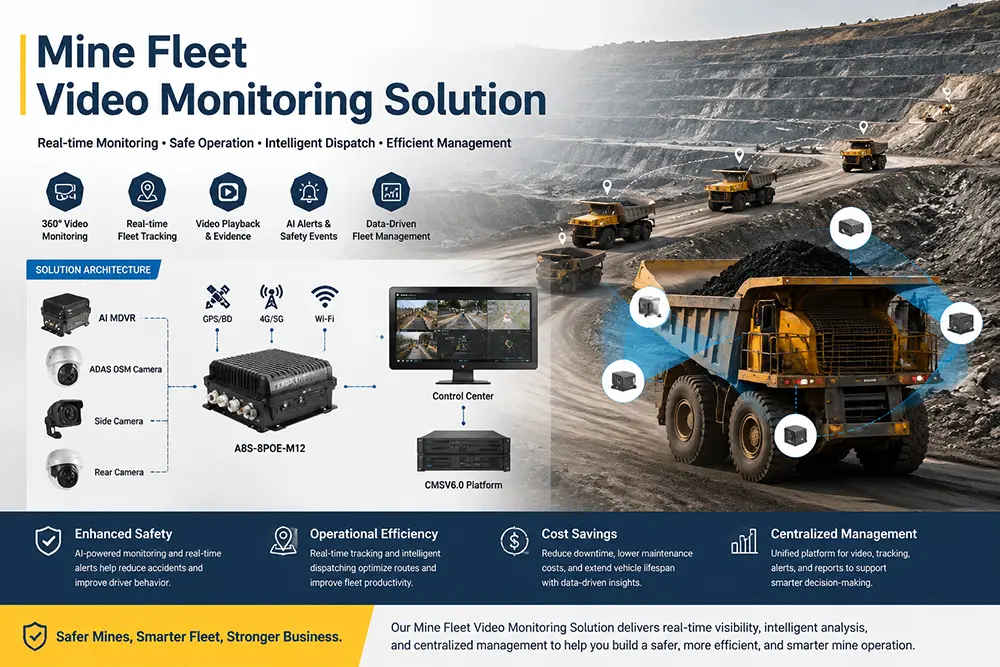
The platform monitors real-time vehicle data including vehicle status, location, speed, fuel volume, tire pressure & temperature, task completion, interior & exterior videos, and violation alarms. It enables managers to grasp real-time vehicle operation, verify compliance with planned operation routes, prevent vehicles from entering restricted zones, and boost transportation safety and production efficiency in mining sites.
Value of the Mine Fleet Video Monitoring Management Solution
1. Improve Transportation Efficiency
Leveraging real-time positioning, task dispatching, queuing analysis and route planning, the platform cuts empty running, unnecessary waiting and repeated dispatching for mining areas, and elevates overall efficiency across loading, transit and unloading procedures.
2. Reduce Safety Risks
Equipped with ADAS, DMS, BSD, HOD, 360° panoramic imaging, millimeter-wave radars and audible & visual alarms, the system conducts real-time monitoring and triggers alarms for risky behaviors such as speeding, fatigue driving, distracted driving, lane departure, insufficient vehicle following distance, pedestrians in blind spots, and unauthorized unloading.
3. Strengthen Production Supervision
The platform records full-process data including excavator operations, mining truck loading, transportation routes, unloading bins, material bin levels, vehicle trips, engine running hours, and driver working hours. It helps enterprises realize digitalized management of the entire production process.
Hardware for Mine Fleet Video Monitoring Management
YUWEI mine fleet solution allows flexible configuration of the following hardware based on mining site environments, vehicle models and management requirements.
1. Vehicle Main Units & Video Devices
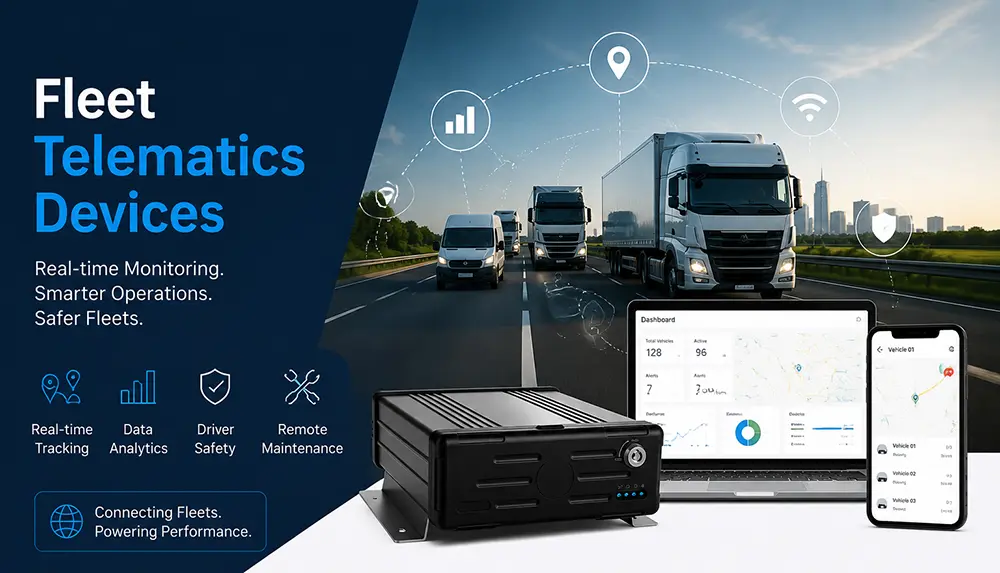
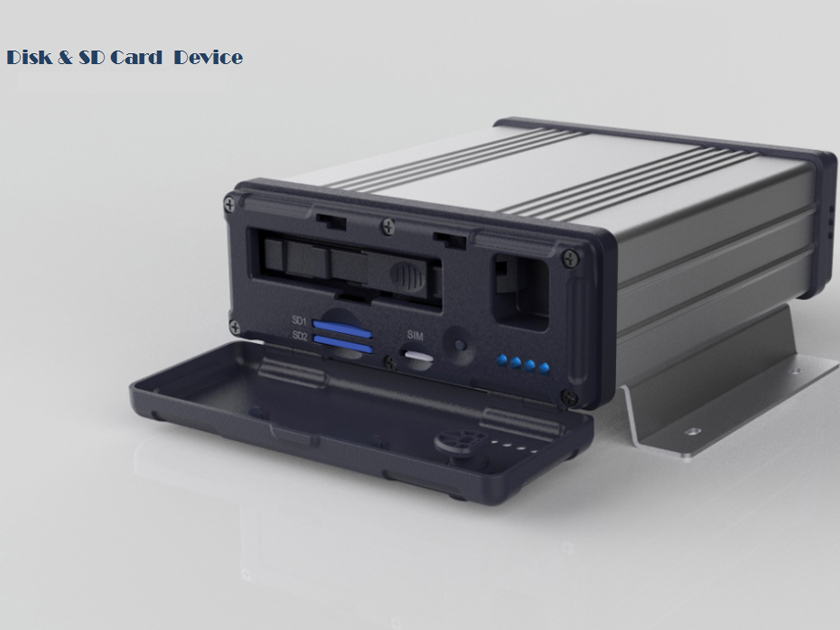
• MDVR Mobile Digital Video Recorder
• AI Intelligent Dash Cam
• 1080P High-Definition Cameras
• Forward ADAS Cameras
• In-cabin DMS Cameras
• HOD Hands-Off Detection Cameras
• BSD Blind Spot Cameras
• 360° Panoramic Cameras
• Rearview Cameras
• Explosion-Proof Cameras
The MDVR supports multi-channel video capture, storage and upload. AI dash cams analyze driving behaviors via embedded algorithms. 360° panoramic cameras stitch surrounding vehicle footage to assist low-speed travel, reversing, turning and blind spot monitoring.
2. Positioning & Communication Devices
• GPS Positioning Equipment
• BDS Beidou Positioning Equipment
• UWB High-Precision Positioning Equipment
• 4G/5G Communication Modules
• WiFi Communication Modules
• T-BOX Vehicle Telematics Terminal
GPS/BDS/UWB positioning devices capture real-time vehicle locations, which are uploaded to the platform server via communication modules to realize vehicle trajectory tracking, route verification and zone supervision.
3. Active Safety Equipment
• ADAS Active Safety Cameras
• DMS Driver Status Monitoring Cameras
• HOD Hands-Off Detection Cameras
• BSD Blind Spot Detection Cameras
• Millimeter-Wave Radar Sensors
• Right-Turn Audible & Visual Alarms
• In-Cabin Buzzers
• External Audible & Visual Alarms
• Vehicle-Mounted Displays
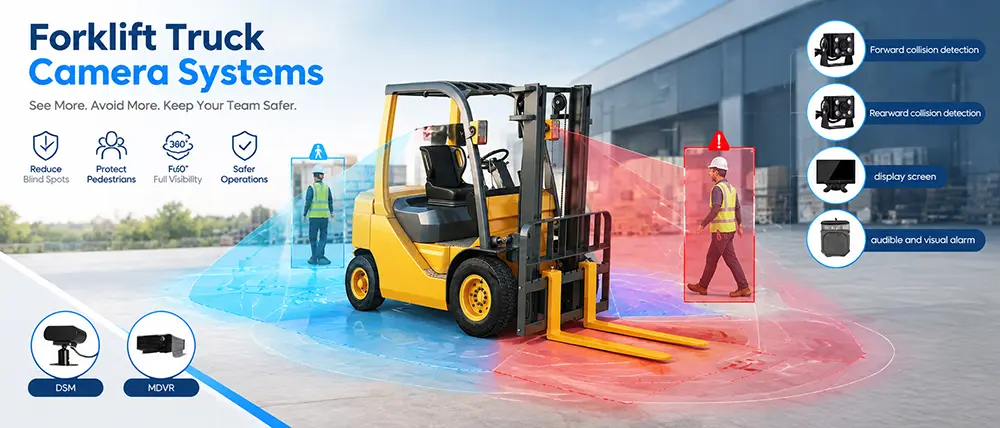
When risks such as forward collision hazards, short following distance, lane departure, line crossing, fatigue driving, smoking, phone calls, mobile phone viewing, hands off steering wheel, or approaching pedestrians in blind spots are detected, the system automatically triggers in-cabin reminders and external audible & visual alarms to prompt drivers and surrounding personnel to avoid dangers timely.
4. Operation Supervision Sensors
• Door Magnetic Sensors
• Vibration Sensors
• Tire Pressure & Temperature Sensors
• Material Level Millimeter-Wave Radars
• Load Sensors
• Fuel Consumption Sensors
• Engine Status Collection Equipment
Door magnetic sensors monitor bucket lifting status to identify unauthorized unloading outside designated zones. Vibration sensors detect active excavator arm operation. Millimeter-wave radars measure material height in vehicle compartments and storage bins. Tire pressure & temperature sensors detect tire abnormalities in real time to reduce vehicle breakdowns and accident risks.
5. Vehicle-Mounted Interaction Devices
• 7-inch Vehicle-Mounted Intelligent Terminals
• Android Vehicle-Mounted Tablets
• Vehicle-Mounted Displays
• Voice Broadcast Equipment
• Intercom Devices
• One-Click Alarm Devices
Drivers can check daily tasks, loading points, unloading points, transportation routes, queuing status and dispatching instructions via vehicle-mounted tablets. The platform supports real-time dispatching and emergency communication through voice broadcast, text orders, intercom and one-click alarms.
Task Execution via Vehicle-Mounted Tablets
The platform conducts comprehensive analysis based on multiple factors including bucket loading progress, excavator working status, mining truck queuing near excavators, idle truck status, transportation distance, route congestion, vehicle type and task priority to automatically calculate optimal dispatching schemes.
After generating dispatching plans, the system pushes task instructions to vehicle-mounted tablets on mining trucks. Drivers can view daily tasks, transportation routes, loading sites, unloading sites, material types and task status on terminals to accurately execute transportation assignments.
Positioning Monitoring
1. Real-Time Positioning
The platform realizes all-round real-time vehicle monitoring through GPS/BDS/UWB positioning equipment, covering vehicle status, real-time location, driving speed, fuel volume, tire pressure & temperature, mileage, task status, alarm status, interior and exterior live video feeds, etc.
Administrators can check vehicle locations and operation trajectories at any time to confirm compliance with designated routes and prevent vehicles from deviating from transport paths or entering restricted areas.
2. Historical Trajectory Playback
The system supports query and playback of full historical operation trajectories with complete vehicle operation processes displayed on maps.
Managers can review driving routes, stop points, parking duration, alarm timestamps, speed fluctuations and task execution records to facilitate vehicle supervision, accident traceback and operation reviews.
3. Real-Time Video Surveillance
The system enables multi-channel high-definition real-time video monitoring to view driver operating status, external road conditions, loading sites, unloading sites and surrounding vehicle environments.
The platform supports video rotation, snapshot capture, video playback and local download, providing video evidence for safety management, accident analysis and liability confirmation.
4. Transportation Route Tracking
The platform pre-binds dedicated transportation routes for different materials, loading points and unloading points, and configures speed limits by zone and road segment as well as no-entry zones.
Automatic alarms will be triggered once vehicles deviate from routes, exceed speed limits, stay stationary abnormally or enter restricted areas, with voice reminders sent to drivers for timely correction.
5. Road Network Management
The platform allows manual drawing of mining area road networks on maps for enterprises to digitally record mining roads, loading points, unloading points, material silos, maintenance zones, parking lots and key supervision areas.
Road network management supports traffic flow planning, path scheduling, transportation task allocation and regional risk control.
Operation Supervision
1. Transportation Route Allocation by Mineral Material Type
After loading by excavators or loaders, drivers confirm loaded material types on Android terminals, with information synchronized to terminals of mining truck operators.
The system automatically matches corresponding transportation routes and unloading bins based on material types to avoid wrong delivery, material mixing and mis-unloading.
Meanwhile, the platform automatically captures photos via cameras to identify and record mineral types, retaining evidence for subsequent traceability.
2. Real-Time Excavator Operation Supervision
Vibration sensors deployed by the platform monitor whether excavator arms are in operation.
If the system detects idling engines with inactive arms, voice reminders will be sent through vehicle-mounted equipment to prompt drivers to shut down engines. Persistent alarms will be triggered for prolonged idling to cut idle fuel consumption and equipment wear.
3. Monitoring of Unauthorized Unloading by Transport Vehicles
Door magnetic sensors monitor bucket lifting states to judge whether unloading occurs at designated locations.
The system sends automatic alarms to alert managers for timely disposal if unloading takes place outside authorized zones, preventing disorderly dumping, mis-unloading and chaotic material management.
4. Real-Time Loading Supervision
Multi-channel millimeter-wave radars deployed on the platform detect material height inside vehicle compartments and automatically send stop-loading alerts once vehicles are fully loaded, realizing unattended loading supervision.
This function reduces manual supervision costs and avoids underloading or overloading, maximizing utilization of transportation capacity.
5. Real-Time Silo Supervision
Millimeter-wave radars monitor material levels inside silos with configurable level thresholds on the platform.
When silo material levels drop below preset thresholds, the system automatically dispatches vehicles for material replenishment. No vehicles will be arranged if silo conveyors stop or level requirements are unmet to eliminate empty transport trips.
6. Unloading Tracking
If transport vehicles arrive at incorrect unloading bins, pop-up notifications and voice reminders will be displayed on vehicle-mounted tablets to guide drivers to correct destinations promptly.
This function minimizes mis-unloading, missed unloading and material mixing issues to improve overall transportation accuracy in mines.
Intelligent Dispatching
1. Vehicle Operation Scheduling Plans
The platform generates vehicle scheduling plans based on operation scopes, transportation tasks, vehicle types, projected mining output and production schedules.
Upon plan generation, daily operation tasks are automatically released every day, with task completion automatically logged via positioning devices and operation rules.
The system also calculates required quantities of excavators and transport vehicles according to total projected mining volume, assisting managers in scientific allocation of vehicles and equipment.
2. Voice & Instruction Dispatching
The platform supports sending text, voice and dispatching orders to single vehicles, multiple vehicles or entire fleets.
Dispatchers can rapidly issue instructions and coordinate vehicle operations in response to emergencies, road congestion, vehicle breakdowns or temporary task adjustments.
3. Queuing Dispatching
Vehicle-mounted displays show queuing status and estimated waiting time of transport vehicles within the operation range of each excavator, with real-time voice broadcast reminders for drivers.
Dispatchers dynamically redirect vehicles via the platform based on on-site queuing conditions to cut waiting time and raise loading efficiency.
4. Dynamic Route Adjustment
In cases of road congestion, vehicle malfunctions, abnormal loading points or changed unloading locations, the platform dynamically adjusts vehicle routes and task assignments based on real-time data to guarantee continuous production and transportation.
Vehicle Safety Management
1. ADAS Active Safety
The ADAS system identifies forward collision risks, short vehicle following distance, lane departure, line crossing, frequent lane changes and pedestrian collision hazards, and sends alarm notifications to drivers.
All alarm data is synchronized to the platform for managers to track real-time vehicle risk status.
2. DMS Driver Status Monitoring
The DMS system detects dangerous driving behaviors including fatigue driving, yawning, eye closure, smoking, phone calling, mobile phone scrolling, distracted driving and prolonged forward vision loss.
Automatic alarms are triggered upon detection of risky driving, with photos and video footage stored as evidence.
3. HOD Hands-Off Detection
HOD cameras monitor whether drivers remove both hands from steering wheels. Combined with algorithms, they also detect unfastened seatbelts and mobile phone use to strengthen full-process driving supervision.
4. BSD Blind Spot Detection
BSD blind spot cameras mainly monitor right sides, front areas and turning blind spots of vehicles.
Once pedestrians, vehicles or obstacles are identified in blind zones, the system simultaneously alerts drivers via in-cabin displays and buzzers, and warns surrounding personnel through external audible & visual alarms, lowering collision risks during mining truck startup, turning and low-speed operations.
5. Right-Turn Audible & Visual Alarms
When mining trucks turn right, blind spot cameras detect personnel in right-side blind zones. Upon risk identification, the system activates linked audible & visual alarms to remind drivers to watch right blind spots and warn pedestrians to stay away from hazardous areas.
6. Speeding Alarms
The platform supports customized speed limits set by zones, road segments and operation scenarios.
When vehicles exceed configured speed limits, drivers receive deceleration reminders while alarm messages are pushed to the platform for strengthened speed control by managers.
7. Zone Alarms
The platform supports configuration of authorized operation zones, no-entry zones, loading & unloading zones and maximum permitted parking duration.
Automatic alarms will be triggered when vehicles enter or exit designated zones, or stay stationary in zones beyond allowed time limits, standardizing vehicle operation ranges and parking behaviors for enterprises.
Daily Vehicle Management
1. Vehicle Inspection
The platform supports full-process vehicle inspection management with photo capture for evidence during inspections.
All inspection records are archived on the system, which allows managers to retrieve logs filtered by inspection date, inspector and license plate number, facilitating vehicle maintenance and safety administration.
2. Trip Statistics
The system automatically records daily transport trips of each vehicle and displays trip volumes completed by individual drivers.
Enterprises evaluate vehicle utilization rates, driver workload and transportation efficiency based on trip statistics.
3. Mileage Statistics
The platform calculates daily, monthly and total departmental vehicle mileage, providing data support for vehicle maintenance, fuel cost accounting, driver performance appraisal and operational cost analysis.
4. Task Statistics
The platform aggregates multi-dimensional data including mileage, engine running hours, driving duration, driver working hours, alarm frequency, task completion rate, transportation volume, empty running ratio, equipment utilization rate and energy consumption.
Multi-angle data statistics help managers identify production and management bottlenecks, offering solid basis for dispatching optimization and business decision-making.
Data Visualization Display
The platform statistically analyzes data such as vehicle mileage, operation hours, transport trips, safety violations, empty running ratio, transport volume, equipment utilization rate, energy consumption and safety incidents, visualized via charts, electronic maps and large-screen dashboards.
The system supports multi-dimensional dynamic analysis and data drilling. Managers can filter data by vehicle, driver, fleet, work team, time period or operation zone to quickly locate root causes of problems.
Contents displayed on large-screen visualization dashboards include:
• Trend of fleet operation efficiency
• Transport volume statistics
• Empty running ratio analysis
• Vehicle utilization rate
• Safety alarm trends
• Accident fluctuation trends
• Mileage ranking of individual vehicles
• Violation ranking of drivers
• Equipment status statistics
• Task completion status
Through data visualization, enterprises gain intuitive insights into mine fleet operations, advancing mining transportation management toward scientific, digital and refined standards.
Mobile Terminal & Multi-Role Permission Management
The platform supports access via PC, mobile phones and tablets. Managers can check vehicle locations, receive alarms, view live videos, process tasks and track vehicle status anytime via mobile or tablet devices.
Multi-role permission control is available on the platform. Differentiated operation authorities are assigned to dispatchers, safety officers, equipment administrators, enterprise management and other roles separately to ensure data security and standardized management workflows.
Equipment Management & Maintenance Reminders
The platform centralizes management of vehicle files, equipment archives, maintenance records, service logs, engine conditions, battery status and equipment operation states.
Automatic maintenance reminders are pushed by the system based on vehicle operation data and scheduled service cycles, reducing equipment failure rates and maintenance costs for enterprises.
Accident Analysis & Accident Management
1. Accident Analysis
The platform records, processes and conducts post-incident analysis for all reported accidents.
After accidents occur, managers quickly retrieve vehicle trajectories, surveillance footage, driving speed, alarm logs and driver behavior data corresponding to the incident time to reconstruct accident processes and identify root causes.
Meanwhile, the platform generates targeted training plans based on accident causes, requiring responsible personnel to complete learning sessions and training to lower recurrence risks of similar incidents.
2. Accident Management
The platform archives complete records of every vehicle accident, including incident reports, compensation amounts, involved personnel, responsible parties, accident locations and timestamps.
Accident files can be linked to corresponding training videos. Responsible staff must finish mandatory training before resuming work.
The platform also supports one-click retrieval of videos, driving trajectories and speed data covering time windows before and after accidents, delivering comprehensive data support for accident investigations, liability identification and safety reviews.
Solution Summary
YUWEI Intelligent Dispatching & Safety Management Solution for Mine Fleets builds an integrated management system featuring vehicle-mounted intelligent hardware + cloud management platform + AI safety algorithms + multi-source data analysis, centered on core demands including mining vehicle transportation, loading & unloading supervision, safety early warning, production dispatching and data analysis.
This solution empowers mining enterprises to achieve visualized vehicle operation, intelligent production dispatching, real-time safety supervision, digitalized operation statistics, standardized equipment maintenance and closed-loop accident management. It comprehensively upgrades operation efficiency, safety management standards and production collaboration capacity of mine fleets.