






Remote Vehicle Monitoring System
Introduction to Remote Vehicle Monitoring System
The remote vehicle monitoring system is an integrated management tool combining software and hardware, with RVMS, IVMS and VMS as its core forms. Supported by technologies such as GPS and telematics, it collects various vehicle data in real time and provides digital management for multiple scenarios, making it a standard configuration in industries including logistics and passenger transport.
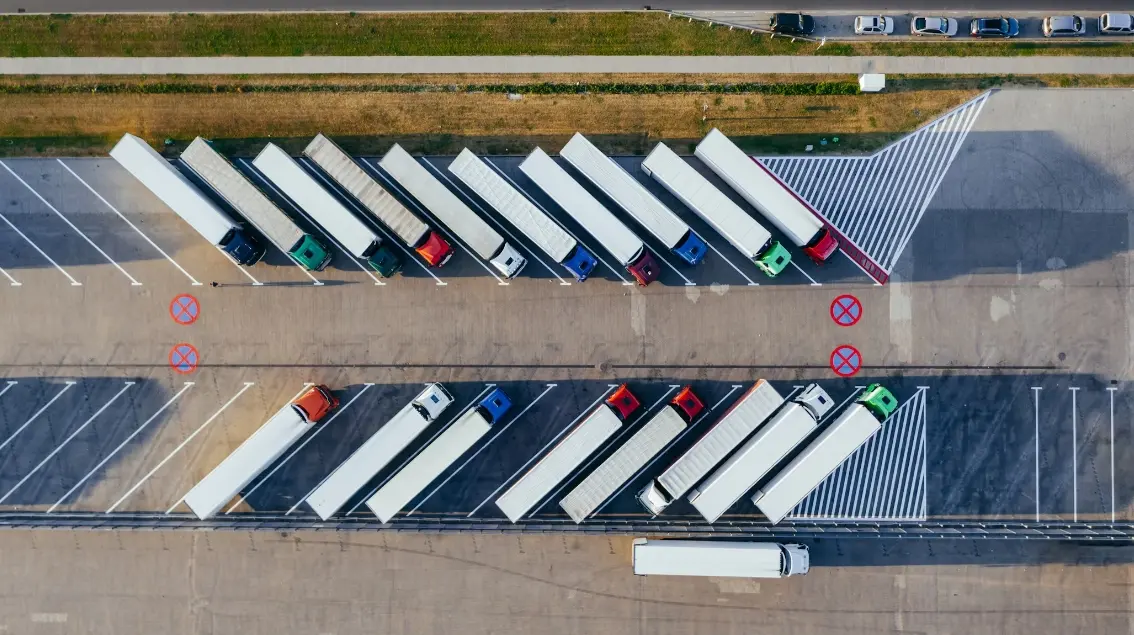
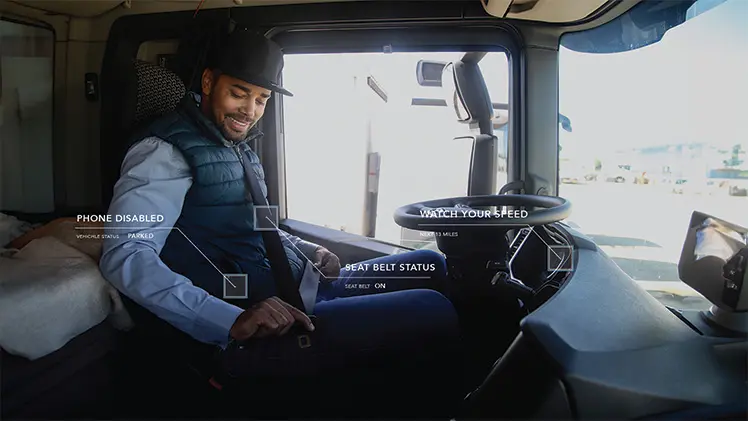
Among them, IVMS focuses on in-vehicle behavior and vehicle condition monitoring, equipped with ADAS, DSM and dual-lens cameras to control high-risk driving behaviors. VMS leans toward overall fleet operation, covering the whole process of scheduling and maintenance. RVMS emphasizes remote cloud-based management and control, realizing full-time supervision.
Hardware Configuration of Remote Vehicle Monitoring System
Hardware Components
1. Positioning Module
Centered on GPS, it realizes real-time positioning, track playback and geo-fence alerts, and can be integrated with GPS-enabled in-vehicle devices to improve accuracy.
2. Perception Sensors
Including OBD, tire pressure, fuel level, temperature and humidity sensors, it collects multi-dimensional vehicle condition data and adapts to special scenarios such as cold chain transportation.
3. Terminal Equipment
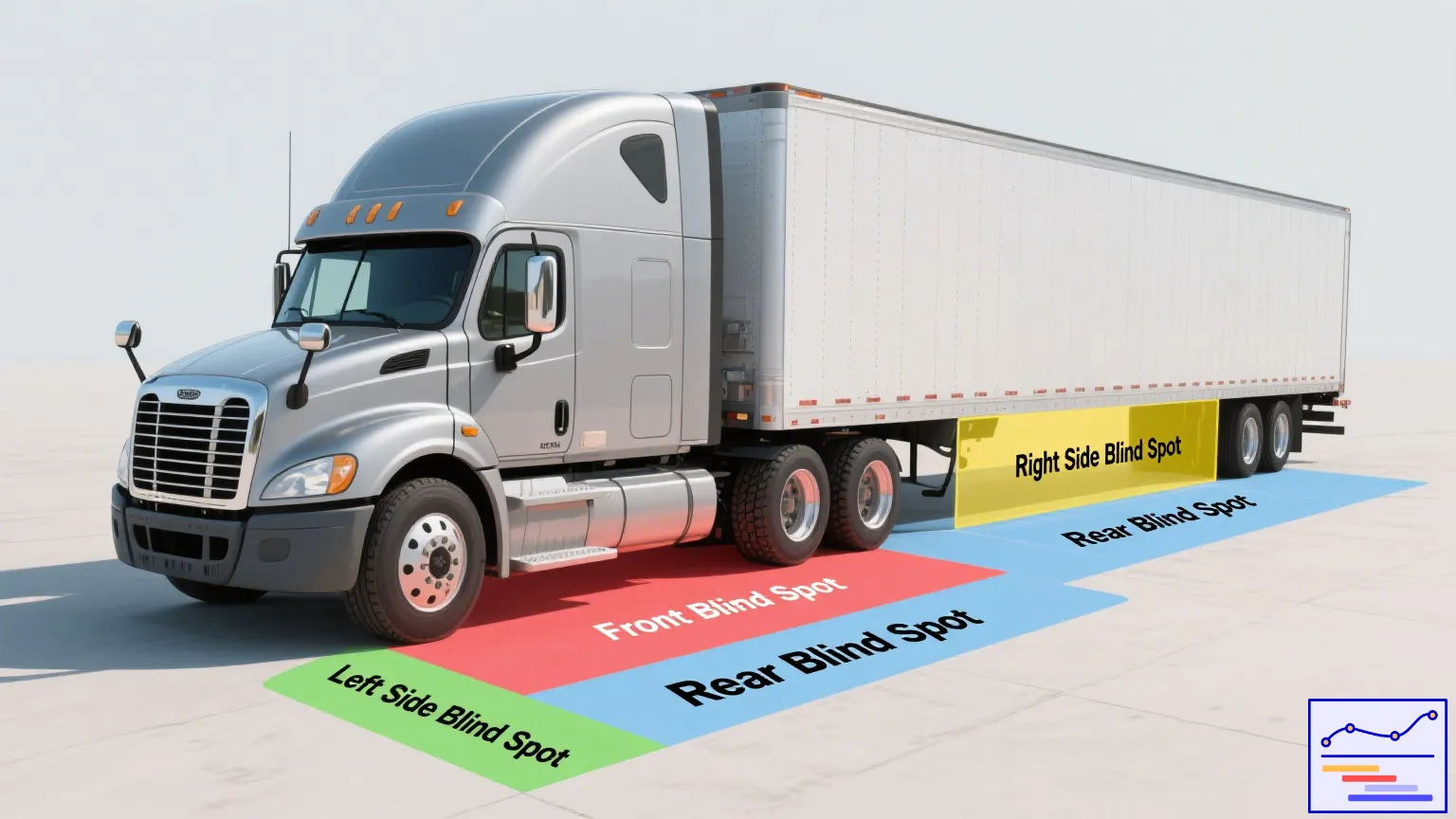
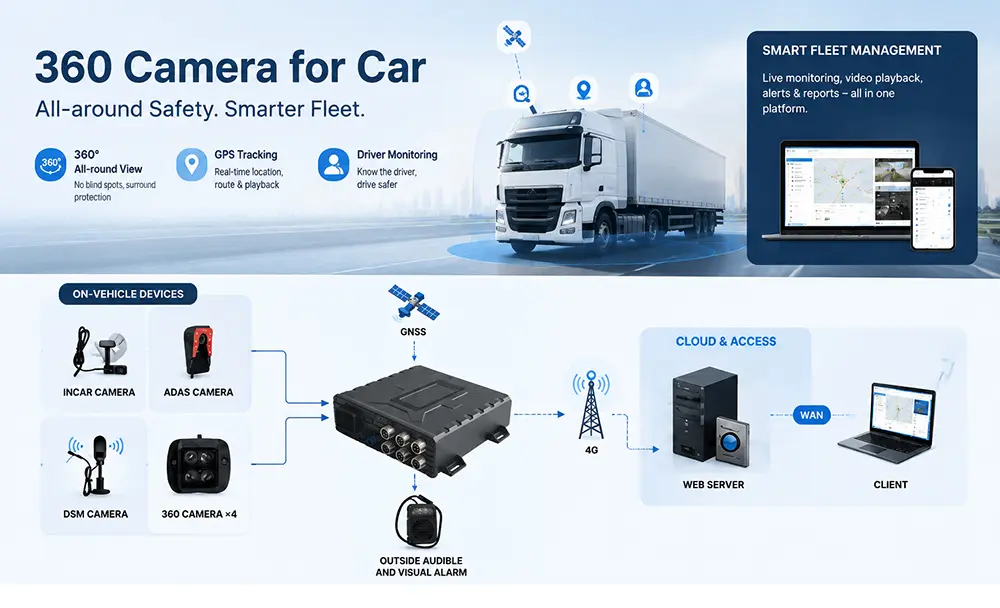
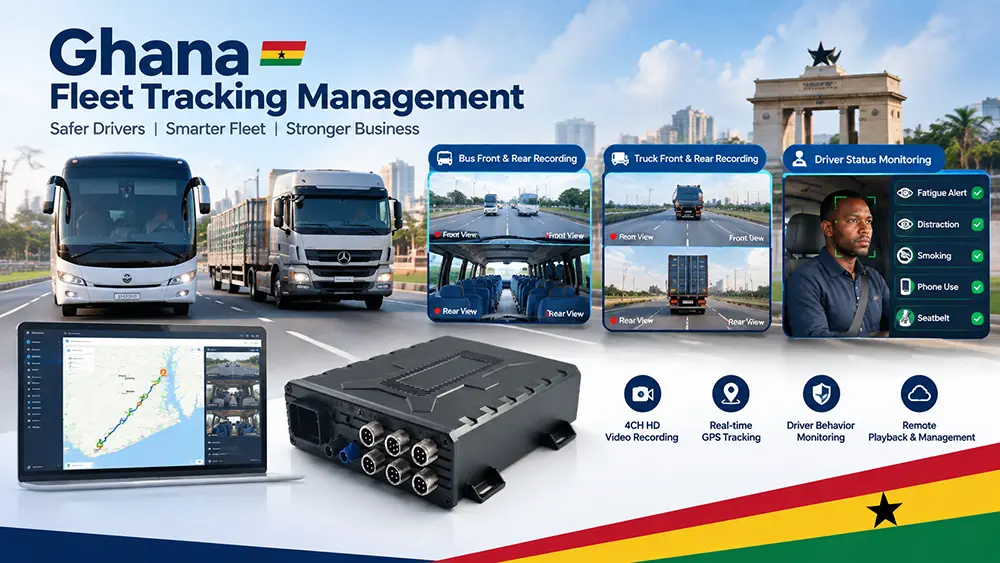
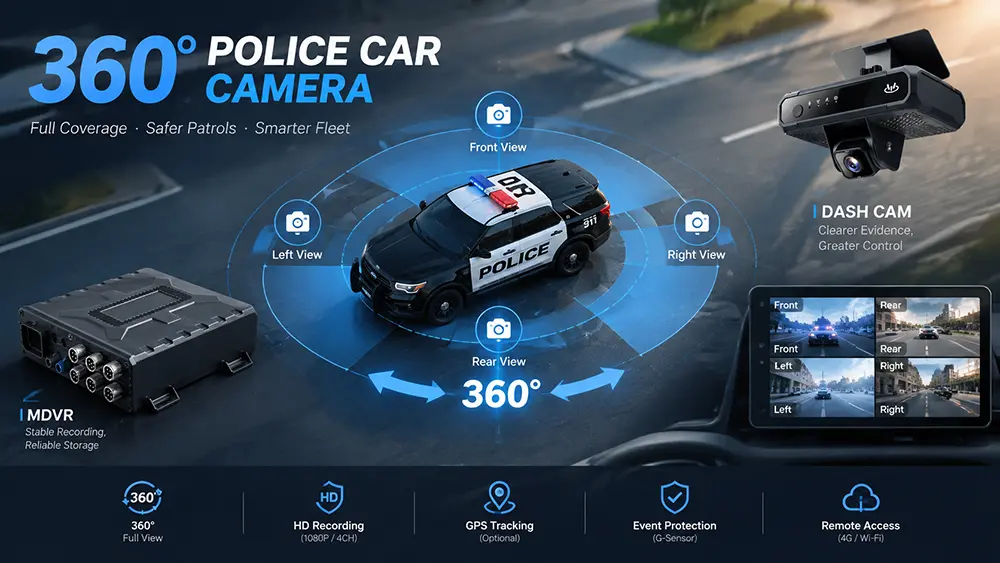
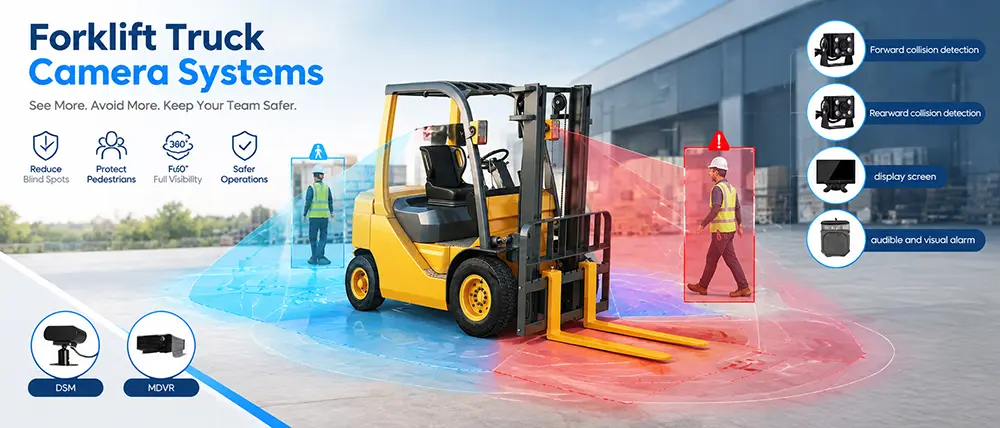
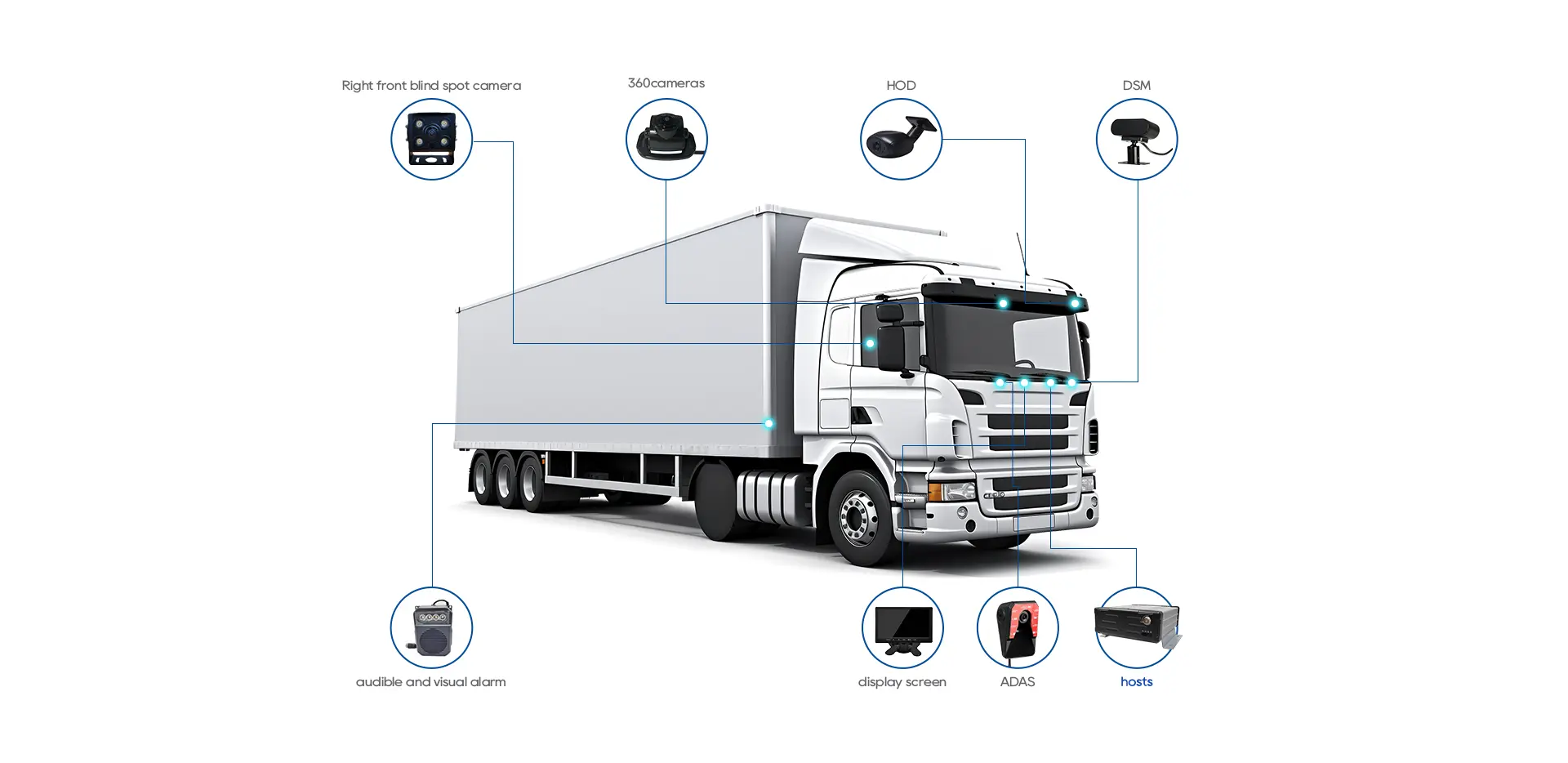
Including in-vehicle host, GPS-enabled dash cam, ADAS camera (for monitoring the surrounding environment of the vehicle and realizing functions such as lane departure warning and collision warning), DSM camera (for monitoring driver status and identifying fatigue, distraction and other behaviors), MDVR (Mobile Digital Video Recorder) (for storing video, audio and vehicle data, supporting loop recording and retrospective query), display screen and alarm devices. Some devices are equipped with backup batteries to ensure stable operation in remote areas.
4. Transmission Components
Realize real-time data interaction between the vehicle end and the cloud through cellular networks, satellite communications and Bluetooth, ensuring uninterrupted transmission of positioning, video, sensor and other types of data.
Core Technologies
1. Telematics Technology
As the core technology, it is responsible for the collection, transmission, analysis and storage of vehicle data, connecting software and hardware links.
2. GPS Positioning Technology
Provides precise positioning, supporting route planning, scheduling optimization and track tracing, serving as the foundation of fleet management.
3. OBD On-Board Diagnostics
Enables vehicle self-diagnosis, provides early fault warnings and supports preventive maintenance.
4. AI and Intelligent Analysis
Identifies dangerous driving behaviors through algorithms, and realizes fault prediction and fuel consumption optimization combined with big data.
5. Cloud Platform
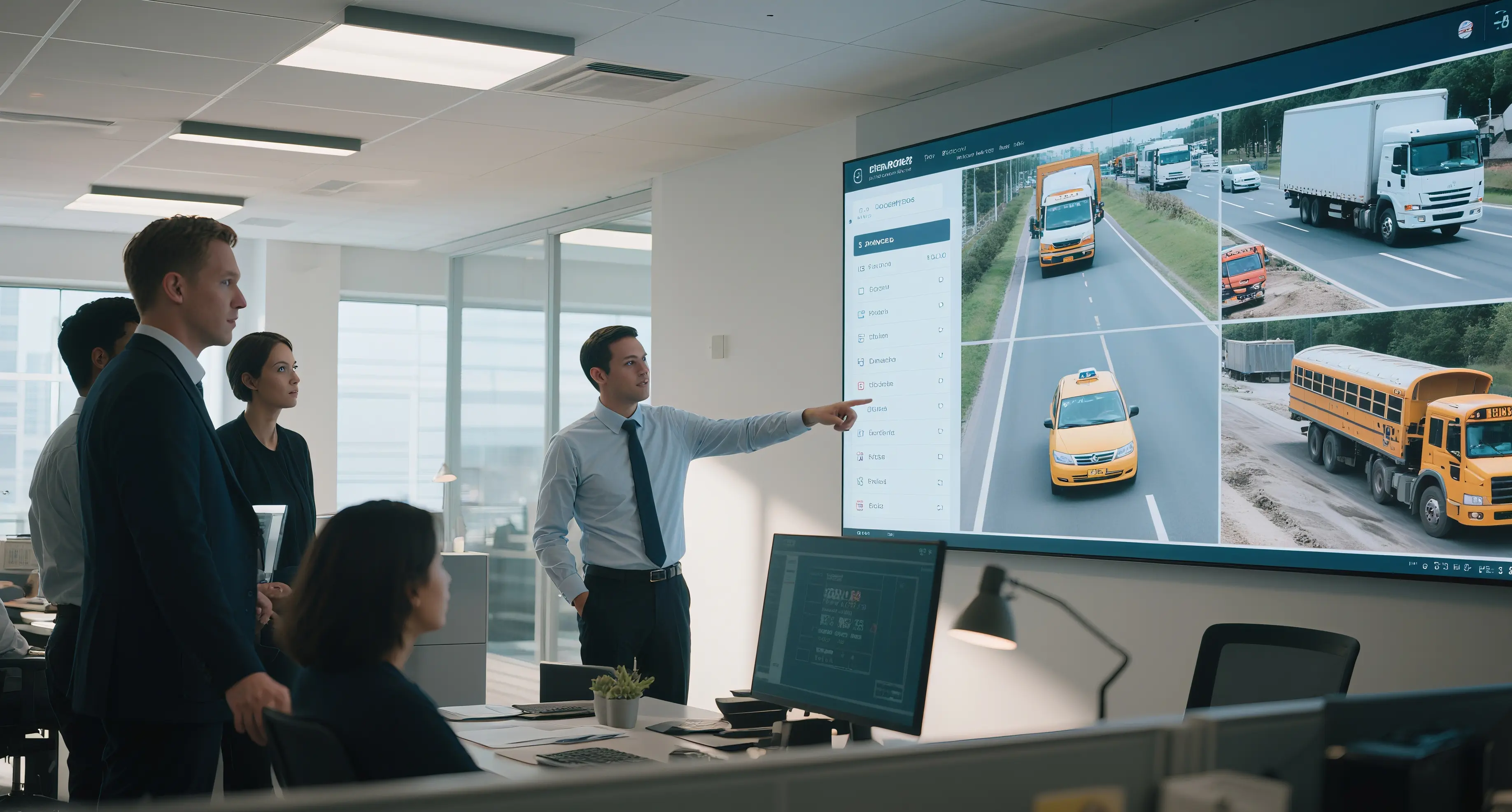
Provides Web and mobile management interfaces, supporting data visualization, alert push and other functions.
Functions of Remote Vehicle Monitoring System
1. Real-time Positioning and Track Management
Tracks vehicle location around the clock, supports track query and route verification, and optimizes scheduling efficiency.
2. Driving Behavior Monitoring
Identifies violations such as speeding and sudden braking, pushes alerts and generates driving scores.
3. Remote Vehicle Condition Diagnosis
Monitors engine, tire pressure and other statuses, issues fault warnings and generates maintenance plans to reduce repair costs.
4. Geo-Fence Control
Supports custom electronic fences with automatic alerts for vehicle border crossing and illegal parking, adapting to multi-scenario management.
5. Alerts and Notifications
Pushes abnormal alerts such as faults and violations through multiple channels.
6. Data Reporting and Analysis
Automatically generates various reports to support operation optimization and cost control.
7. Compliance Management
Meets compliance requirements such as HOS and IFTA, simplifying the audit process.
Applications of Remote Vehicle Monitoring System
1. Enterprise Fleet Management
Fleets in logistics, passenger transport and other fields optimize scheduling, control fuel consumption and safety through the system, improving asset utilization and operational efficiency.
2. Safety Control in High-Risk Industries
Mining, oil and gas industries apply IVMS combined with driver training to reduce violations and accident rates, ensuring operational safety.
3. Insurance and Risk Control
Insurance companies rate and price policies based on driving data, and quickly determine liability after accidents through tracks and videos, improving claims efficiency.
4. Cold Chain and Special Transportation
Integrated with temperature and humidity monitoring, it controls the transportation environment throughout the process, ensures the safety of cold chain goods and meets industry regulatory requirements.
The remote vehicle monitoring system (including RVMS, IVMS and VMS) is a comprehensive software and hardware management tool. Relying on GPS, AI and related hardware, it realizes core functions such as vehicle positioning and behavior monitoring, and is applied in multiple scenarios.
Email:hello@yuweitek.com