










Singapore Taxis Dual Front & Rear Dashcams
Singapore Taxis Dual Front & Rear Dashcams
By the end of May 2026, data released by the Land Transport Authority (LTA) of Singapore showed that the country had a total of 12,276 taxis and 97,346 private hire cars. Singapore’s official regulations do not mandate a specific model of dual front-rear recording device for all taxis and private hire vehicles. Current regulatory oversight mainly targets in-cabin recording cameras that capture passengers: such devices must obtain LTA approval prior to installation and be fitted at authorised installation centres. Footage must be securely stored and may only be accessed by government or LTA authorised personnel for investigations, law enforcement and related official procedures. Vehicles must also notify passengers in advance via in-car signage and trip booking information. Drivers are prohibited from using unauthorised devices such as mobile phones to record audio and video inside the vehicle.
Why Taxis and Private Hire Vehicles Require Dual Front & Rear Recording
Standard single-channel dashcams only capture footage of the road ahead. In cases of rear-end collisions, dangerous tailgating, lane-change crashes, reverse accidents, and disputes arising during passenger pick-ups and drop-offs, critical footage of the incident is often missing.
A dual-channel camera system simultaneously records the road ahead and the vehicle’s rear surroundings, linking video footage with timestamps, vehicle speed, GPS coordinates and driving status. In the event of traffic accidents, passenger complaints or insurance claim disputes, fleet operators can rapidly reconstruct the full sequence of events before and after an incident.
For taxi and private hire vehicle fleets, dual front-rear recording primarily addresses four core pain points:
1. Difficulty Determining Liability in Traffic Accidents
Front and rear footage supplements evidence including collision angles, positions of adjacent vehicles and crash sequences, eliminating blind spots caused by single-angle recording.
2. Lack of Objective Evidence for Passenger Complaints
When compliant with local privacy laws and device licensing requirements, authorised in-car and exterior footage serves as impartial evidence for investigating service disputes.
3. Delayed Detection of Dangerous Driving Behaviours by Drivers
Linking dashcams with AI devices such as ADAS and DSM enables identification of hazards including drowsiness, distracted driving, mobile phone usage, insufficient following distance and lane departure.
4. Inability for Fleets to Centralise Management of Footage and Alert Data
Consumer-grade dashcams rely solely on local memory cards, frequently resulting in lost footage, hardware malfunctions or barriers to remote video retrieval. Professional fleet systems integrate footage, location tracking and alert logs into a unified management platform.
Upgrade from Single Dashcam Installation to a Comprehensive On-Board Video System
Taxis and private hire vehicles in Singapore operate within an environment characterised by large fleet sizes, high trip volumes, dense urban road networks and strict service quality standards. Fleets therefore require more than standalone cameras — they need an end-to-end solution integrating on-board cameras, edge storage, AI recognition, real-time alerts and cloud-based fleet management.
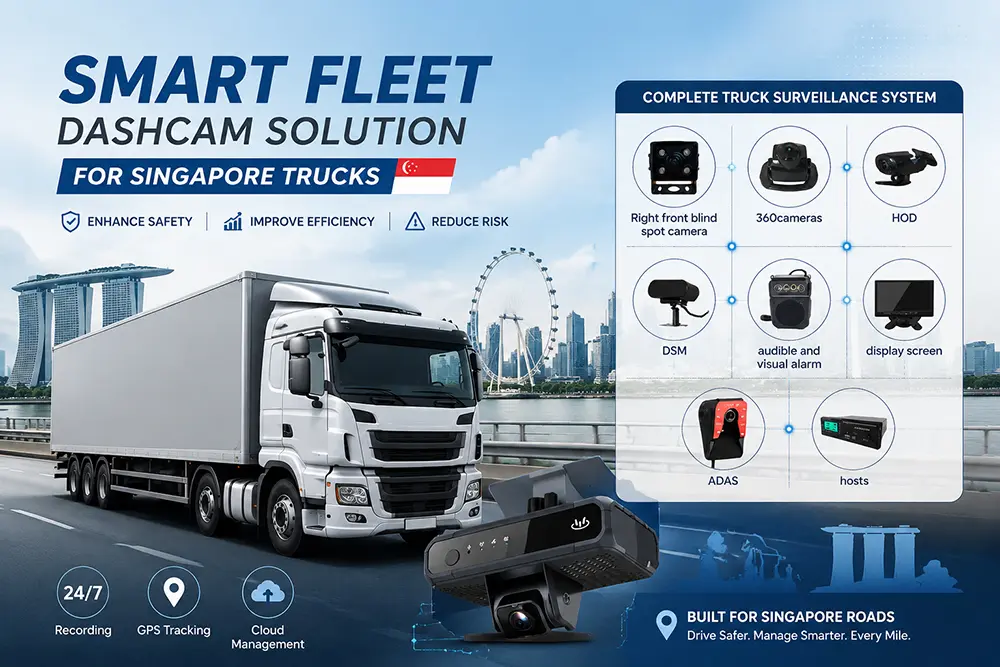
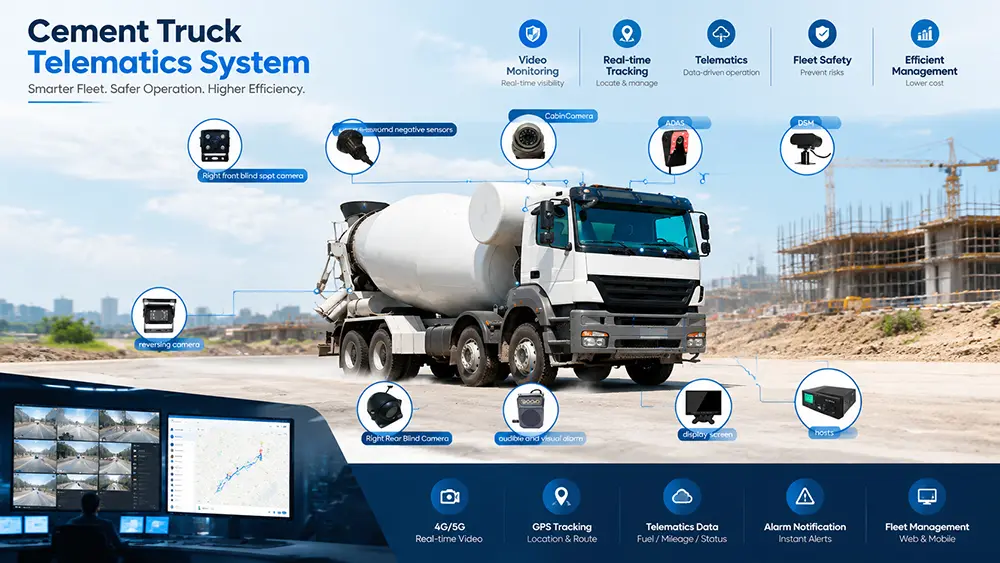
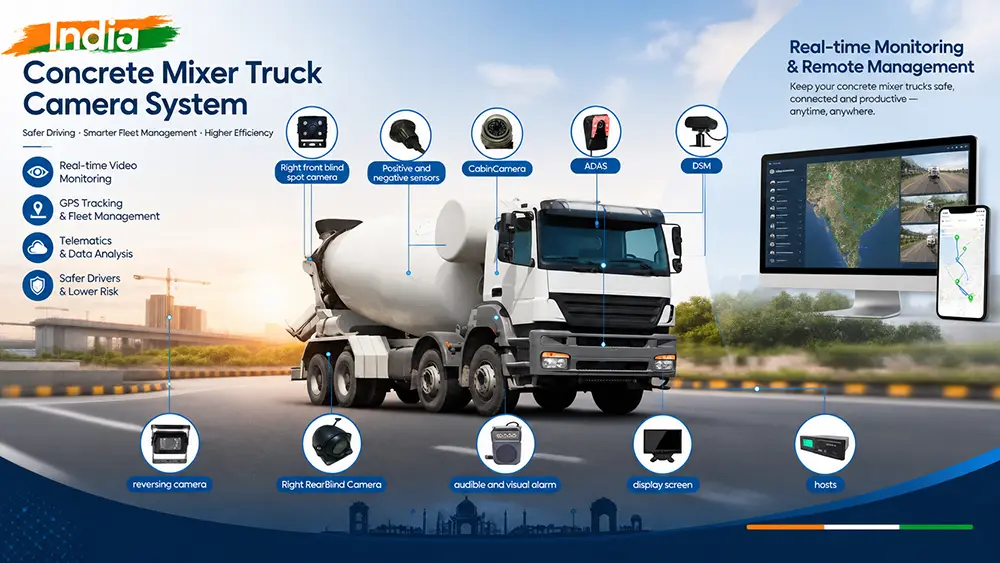
YUWEI’s Taxi Fleet Management Solution unifies 4G/5G cellular communication, GPS/BDS positioning, video surveillance, AI analytics and remote administration on one platform. It records vehicle routes, driving conditions and abnormal incidents, and supports real-time location tracking, live video streaming, historical playback, alert resolution and operational performance analysis.
1. Dual Front & Rear Dash Cams: Core Video Evidence Capture
Fleets may deploy dual-channel dash cams to simultaneously record forward road views, rear surroundings or both interior and exterior vehicle footage.
Serving as the foundational video terminal of the full system, this hardware delivers the following capabilities:
• High-definition driving footage recording
• GPS/BDS travel trajectory logging
• 4G real-time video transmission
• Locked footage storage for critical events including collisions and hard braking
• Local on-device storage plus remote video retrieval
• Expandable multi-camera support
• Synchronised display of vehicle location, speed and video feeds
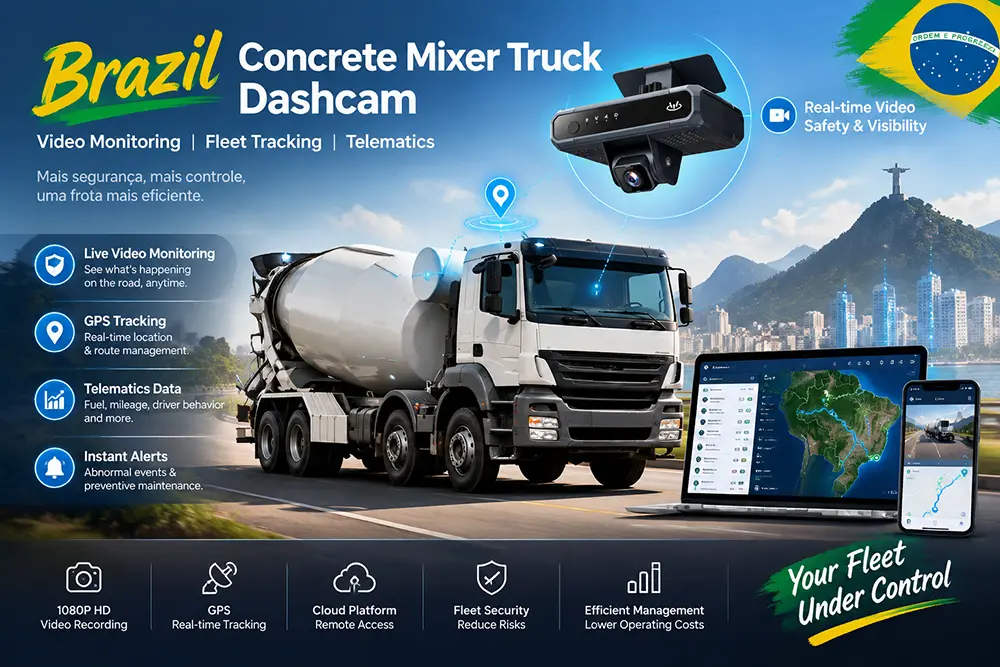
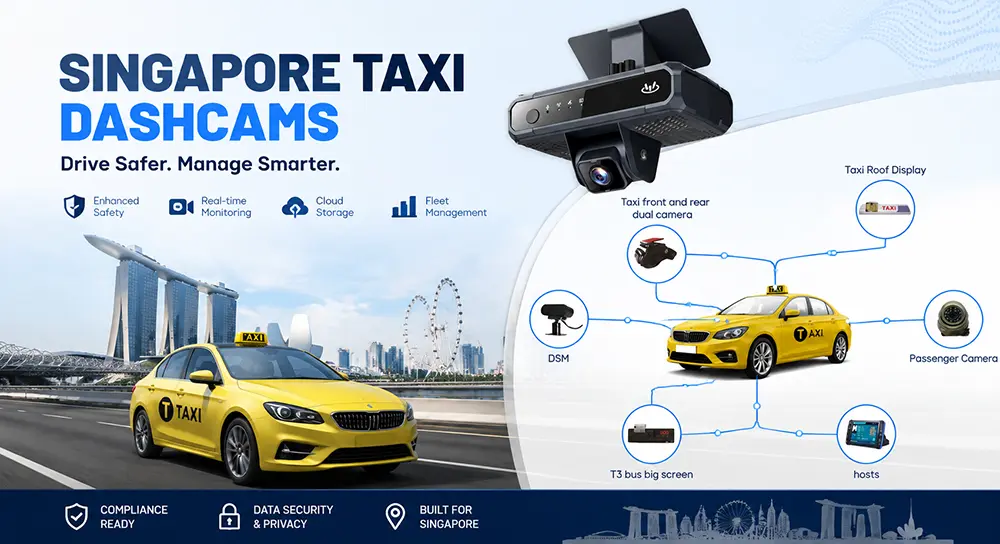
YUWEI fleet dashcams support multi-channel camera connectivity and transmit video and alert data to the management platform via cellular networks, making them suitable for taxis, private hire vehicles, logistics vans and other commercial motor vehicles.
2. MDVR: Centralised Multi-Channel Video Administration
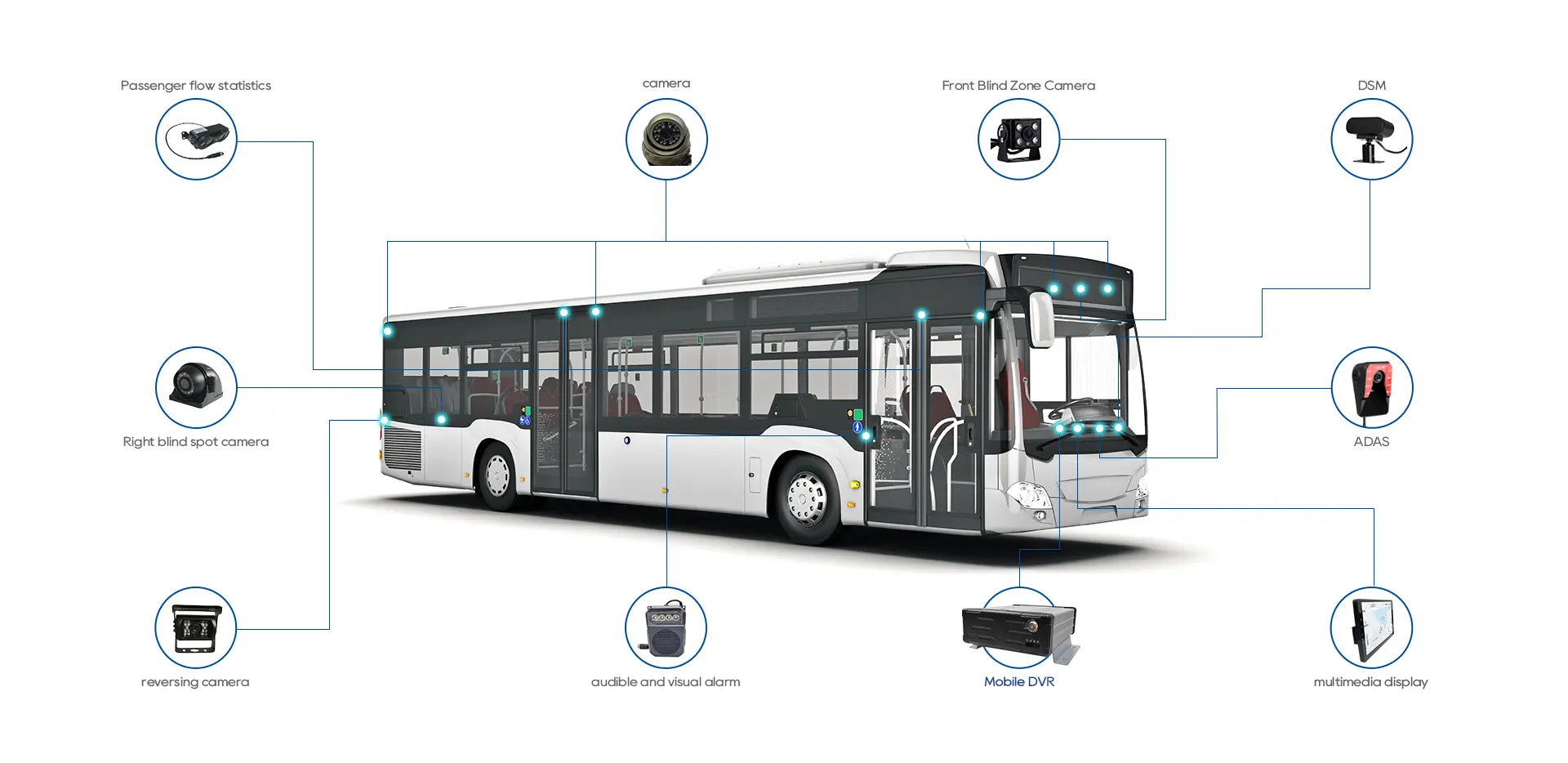
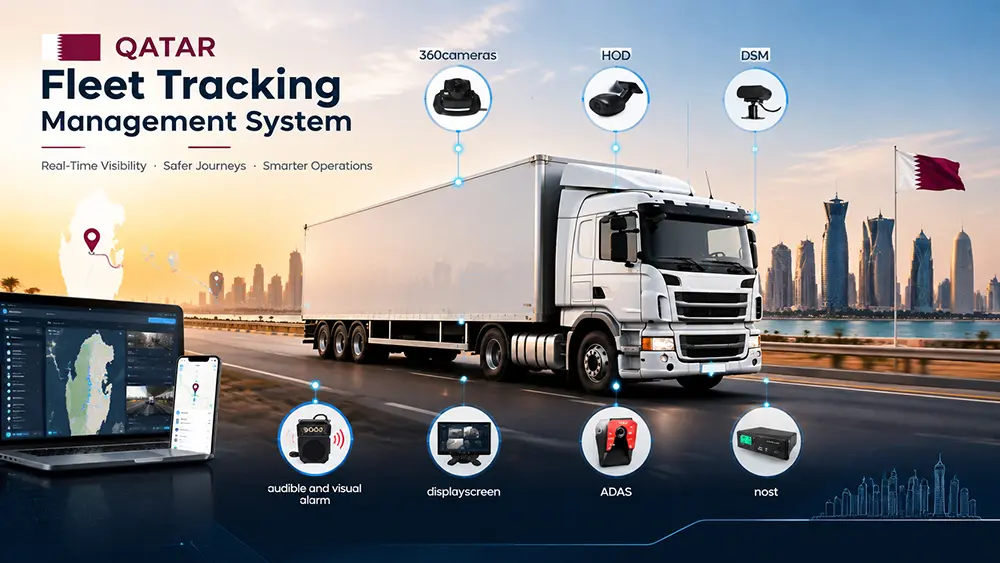
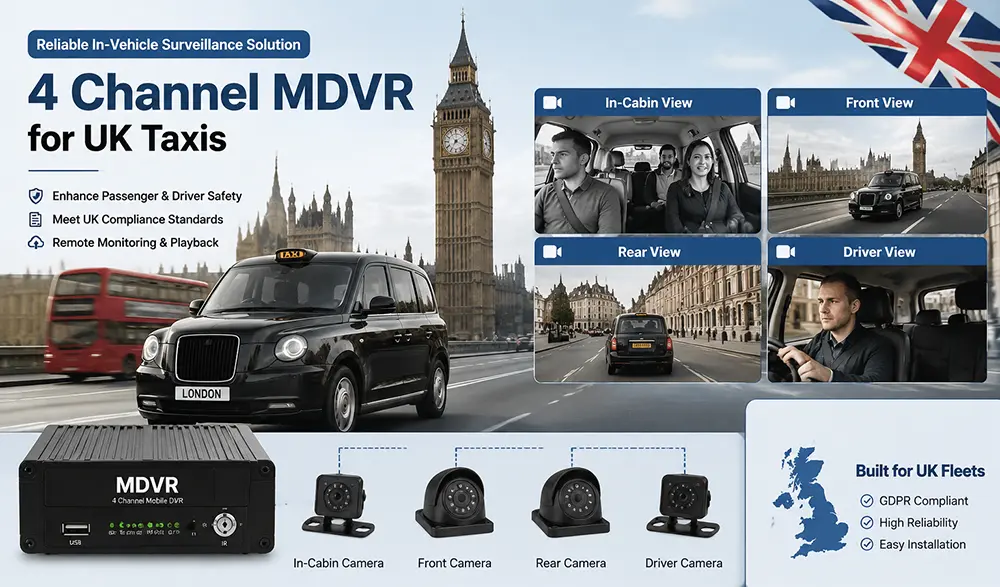
Fleets requiring full coverage of forward, rear, cabin and blind-spot views may deploy MDVR units.
An MDVR acts as the central hub of the entire on-board camera system, aggregating feeds from multiple cameras, GPS positioning signals and vehicle hazard alerts to enable synchronised recording, local cache storage, automated event triggering and remote oversight.
With an MDVR, taxis and private hire vehicles can be configured according to vehicle model and business demands with the following camera types:
• Forward road-facing camera
• Rear dash recording camera
• Driver monitoring camera
• Passenger compartment camera
• Left and right blind-spot cameras
• Reverse parking camera
• Expandable 360° surround-view cameras
After multi-channel video streams are fused with GPS data, managers can search footage by vehicle ID, timestamp, geographic location or alert category, eliminating the need to physically retrieve memory cards from individual vehicles.
3. ADAS: Shift from Post-Accident Evidence to Proactive Crash Prevention
Traditional dashcams only supply evidence after collisions occur. ADAS forward-facing cameras conduct real-time analysis of the road ahead to warn drivers before hazards unfold.
The system supports the following warning functions:
• Lane Departure Warning (LDW)
• Forward Collision Warning (FCW)
• Following Distance Warning
• Pedestrian Collision Risk Warning
• Traffic Sign Recognition
• Lead Vehicle Departure Reminder
Upon detecting lane drift, unsafe tailgating or impending collision risks, the system emits instant audible alerts and uploads corresponding video clips and alert metadata to the cloud management platform.
4. DSM & HOD: Mitigate Drowsy and Distracted Driving
Taxi and private hire vehicle drivers often undertake extended continuous shifts, with airport transfers and peak-hour back-to-back trips significantly increasing fatigue and loss of focus.
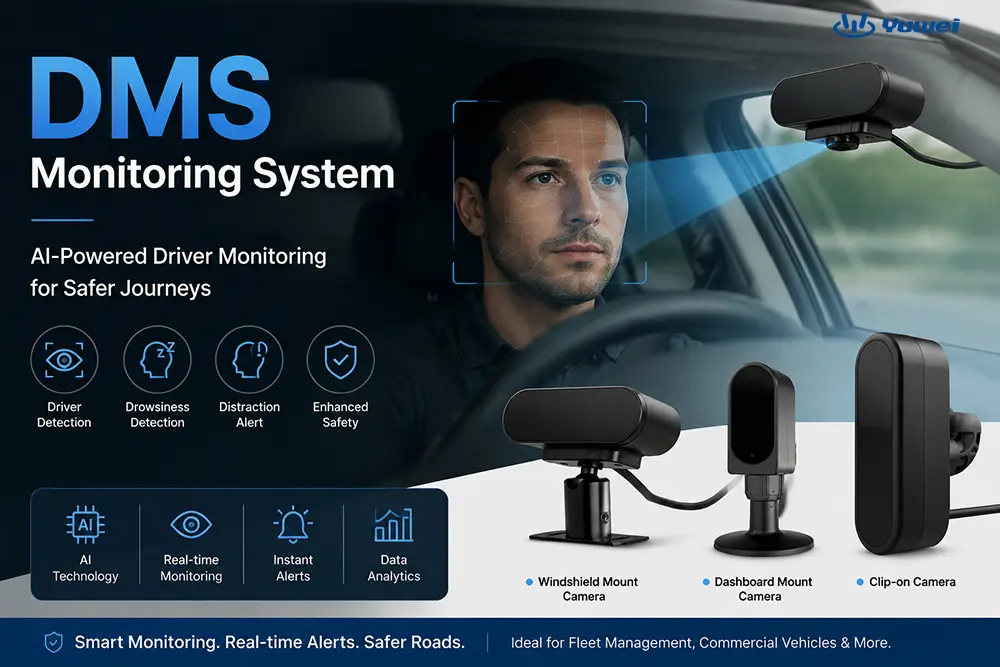
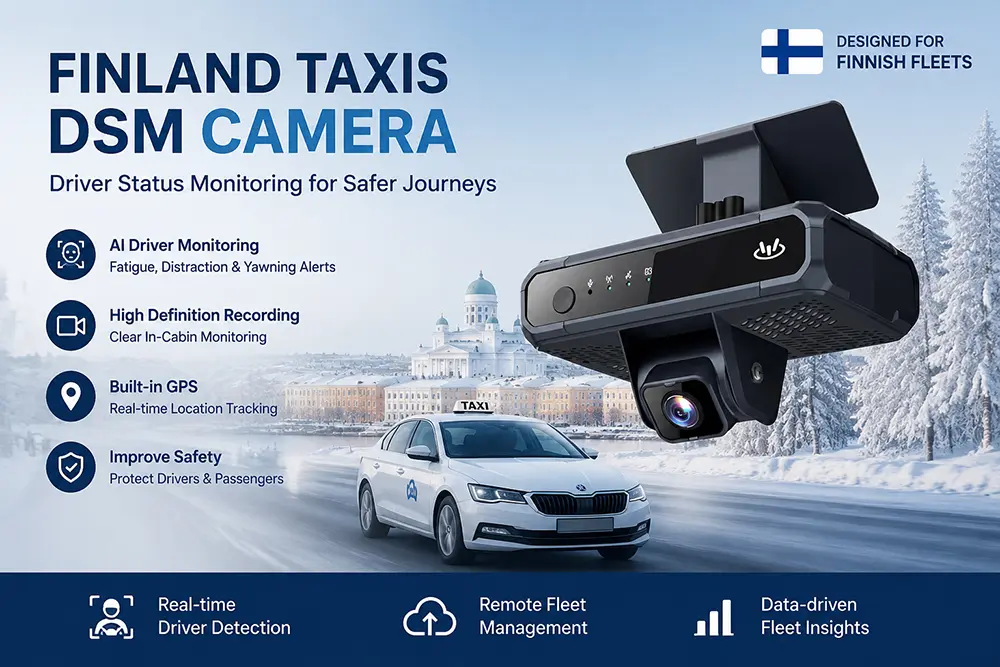
DSM (Driver Status Monitoring) cameras enable the system to identify unsafe driver states including:
• Fatigue indicators such as closed eyes and yawning
• Mobile phone usage while driving
• In-vehicle phone calls
• Sustained off-road visual distraction
• Smoking
• Camera obstruction or driver leaving the monitoring frame
When risky behaviour is detected, the system delivers immediate audio or voice alerts inside the vehicle, while uploading incident type, timestamp, vehicle location and associated footage to the backend server.
HOD (Hand-on-Detection) cameras may be added as an auxiliary module to identify hands-off steering wheel behaviour, mobile phone operation and unfastened seatbelts, further refining the driver safety evaluation framework.
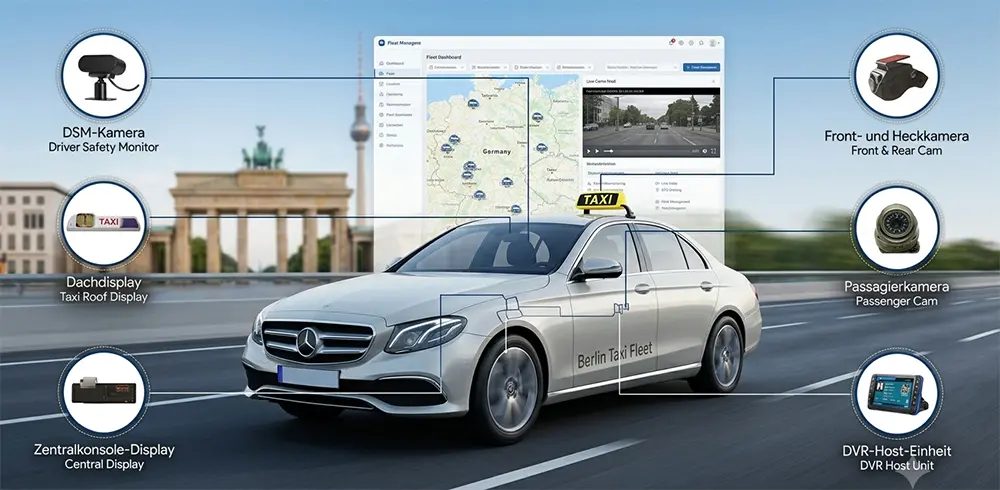
5. Display Terminals, Blind-Spot Cameras & Audible Alerts
To enable drivers to instantly view camera feeds and safety notifications, the system can be equipped with an on-board display terminal that consolidates front/rear video, reverse feeds, blind-spot visuals and system hazard alerts.
The display terminal supports the following functions:
• Toggle between multi-camera video feeds
• Real-time rear and reverse environment viewing
• Blind-spot auxiliary visualisation
• Trip order and dispatch information reception
• Pop-up notifications for ADAS and DSM alerts
• Integrated navigation and vehicle status monitoring
YUWEI on-board display terminals accept multi-channel video input and integrate navigation, cellular communication and vehicle control functionalities.
Waterproof rear-view and blind-spot cameras can be mounted on the vehicle’s rear and sides to deliver a complete field of vision during reversing, kerb parking, passenger pick-up/drop-off and lane changes. Rear cameras link directly to the display terminal to stream live footage of the vehicle’s rear zone.
Audible alert modules can be activated for high-priority hazards, delivering buzzer tones or voice prompts to urge drivers to take corrective action immediately.
Closed-Loop Safety Management via Fleet Cloud Platform
Cameras solely function as data collection endpoints; fleet management efficiency hinges on the backend platform’s capacity to correlate video, vehicle and driver datasets.
YUWEI’s Taxi Fleet Management Platform offers full support for:
• Real-time GPS vehicle positioning
• Single-vehicle tracking and full fleet geographic distribution mapping
• Live video streaming and historical footage playback
• Centralised resolution of ADAS, DSM and blind-spot alerts
• Statistical reporting of all dangerous driving behaviours
• Mileage tracking and travel route analytics
• Notifications for abnormal vehicle operating conditions
• Remote retrieval of accident footage
• One-touch emergency panic alert with instant location upload
• Custom operational reports and driver safety scoring
When the system identifies drowsy driving, mobile phone usage, lane departure, collision risks or emergency panic triggers, it automatically saves pre- and post-incident footage, and transmits vehicle coordinates and alert records to the platform. Managers thereby establish a complete closed-loop workflow: real-time hazard detection → in-cabin driver alert → cloud platform log storage → post-incident review → targeted driver safety training.
Non-Negotiable Data Compliance Requirements
On-board camera systems for taxis and private hire vehicles must balance operational safety with protection of driver and passenger personal data privacy.
Devices recording audio or video inside the passenger cabin carry strict compliance obligations. Prior to system deployment, fleets must verify the latest LTA requirements covering hardware approval, authorised installation centres, passenger notification protocols, data access controls and secure footage storage. Per official statements from Singapore’s Ministry of Transport, in-cabin recording footage may only be used for authorised investigative and law enforcement purposes. Vehicles must display prominent notification signage, and pre-booked passengers must receive advance notice at the time of dispatch.
Fleet systems must incorporate the following core compliance controls during design:
• Role-based tiered access permissions for the management platform
• Encrypted secure transmission of video and location tracking data
• Formal approval workflows for all footage retrieval requests
• Immutable audit logs recording every video view and download event
• Technical safeguards preventing drivers from copying or publicly sharing in-cabin footage
• Reasonable data retention periods aligned with legitimate operational purposes
• Clear delineation of responsibilities between equipment operators, data controllers and authorised personnel permitted to access recordings
Unauthorised installation or operation of in-cabin recording hardware, or unapproved disclosure of passenger/driver footage, may result in financial penalties and demerit points on professional driving licences.
Recommended System Configuration Packages
1.Entry-Level Package: Dual Recording & Location Tracking
Suitable for small private hire vehicle rental firms and basic operation fleets
Dual Front & Rear Dash Cam + GPS Positioning + 4G Cloud Remote Platform
Core use cases: traffic accident evidence capture, real-time vehicle tracking, route history lookup and remote video retrieval.
2.Safety-Focused Package: Proactive Hazard Alerts & Driver Monitoring
Suitable for taxi operators, mid-to-large private hire fleets and overnight shift vehicles
Dual Front & Rear Dash Cam + ADAS + DSM + Audible Alert Module + Cloud Management Platform
Extends basic incident recording with collision warnings, lane departure alerts, drowsiness detection and distracted driving identification.
3.Full-Spectrum Enterprise Package: Multi-Channel Video & 360° Surround Coverage
Suitable for large-scale taxi operators, airport transfer fleets and premium high-service fleets
MDVR + Front & Rear Cameras + ADAS + DSM + HOD + Blind-Spot Cameras + On-Board Display Terminal + Cloud Fleet Platform
This configuration delivers complete coverage of forward, rear, cabin and lateral blind zones, aggregating multi-channel footage, GPS travel trajectories, driving behaviour metrics and hazard alerts within a unified fleet management portal.
Upgrading camera systems for Singapore’s taxis and private hire vehicles extends far beyond simply installing a basic dashcam. Dual front-rear recording solves post-incident evidence gaps; ADAS and DSM deliver proactive accident prevention; MDVR and cloud platforms enable unified oversight of large fleets; meanwhile access permission governance and secure data storage determine full compliance with local privacy and transport regulatory standards.
By combining dash cams, MDVR, ADAS, DSM, HOD, blind-spot cameras, on-board display terminals and audible alert hardware, taxi and private hire vehicle operators can build an end-to-end safety management ecosystem covering vehicles, drivers, road conditions, passengers and cloud administration platforms. This framework achieves traceable accident records, predictive risk alerts, real-time vehicle geotracking, centralised video management and data-driven operational analytics.
Email:hello@yuweitek.com