










Long Distance Bus Driver Fatigue Monitoring Camera
Bus Driver Fatigue Monitoring Camera
Long-distance interprovincial buses in Thailand undertake massive cross-provincial passenger transport between Bangkok and major cities including Chiang Mai, Phuket, Nakhon Ratchasima and Khon Kaen. Public transport statistics show there are approximately 14,000 registered buses nationwide in Thailand. On April 14, 2026 alone, the passenger transport system of Thailand’s State Transport Company operated 6,062 inbound and outbound trips, carrying roughly 98,451 passengers. It is evident that interprovincial buses remain a vital travel option for Thai residents returning home, sightseeing and travelling between cities.
Entering 2026, Thailand’s public passenger transport administration has further advanced toward digitalization and full traceability. Fuel subsidies for interprovincial buses now rely on vehicle GPS tracks to verify operational status. Land transport authorities have also intensified supervision over vehicle technical conditions, driver qualifications, alcohol testing, driving hours and passenger seatbelt compliance.
Thailand has not yet issued a nationwide mandatory regulation requiring all long-distance buses to install DMS cameras. Nevertheless, driver status monitoring, GPS trajectory recording, alarm logs and video evidence chains align perfectly with Thailand’s public passenger transport regulatory priorities.
Why Long-Distance Buses in Thailand Need DMS Cameras
1. Mitigate Fatigue Risks During Nighttime & Extended Driving
Many cross-provincial routes in Thailand require continuous driving for several hours, with a portion of vehicles operating overnight shifts. Maintaining a fixed seated posture for long periods easily triggers fatigue symptoms such as frequent blinking, eye closure, yawning, head drooping and diminished concentration.
Traditional management mechanisms mainly depend on driver self-discipline, rest schedules and random fleet inspections, which fail to detect real-time fatigue while vehicles are in motion.
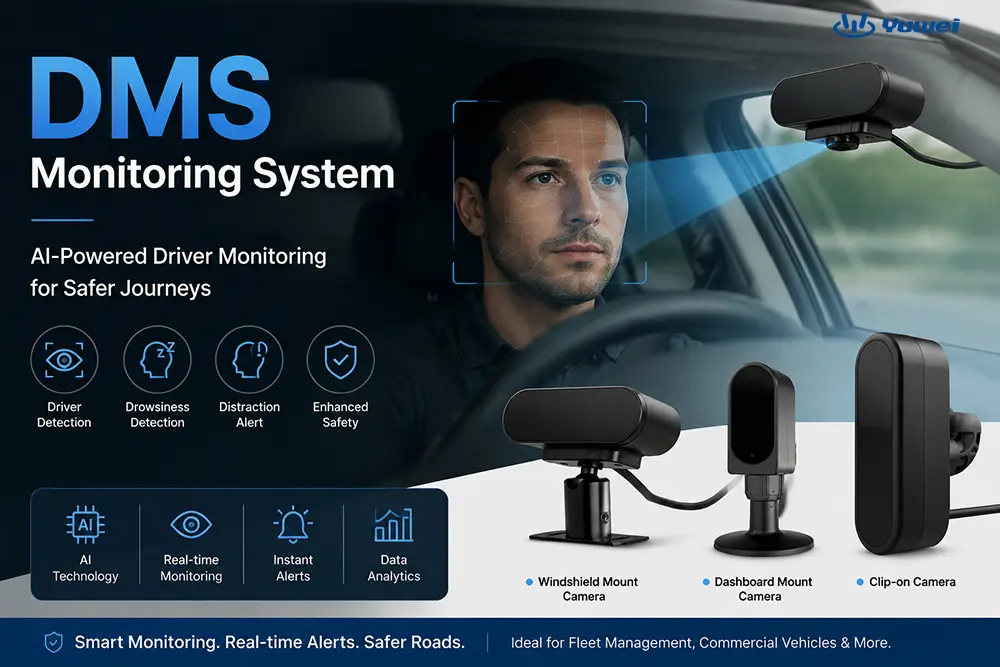
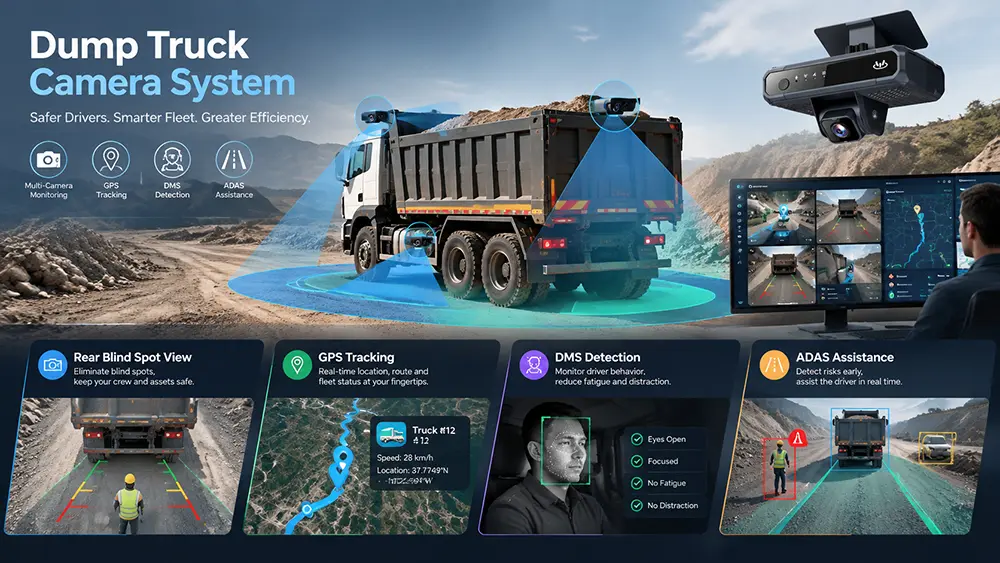
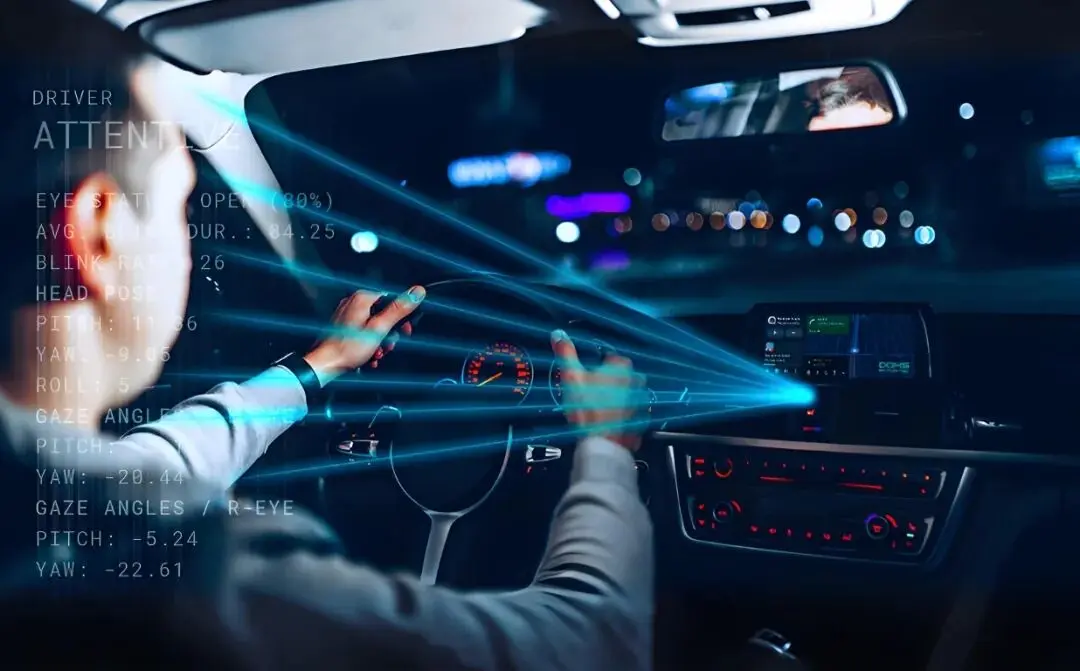
The DMS Driver Monitoring Camera continuously captures drivers’ facial features and head postures. When the system detects prolonged eye closure, repeated yawning, head lowering or off-road gaze, it immediately triggers voice alerts and uploads incident data to the management platform. This shifts safety governance from post-accident accountability to pre-incident intervention.
2. Reduce Distracted Driving Hazards
Drivers taking phone calls, operating mobile phones, smoking, chatting with passengers or focusing on cabin conditions for extended periods divert their eyes from the road.
Long-distance buses feature long bodies, large passenger capacities and long braking distances. Even a few seconds of distraction may result in rear-end collisions, lane departures or delayed braking responses.
Beyond fatigue detection, DMS cameras identify mobile phone usage, smoking, distraction, abnormal driver absence and camera obstruction. The YUWEI DSM System recognizes abnormal driving states in real time, delivers in-cab voice reminders to drivers, and transmits all alarm events to the fleet backend platform.
3. Compensate for Limitations of Ordinary Dashcams
Standard dashcams only record forward road footage, serving solely as post-crash video evidence. They cannot identify driver eye closure or phone use, nor link driving behaviour to vehicle speed, location and cumulative driving time.
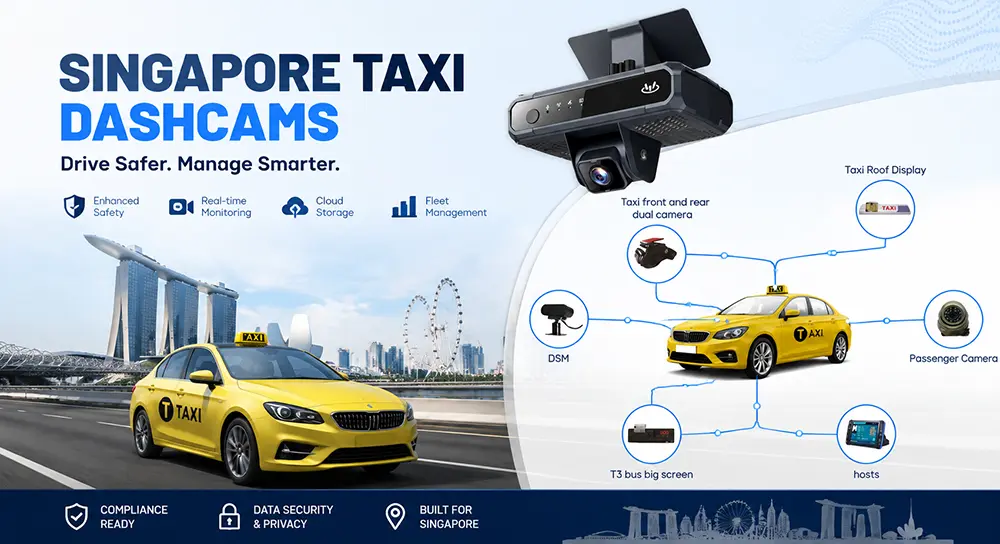
When integrated with MDVR, GPS and 4G communication systems, DMS cameras synchronously record driver status, forward road views, cabin environments, vehicle speed and real-time positioning.
Fleet managers gain access to complete safety records incorporating timestamps, locations, driving behaviours and alarm categories, rather than isolated video clips.
4. Cut Casualties & Operational Losses Caused by Traffic Accidents
Long-distance buses carry large passenger groups. Accidents stemming from fatigue or distraction often lead to fatalities, vehicle downtime, expensive insurance claims and severe damage to corporate reputation.
A bus rollover in eastern Thailand in 2025 killed 18 people and injured 31. Investigations into prior bus crashes also suspected driver fatigue or drowsiness as contributing factors.
Accordingly, fatigue monitoring cameras should not be treated merely as an additional onboard device, but as a core component of proactive safety management.
DMS Camera Solution for Thai Long-Distance Buses
YUWEI’s safety management solution for Thai interprovincial buses adopts the following integrated system architecture:
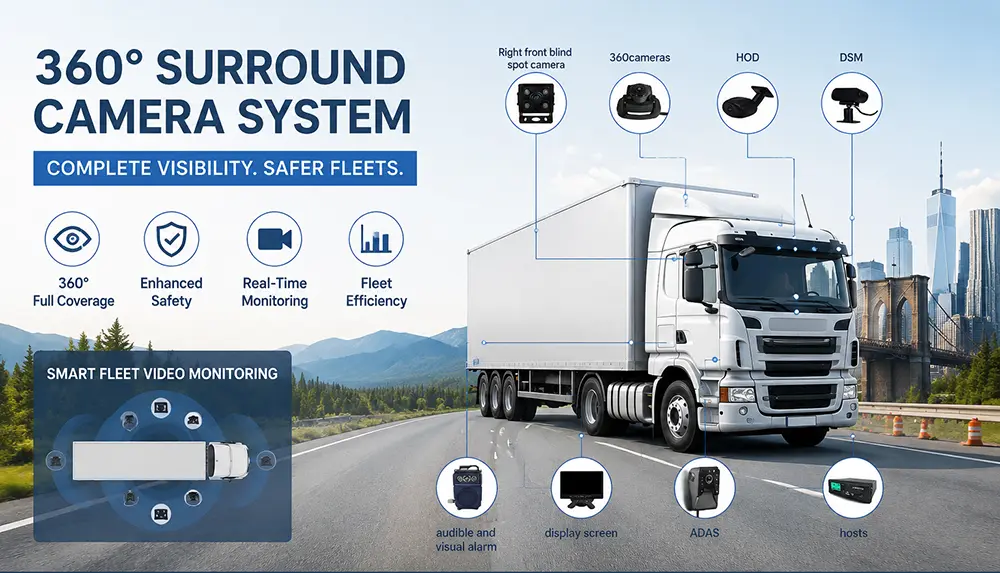
DMS Driver Monitoring + ADAS Road Risk Warning + Multi-Channel MDVR Recording + GPS Positioning + 4G Communication + On-Board Display + Cloud Management Platform
1. Driver Status Recognition
DMS cameras can be mounted on dashboards, near A-pillars or directly in front of drivers to capture facial images without obstructing forward vision.
The system identifies the following risky behaviours:
• Fatigue and eye closure
• Repeated yawning
• Distracted driving
• Smoking and phone calls
• Abnormal driver absence from the seat
• Other irregular driving conditions
Upon risk detection, the device first issues voice reminders to drivers to prevent hazard escalation.
2. Forward Road Hazard Identification
ADAS cameras are installed on the front windshield to analyse preceding vehicles, lane markings, pedestrians and road surroundings.
Core functional modules:
• Lane Departure Warning (LDW)
• Forward Collision Warning (FCW)
• Safe Following Distance Warning
• Pedestrian Collision Warning
• Traffic Sign Recognition
3. Multi-Channel Video & Event Storage
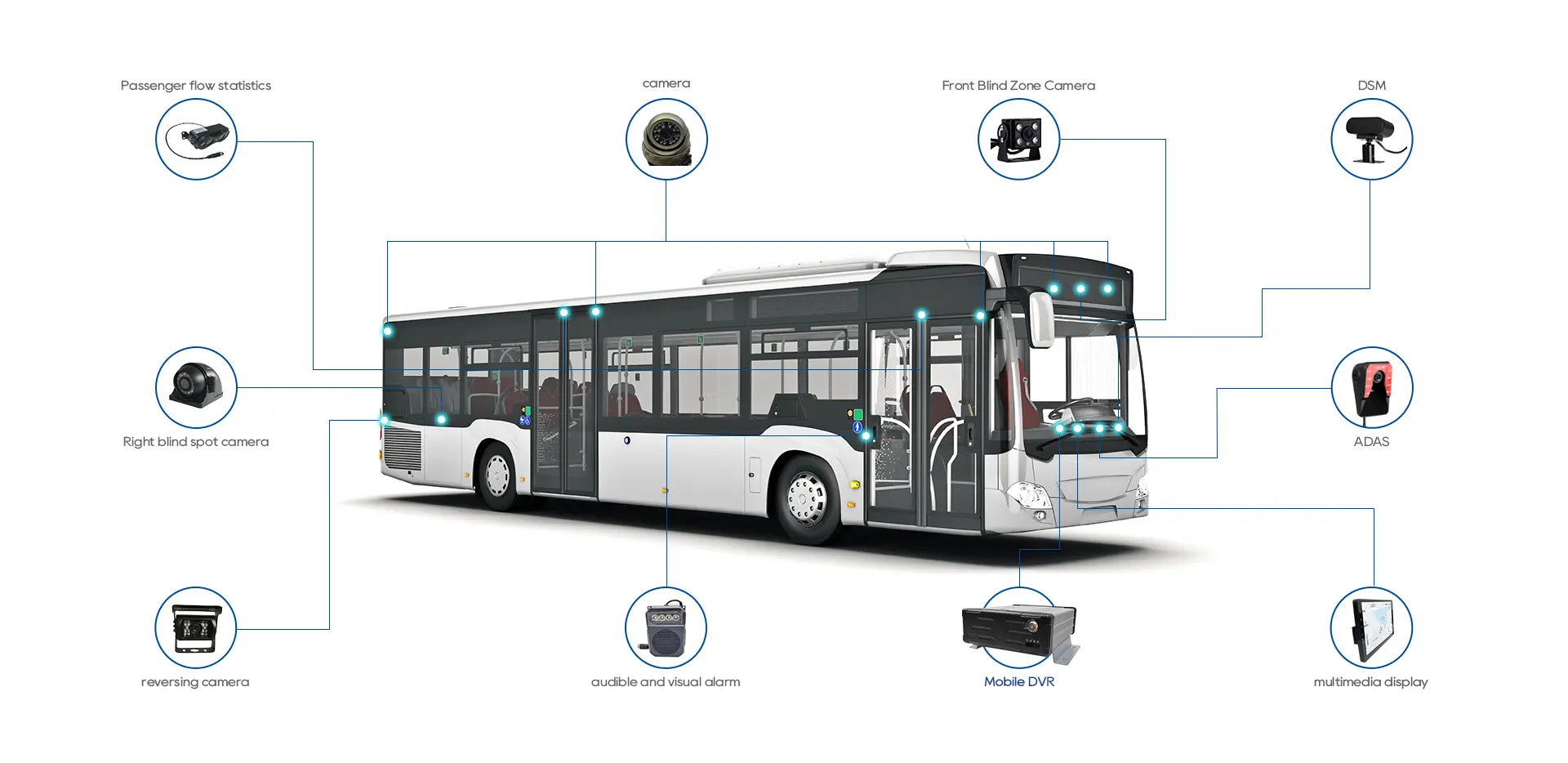
MDVR units support connections to driver-facing, forward, cabin, door, side and rear vehicle cameras.
When alarms activate, the system automatically saves critical footage captured before and after each incident, linked to alarm types, vehicle speed, coordinates and timestamps.
All video files are cached locally during temporary network outages and uploaded to the cloud once connectivity resumes.
4. 4G Communication & GPS Positioning
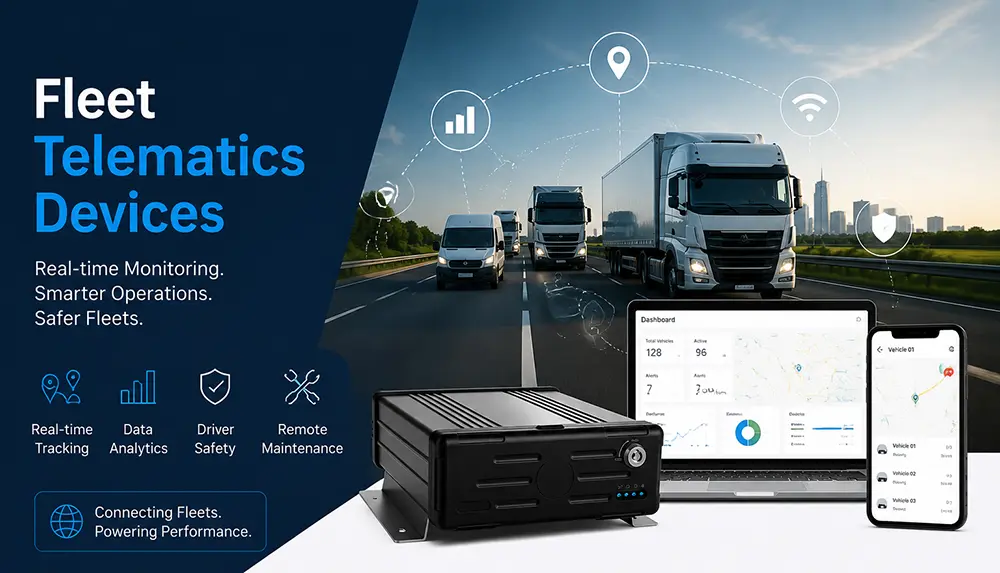
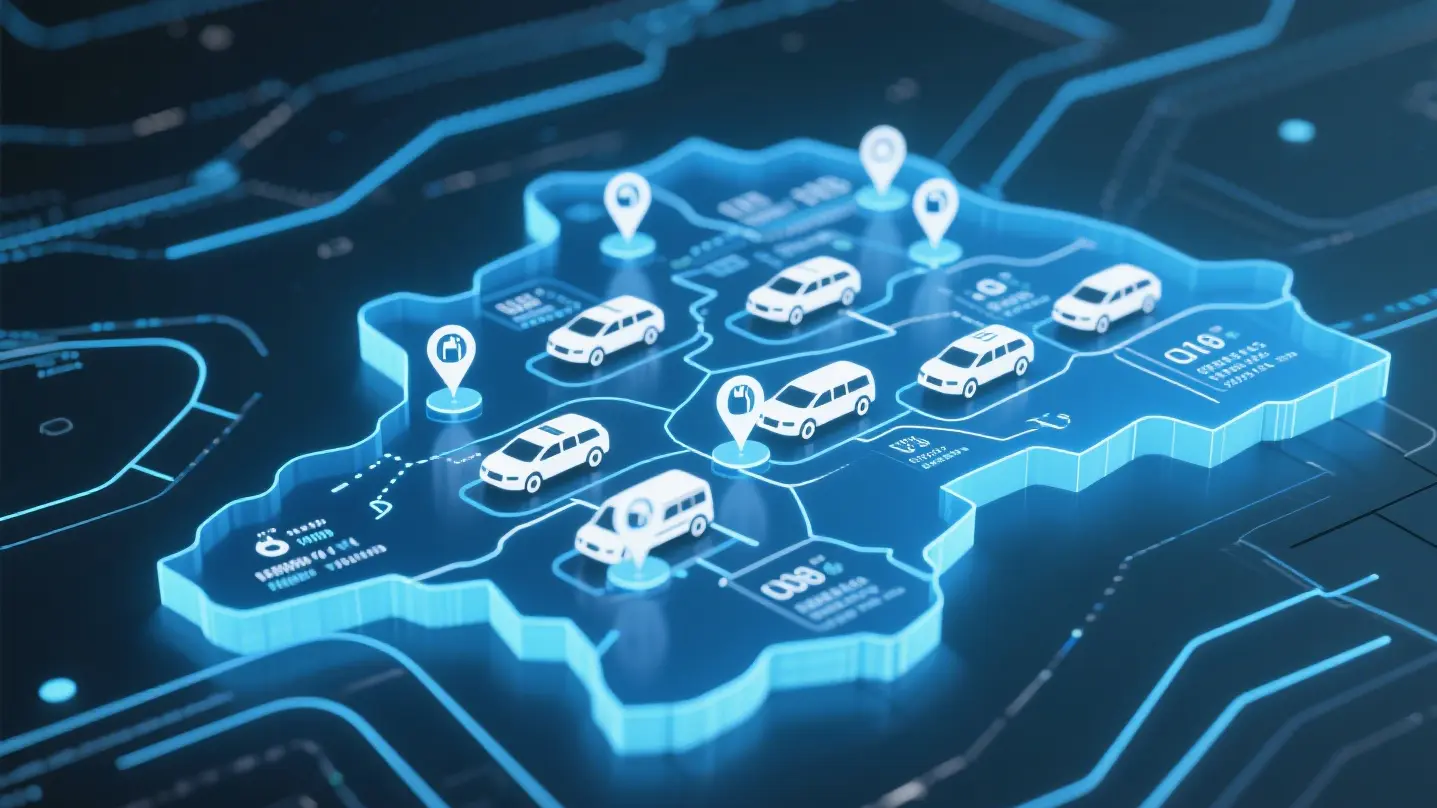
Onboard terminals transmit vehicle locations, travel trajectories, live video streams and alarm data to the central management platform.
Fleet supervisors can remotely monitor real-time metrics including:
• Route deviation
• Prolonged vehicle idling
• Speeding violations
• Frequent fatigue or distraction alarms triggered by drivers
YUWEI fleet management solutions integrate 4G/5G cellular communication, GPS/BDS positioning, video surveillance, AI analytics and cloud-based alarm notification functions.
5. Closed-Loop Platform Administration
If a driver continuously triggers fatigue alerts, the platform sends instant notifications to the dispatch centre.
Administrators may initiate two-way voice intercom to instruct drivers to stop for rest at the nearest service station or arrange relief drivers for shift rotation.
The system also generates driver risk rankings, route alarm statistics and vehicle safety reports to support driver training, scheduling and performance appraisal.
Fleet Management Schemes & Hardware Configurations
Scheme 1: Basic Configuration
Applicable Scenarios:
Small-scale tour bus or regional passenger fleets with limited vehicle quantities and tight budgets, prioritizing fatigue driving risk control.
Recommended Hardware:
• DSM Y7 Driver Monitoring Camera
• 4G Dash Cam or entry-level vehicle video recorder
• Forward road ADAS camera
• GPS positioning module
• Local storage memory card
• In-cab driver voice alarm unit
Available Functions:
• Fatigue driving detection
• Distracted driving identification
• Mobile phone and smoking recognition
• Local in-cab voice reminders for drivers
• Real-time vehicle positioning
• Cloud upload of alarm snapshots and short video clips
• Historical travel trajectory and alarm log retrieval
The DSM Y7 features 720P resolution and 940nm infrared supplementary lighting to minimize ambient light interference with recognition accuracy, ideal for bus cabs operating day and night.
Scheme 2: Standard Configuration
Applicable Scenarios:
Fixed-route interprovincial buses, overnight coaches, airport shuttle buses and medium-sized passenger transport fleets.
Recommended Hardware:
• DSM Y10A Driver Status Monitoring Camera
• ADAS Y5 Forward Vision Camera
• Fleet Dash Cam V5
• Cabin surveillance camera
• GPS/BDS positioning module
• 4G communication module
• Emergency panic button
• Cloud fleet management platform
Available Functions:
• Recognition of fatigue, distraction, smoking and phone usage
• Lane Departure Warning
• Forward Collision Warning
• Safe following distance alert
• Pedestrian collision warning
• Driver identity and behaviour logging
• Synchronized interior & exterior video recording
• Real-time live video streaming
• Historical trajectory playback
• Remote alarm notification and statistical reporting
The DSM Y10A monitors driver fatigue and unsafe behaviours in real time, delivers voice prompts and submits incident data to the management platform. Its adjustable lens angle adapts to all types of bus cabins.
The Fleet Dash Cam V5 supports 4G connectivity, GPS/BDS positioning, real-time audio-video transmission, dual TF card storage and up to four camera inputs. Compatible with ADAS and DSM algorithms, it enables rapid deployment for fleets.
Scheme 3: Professional-Grade Configuration
Applicable Scenarios:
Large interprovincial passenger transport groups, double-decker tour buses, cross-border coaches and large fleets requiring centralized supervision.
Recommended Hardware:
• DSM Y13 High-Definition Driver Monitoring Camera
• HD ADAS Forward Vision Camera
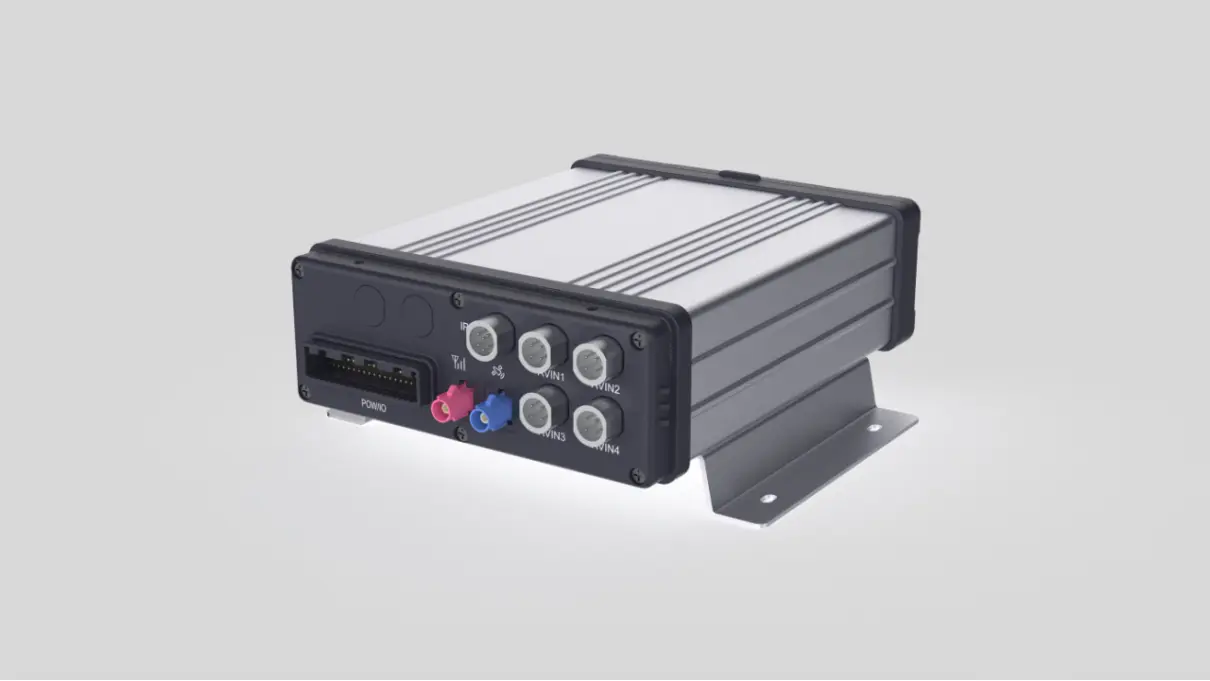
• F4 Series AI MDVR
• Cameras for cabin, door, rear and vehicle side monitoring
• BSD Blind Spot Detection Cameras
• On-board display monitor
• Emergency panic button
• Driver identity recognition device
• 4G/5G communication module
• GPS/BDS positioning module
• Enterprise-grade cloud management platform
Available Functions:
• Identification of fatigue, smoking, phone calls and distracted driving
• Forward collision, lane departure and following distance warnings
• Side and rear blind spot monitoring
• Centralized storage of multi-channel HD video
• Automatic locking of pre/post-alarm footage
• Remote live video access and two-way intercom
• Driver risk scoring
• Route, trip duration and driving hour analytics
• Centralized vehicle dispatching and geofence management
• Video evidence for accident investigation and insurance claims processing
The DSM Y13 caters to long-distance passenger vehicles demanding superior recognition precision and high-quality video footage.
YUWEI F4 AI MDVR integrates 4G/WiFi communication, GPS/BDS positioning and vehicle video recording. Compatible with ADAS, BSD and DSM peripheral devices, it suits fleets with multiple cameras and long-duration continuous recording under unified central management.
Scheme 4: On-Board Display Terminal Configuration
On-board display screens installed near driver cabins display live feeds from forward, rear, door and blind spot cameras.
When the system detects fatigue, collision risks or pedestrians in blind zones, warning pop-up notifications instantly appear on the display.
The YUWEI M3 On-Board Display runs on the Android OS with a 10.1-inch touchscreen. It supports WiFi, Bluetooth, navigation, multimedia playback and four-channel video input, consolidating driving assistance alerts, vehicle operational data and camera feeds on a single interface.
Typical Application Scenarios
Overnight Interprovincial Routes
DMS prioritizes detection of eye closure, yawning and reduced focus. The dispatch centre receives notifications for mandatory rest stops following consecutive alarm triggers.
Bangkok-to-Tourist City Routes
ADAS and DSM work in tandem to simultaneously monitor driver status, following distances, lane deviation and forward pedestrian hazards.
Charter Tour Buses
Multi-channel interior and exterior footage records full driving processes, passenger boarding/alighting and unexpected incidents, providing supporting evidence for dispute resolution and insurance claims.
Double-Decker Buses
Additional door, cabin, side and rear cameras eliminate blind spots for drivers, with all video centrally stored via MDVR.
Cross-Border Passenger Transport
GPS geofencing, real-time trajectory tracking, remote video streaming and abnormal parking alarms enable full visibility over vehicle operations at border checkpoints and cross-border routes.
Large Passenger Transport Conglomerates
The platform generates fatigue alarm logs, speeding records and high-risk driver rankings segmented by vehicle, route and individual operator, supporting unified driver training, scheduling and safety performance assessments.
YUWEI Fatigue Monitoring System Recommended for Long-Distance Buses
Safety management for Thai long-distance buses cannot rely solely on driver experience and post-crash video reviews. An effective solution delivers instant alerts upon detecting driver fatigue or distraction, and uploads alarm footage, GPS coordinates, vehicle speed and driving behaviour data to the management platform to form a complete closed-loop workflow:
Risk Identification → In-Vehicle Warning → Platform Alarm → Manual Intervention → Post-Incident Data Analysis
YUWEI deploys DSM Y7, DSM Y10A or DSM Y13 driver cameras tailored to bus models, fleet scale, route lengths and monitoring requirements, combinable with ADAS dashcams, AI MDVR units, GPS positioning hardware, on-board displays and cloud management platforms.
Beyond fatigue detection, this system empowers fleets with remote video supervision, vehicle dispatching, high-risk driving analytics and standardized accident evidence archiving.
For Thai operators running interprovincial passenger services, tour buses, airport shuttles, double-decker coaches and cross-border transport lines, the YUWEI Driver Fatigue Monitoring System upgrades traditional passive video recording to proactive early warning, transforming scattered vehicle management into unified digital safety oversight.
Email:hello@yuweitek.com