












Best AI Dash Cam for Trucking Companies
Why Trucking Companies Cannot Do Without AI Dash Cams
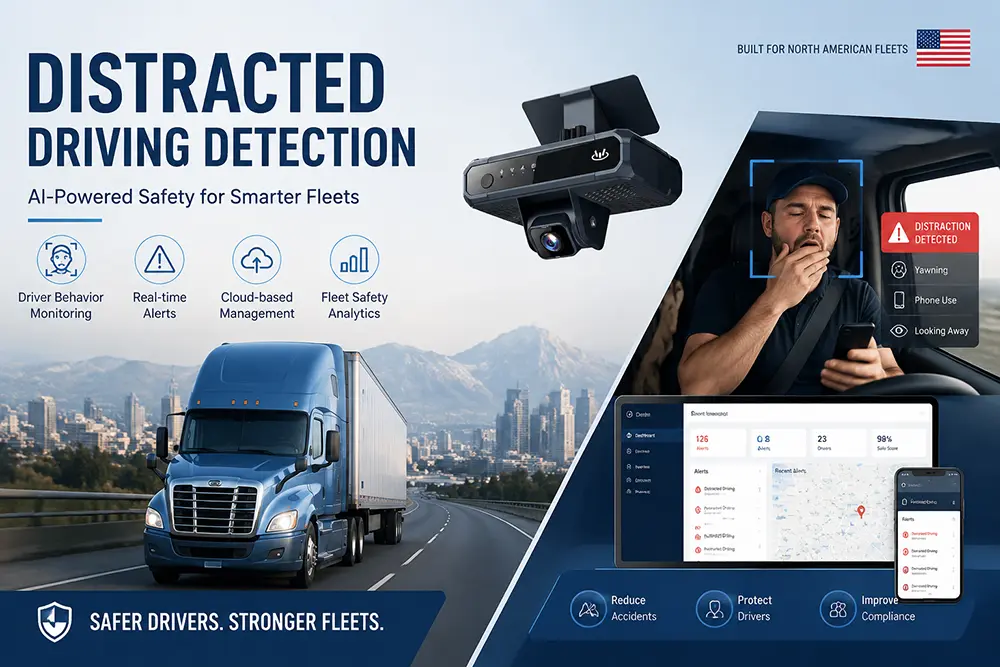
AI dash cams for trucks transition fleets from passive video recording to proactive safety—identifying dangerous behaviors like distraction and drowsiness in real-time and issuing warnings. Data shows that in-vehicle monitoring can reduce accident rates by 60% and related costs by 86%. Furthermore, driver factors such as speeding, distraction, and fatigue are the main causes of fatal accidents involving large trucks. These cannot be captured by traditional telematics and must rely on in-cabin monitoring to be detected.
Technical Principles of AI Dash Cams
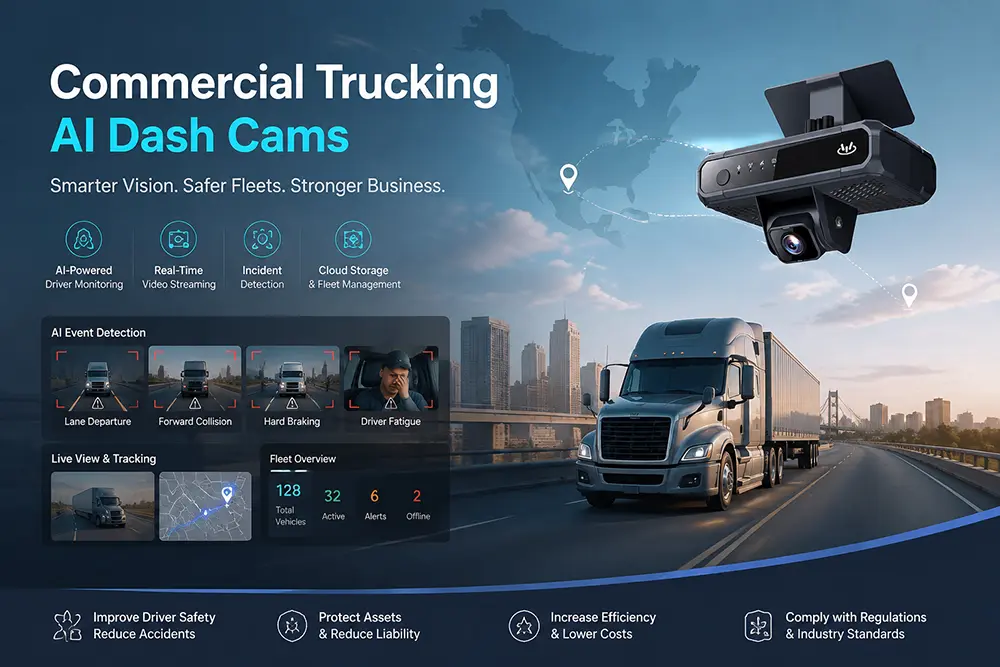
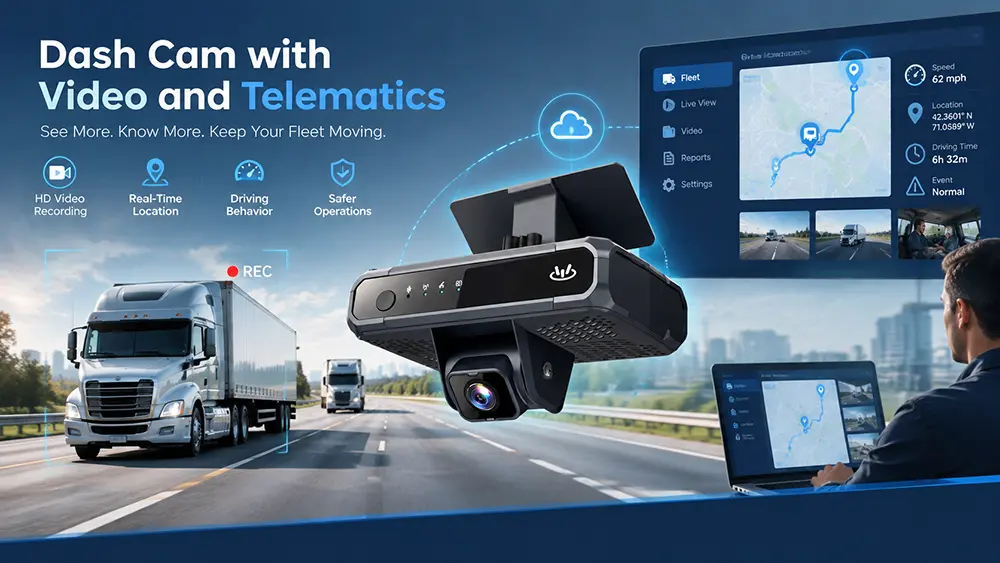
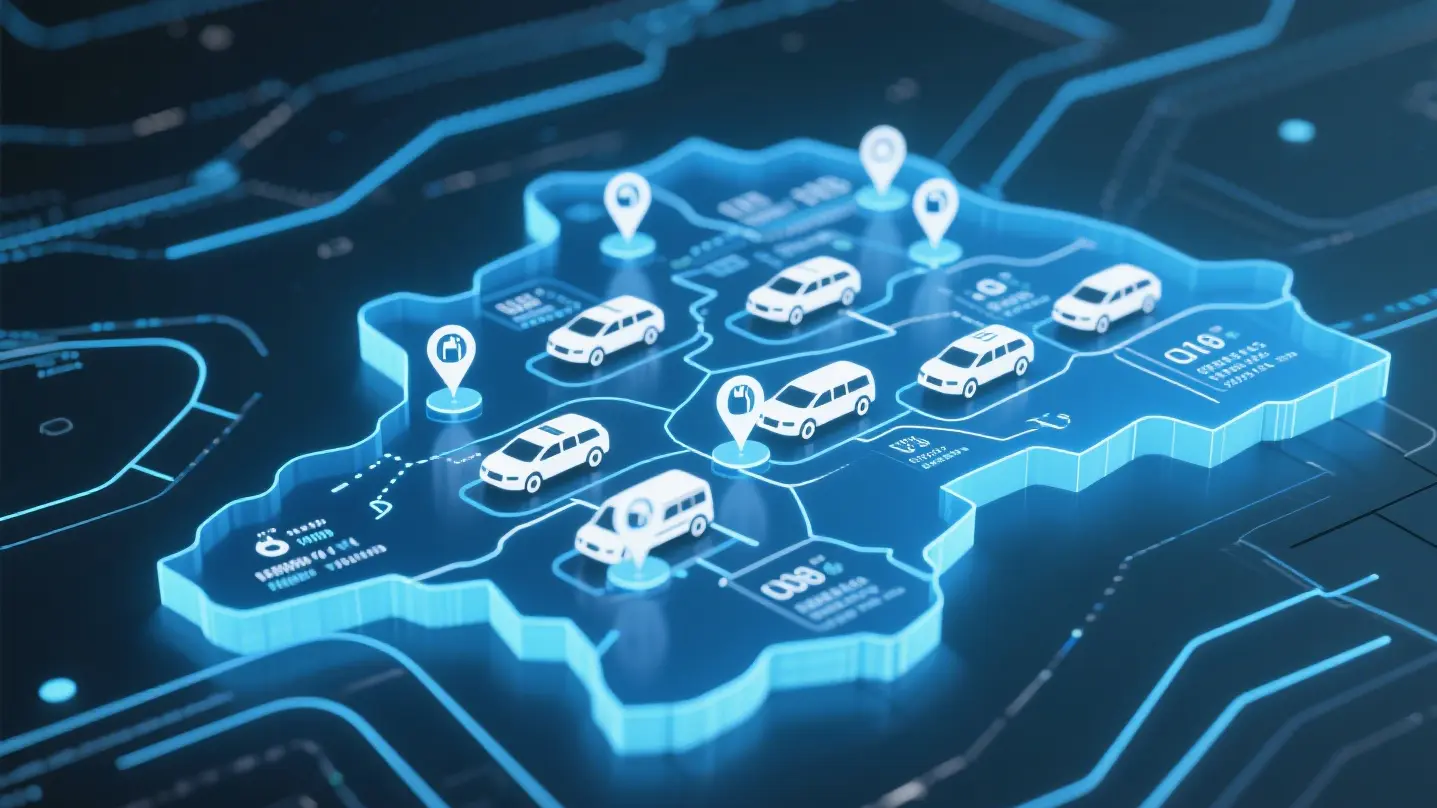
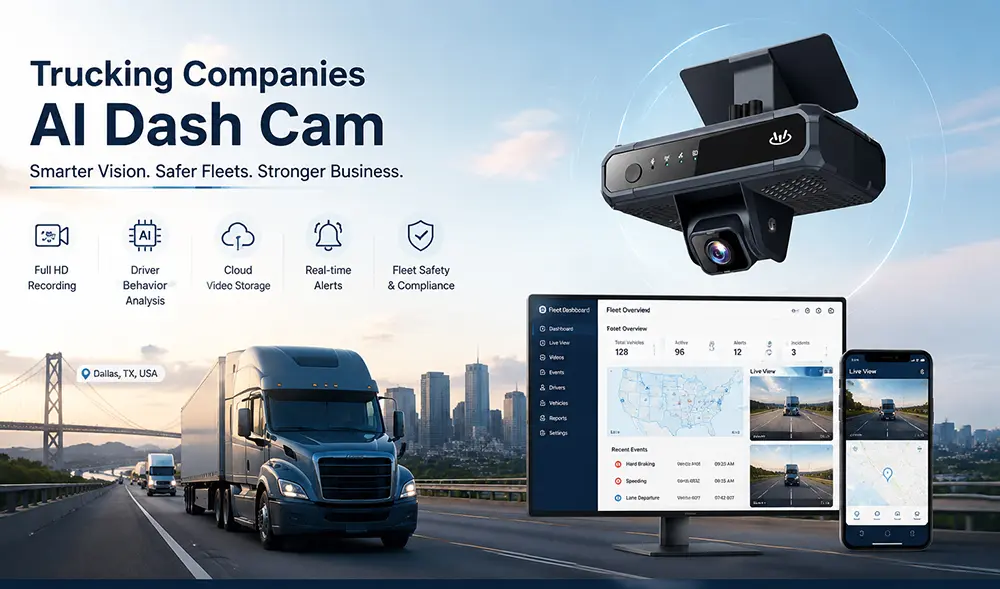
Fleet management systems are no longer simple GPS tracking tools; they have evolved into comprehensive digital platforms integrating real-time GPS tracking, AI video analysis, cloud management, and driver behavior recognition. This integrated technology stack is known as "Video Telematics."
Workflow of AI Dash Cams
1.Continuous Dual-Lens Recording: Front-facing road + In-cabin
2.AI Edge Computing Analysis: Deep learning algorithms
3.Real-Time Risk Detection: Distraction / Fatigue / Collision
4.Instant In-Cabin Alerts: Voice reminders for drivers
5.Cloud Upload: Automatic upload of key video clips
6.Management Review: Cloud-based fleet management platform
Core Technology Modules
Real-Time GPS Tracking System
Collects data on vehicle location, routes, driving speed, and fuel consumption to support operational dispatching and efficiency optimization. The GPS tracking module is closely integrated with the AI camera to achieve synchronous playback of trajectory analysis and video.
Dual-Lens AI Camera System
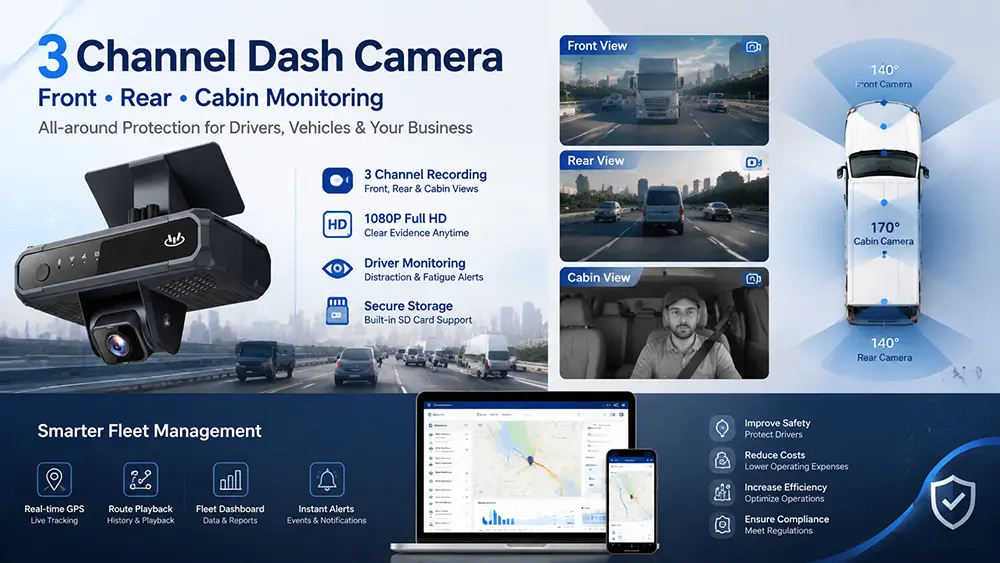
1.Front-Facing Road Camera: 1080P to 4K high-definition, 140°–170° wide-angle, recording real-time road conditions.
2.In-Cabin Driver Camera: 720P–1080P, 170° ultra-wide-angle, equipped with infrared LED night vision.
3.ADAS (Advanced Driver Assistance Systems): Forward collision warning, safe following distance monitoring.
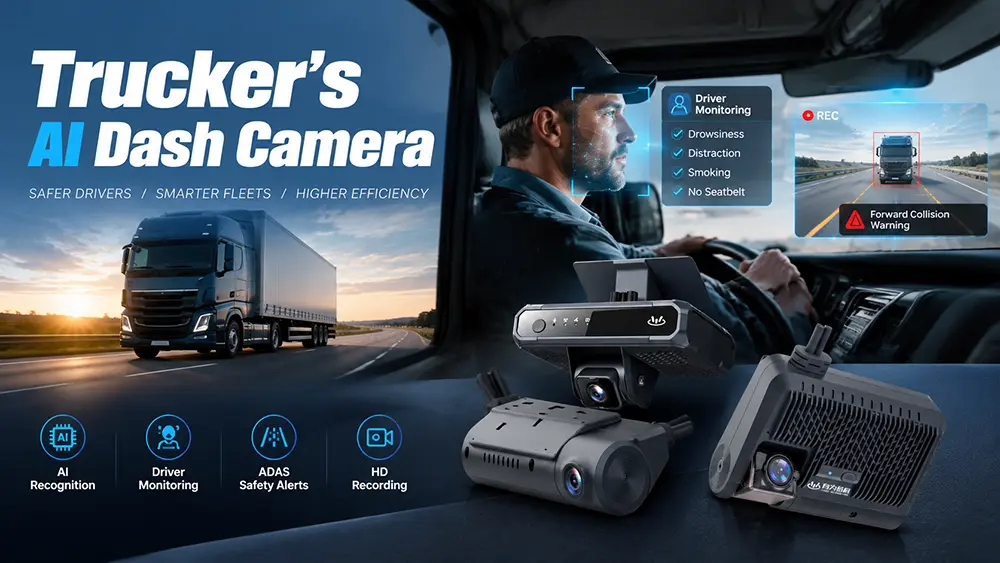
4.DMS (Driver Monitoring System): Fatigue detection, distracted driving warning, facial recognition for identity verification.
Cloud Fleet Management Platform
1.Cloud video storage and rapid retrieval
2.Driver behavior analysis reports
3.Driver safety scoring system
4.Remote real-time monitoring and operational dispatching
5.Automatic upload and tagging of key video clips
Key Differences Between AI and Traditional Dash Cams
Comparison Dimension | Traditional Dash Cam | AI Dash Cam |
Recording Method | Continuous recording to SD card | Continuous recording + AI smart event triggers |
Risk Detection | None | Real-time detection of distraction, fatigue, collisions, etc. |
Driver Feedback | Post-event review | Instant in-cabin voice/visual alerts |
Data Storage | Local SD card, requires physical retrieval | Automatic 4G/5G upload to the cloud |
Behavior Analysis | None | Deep learning algorithms, multi-dimensional scoring |
Installation Difficulty | Simple, plug and play | Simple, most support OBD/JBUS direct connection |
Dual-Lens AI Dash Cam Products
YUWEI V5C Dual-Lens AI Dash Cam
High Cost-Effectiveness | 4G Cloud Management
The V5C is a dual-lens AI dash cam designed for commercial fleets, integrating GPS and 4G communication modules, specifically built for low-cost, large-scale deployment. When equipped with an MDVR, it can support up to 8 different camera angles for comprehensive full-vehicle coverage.
Key Specifications:
1.Front-Facing Road Camera: 1080P HD, 140° wide-angle
2.In-Cabin Driver Camera: 720P wide-angle + infrared night vision
3.Built-in ADAS: Forward collision warning, following distance monitoring
4.Built-in DMS: Fatigue detection, distracted driving, facial recognition
5.Dual-Mode Positioning: GPS + BeiDou
6.Expansion: Supports 4-channel front and rear camera expansion
7.Applicable Scenarios: Logistics and freight, urban last-mile delivery, ride-hailing/taxis, buses/school buses, construction vehicles.
Enterprise-Level Fleets (Custom Pricing)
Full-Feature Video Telematics
YUWEI V5C + F4 MDVR: High cost-effectiveness + 4G cloud management + multi-channel support. Ideal for logistics, engineering, and mining heavy-duty fleets.
How AI Detects Dangerous Behaviors in Real-Time
Modern AI dash cams run various deep learning algorithms capable of analyzing comprehensive driving behaviors, rather than merely recording video clips after an accident. Different platforms have varying focuses on detection capabilities:
Behavior Category | Specific Detection Items | Detection Method |
Distracted Driving | Phone usage, reaching for items, eating/drinking, excessive talking with passengers | DMS Camera + Computer Vision |
Fatigue Driving | Closed eyes, yawning, nodding, extended periods without blinking | Facial Feature Analysis + Infrared Night Vision |
Collision Risk | Forward collision warning, pedestrian collision warning, unsafe following distance | ADAS + Road Camera |
Compliance Monitoring | Unbuckled seatbelt, smoking violations, identity fraud | In-Cabin Camera + Facial Recognition |
Dangerous Operations | Speeding, harsh braking, sharp turning, lane departure, illegal lane changes | GPS + Accelerometer + Vision Fusion |
Factors to Consider When Buying an AI Dash Cam
1.Video Resolution: At least 1080P Full HD to ensure clear details are captured both day and night.
2.Lens Configuration: Dual-lens (road + driver) is the minimum standard for fleets; three-channel or four-channel setups are suitable for long trailers or complex operations.
3.AI Detection Capabilities: Confirm support for ADAS (forward collision, lane departure) and DMS (fatigue, distraction, seatbelt).
4.Network Connection: 4G/5G real-time cloud uploading, supporting remote live streaming and historical playback.
5.Total Cost of Ownership (TCO): Hardware price + monthly/annual fees + storage costs + installation costs (ensure these are clarified upfront).
Camera Type Selection Guide
Type | Applicable Scenarios | Advantages |
Single-Lens Front-Facing | Fleets that only need road evidence | Most economical, simple installation |
Dual-Lens (Recommended) | Needs two-way monitoring of road + driver | Best cost-effectiveness, comprehensive features |
Multi-Lens / MDVR | Long trailers, construction vehicles, all-around needs | 360° blind-spot-free coverage |
Standalone (SD Card) | Ultra-low-cost entry level | Cheapest, requires no network connection |
AI Cloud-Based (Recommended) | Professional management for medium to large fleets | Real-time analysis, remote access, automatic uploading |
Conclusion: Dash cams have transitioned from a "luxury option" to an absolute operational necessity. However, the true revolution lies not in the "recording" itself, but in the real-time perception, instant feedback, and proactive prevention capabilities empowered by AI.
Email:hello@yuweitek.com