










Singapore Taxi DVR Dash Cam System
Singapore Taxi DVR Dash Camera
Singapore ranks among the world’s most highly urbanised mobility markets with stringent traffic regulatory frameworks. According to the latest publicly available statistics, by the end of 2025, Singapore had approximately 12,161 registered taxis, alongside around 62,092 active Private Hire Vehicles (PHVs, primarily ride-hailing/platform vehicles). Collectively, this forms an operational mobility fleet of over 70,000 units, with PHVs vastly outnumbering traditional taxis. Amid deep integration between ride-hailing platforms including Grab and ComfortDelGro and legacy taxi operators, Singapore has matured into a market defined by high-density platform dispatching paired with rigorous safety governance systems.
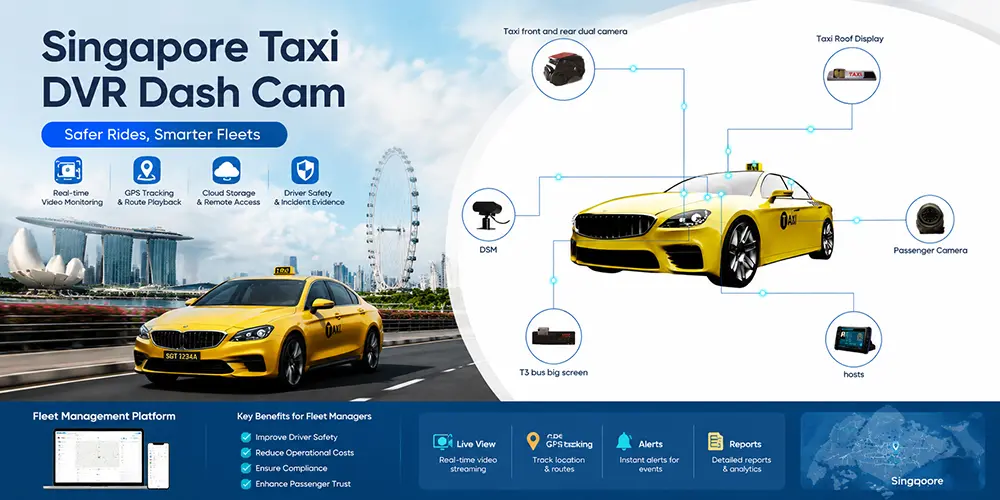
Meanwhile, the rollout of new taxi licence schemes such as GrabCab (featuring expanded fleets and set growth targets for the future), alongside government policies promoting clean energy and smart transport upgrades, is accelerating the Singapore taxi industry’s transition into a stage of fully digitalised, fully traceable, data-driven operations.
Within this heavily regulated, high-efficiency, densely populated urban transport ecosystem, standalone GPS positioning can no longer satisfy fleet management demands. The industry is comprehensively shifting toward intelligent fleet architectures centred on DVR video recording + AI driver behaviour analytics + cloud-based Telematics remote information processing platforms.
Mandatory DVR & AI Monitoring System Upgrades for Singapore Taxis
In Singapore’s hyper-urbanised operating environment, taxis and private hire vehicles face four core operational pressures:
1. Frequent Short Trips + Congested High-Density Road Networks
• Persistent traffic congestion within the Central Business District (CBD)
• Constant switching between short-distance ride orders
• Minimal tolerance for irregular driving behaviours
2. Complex Platform-Based Operations
• Coexistence of multiple platforms including Grab and ComfortDelGro
• Drivers accepting orders across several platforms simultaneously
• Centralised unification of all operational data
3. Rigorous Safety & Compliance Oversight
• Complete reconstructability of all traffic accident sequences
• Auditability of all driver manoeuvres and behaviours
• Full alignment of stored data with privacy regulations under the PDPA framework
4. Intense Service Quality Competition
• Strict passenger rating and review mechanisms
• Mandatory video evidence to resolve passenger complaints
• Fleet brand reputation tied to verifiable safety track records
For these reasons, Singaporean fleets are evolving from basic location tracking management to a unified solution:
Video-Enabled Operations + AI Behaviour Analytics + End-to-End Cloud Management System
Singapore Taxi DVR System Architecture
Modern intelligent taxi systems are structured across three core layers:
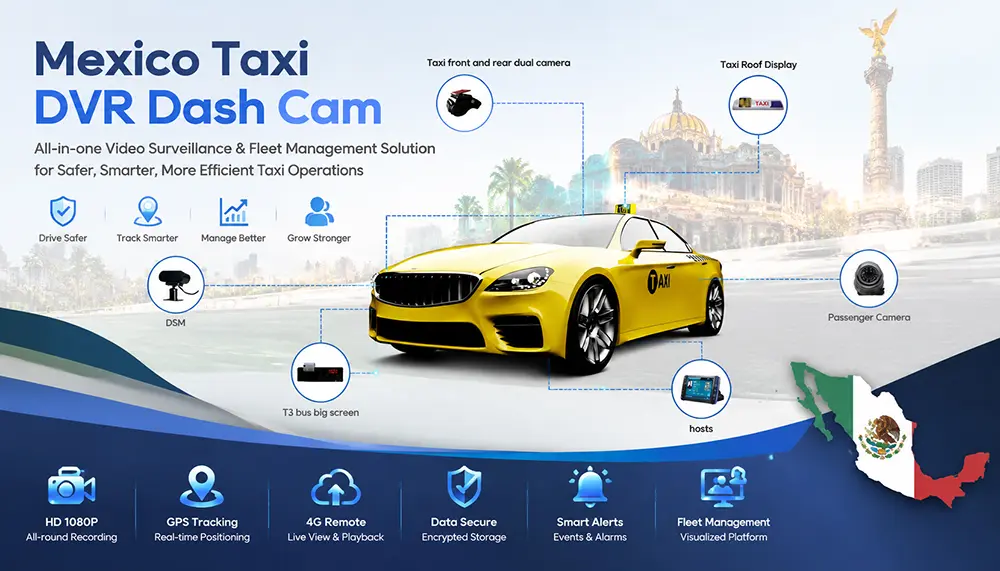
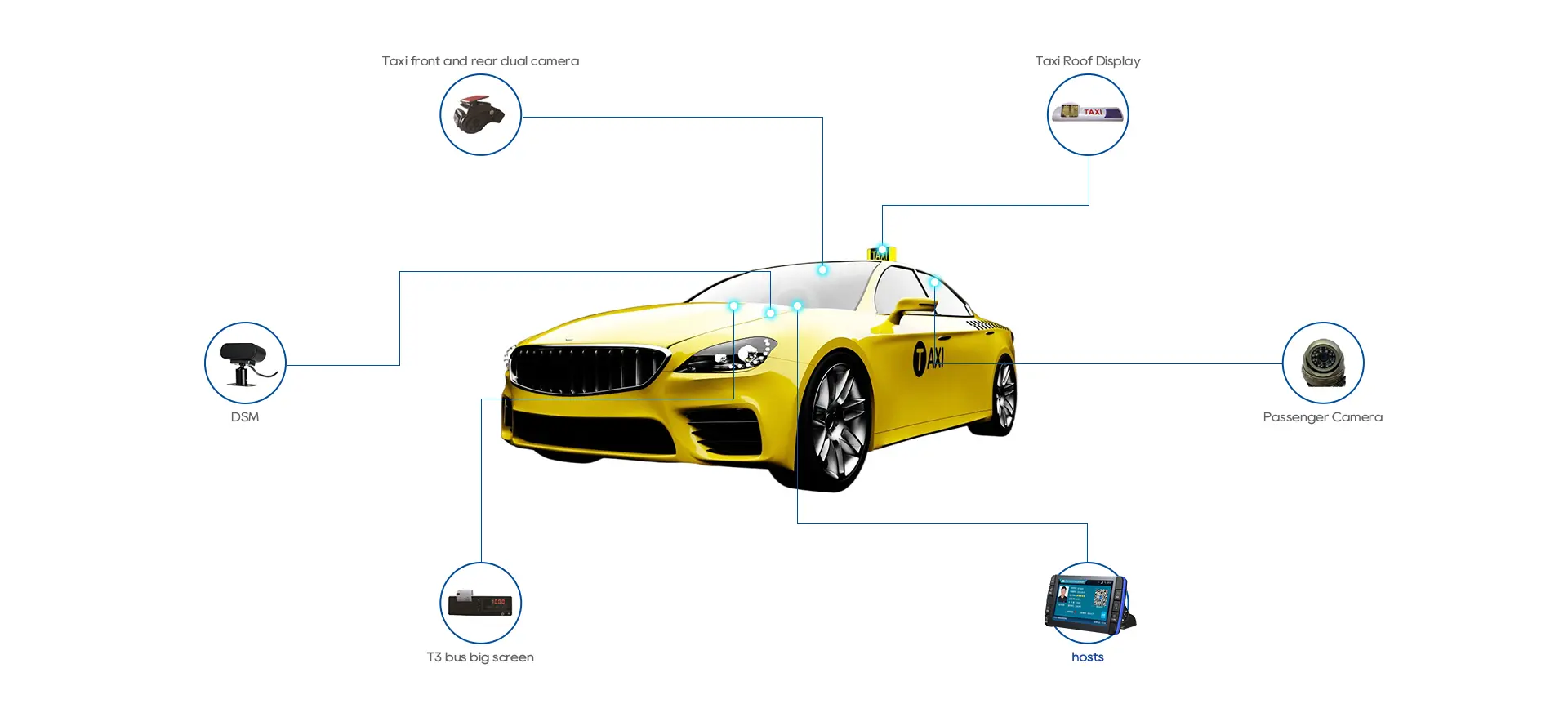
On-Board Perception Layer
• Forward-facing Dash Cam
• DSM (Driver Monitoring System)
• ADAS (Advanced Driver Assistance System)
Edge Computing Layer
• Multi-channel video integration via MDVR
• Localised event detection and video caching
• End-to-end data encryption and controlled cloud uploads
Cloud Telematics Platform
• Real-time GPS trajectory tracking
• Driver safety scoring module
• Optimised fleet dispatching
• Automated risk analytics and instant alert notifications
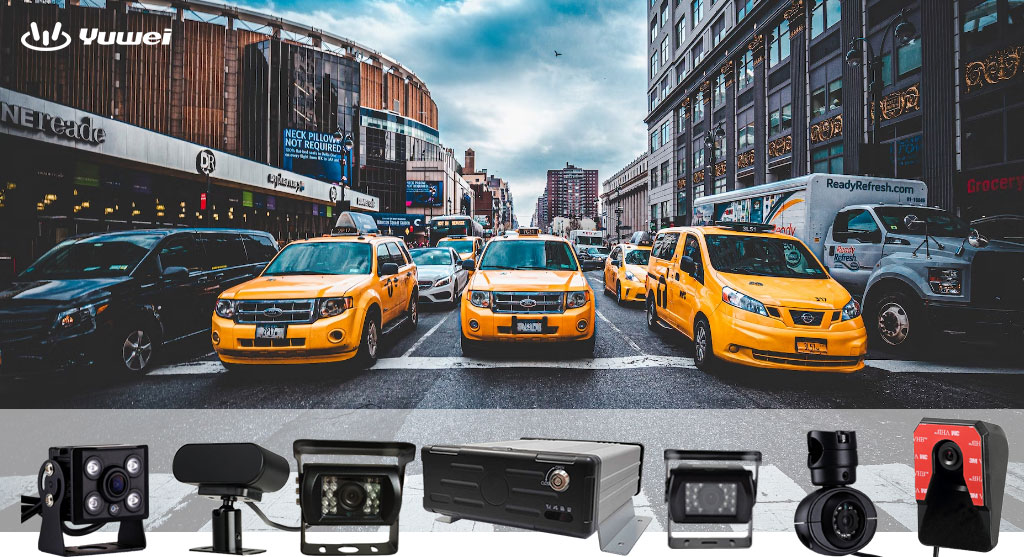
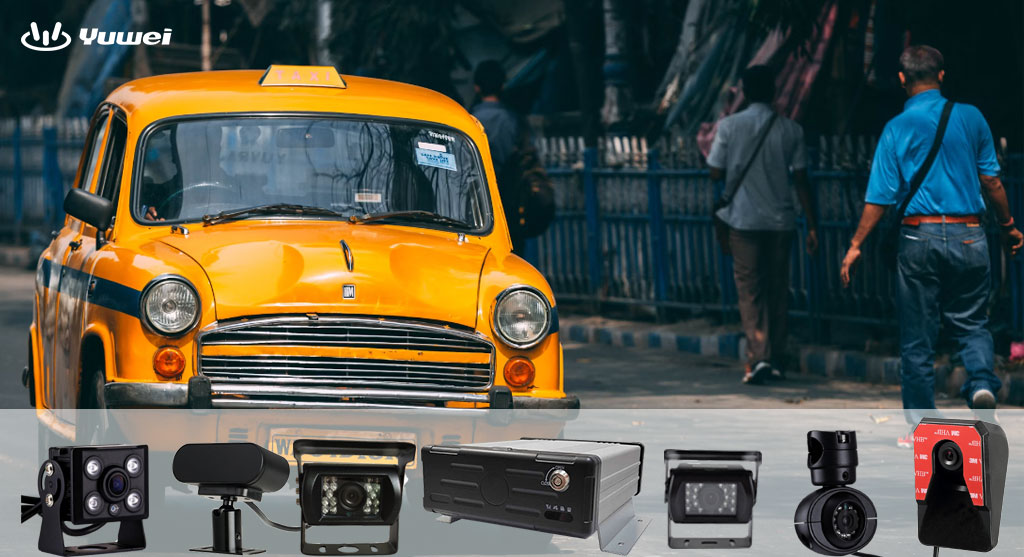
Core Hardware System Breakdown
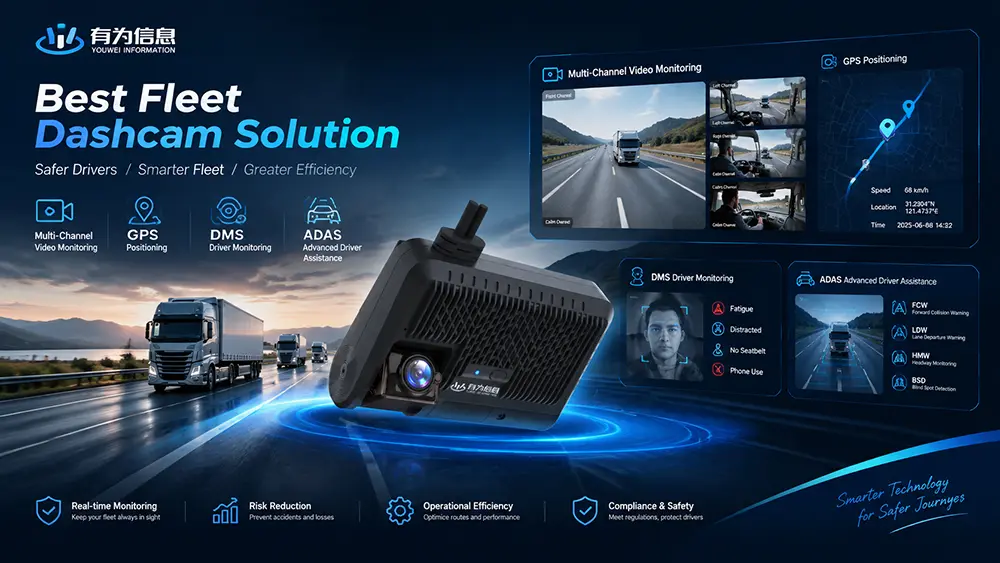
1. YUWEI V5C Dash Cam
Core Capabilities
• High-definition forward road recording
• Synchronised GPS trajectory logging
• 4G live video streaming to cloud servers
• Automatic locked evidence storage for collisions and harsh braking events
• Remote cloud video retrieval at any time
Primary Singapore Use Cases
• Liability determination for traffic accidents
• Visual evidence for passenger dispute resolution
• Auditing of driver driving conduct
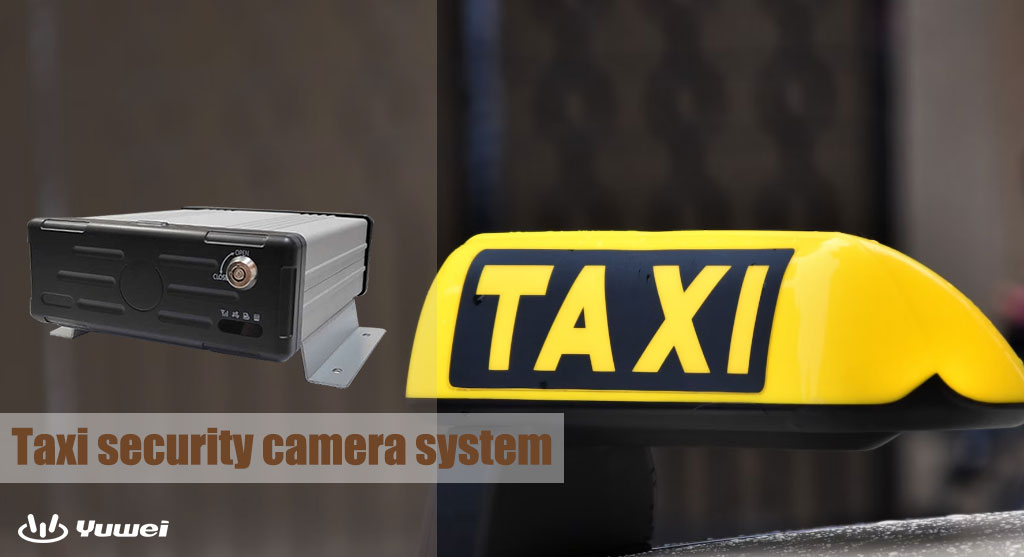
2. YUWEI F4 MDVR
Core Capabilities
• Synchronised multi-camera recording
• Full panoramic coverage of vehicle interior and exterior
• Combined GPS positioning and video data fusion
• Complete remote fleet administration via cloud
• Auto-triggered video recording for abnormal incidents
Key Function
Transforms each vehicle into a visualised data collection node
3. ADAS – AI Driving Safety Assistance System
Functional Modules
• Forward collision warning alerts
• Lane departure detection notifications
• Safe following distance recognition
• Vulnerable pedestrian hazard detection
Business Value
• Reduces low-speed urban collision incidents
• Boosts driving safety within congested CBD zones
• Cuts the frequency of insurance claim submissions
4. DSM – Driver Behaviour Monitoring System
Detection Capabilities
• Drowsy/fatigued driving identification
• Distracted driving recognition
• Mobile phone usage behind the wheel
• Detection of all unsafe driving conduct
In-Vehicle Control Mechanisms
• Real-time voice reminders inside the cabin
• Audible buzzer warning alerts
• Permanent risk event logging stored on the cloud
Core Application
�� Establishes a standardised driver safety rating framework
5. On-Board Display Terminal
Built-In Functions
• Real-time ride dispatch notification display
• One-click switching between multi-camera live feeds
• Blind-spot auxiliary visualisation
• Synchronised safety warning pop-ups
Operational Benefit
Improves drivers’ instant response capacity to complex urban traffic conditions
Core Value of Telematics Remote Information Processing
In Singapore, fleet competition has fundamentally shifted into a race for superior data processing capabilities.
The platform aggregates multi-source data streams including:
• Live GPS location tracking data
• Continuous real-time video feeds
• Comprehensive driver behaviour metrics
• End-to-end ride dispatch operational data
• Automated risk incident alert logs
This integrated dataset forms a fully closed-loop fleet management ecosystem.
1. Intelligent Dispatch Optimisation
• Real-time visualisation of full fleet geographic distribution
• Automated order allocation to high-demand hotspots
• Reduction of empty vehicle mileage rates
2. Standardised Video Evidence Repository
• Full chronological reconstruction of all traffic accidents
• Objective arbitration of passenger-driver conflicts
• Streamlined, standardised complaint resolution workflows
3. Driver Behaviour Scoring System
• Quantifiable safety driving performance ratings
• Tiered classification of driver risk levels
• Data-backed driver performance management and assessment
4. Operational Efficiency Improvements
• Intelligent route planning optimisation
• Real-time fuel consumption monitoring and control
• Precise matching of drivers to ride orders
Typical Deployment Scenarios in Singapore
1. High-Density CBD Taxi Operations
• Constant high-volume short-distance ride requests
• Severe recurrent traffic congestion
Recommended Hardware Configuration: Dash Cam + DSM + Telematics Cloud Platform
2. Multi-Platform Ride-Hailing Fleets
• Cross-platform order acceptance by drivers
• Unified centralised data administration
Recommended Hardware Configuration: MDVR + DSM + Cloud Telematics Platform
3. Night-Time Airport & Inter-Island Transfer Services
• Extended long-distance driving durations
• Elevated safety compliance requirements
Recommended Hardware Configuration: ADAS + DSM + Dash Cam
Singapore operates a combined fleet of approximately 12,161 taxis and 62,092 PHV ride-hailing vehicles, forming one of the world’s most mature city-wide mobility networks. At present, YUWEI’s Taxi DVR Dash Cam solutions have been widely deployed across Singapore.
Email:hello@yuweitek.com