










Best Dash Cam with Real-Time GPS Tracking
Dash Camera with Real-Time GPS Tracking
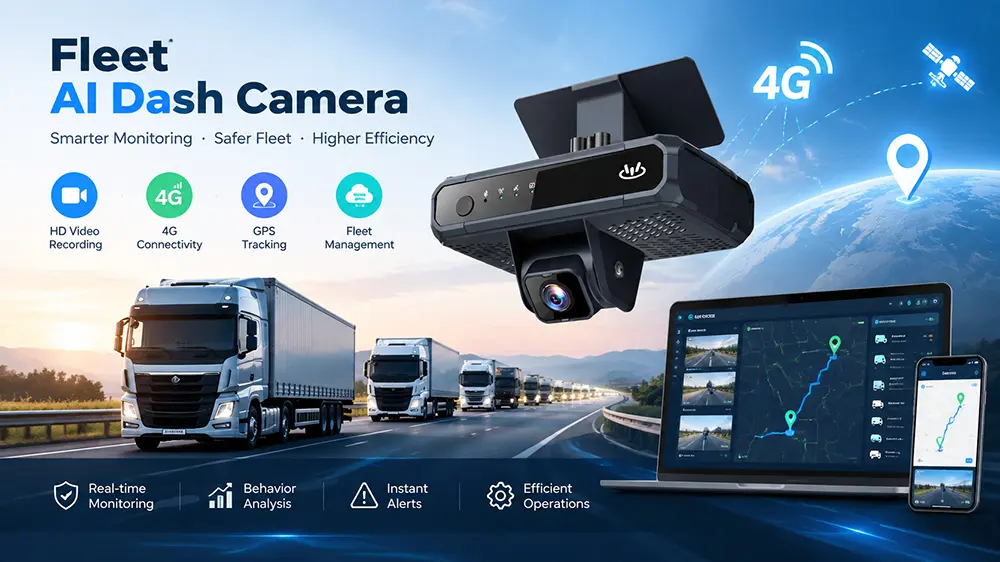
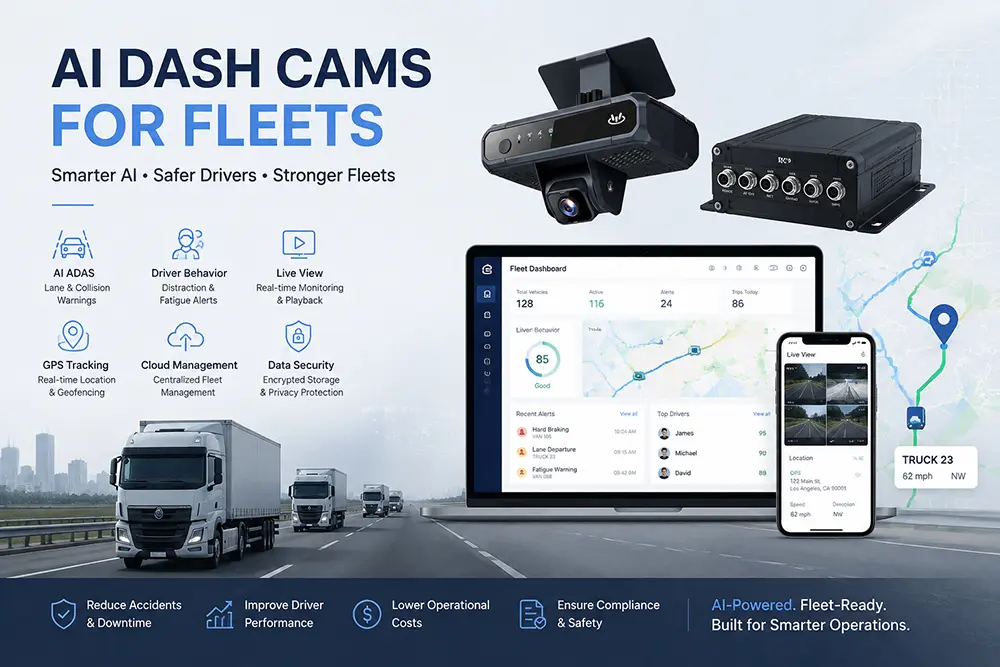
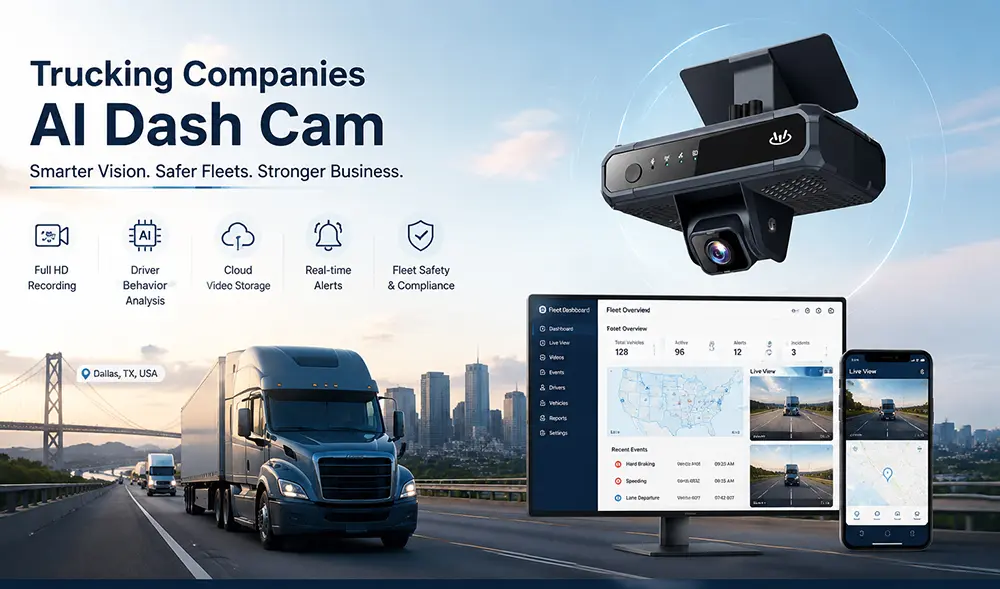
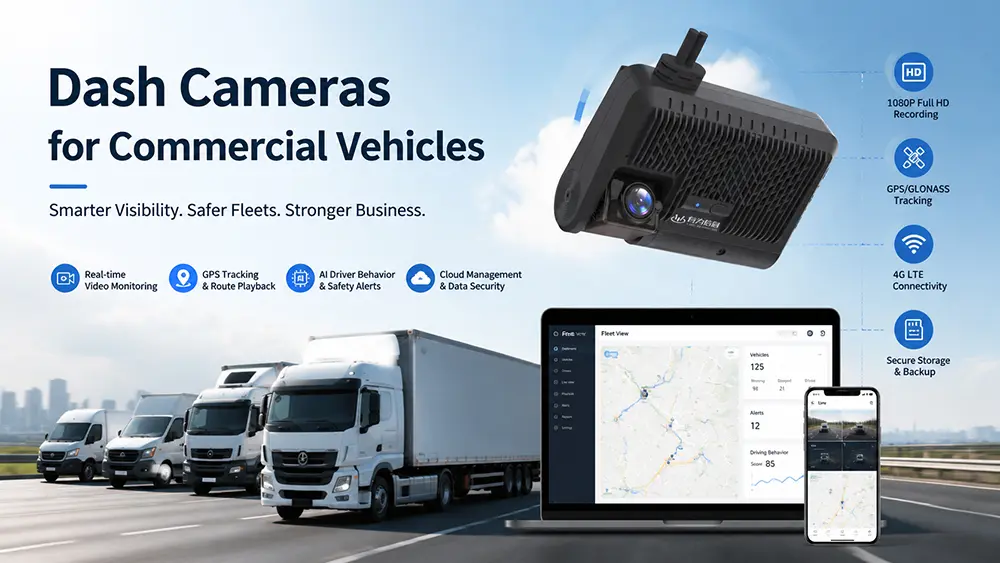
Traditional dash cams only offer local SD card access after an accident occurs. Standalone GPS trackers only provide location coordinates. In 2026, commercial fleets require an all-in-one solution: high-definition video recording overlaid with GNSS positioning, vehicle speed, and timestamps, transmitted in real time via a 4G network.
Three Dash Cams with Real-Time GPS Tracking:
Small Fleets / Ride-Hailing / Taxis: Choose V5C
Applicable Fleets
1.10–50 urban operation vehicles.
2.Ride-hailing vehicles, taxis, and start-up urban delivery fleets.
3.Limited budget, but require accident evidence collection and driver behavior management.
Core Configurations
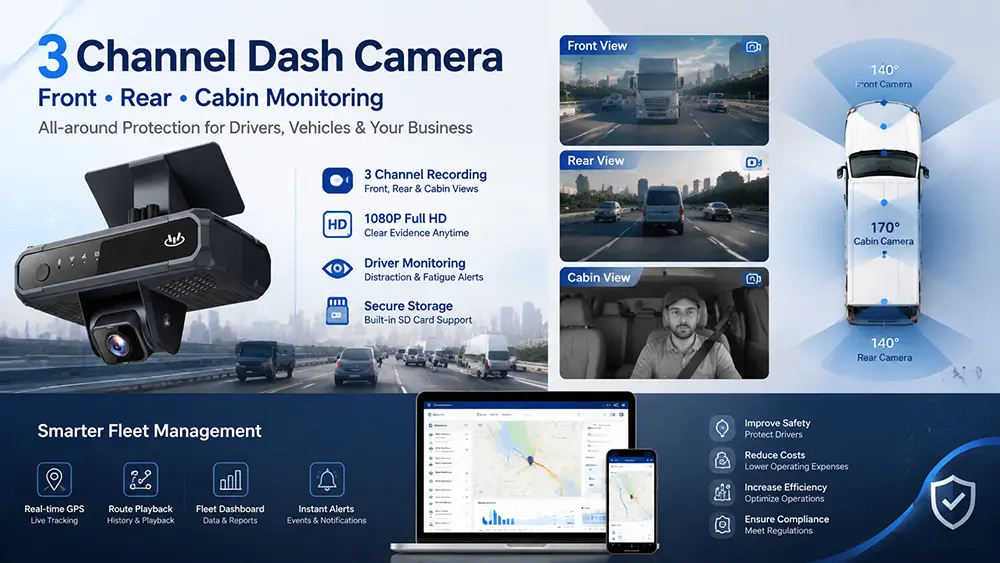
1.Camera Specs: Front-facing 1080P@25fps, DFOV 140°; In-cabin 720P@25fps, DFOV 150°.
2.Connectivity: GPS/BDS dual-mode, built-in 4G, WiFi AP/STA.
3.Smart Features: ADAS (Forward Collision / Lane Departure), DSM (Fatigue / Distraction / Phone Use / Smoking), Face ID driver sign-in.
4.Sensors: 3-axis G-sensor, with event tags for harsh acceleration / harsh braking / harsh cornering.
5.Storage & Security: Single TF card up to 1TB, H.264/H.265, AES-256 local + cloud backup, configurable retention period of 15–90 days.
6.Hardware: 9–36V wide voltage, -20~70°C operating temperature, tamper/lens-covering alarm, power-loss protection for critical video clips.
Problems Solved
1.Rear-end collisions, lane changes, passenger disputes: Front + in-cabin dual-lens evidence collection, watermarked with time, coordinates, and vehicle speed.
2.Driver fatigue and phone distraction: Real-time DSM voice alerts, with platform reports generated per driver trip.
3.Unclear shift responsibilities: Face ID sign-in binds specific events to specific drivers.
4.Low-cost deployment for small fleets: 20-minute installation without modifying the original vehicle wiring, keeping single-unit costs manageable.
Not Suitable For: Vehicle types requiring long-term multi-channel recording for side blind spots, rear views, or cargo areas.
Medium to Large Logistics / Taxi Companies / Corporate Vehicles / Multi-Route Passenger Transport: Choose V5
Applicable Fleets
1.50–200 regional logistics, urban delivery, taxis, and corporate official vehicles.
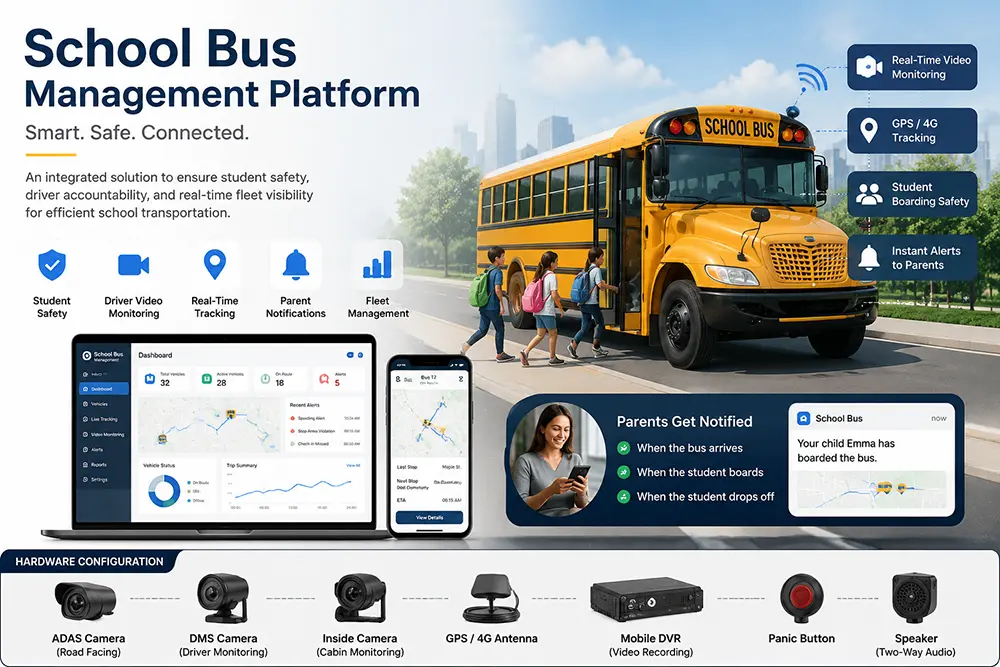
2.Minibuses, school buses, and engineering support vehicles.
3.Fleets requiring unified multi-angle playback (front, cabin, side, rear).
Core Configurations
1.Camera Specs: Main unit front camera 1080P MIPI, H112°/V55°; Expandable up to 3 channels of AHD 720P (cabin / right-side / rear / cargo area).
2.Storage: 4 channels in total; Dual TF cards up to 2TB each, DXR streaming storage.
3.Connectivity: GPS/BDS dual-mode, global 4G, WiFi.
4.Smart Features: ADAS (Forward Collision / Lane Departure / Headway Monitoring); DSM (Fatigue / Distraction / Phone Use / Smoking); Facial recognition, mask detection, and passenger counting.
5.Alarms & Alerts: Overspeeding, overtime driving, geofencing, and lens/storage failure alarms; TTS voice, two-way intercom, SOS, OTA updates.
6.Hardware & Protocols: 12/24V, -20~70°C, JT/T808 positioning protocol, JT/T1078 video protocol.
Problems Solved
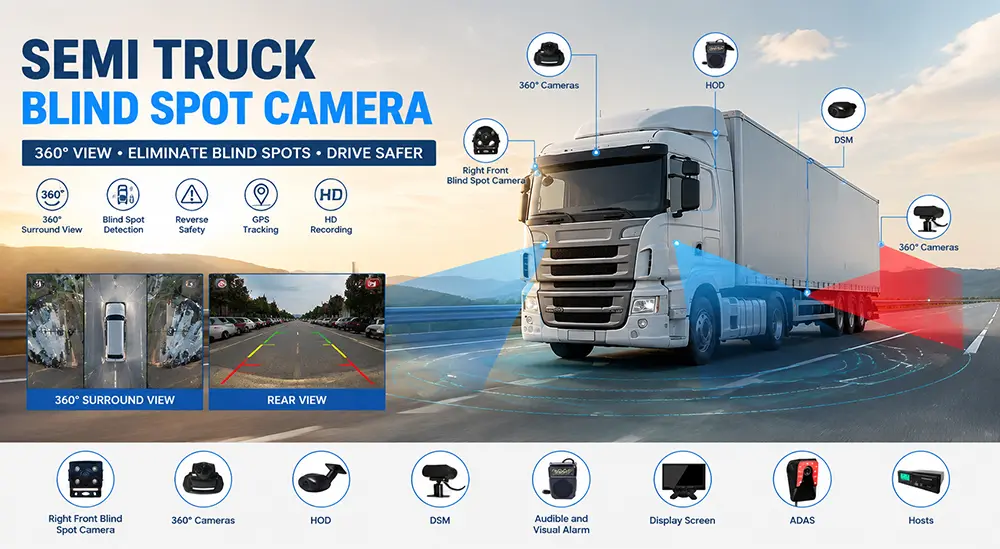
1.Right-turn blind spots and reversing collisions: Expandable side and rear cameras, linked with the front view on the same unified platform.
2.Cargo damage and passenger boarding/alighting disputes: Cargo area or cabin camera combined with passenger counting enables targeted video retrieval by time points.
3.Multi-route management: Real-time trajectories, route deviation tracking, geofence breaches, and graded overspeed alarms.
4.Large-capacity loop recording: Dual TF cards reduce the risk of evidence loss due to single-card damage; DXR technology reduces failures from repeated erasing and writing.
5.Standardized integration: 808/1078 protocols facilitate seamless connection to existing dispatch or regulatory platforms.
Typical Combinations
1.Taxis / Minibuses: Front ADAS + Cabin DSM + Rear view.
2.Urban Delivery Trucks: Front ADAS + Cabin DSM + Right blind spot + Rear view.
3.Cargo with Damage Risks: Front ADAS + Cabin DSM + Rear view + Cargo area camera.
Night Shifts / School & Public Buses / Mixer & Engineering Trucks / Cold Chain / High-Risk Long Haul: Choose V8N
Applicable Fleets
1.Fleets with over 50 vehicles requiring high safety standards.
2.Nighttime delivery, cold chain, long-haul freight, mixer trucks, and engineering vehicles.
3.Operations around schools, old city right-turns, dense pedestrian areas, and high risk of personal injury.
Core Configurations
1.Camera Specs: Starlight-grade front camera (optional Sony IMX335), up to 2560×1920 (commonly used at 1080P), H106°/D139°, WDR + low-light night vision. In-cabin 2MP IR-CUT, H152°/D180°, 720P.
2.Storage: Main unit (2 channels) + Expandable AHD (2 channels) = 4 channels total; Dual TF cards up to 2TB each, DXR.
3.Full ADAS: LDW (Lane Departure) / HMW (Headway Monitoring) / FCW (Forward Collision) / PCW (Pedestrian Collision) / Crosswalk / Front Vehicle Start Alarm.
4.Full DSM: Eyes closed, yawning, distraction, phone use, smoking, unfastened seatbelt, infrared-blocking glasses detection, facial authentication.
5.Advanced Safety: BSD (Blind Spot Detection) for pedestrians and non-motorized vehicles; Aggressive driving detection (harsh acceleration / harsh braking / harsh cornering).
6.Sensors & Power: 6-axis accelerometer, CAN bus for speed/RPM/load; Supercapacitor for approx. 1 second of continued recording (some hardware versions offer extended backup power).
7.Connectivity & Environment: 4G + WiFi + GPS/BDS; App for real-time video, trajectories, and downloads; -30~80°C operating temperature.
Problems Solved
1.Low-speed personal injuries at night: Starlight front camera + in-cabin IR ensures license plates and pedestrians are visible in low-light intersections, construction sites, and delivery points.
2.Right-turn / Side-rear blind spots: Expandable BSD cameras recognize pedestrians and non-motorized vehicles, triggering instant alarms upon approach.
3.Fatigue and aggressive driving: Full DSM + 6-axis + CAN integrates harsh braking, harsh cornering, overspeeding, and fatigue into a comprehensive driver scoring system.
4.Extreme working conditions: The -30~80°C temperature range and supercapacitor power-loss protection make it significantly more stable than standard units for mixers, cold chain operations, and mountainous areas.
5.Groupized data: CAN bus connectivity for speed/RPM/load enables unified reporting when integrated with dispatch, fuel consumption, and temperature control platforms.
Quick Match
Implementation Steps
1.Pilot Deployment: Select 10 vehicles and run them for two weeks. Ensure coverage across different routes and time periods.
2.Parameter Calibration: Adjust ADAS/DSM sensitivity based on the pilot run results to reduce false alarms.
3.Full Rollout: Optimize configurations using pilot data and gradually expand the deployment to the entire fleet.
Conclusion
In 2026, real-time GPS tracking dash cams are standard equipment for fleet risk management. The YUWEI V5C, V5, and V8N cover all scenarios ranging from small to large-scale operations, and from standard to high-risk environments.
Email:hello@yuweitek.com